eran eizenhamer studio
what i do
i’m an architect, curator, and educator. i work across architecture, pedagogy, exhibitions, and exhibition design in tel aviv and berlin, creating spaces and situations that evoke a sense of belonging by drawing from the beauty of everyday life.
the places i design, whether for living, learning, or exhibiting, are conceived as open and enabling, inviting creativity, attentiveness, and engagement, inspired by a quiet sense of freedom.
they emerge through attentive listening to context, to people, and to daily patterns, and they adapt over time. the language of form grows from how space is experienced.
my master’s thesis explored architecture as a form of pedagogy, rooted in everyday experience and bodily presence. it proposed spatial tools for learning through inhabiting, sensing, and acting in the world. from these ideas, the school of the city at liebling haus was founded as a living framework for architectural thinking and action.
this site reflects my ongoing practice. it presents architectural projects,curation and design of exhibitions, pedagogical initiatives, performance events, and a text archive, organized in sections that reflect a holistic approach to space and practice.
projects included on the site evolve in dialogue with collaborators, whose contributions are acknowledged throughout the site.
education is life
a. passion
this text addresses form, not content. instead of engaging in a conventional discussion of “educational methods,” it proposes a way to break through the boundaries of education. rather than learning within a closed hierarchical system, it suggests learning within the space of our lives, the city.
two insights about today’s education system led to a rethinking that reconnects learning and education to life itself. the first is that the system cannot meet the unique needs of each learner, nor can it embrace their individuality or create a personal connection with them. the second is that the system is centered on “methods of education,” a concept based on the assumption that a shared set of values and actions can guide a broad population in learning and development. but there is no fixed method for learning, just as there is no fixed method for living. what exists is a learning space, the city, in which each person discovers their own way of learning.
education is life, meaning that every aspect of life: actions, thoughts, relationships, successes, and failures, contains an element of learning. the geographical boundaries of the city align with the boundaries of human activity, thought, and imagination. the city is where people live out their lives, it is a space of curiosity and desire for discovery. the school is where people learn about life, while the city is where they learn through life. the city, then, is the space in which we live, and it must also be the space in which we learn.
a city as a space for learning allows every individual to study what they want, when and how they choose, and from whomever they wish. the desire to learn arises from being a curious, thinking, and feeling person, someone drawn to discovery and seeking self fulfillment. learning is mostly dialogical, and therefore relational. to learn is to receive knowledge, but also to share it, to teach, to give. the city’s inhabitants hold knowledge that can be transmitted through immediate and vibrant dialogue. they are both learners and teachers, and the city is the space in which they act.
b. conformism
today, learning and education are no longer natural parts of our lives. learning, which is essentially a path of discovery that accompanies us throughout life, has become a means to an end. its essence has been forgotten, as has the curiosity and passion for discovery with which we entered the world. education has become a product controlled by a system that removes personal responsibility from the learner, ties education to a method, and reduces learning to a commodity.
frustration and a sense of wasted time are common experiences among students throughout their long school years, years spent in institutions where children arrive with a joy for play, curiosity, and the excitement of learning, but leave having lost these qualities. they are now educated, that is, conformist, overly nationalistic, and lacking life skills or the tools to understand how they learn.
childhood and adolescence are spent sitting obediently in chairs, inside classrooms with no character. learning about the city or the world through the school’s windows turns life, that is, the city, into something to be studied rather than experienced. in a closed classroom, there is no need to sharpen or develop the senses, only to see and hear just enough to follow the lesson. as a result, the city’s weather, nature, and daily changes, life itself, are studied rather than lived.
moreover, interactions between learners and the city do not take shape, and new ideas find no entry into the school’s physical or conceptual space. the student, with their emotions, traits, and desires, remains unacknowledged in this rigid structure. schools function primarily as centers of power, hierarchical systems meant to discipline students and mold them into model citizens, serving the goals of the ruling system. they emphasize control, regulation, and the subjugation of both body and mind through the architecture of the school and its classroom layout, a layout that enables constant supervision.
these dynamics between students, teachers, and institutions are not the result of specific teaching methods, as they are found in almost all familiar schools, but rather the direct outcome of form, the very model of schooling. methods, teaching styles, and correct education are ideal templates, defined by utopian aims. our inability to meet these ideals leads to deep frustration. more fundamentally, such templates prevent us from seeing and experiencing things as they are.
c. the city
in the new educational space, the city, the learner can experience life as learning, at their own pace and timing, and shape their own version of school. in this analogy, the teachers and students are the city’s inhabitants, the classrooms are all of its spaces, and the lessons are any occurrences or activities that carry a learning dimension. the city is where our dialogue with places and people unfolds, and where the experience of encounter becomes part of who we are. it is the space where present day desires materialize through lived experiences. our activity in the city, the natural space of life, includes all aspects of learning that life itself offers. learning that takes place in the city, where thought and action are woven together, turns experience into understanding.
urban life, dynamic and ever changing, invites us to reflect on the present, on human behavior, on interpersonal interactions, on the shifting nature of the city and of ourselves. the city is a space for learning about human nature, a space of active, sensory based learning that draws on all human faculties.
a city that becomes a school is not a hierarchical structure but a network. in this network all inhabitants, of all ages, participate equally as learners and teachers, where all physical learning spaces are interconnected, enabling growth and transformation. it also allows for spontaneous learning initiatives, for example, groups of people gathering to realize an idea or pursue a goal. this network is a tangible and accessible expression of the knowledge embedded in the city and its inhabitants, and through it, we weave our learning space.
d. encounter
learning is a common thread shared by all. since everything contains an aspect of learning, each person can be both student and teacher to others. the mutual presence of these roles opens the door to social change through equality. in the space of questioning and mistake, learning helps us see success and failure through a gentler lens, be more forgiving toward ourselves and others, and find meaning in the things we encounter.
learning is part of human nature, and it takes place through participation in any activity. it also emerges through encounters with others, made possible through dialogue. at every stage of life, we are engaged in varying degrees of proximity with different people. these relationships expand and contract, and through them, we experience meaningful moments in which we can see ourselves and our familiar reality in new ways. such experiences allow us to change and grow over time. encounter and dialogue are the essence of the lesson.
the city offers the potential for new relationships and learning through them, made possible by direct and spontaneous meetings. the value of unmediated or accidental encounters lies in their very spontaneity and in the authentic way they are experienced. these are not formal meetings shaped by power dynamics or intermediaries, but interactions that take place without authority or predetermined purpose. the boundary between a meeting and a learning encounter is not clearly defined. learning is a possibility, and the ambiguity that arises from not labeling every encounter as educational is essential to this kind of shared voluntary learning.
e. learning
interpersonal connections through encounters are an urban phenomenon. in the city, learning is offered, not enforced. it arises from within. whether we accept what is offered or not depends on its timing and relevance to our lives. systemic politics and hierarchies do not foster connection among learners, people do. each person weaves their curriculum just as they weave their personal and social relationships.
handing over responsibility for defining the structure of a lesson to its participants breaks down the walls between self and knowledge. it acknowledges that someone else may be interested in that knowledge and, more importantly, that the self is capable of sharing it and becoming a teacher. in this model, the learning space grows from the individual to the collective, from the singular lesson to a web of connections. each person is part of a series of individual lessons that interlink into a larger system.
in this way, each lesson is a free unit, always open to change. learning becomes embedded in our everyday lives. at times, we will be the teacher, and at others, the student. the space in which a lesson takes place shapes the lesson itself, influencing relationships and the participants’ willingness to remain in it. stepping outside the standardized anonymous classroom opens new possibilities, allowing the teaching space to reflect the teacher’s personal world and for the subject to emerge from their lived experience. the teacher gives character to the space, creating the unique quality of the encounter.
f. the future
a vision of the city’s future, in which it is integrated with education, describes a shift from viewing the city as a capitalist space driven by economic forces and characterized by limitless consumption to seeing it as a space of values, content, learning, and education. this future city no longer sees its inhabitants as consumers or providers of knowledge, but as participants in a shared process of personal and social growth.
the city of learning connects the curious and attentive individual to education through their natural surroundings, enabling constant dialogue with the space of their life. this person can satisfy their desire for discovery, fulfill their abilities, and realize their aspirations. the city’s inhabitants, teachers and learners, share their knowledge and skills, evolve and develop together, and build new communities of learning.
instead of a few massive school buildings housing tens of thousands of young people, countless learning spaces emerge across the city, accessible anytime and anywhere. learning and education become part of the fabric of daily life. every day is a day of learning, shaped by spontaneous or planned encounters in these new learning spaces. by linking education to life, we can again feel the deep excitement of learning through desire and discovery, as well as the natural fulfillment that comes from teaching others. learning becomes a natural evolving system, aligned with the way we live, bringing education and life back together in the everyday.
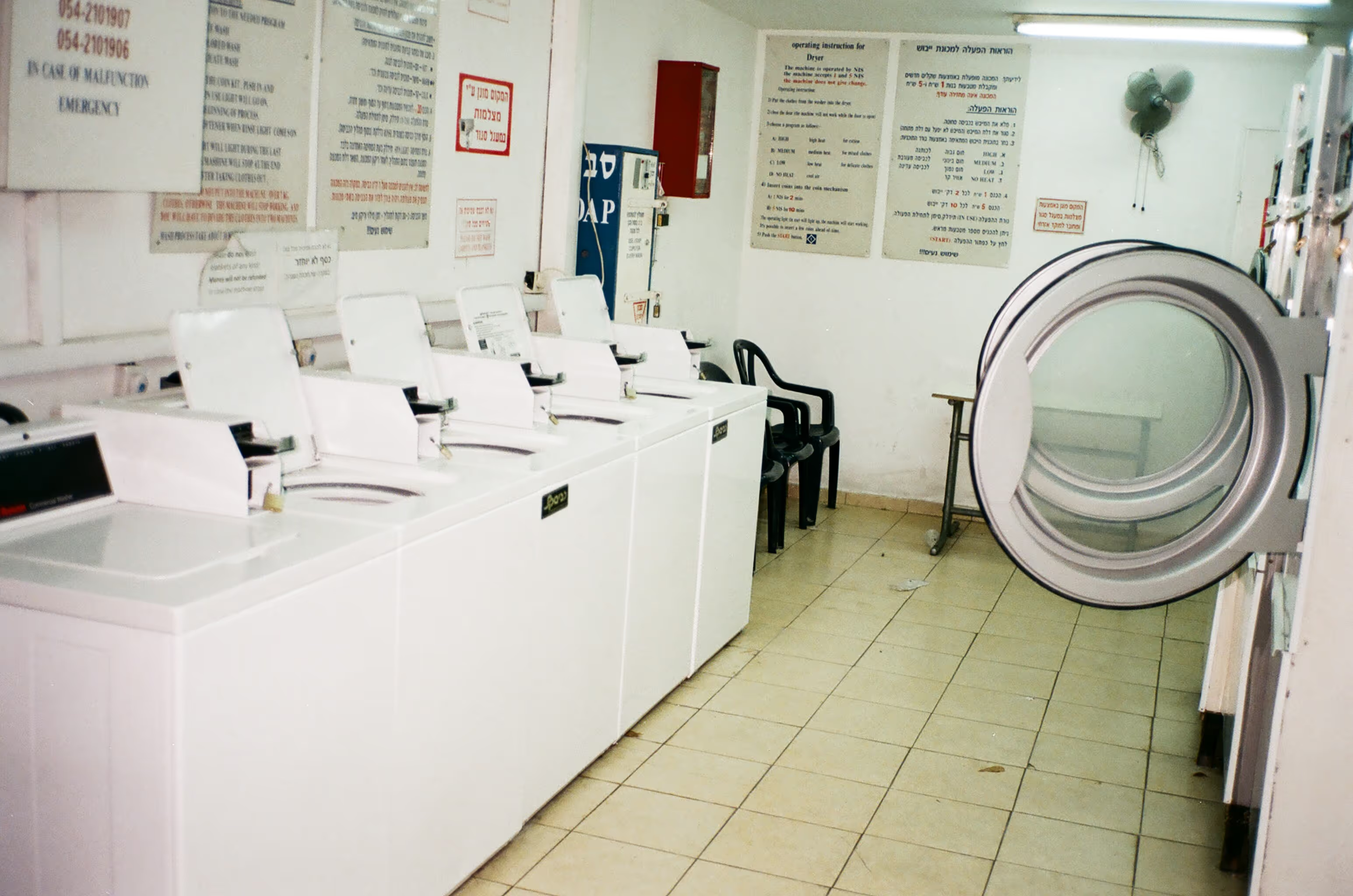
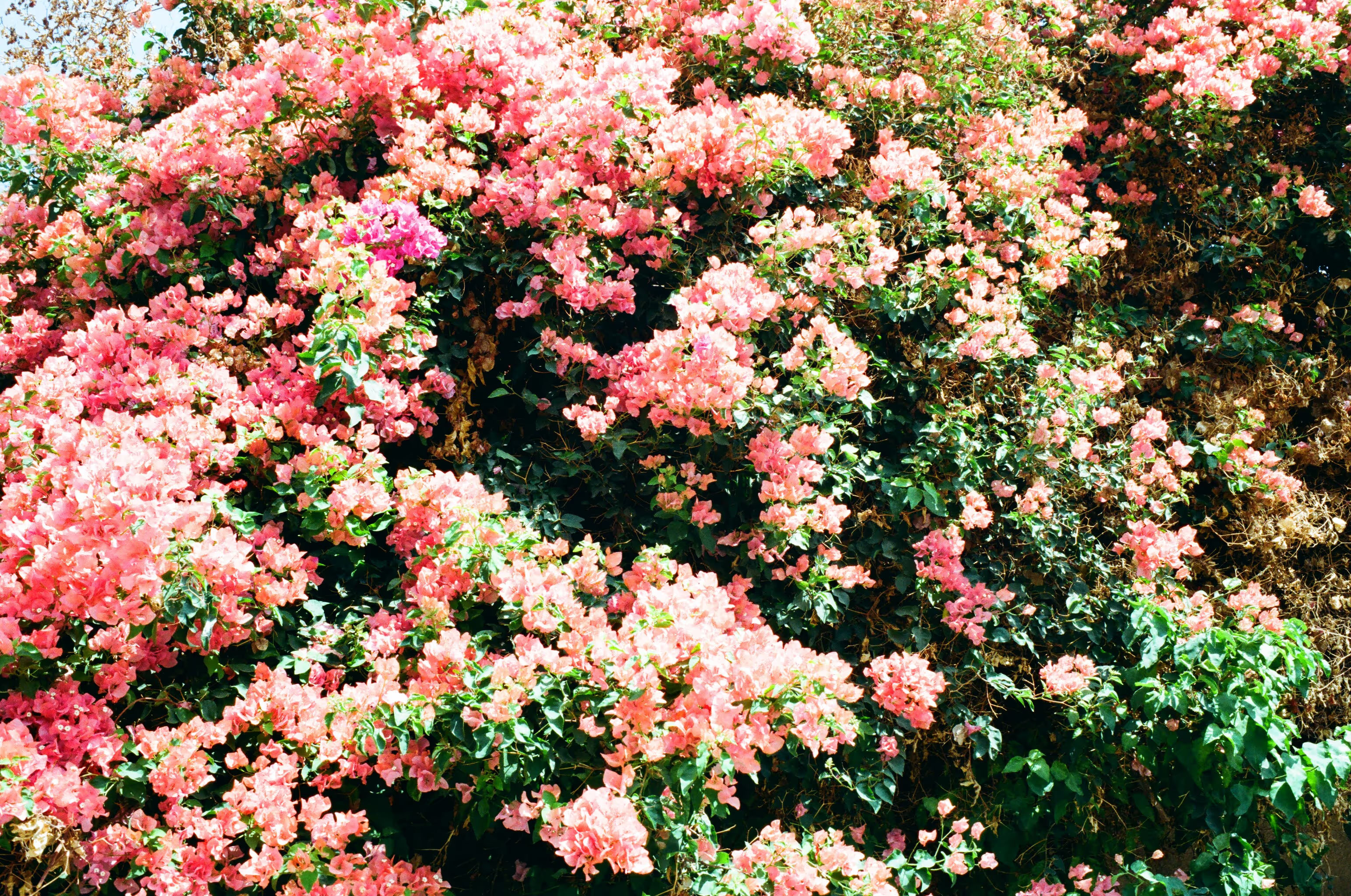
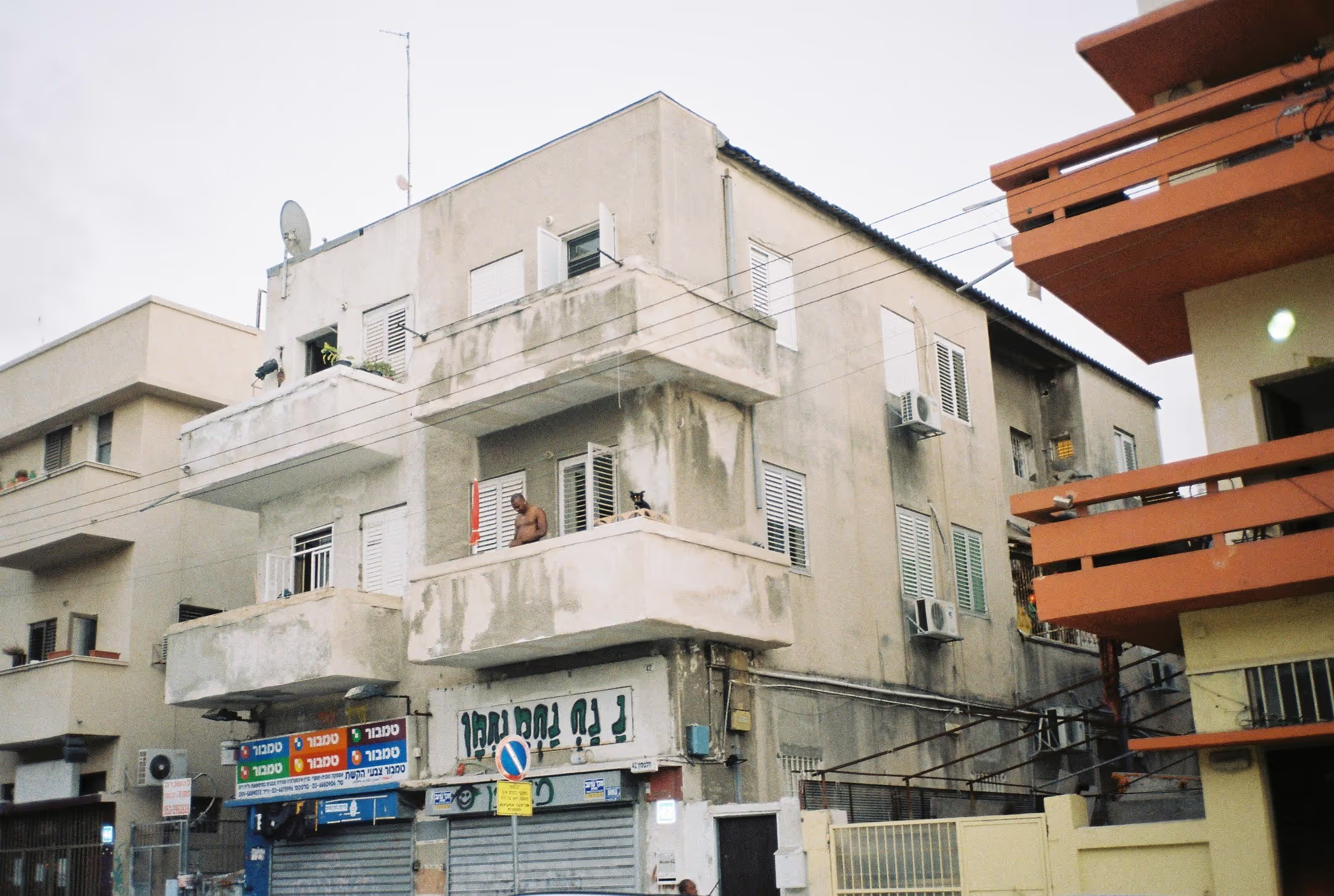
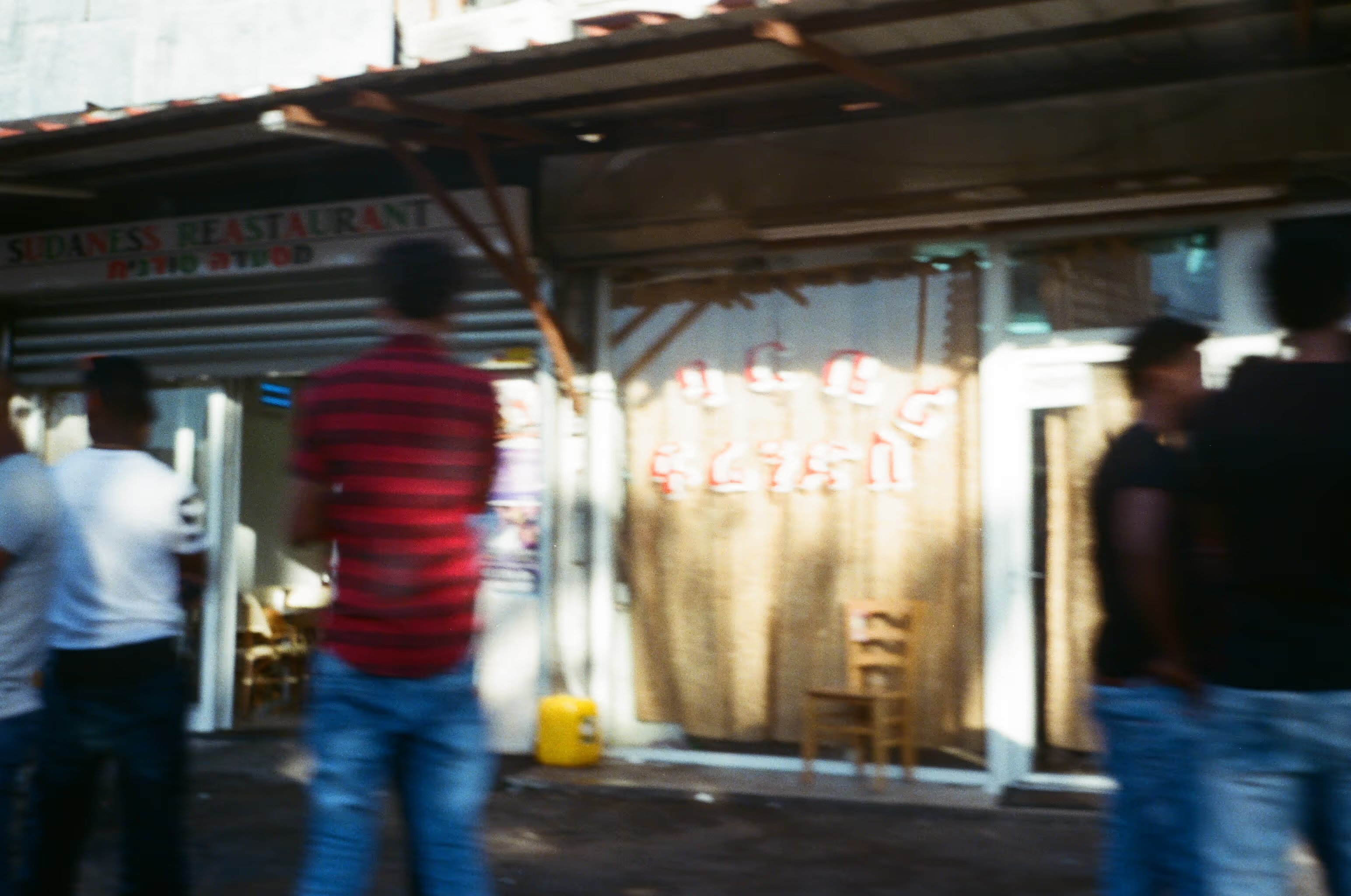
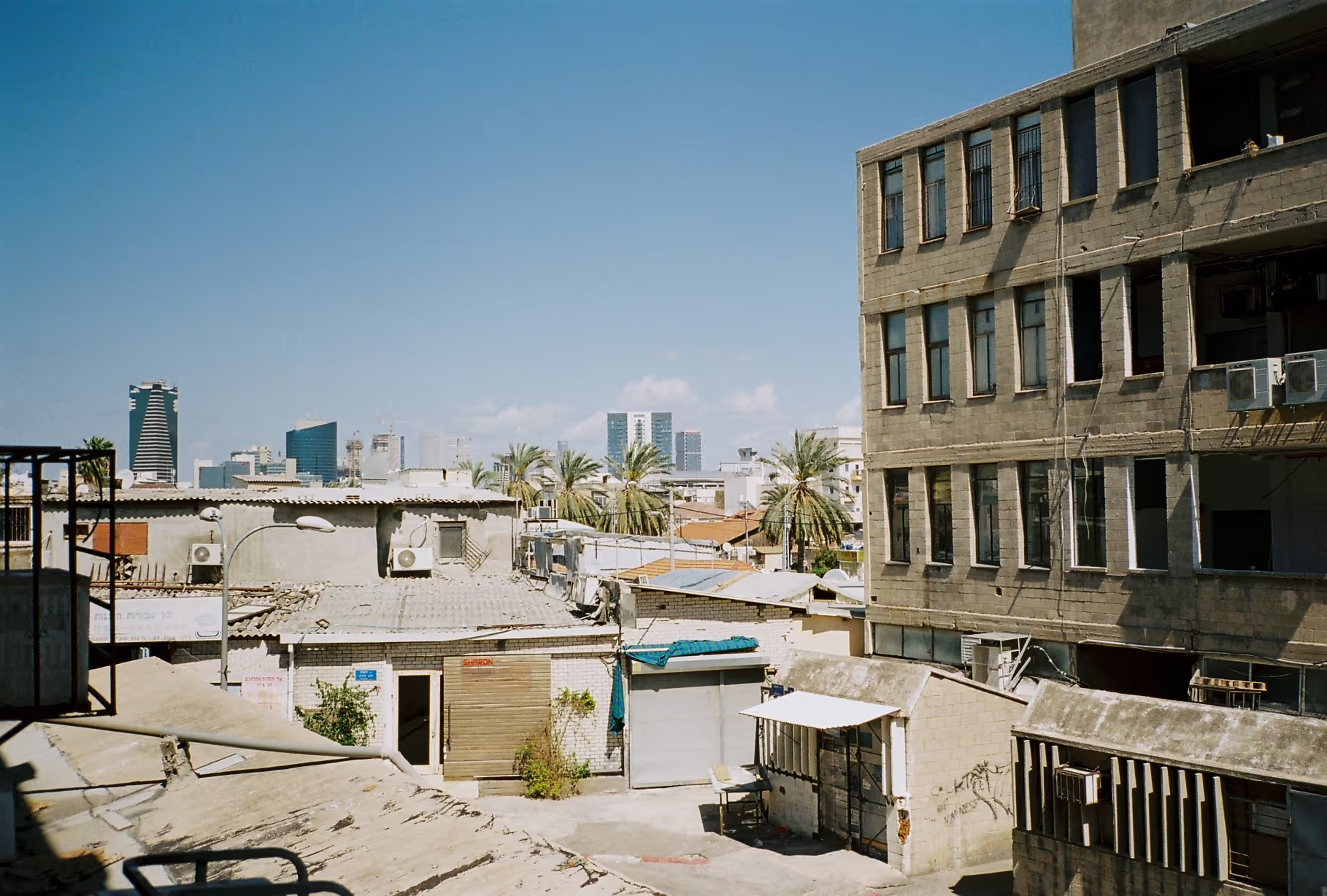
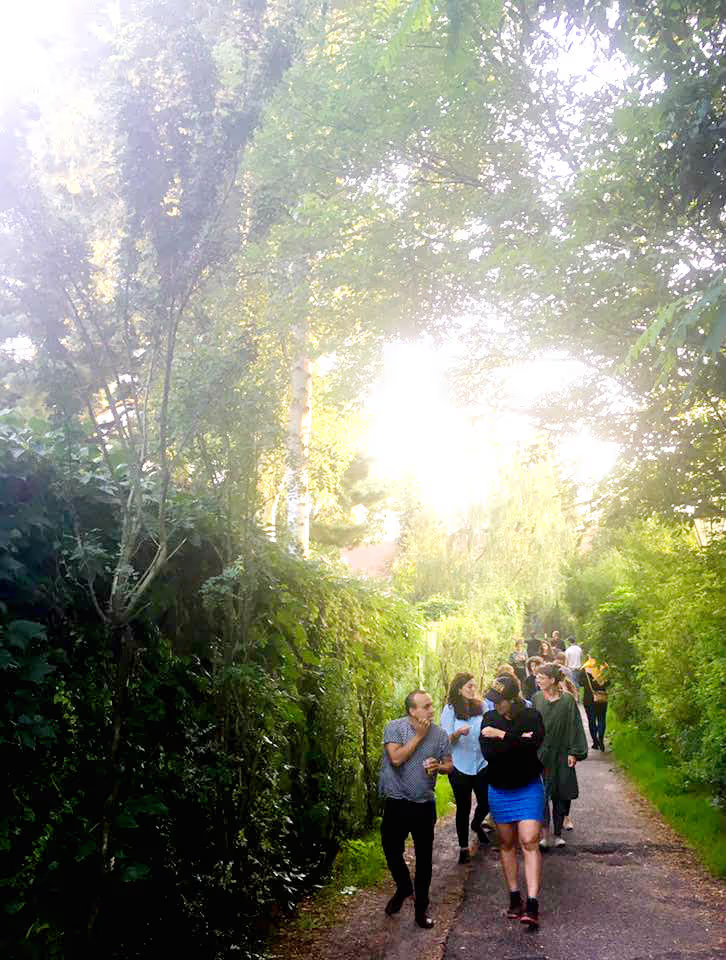
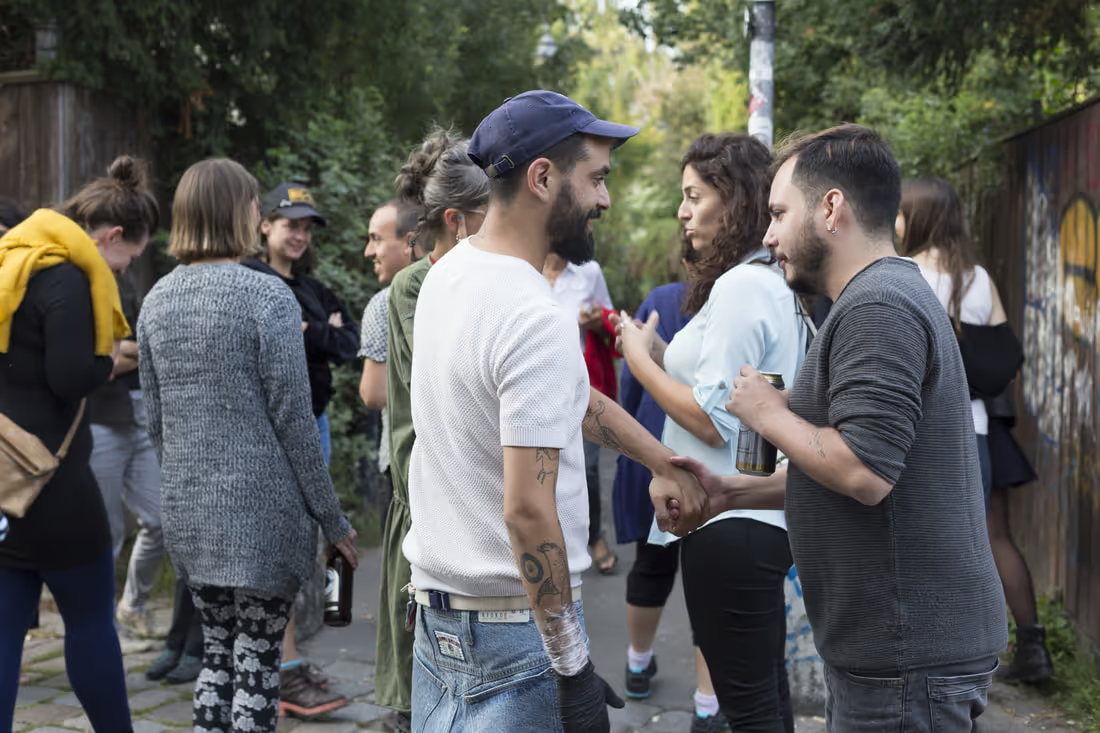
published in elipsis magazine, tel aviv, 2016, co-edited by yuval saar.images from neve shaanan neighborhood, metropolis 3, city as school, 2016. photography of neve shaanan for metropolis 3, david havroni
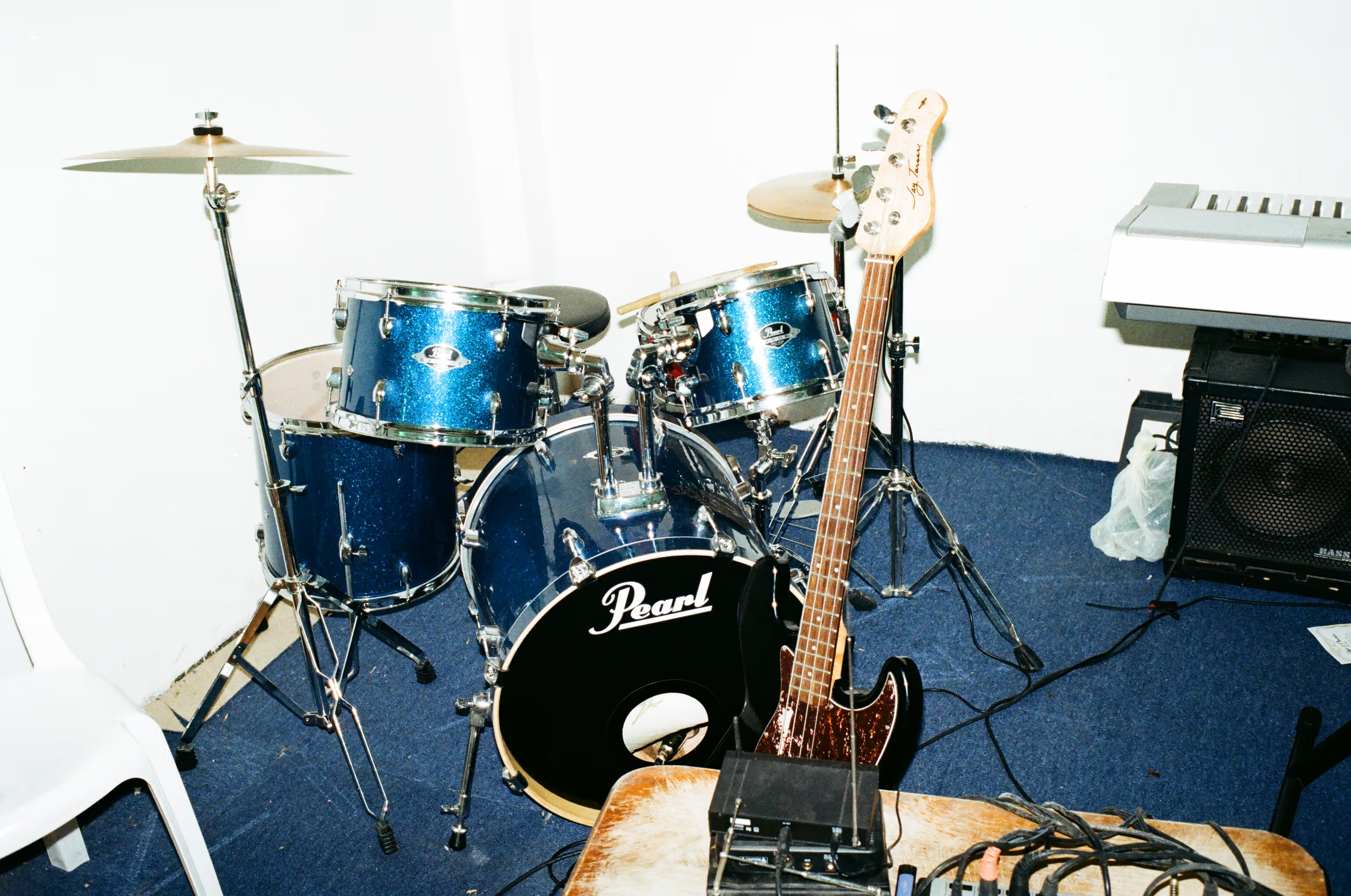
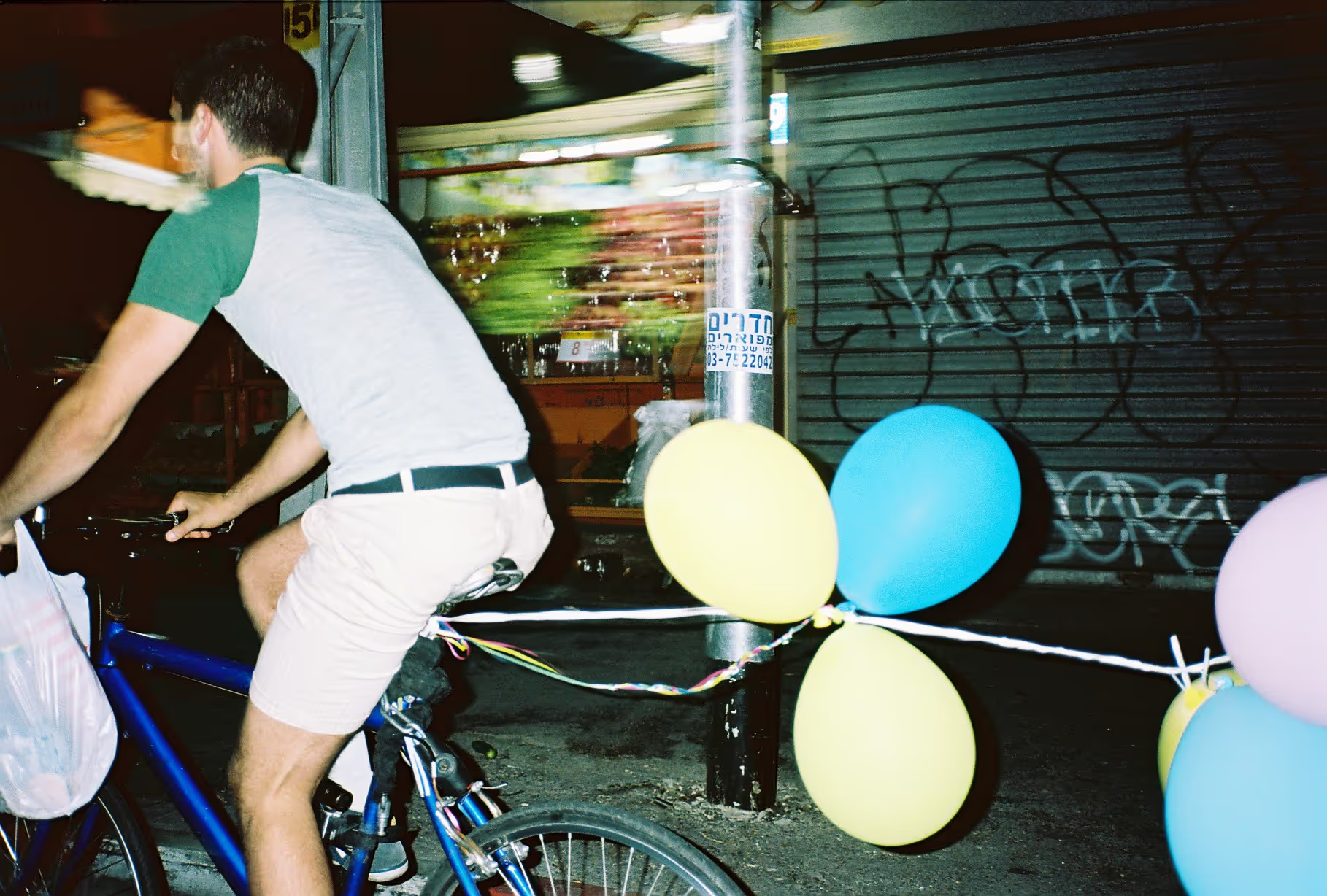
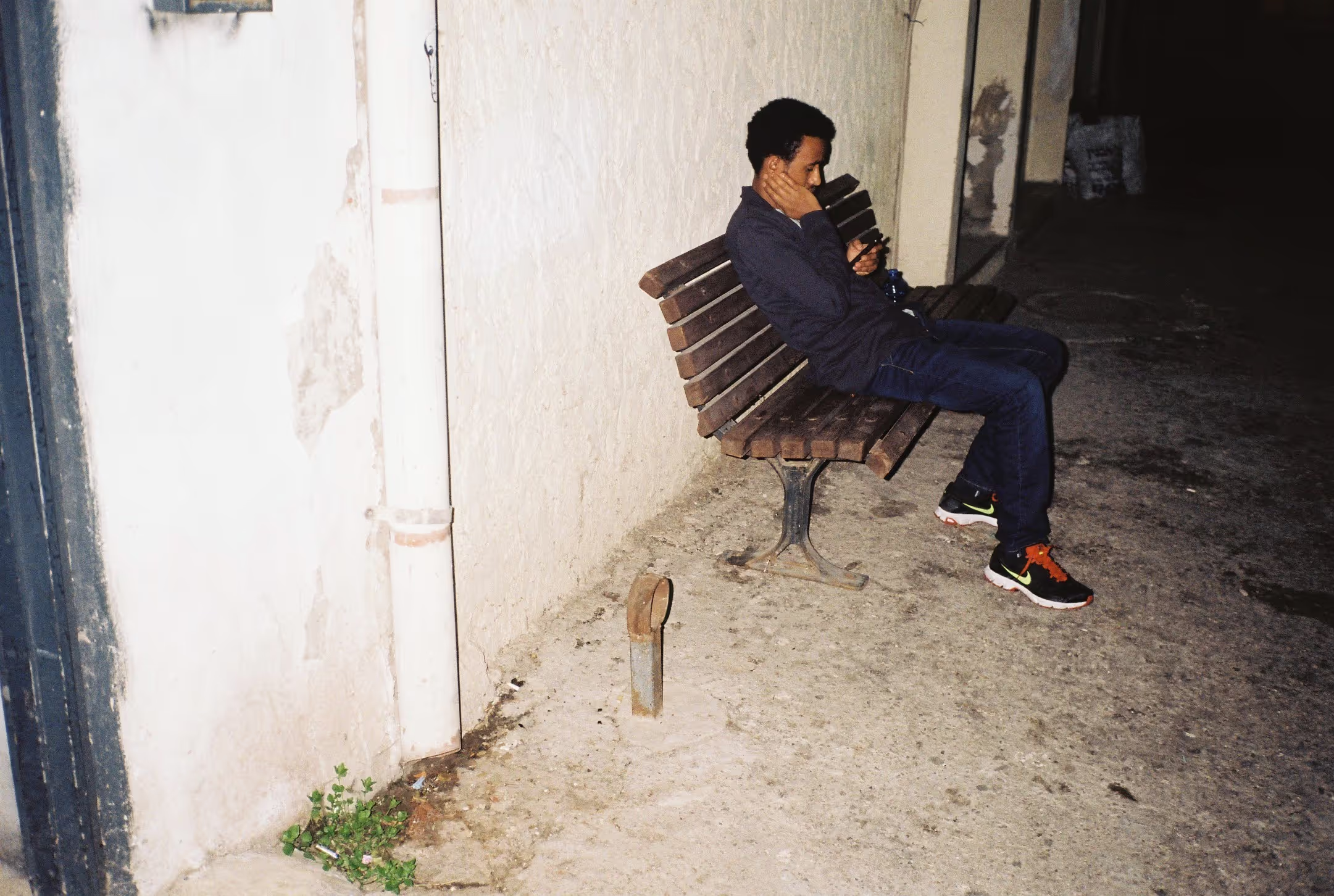
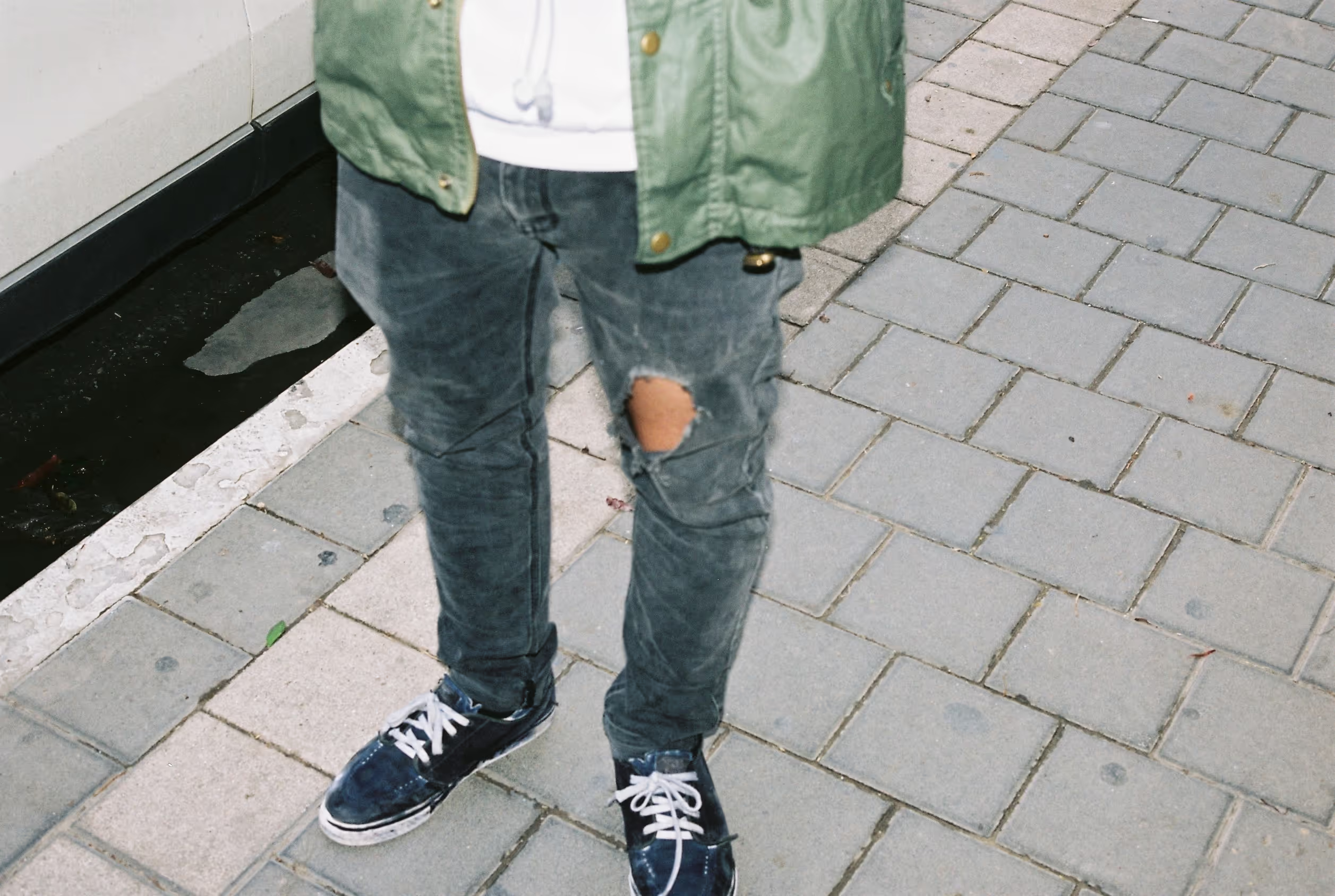
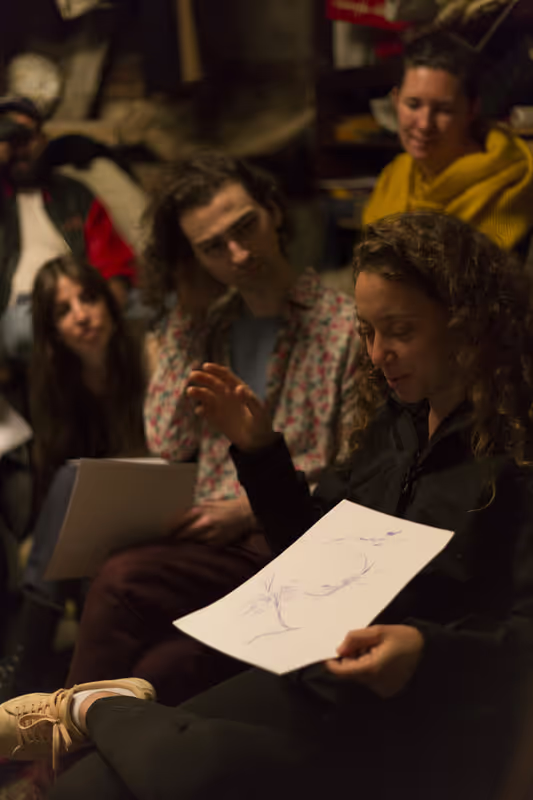
dreams are stories that we carry in our everyday life. the workshop offers practice in sharing dreams through telling, listening, and imagining as a way of expressing yourself and as a form of social gathering between fantasy and reality, the place you live, and the city.
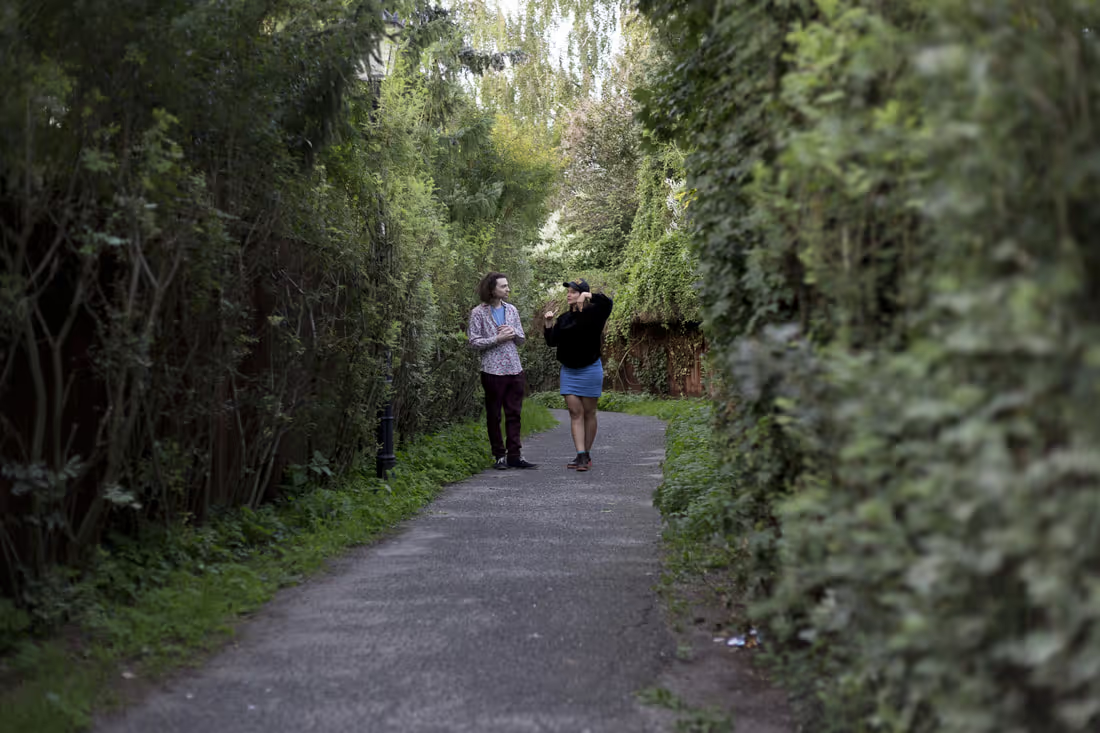
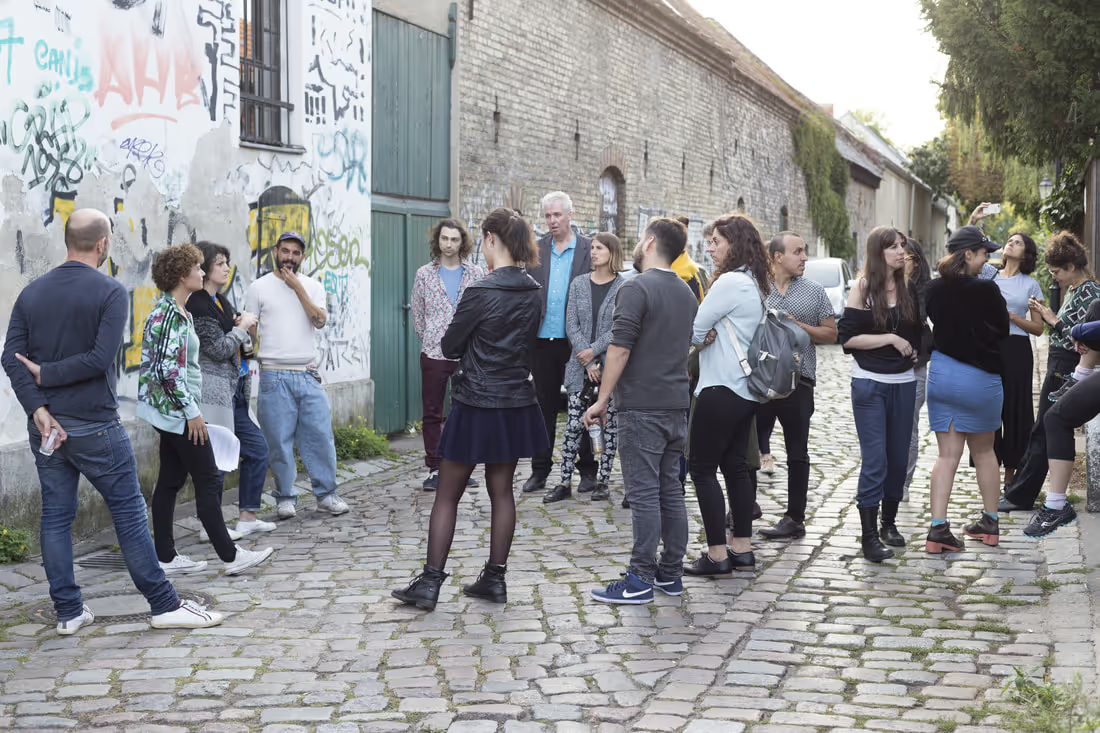
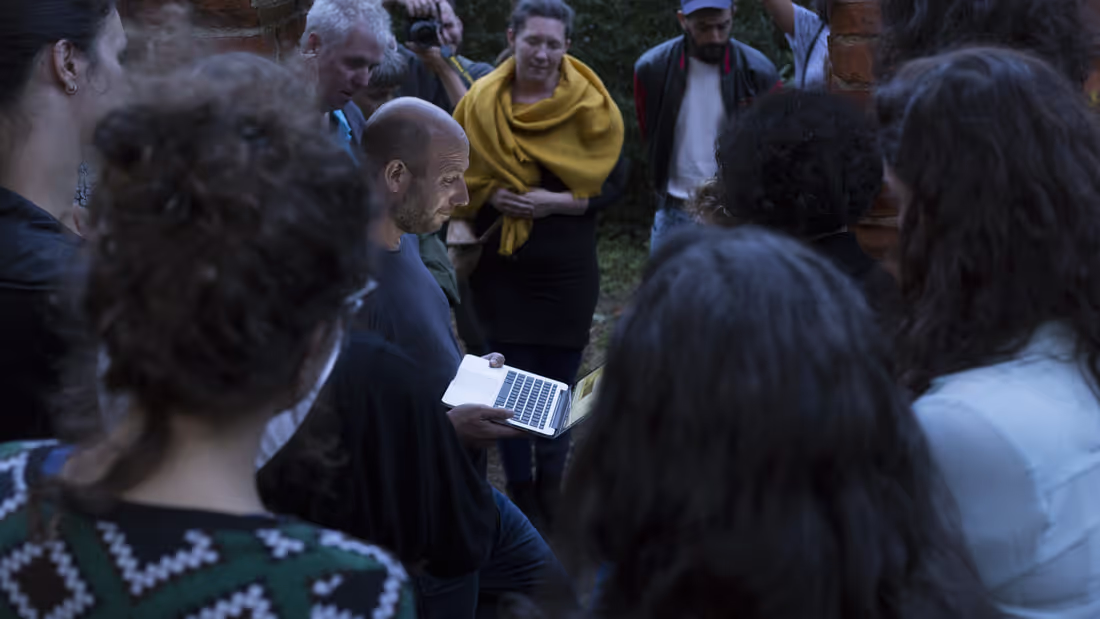
the workshop will be hosted at the studio of Club real e.V., a barn (originally a farmer’s storeroom) in neukölln/böhmisches dorf. The old bohemian district, with its small alleys, community gardens and historic architecture.
co curator paz ponce, produced in the frame of an exchange program by jindas (lod), hamekarer (tel aviv), agora (berlin), and b tour (berlin). presented in berlin as part of an invitation, experimenting with participation, august 2017, curated by yael sherill and iris pshedezki, photography joana dias
.avif)
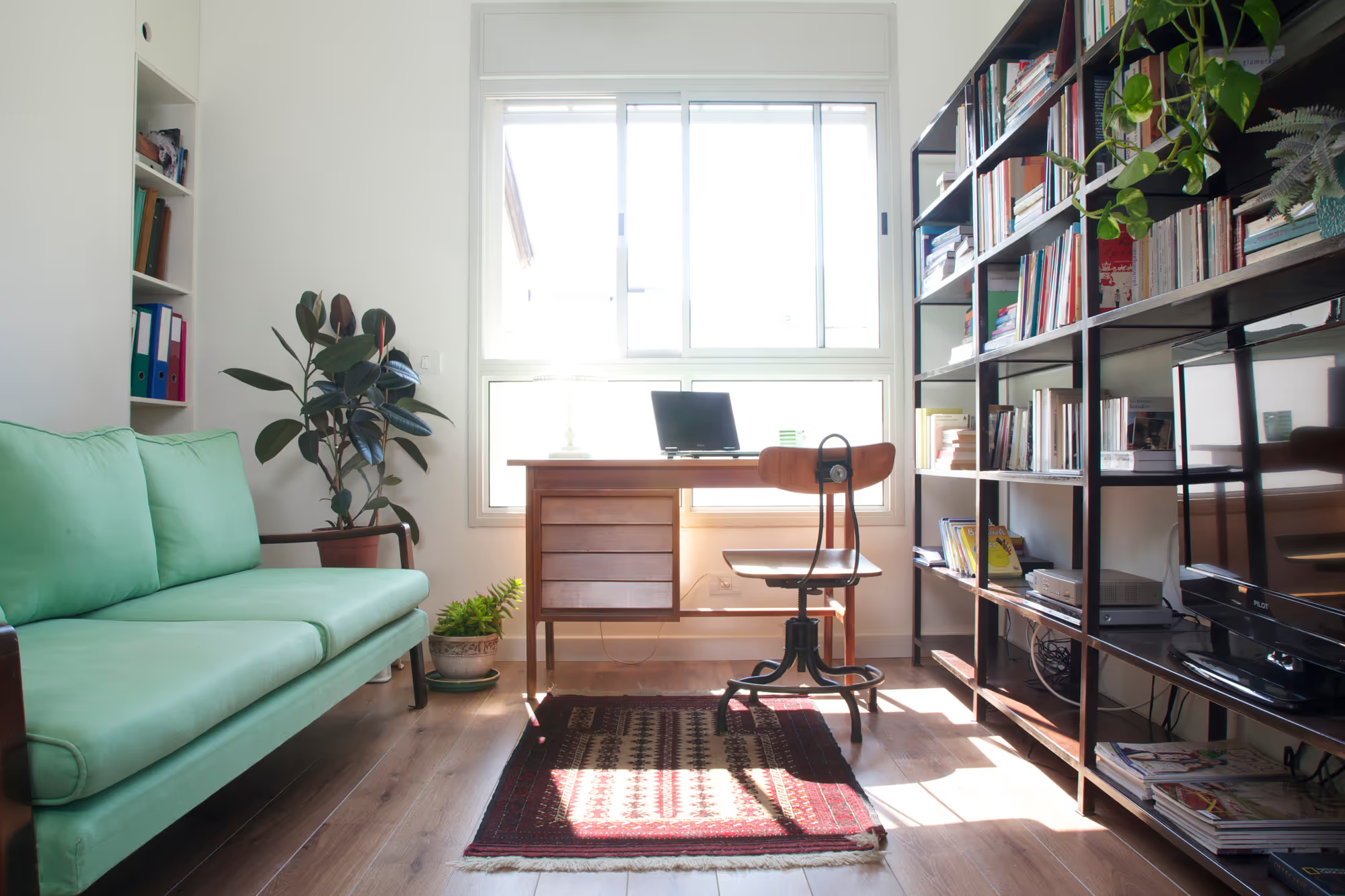
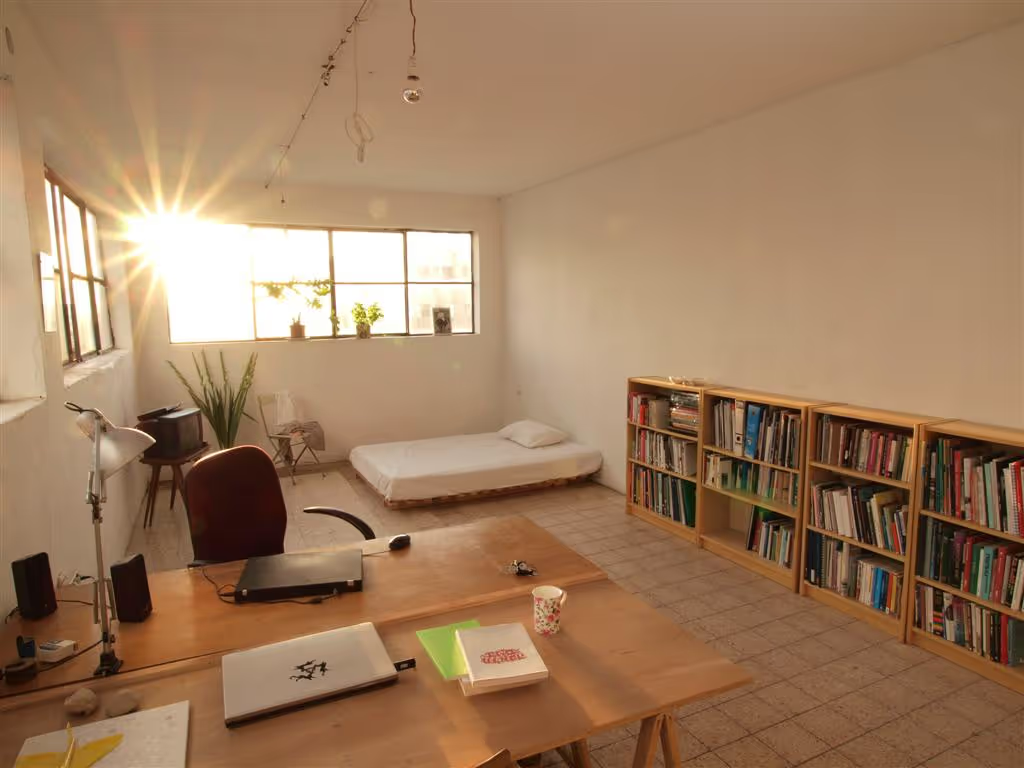
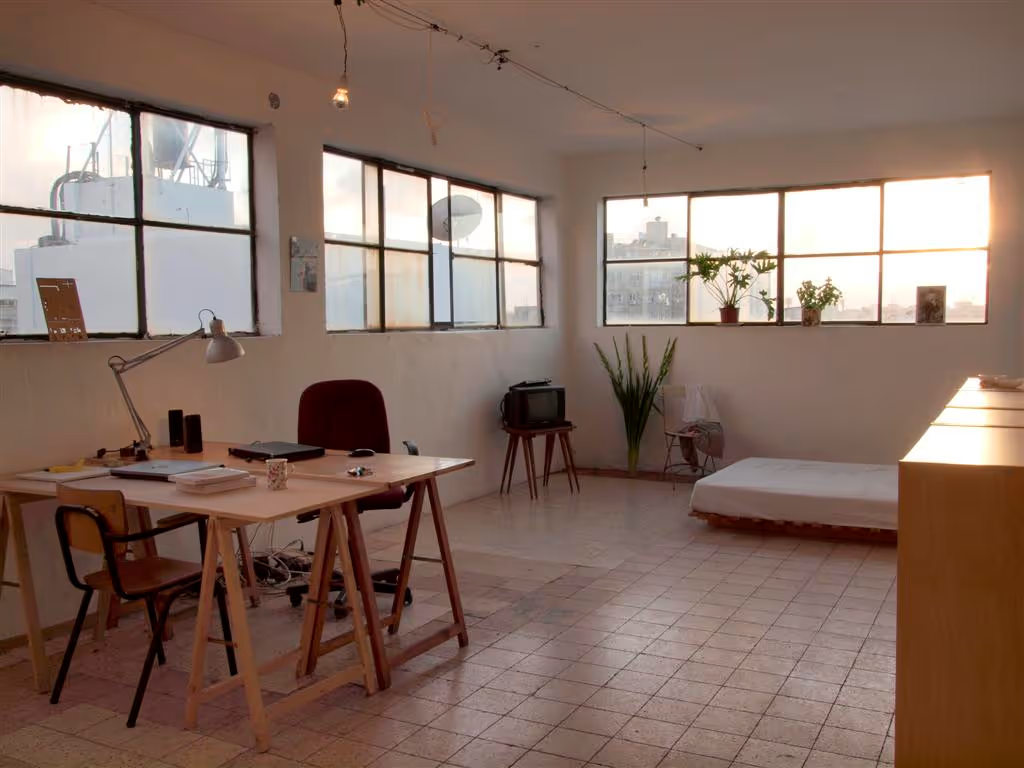
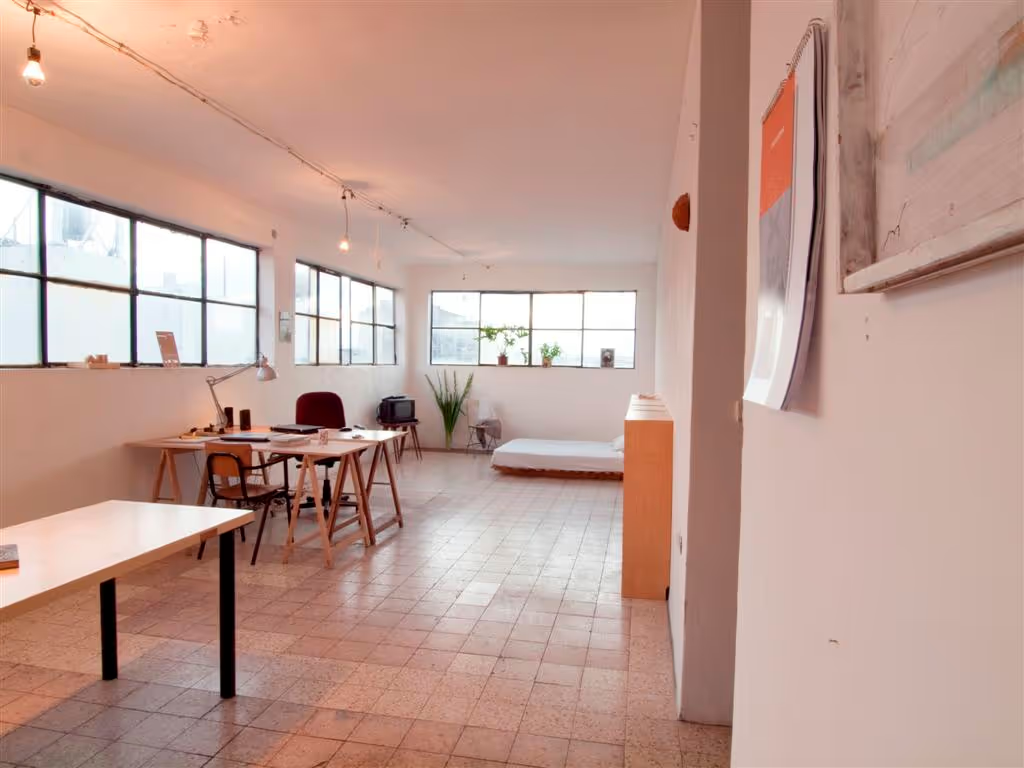
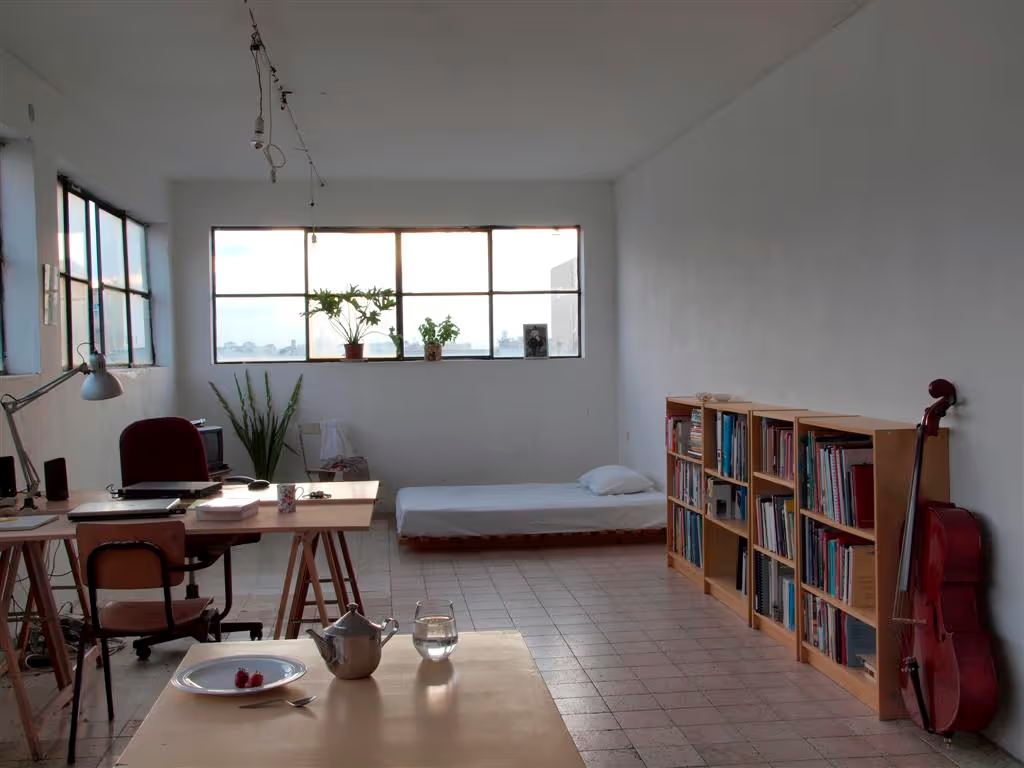
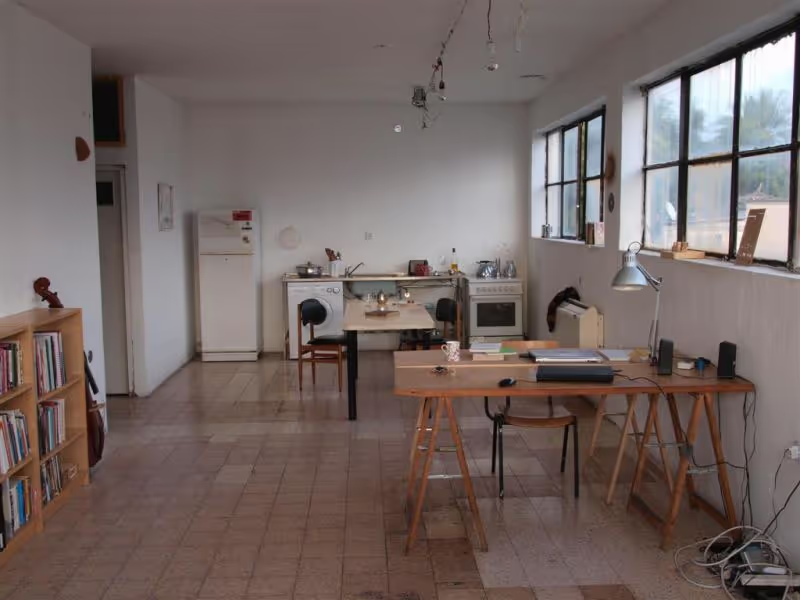
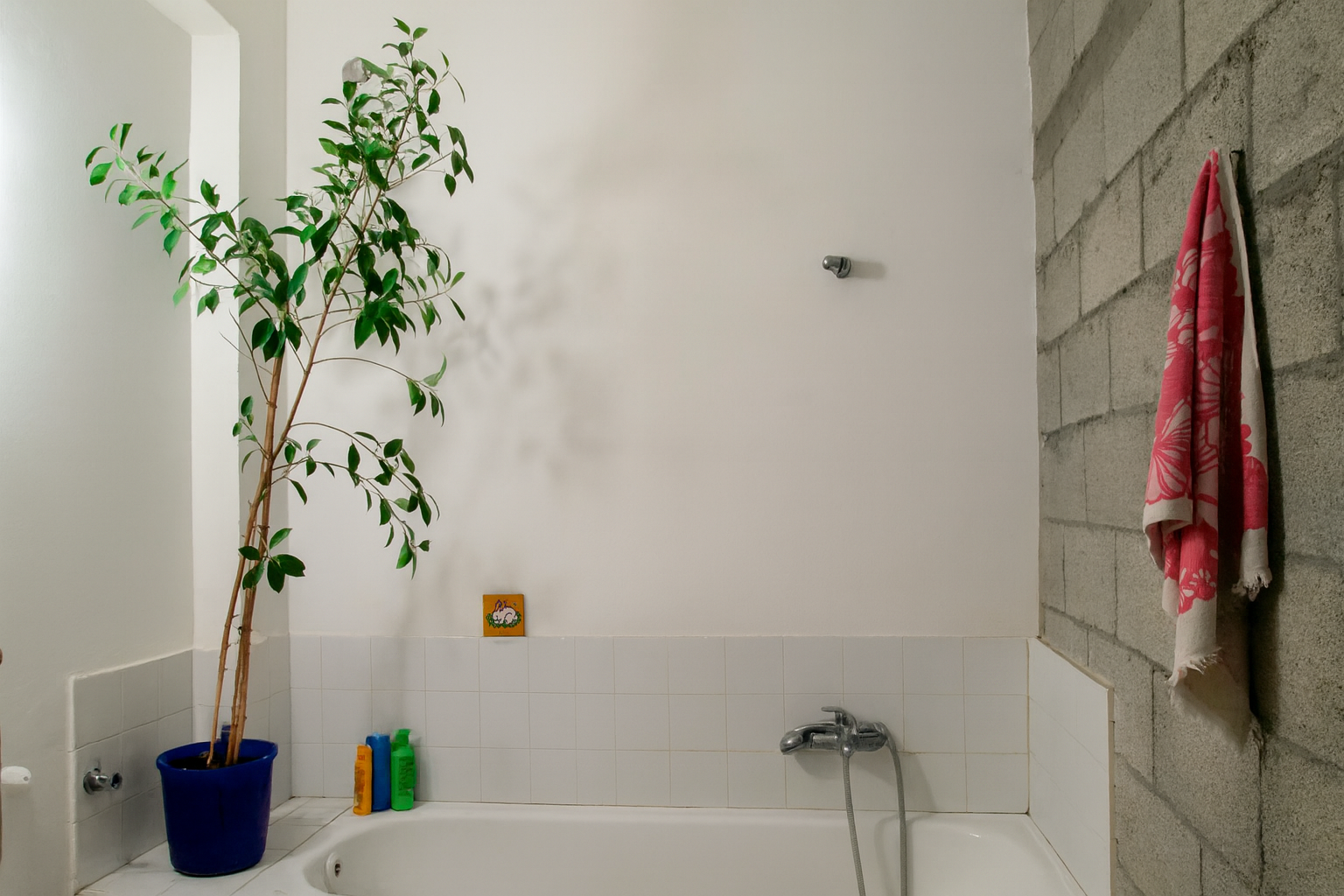
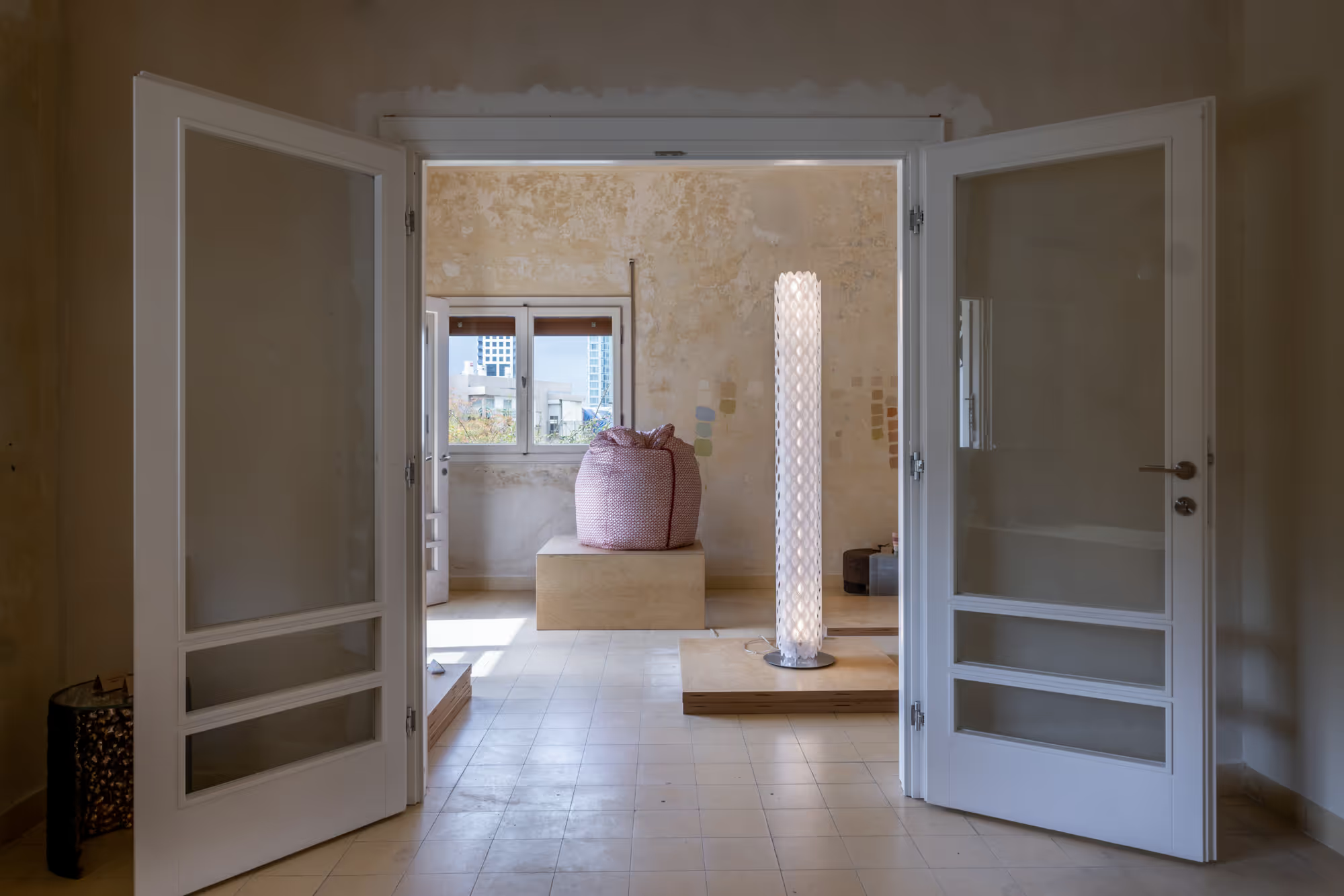
low-cost design in a sunlit loft
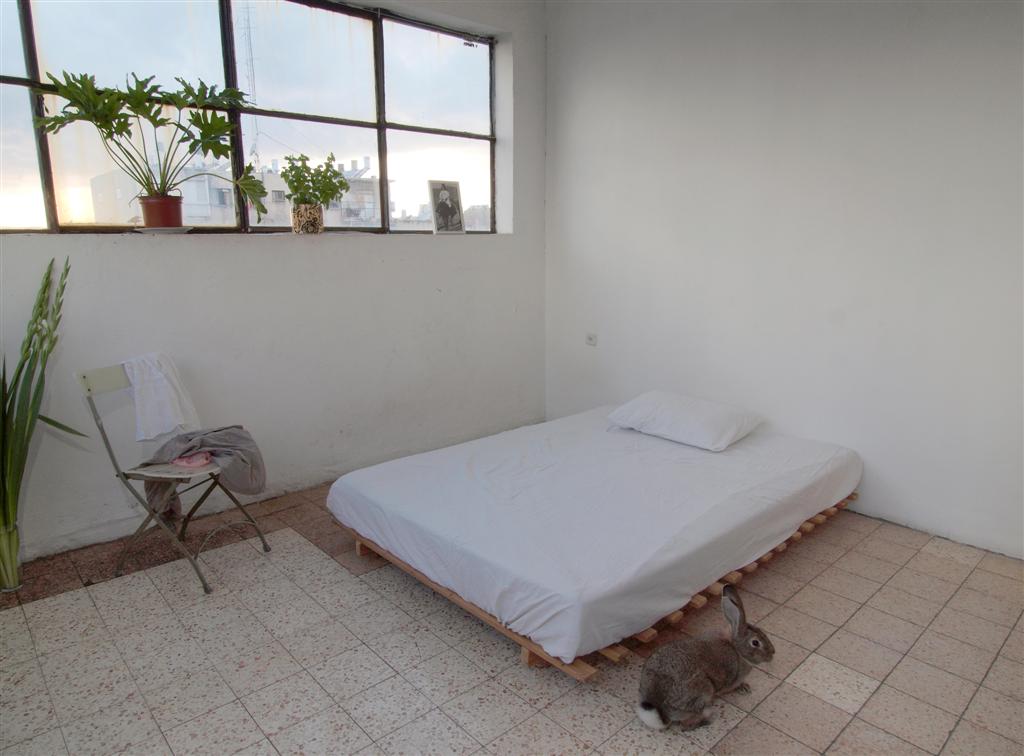
former diamond-polishing workshop designed for a couple and naoko the rabbit.
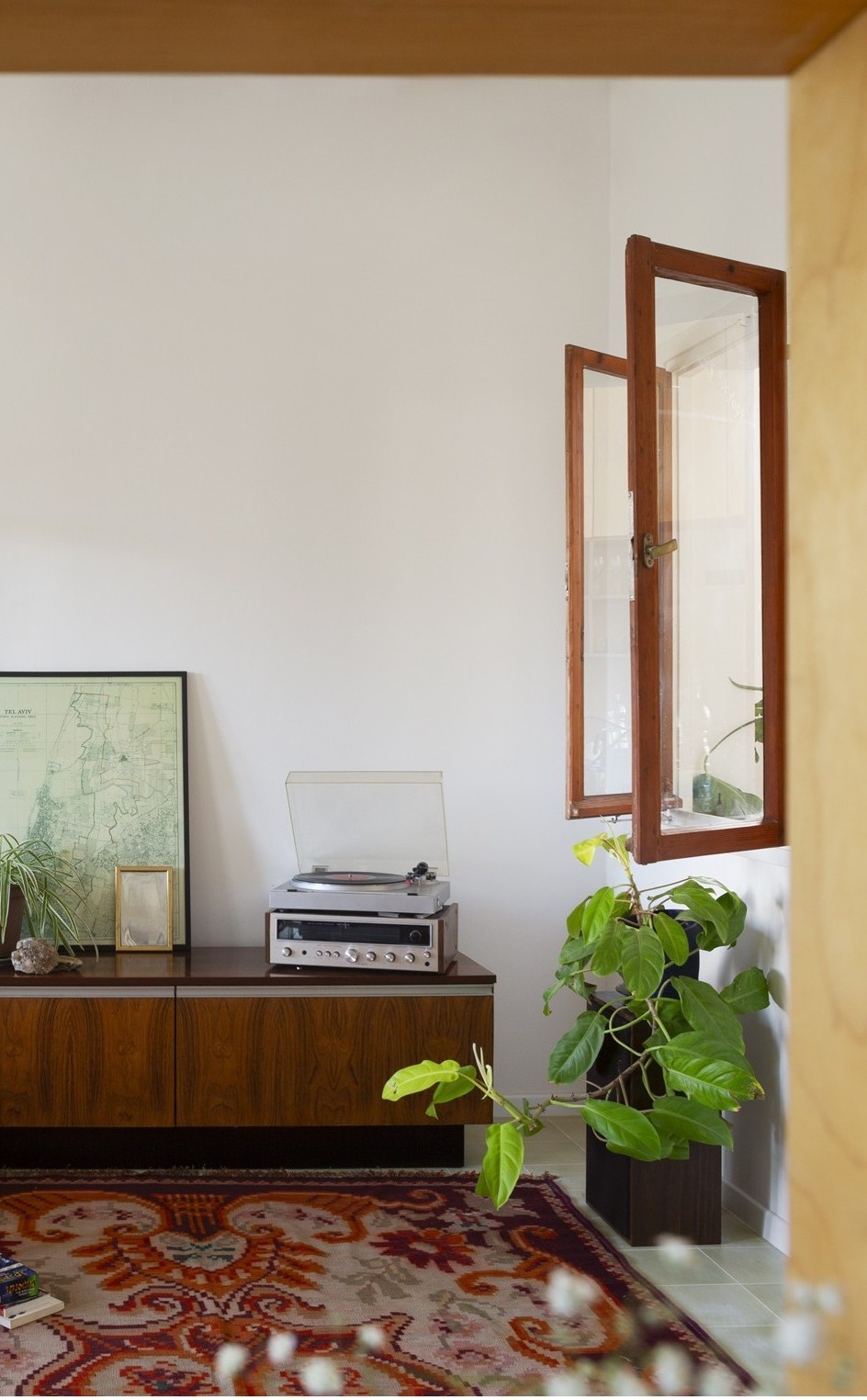
this 50 m² loft was planned and designed for shared living, shaped by the spatial quality of the place and the soft southern-western light. the design grew out of the constraints of a modest budget.
the original floor and windows were preserved, while custom low-cost lighting and furniture were created for the space: a table built from a dismantled door, a second-hand stainless-steel kitchen, ikea billy bookcases, a cable-stretched lighting system, and a minimal bathroom that saved the cost of plastering.
photography: dina koren
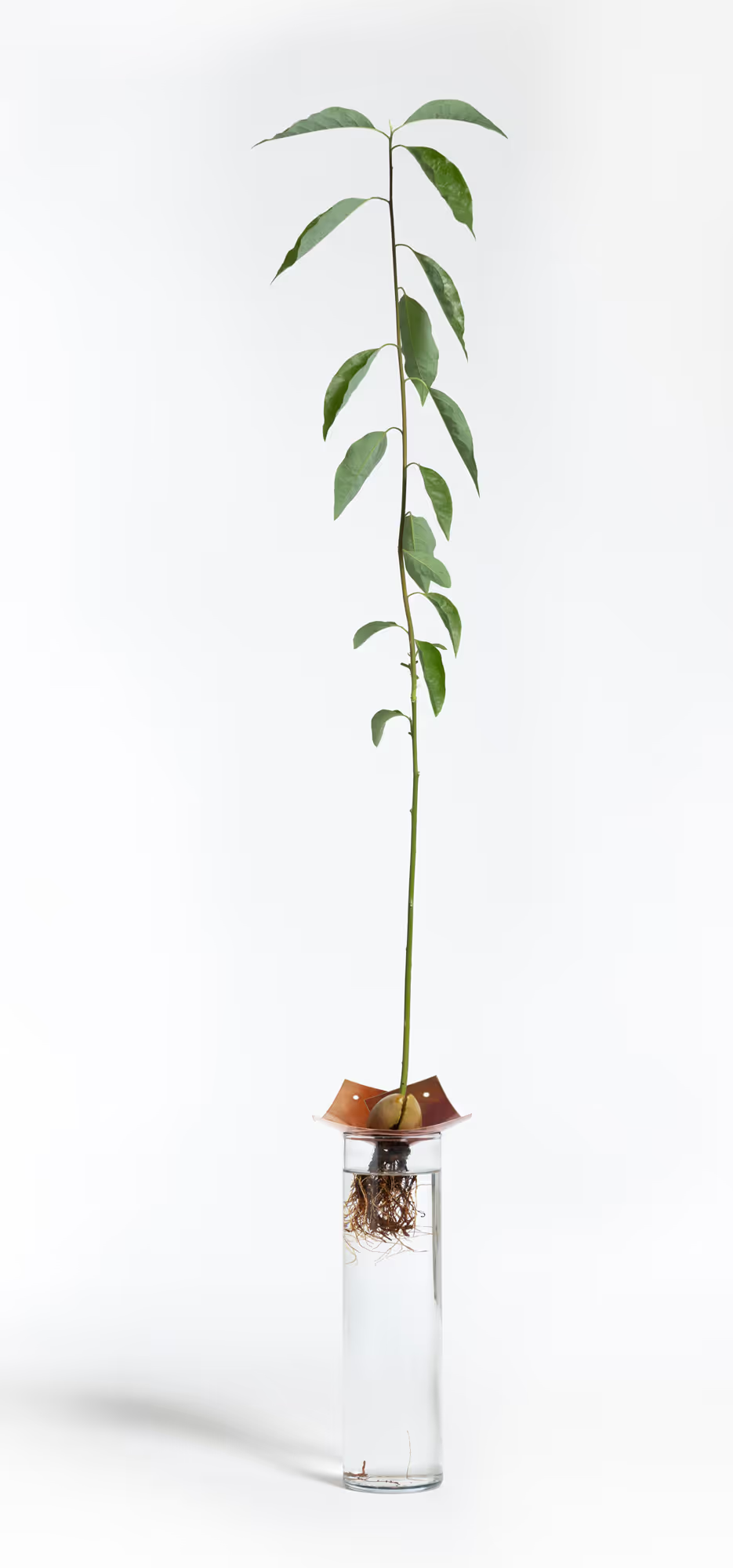
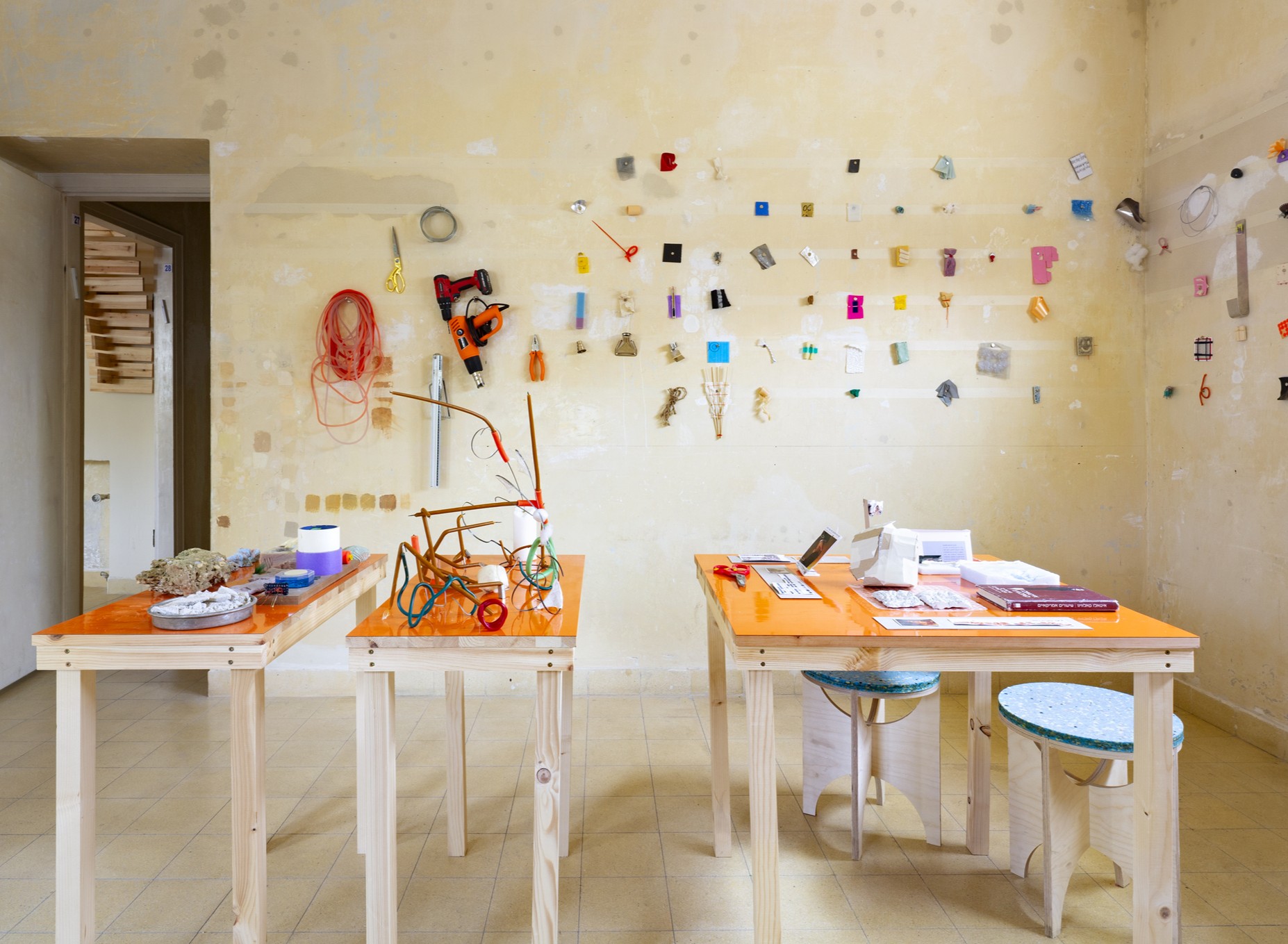
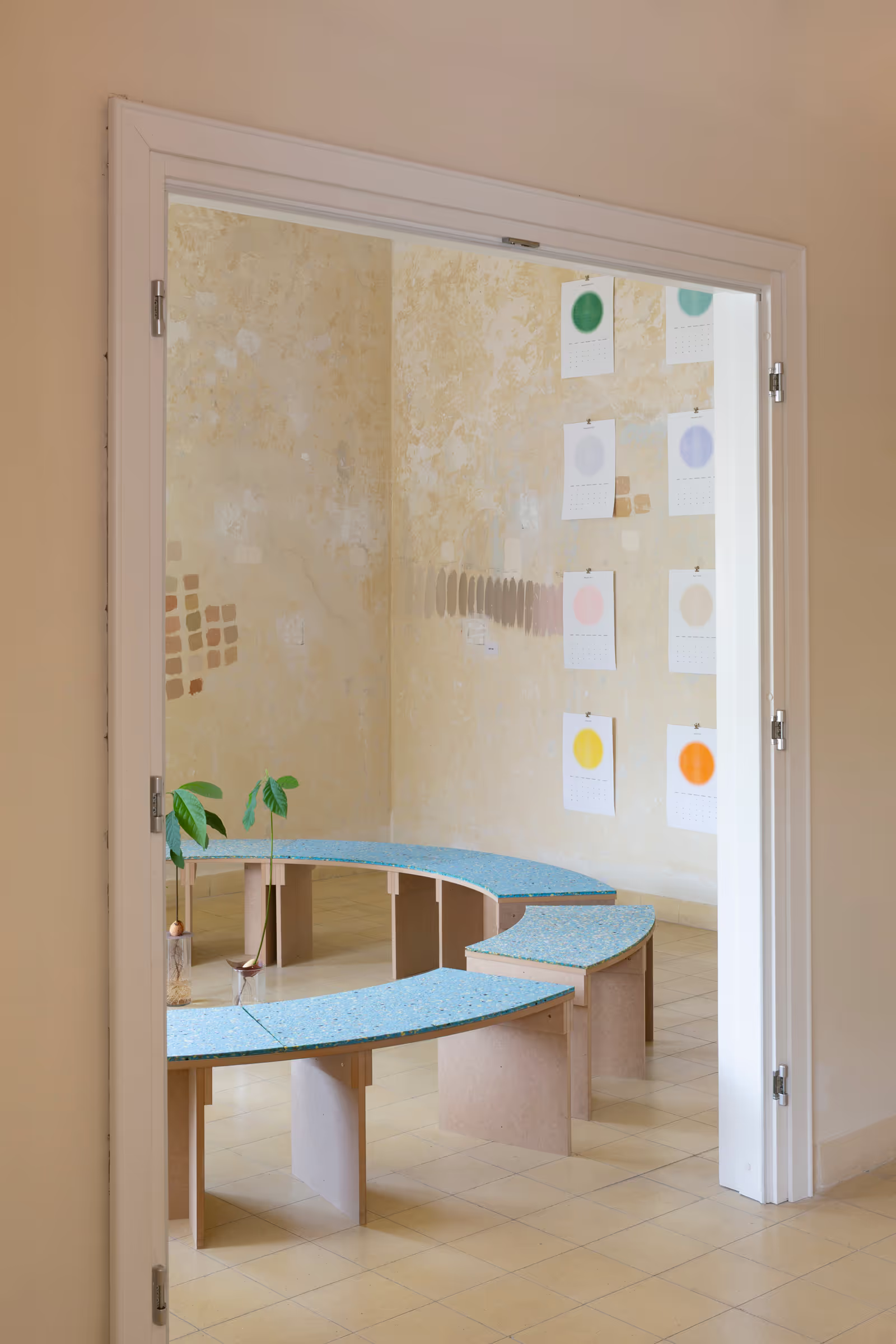
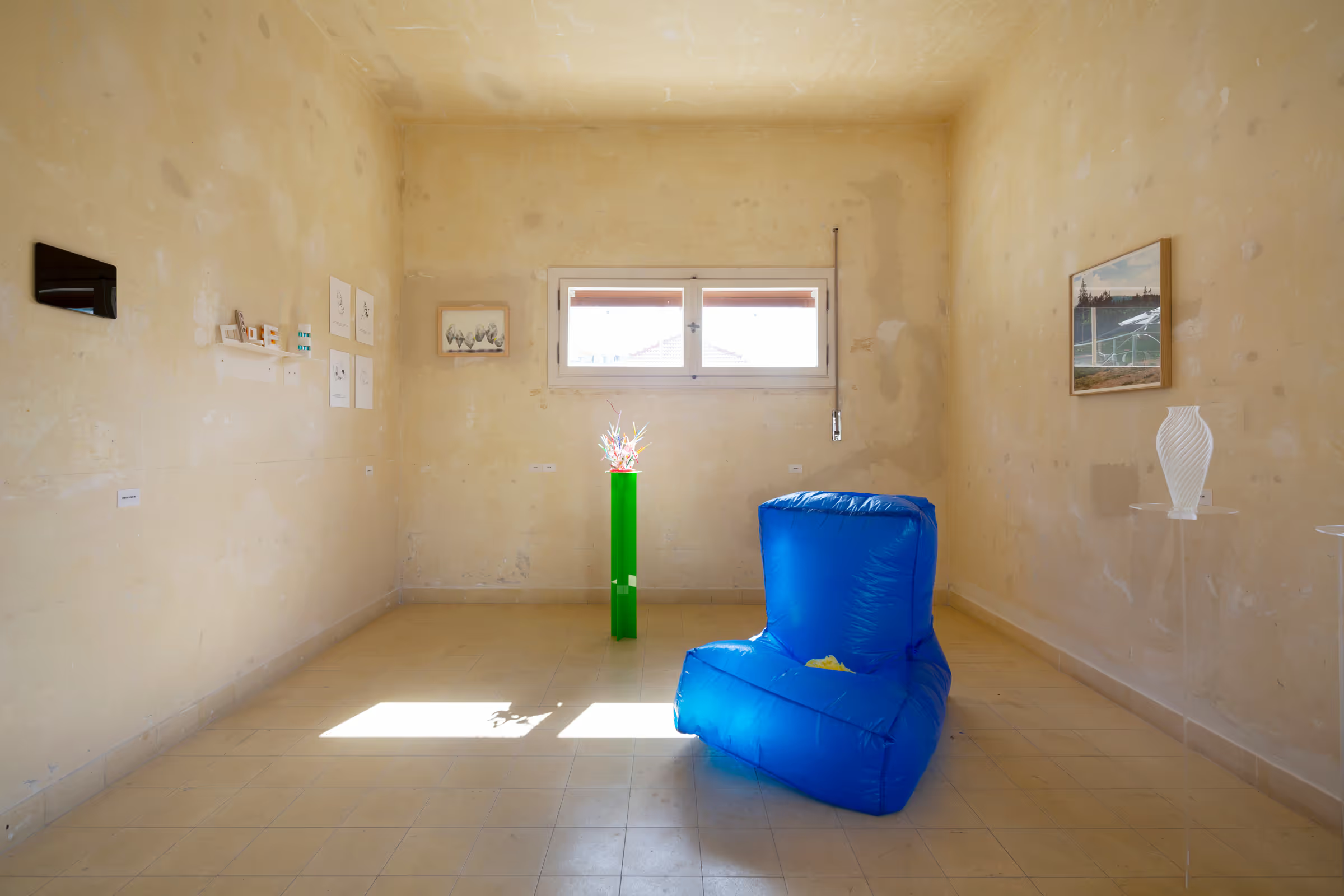
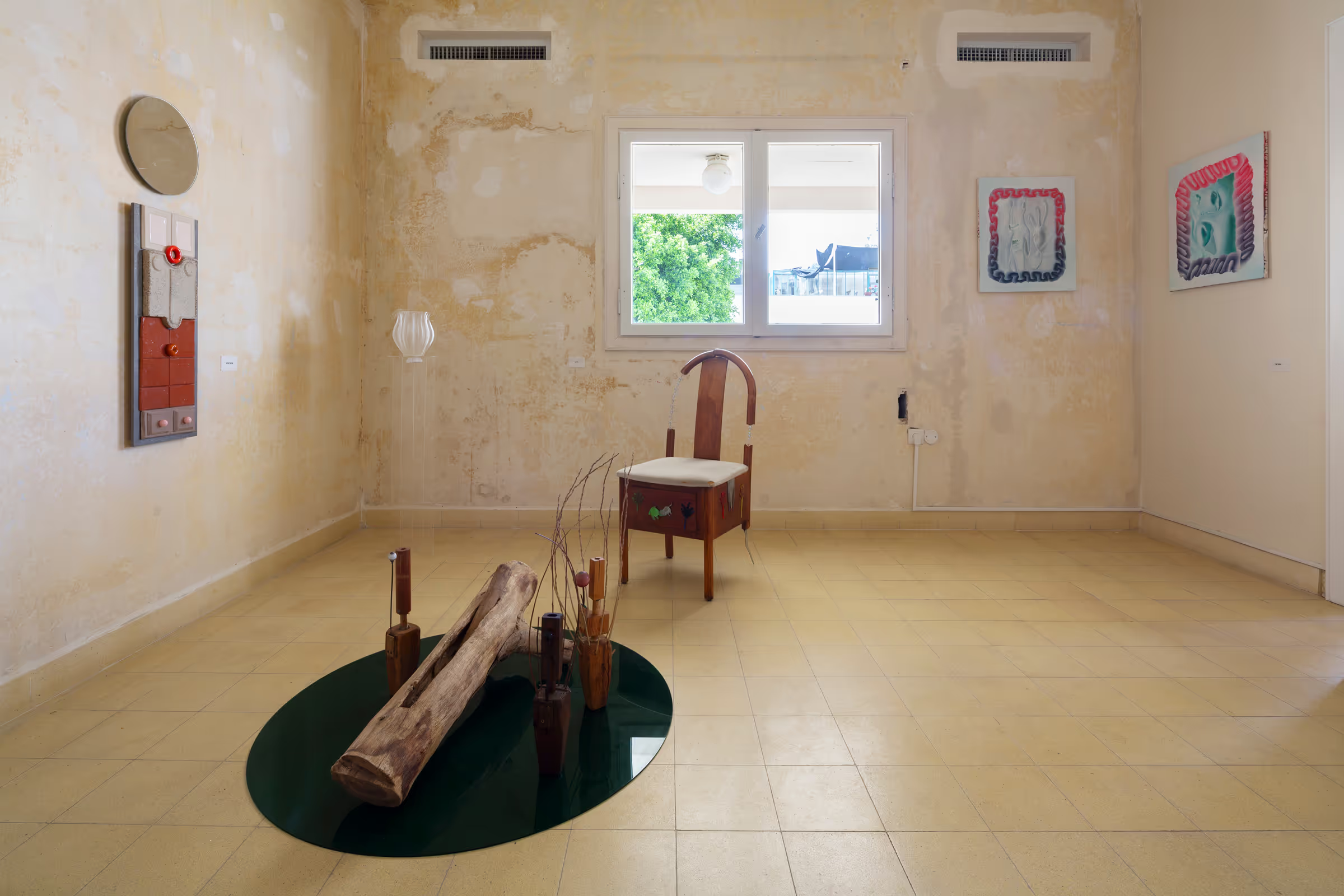
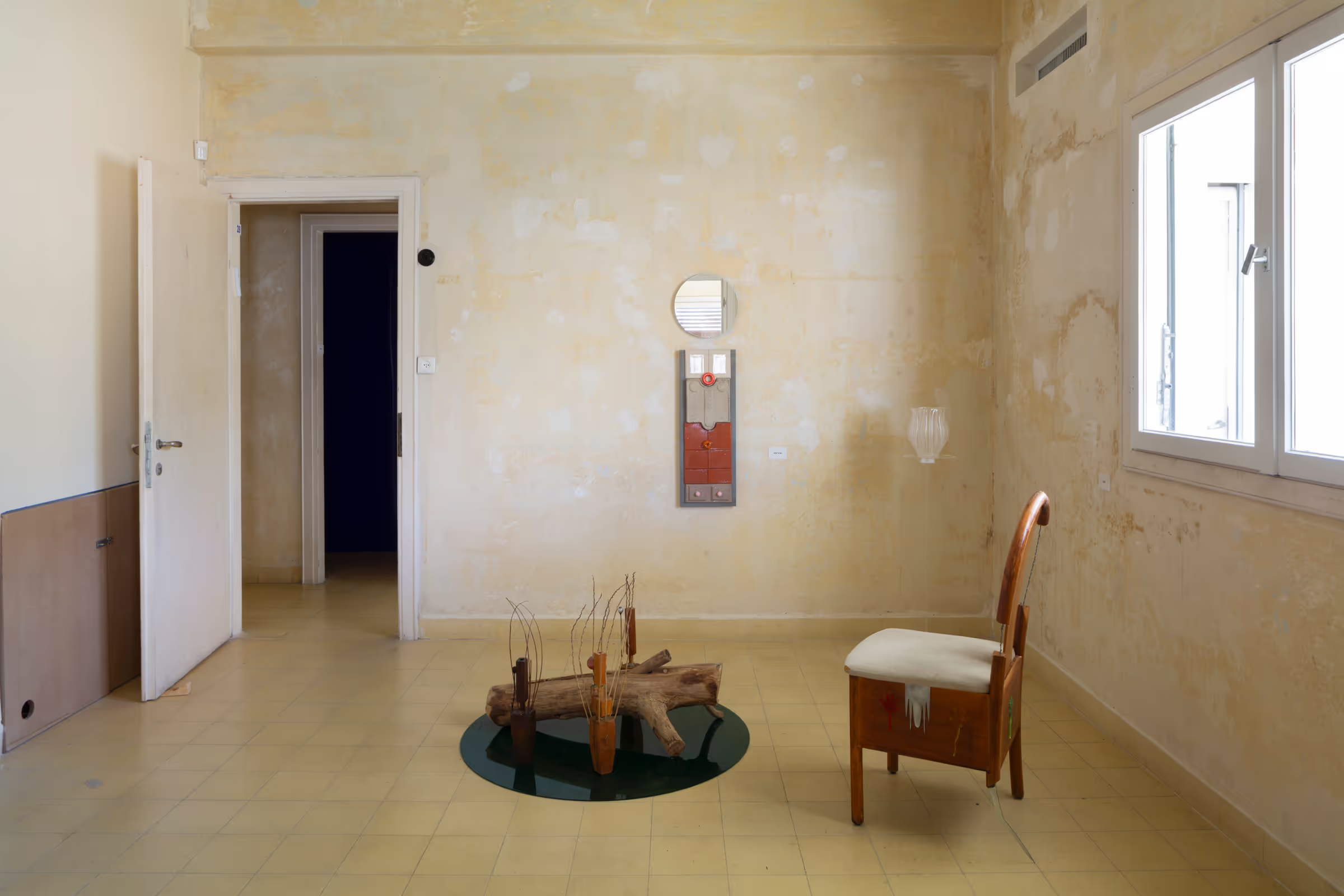
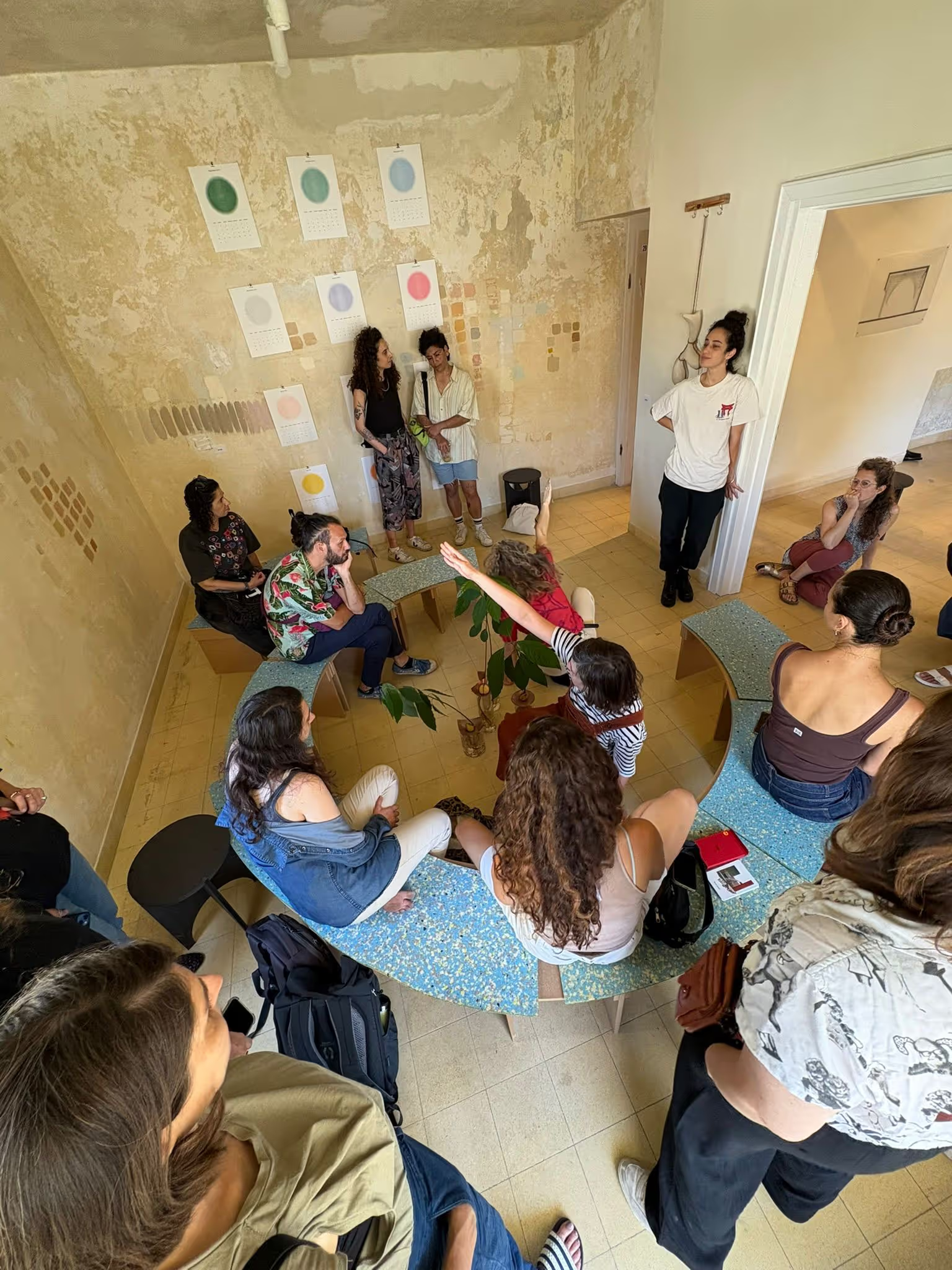
as the school of the city enters its eighth year of activity, two consecutive exhibitions open, presenting the school and its artistic pedagogical practice: the school of the city presents and everything we’ve learned so far. in search of an image for the school, one object stood in the room before our eyes: the avocado containing the entire world within it, growth, knowledge, air, and water. alongside artworks, conversations, gatherings, and actions, the avocado will grow, alongside all the knowledge we’ve gathered, all that we haven’t yet encountered, and the things we may never understand.
over the next five months, we will grow an avocado and observe it. we will observe the seed, its cracking open, its sprouting, the vessel in which it grows, and the water. the avocado represents art, represents creation, represents learning, daily processes happening at every moment, in every place and time, as long as we pay attention to our surroundings, to conditions, to details, and continue to experiment.
co curator maayan moses, exhibition participants rani aviv, nurit agozi weiner, tal alperstein, adam elazra, avi ben shoshan, roni binder, tzuf bar on, neta debelstein, michal david, karen dolev, or hertz, rotem volk, naomi wilner, yoav weinfeld, ron chen, haim hakimian, rani ifrach, shir cohen, yuval karuch, omri livni, shachaf levy, maayan moses, dana mor, juli maroz, yael saloma, aya tsaiger, merav kamel and halil balbin, maya kramer, roni raviv, michal ronald, irit sternberg, omer shach, noa simhayoff shachaf, guy sherf, tal tamara krunkop, aya zaiger
prologue
sleep is replaced by wakefulness, followed by breakfast, driving, work, and then shopping and supper, then sleeping, again, and waking up, again. every day repeats the previous day. the same actions, same habits, same places. this is everyday life that threatens to engulf us with its relentless routines. and we move away from it towards the extraordinary and the singular, towards the event, fantasizing about the unattainable. architecture has also moved away from everyday life and its routine. architecture plans the singular, the spectacle. today more than ever, it is inextricably entwined with the image and the fantastic.
the quotidian takes place between the apartment and the city, it takes place on the streets of the city, between the cogs of its huge underlying mechanisms, like economics and politics, as well as in the individual’s private space, in his home. architecture is the space of the quotidian and holds the possibility to build on the mundane to formulate the sphere of our life. but can we see the everyday as changing, identify the singular in something that repeats itself day after day? can architecture plan for everyday life?
architecture or fantasy
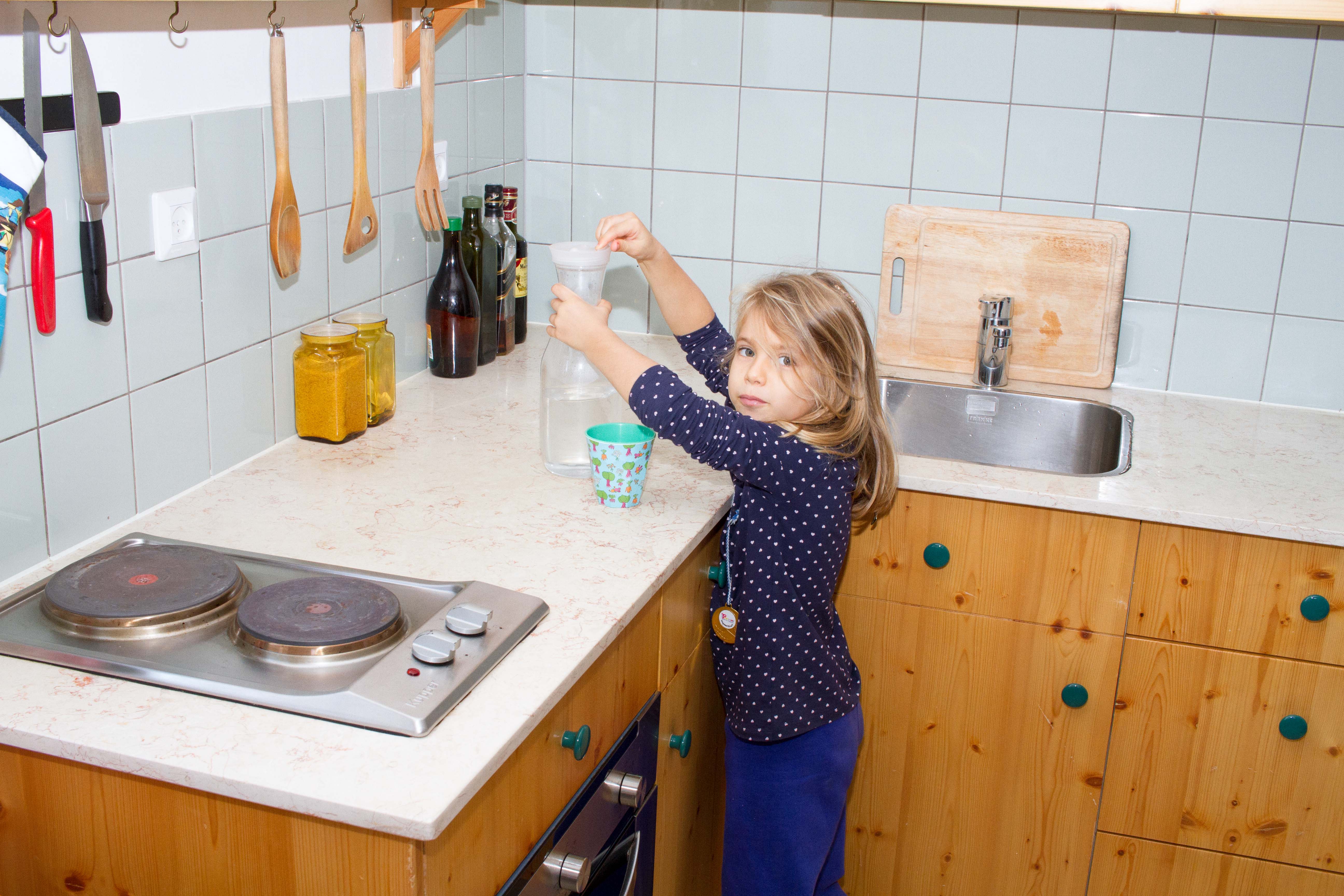
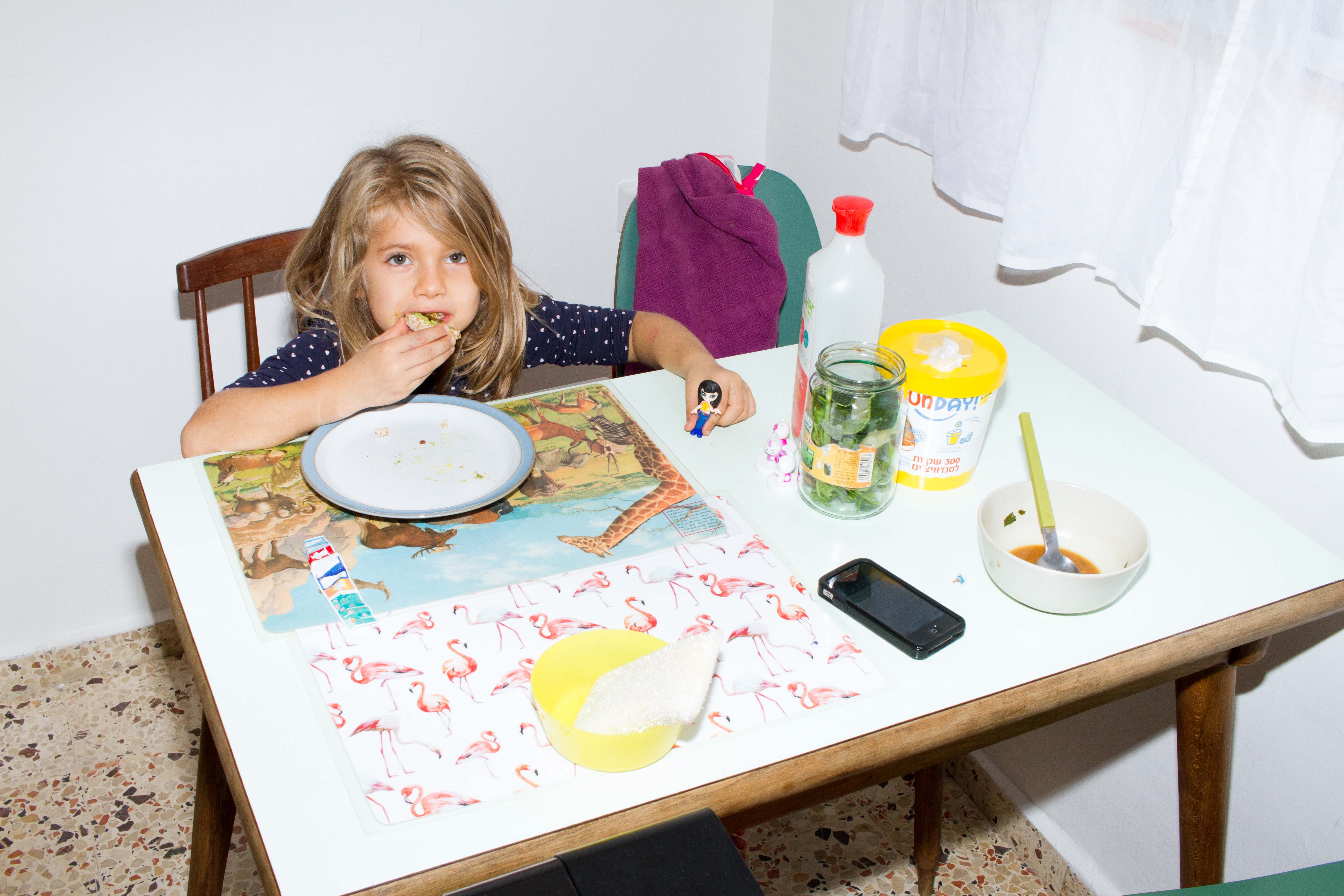
a girl eating breakfast. she is sitting at the table, in front of a plate, a bowl with salad leftovers, and a telephone. the frame also captures the floor, curtains, and some chairs, an everyday life situation. this is what a girl having breakfast at home looks like, this is what a kitchen looks like, and this is architecture. flicking through architecture magazines and looking for pictures of kitchens will reveal something different, the images are all very similar to one another. the kitchen in them is always gray, spacious, and empty with gleaming countertops and an island. it has stainless steel built in oven and fridge. it is made of pristine white veneer. the floor is made of a gray material. the kitchen is encased in a cold material and the entire photo exudes coldness. something else links these images, they are all photographed in the same manner, same cleanliness, same camera angles. mediated through perfect images.
where did the gap between reality and the architectural image, between life and fantasy, start? in real life, the girl is sitting in front of an empty plate on the dining table. in real life, the sink is full of dirty dishes. and in the architectural image, life is diverted and replaced with something else. we may call it “mainstream.” “consumerism” can also describe this phenomenon. guy debord used the term “the society of the spectacle.” all these wish to define the substitution of our everyday world with what lies beyond our grasp.
this shared fantasy, manifested in the architectural images, stands in opposite to the quotidian. ninety nine percent of what we actually do in life. and so, when we are talking about the link between architecture and everyday life, we must ask, can we plan for it? and if we can, then, what is its esthetics? since, if we plan for the everyday (reality) we will plan for our life in it. the answer may be found on the architect’s desk, in a practice removed from the street and from the house, where the room in which we are reading these lines was designed.
what is the planner’s position towards the real, and why does he plan images of a house rather than a house? and how is the cultural agenda that delineates how we live our life determined? the absence of architecture from the concrete examination of man’s immediate living environment engenders man’s alienation from the building and the street and the city. in almost every apartment, in almost every building whose spatial organization presumes to constitute a street and a city, we find the same cold and gray kitchen.
the aesthetics of everyday life
everyday life stands against (architectural) culture and its aesthetics. against the path paved by capitalism in which architecture follows, the fake grandeur embedded in our life, the spectacle, the dazzling, the singular, the desire to impress. against architecture and the architects of glamour. porcelain granite and glass shopping malls and prestigious skyscrapers, which are, despite their name, impervious to the sky, to light and to air.
architecture that serves compulsive consumerism by separating man from the world. against residential neighborhoods that are in fact commercial projects. materials whose main quality is luxury while the material is nothing but a product. as well as against inscrutable technology, the systems of the buildings that have taken over our life, from the central ac system to the “smart house”, against formalist uninspired architecture that produces nondescript buildings, which are not banal either. against the fact that not only architecture does not serve as the foundation from which society can formulate the quality of man’s environment, it also does not serve as a source of inspiration for him.
everyday life introduces questions surrounding the immense distance that stretches between architecture and the architectural practice to people and their daily routines. everyday life is not a theory or an ideology, but rather an invitation to identify our commonality in the particular. it is the forgotten story, it is the greater portion of our life. prosaic, it nevertheless holds the possibility to be poetic, moving, and have a passion for life. everyday life allows us to trace it through its iterations. it is familiar and common. everyday life is simplicity that envelops, in structural and sensory terms, the common human actions, eating, sleeping, watching television, reading. it has an appearance and it is made of a certain material.
looking at everyday life, you can sense actions, you can see actions, you can be nostalgic without fearing the irrelevance that comes with not rushing to catch up with progress. you can feel the motions of cutting vegetables for a salad, imagine the morning light streaming through the window, sitting by the dinner table, the way to work, the darkness of the stairway, the feeling of sitting down on the sofa, listening to the sound of the steps from the room to the kitchen. the aesthetics of everyday life emerges from the amalgamation of action and space. the everyday is the chaos of the actions of life, before they are arranged in an imaginary narrative along the continuing timeline. hence, the architecture of everyday life is not a spatial composition of functions, but rather what allows these actions to take place in it. everyday life has a material, whose presence can still be felt by the senses. the material of everyday life is a mixture of tactility and memories.
even if it does not belong to private memory, it is familiar because it belongs to a collective memory, meaning, to culture. today, we are surrounded by a new material that originates in the image. the new material is dramatically different, unchangeable, nonrenewable, it cannot be polished, painted, restored, only replaced. aluminum, porcelain granite, synthetic marble, ceramics, laminate flooring. these are the new materials, the materials of the “event.”
no one will ever have a sensory memory of porcelain granite. nothing in the world is made from porcelain granite. porcelain granite can look like anything, it comes in every color, any size, an image of material that we lay on the apartment’s walls and ceiling, a rigid photograph. architecture once started from the material and today it starts with “what the material looks like.”
the new material is a product. it has public relations and a marketing system, and is an expression of purchasing power. it is a component in the fantasy and therefor it has to be sold in showrooms and requires endless reaffirmation by its surroundings, carried out through the architectural image and the architectural simulation.
the new material fills the image square in the design. the image does not concern the depiction of space, but rather presents the material on its various surfaces, floor ceiling walls. being a fantasy, design never lets go of the façades of the space.
it offers no crack through which life can be glimpsed. the image produces an architectural culture and is the aim of the planning and design. it is an easy to digest image that draws on the same camera angles, the same familiar perspectives. thus, it can be grasped with one quick glance, leaving no room for the imagination. it turns the photographed into consumer goods.
the architectural photo is preceded by the hyperrealist architectural simulation. the image of the simulation is also perfect. the material in it is perfect, flawless. its application is seamless, everything fits perfectly. the material is stretched to the size of the image to produce a “clean” image. like the image, the simulation is also based on the perfect camera angle, precise sheen, pleasant reflection illuminated by soft, illogical, light. synthetic realism of a theoretical material. from the simulation, to the image, to a catalogue of thousands of identical images, which are the visual aesthetic foundation of how things are reshaped time and again. architecture plans from the image and for the image.
the architect and everyday life
the architect is the executor of worldviews that he shapes into styles. architects move from theory to theory, from one worldview to the next. perfecting the architectural model whose evolution is interrupted prematurely, to be replaced by the next model, by a different ideology. “what does it look like?” has come to replace “how does it feel?” and architecture does not offer a dialogue on aesthetics in its broader sense, formulated from a multisensory perception.
the architect plans buildings in the world, while he looks at it through his office’s window. planning time in which theory takes shape. in his book about everyday life, michel de certeau describes the systems in which we live. the formal, overriding system, called “strategy”, and the system of the action that takes place in its cracks, “tactic.” while strategy regulates the power relations of everyday life, tactics allow us to exist in it in practice.
it is the moment in which can live in the cracks of formal everyday life. planning is the strategy, it is the time when everyday life is expropriated from action to thought, handed from life in a given space to the planners of that space. while strategy has no tact, “the act of listening to and observing the environment.” an act that forces you to choose, to be in everyday life or to plan for it.
to plan means to want to know everything before construction commences, while the possible expression of everyday life is tactic, it is the possibility to embody in the building the surprising, the unknown, the transformation of the space over time, the unplanned. everyday life exists in the cracks, between the house and the building and between the building and the city, between the thing and the image of the thing. perhaps, this is also where we could find the possibility to have architecture that addresses the simple and the humble, the singular in the recurring thing that repeats itself day after day, everyday life.
epilogue
it’s not enough to open the window
to see the fields and the river.
it’s also not enough to not be blind
to see the trees and the flowers.
it’s also necessary to not have any philosophy at all.
with philosophy there are no trees, there are only ideas.
there’s only each of us, like a wine cellar.
there’s only a shut window and the world outside it,
and a dream of what you could see if you opened the window,
which is never what you see when you open the window.
fernando pessoa
published in the exhibition catalog, designed by racheli kinrot, with texts by prof. eran dorfman and architects eran tamir, dana prives, and roy fabian. works by naama roth. photography, david havrony
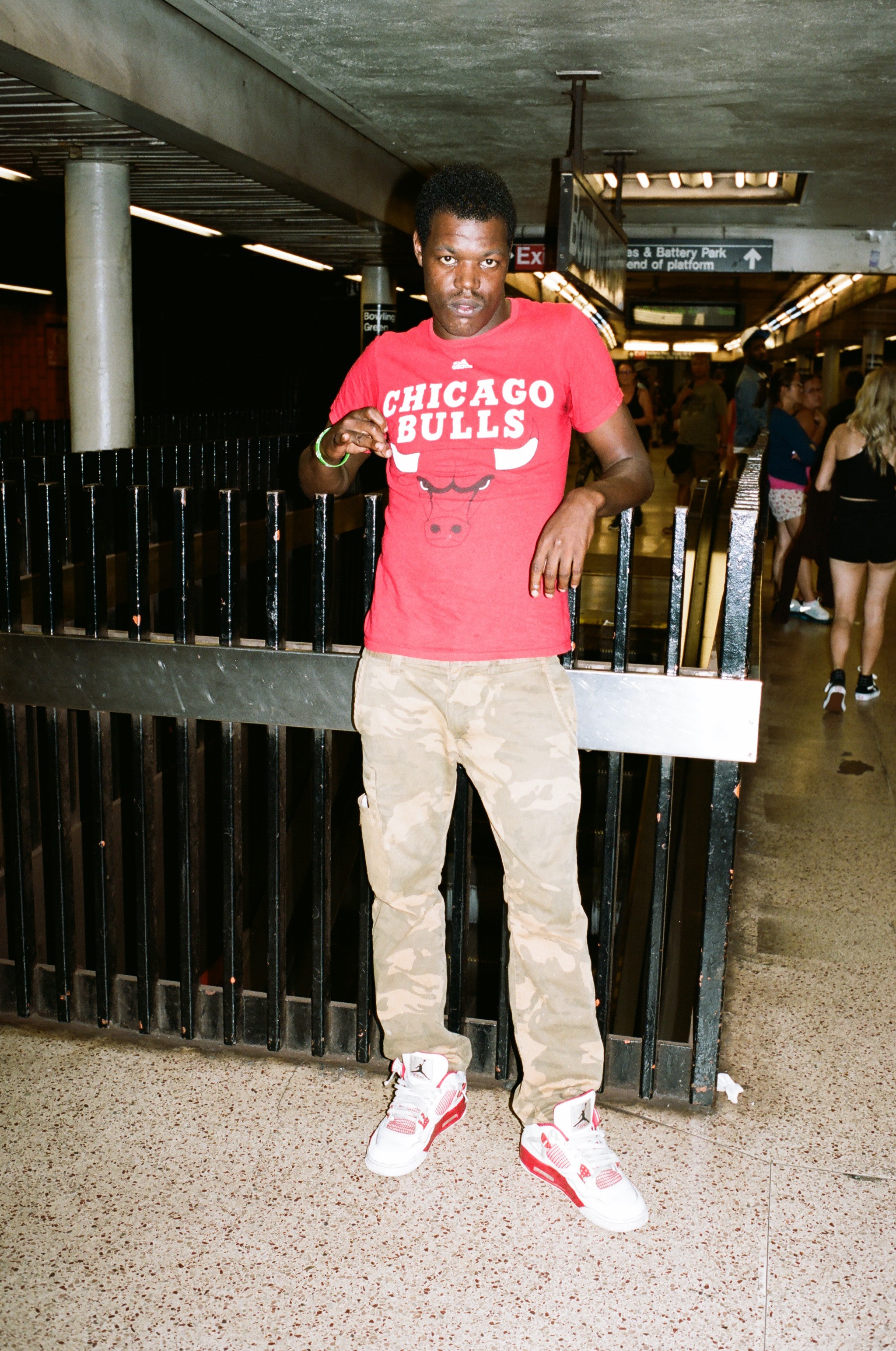
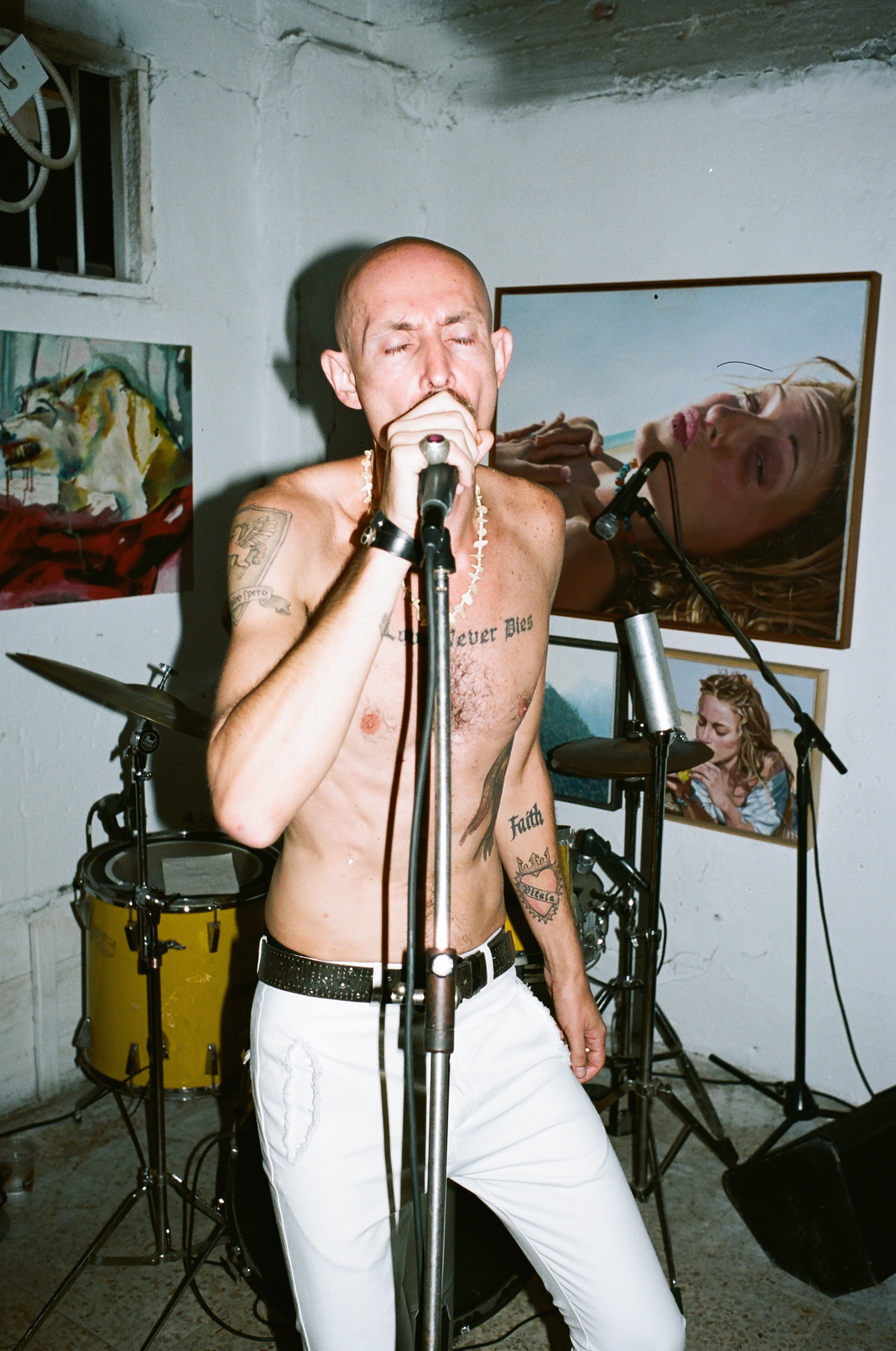
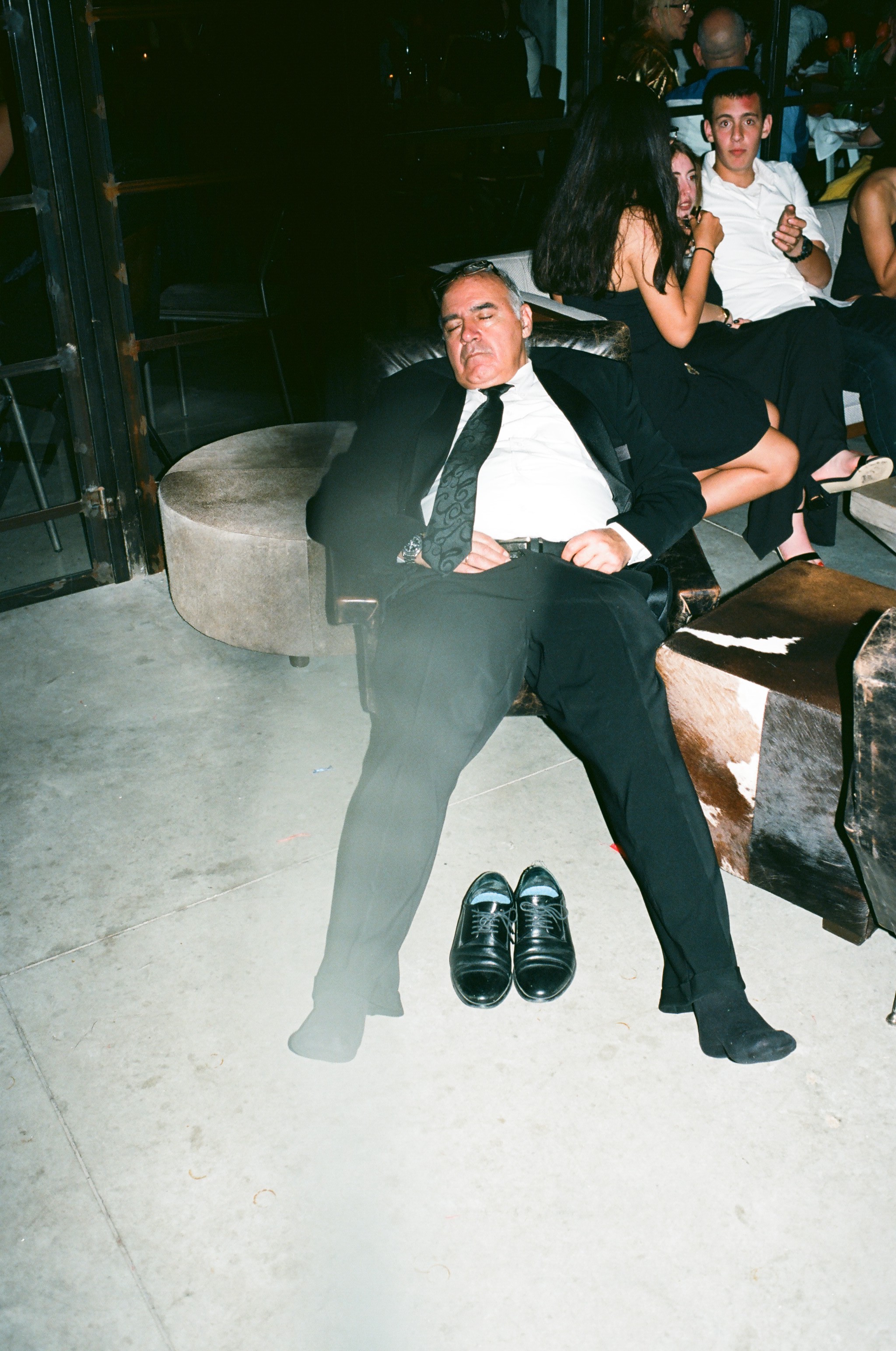
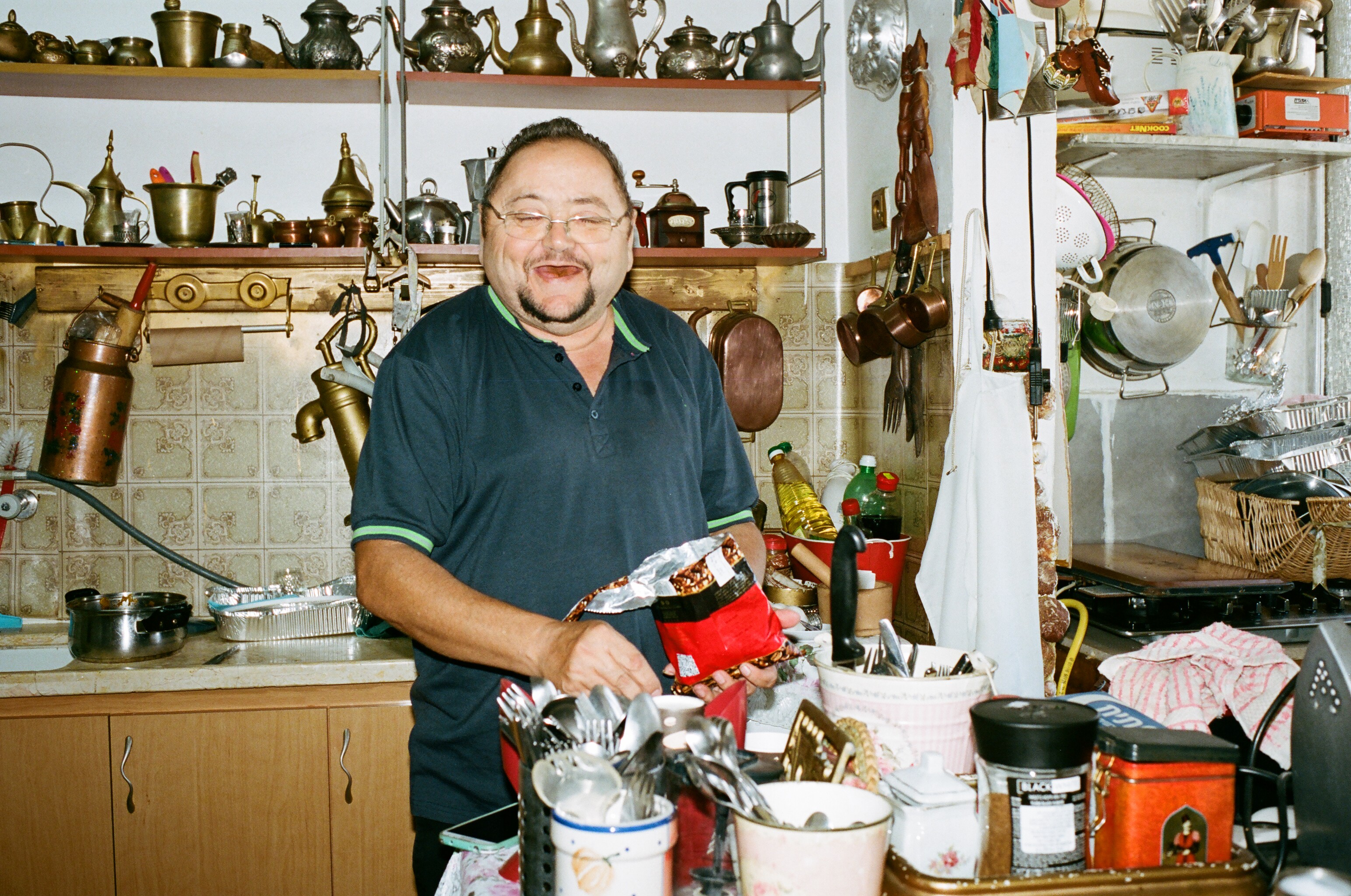
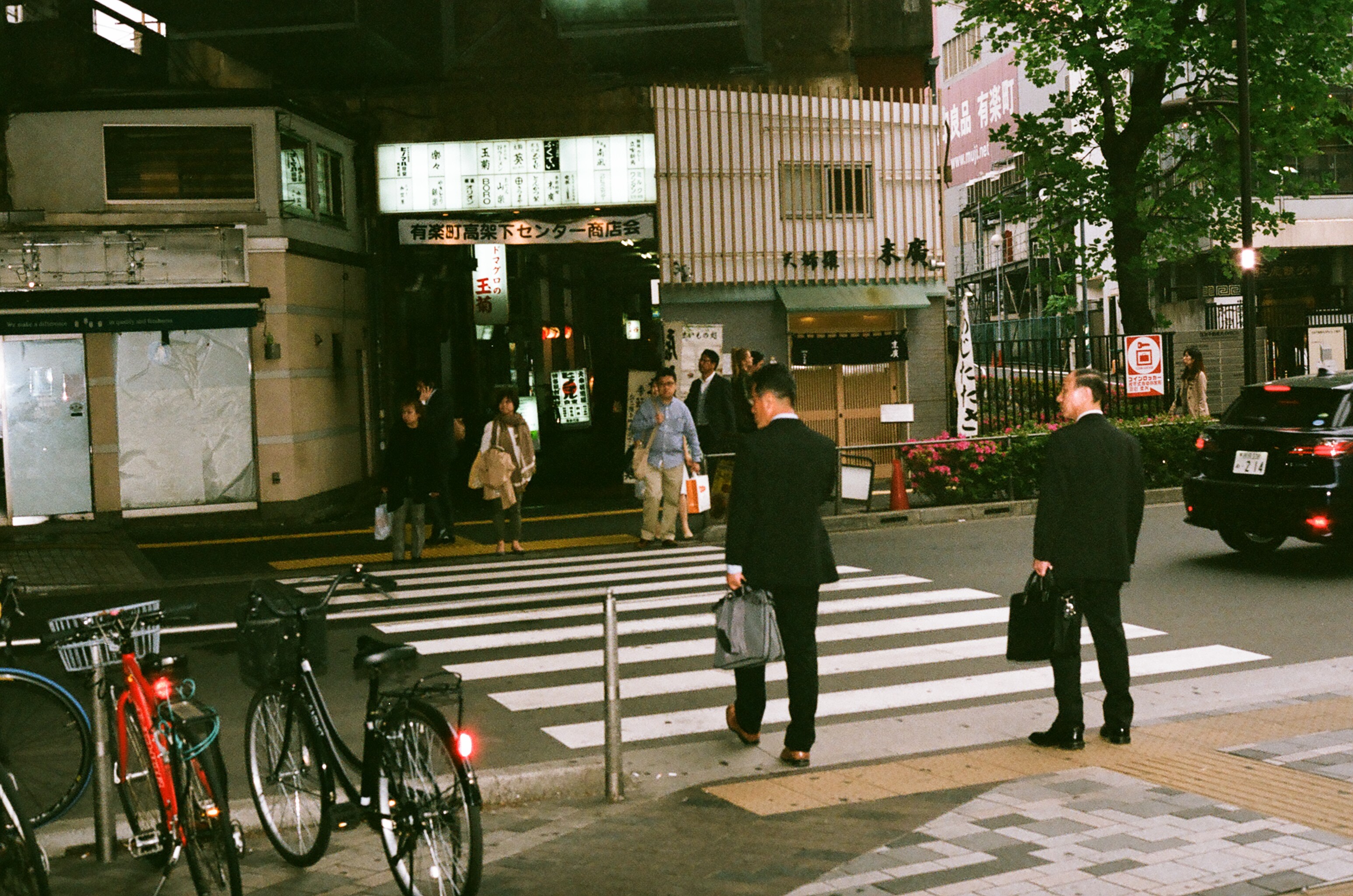
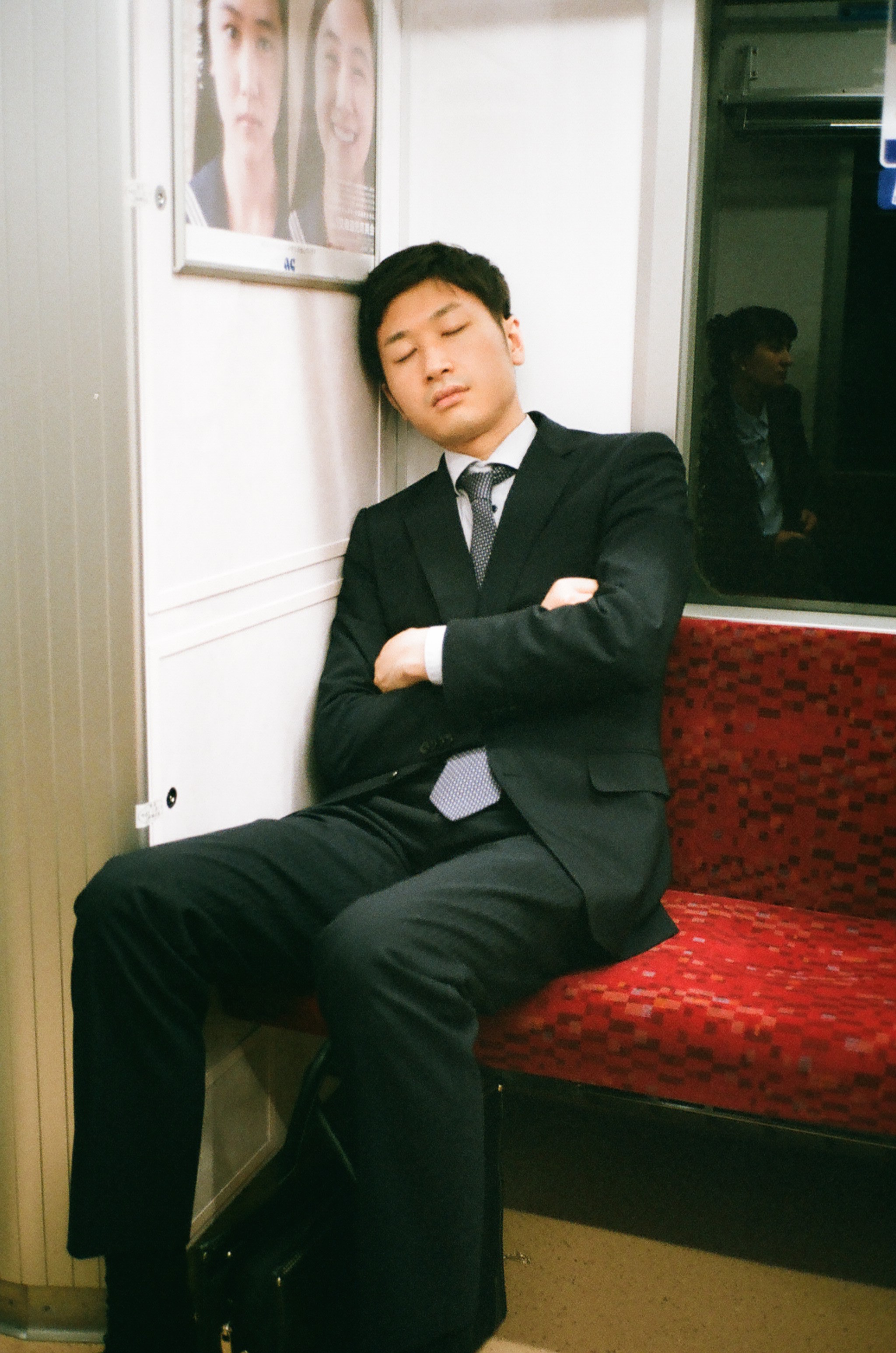

it is rare to catch a glimpse of the heart of a city. like in the letter of a young woman who writes to the city about a public bench near her home, describing how passing by it floods her with memories. she asks the city to remove the bench from its place, to uproot the memory from her heart. a story about the city and its place within a person’s inner world is told in the magazine through the work of artist chen serfaty. it reminds us that the city and art share the common space of our lives.
art allows us to see ideas through other eyes, or to notice what is unfamiliar. this city:art issue of ellipsis magazine presents such reflections by artists and writers, ideas as old as the city itself yet more relevant than ever. these are ideas that offer a foundation for discussing urban life through emotionally and imaginatively shaped alternatives.
writers in this magazine look at the city from the eye level of the person living in it and write about how changes in habit reshape urban planning, about the way we move through a city designed as a system for transport, about people living side by side but in different times, about the city as a space for learning, about institutions and flexibility, and also about magic and love.
co-edited by yuval saar, graphic design, avi bohbot, published in ellipsis, the magazine of the master’s Program in Policy and Theory of the arts at the bezalel academy of arts and design in collaboration with the Arts department of the tel aviv-yafo municipality,
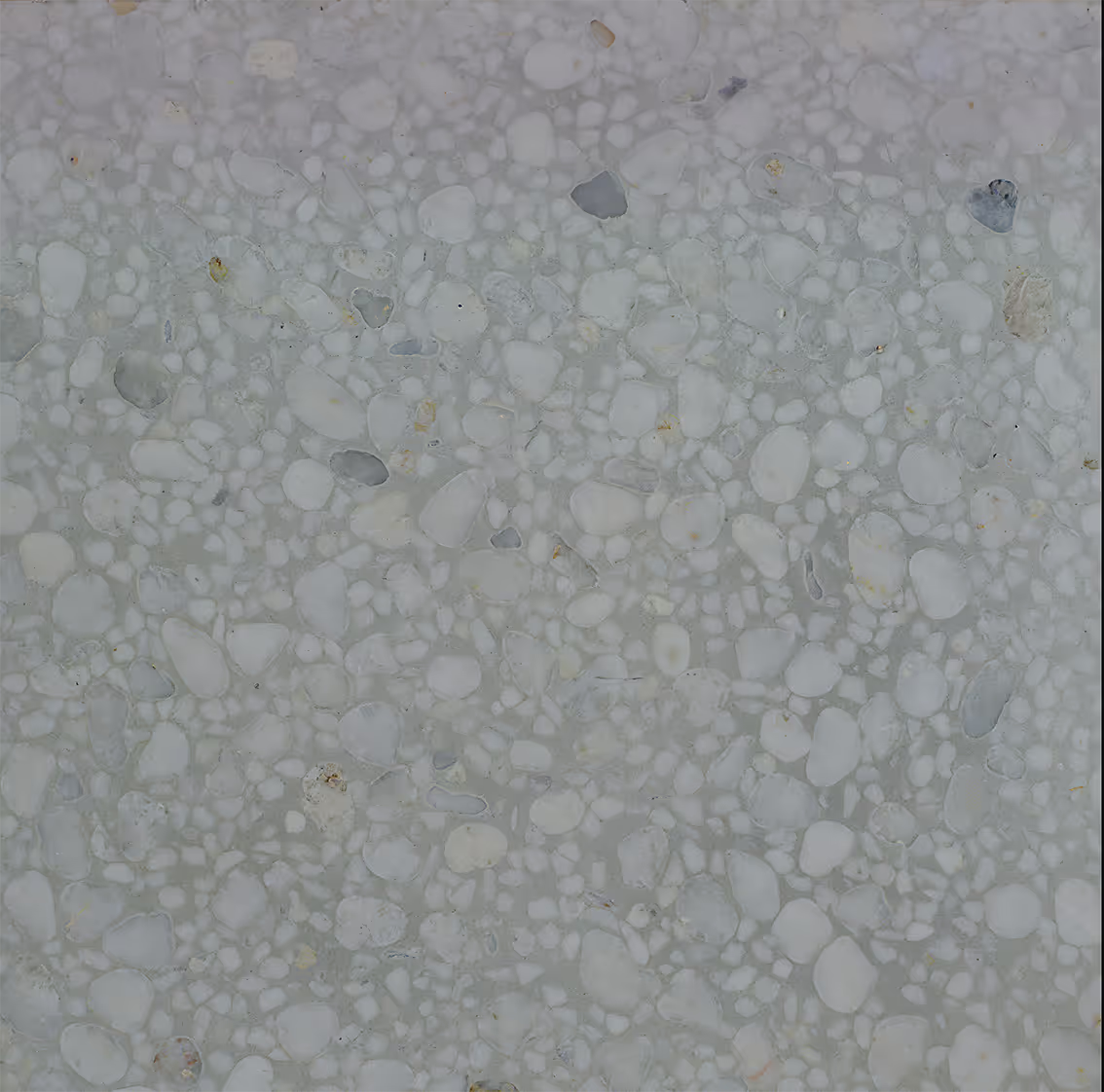
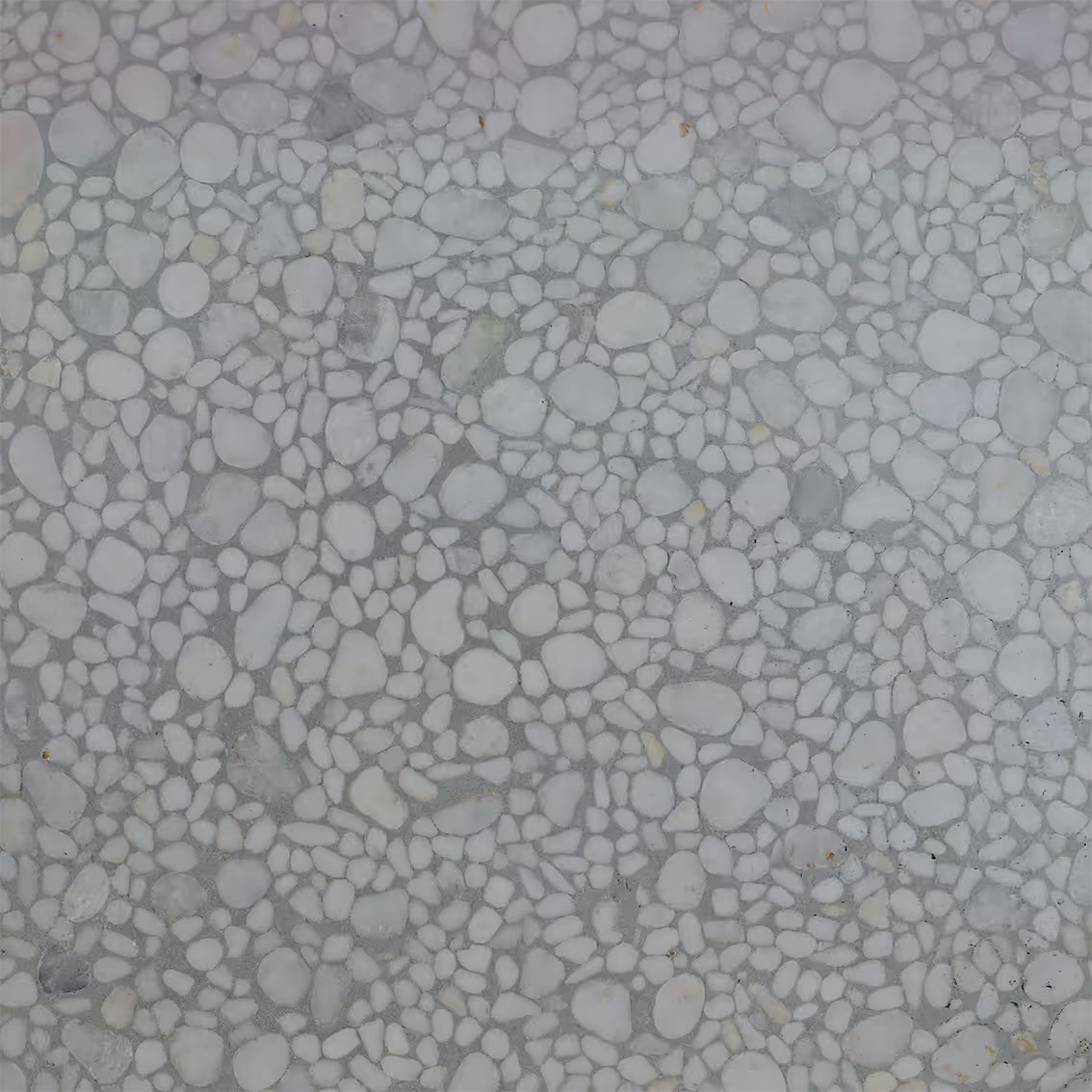
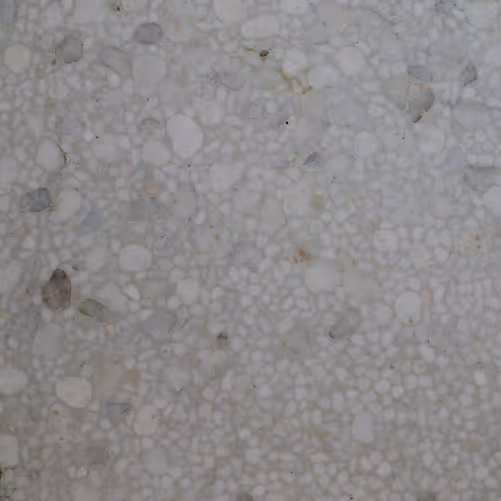
a series of terrazzo designs was developed in a concrete factory, exploring the material’s tactile and aesthetic potential. while most terrazzo floors are composed of sharp edged, angular stones, this series uses rounded river stones to create a softer and more natural presence.
the terrazzo is composed of smooth river stones that evoke a calm and tranquil atmosphere. the result is a flowing, organic surface whose light tones reflect brightness and bring a sense of harmony to the space.
terrazzo is a historic and international material, originating in the italian renaissance and later becoming a symbol of durability and understated beauty around the world. in tel aviv, terrazzo appeared from the 1930s onward in residential buildings of the international style, as a simple and affordable local solution.
its popularity in the city was closely tied to its material and aesthetic qualities. terrazzo could be produced locally from cement, sand, and crushed stone, making it durable and accessible. during the 1950s and 1960s it became a defining element of modernist architecture in tel aviv, appearing in many residential buildings and public interiors. its smooth, bright surface resonated with the modernist aesthetic of the international style, clean, continuous, and unornamented, reflecting light.
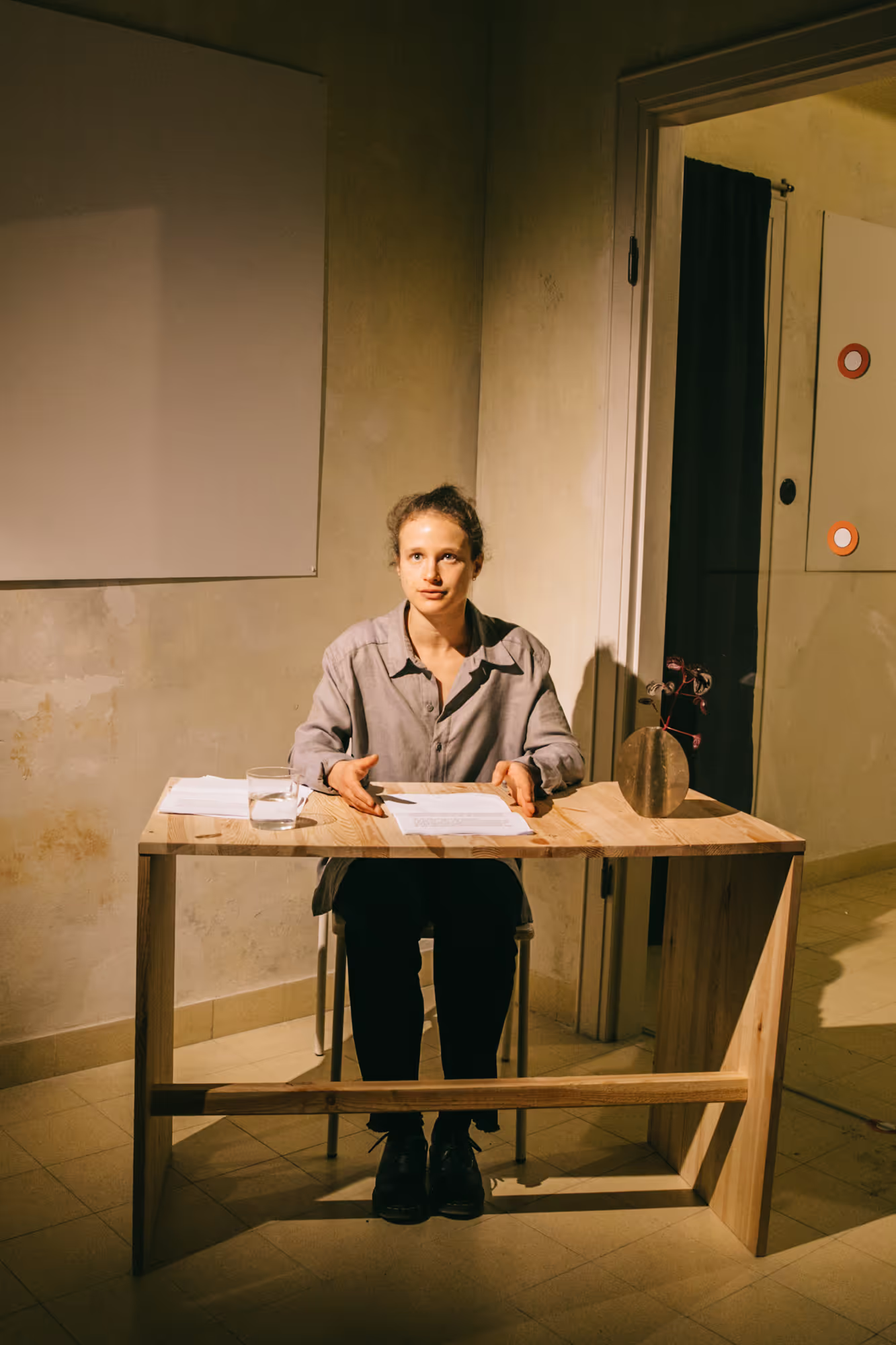
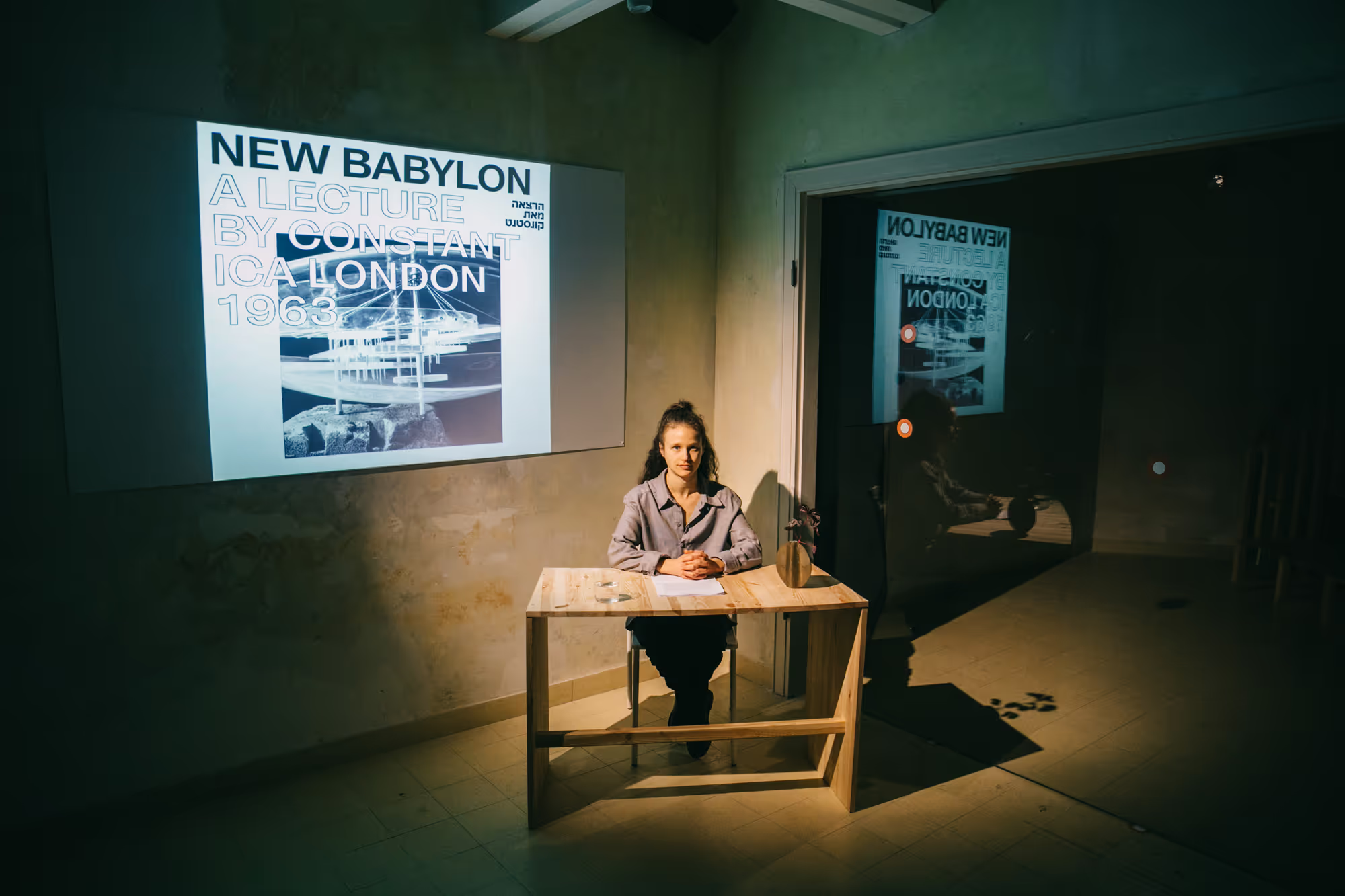
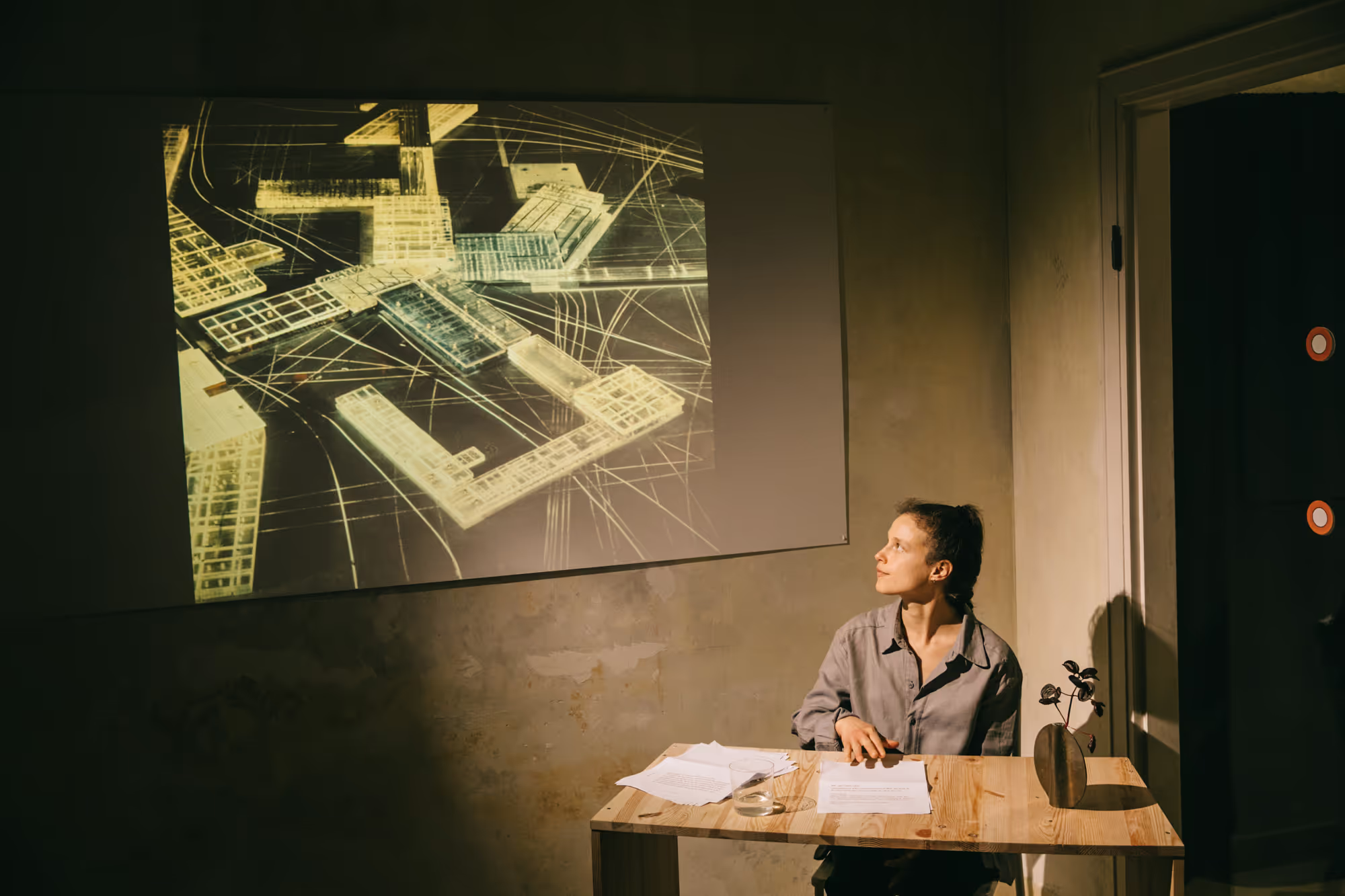
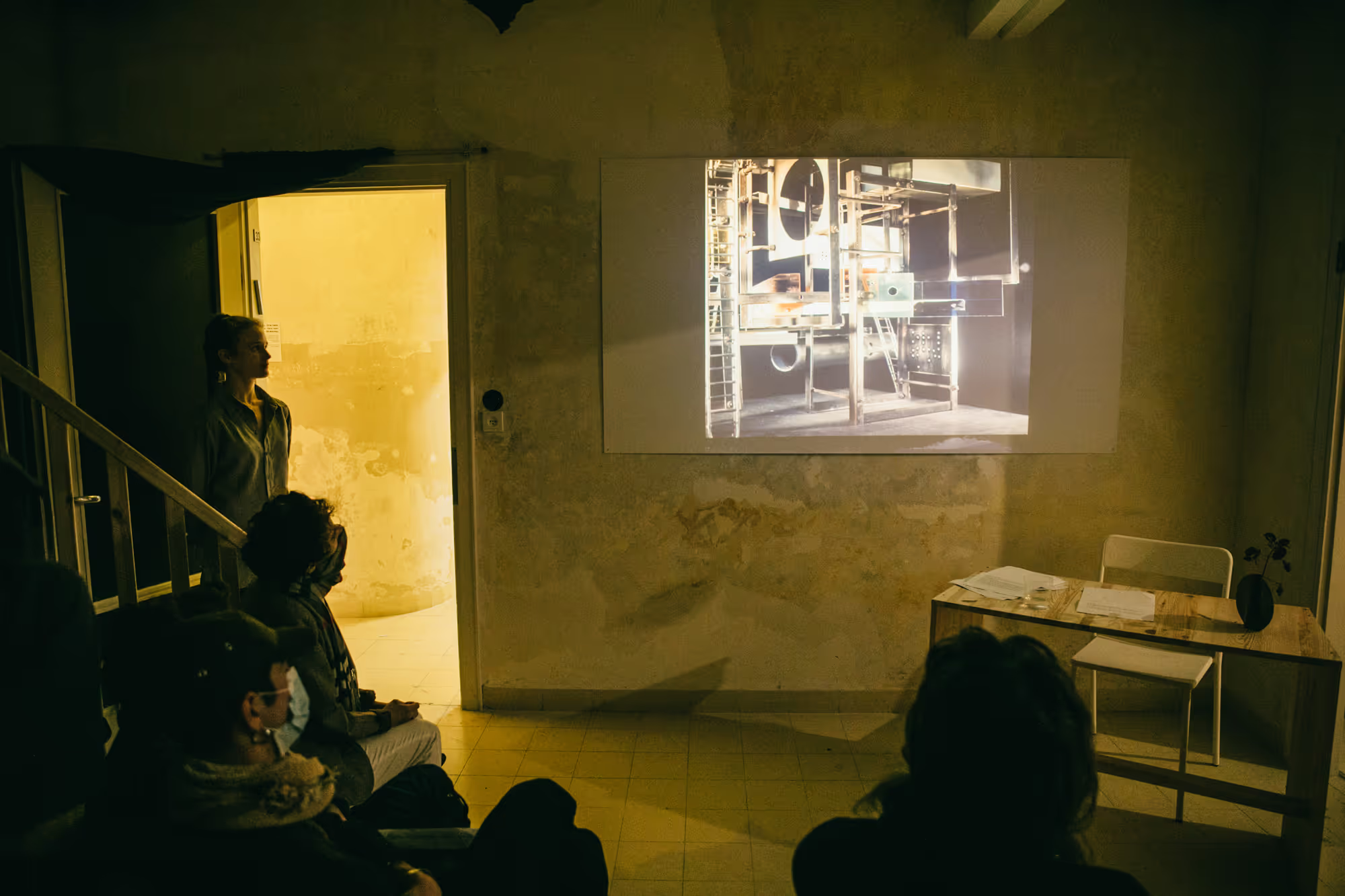
new babylon is a visionary city designed to fulfill the desires of the free human being, proposing new, creatively passionate architecture, a framework for nomadic life, play, and creativity.
dutch artist Constant spent 20 years developing and devising New Babylon. He prepared models, blueprints, collages, sound clips, paintings, and drawings presented in a series of international lectures and exhibitions.
The lecture, which will be re-enacted, explores the artist's role as a generator of new and exciting ideas, and the presence of creativity within everyday life itself.
preformned by meshi olinky, producer olga stadnyuk
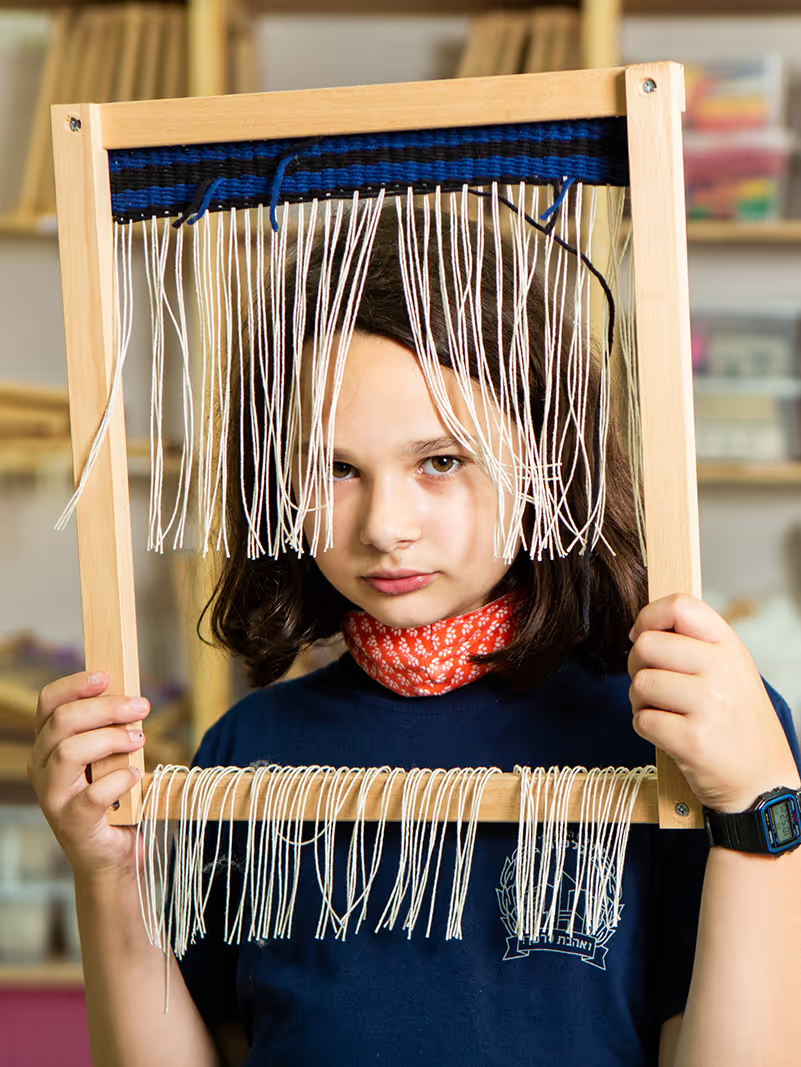
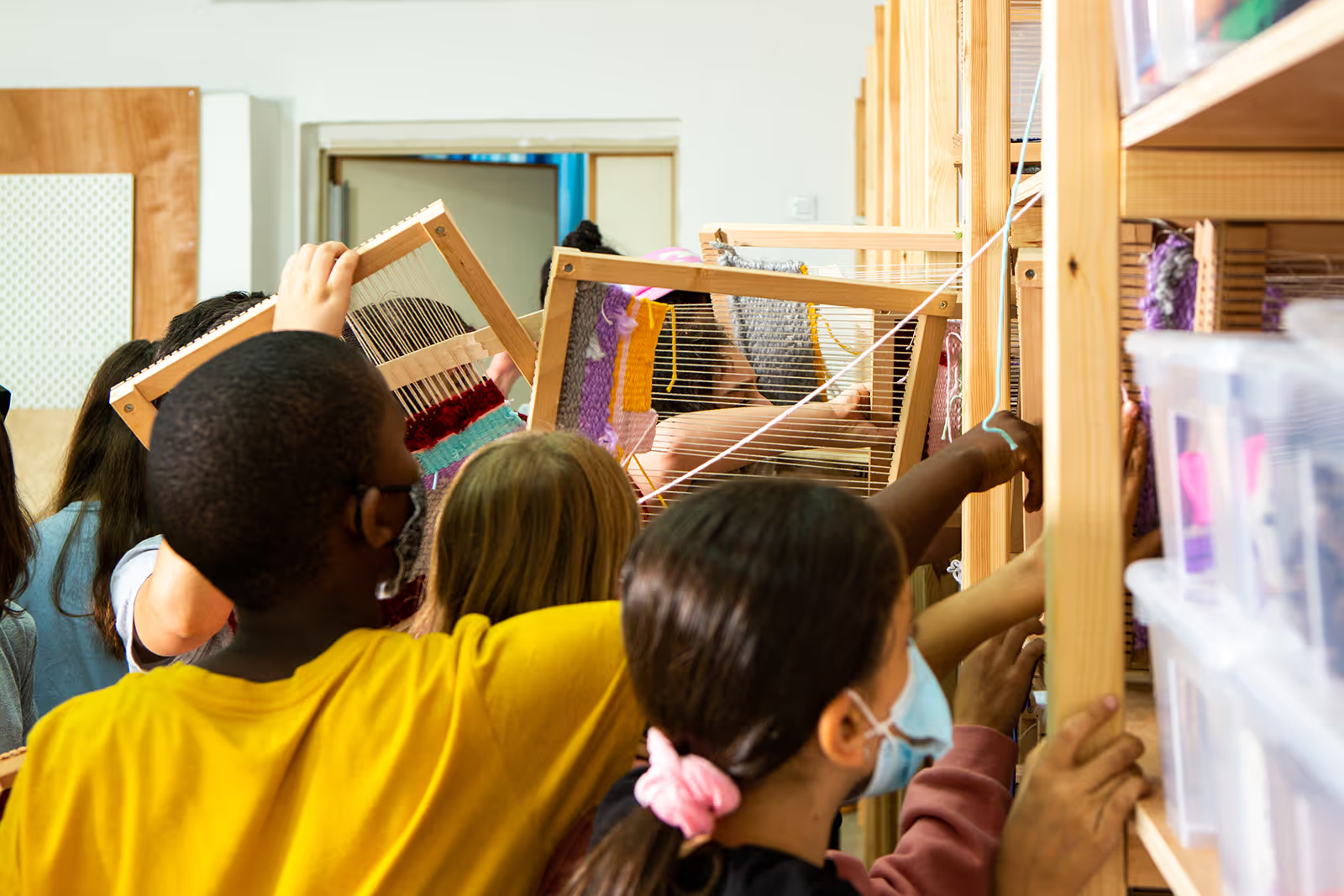
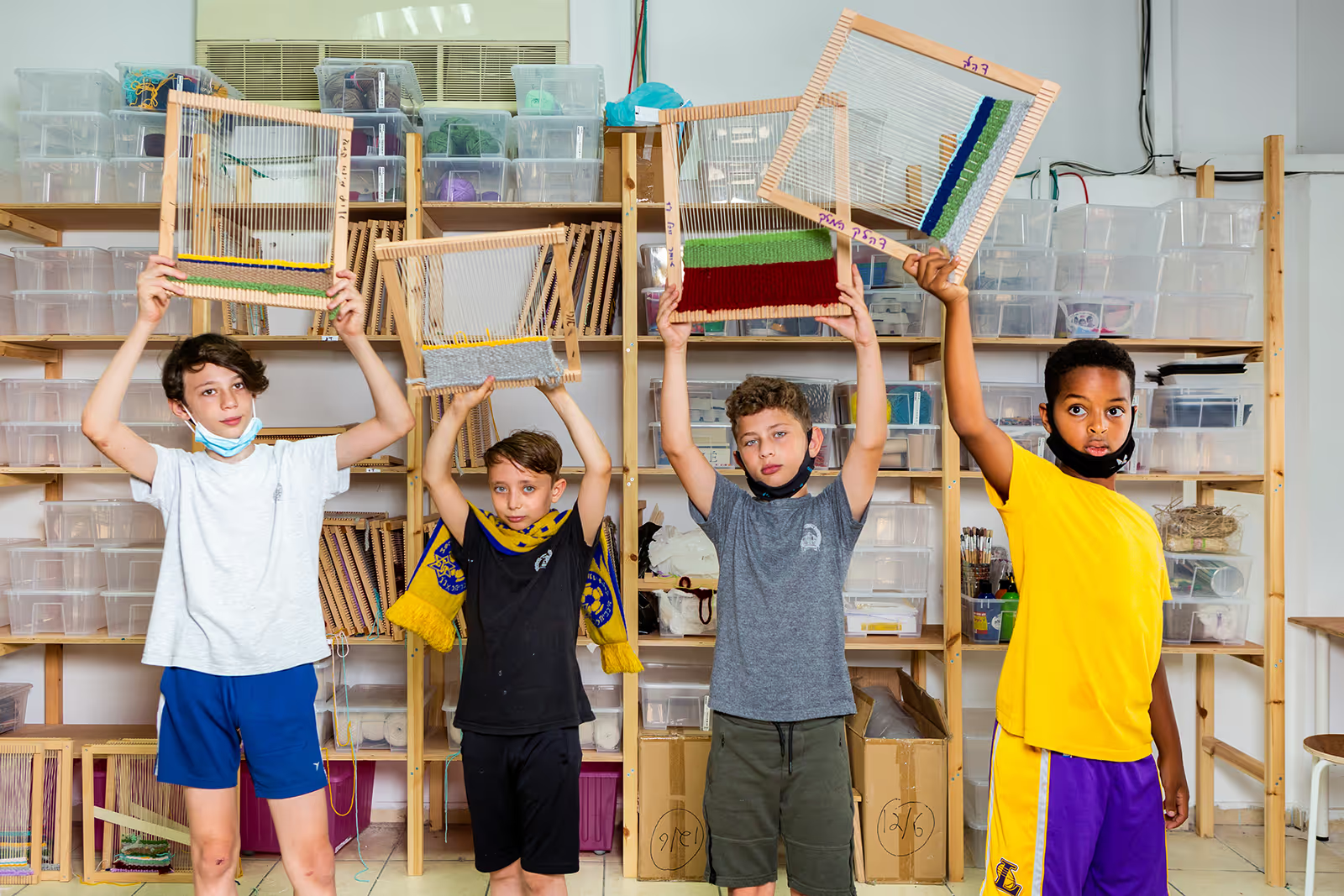
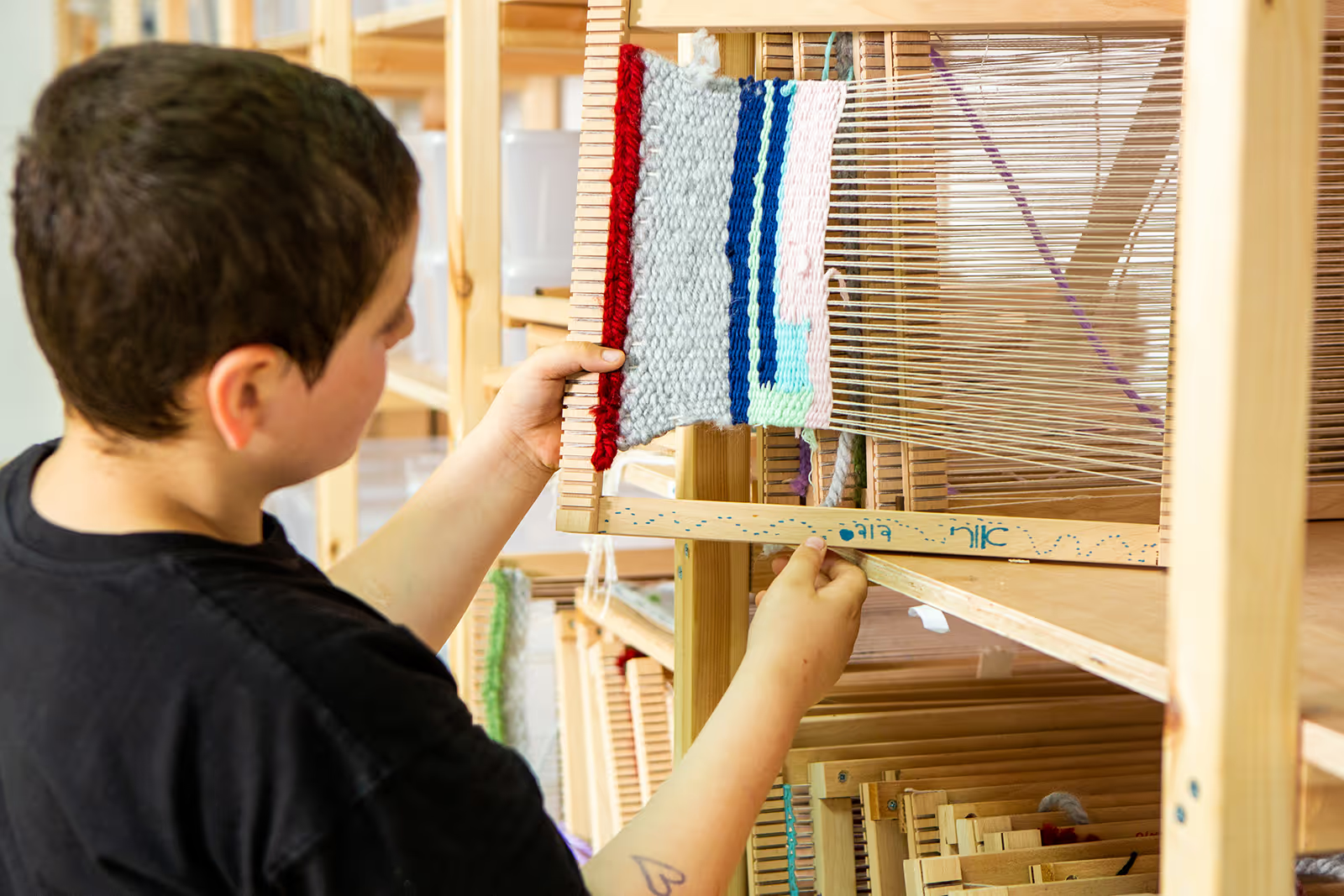
a weaving workshop was established at an elementary school in tel aviv. regular weaving classes were integrated into the curriculum for fourth grade students, creating a sustained encounter with making as part of everyday learning.
weaving, an ancient technology, became a foundation for modern design education through the bauhaus weaving workshops, among the first to integrate craft as a way to explore material, color, and structure within a design curriculum.
the proposal for the school emerged from a request to create a makerspace. this led to the opening of a weaving workshop that explores technology through the craft itself, embracing both the meditative and material dimensions inherent in the practice.
the workshop offers students a direct, hands on experience of making through immediate and accessible technology. for the program, around 100 looms were commissioned from a local carpenter.
teacher: haim hakimian, photography: yael schmidt
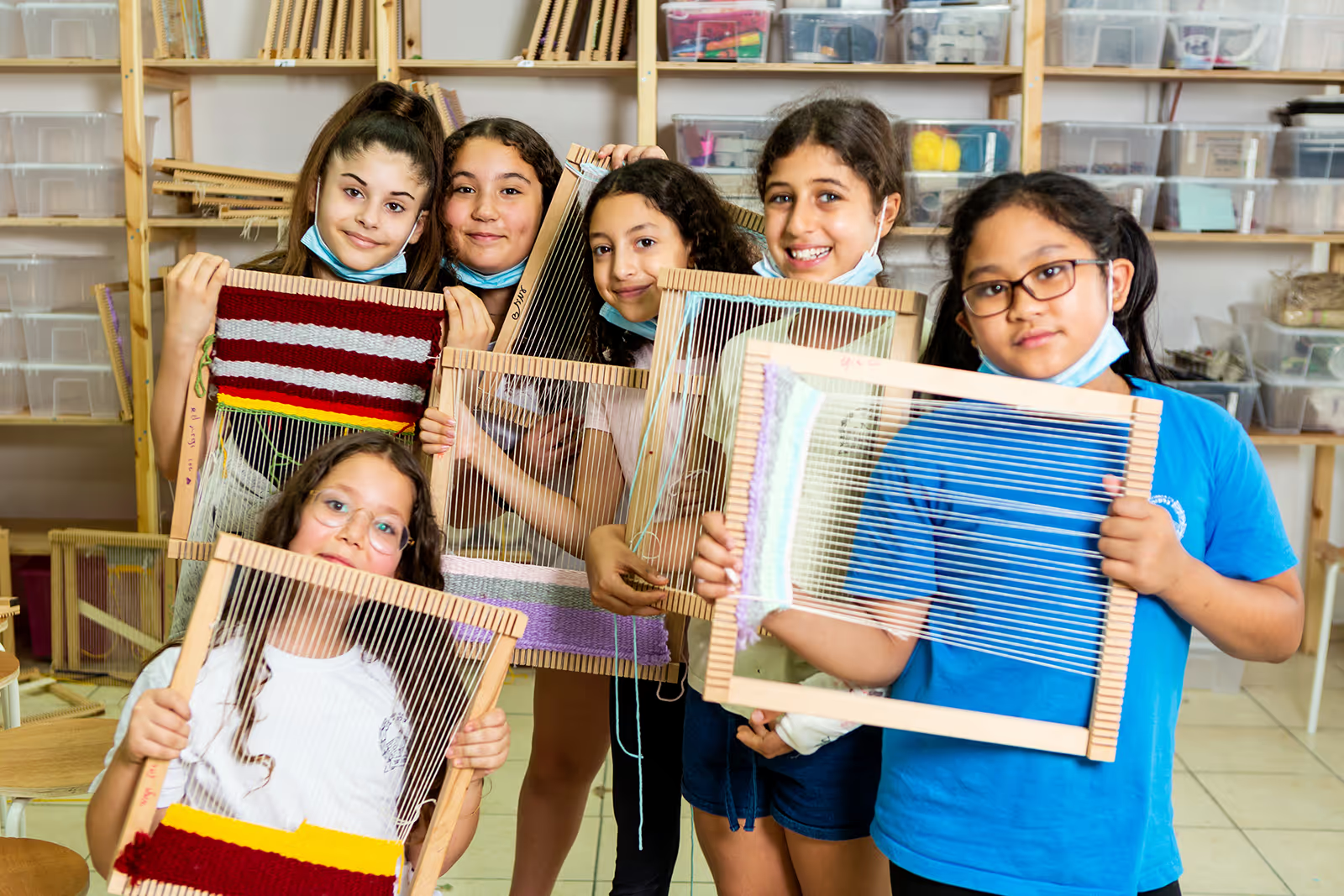
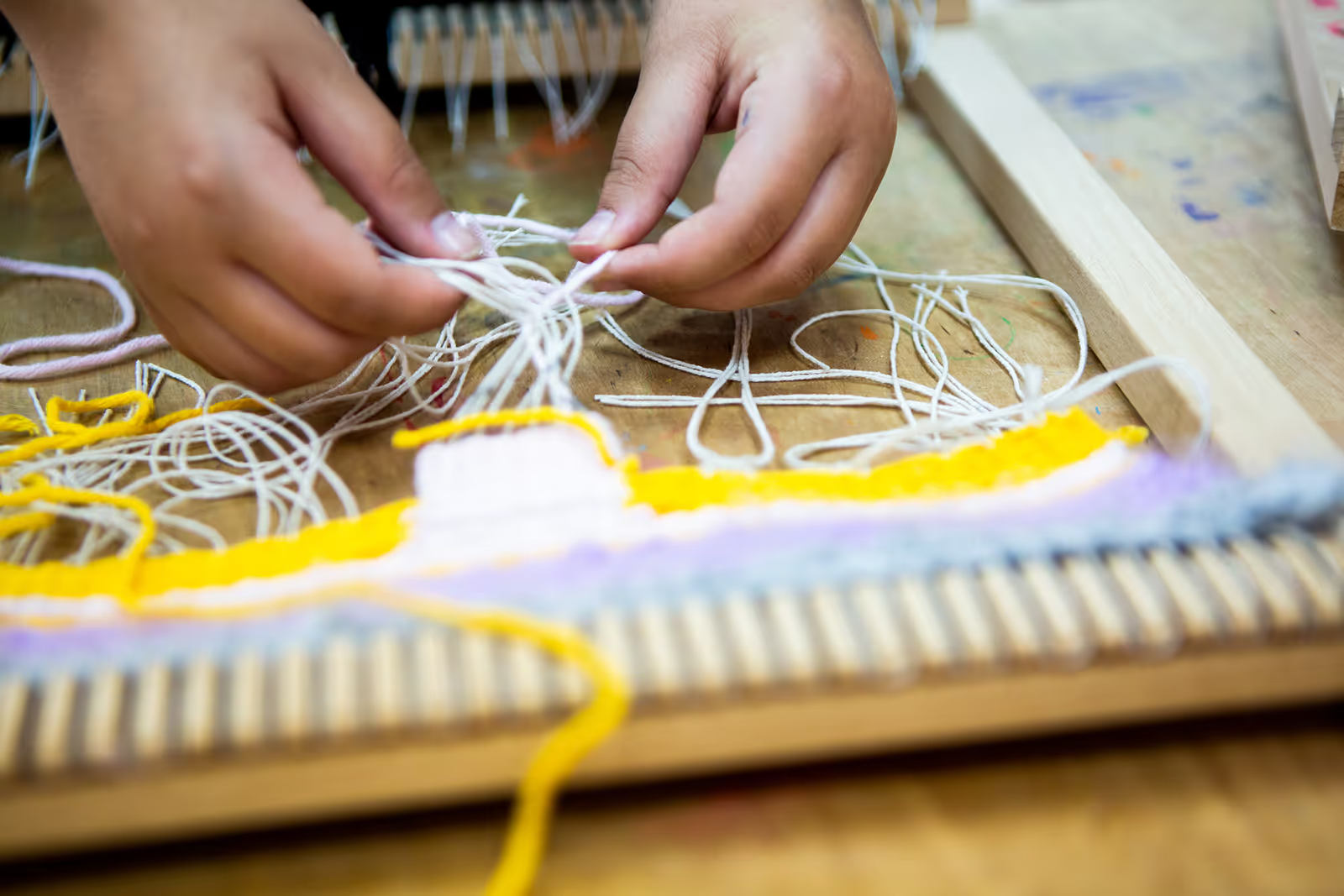
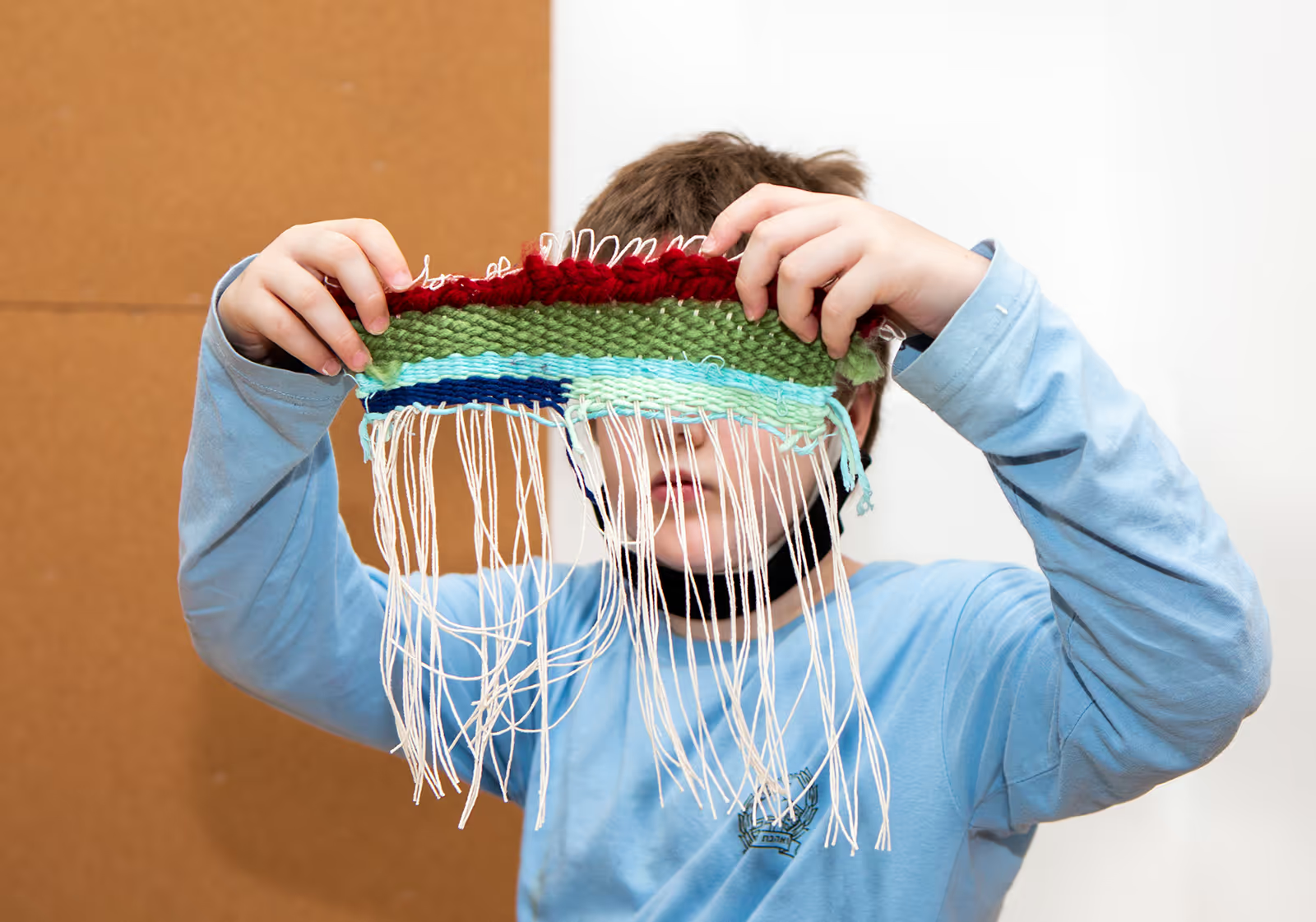
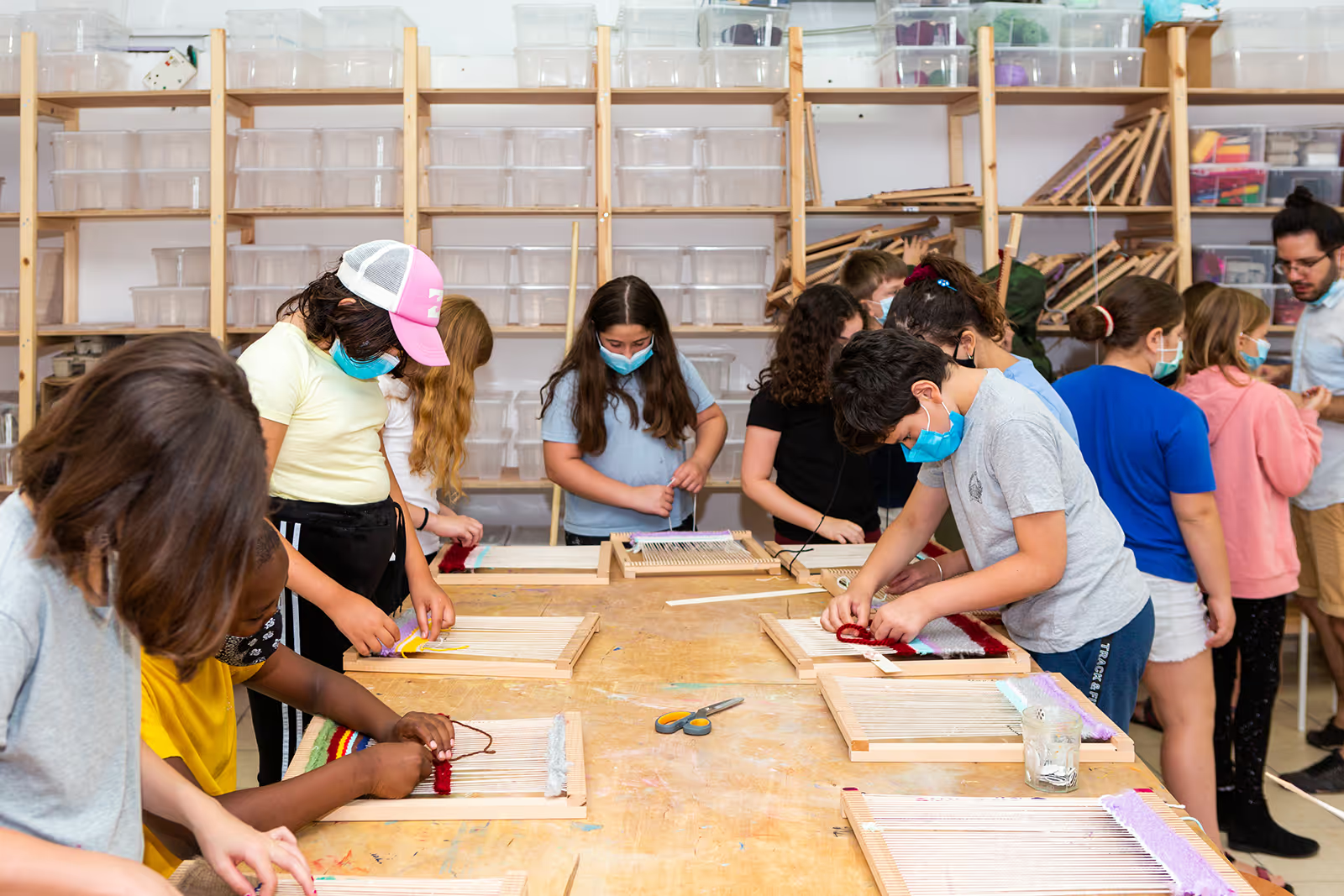
conference, prologue
a few weeks before the opening of the school of the city’s first conference i traveled to the netherlands to visit the house of the artist constant (constant nieuwenhuys, 1920–2005). his daughter, kim, led me to the attic which now houses his archive. on the table stood two black boxes with the words new babylon, containing the original slides that constant presented in his series of lectures on the city he spent decades of his life planning. i had first encountered the new babylon project years earlier as an architecture student, and now came to the archive to learn more about the city and especially about a lecture constant gave at london’s ica in the winter of 1963.
as i removed the slides from the box i saw fascinating models, colorful and shiny architecture, the appearance of new babylon. in his lecture constant presented the city as a place in which life is an adventure and everyone can realize a life of freedom and creativity. we considered presenting the project at the first school of the city conference in tel aviv, as a way to introduce this vision of space and life.
new babylon was planned to allow its residents to be creative, and its architecture was invented to enable freedom. constant described it as a space giving the minimum conditions for a behavior that must remain as free as possible. his notion of the city offers a model in which space and human forms of organization and behavior interweave, fostering creativity in all areas of life.
the first school of the city conference was planned with the aim of giving participants the opportunity to experience their city as a free space of learning and inquiry. we envisioned a week of meetings, exhibitions, studies and performances in various places throughout tel aviv. a few days after i returned from utrecht, however, the outbreak of covid-19 began. the city went into lockdown and the conference was canceled.
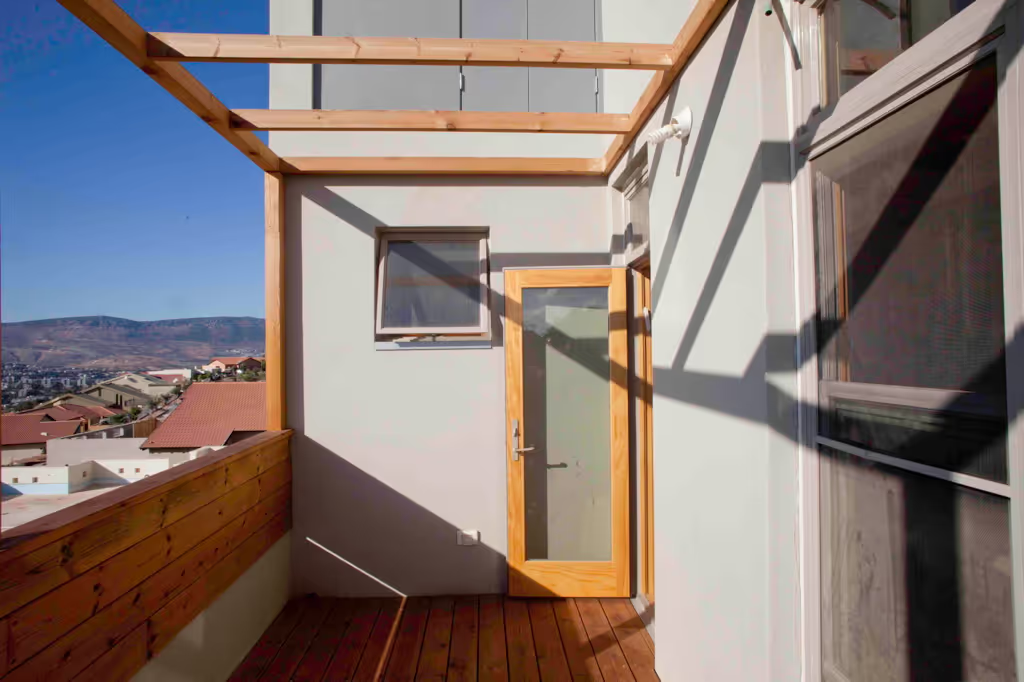
on one of the first evenings of the lockdown, slipping out of our apartments and into the locked balcony at liebling haus, the curators gathered to think about a different conference model. we looked out at the empty city, dissatisfied by the thought of replacing the conference with a series of dull zoom meetings. we tried to imagine a conference not based on communal meeting spaces, fixed times or predefined content, one that could exist within a locked-down city. then we remembered the folding chair.
the pedagogy of the folding chair
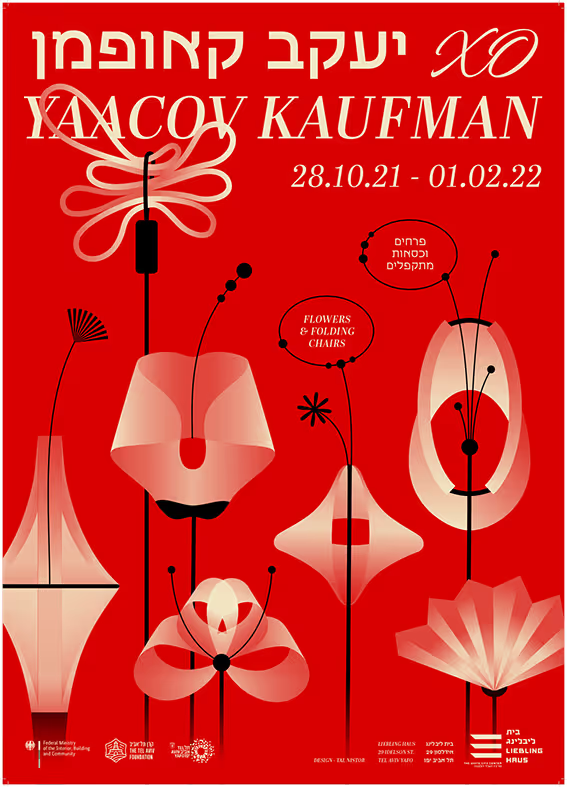
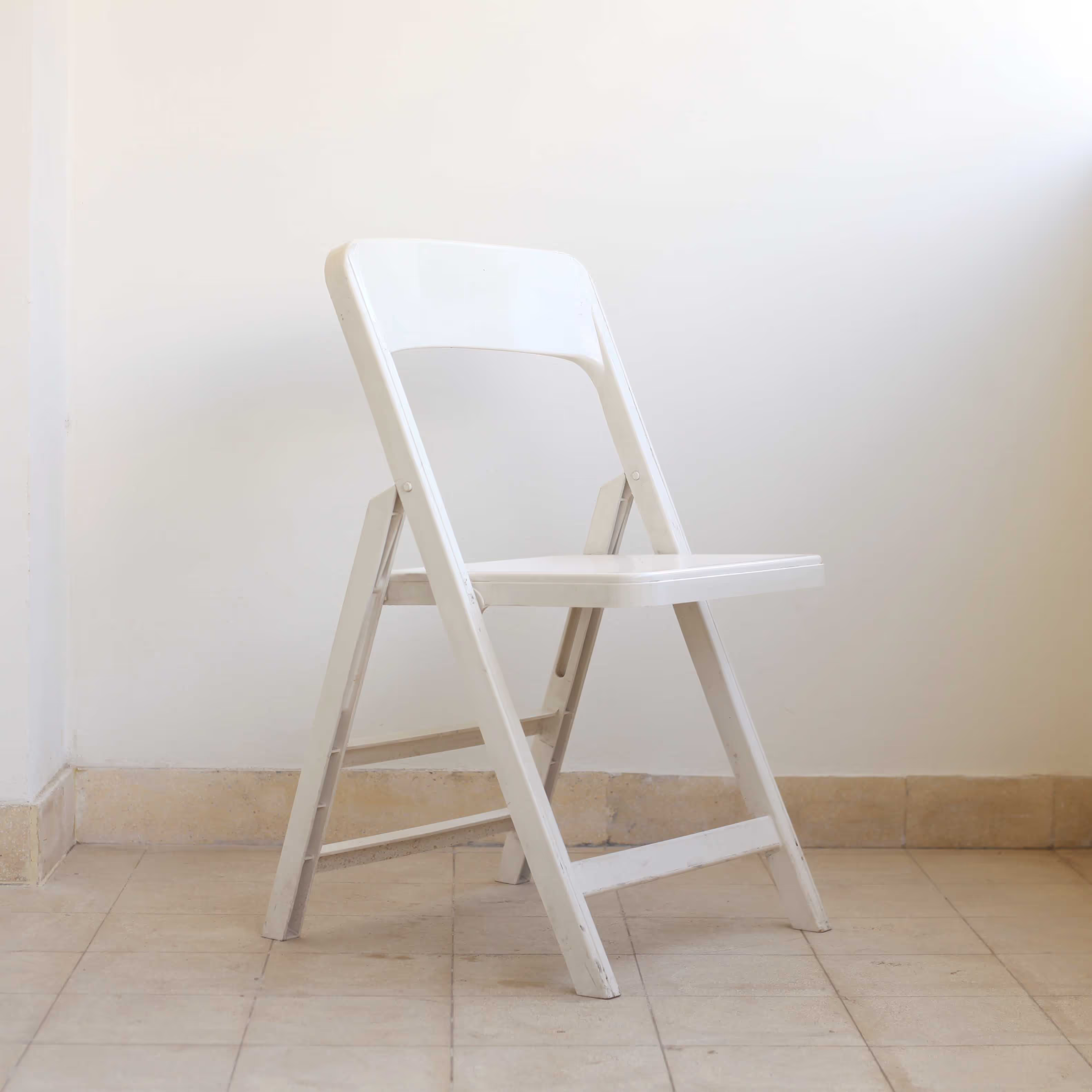
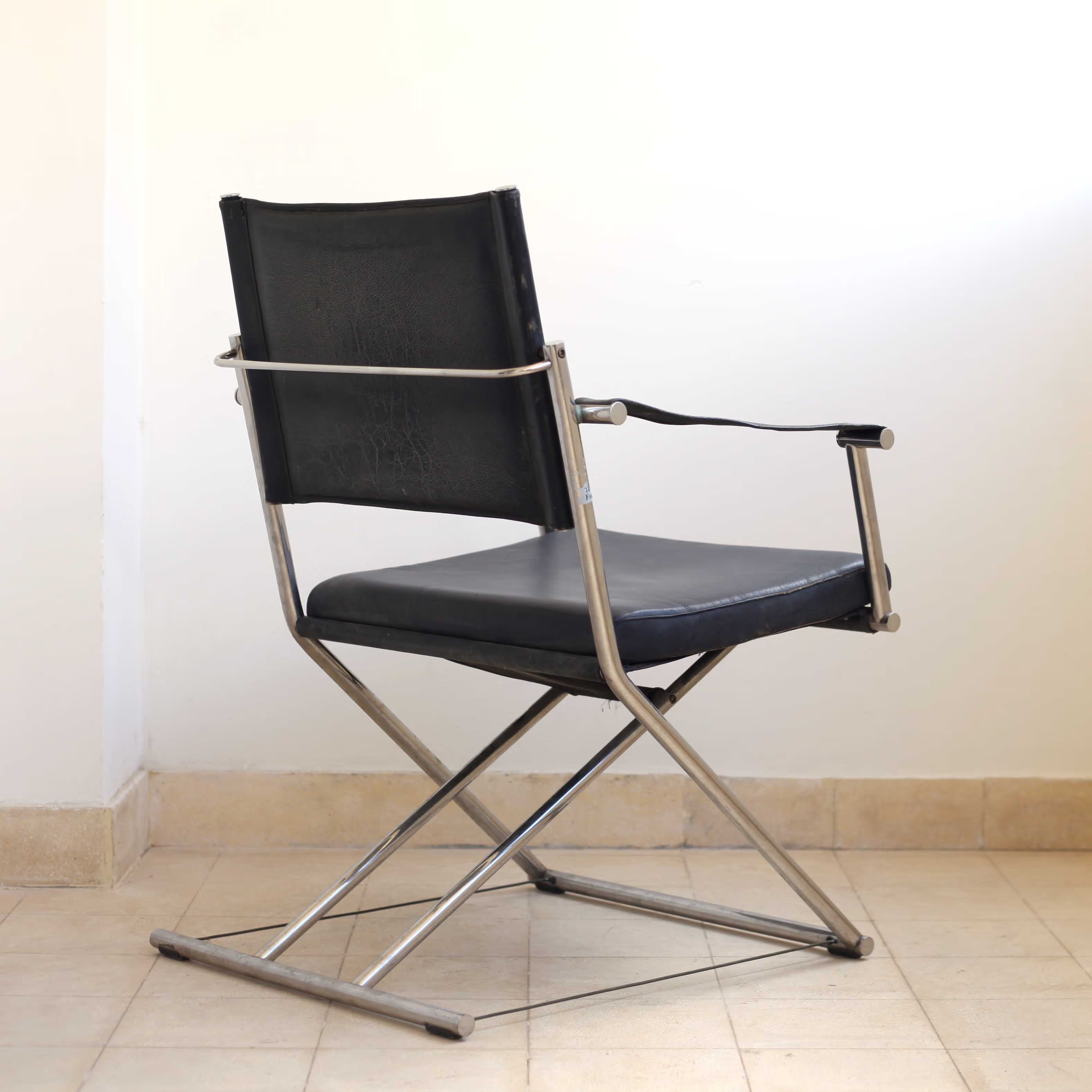
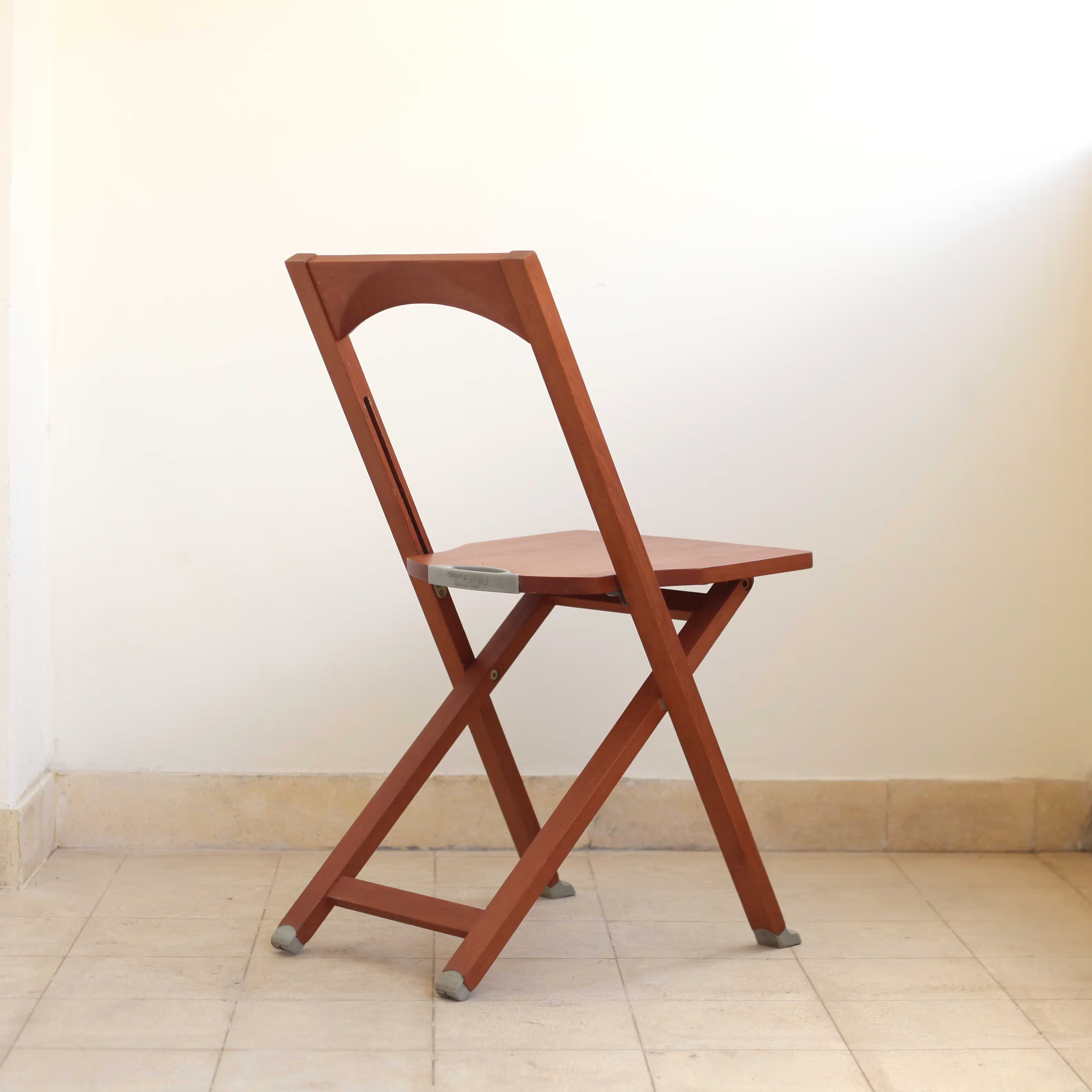
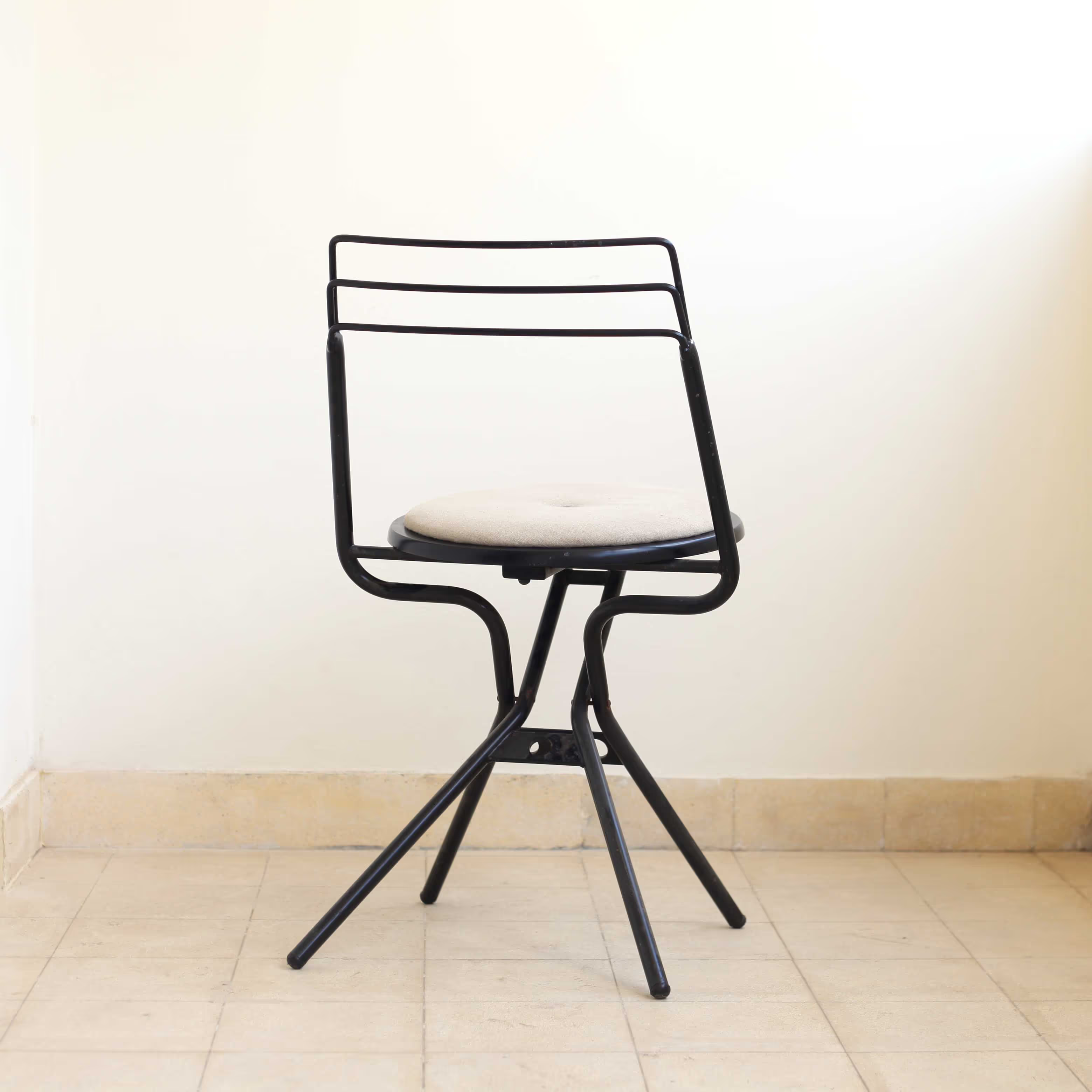
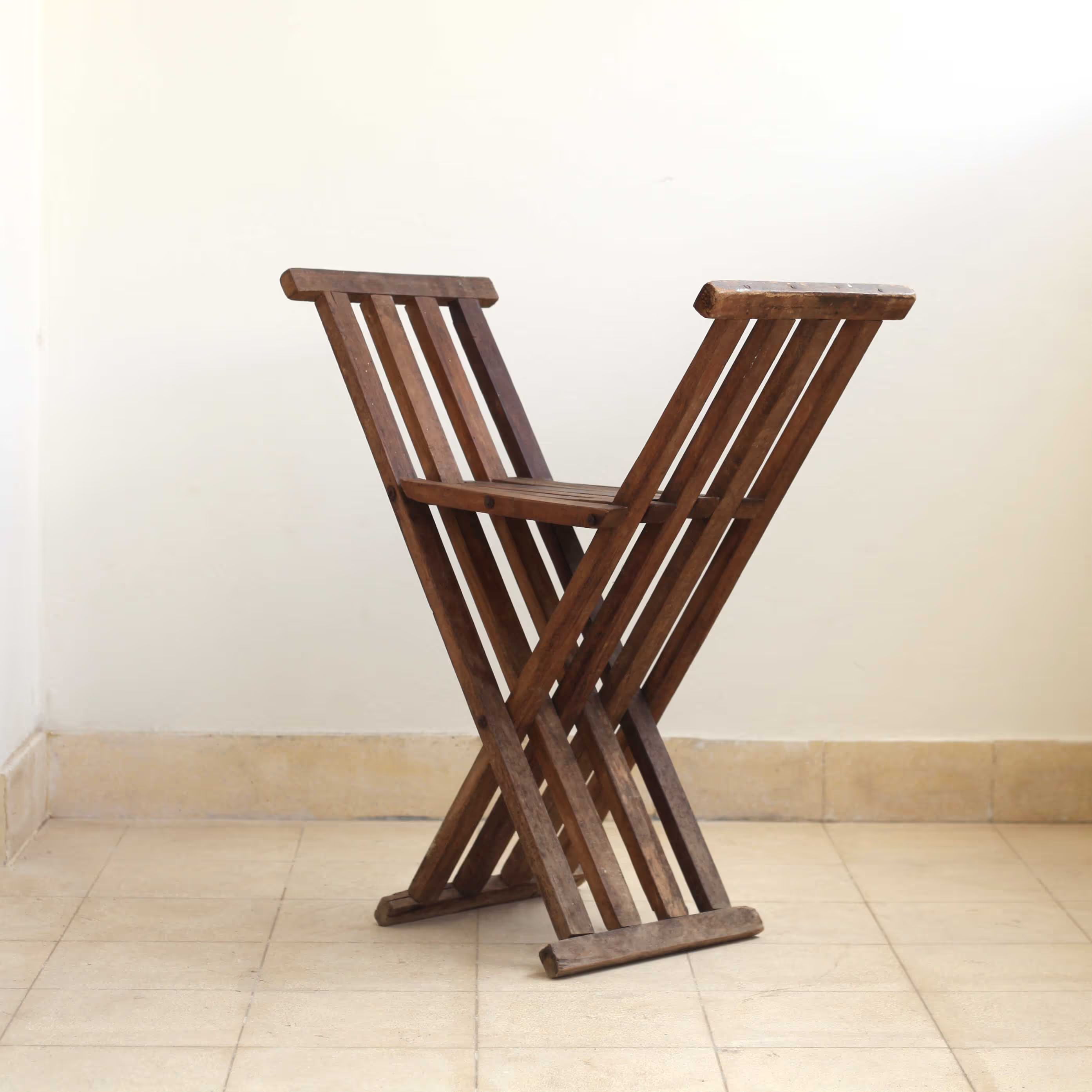
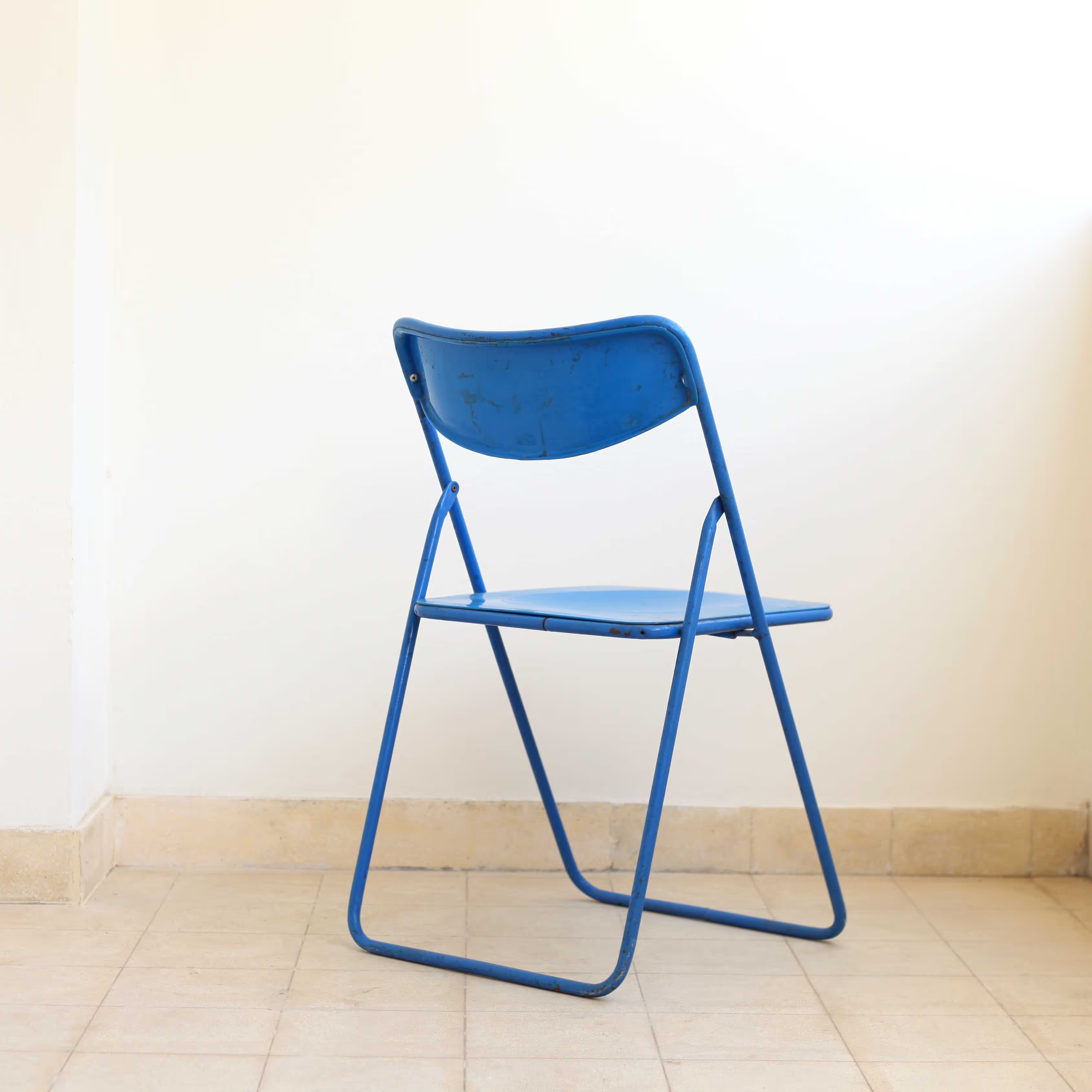
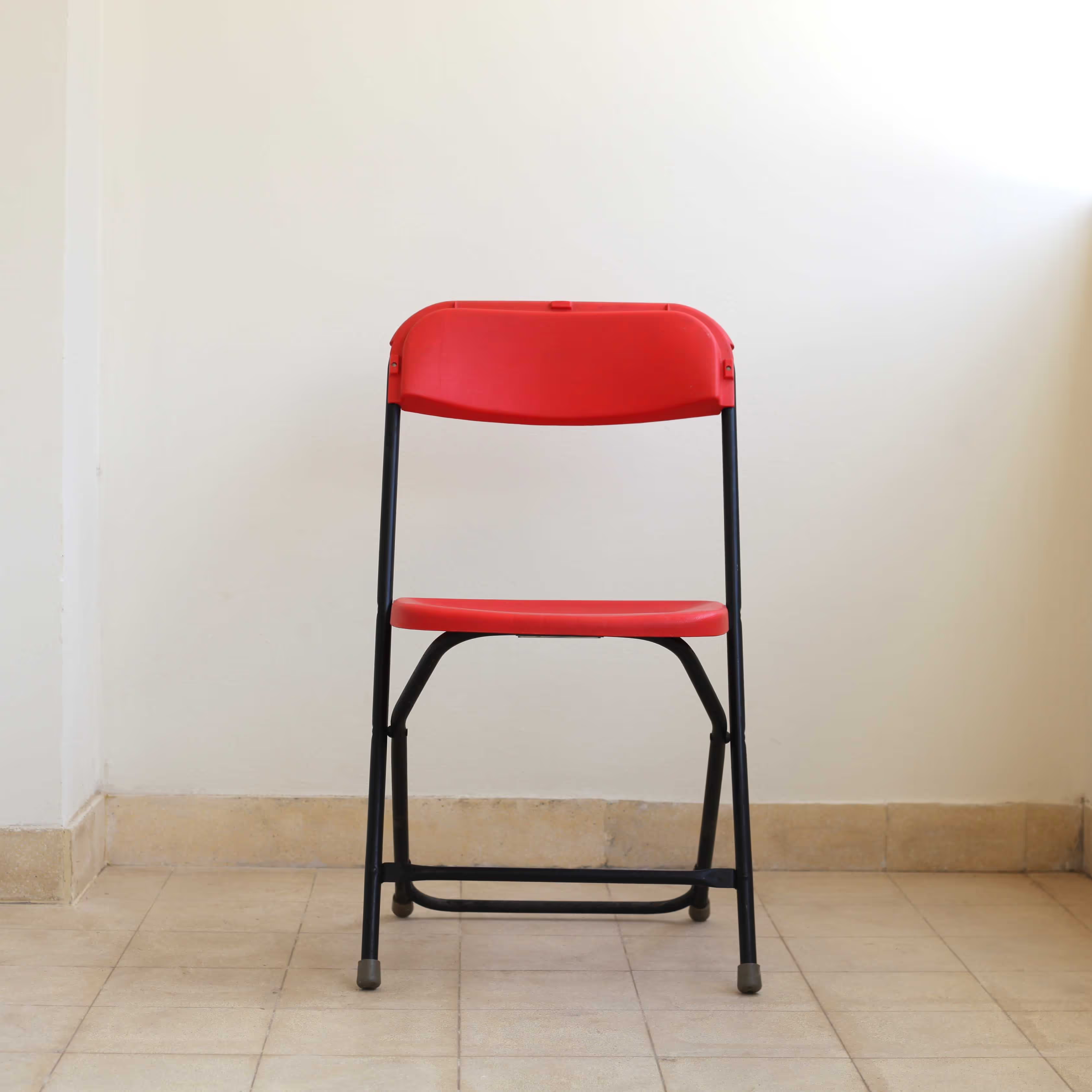
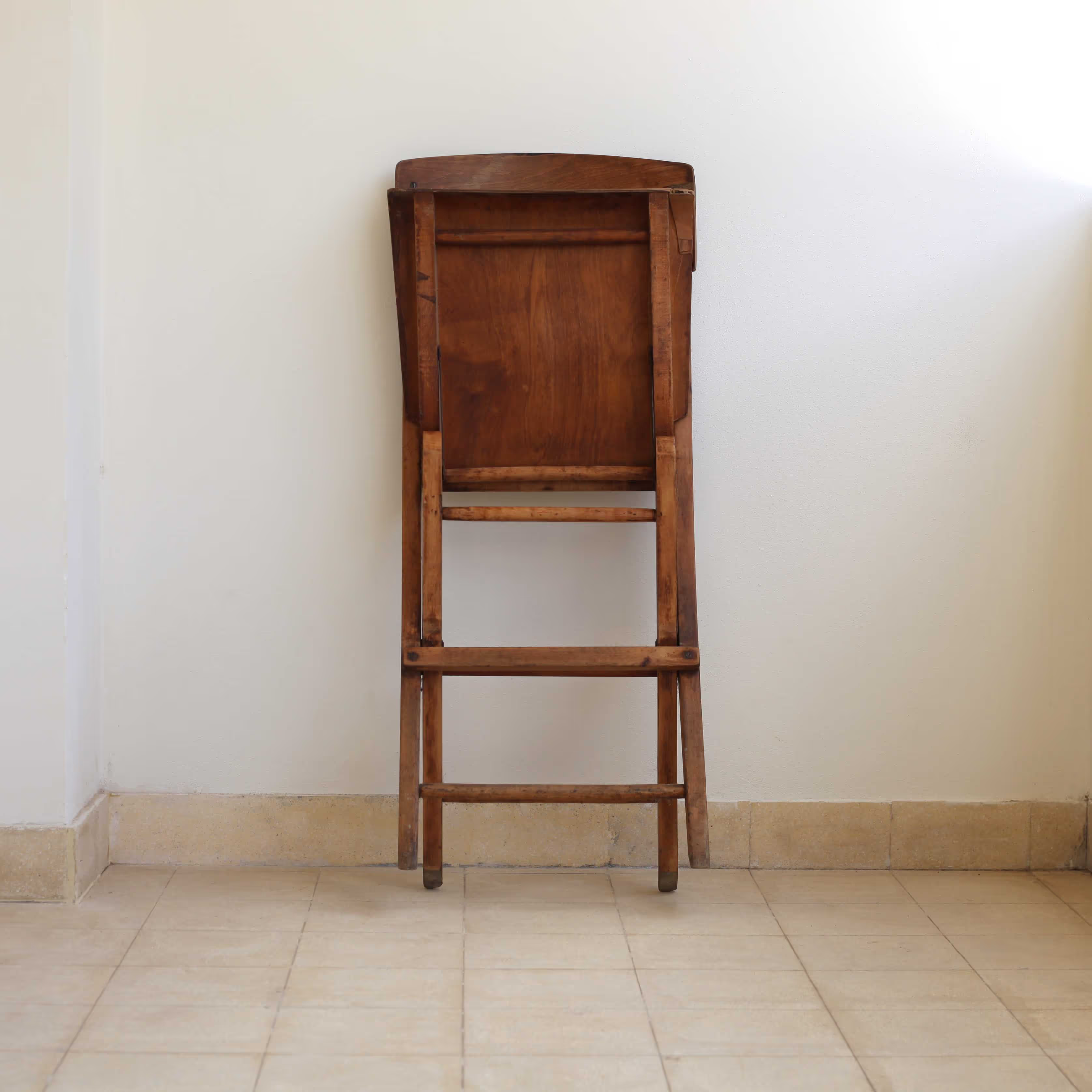
two floors beneath us, in the liebling haus basement, stood forty folding chairs waiting for the conference participants. these chairs were collected over decades by the designer yaacov kaufman and used in his seminal bezalel course on designing a folding chair. when we approached kaufman to borrow the collection, we thought chairs gathered specifically for study would suit a conference about learning.
with participants confined to their homes, the folding chair became the generator of the conference itself. we decided to send the forty chairs to forty apartments in tel aviv, jerusalem, london, berlin and amsterdam. the conference website was cleared of its original details, renamed nevertheless and despite everything, and a new message was sent to participants.
dear conference participant, had the first school of the city conference opened as planned, we would now be sitting together on forty folding chairs from the private collection of the designer yaacov kaufman. this week, one of these chairs was sent to your home for one month. this folding chair is a vehicle for an adventure, a supra-physical journey. it connects the person sitting on it to a network, a collection, the first liebling haus school of the city conference.
during the following month a network of chairs connected artists and creators working in different rooms. we followed their processes, observed their research and watched a web of ideas form as thoughts passed between participants. we documented projects as they developed and accompanied the participants as they studied, created and investigated within this unusual framework.
at the end of may the forty folding chairs returned to liebling haus, along with forty people. they met in person for the first time, sharing experiences from the past month. that evening we stood on the roof and looked at the large map we had traced together, a galaxy of ideas accumulated live over one month by artists, designers and architects.
the folding chair conference had no theme. its meaning emerged through its occurrence, nevertheless and despite everything, through the insistence on continuing to think and create during an exceptional time. it opened new perspectives on pedagogy, information and forms of study, and realized ideas we had been developing since the founding of the school of the city.
the language of space
during my years as an architect i became aware of a gap between architecture, between planning and building the environment, and the way that environment is experienced by those who inhabit it. one major reason for this gap is the absence of a language to describe spatial experience. without such a language, everyday spaces remain vague and out of reach, even though we clearly sense experiences in exceptional places.
instead of experiencing space directly, we learn about it through lectures. instead of developing sensory tools, we learn history. this absence of a sensual language for dwelling is also one reason for the inadequate public and political discourse on architecture and urbanism in israel. when people cannot clearly articulate how spaces affect them, those spaces tend to remain unchanged.
when planning new babylon, constant rejected top-down urban planning. new babylon could impossibly be a determined urbanist plan, he explained, every element must remain undetermined, mobile and flexible, shaped by the people circulating within it. this idea reinforced my desire to develop a shared language that describes how space is felt and lived.
the school of the city grew from this ambition. i believed the people best suited to develop such a language were designers, architects and artists, especially those engaged with pedagogy. together we began shaping a language that could bridge sensation, description and understanding.
the school of the city
we imagined the school of the city as a space generated by creativity and aesthetics, established by artists. it was conceived as a place with no separation between ideas, study and learning, where pedagogy emerges from art, design and architecture. developing the language of space became the first step and the foundation that united us as a team.
the language we developed moved between sensation and metaphor, abstraction and image. it focused attention on presence and validated experience, perception and thought. through it we became more aware of the city around us and our place within it.
learning was based on staying in a space and studying it directly. instead of transmitting knowledge, we learned how to learn through the senses. when i experience a space and study it, i learn about myself within it. after two years of activity, we wanted to present these ideas in the form of a conference.
the learning movement
the pedagogy that emerged during the conference did not form an ordered system, but a provisional structure. the learner, not knowledge, stood at the center. the outcomes were unknown in advance, and the development could not be controlled. learning appeared as a movement between observation and action.
this approach echoed constant’s vision of new babylon as a fabric in which learning is interwoven into everyday life. pedagogy became an aspiration to experience the world as a space of curiosity and desire. the learning movement cannot be organized or planned, it unfolds as part of living itself.
imagination and space, epilogue
the only activity that will remain beyond automation is the unique act of imagination, constant declared. imagination is the source of creativity and the ability to offer what does not yet exist. new babylon was never meant as a final model, but as a call for continuous development by its inhabitants.
these are the spaces we need today, realistic spaces for the creation of imaginary things. to plan a school, a lesson, an exhibition or a city, we must first imagine a physical and conceptual space that allows ideas to emerge freely.
“i beg you to look at these slides as if you were visiting a new and unknown city and to experience its specific atmosphere. the rest is left to your imagination,” constant concluded.
all quotes from constant, manuscript of lecture at the ica, london, 7 november 1963
conference co-curator: ana wild and maayan moses. text editing yoni raz portugali, english translation sivan raveh. photography: omri livne
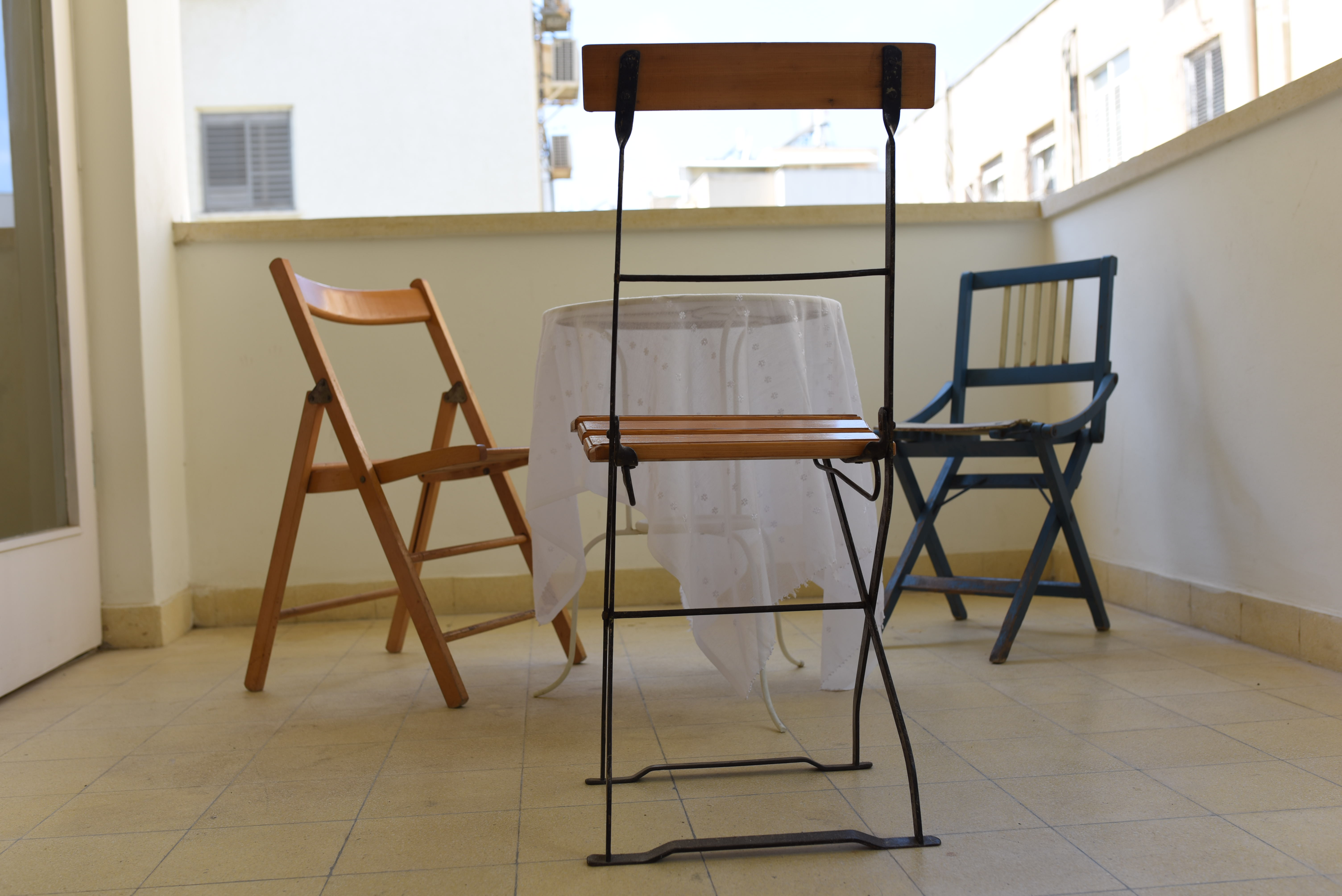
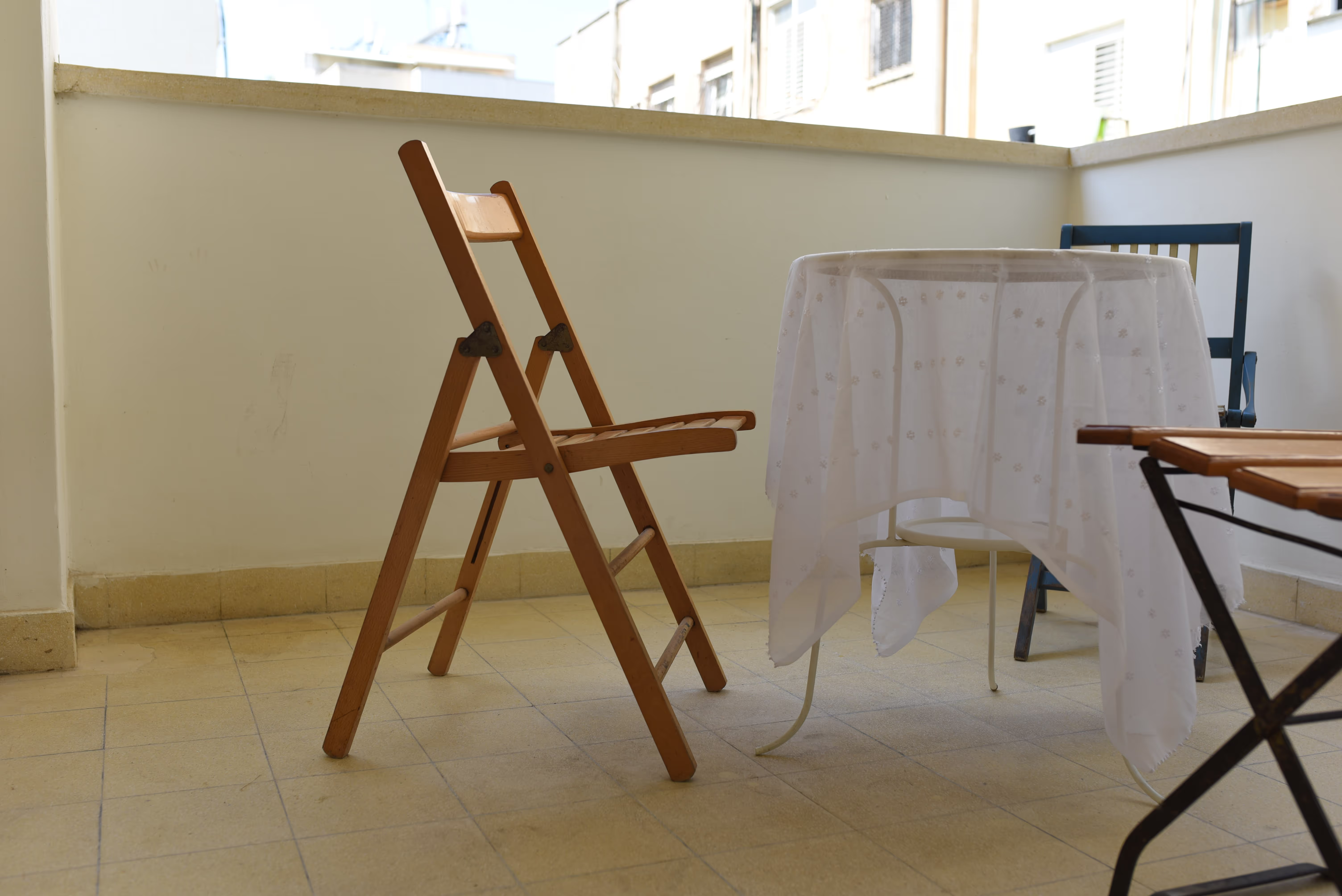
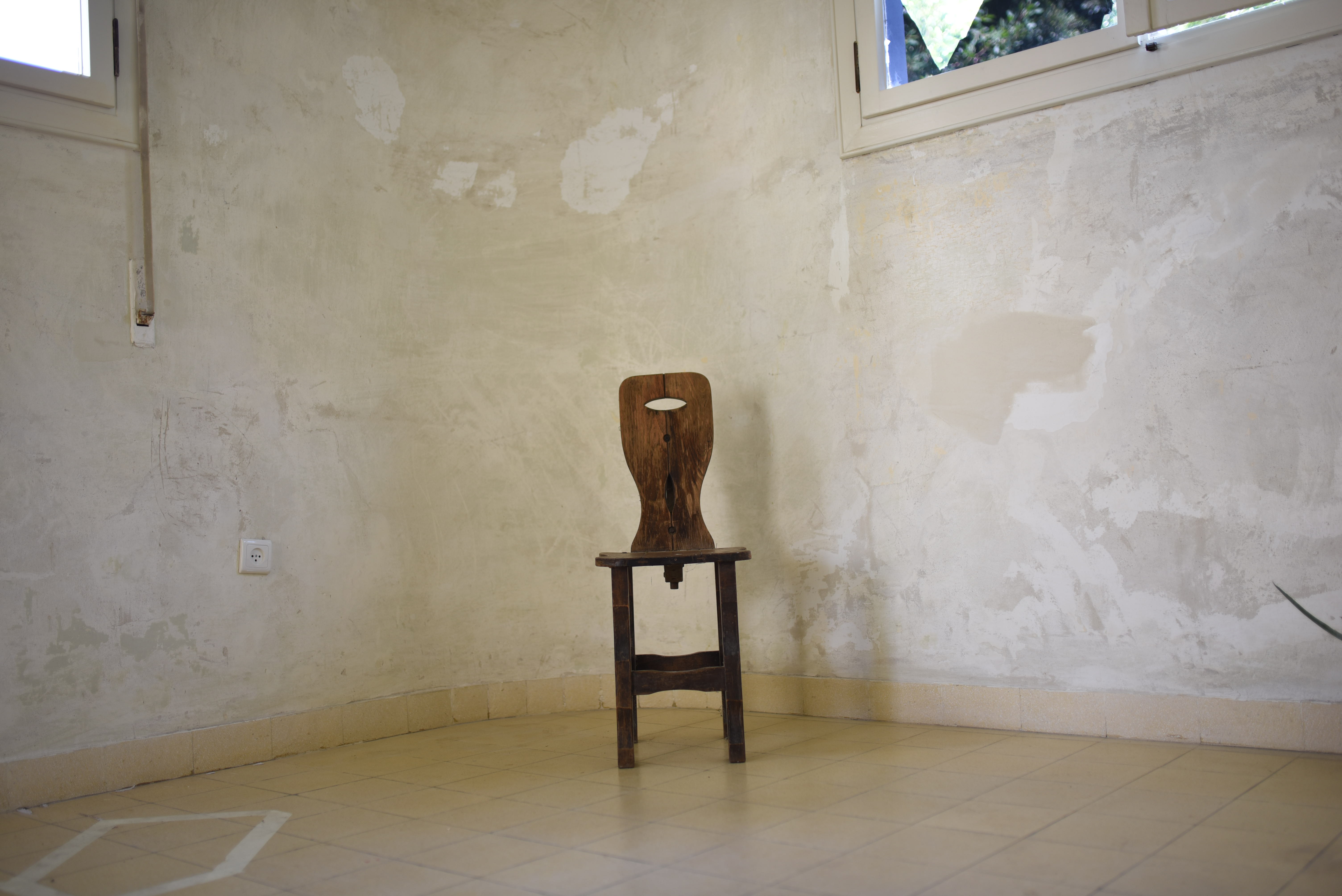
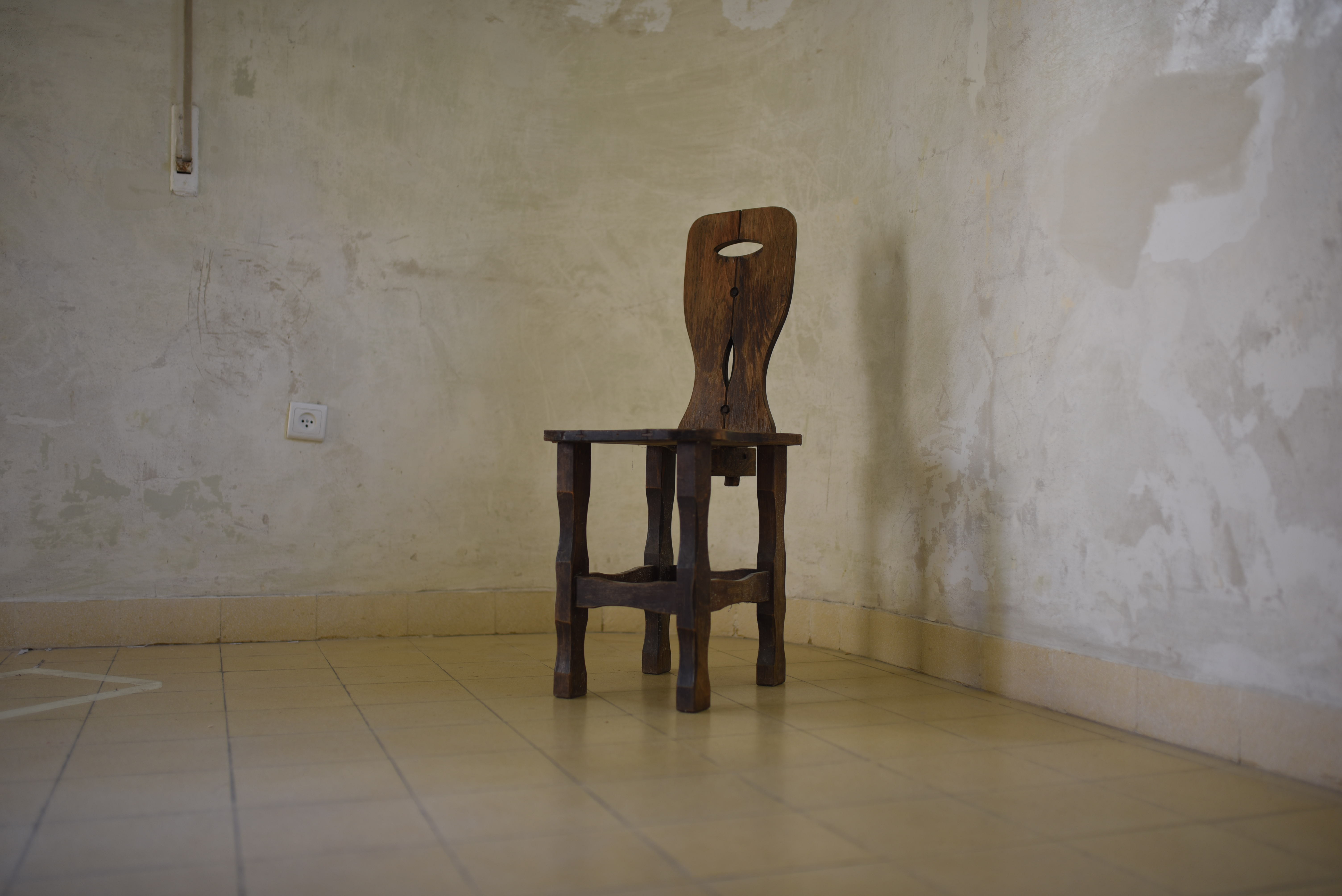
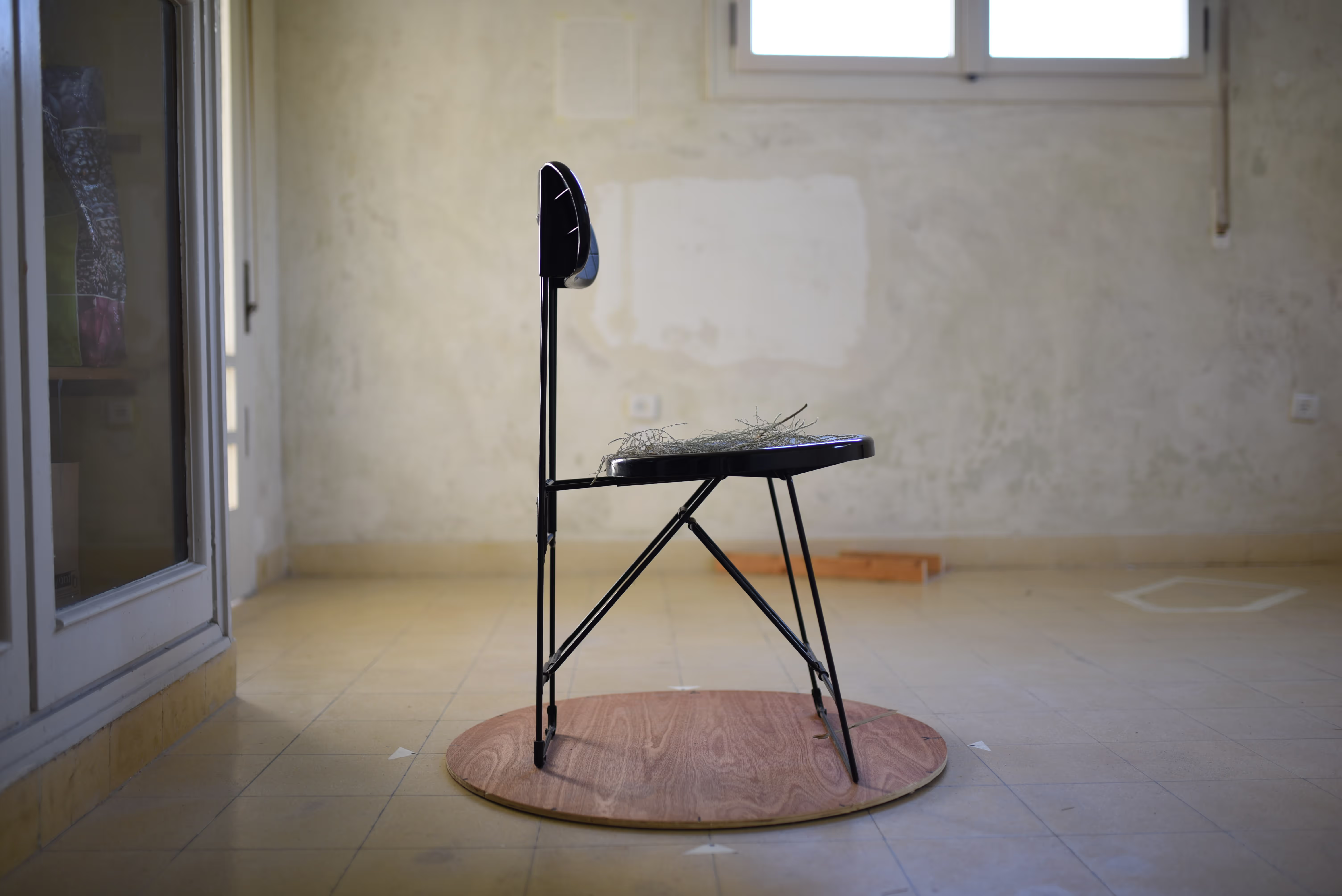
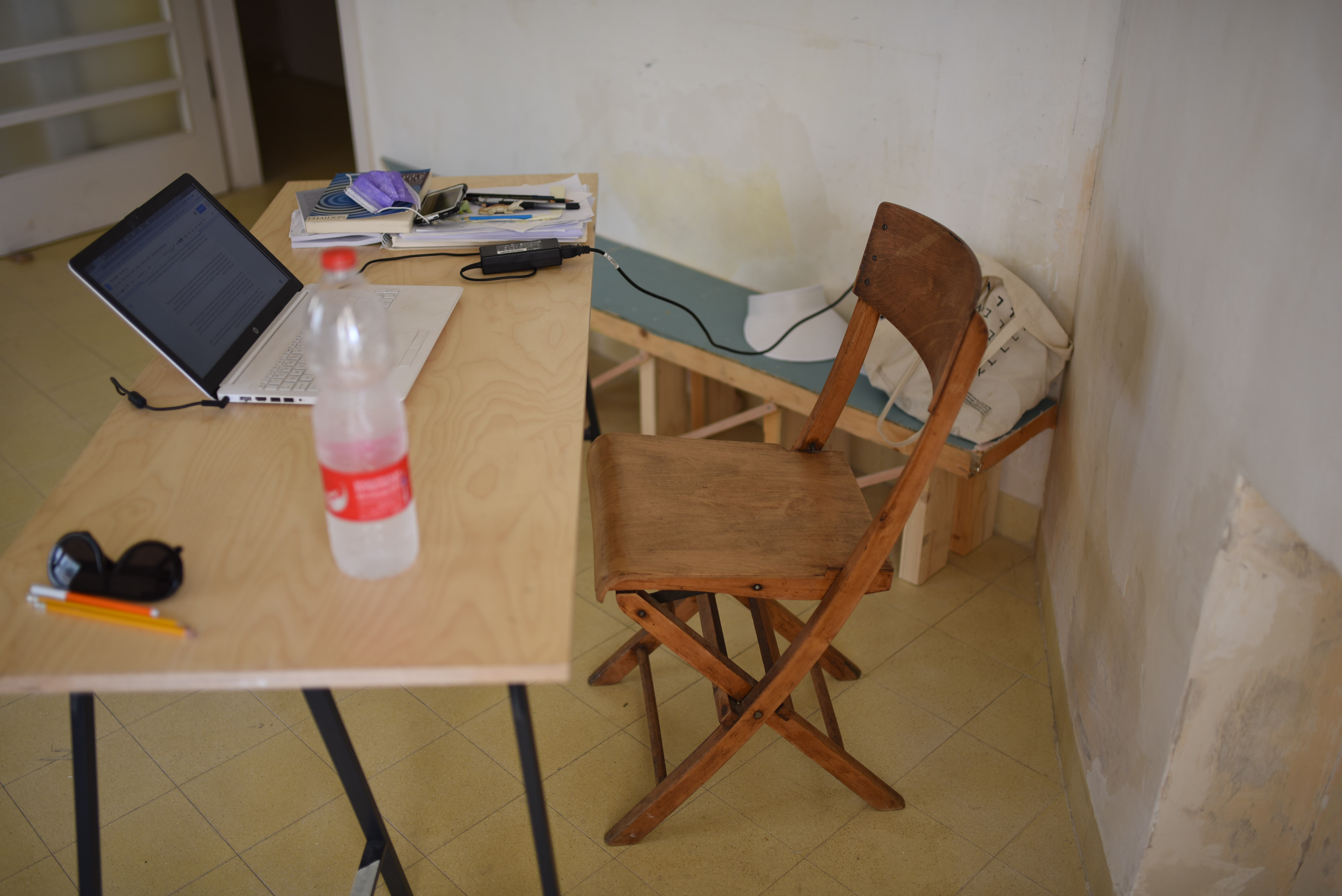

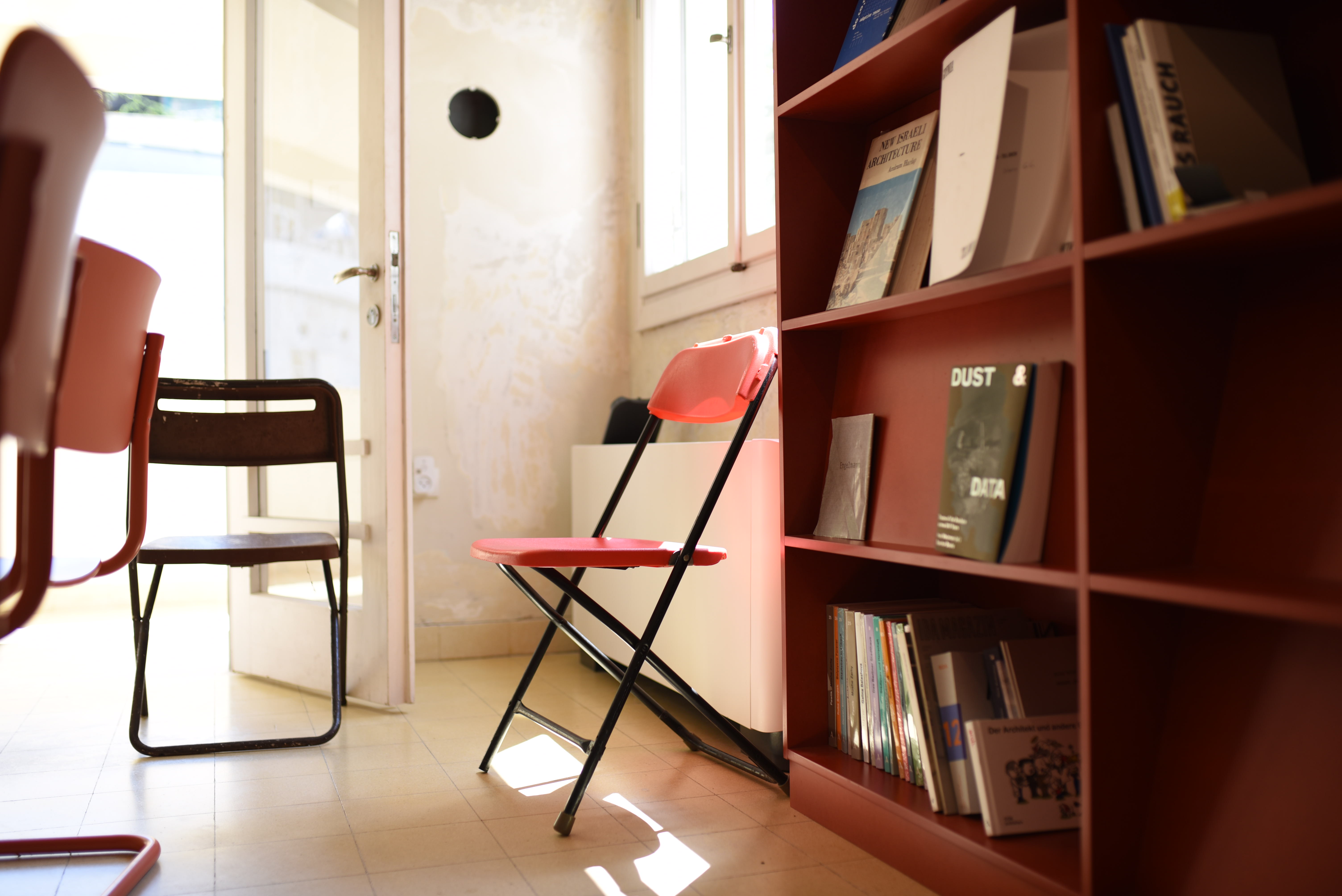
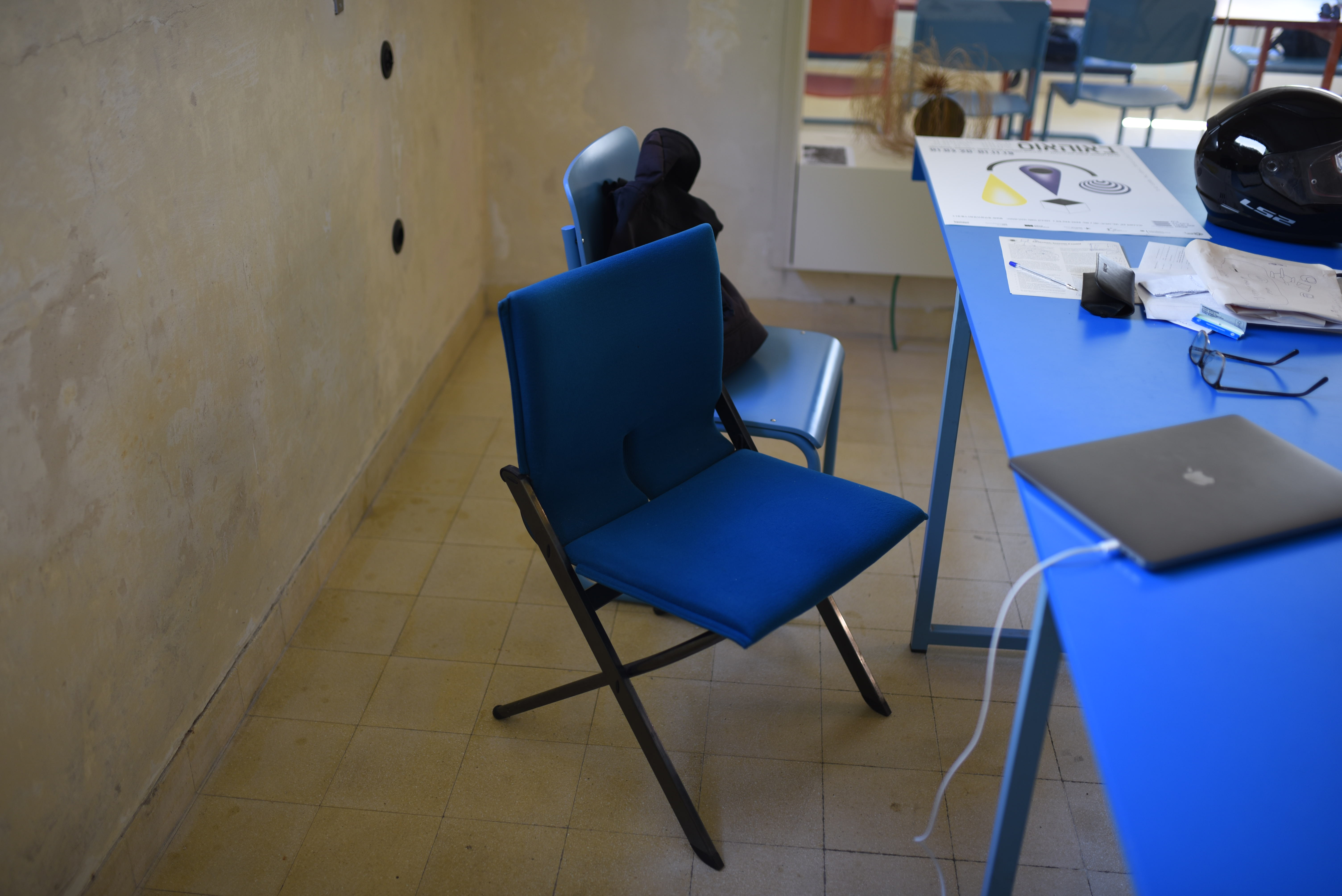
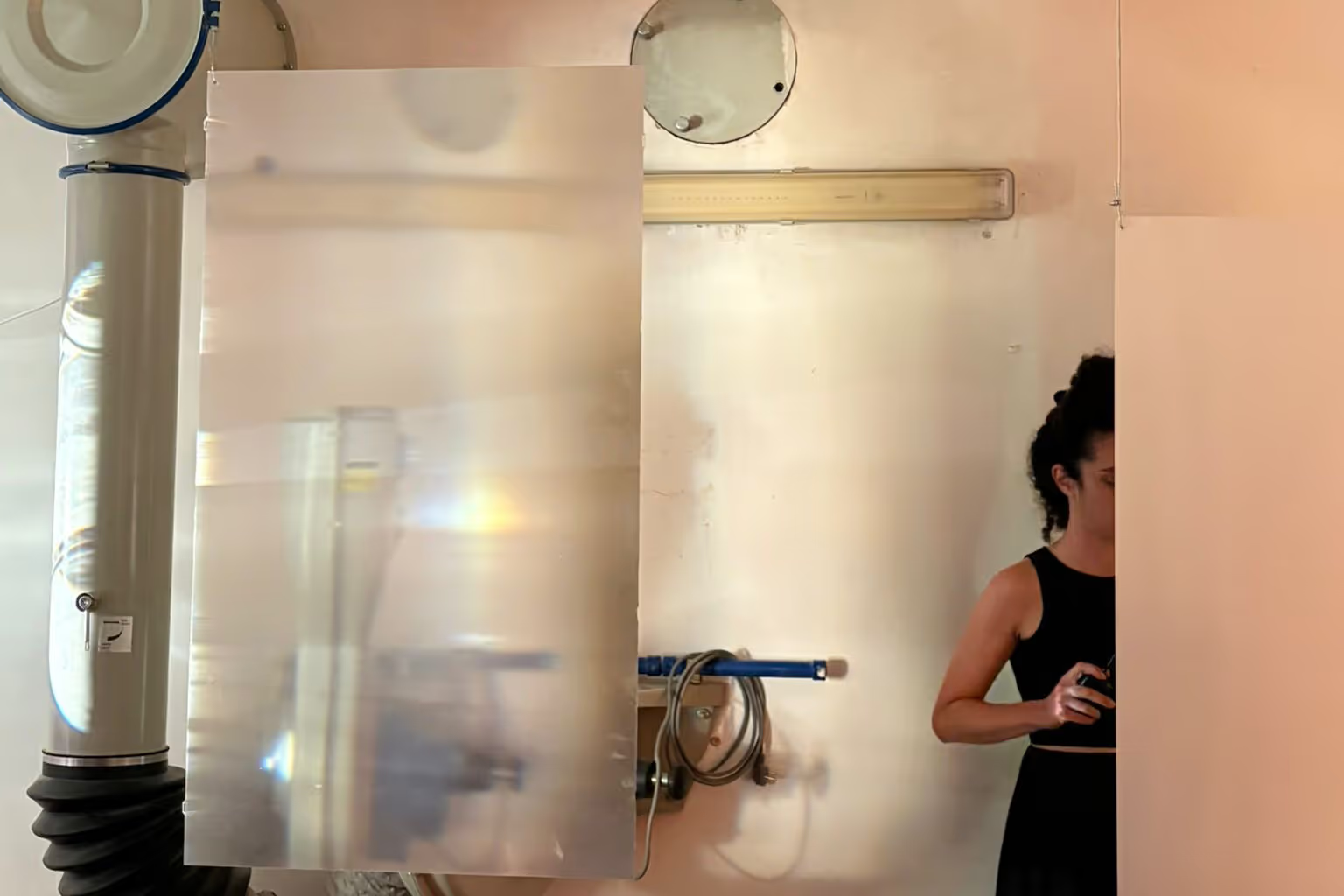
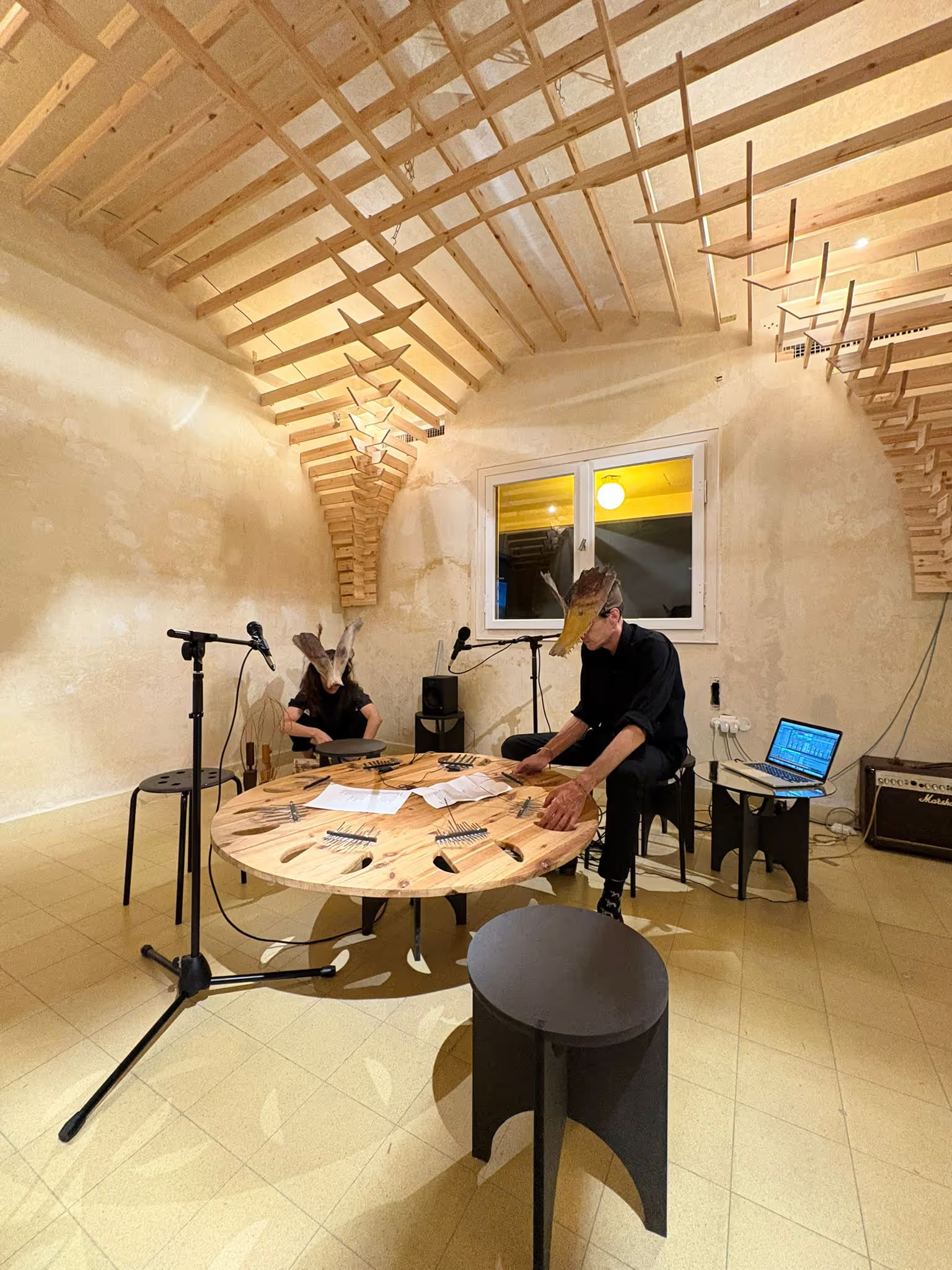
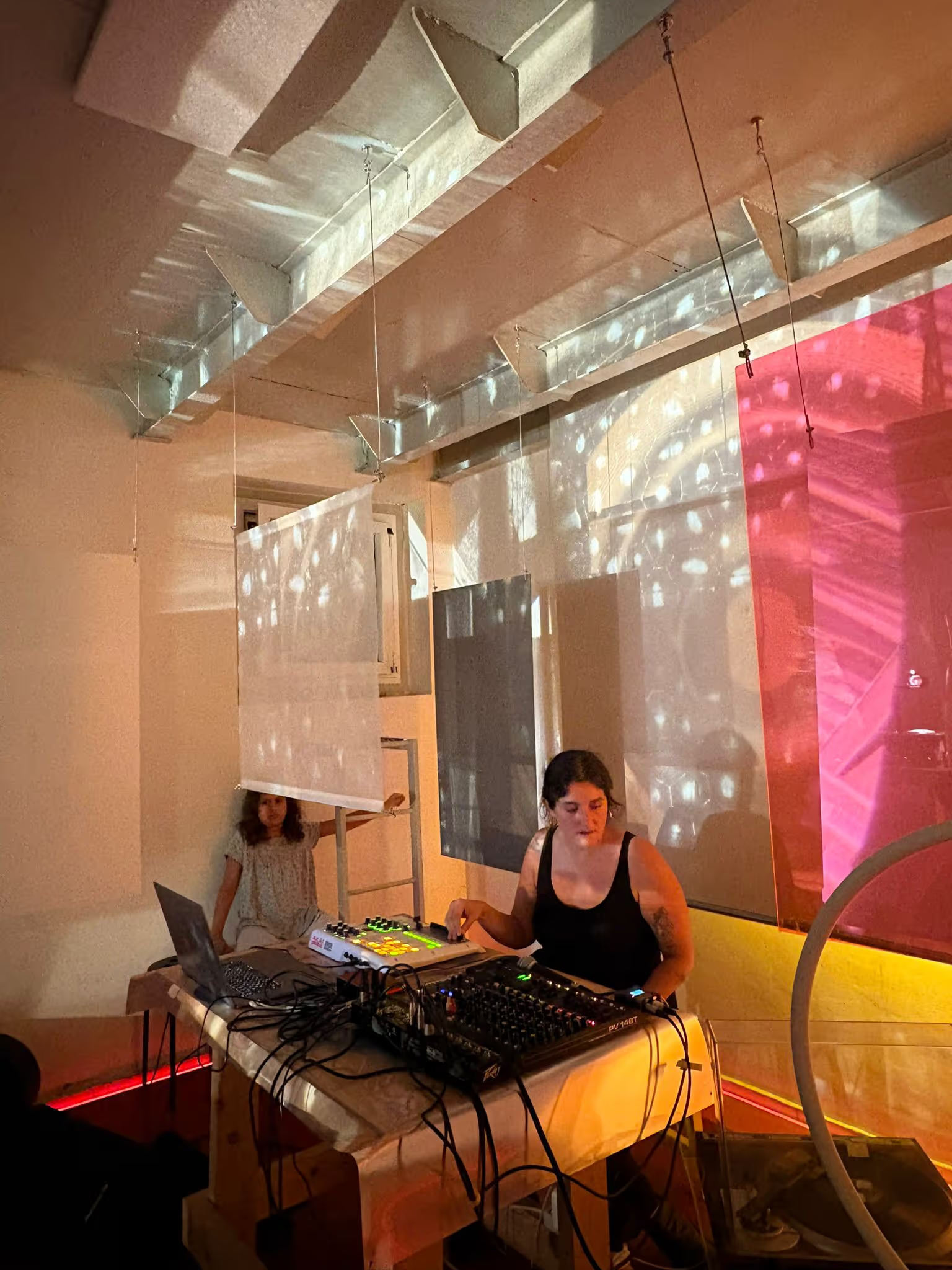
an experience of observation, listening, and presence through voice, light, music, and resonance, unfolding in an evening of wandering and sound throughout the liebling haus
co curator maayan mozes, performing michal david, adi shahar, ran nechmias, yarden shahar, and guy sherf, lighting design aya zaiger and michal david
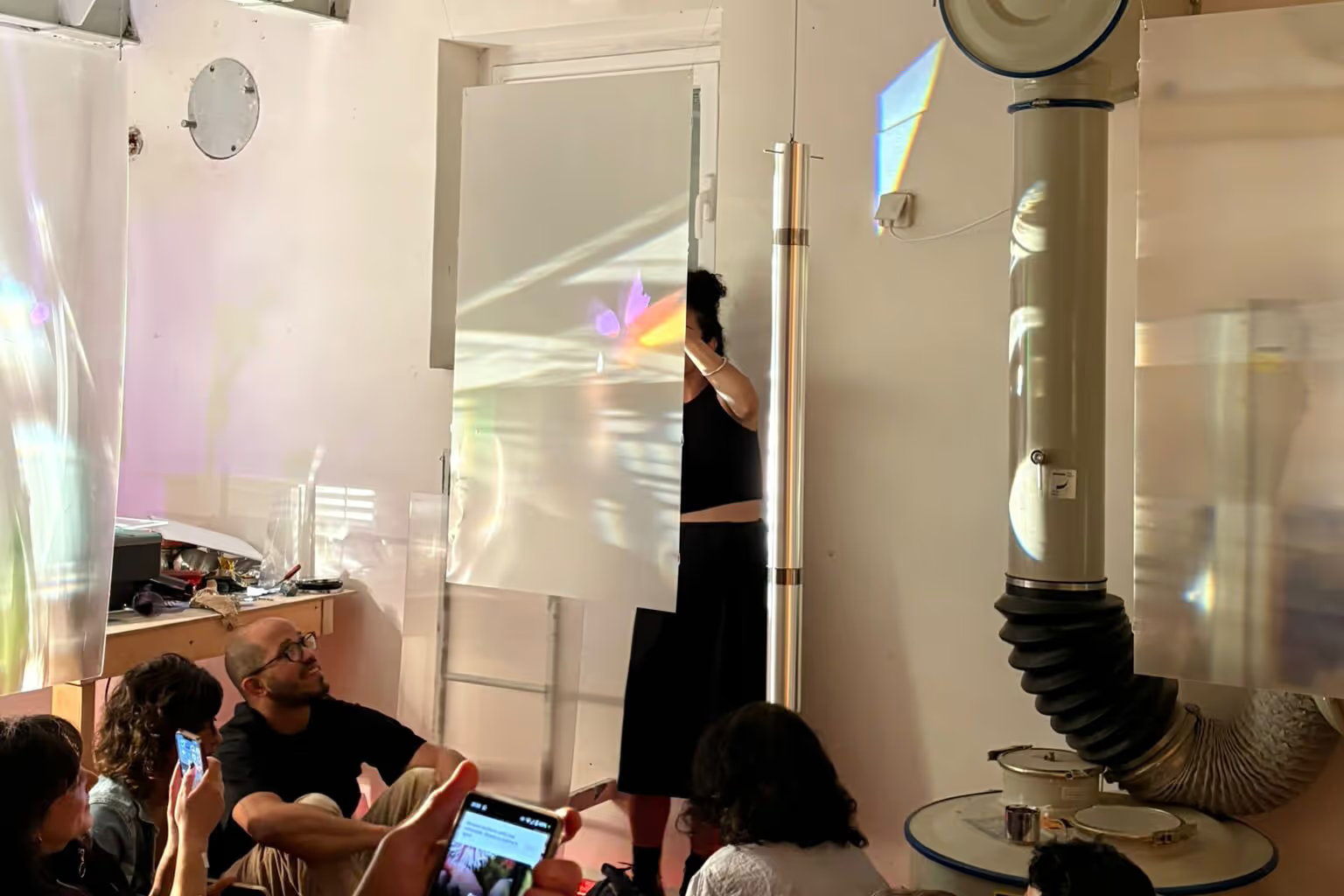
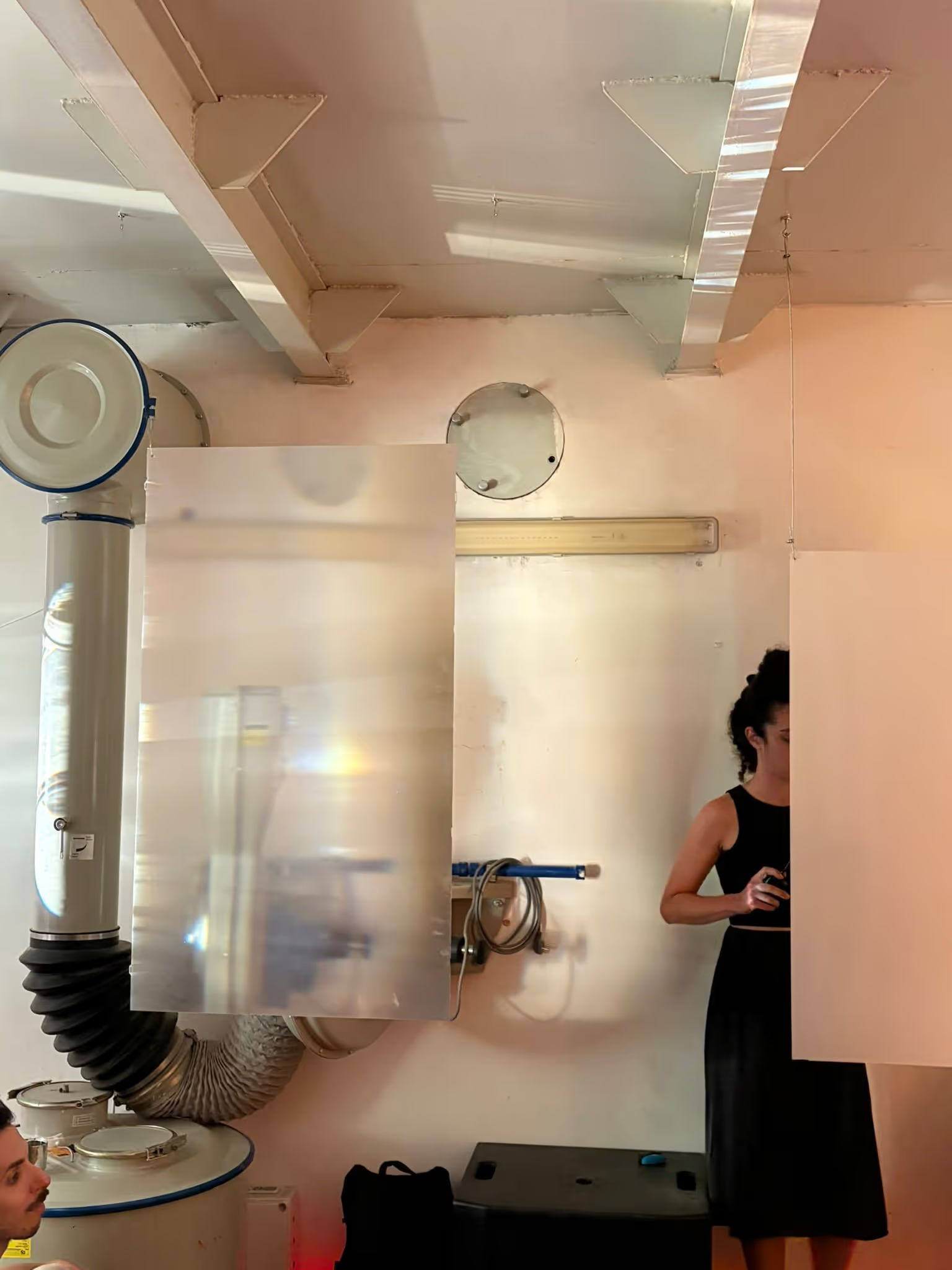
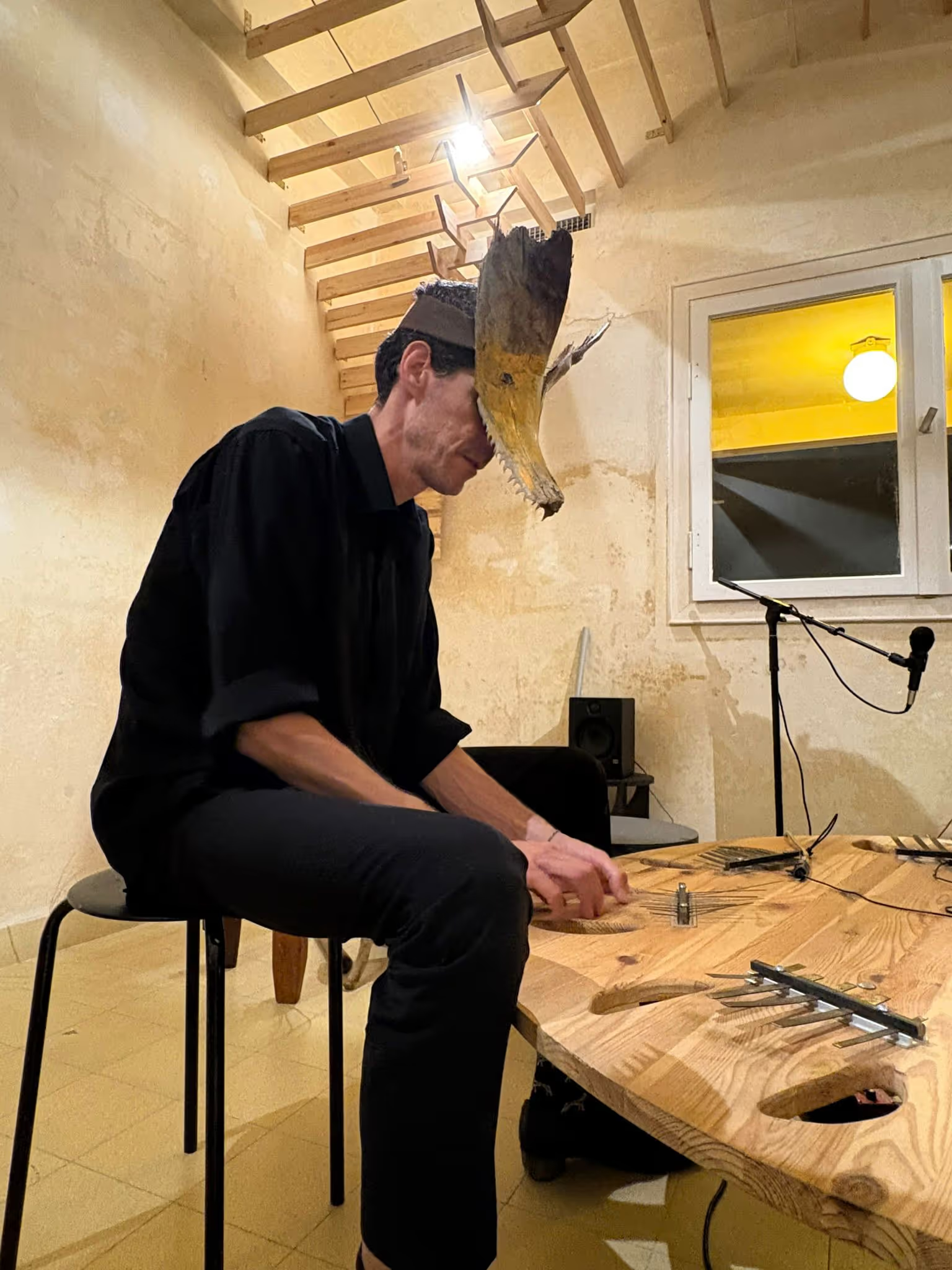

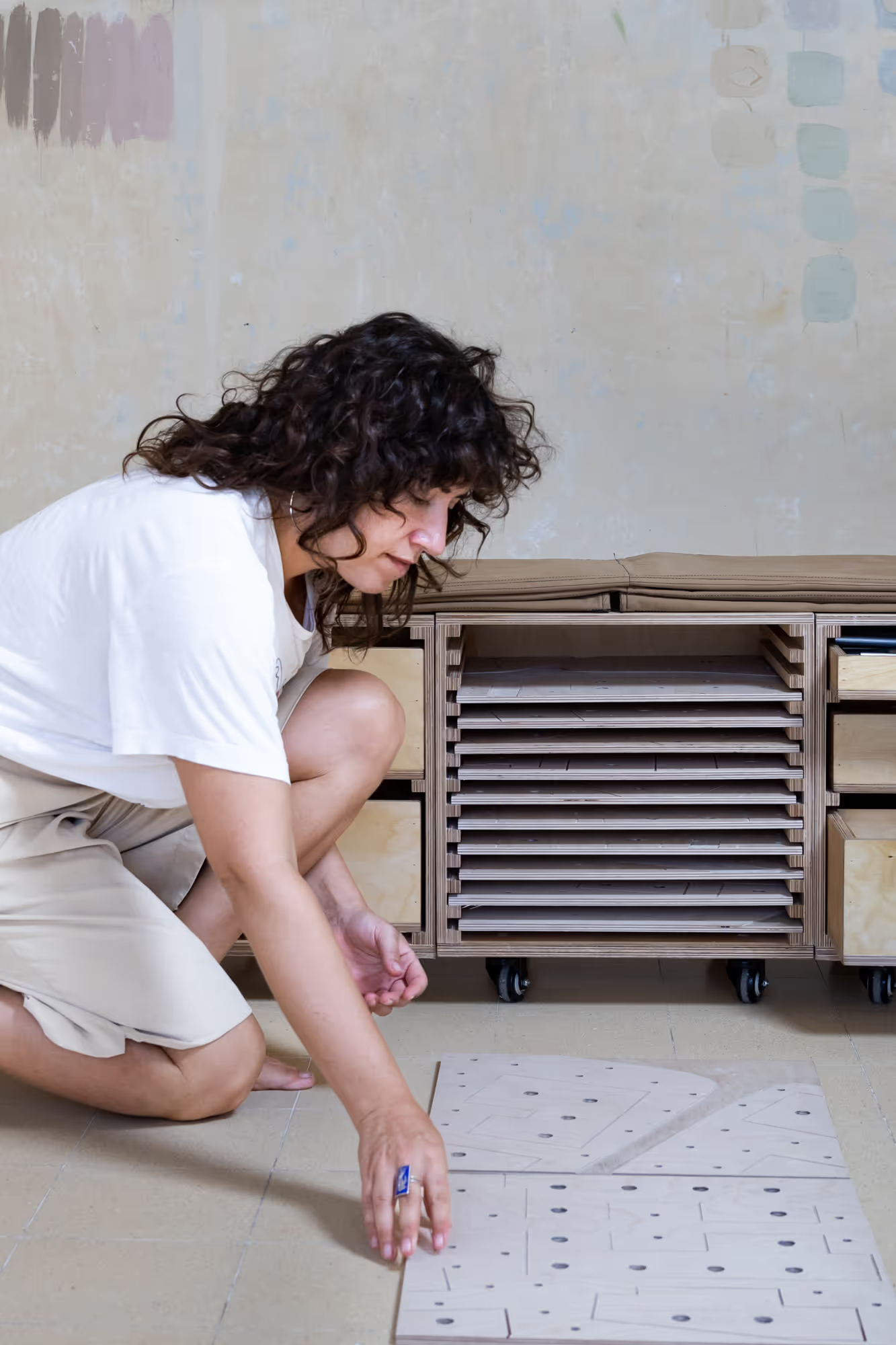
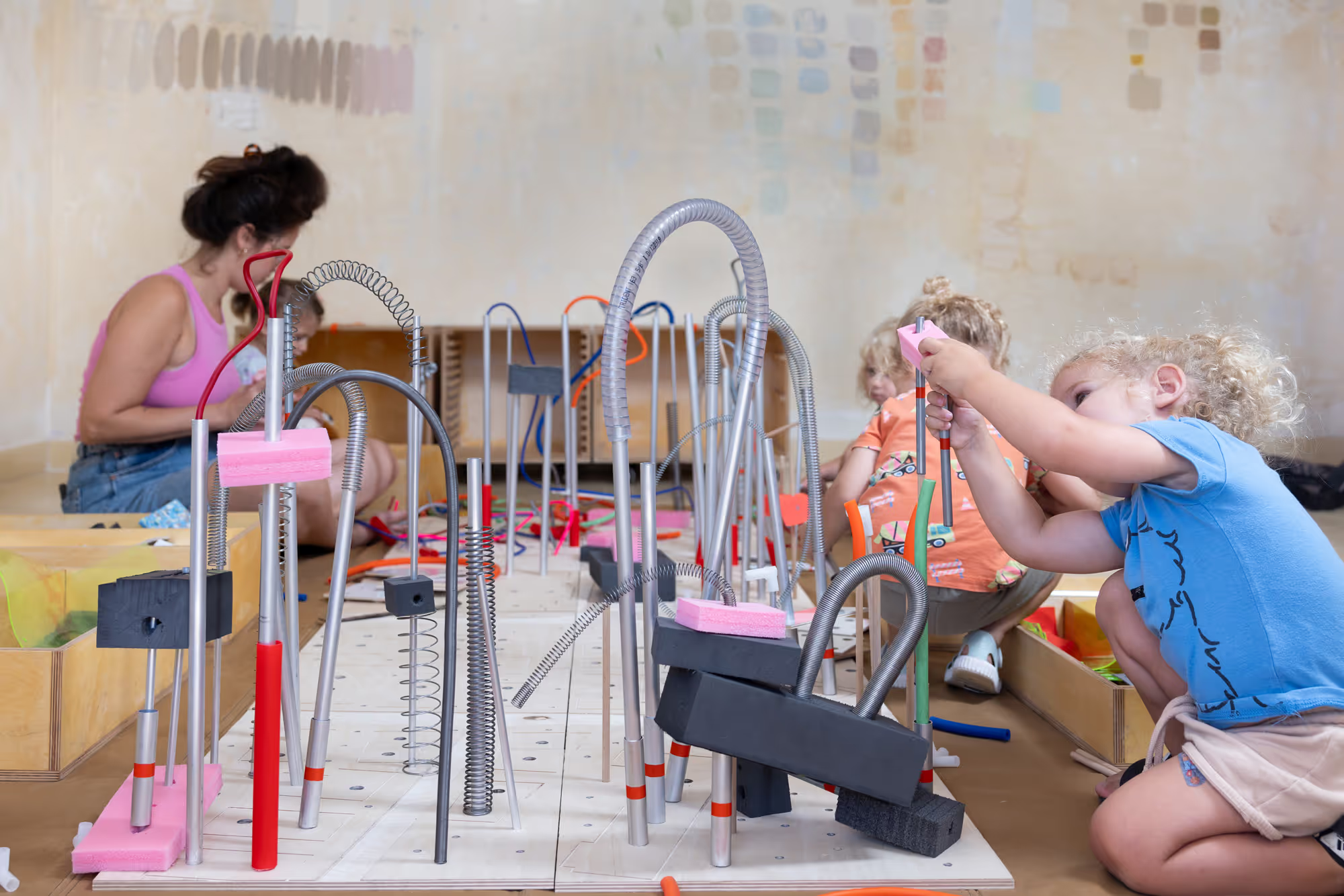
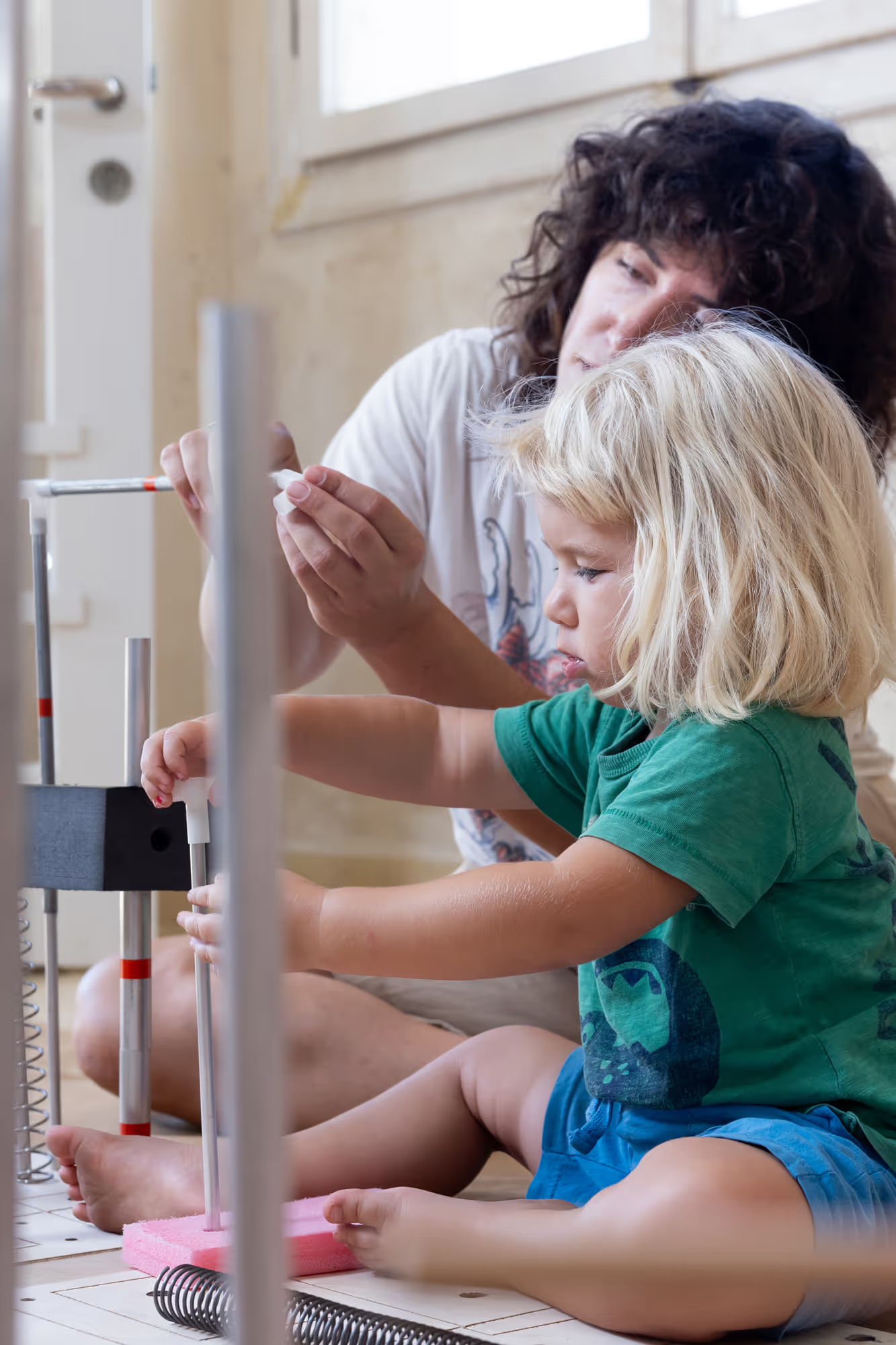
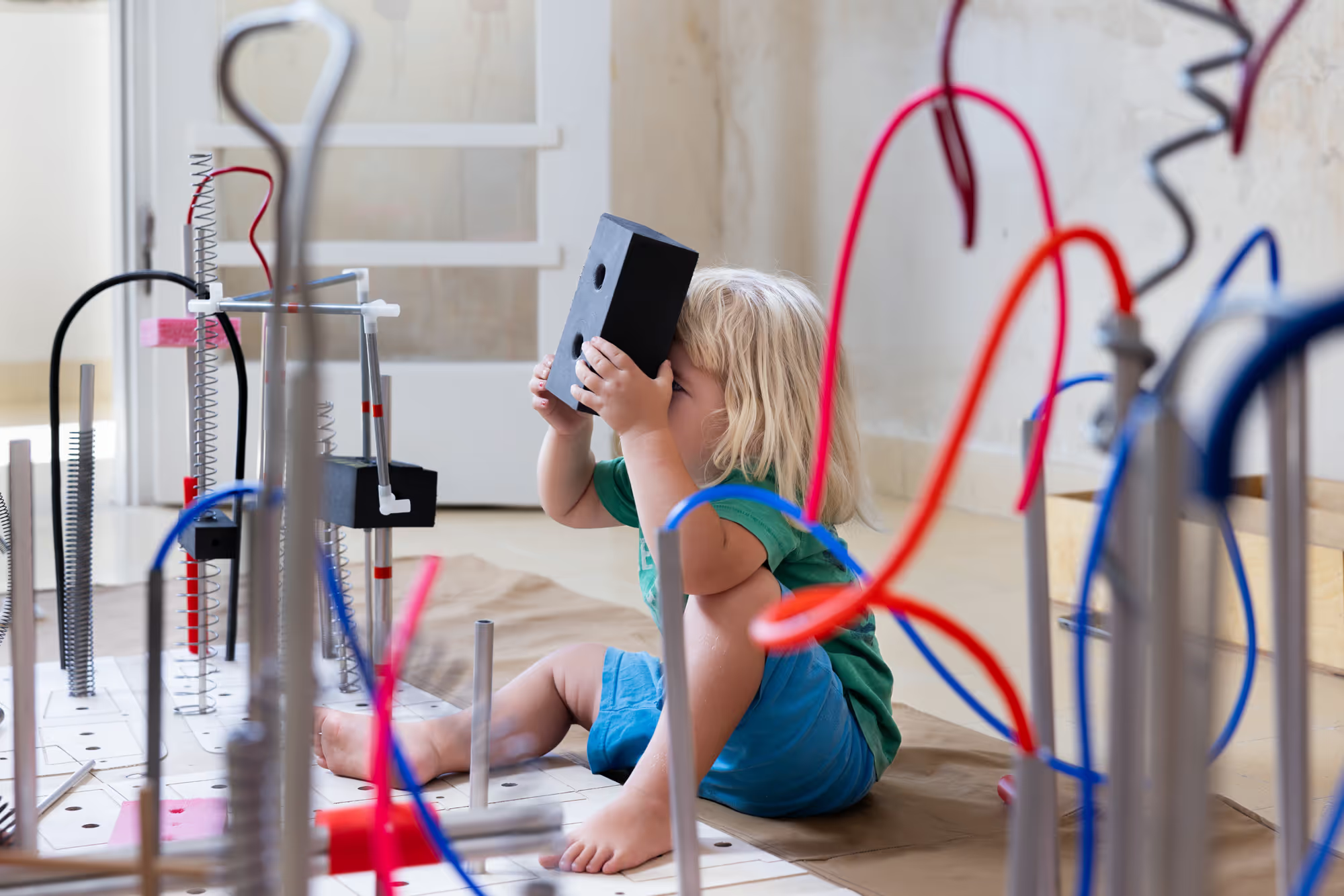
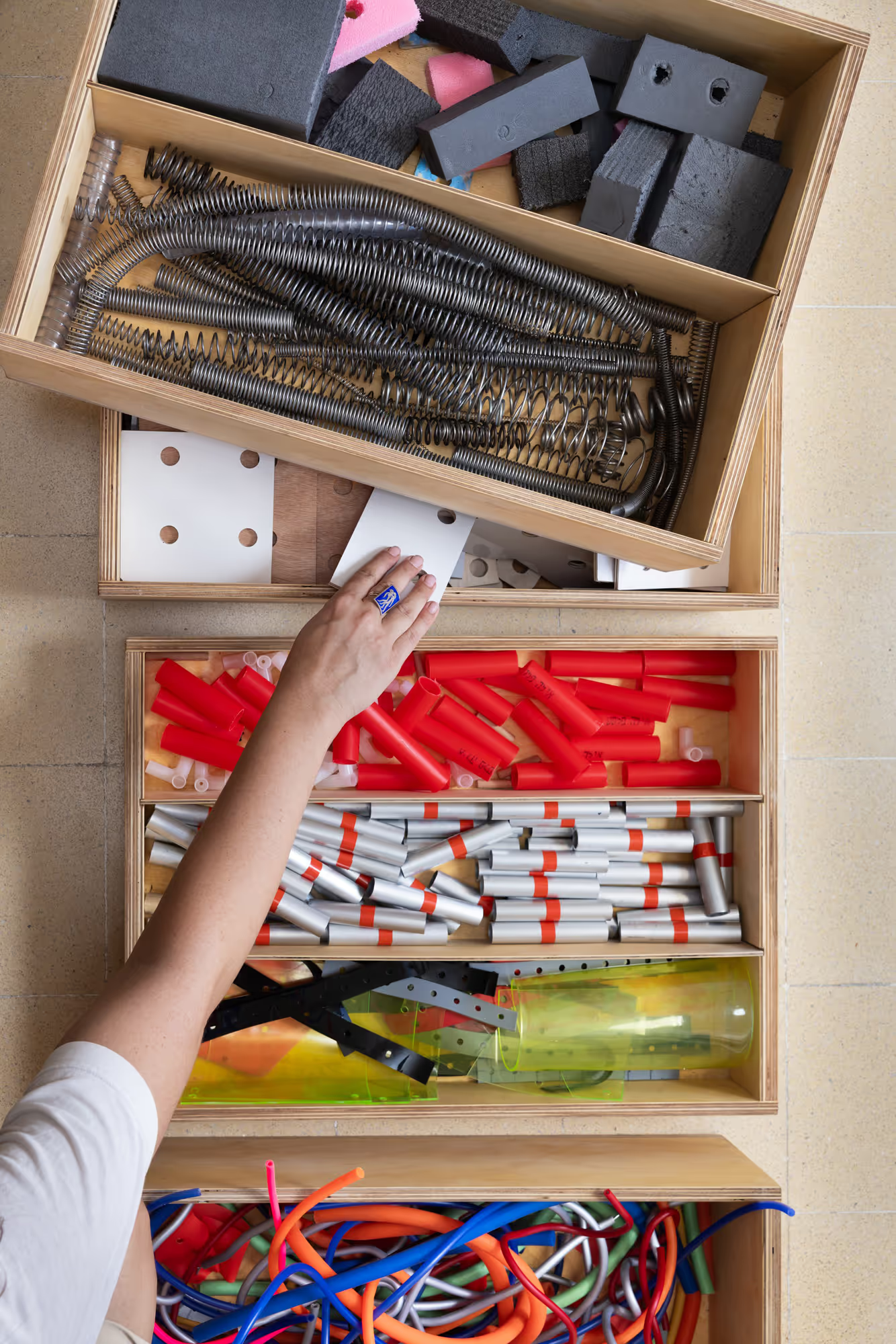
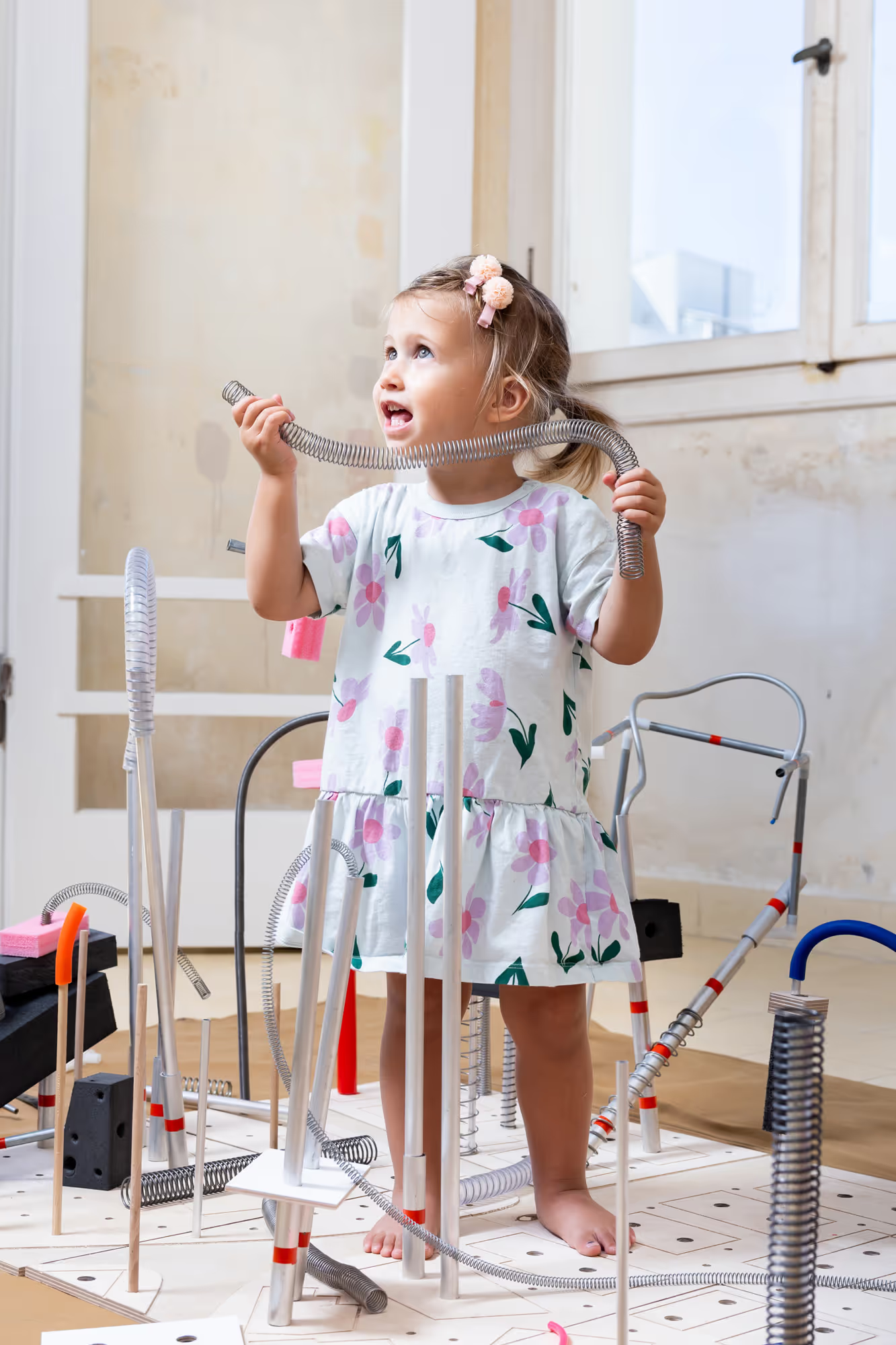
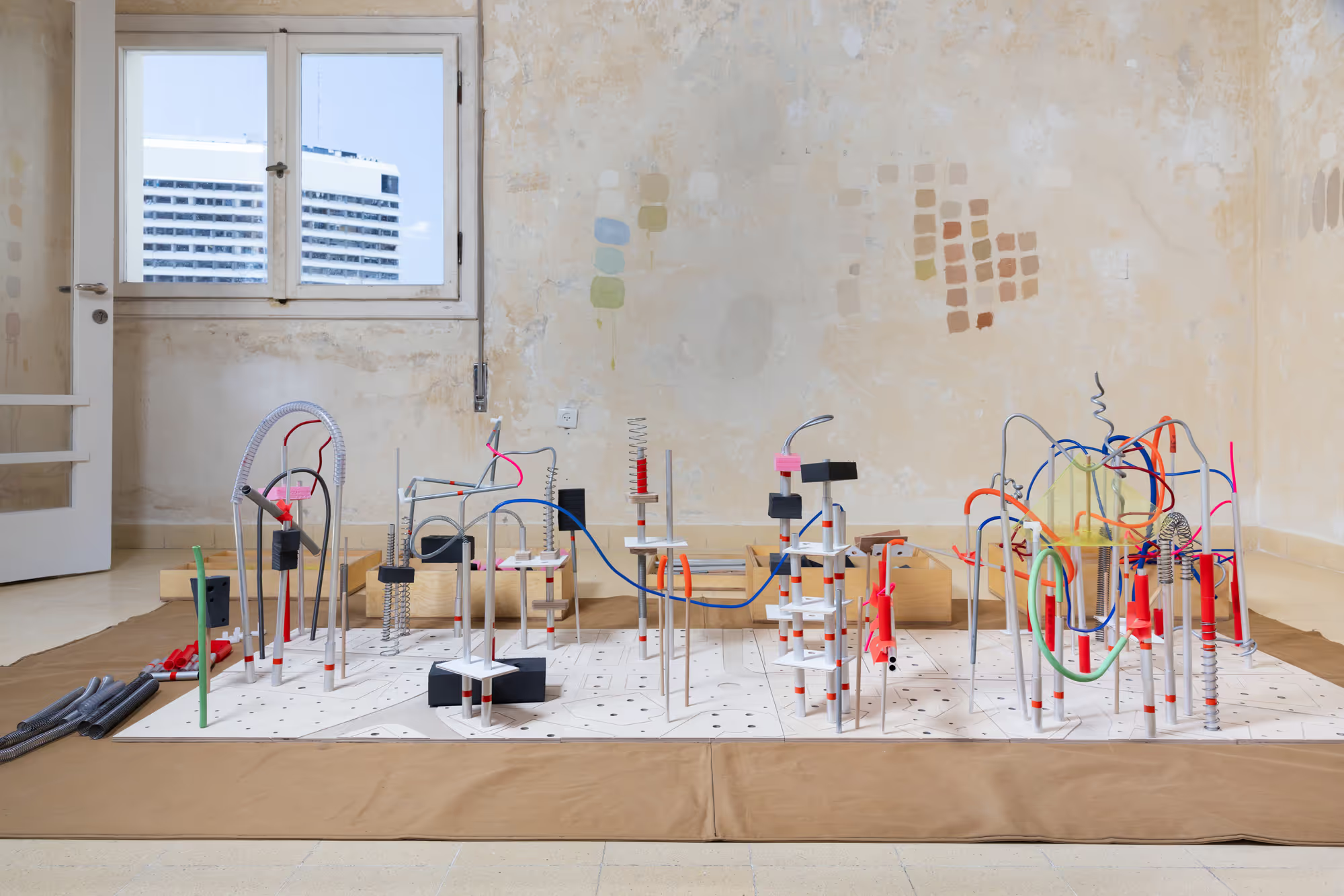
super studio was created to offer children aged 4 to 6 and their parents a free and open space for collaborative work. in this space, creative making becomes a way to explore, learn, and experience the world through hands on activity.
it functions as a building and architecture game using real materials. the activity unfolds with ease and enjoyment, without the need for tools, without fixed rules, and with the guidance of professional artists.
visitors are invited to experience the learning approach of the city as school, which emphasizes free making, discovery, and personal curiosity. during the studio process, thought takes shape, understanding deepens, and participants are encouraged to think independently, learn through doing, and bring their own ideas to life.
developed and designed with roni raviv and michal david, photography: yael schmidt
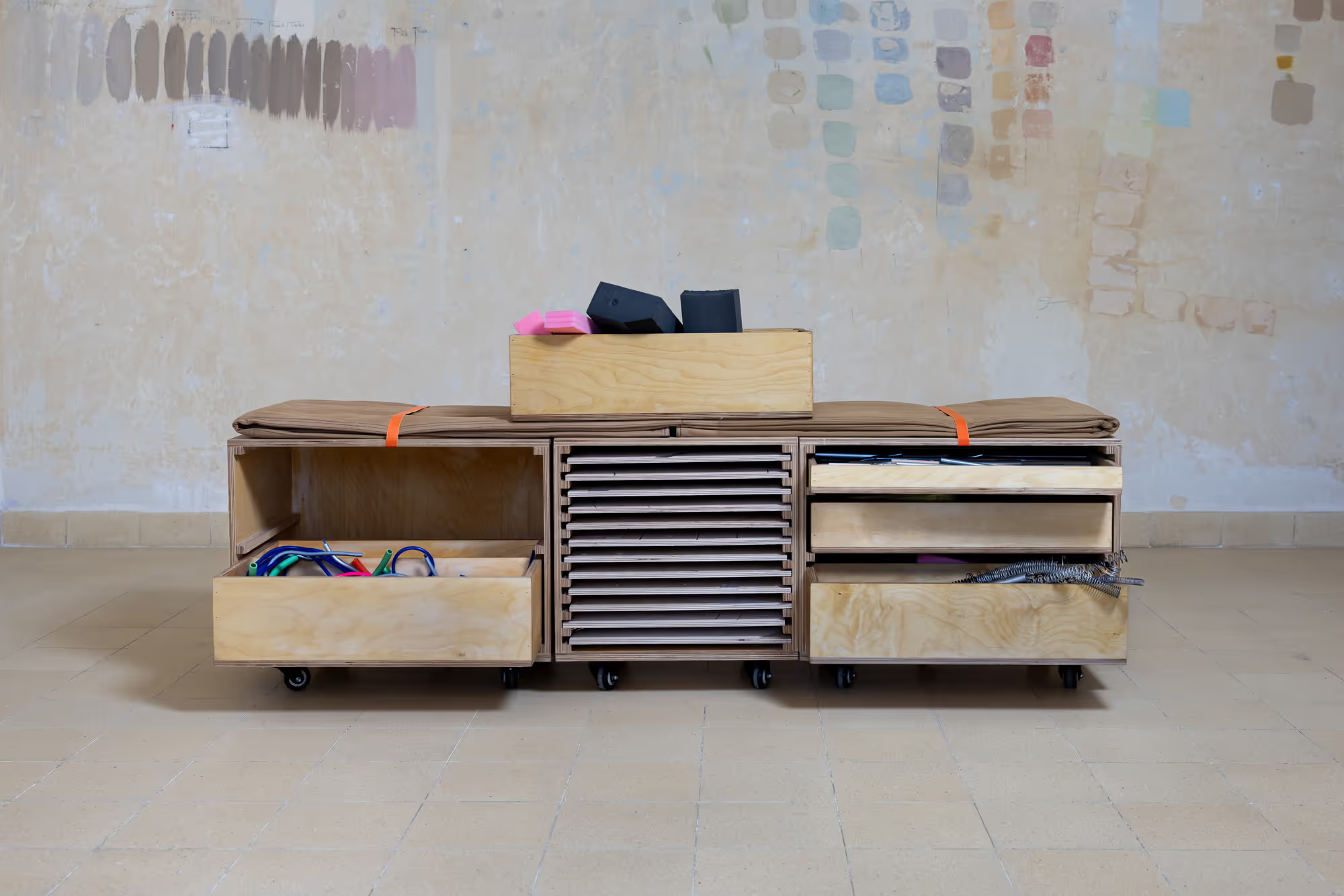
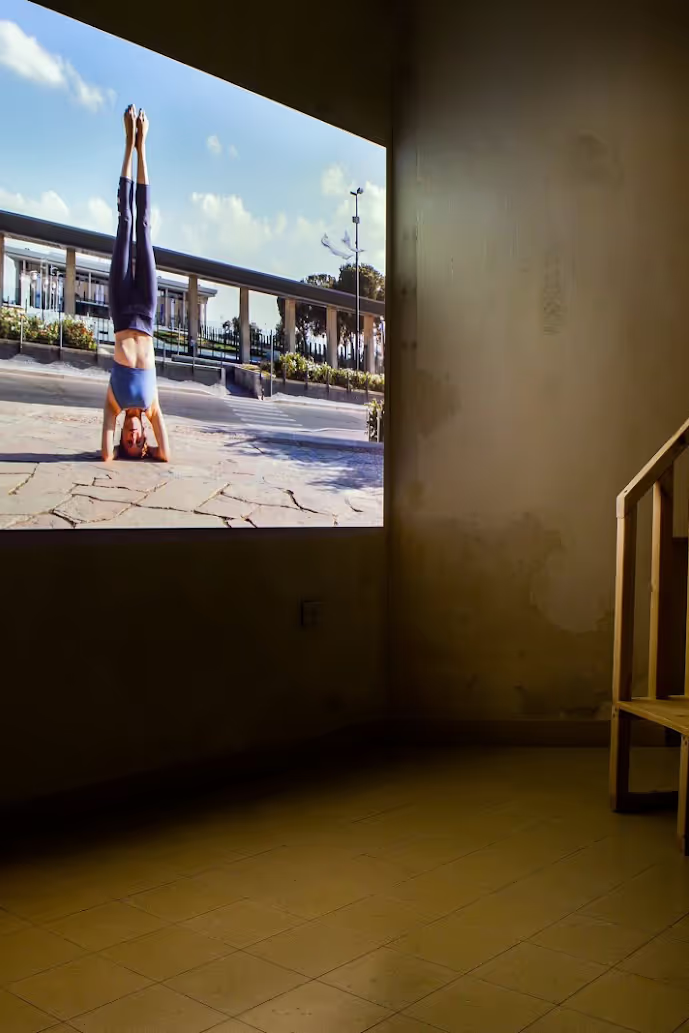
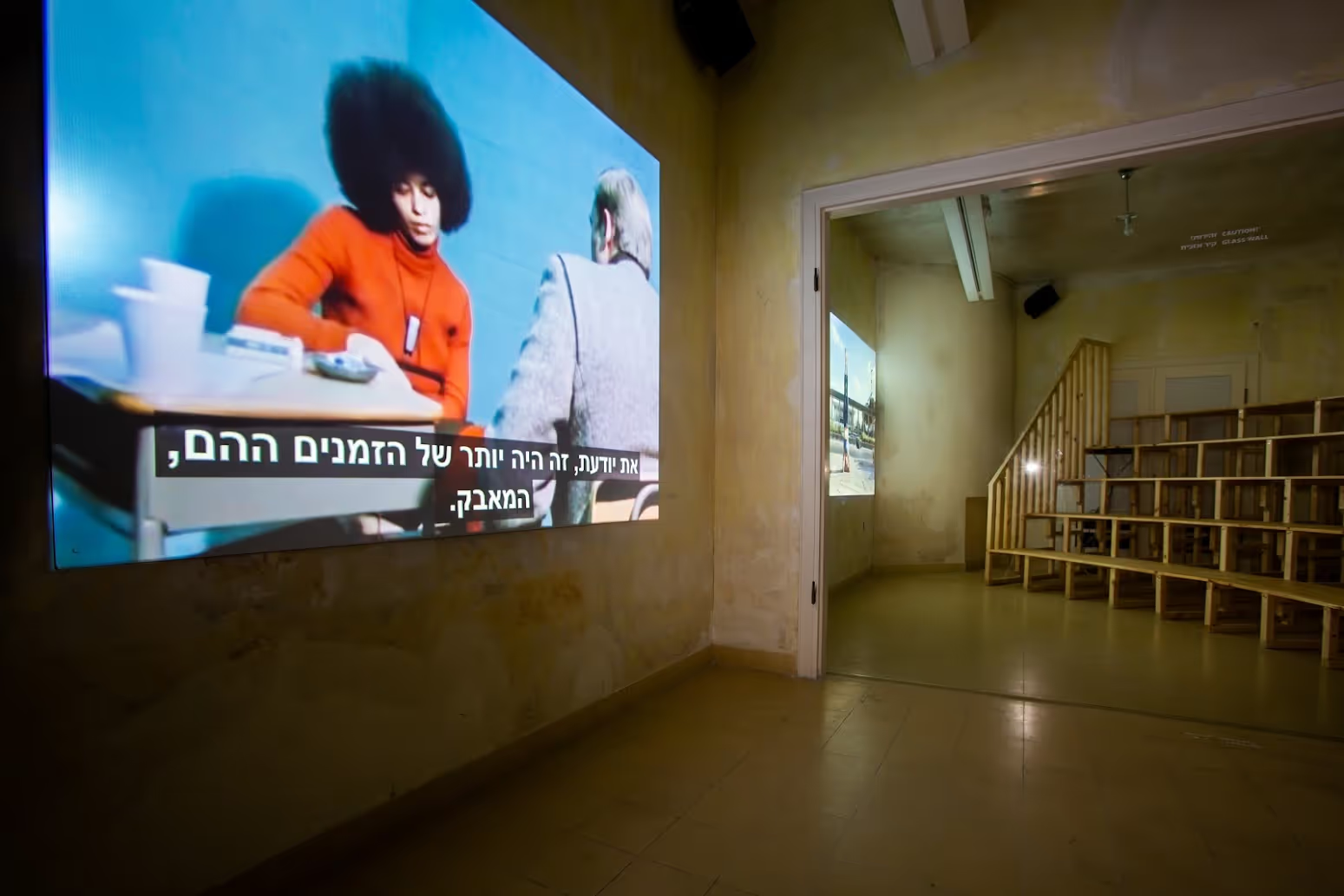
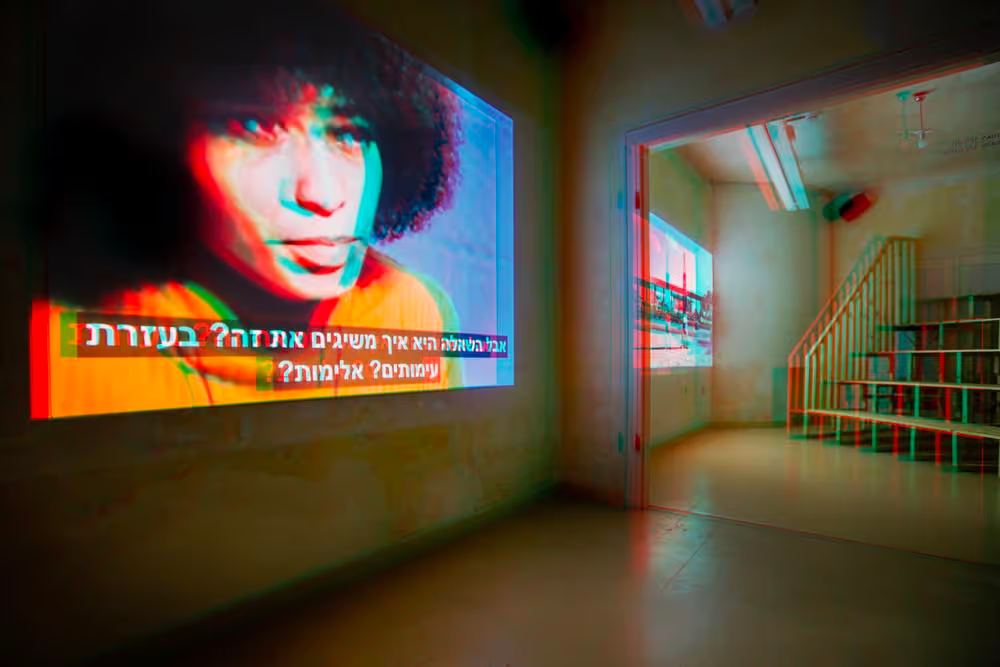
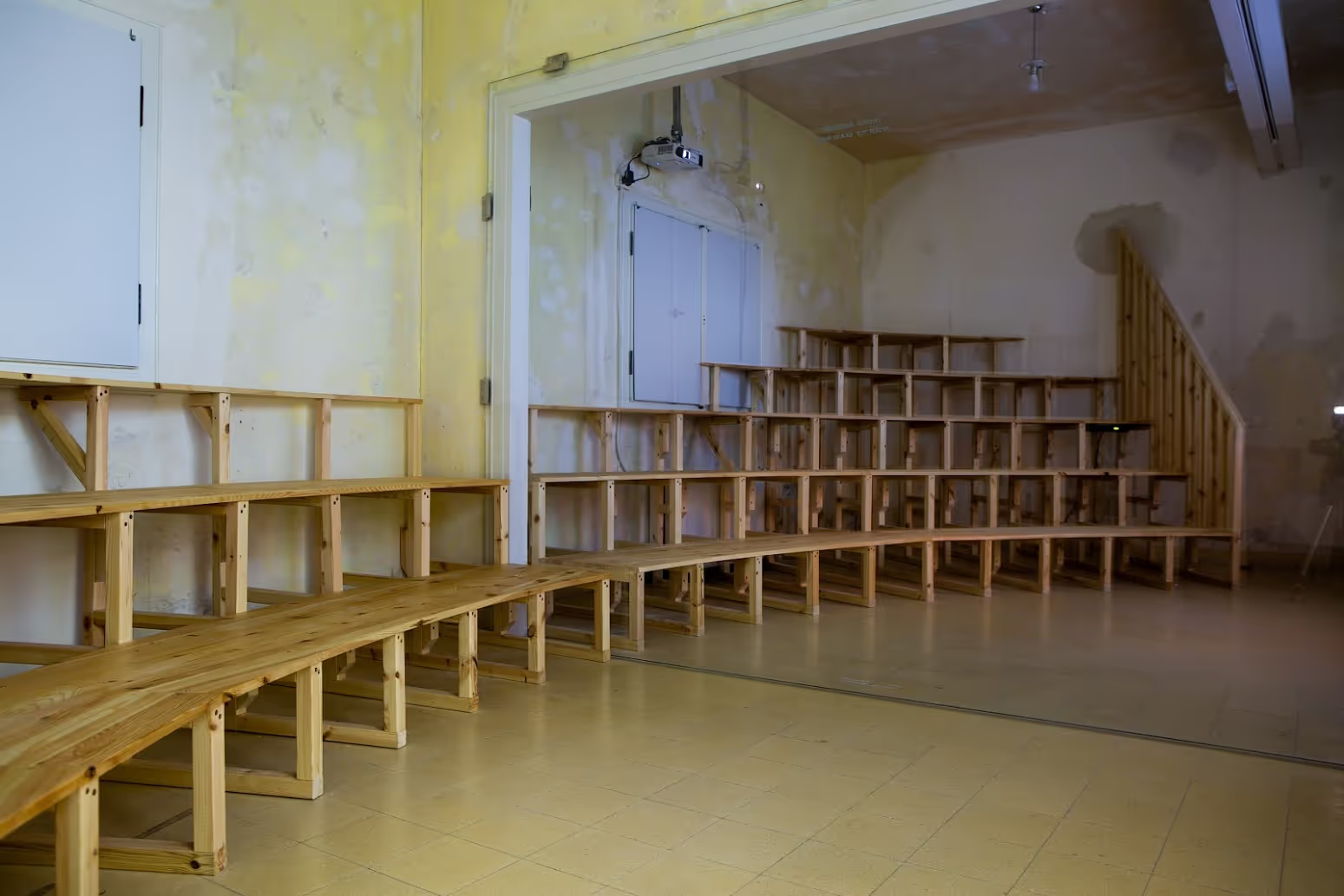
two video screenings are presented: headstand by maayan mozes, and a prison interview with political activist and writer angela davis. both works are projected simultaneously in the same space, divided into two sections, creating a shared field of viewing and tension.
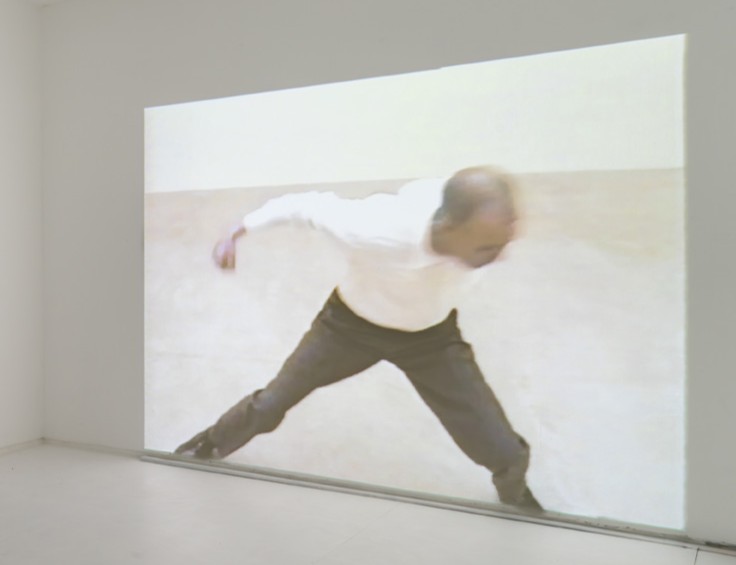
in headstand, maayan mozes stands on her head in front of the knesset, the legislature overseeing state affairs. her inverted body protests the institution’s form and function, confronting the laws that grant the state authority to use force against us. the physical resistance enacted in mozes’ video is a political act, part of a long lineage of protests, demonstrations and public performances that use the body as an instrument of refusal and opposition. it is also an act of ongoing, persistent resistance by the artist.
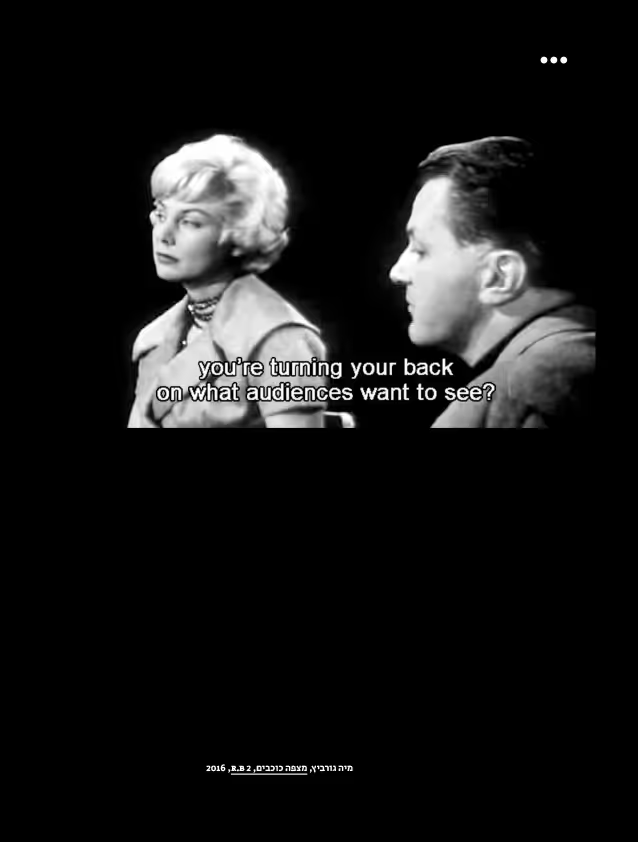
angela davis, one of the leaders of the black panthers movement, was arrested in 1970 on false charges and fought for her freedom until she was acquitted. the interview presented here was filmed while she was imprisoned. it reaches a pivotal moment when the swedish television crew asks whether the black panthers will continue to resort to violence.
rather than falling into a populist trap, davis responds by reframing the question. she outlines its personal and historical context, controls the terms of the discussion, and redraws the boundaries of the debate, all while speaking from within incarceration.
images from angela davis’s 1972 prison interview are featured in the film the black power mixtape 1967 1975, directed by göran olsson and headstand by maayan mozes
30 min, Single video channel (2016)
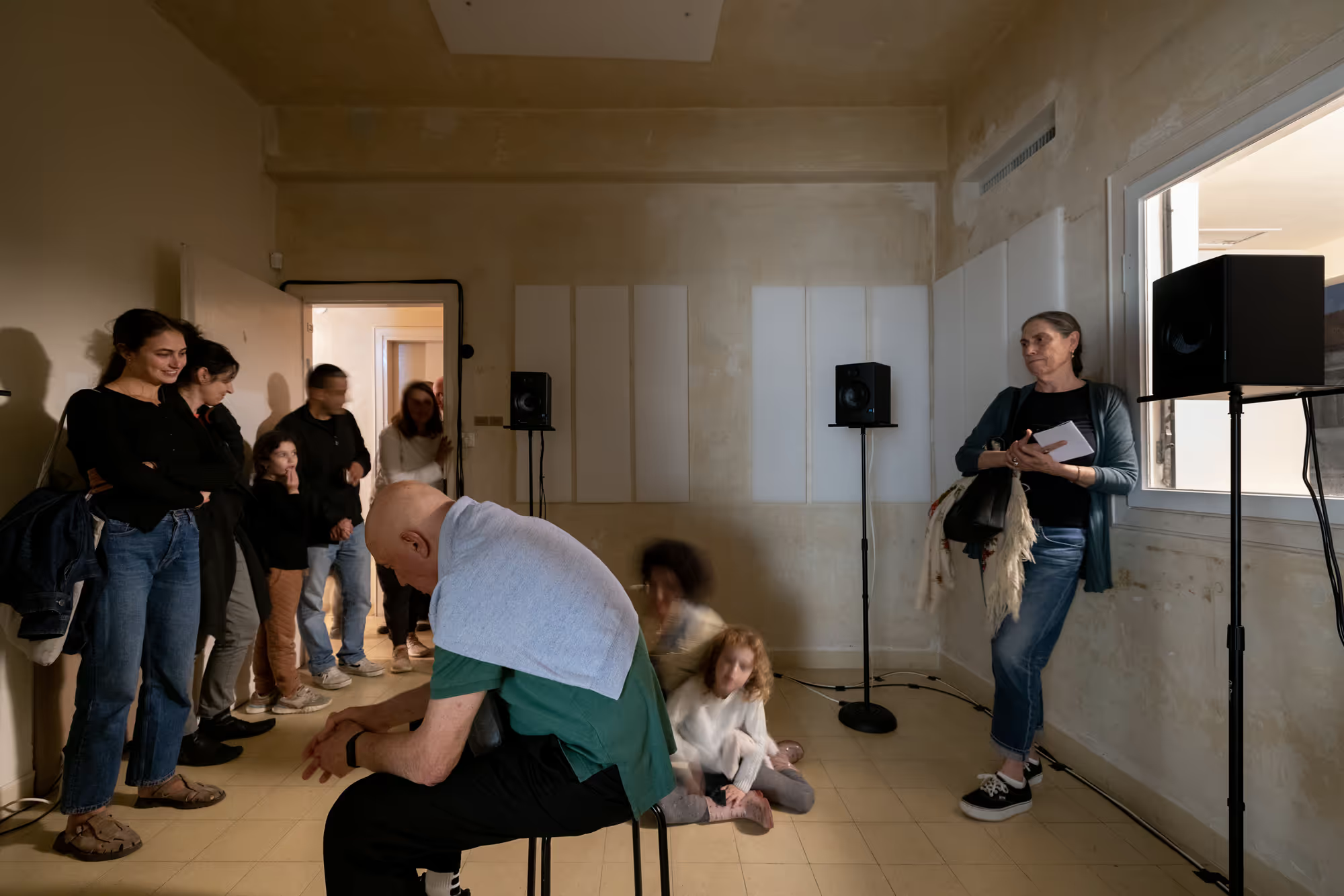
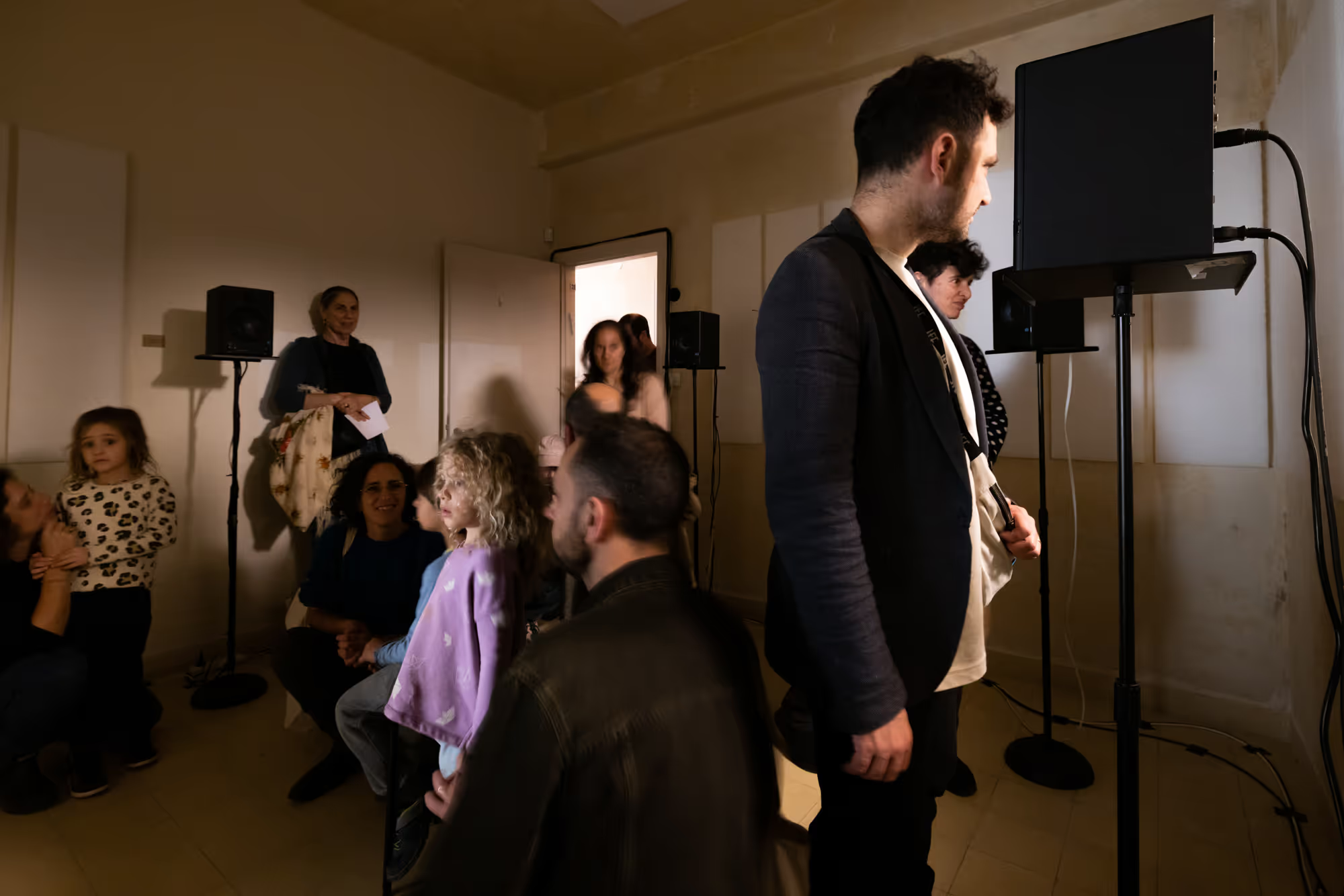
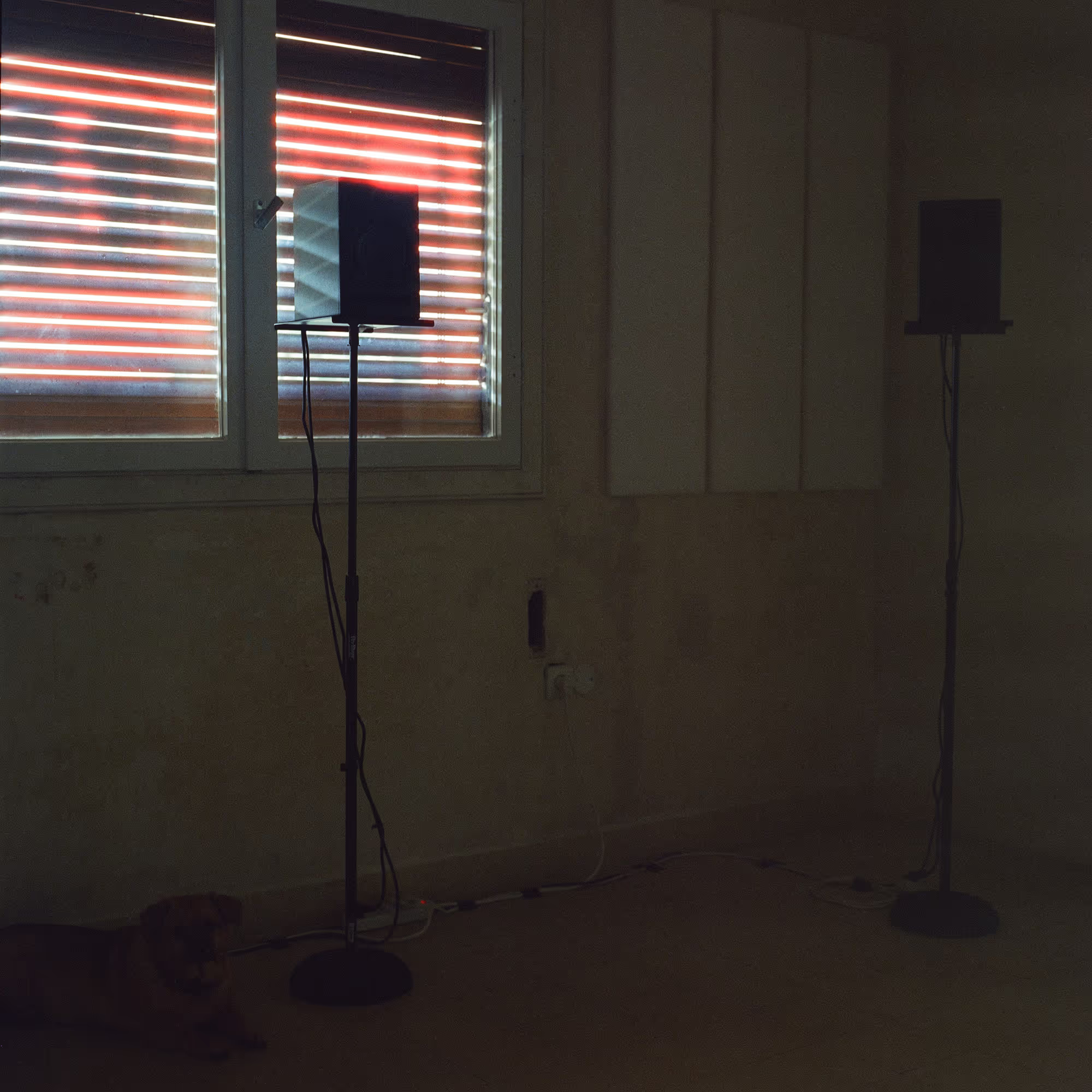
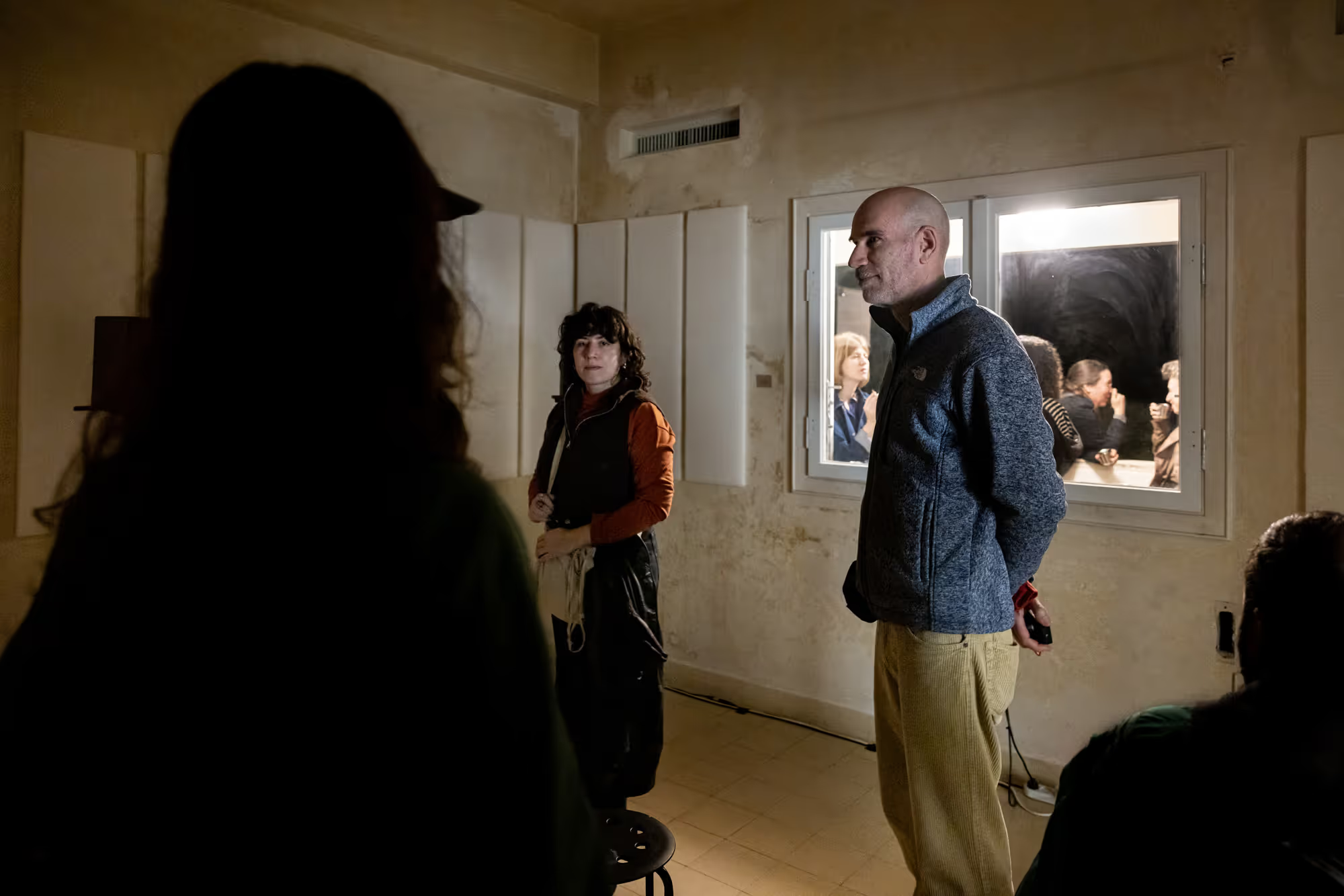
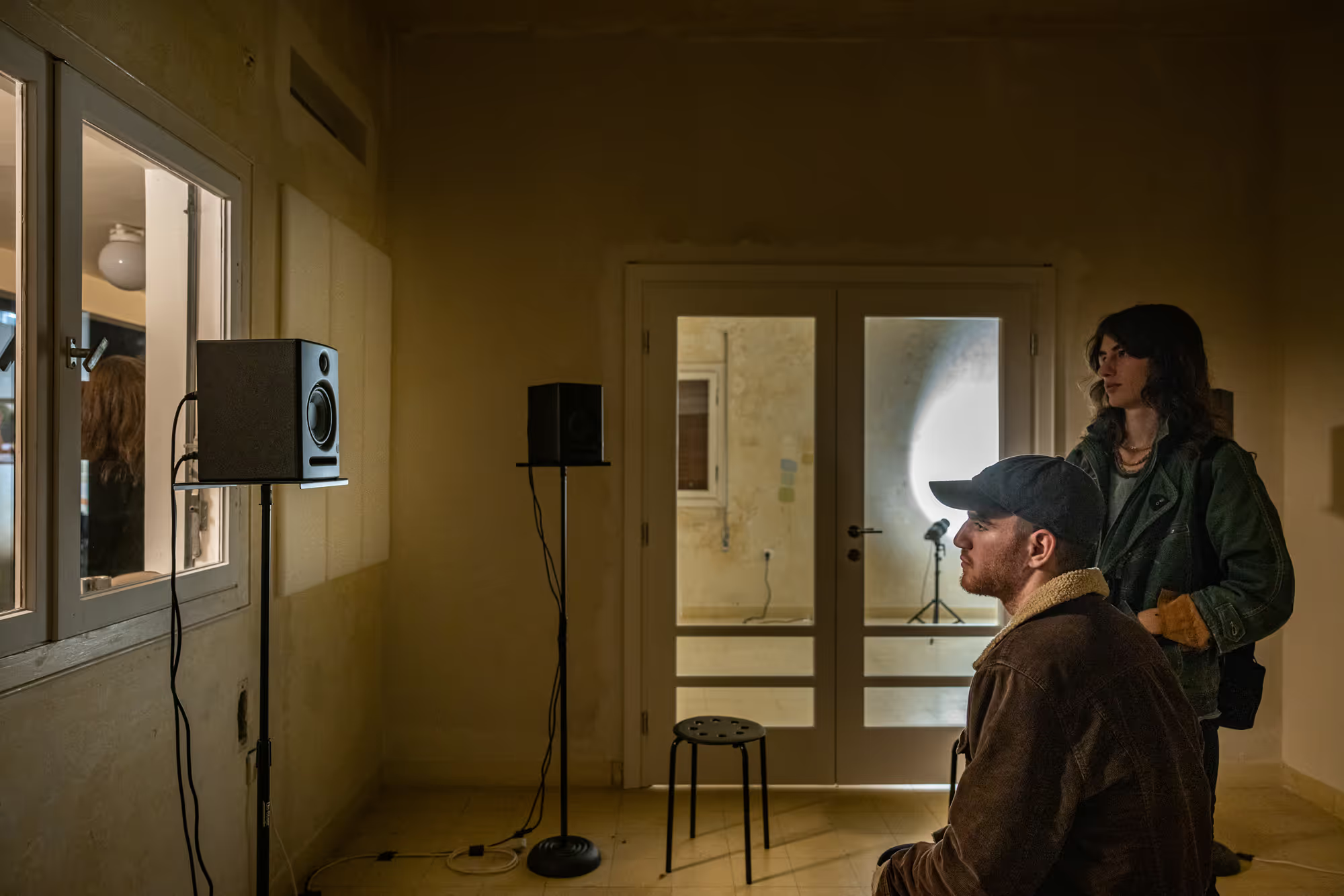
every night, when i was singing a lullaby in my daughter’s room, i imagined other mothers doing the same thing. lyla lyla (night night) is a sound installation for a choir of women who alone and together sing the song for the hyacinth.
the work consists of a composition of recordings. nurit agozi weiner recorded 13 women, each in the bedroom where she puts her children to sleep. the work turns its gaze to one everyday act among many, a moment of dedication to the song, to falling asleep, to the last moment of the day before leaving the children’s room and returning to oneself.
the composition places the mothers in one shared space, individually, as a duet, a trio, or a choir. it reveals the hive, the invisible ties and connections between all mothers, while also showing each woman in her solitude. the work offers a visual and sonic image of a collective voice that holds together intimacy and separation.
song for the hyacinth was written by lea goldberg and composed by rivka gvili. the song has been sung by mothers for more than 80 years.
co-design tsuf bar-on, music production and sound installation maya felixbrodt, graphic design ran malul and tali liberman, technical production dotan brand, mix and master dotan brand and daniel slabosky, text editing yoni raz portugali
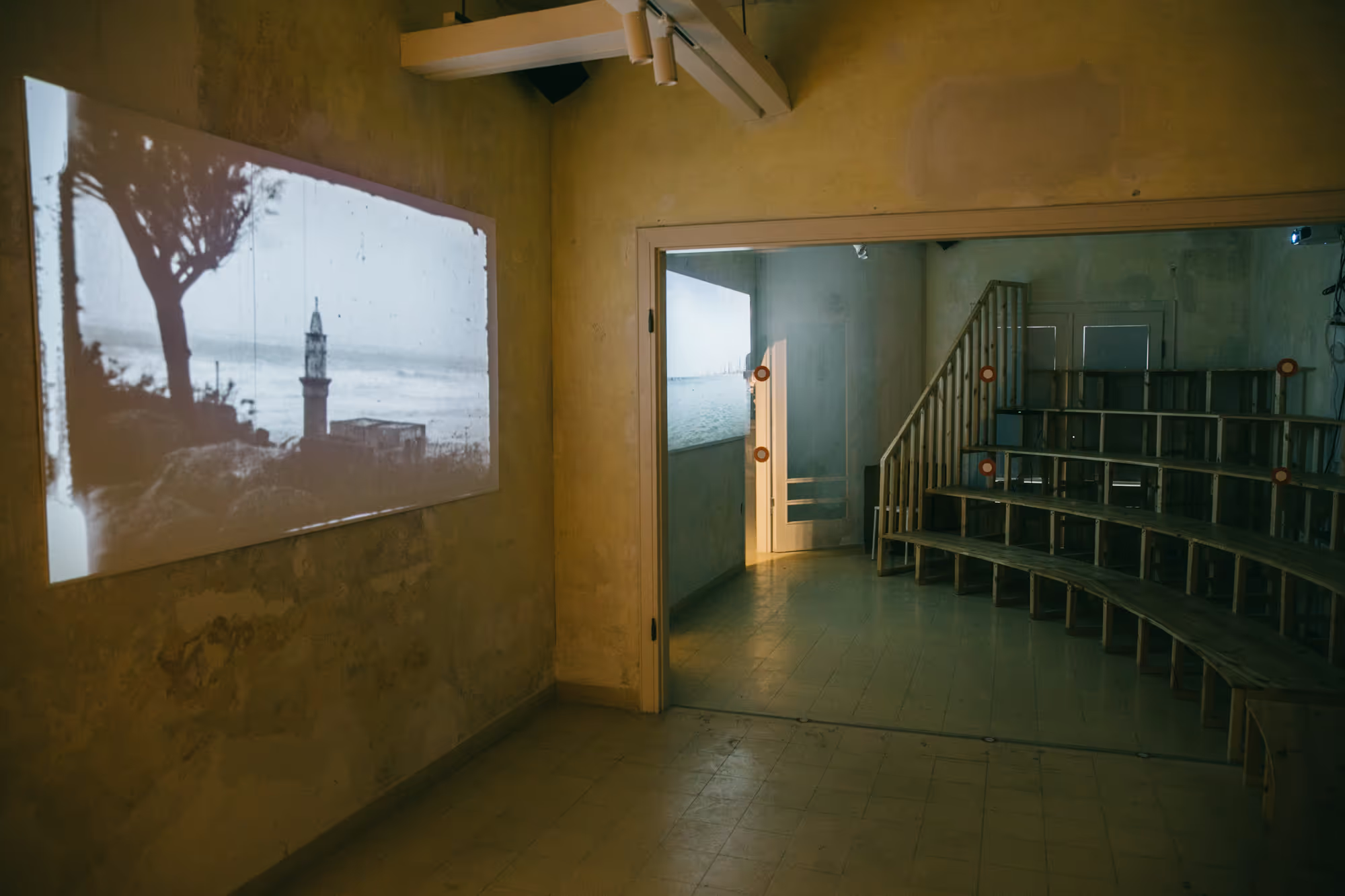
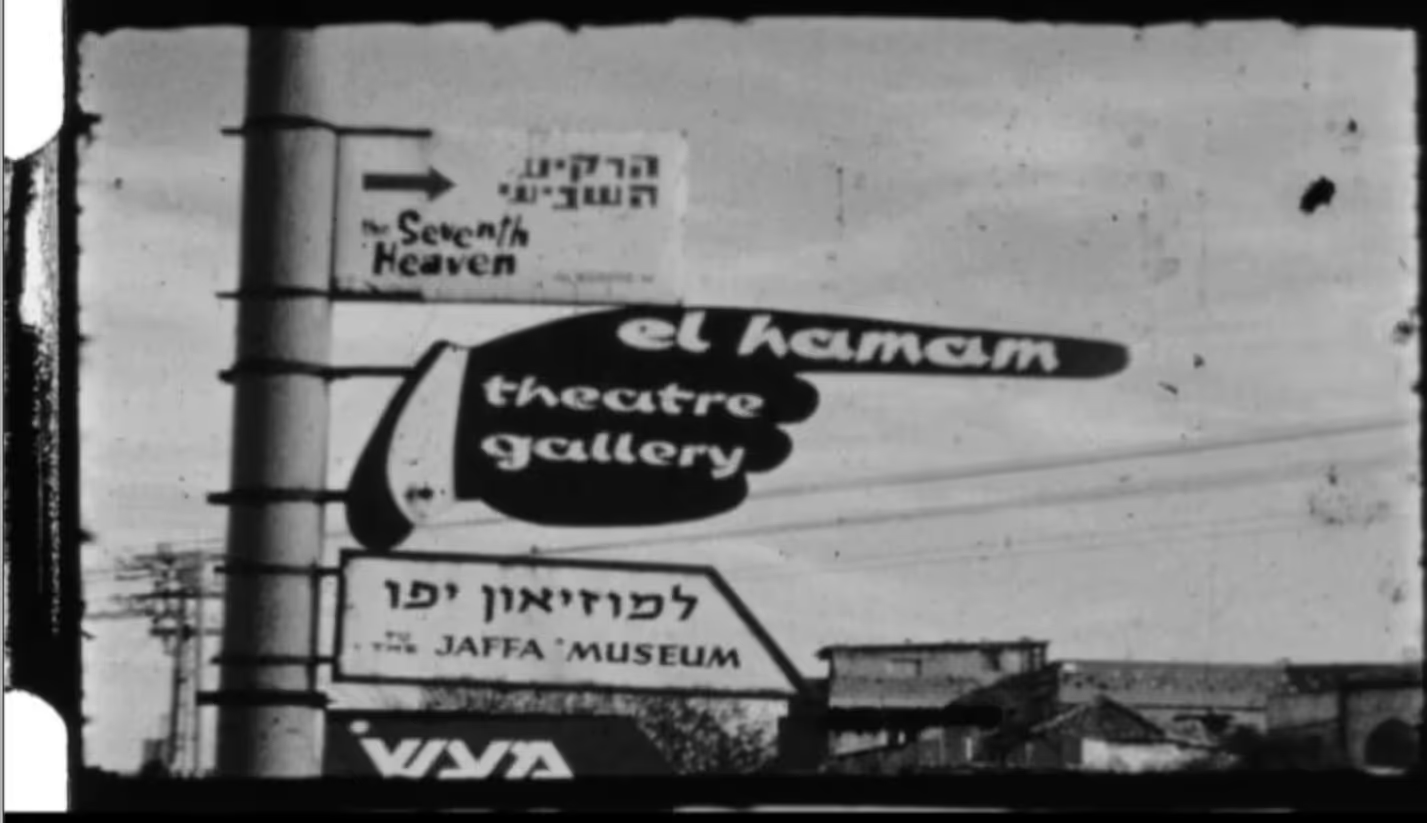
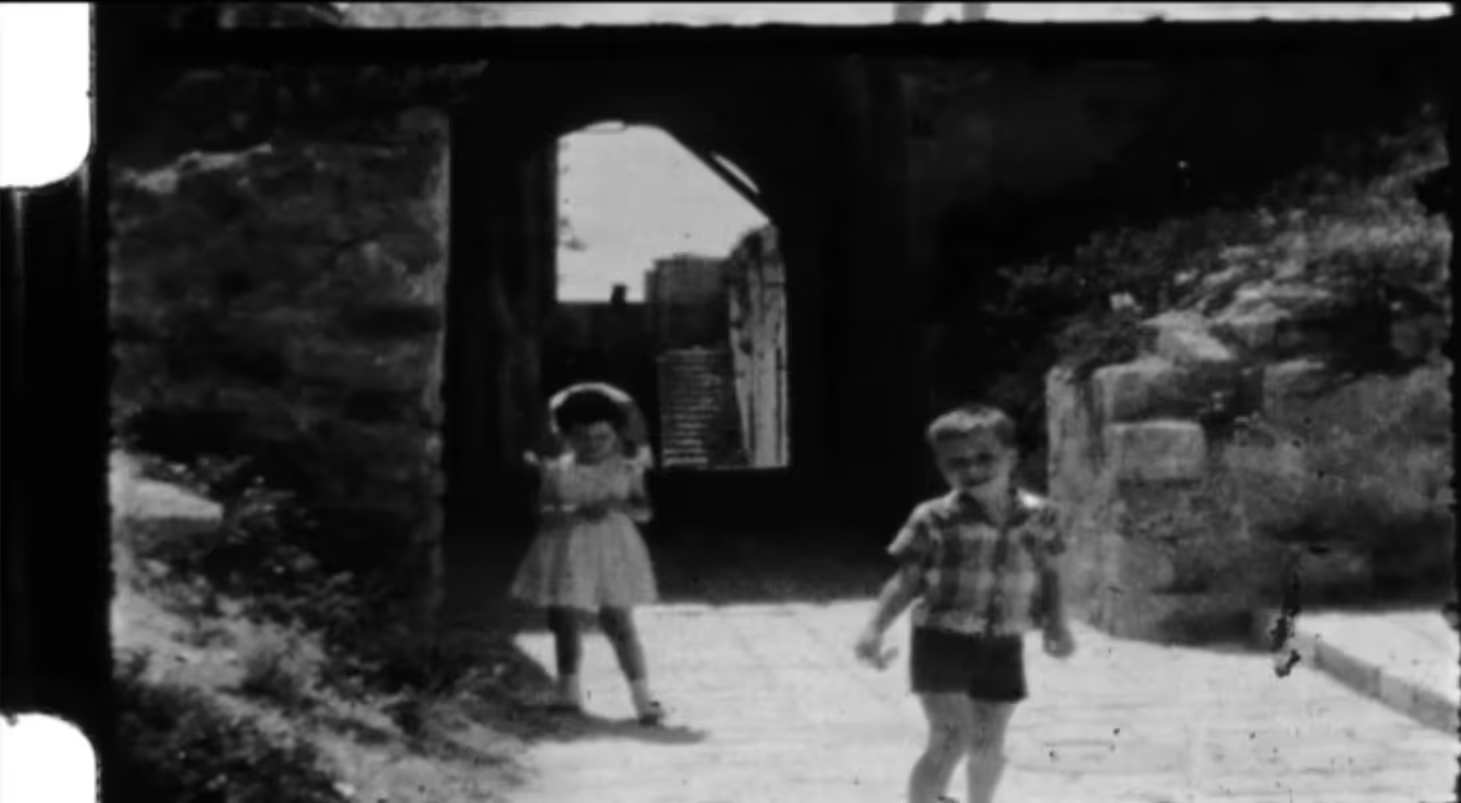
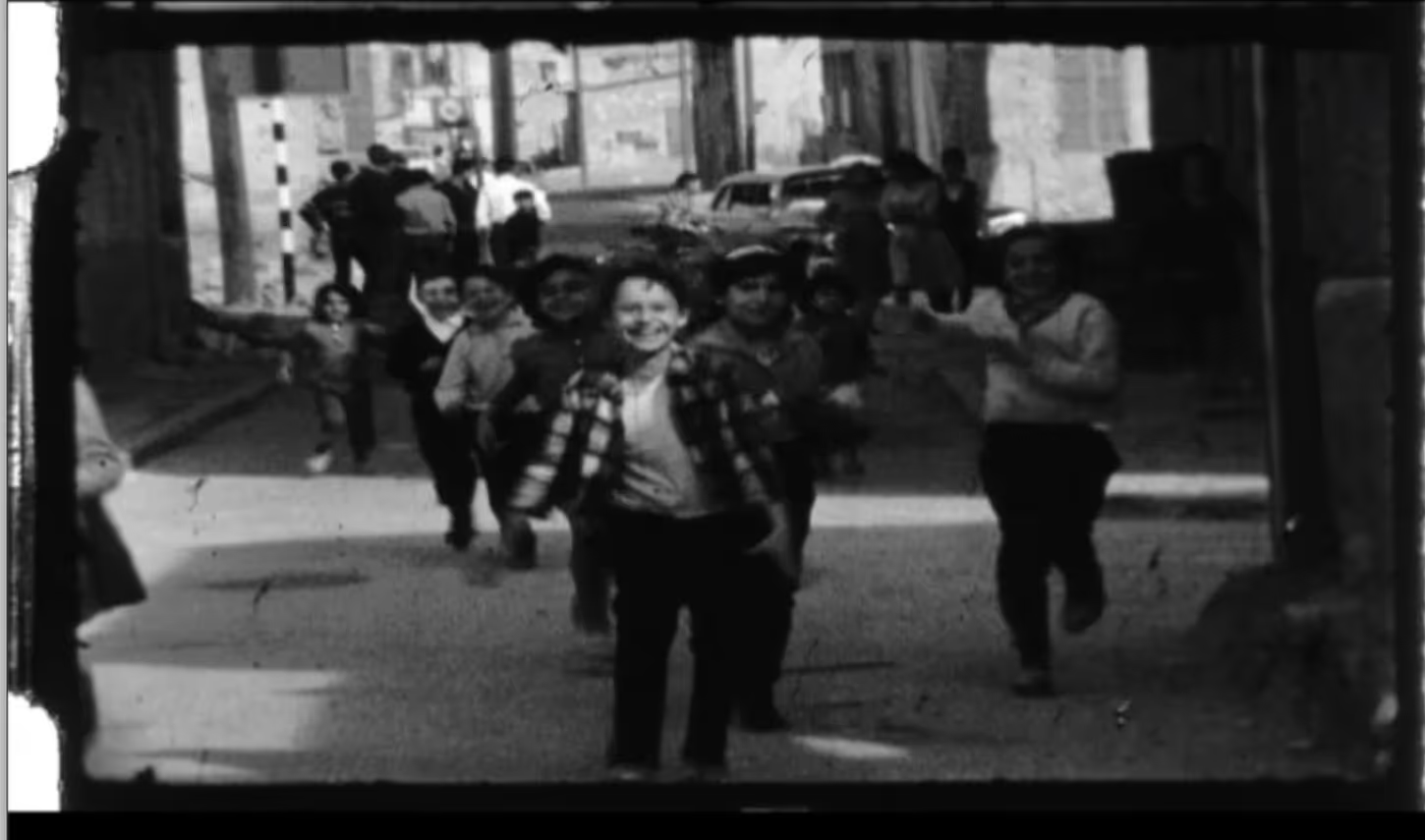
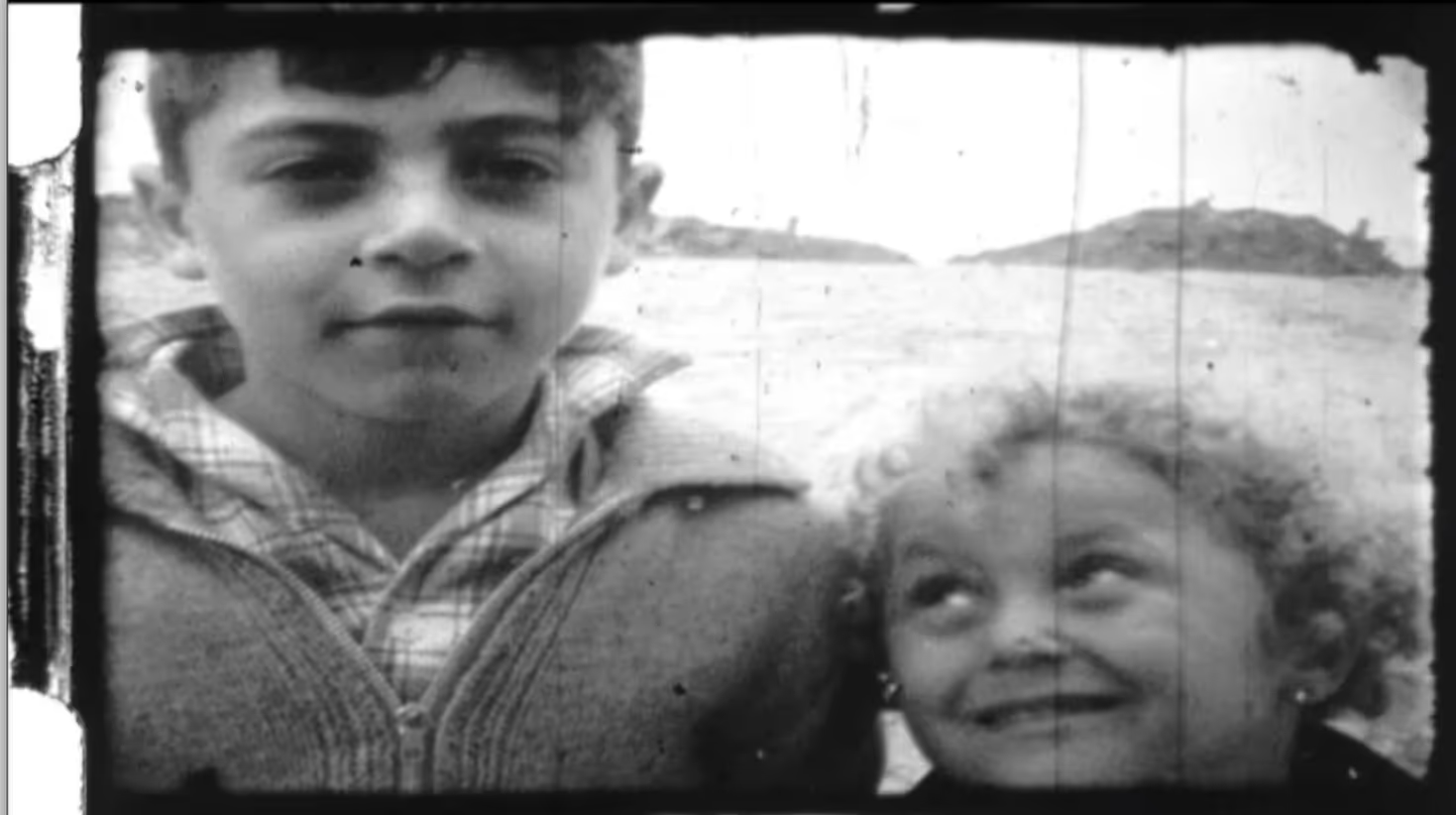
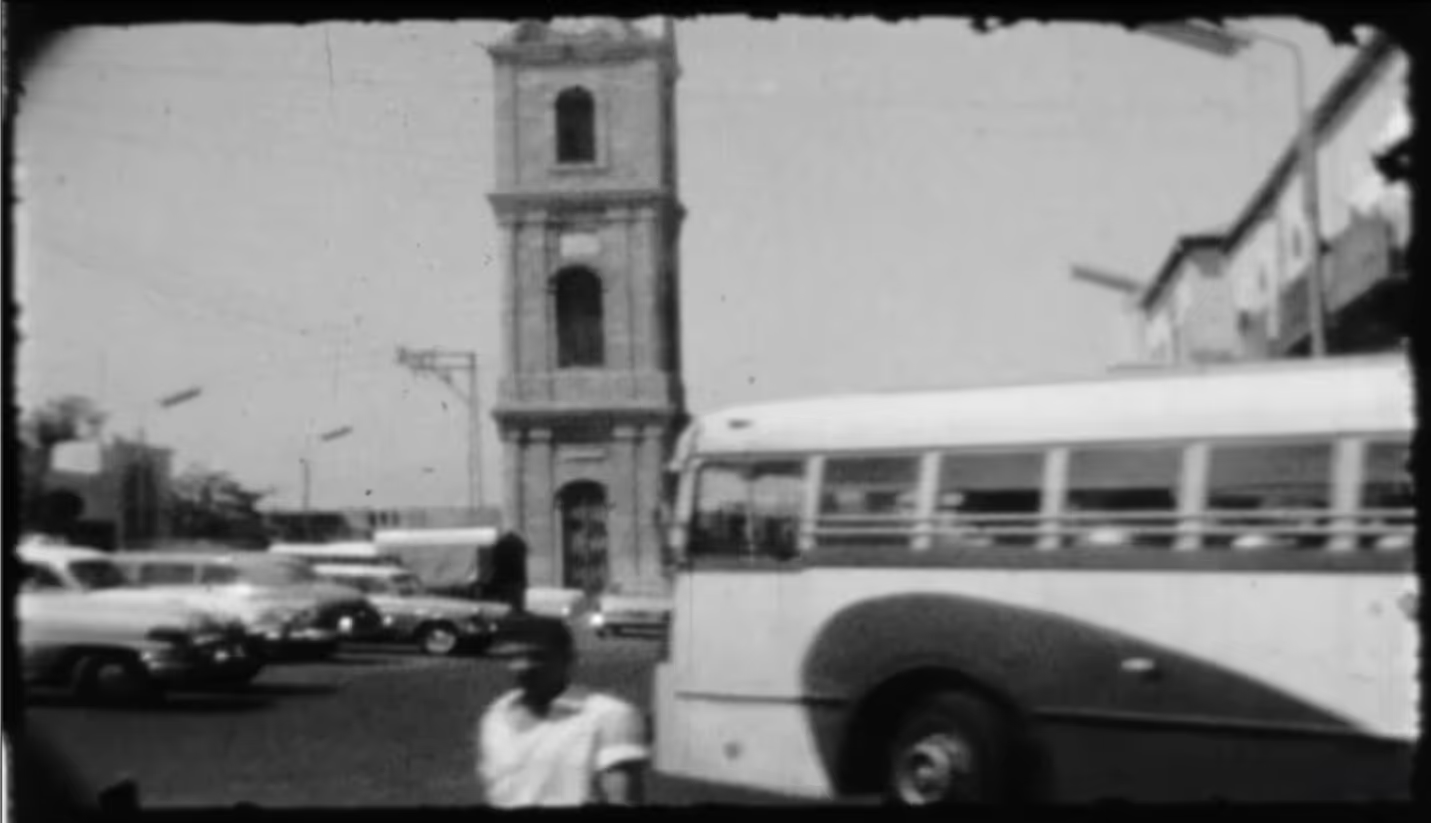
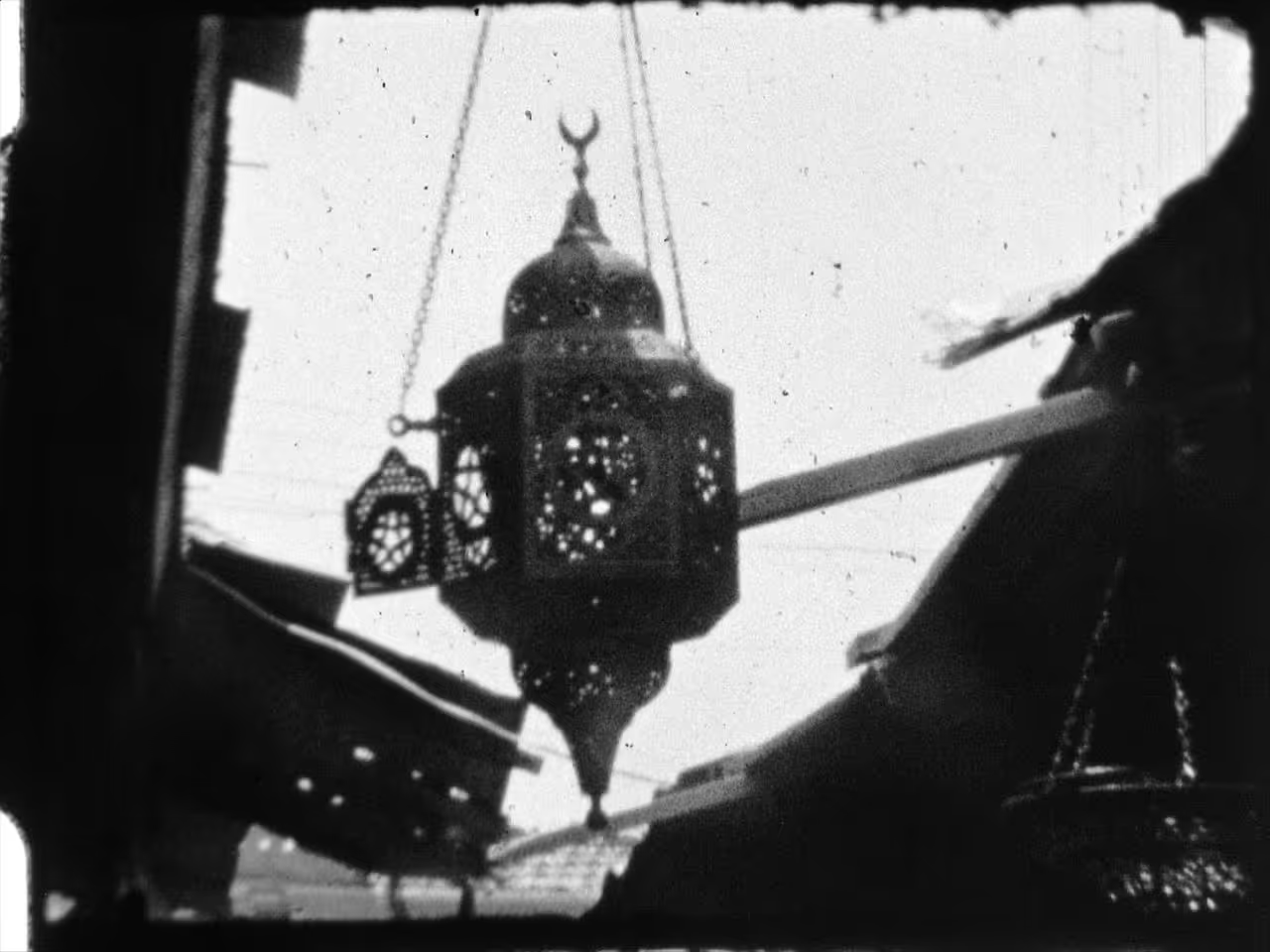
a few years ago, while packing her home before moving to london, artist mai omer discovered an 8mm film shot by her grandfather, poet and landscape architect a. hillel (hillel omer), in the manshiyyeh neighborhood. the film was recorded in the mid 1960s, before the neighborhood’s final evacuation to make way for the construction of charles clore park, which he had designed. omer’s grandfather’s film is a romantic gaze at a disappearing landscape. it documents houses, alleyways, and a shoreline that no longer exist. a landscape whose disappearance the documenter himself took an active part in.
over the past decade, mai omer, his granddaughter, has been documenting the park her grandfather designed. she investigates the history of the neighborhood that vanished beneath the lively park, thus continuing her grandfather’s point of view, but also expanding it, and opposing it at the same time.
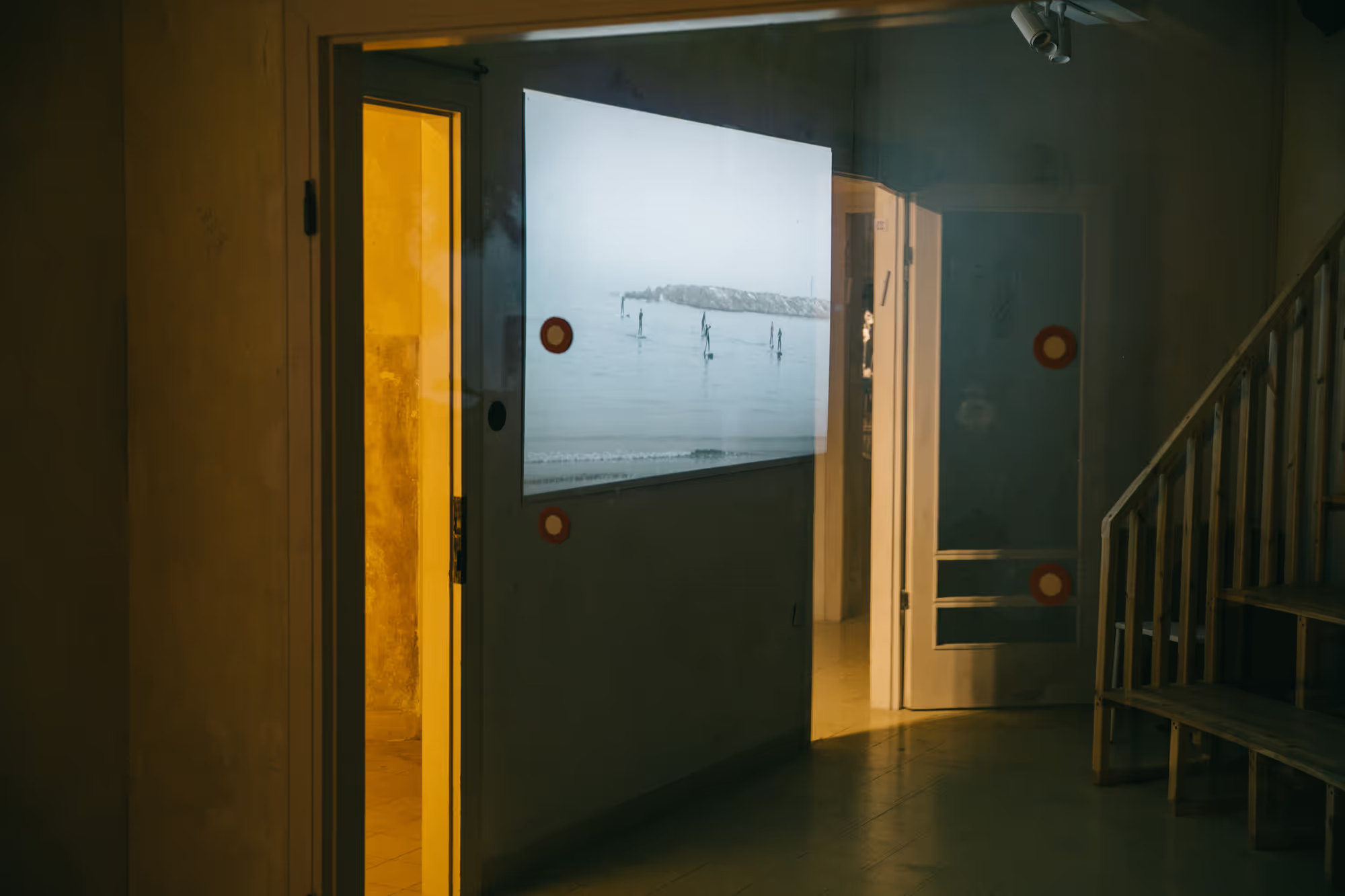
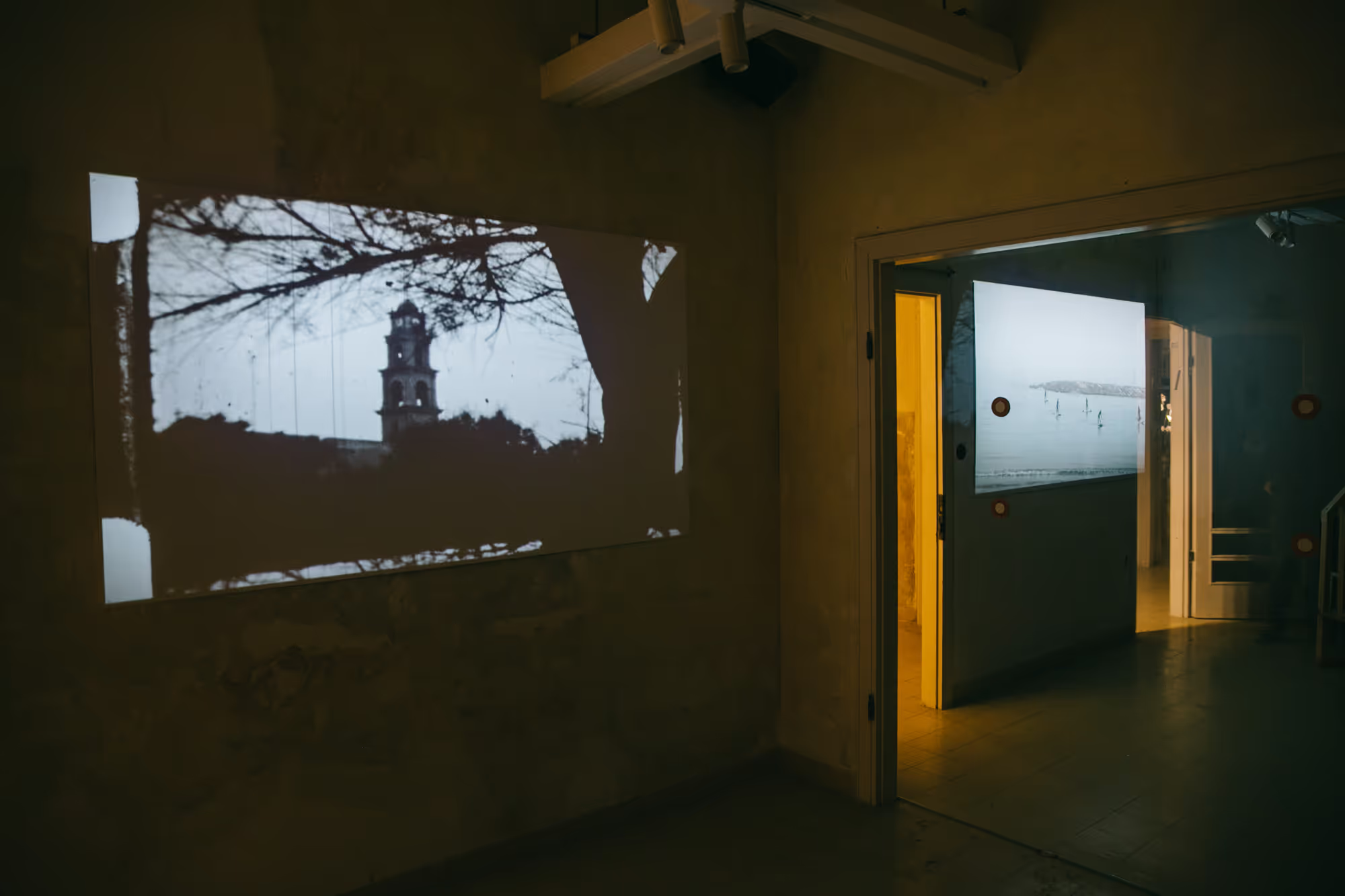
the exhibition to the sea presents a. hillel’s film for the first time, alongside mai omer’s works from charles clore park. these works, separated by more than fifty years, enter into a dialogue about the complexity and blind spots of the documenting gaze, and ask: what, in fact, can be done with a troubling history when there is no statue to topple?
arabic translation ibtisam ammouri, english translation sivan raveh, text editing yoni raz protugali, graphic design efrat goldmann, production anat levy
an article by nurit chinn in haaretz
before building charles clore park on its ruins, landscape architect hillel omer filmed a neighborhood on the cusp of destruction. some 50 years on, his grandchild, mai omer, revisits manshiya for a new exhibition.
tel aviv’s charles clore park looks like it was designed for promotional photos, with picturesque palm trees, evergreen astroturf and a panoramic view of the sea. the beachside expanse has become synonymous with the city’s annual pride parade, with over 100,000 people gathering there each year.
yet underneath the park lies the rubble of manshiya (also known as al-manshiyya), a historic palestinian neighborhood captured in 1948, later inhabited by working-class jewish migrants, and demolished in the late 1960s. its ruins were thrown into the sea and the park was built atop the debris. only one original structure remains, the hassan bek mosque, built in 1914 and now encircled by high-rise hotels.
ironically, a man instrumental in manshiya’s destruction also made an effort to preserve its memory. israeli poet and landscape architect hillel omer, known by his pen name ayin hillel, designed the park in 1963 and filmed the neighborhood before its demolition. he documented stone arches and alleyways, markets and children smiling, waving and climbing on seaside rocks.
half a century later, hillel’s grandchild, the multimedia artist mai omer, discovered their grandfather’s footage, and with it a world lovingly captured before its ruin.
omer examines this dissonance in the exhibition alayam (to the sea in hebrew and the days in arabic), curated by eran eizenhamer at tel aviv’s liebling haus, an arts hub dedicated to architecture, conservation and urban renewal. the installation splices hillel’s footage of manshiya with omer’s own images of charles clore park fifty years later, inviting viewers to reckon with personal and collective histories of destruction.
as omer puts it, this is something that’s part of living in a conflicted reality. everything is personal. for omer, the question then becomes how do you relate to it, how does it change you, and how do you choose to act in the world.
a bridge and a border
the neighborhood was established at the end of the nineteenth century, on the northern tip of jaffa and the southern edge of what would later become tel aviv. the name manshiya, according to prof. daniel monterescu, an urban anthropologist specializing in jaffa, represents an abstraction of multiple neighborhoods with different names and histories.
a bustling and diverse enclave, home primarily to muslim palestinians alongside a small mizrahi population, manshiya functioned as a bridge between tel aviv and jaffa, what monterescu calls a creative hyphen.
during the 1948 war, this bridge became a militarized border. following the 1947 un partition plan, manshiya marked the frontier between palestinian jaffa and jewish tel aviv. it was among the first targets of the irgun militia.
in april 1948, the irgun captured manshiya, forcing palestinian families to flee to gaza, lebanon and jordan, with some transferred to jaffa. people felt they were leaving and could come back, monterescu explains, but they would never be allowed to come back. for palestinians, manshiya became a site of profound urban erasure, both of community and of space.
after palestinians were forced from their homes, working-class jewish migrants settled in the neighborhood, including monterescu’s father. these lively communities were largely romanian and bulgarian, with iraqi and moroccan pockets. to city planners, however, manshiya symbolized danger and disorder, the alter ego of tel aviv’s modern white city.
municipal authorities deliberately neglected the area, allowing it to deteriorate in preparation for demolition. architectural scholar or aleksandrowicz argues that postwar planning caused more damage than the fighting itself. in the mid-1960s, city officials razed manshiya as part of a sweeping plan to modernize jaffa. residents resisted but were erased from planning discourse and historical record alike.
a magical, naïve place
before manshiya was destroyed, hillel omer filmed it in detail, capturing the transient working-class jewish community about to be displaced and the homes of palestinian refugees who would never return.
what stands out in the footage is the sensitivity and wonder with which a place on the brink of destruction is portrayed. although the filming may have been part of a design process, it feels more poetic than pragmatic. according to omer, he created a very magical, naïve place.
omer traces this naivety to orientalist photography and colonial travel diaries, identifying a gap between an ethos of creation and a reality of destruction. was he aware of this gap, omer asks, because to me it’s very obvious.
replacing manshiya with manicured lawns aligned with the zionist narrative of shaping landscape to tell a story. in alayam, archival images dissolve into present-day scenes of empty paths and glossy office buildings, reframing the space through what has been erased.
a lot of people perceive jaffa as antique and tel aviv as modern, and that’s intentional, omer notes. there’s an ideology that separates the past as primitive and the modern as progressive.
monterescu observes that planning authorities are often better at destroying than building. the vision of manshiya as a new city center was never realized. today, charles clore park occupies only a fraction of the land that was erased, leaving what he describes as a no-man’s-land.
a site of longing
omer’s project reckons with their grandfather’s legacy, inviting viewers to revisit manshiya’s history in light of ongoing urban renewal carried out in the name of creation. the archival footage is treated not as something sealed off, but as material to converse with, challenge and continue.
omer will never know whether their grandfather recognized the gap between creation and destruction. instead, they argue that this consciousness lives on through them, as history lives on through all of us. this is where i come from, omer says, asking how one heals, processes and grows from such a history.
these questions gain urgency in light of new plans to transform manshiya once more. while recent redevelopment frames the area as a bridge to be rebuilt, for palestinians manshiya has long been a site of longing. refugees who are allowed to return search for traces of a vanished world, echoing other histories of displacement.
the exhibition holds these questions open, treating the city as a living archive in which memory, loss and imagination continue to unfold.
an article by nurit chinn in haaretz, december 14, 2021. video stills: mai omer
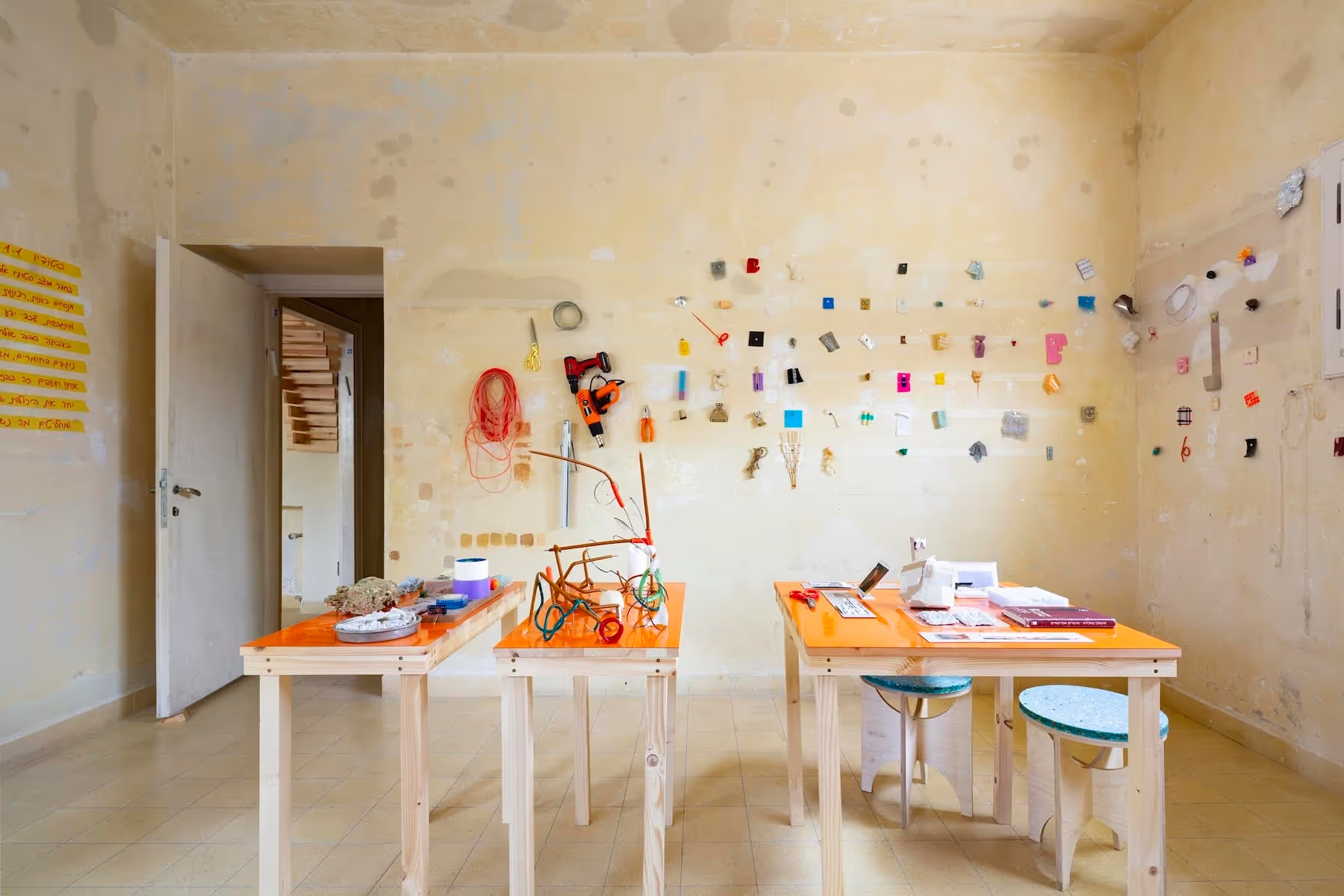
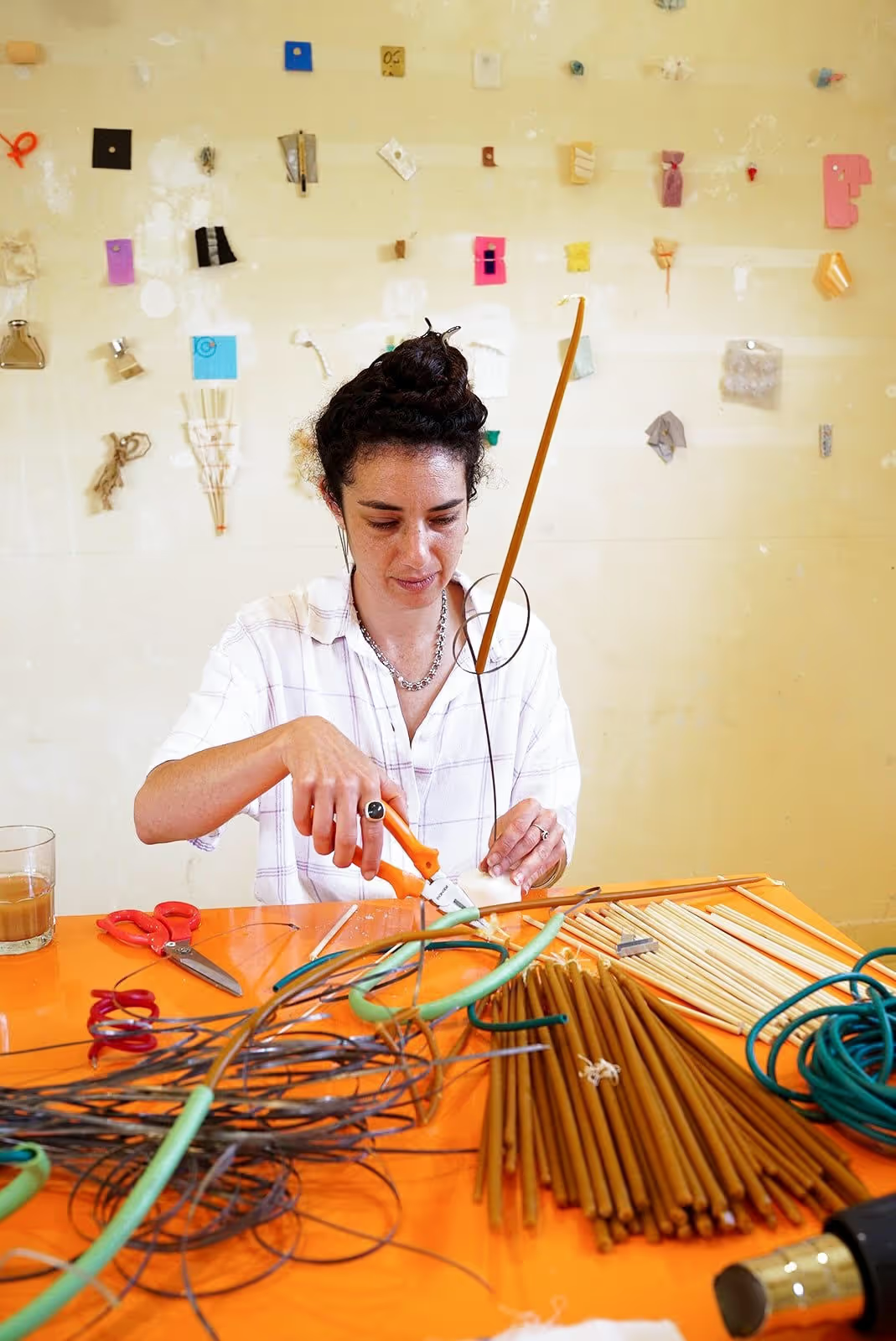
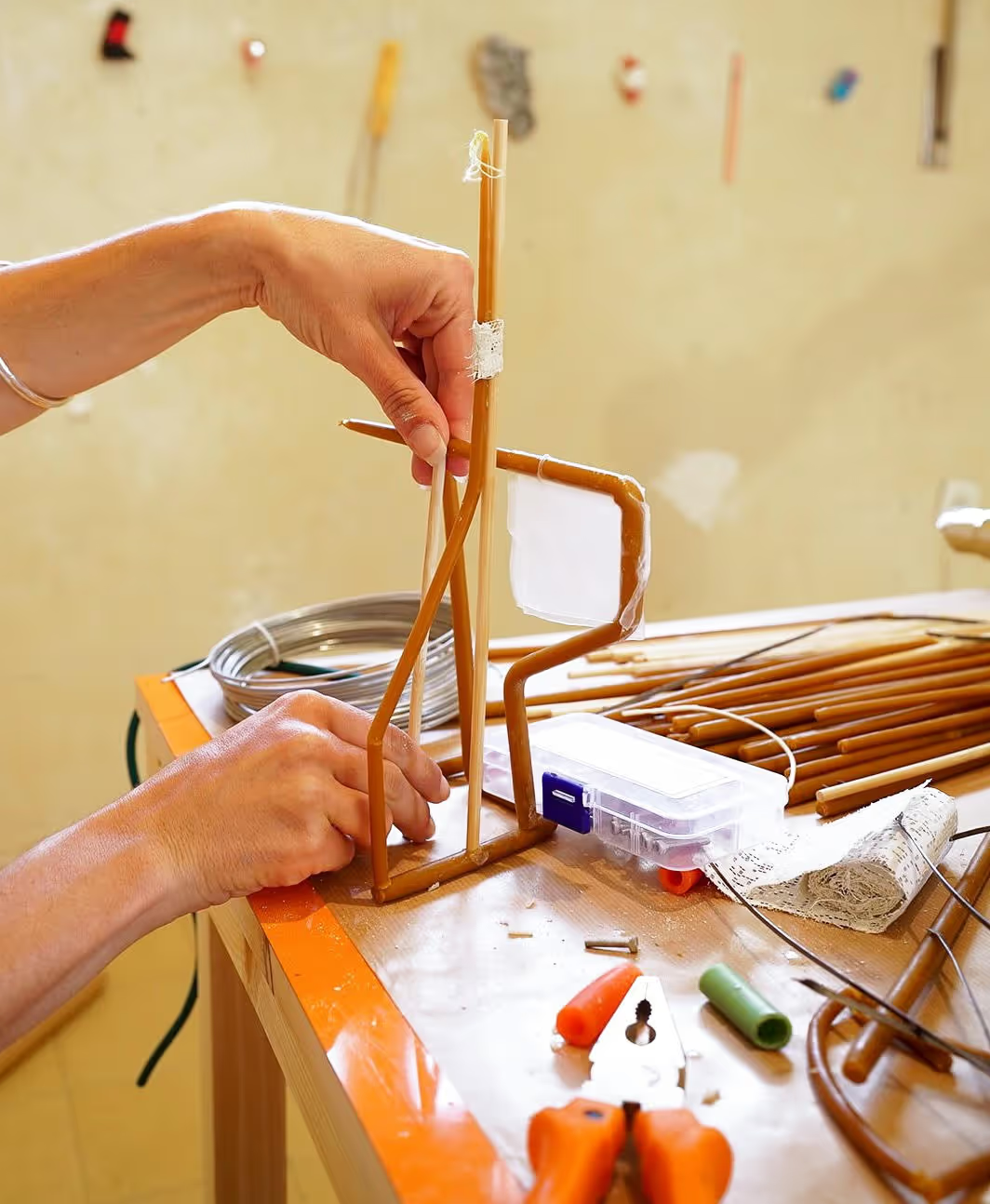
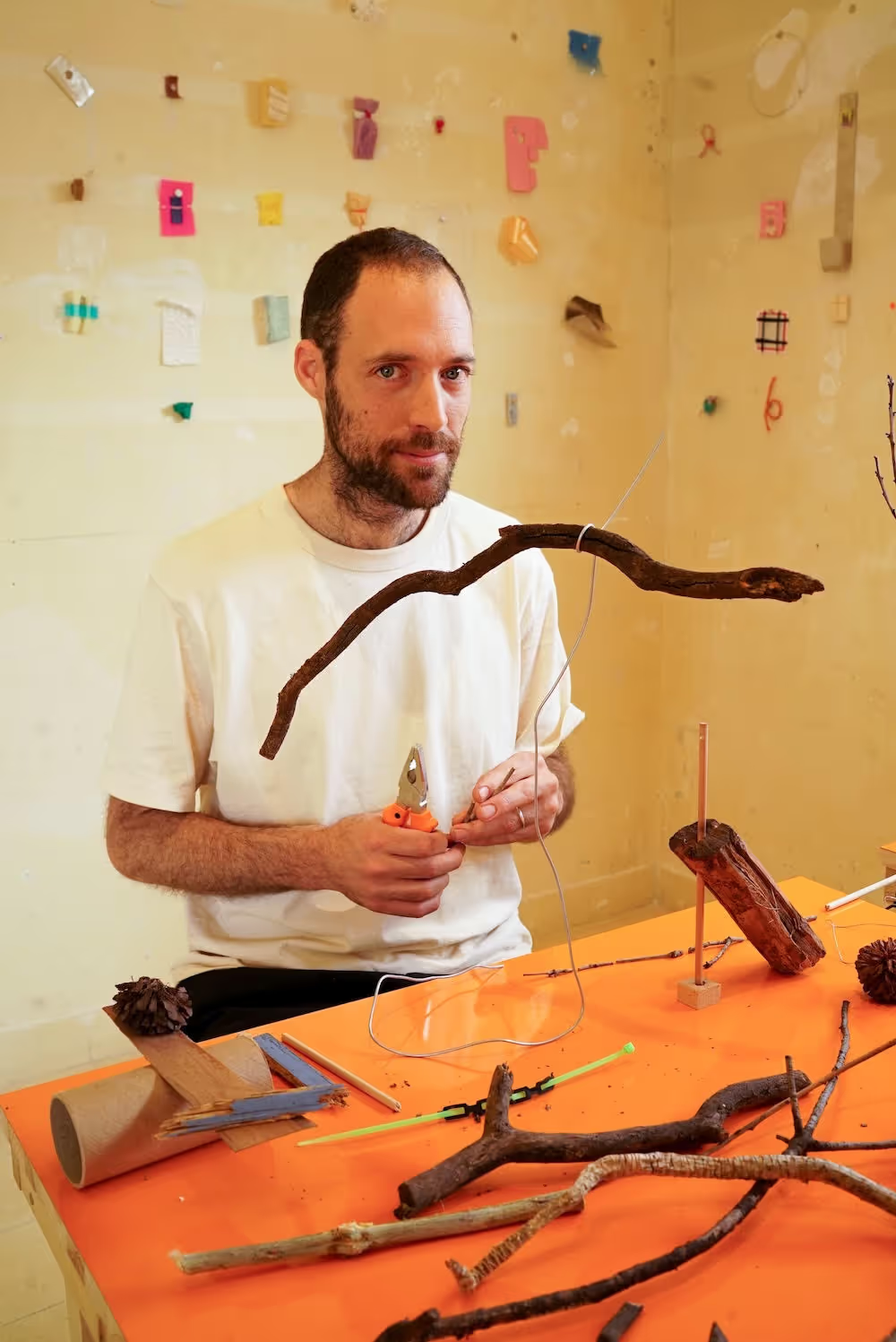
in the room stands a studio into which i invite people to learn with me in a one on one encounter. through this meeting, i explore how intentions, desires, and ways of acting together are articulated; what conditions are needed for co creation; and how individual actions can form shared knowledge.
the meeting begins with a personal selection of materials and continues with working around a single table. we improvise, play, and think through gestures and material contact as we imagine, touch materials, alter their form, examine what they afford, and create connections between them.
we reveal to one another what we know how to do, discover new materials, and expand our capacities together. when time runs out, we reflect on what happened, what was made possible and what wasn’t, and decide what remains after us.(roni raviv)
photography: eli cohen
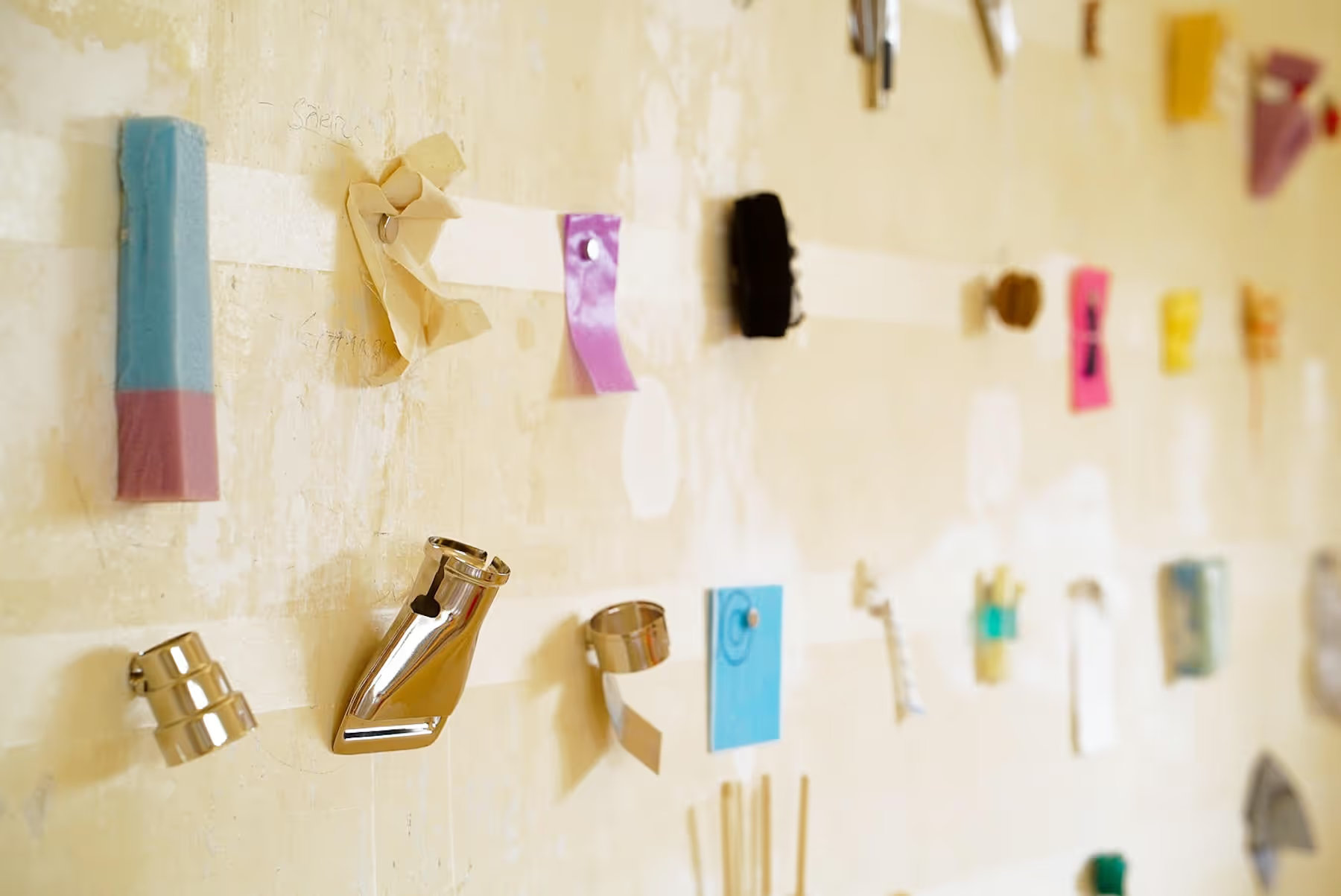
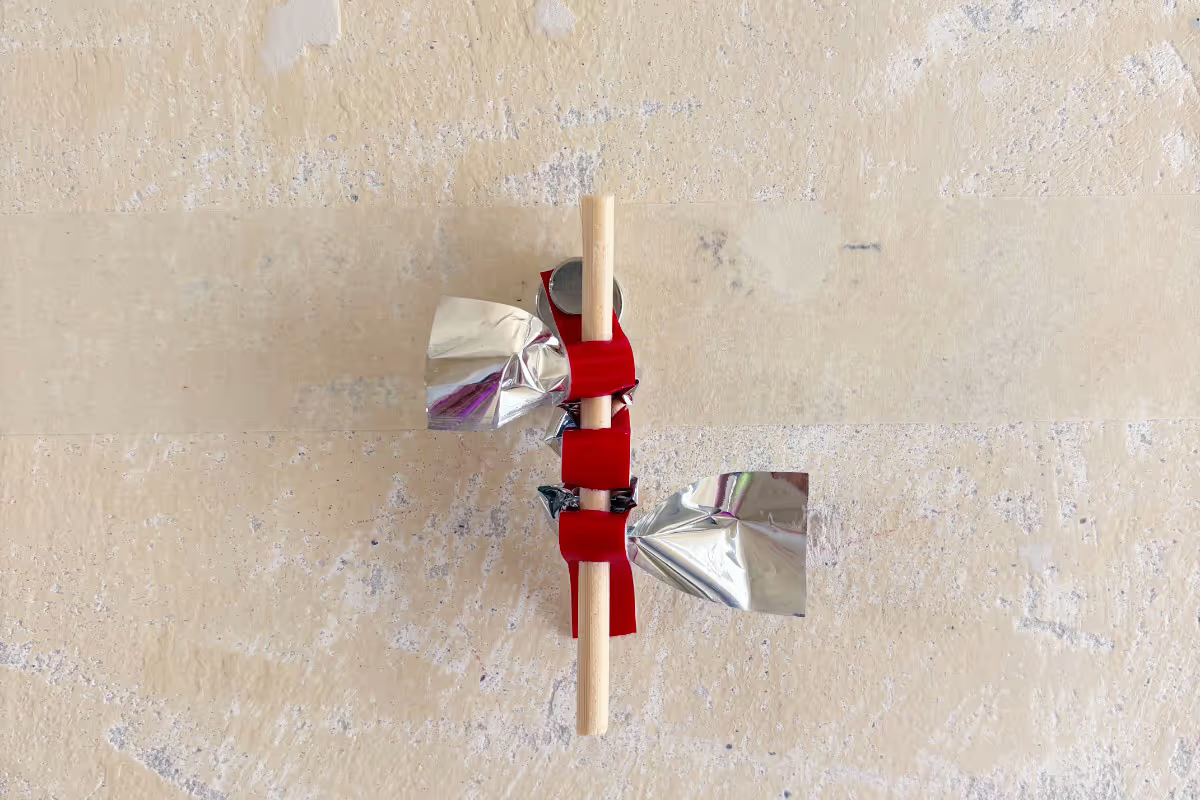
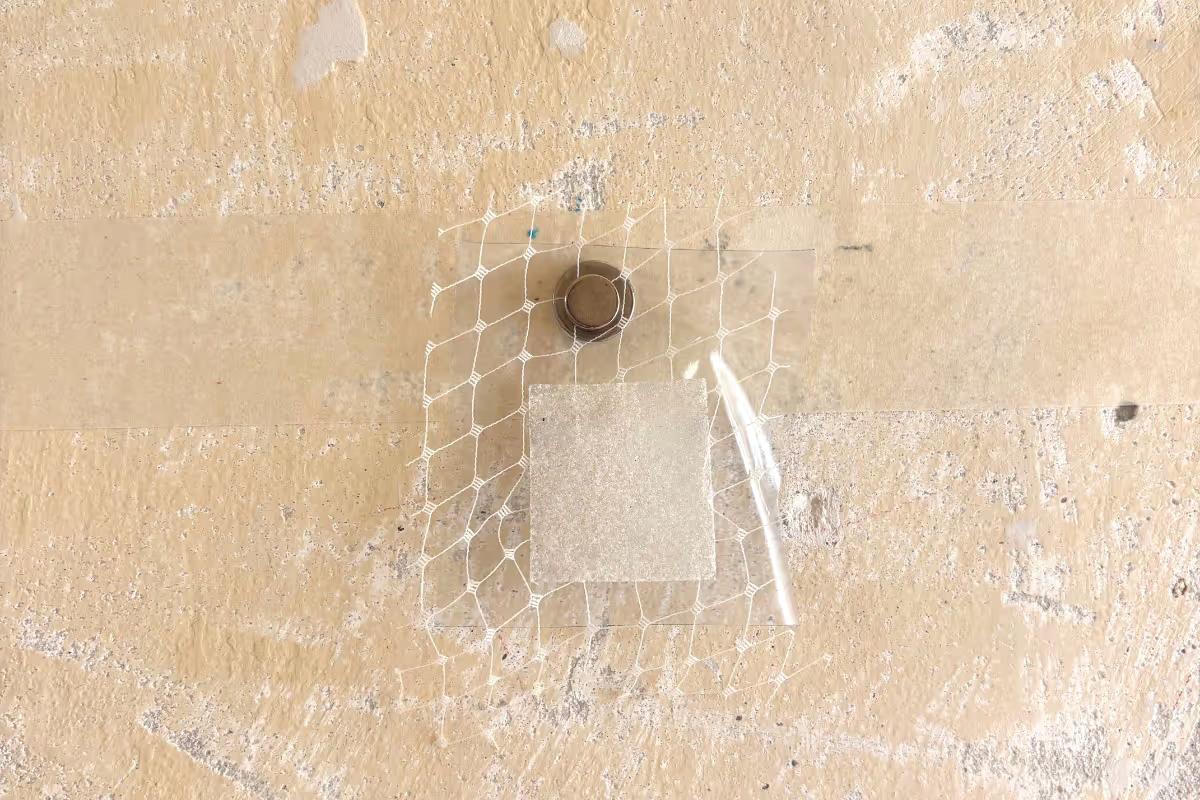

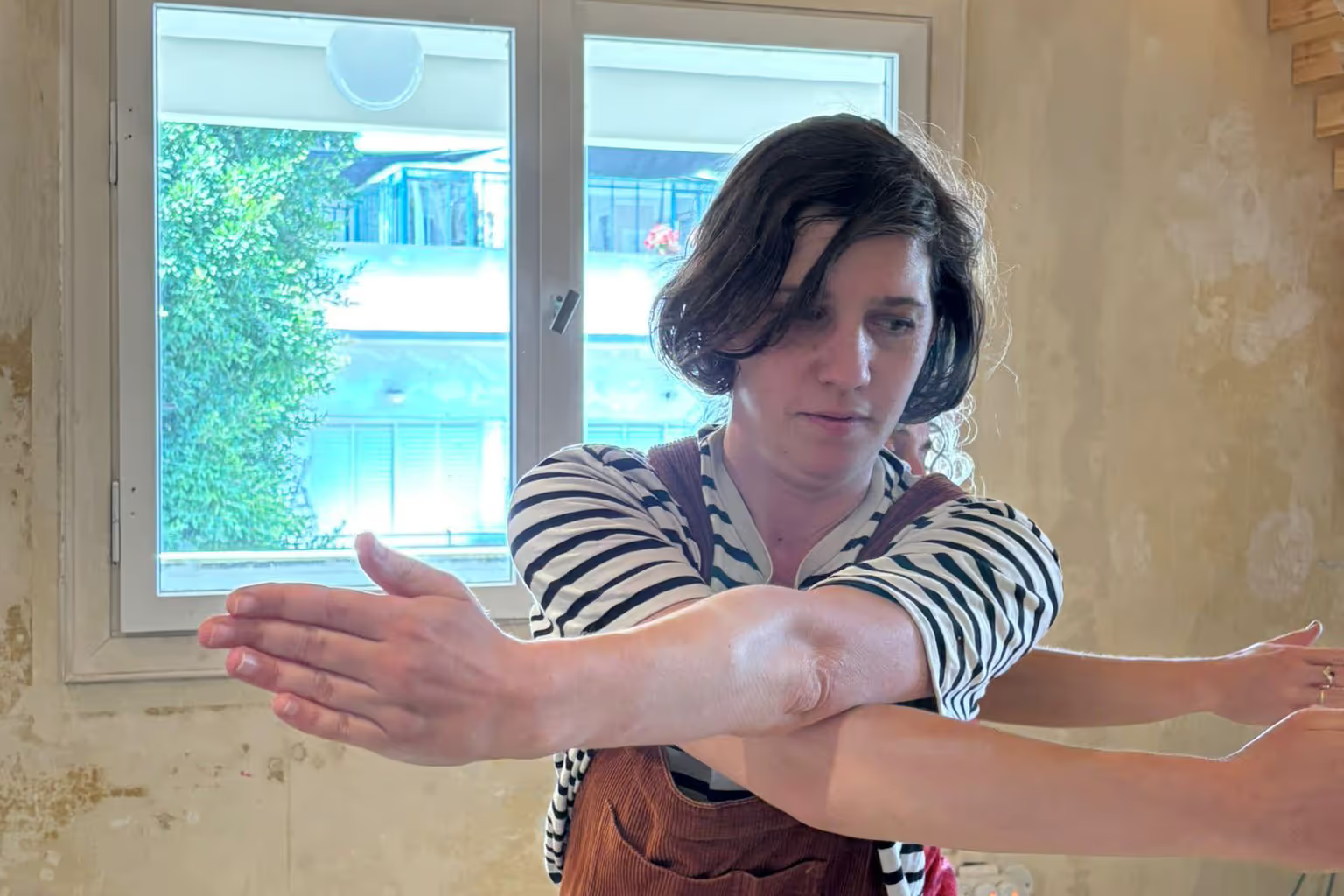
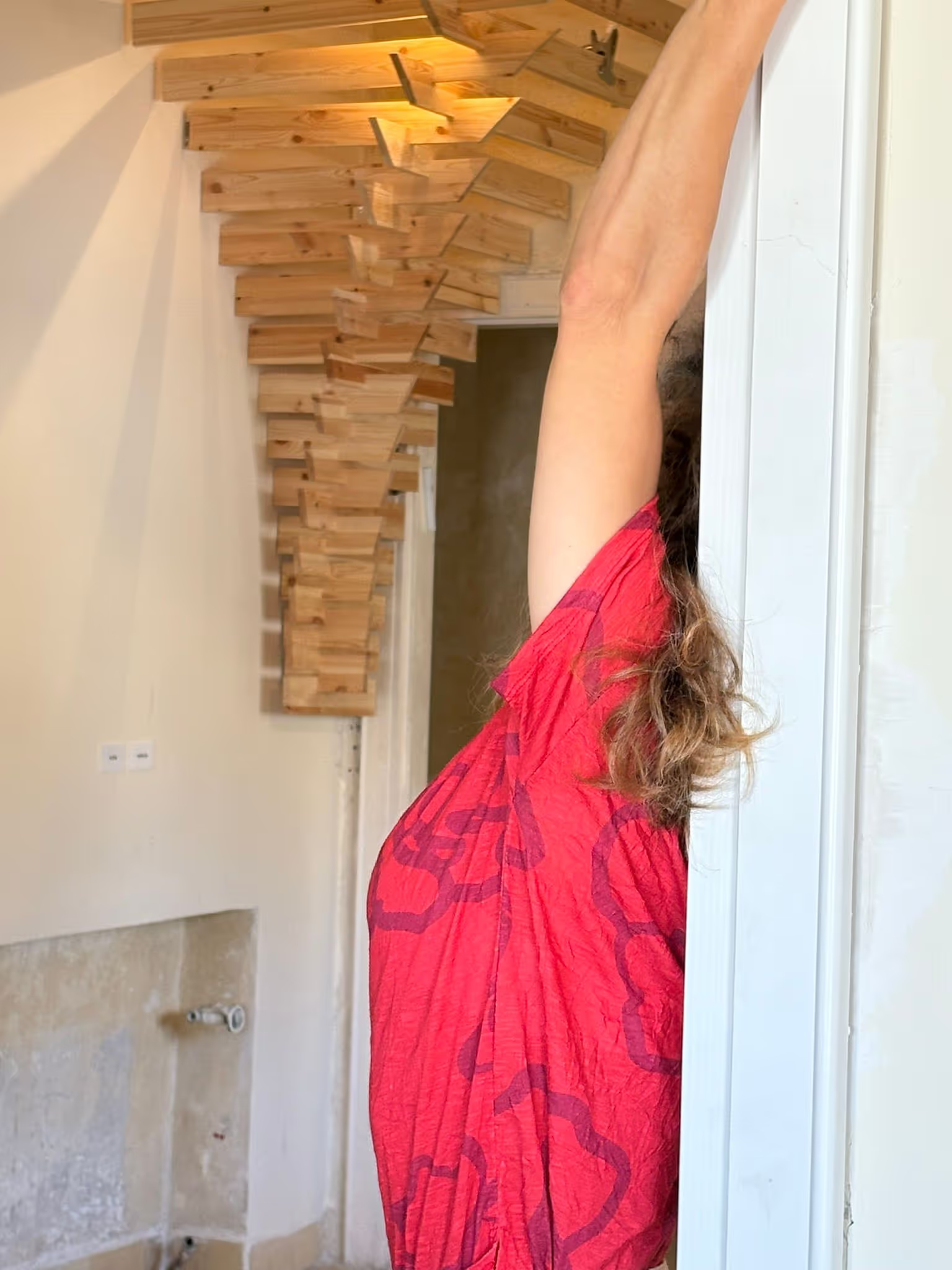
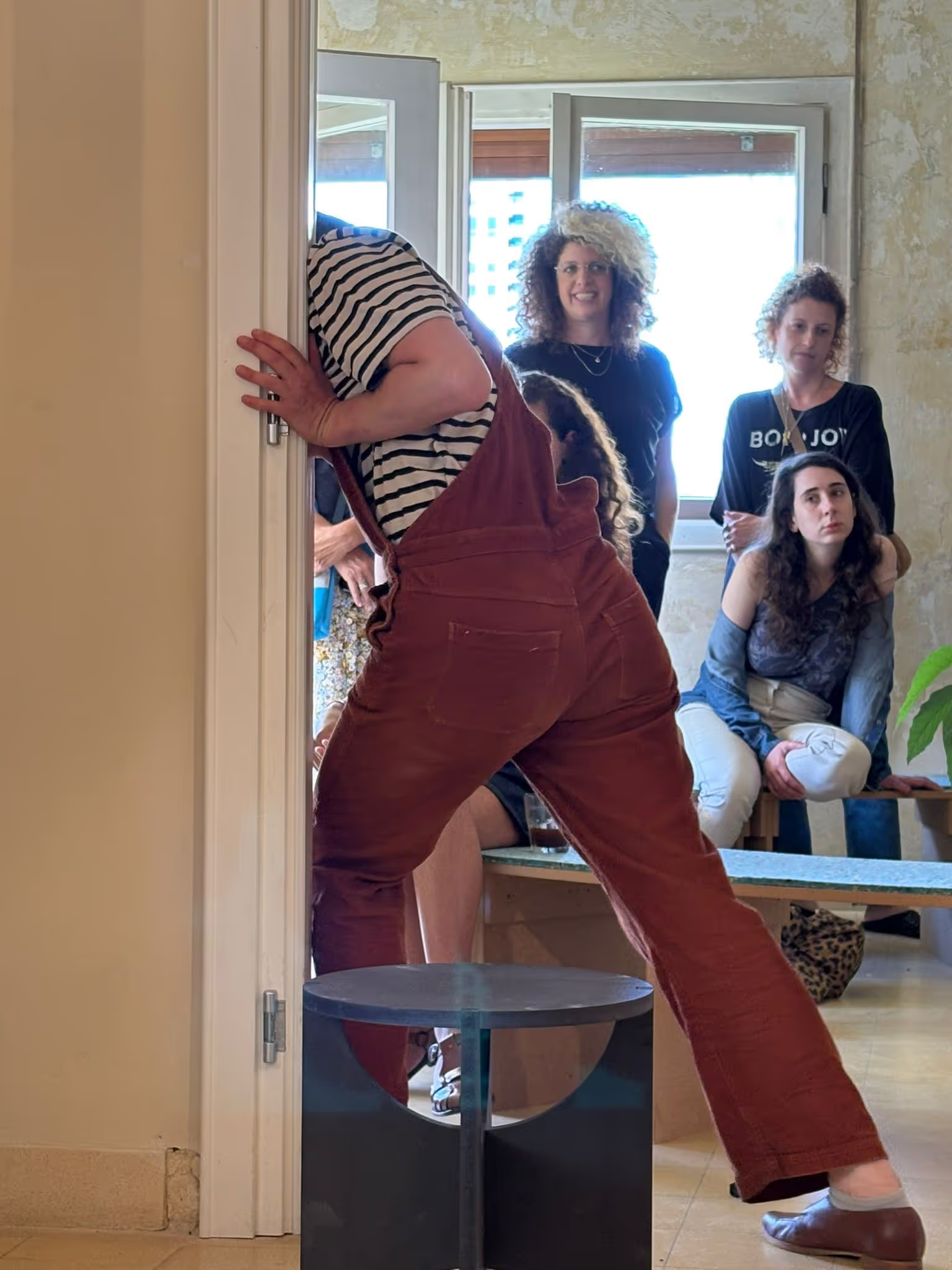
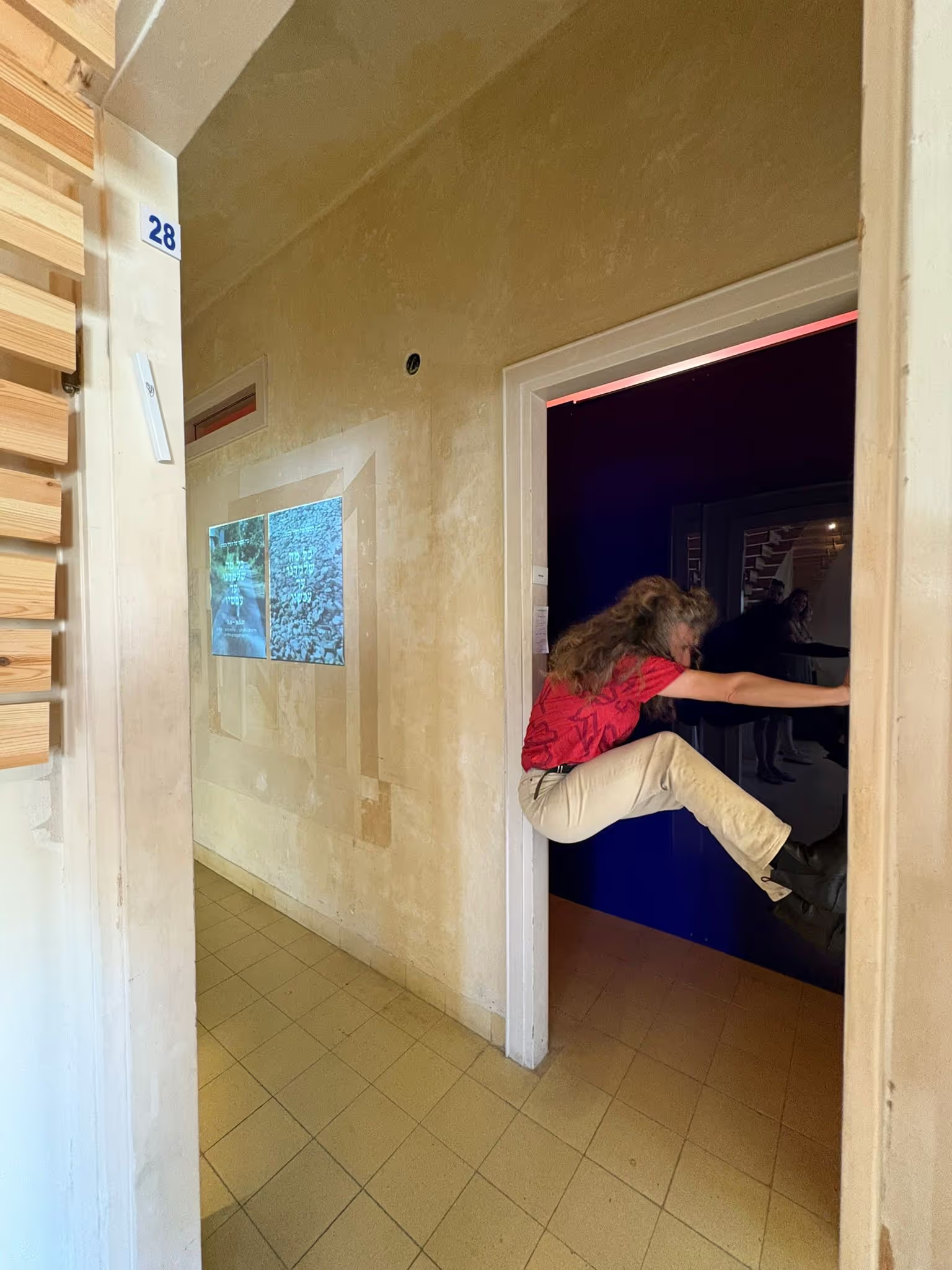
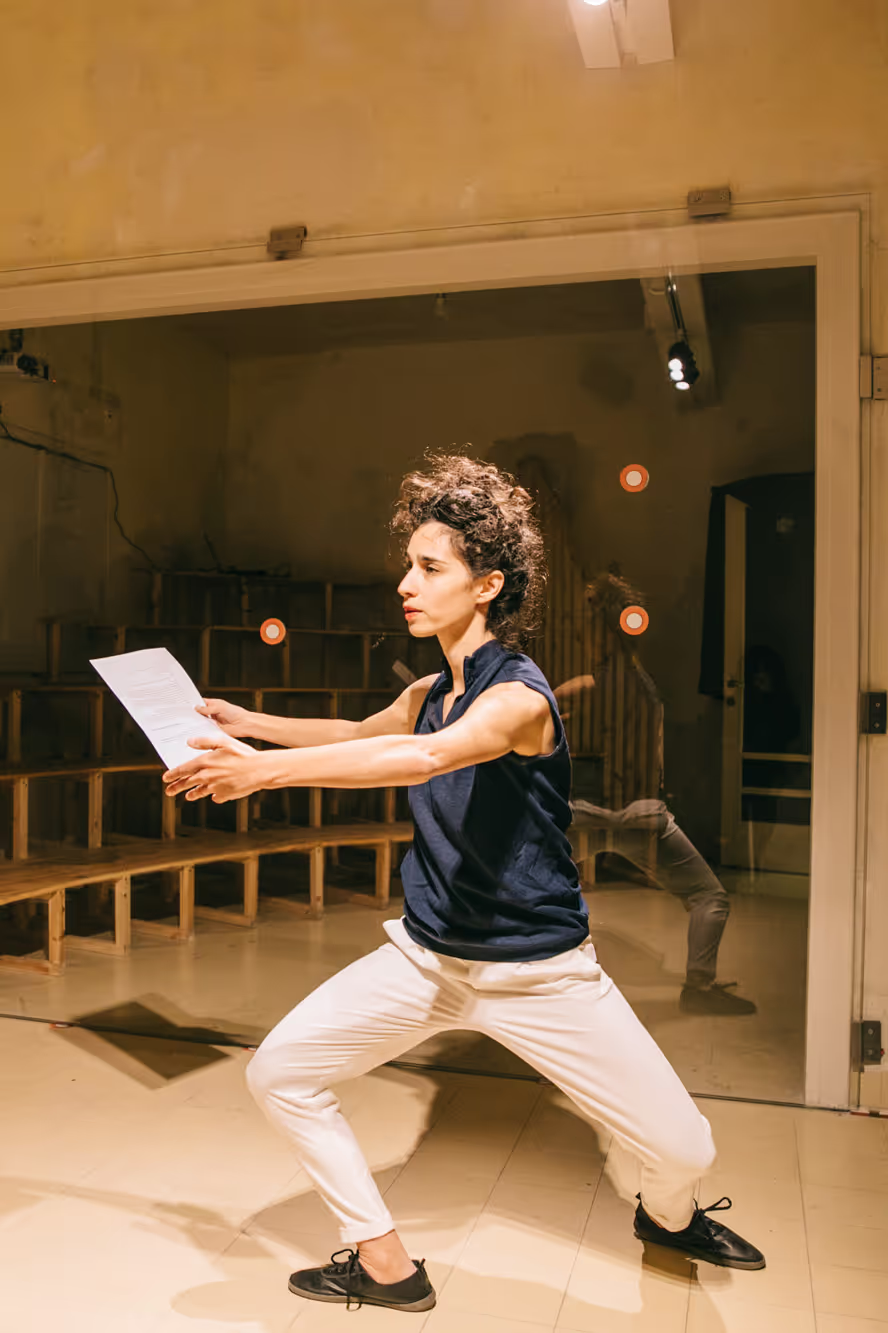
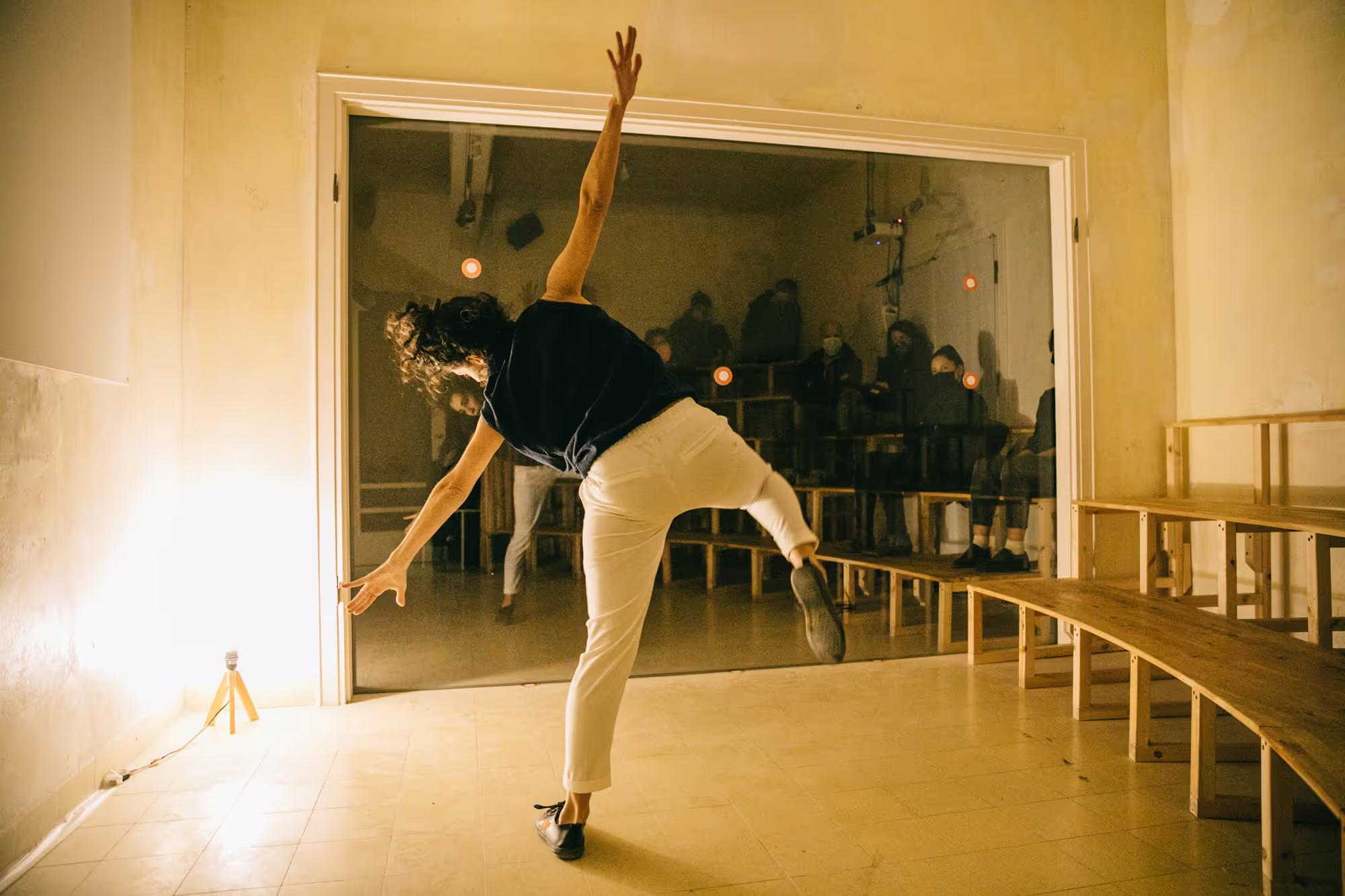
a performance offering a live practice of the body in space, creating an ongoing dialogue between the human and architecture. the performance marks the launch of a deck of cards developed by the school of the city, a tool for anyone with a creative spirit who is interested in an experiential approach to learning about spaces and environments.
over the years, the school of the city has developed a series of exercises for living in space, designed to foster a deep familiarity with new spaces while refining the way we observe and understand them.
we believe that spatial learning does not require a new set of skills, but rather an expansion and deepening of our existing ways of seeing the space around us. this series of exercises cultivates a more nuanced spatial awareness, allowing us to get to know the spaces we inhabit, to move freely within them, to act in them with ease, to illuminate them well, or in other words, to love them. space and our presence within it form a single whole, and the exercises for living in space sharpen this understanding.
the exercises create a field of action in which the body exists within space and learns its impact upon us. through these practices, we refine our sensitivity to light, material, and the full range of sensations they evoke. they are designed to deepen our attentiveness to personal taste and to architectural and design choices as expressions of our inner world, leading to new insights about ourselves and about the places we inhabit, our homes, our cities, and any space in which we find ourselves guests.
performance by tal alperstein and maayan mozes
curated by tal alperstein
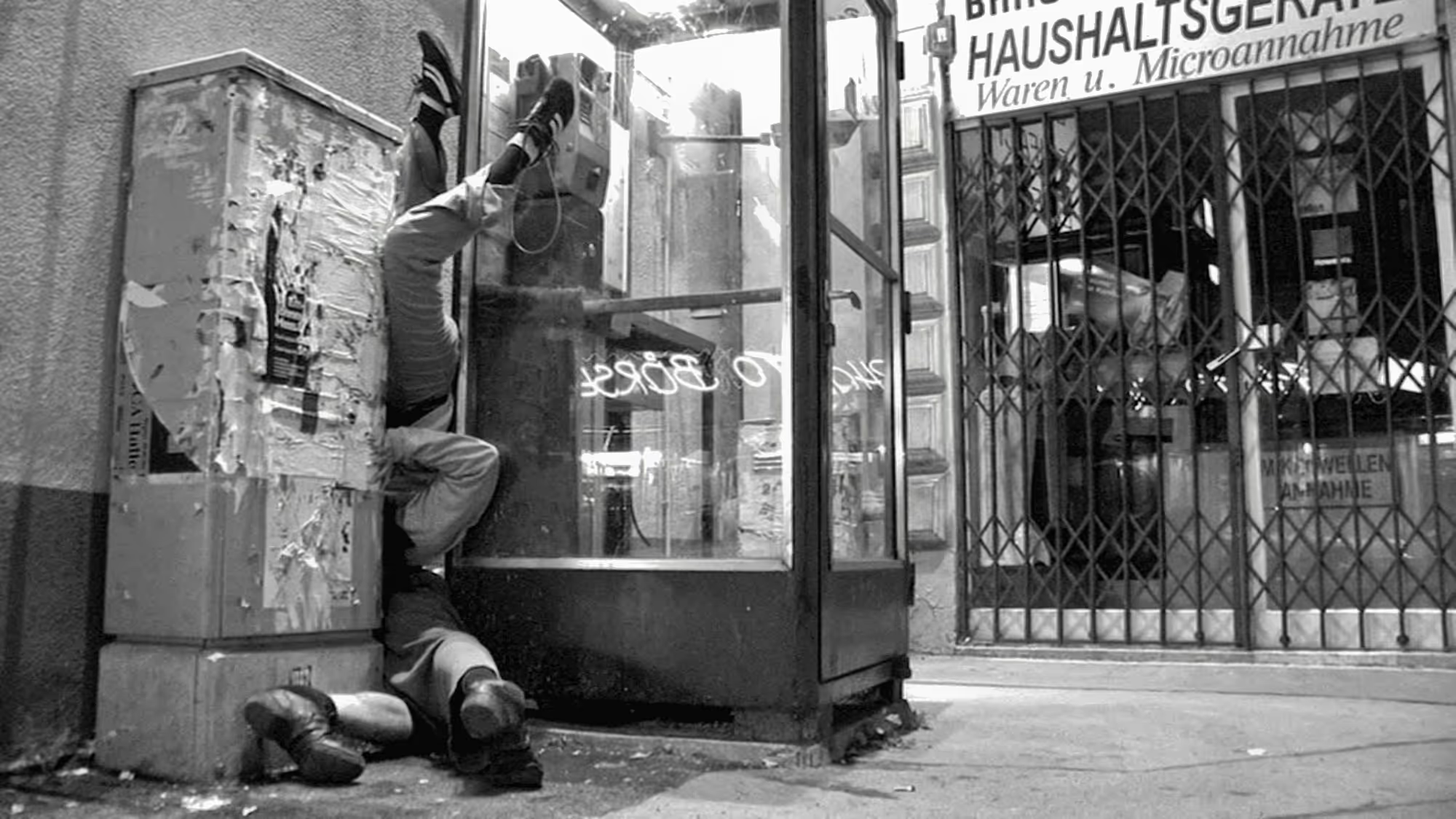
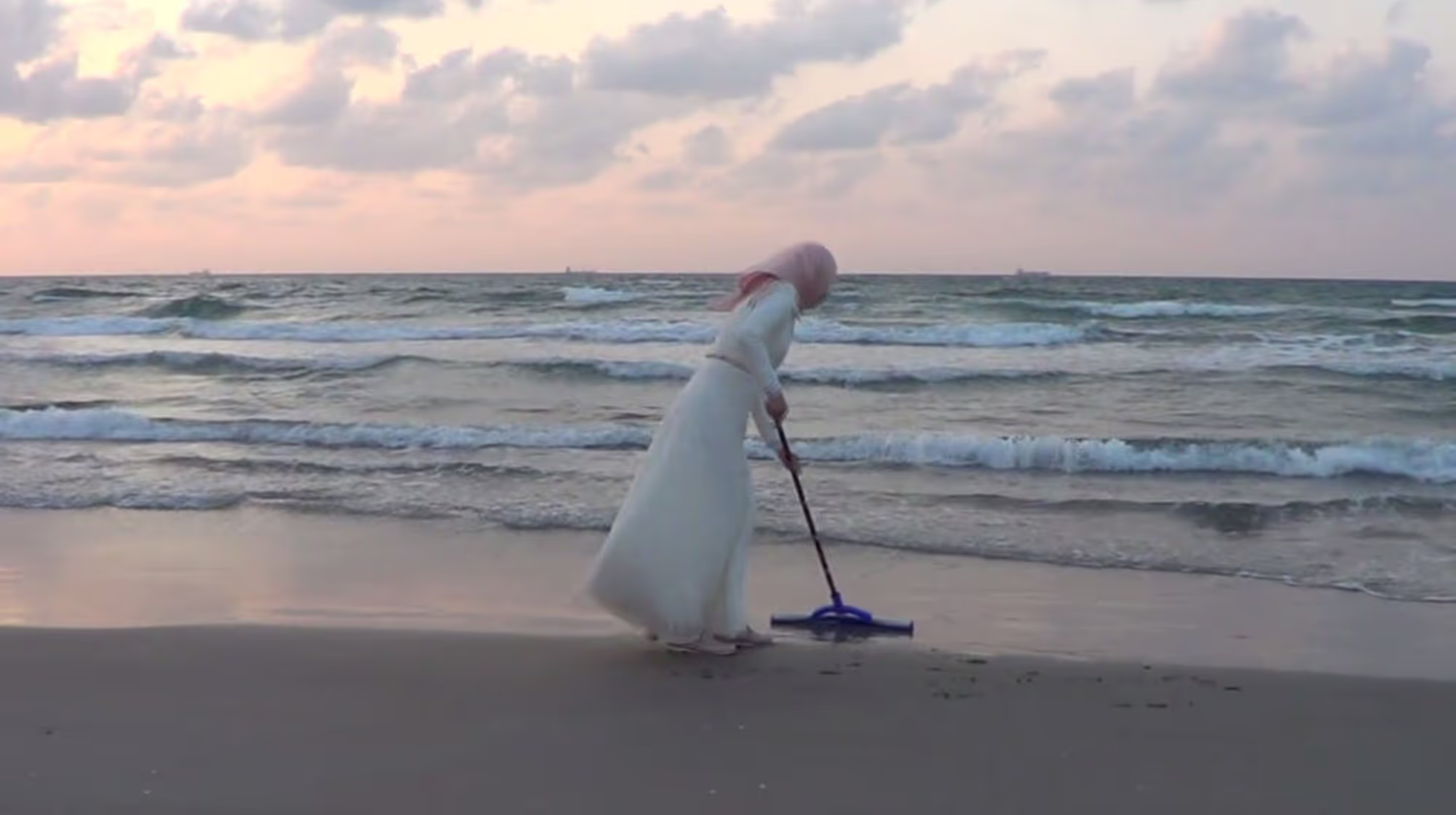
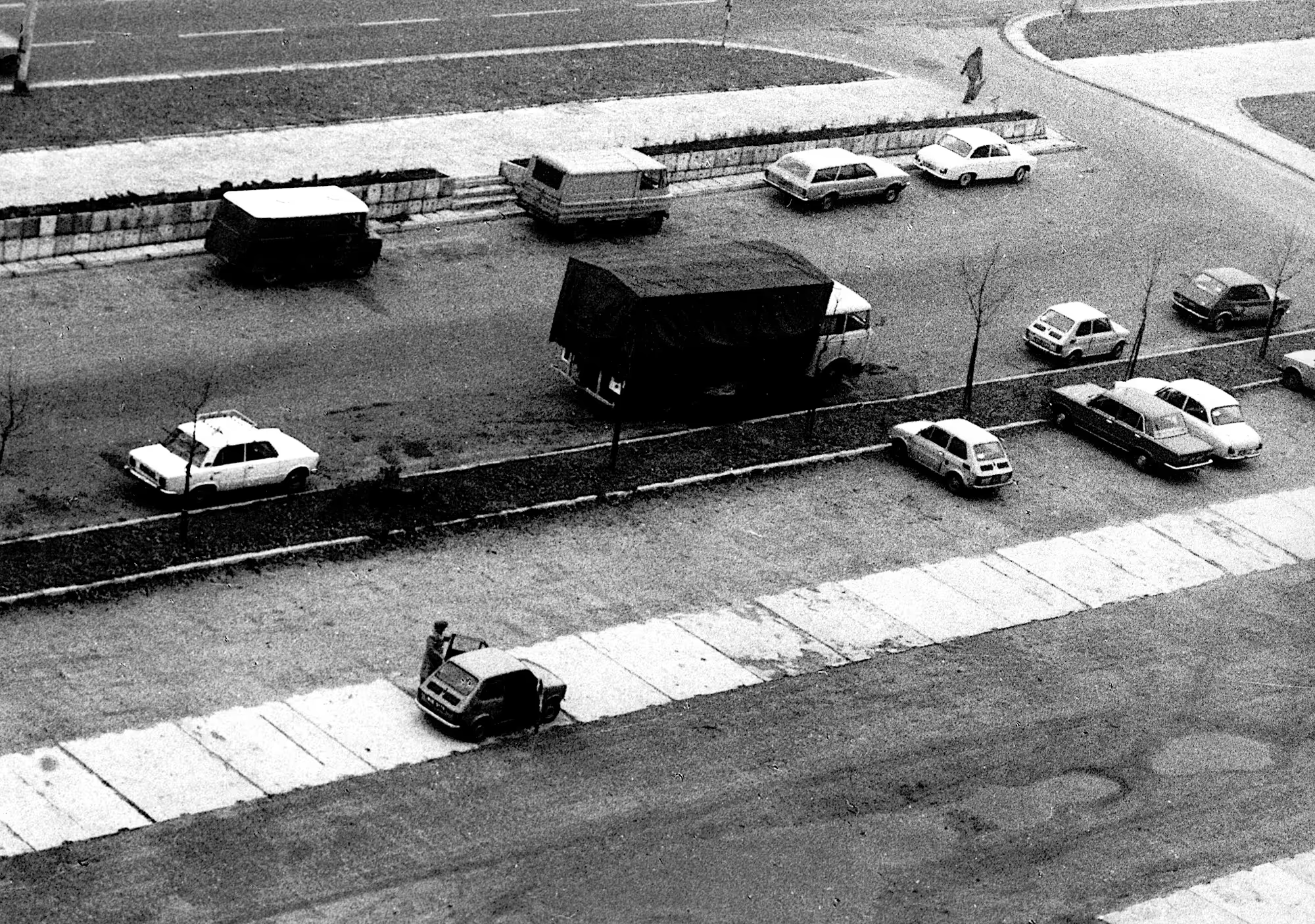
an artistic lens on life in the city and in our everyday world is presented in the exhibition everything we’ve learned so far. it invites us to view urban life and the spaces we inhabit as sites for observation and learning, where actions such as looking out the window, walking down the street, or simply being become exercises in presence, opening a critical view that emerges from within the ordinary.
the works on view include: a slow walk for a longplayer - ohad fishof, 2005, 8:16; bidoun einwan - raafat hattab, 2009, 4:06; body trail, the movie - willi dorner, 2007; nothing to write home about - ori levin, 2012, 7:34; untitled - murjan abo deba, 2017, 10:05; z mojego okna (from my window) - józef robakowski, 1978–1999, 19:15.
video art by ohad fishof, raafat hattab, willie dorner, ori levin, murjan abo deba, z mojego okna, józef robakowski.
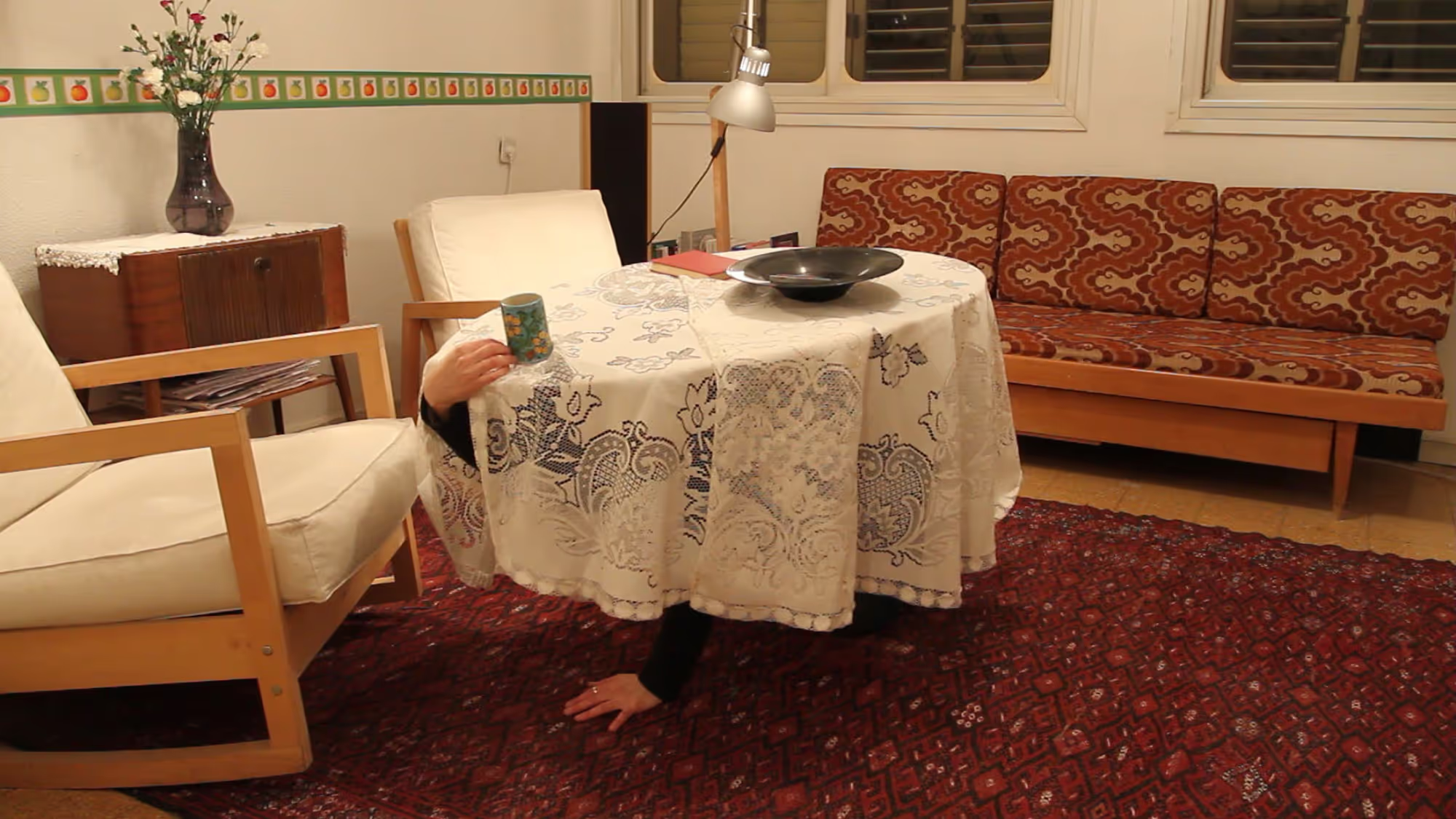
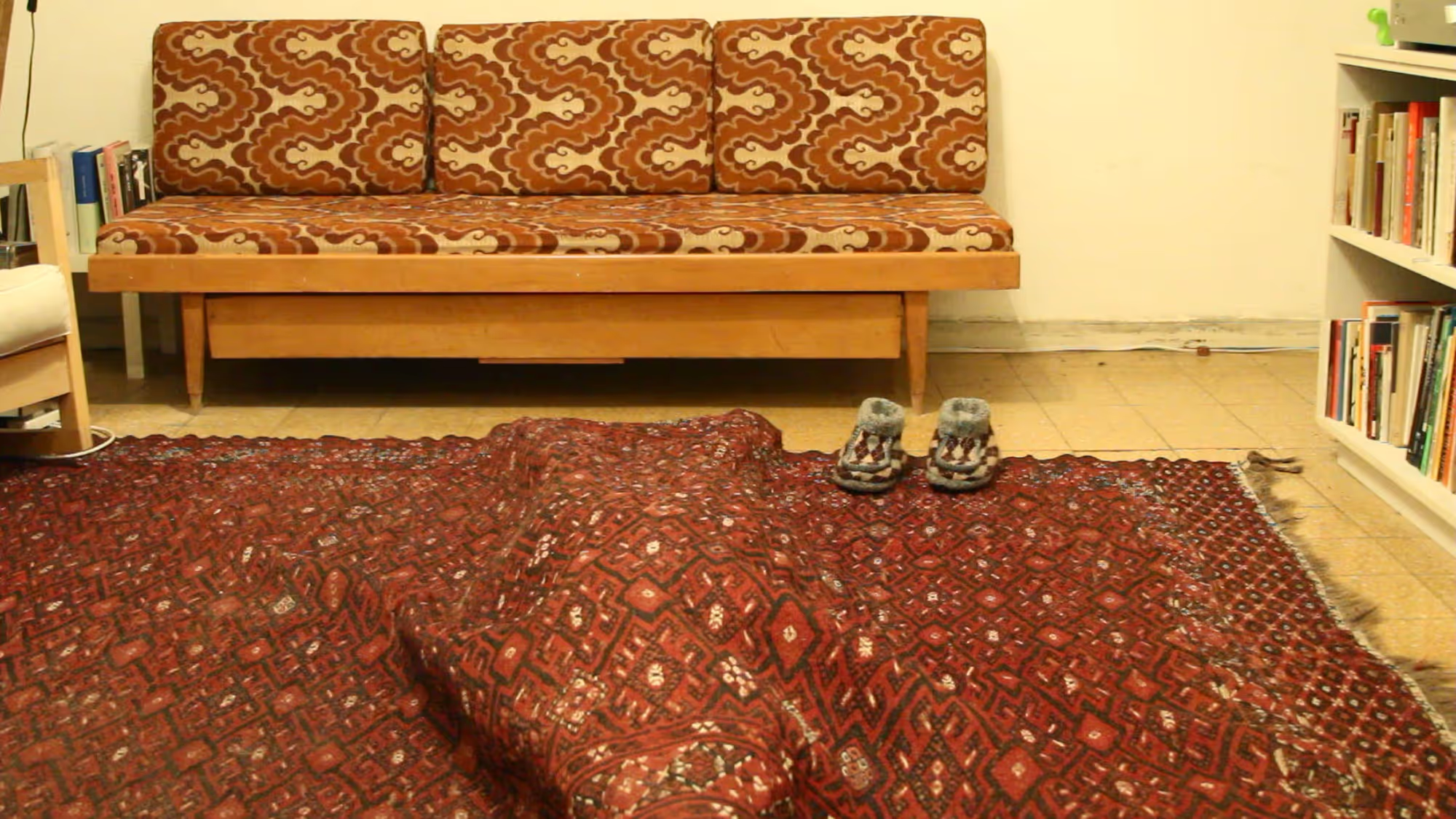
curated by maayan mozes
action function is an event of performances in which six artists presented ideas and research-in-development through short performance works. The event is the result of a practical research in performance, which summarized a 5 months process in which Mozes accompanied the artists in their work, focusing on the essence of the lecture-performance concept and searching for additional experimental actions within this field.
action function is a term coined by the artist Omer Shach at Olympus, School for Artists at Lileblin house, to describe the medium of performance art.
performers tal gefen, may aylon, tal gafni, rotem volk, naama bar-or, curator maayan mozes. Images featured: shani tamari-matan, tal alperstein.
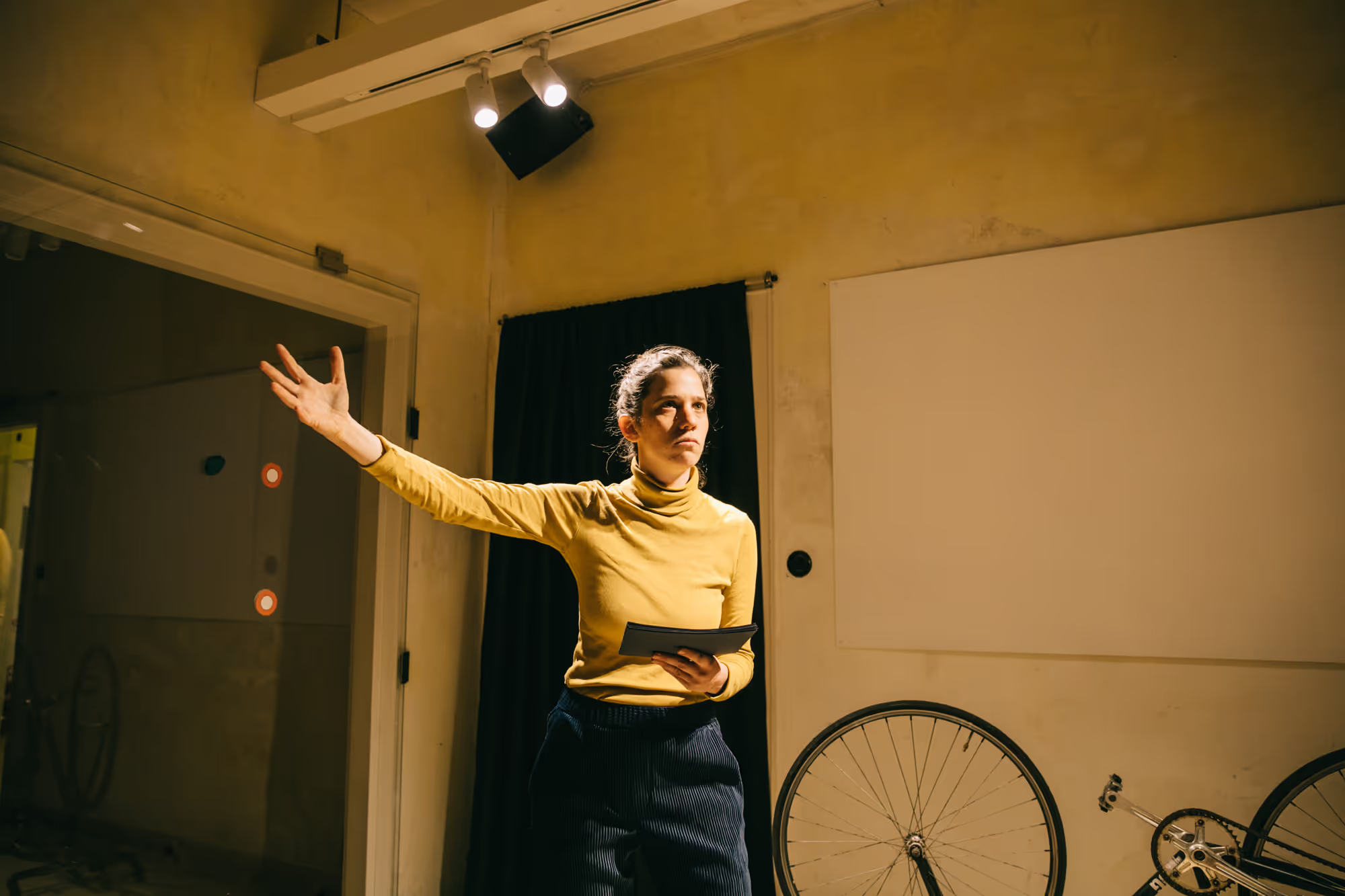
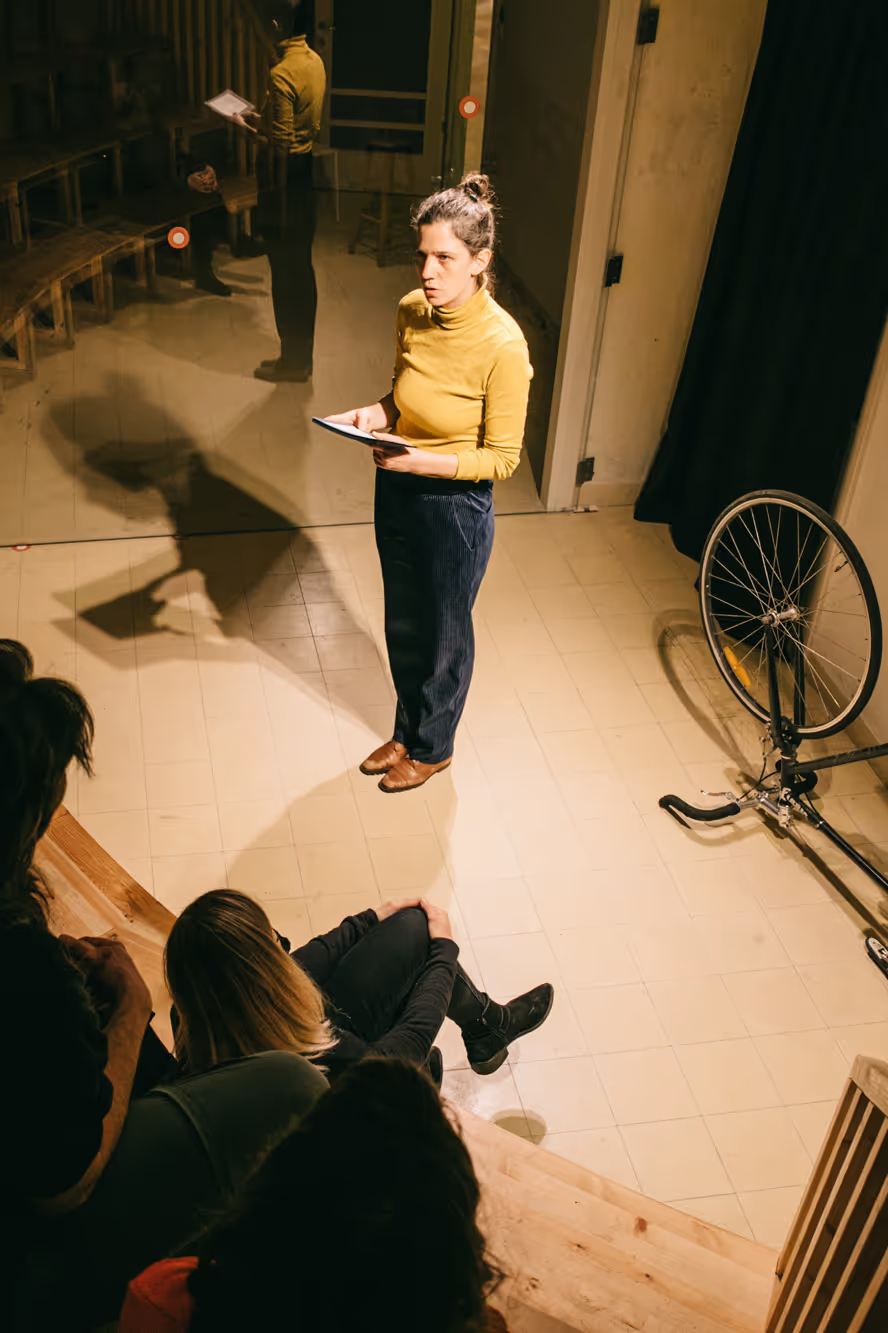
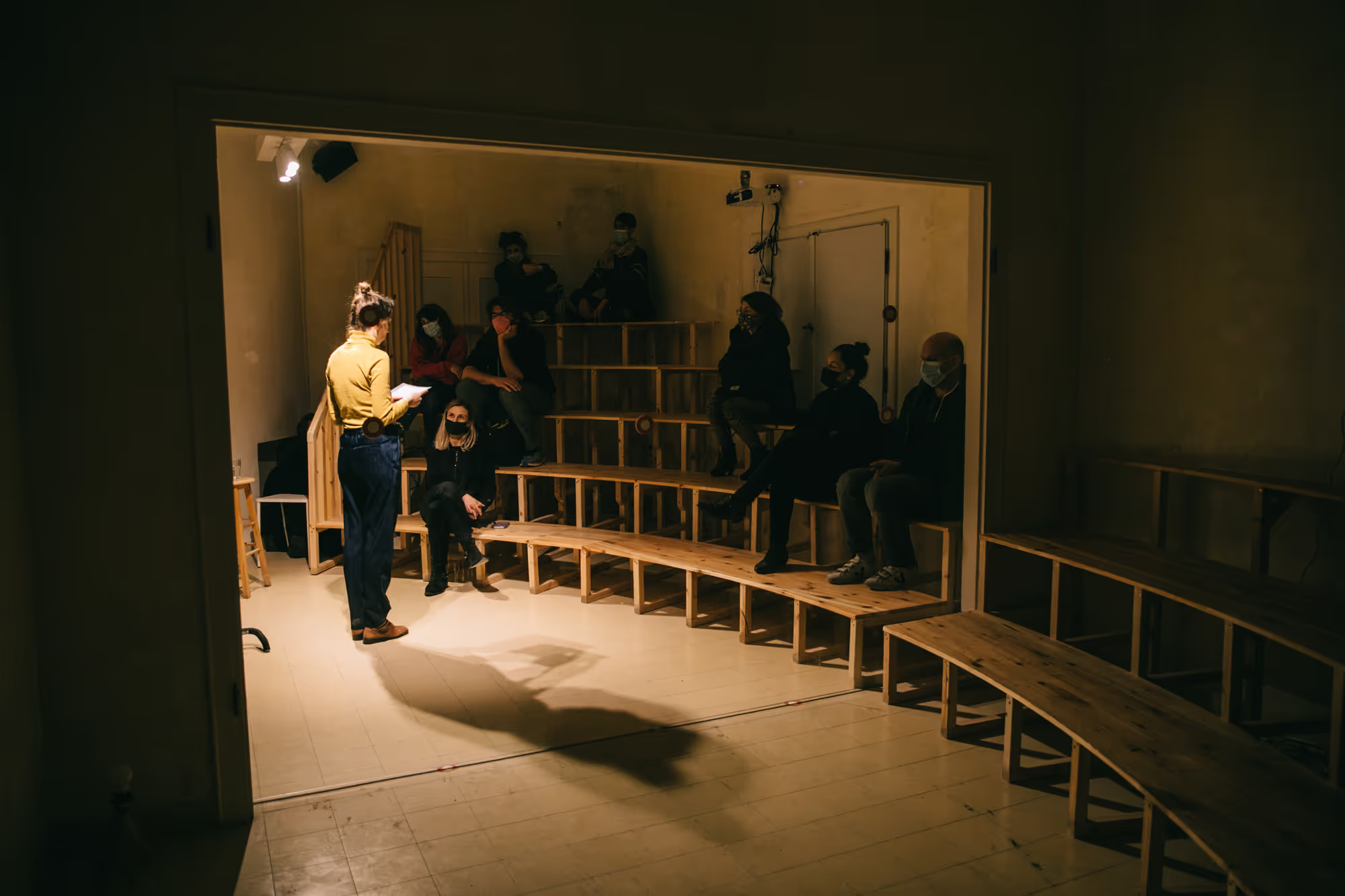
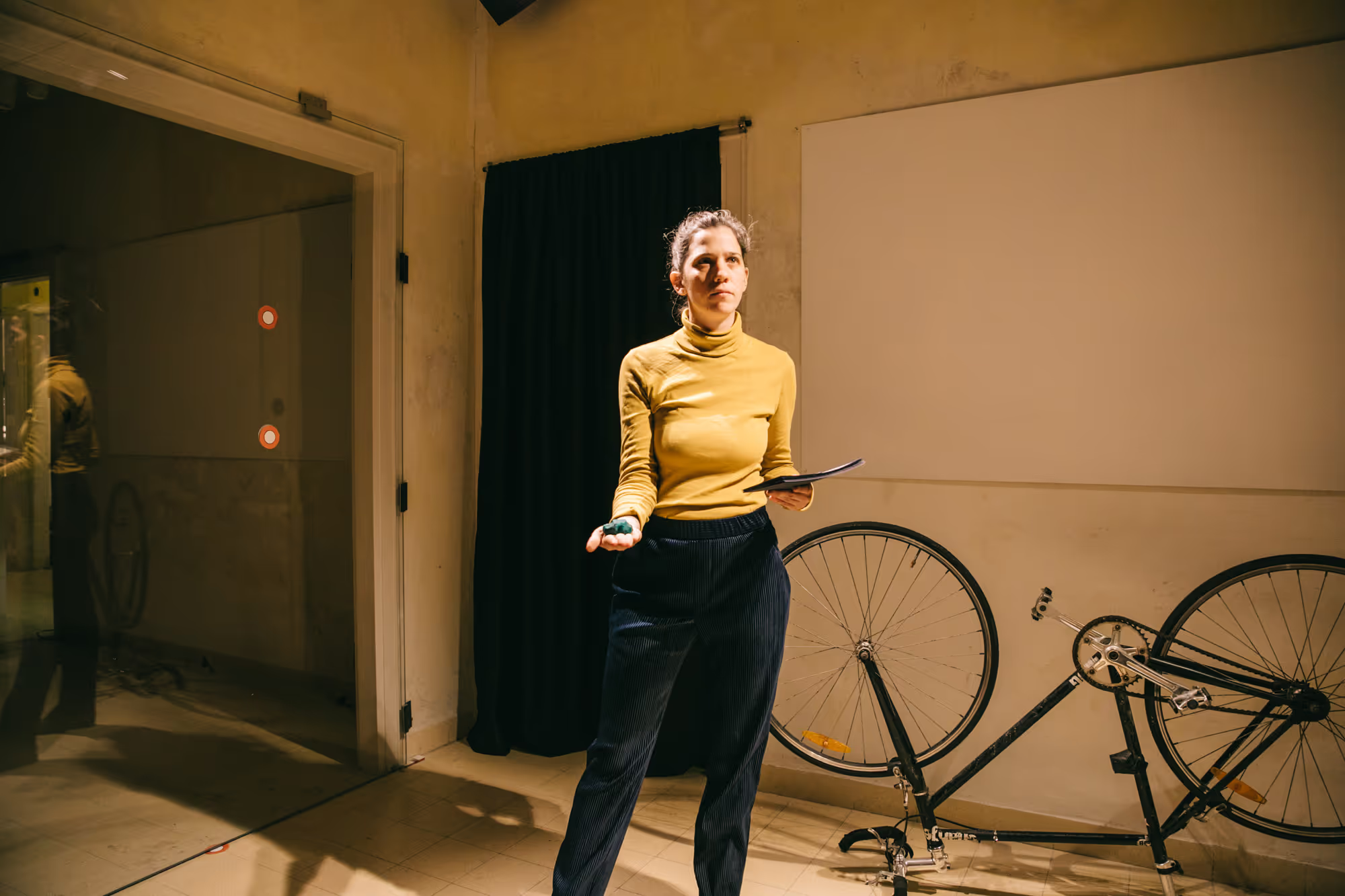
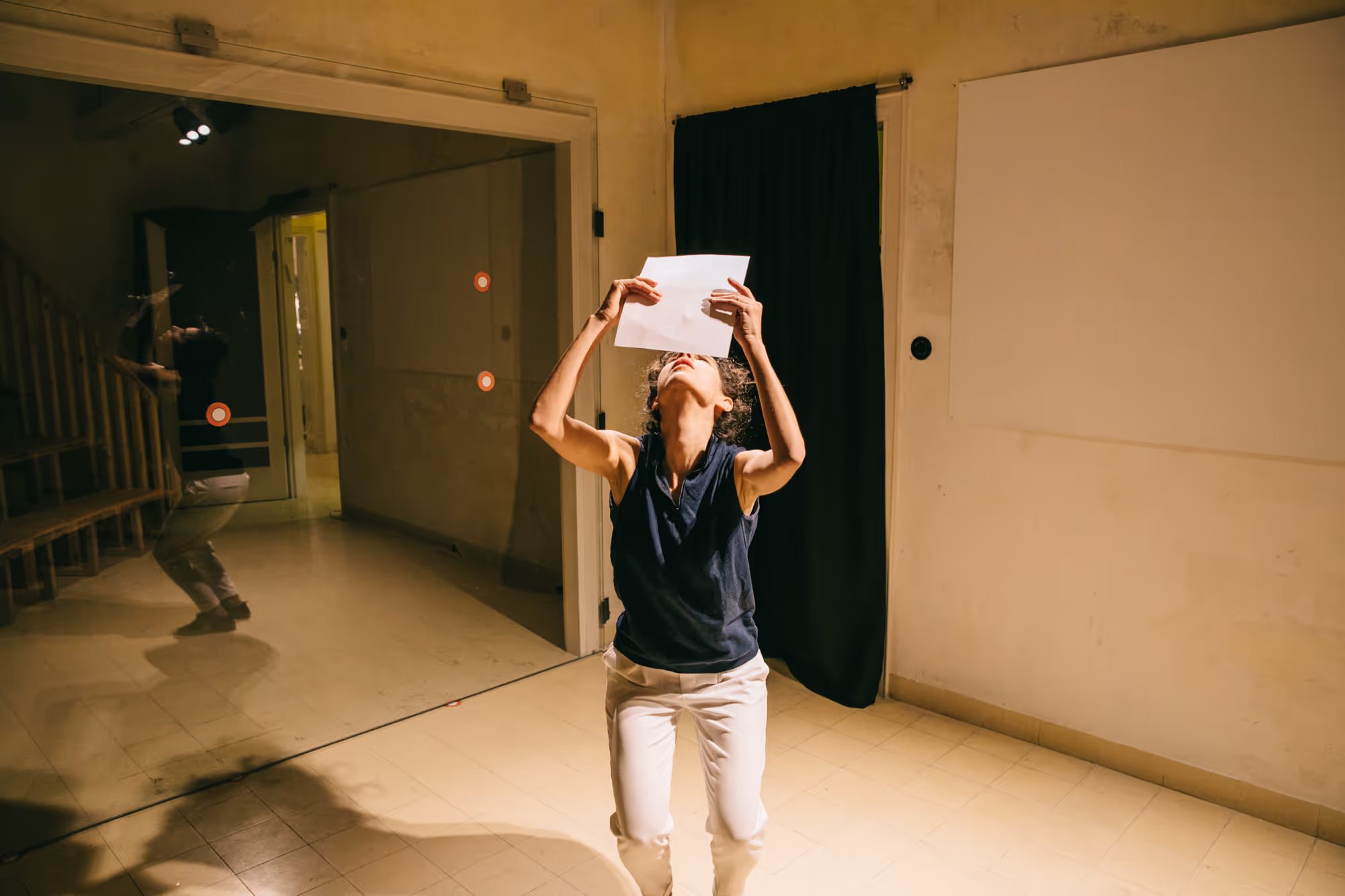
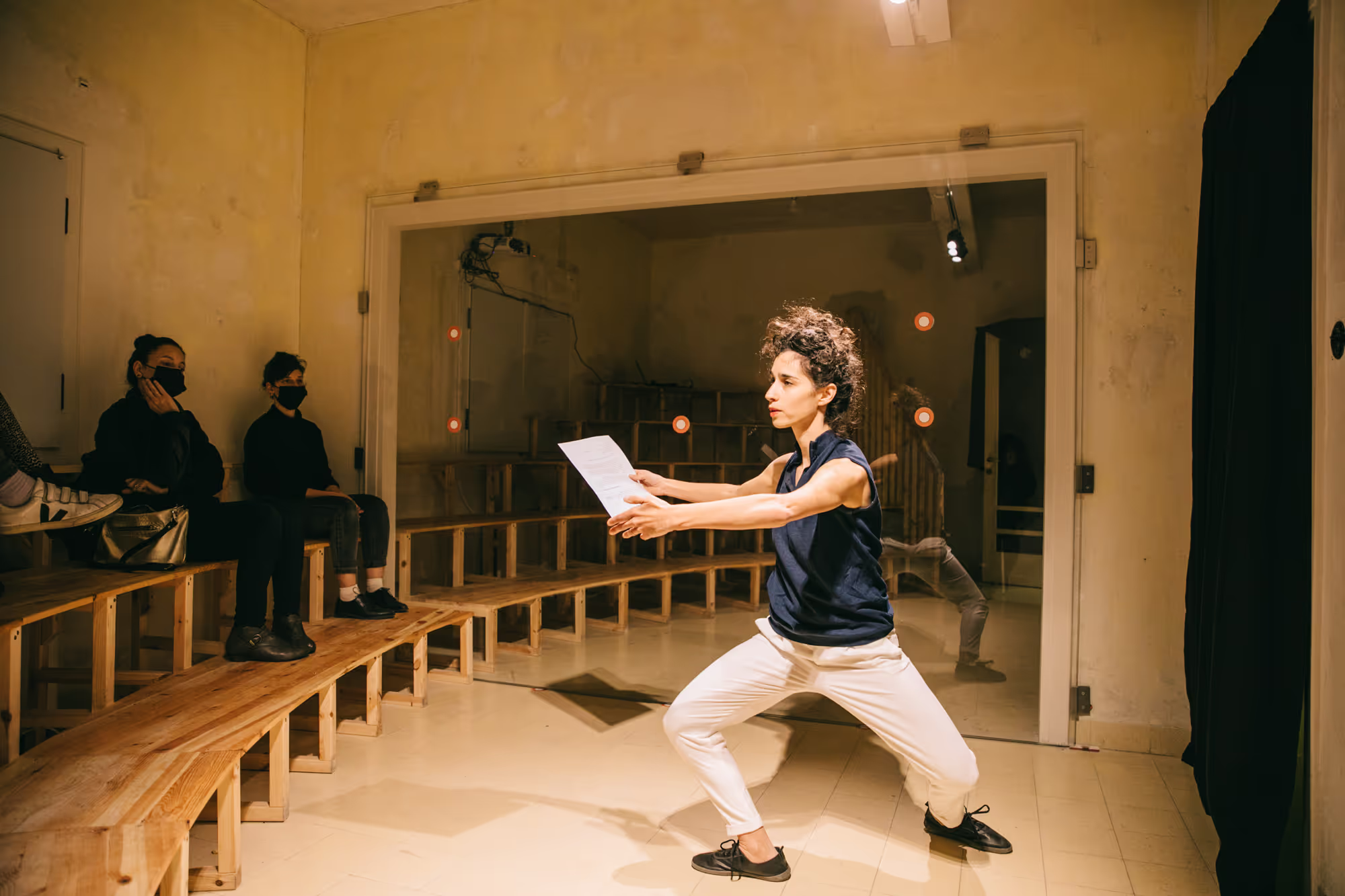
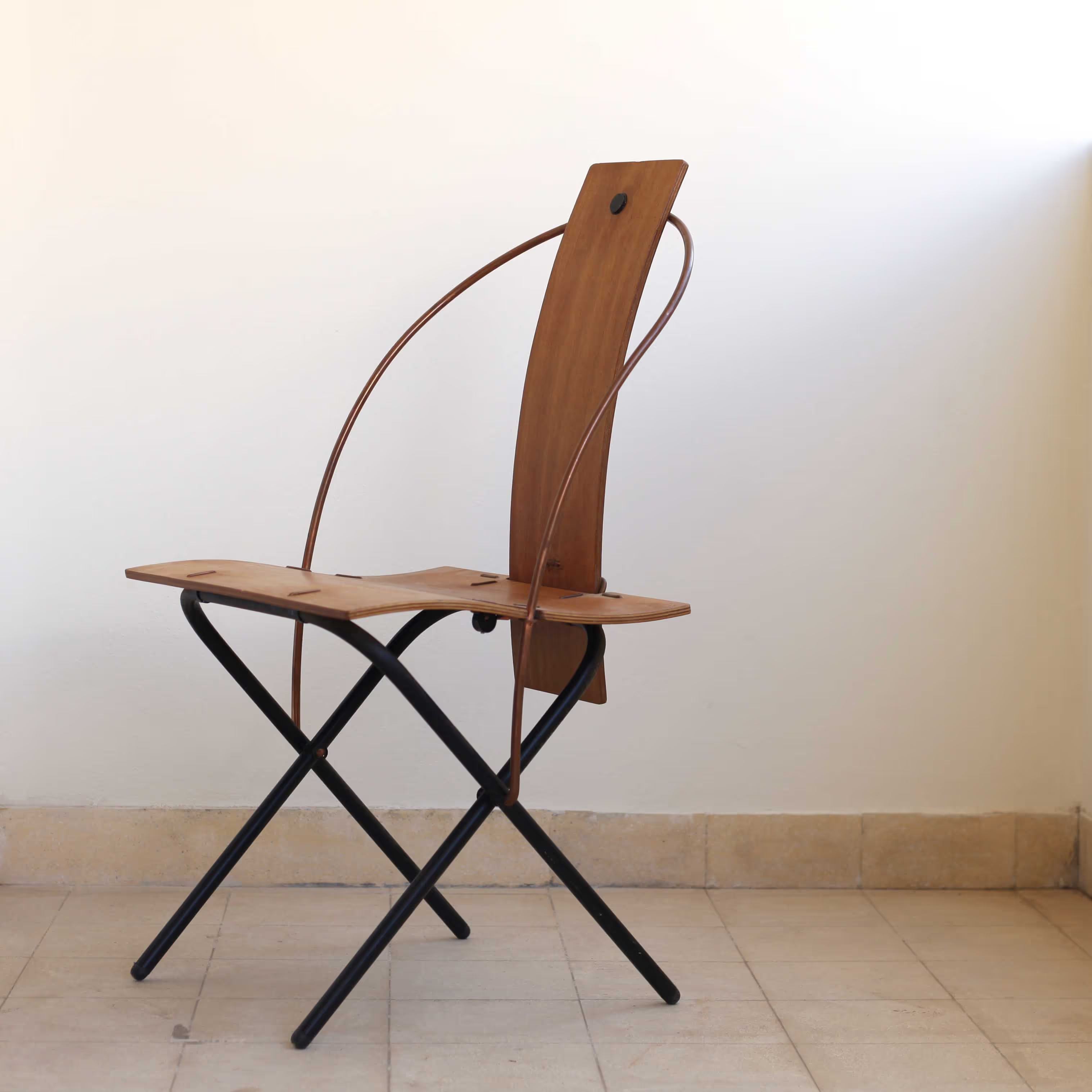
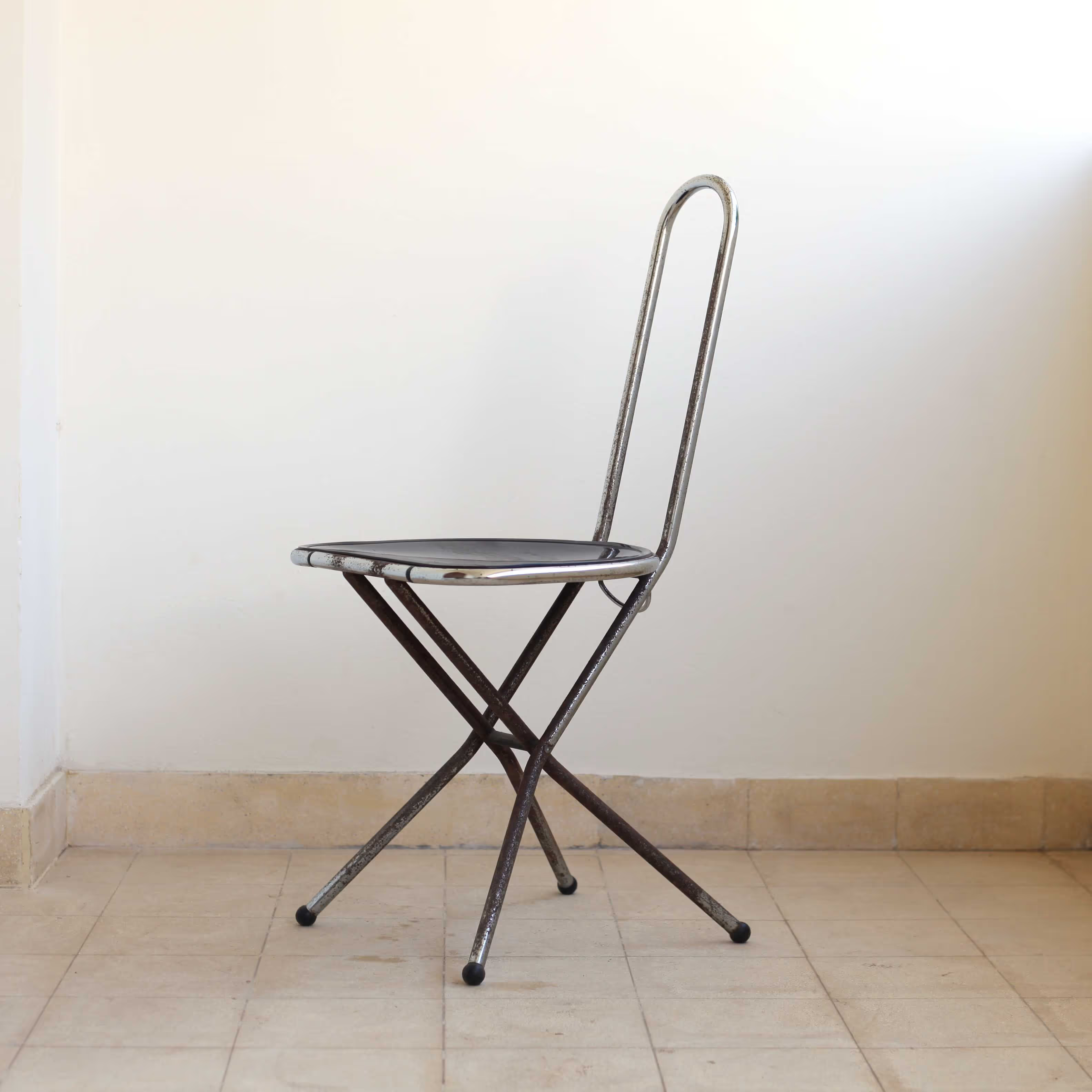
the school of the city conference began with forty foldable chairs. forty chairs from designer yaakov kaufman’s folding chair collection were sent during the lockdown to the homes of forty participants for a period of one month. participants were invited to follow a personal trajectory and process while seated on the chair. they embarked on an individual study journey shaped by their own interests and methodologies, while remaining connected through an invisible network to all other participants.
the conference sums up the first three years of operation and research of the school of the city at liebling haus. it is an opportunity to open our doors and present to the public the knowledge, ideas and methods we have developed.
for us, the city is a learning environment. learning takes place through active, spontaneous and sensorial research. we are developing a pedagogy that is not confined to schools and academies, but lives in the city and in everyday life. this is a pedagogy of space and place, non disciplinary in nature. it binds together knowledge, experimentation and craft, and is not based on a hierarchical division between teacher and student.
instead, it assumes an ongoing exchange and mutual rendering of ideas. it recognizes plural forms of studying from and studying with, and allows each person to develop their own passion and curiosity. we propose the term learning movement to describe this approach. a learning movement is an attitude formed through experience, conversation, observation and imagination. learning can happen anywhere and at any time, depending on intention, attention and conditions.
the kaufman collection includes dozens of foldable chairs gathered by designer yaakov kaufman over the last thirty years. these chairs were used as learning tools in his foldable chair design course at the bezalel academy.
co-curators maayan mozes & ana wIld
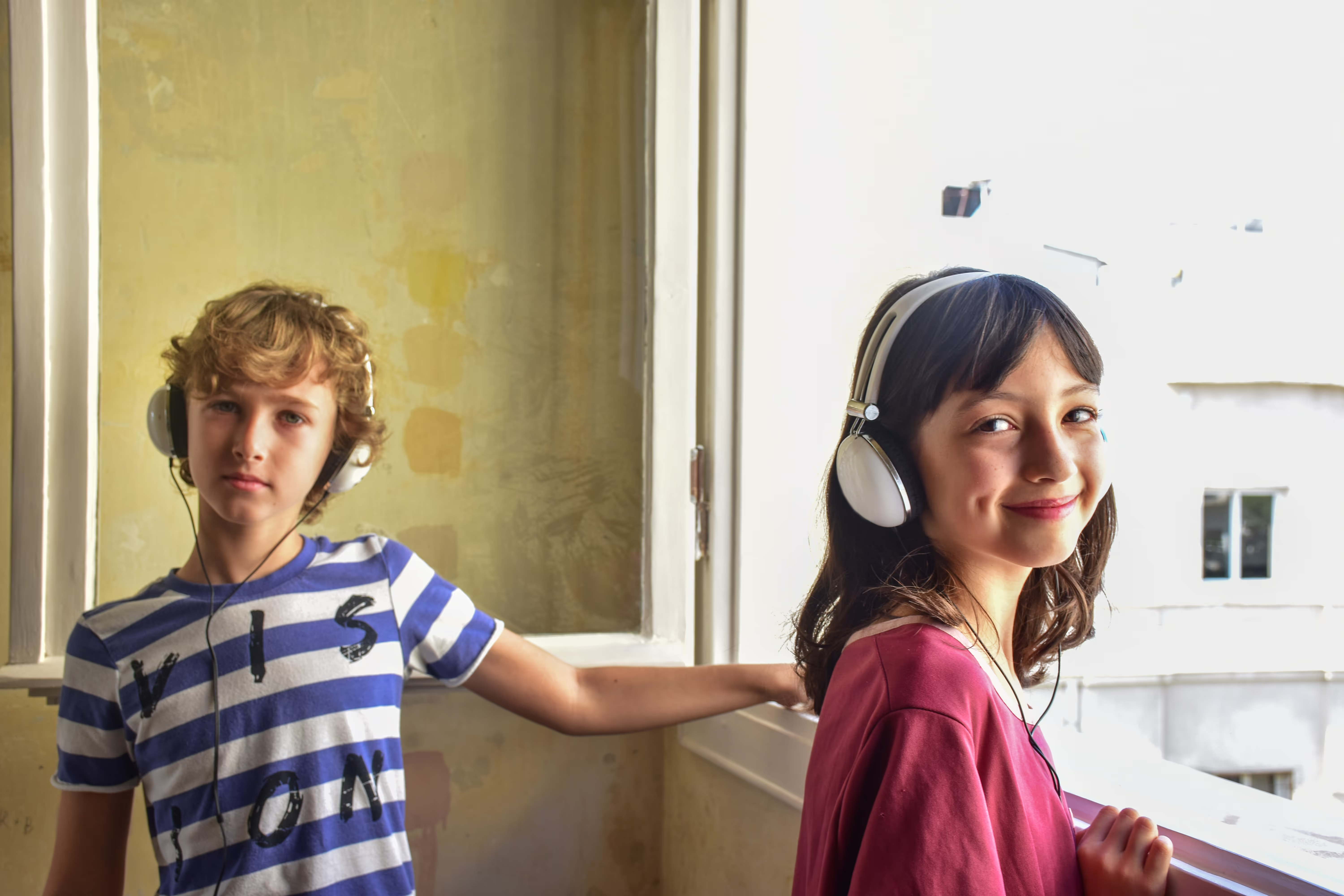
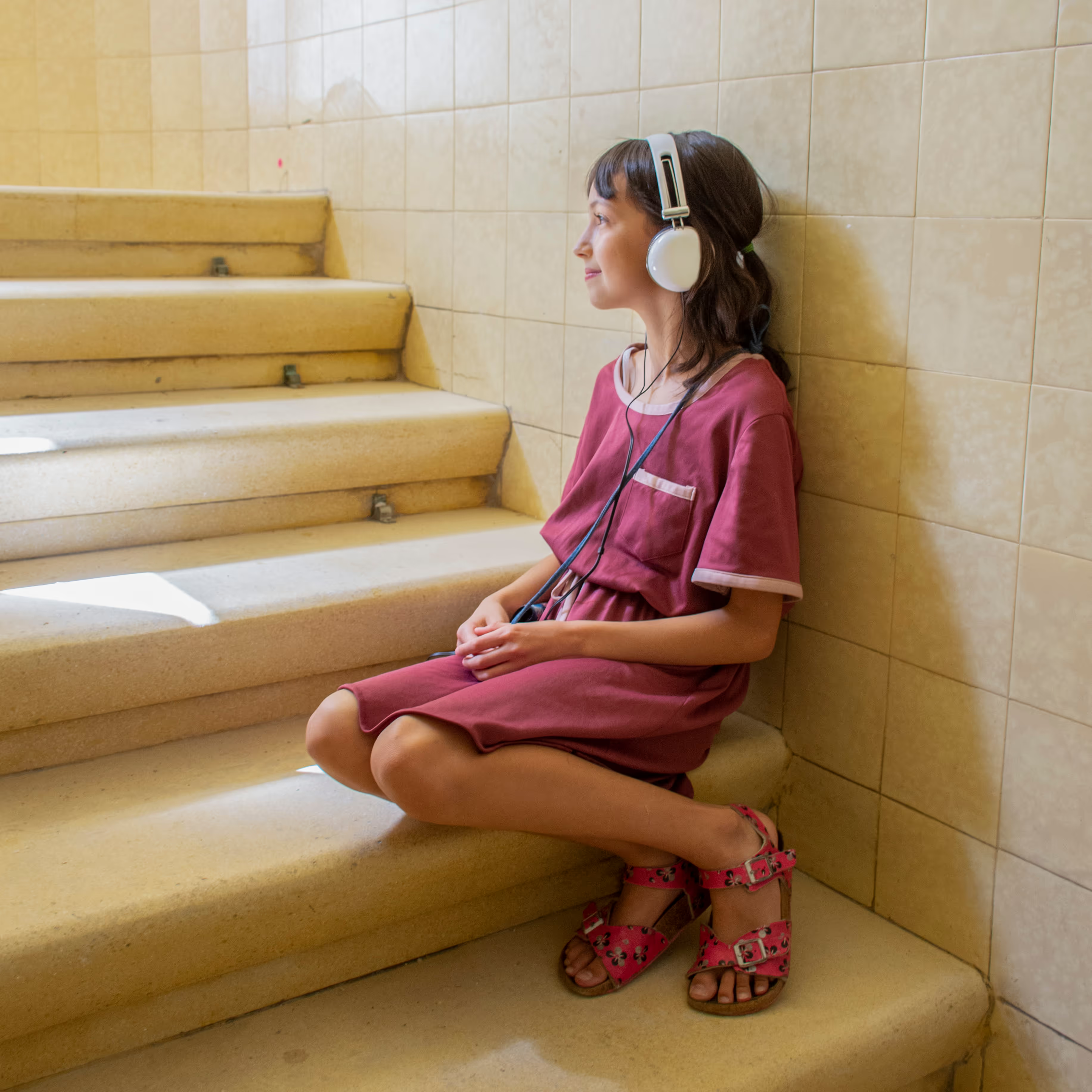
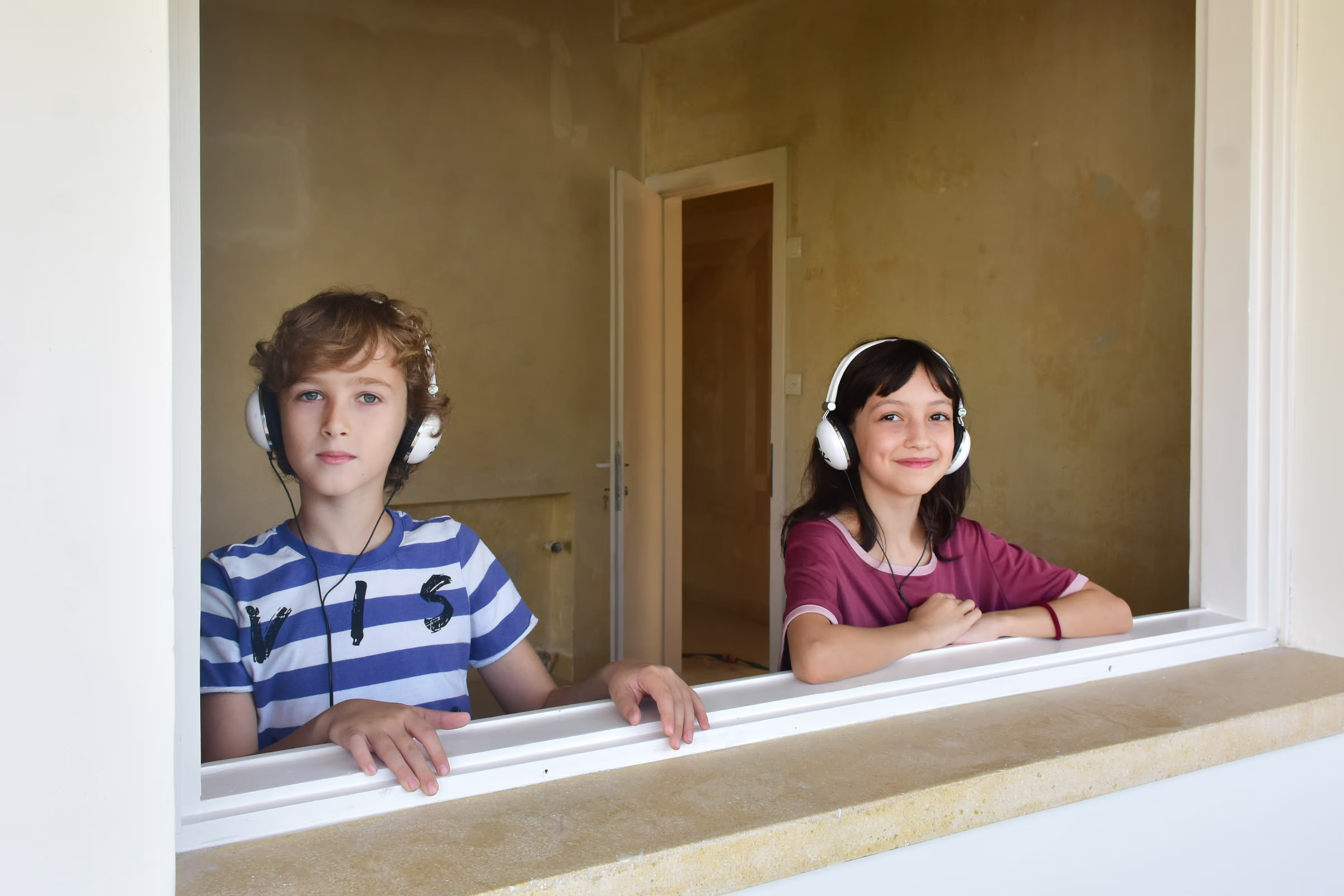
an audio tour designed with and for children visiting liebling haus, a culture center dedicated to architecture, urbanism and the bauhaus heritage in tel aviv’s white city. the project is a collaboration between the tel aviv municipality and the german government. the guide invites children to explore the building freely, in an adventurous and playful manner, without parental guidance.
the tour encourages the use of all senses to explore space through a bodily and emotional experience. it is narrated by a child, in english and hebrew, who invites listeners to play together while following associative instructions throughout the building, such as let’s look for a place with a lot of light, can you see the highest place here, you have 20 seconds to find a hiding place, or touch the wall near you, is it cold. accompanied by an original soundtrack, the children slide into a poetic and immersive experience, forming a personal connection to the space and its architecture.
the tour was developed through a series of intensive workshops with children aged 8 to 12. during our time together, we improvised, tested and explored creative ways of engaging with the building’s different spaces. rather than adopting the traditional audio guide format that delivers information, we focused on offering tools for self exploration.
co creators rotem volk and maayan mozes, sound design yoni tal, narration sarah goldman, yonatan marcus, and jan mandrea
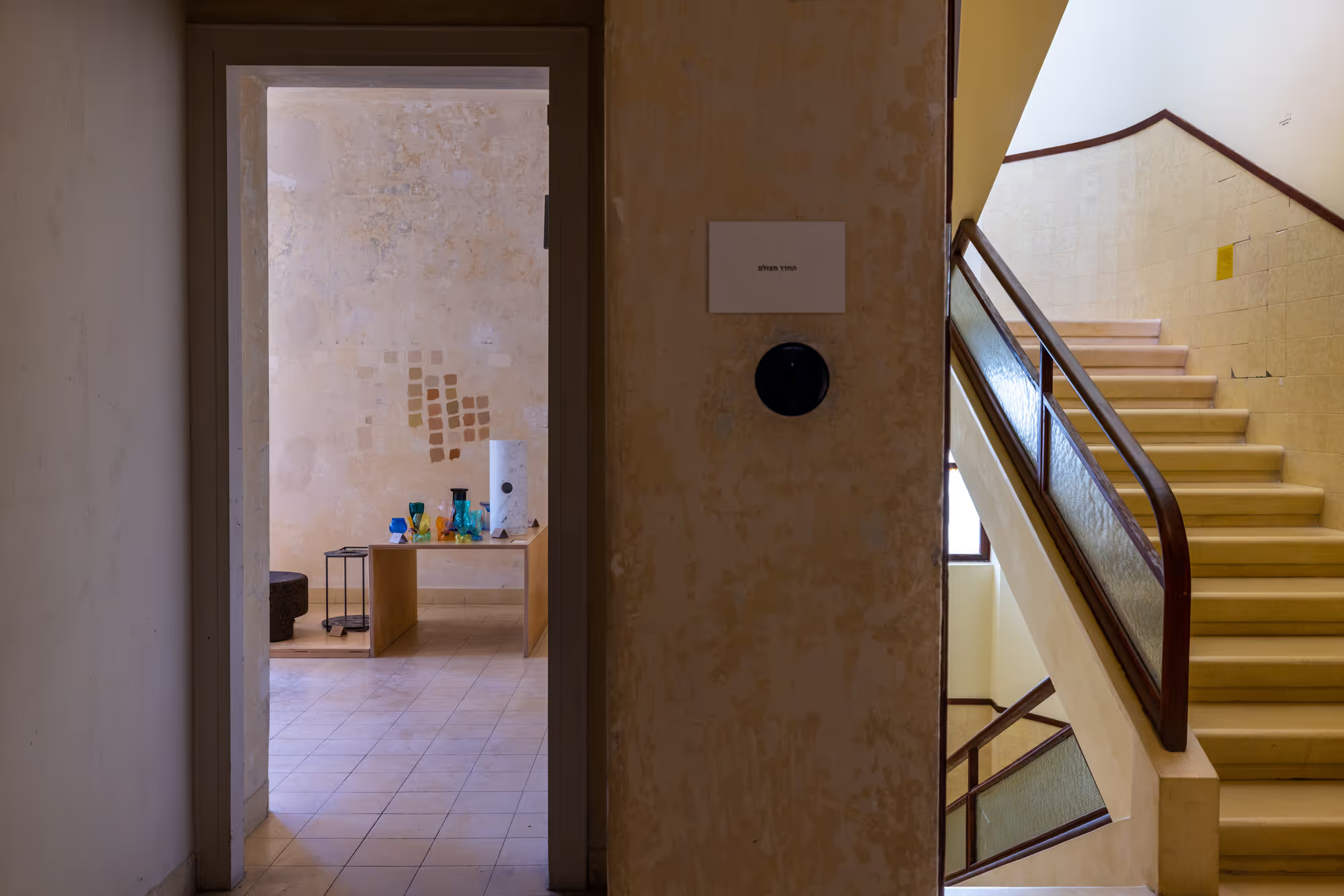
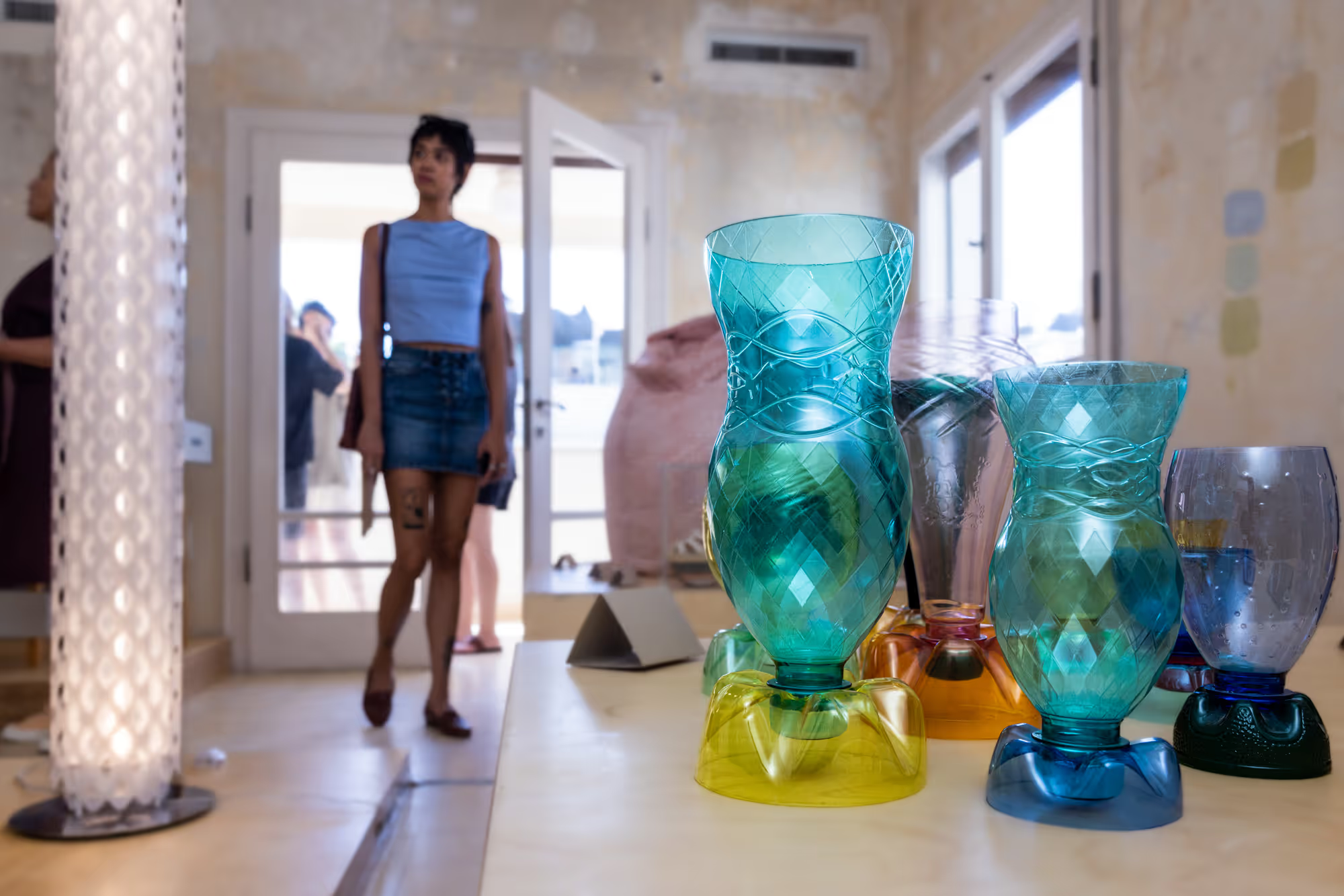
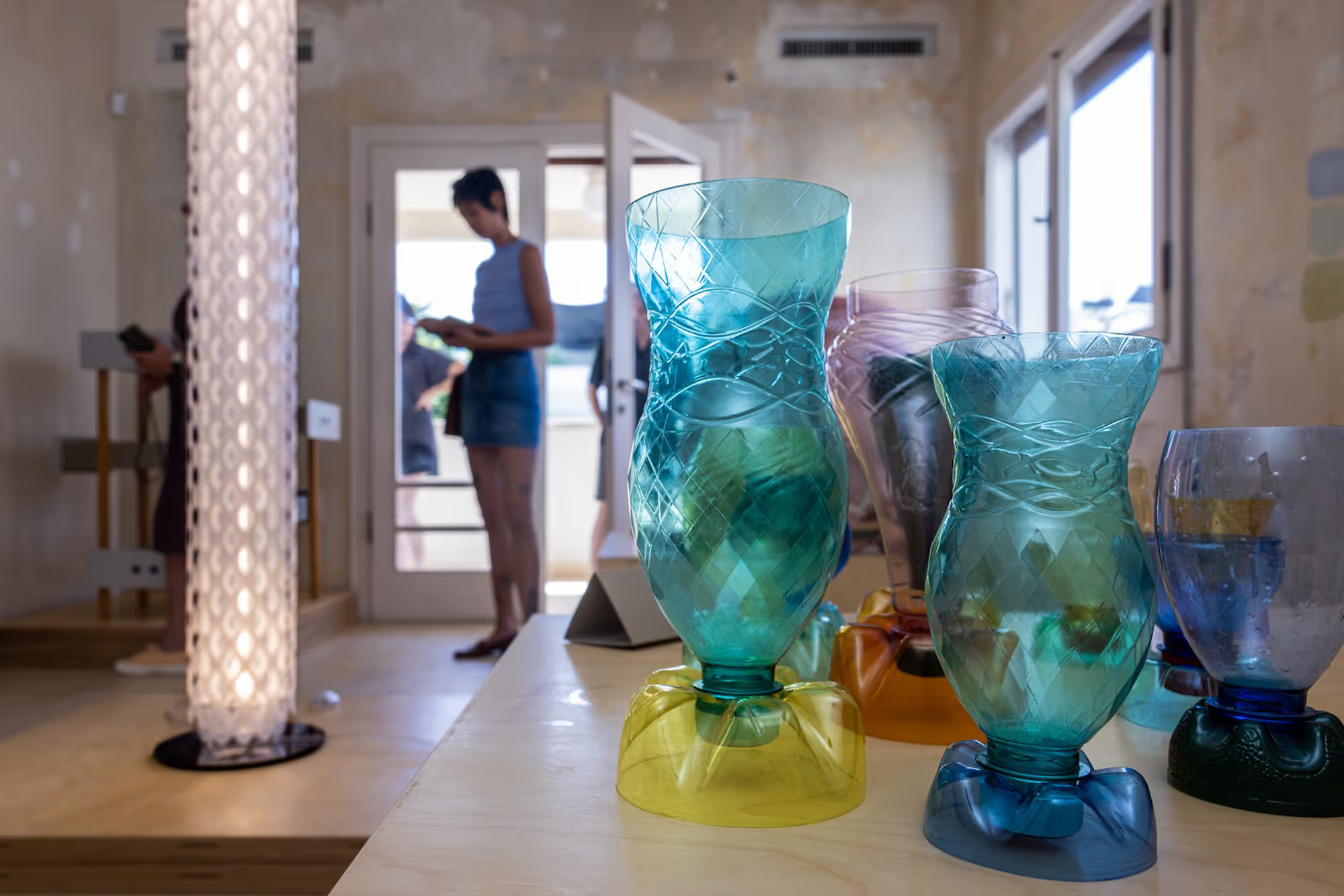
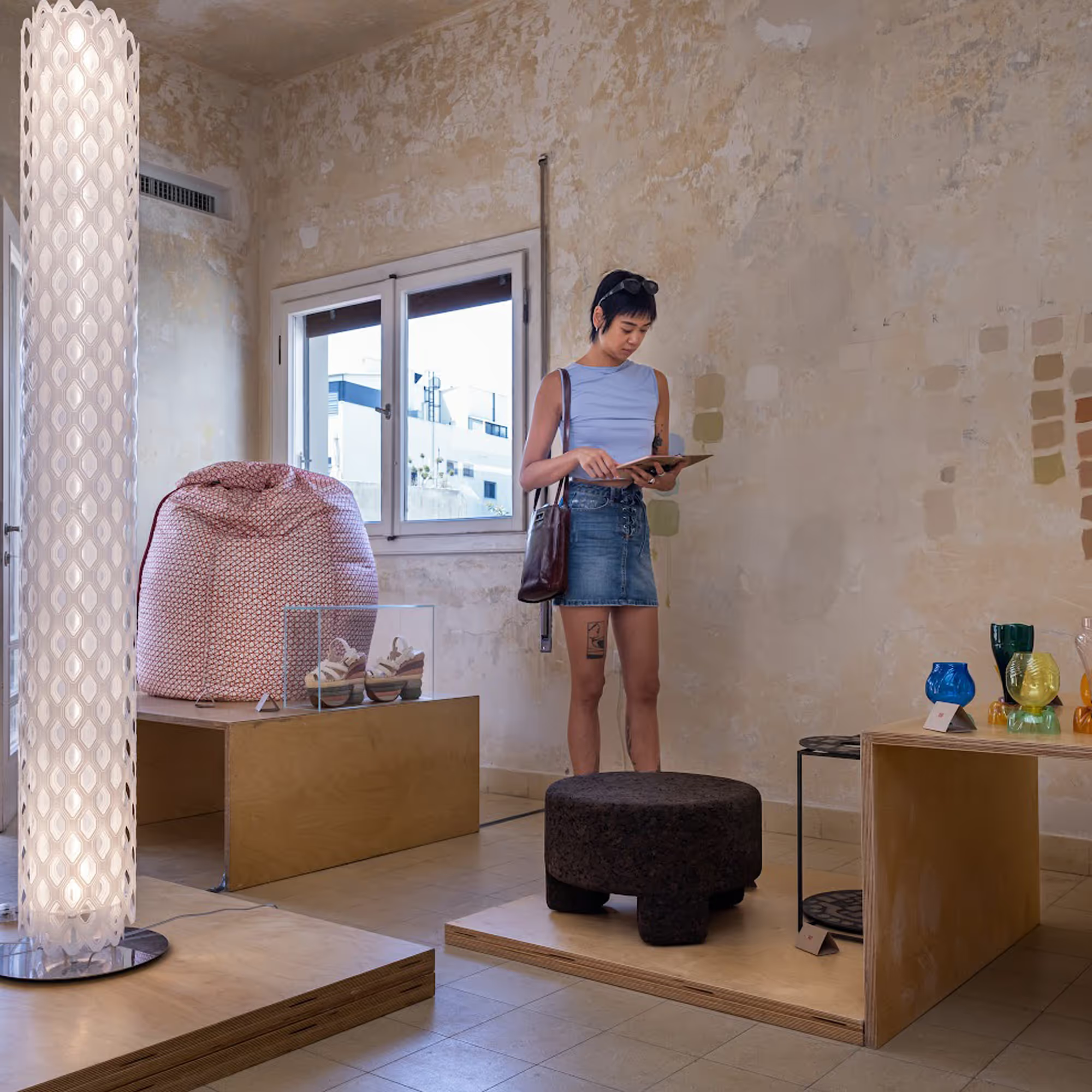
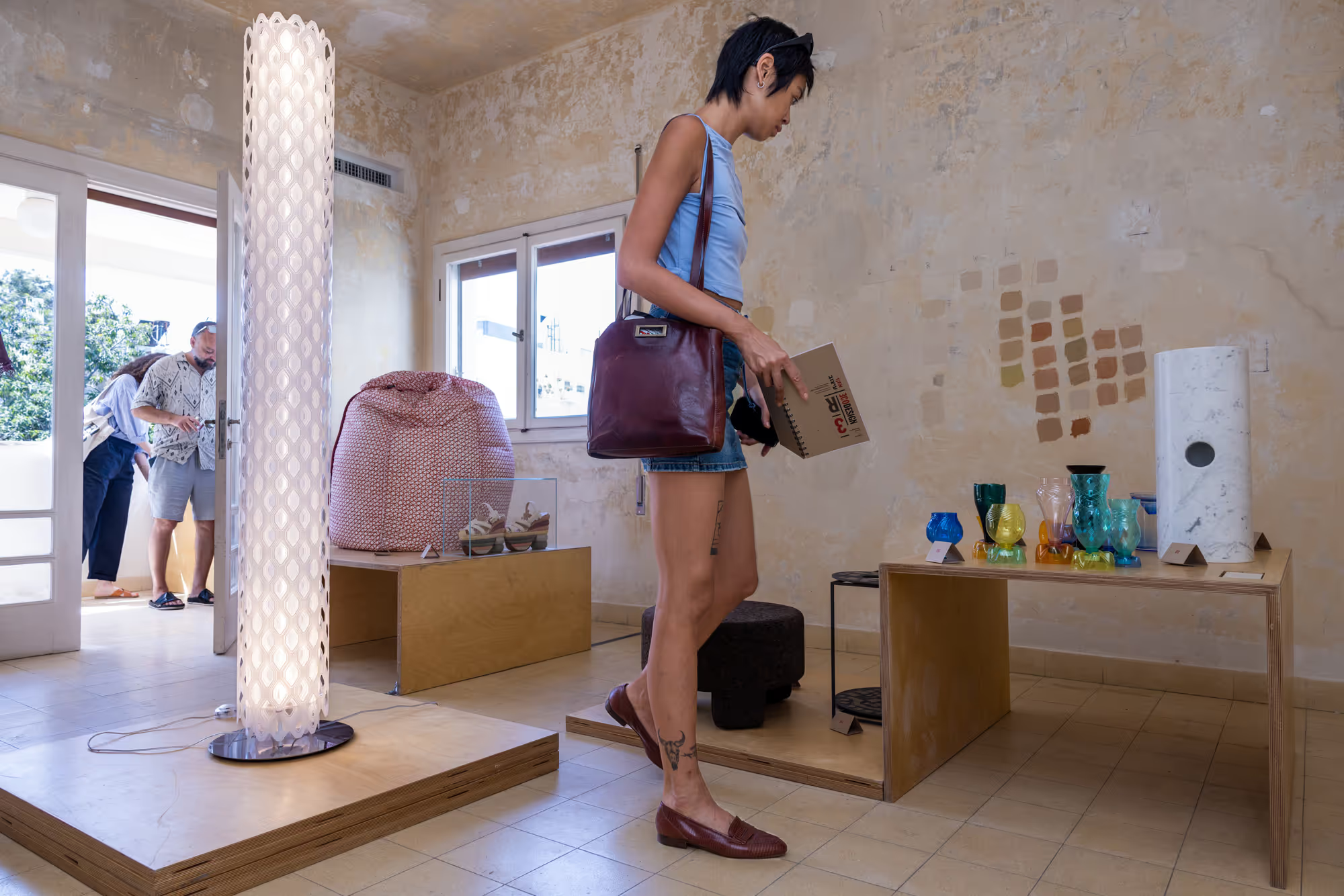
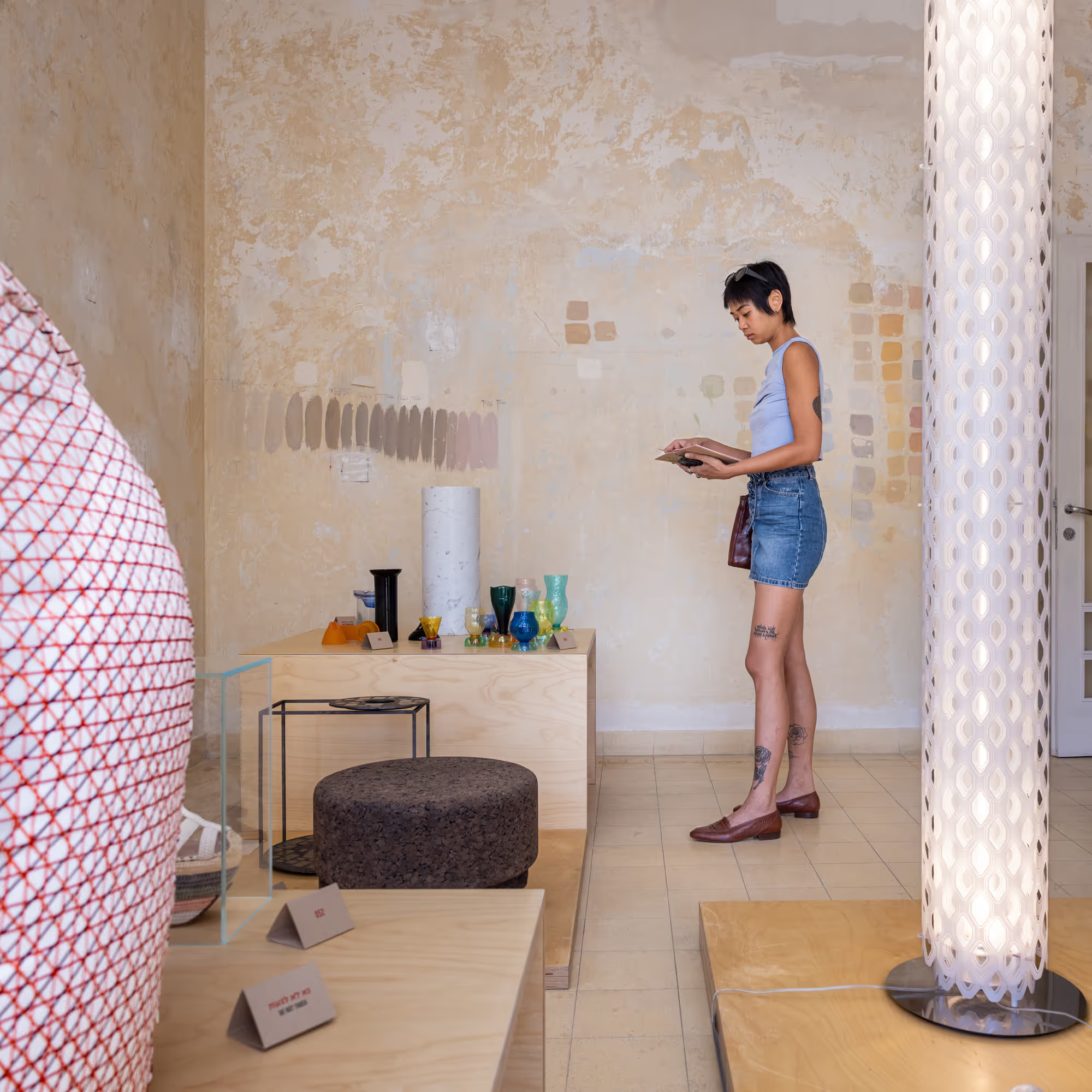
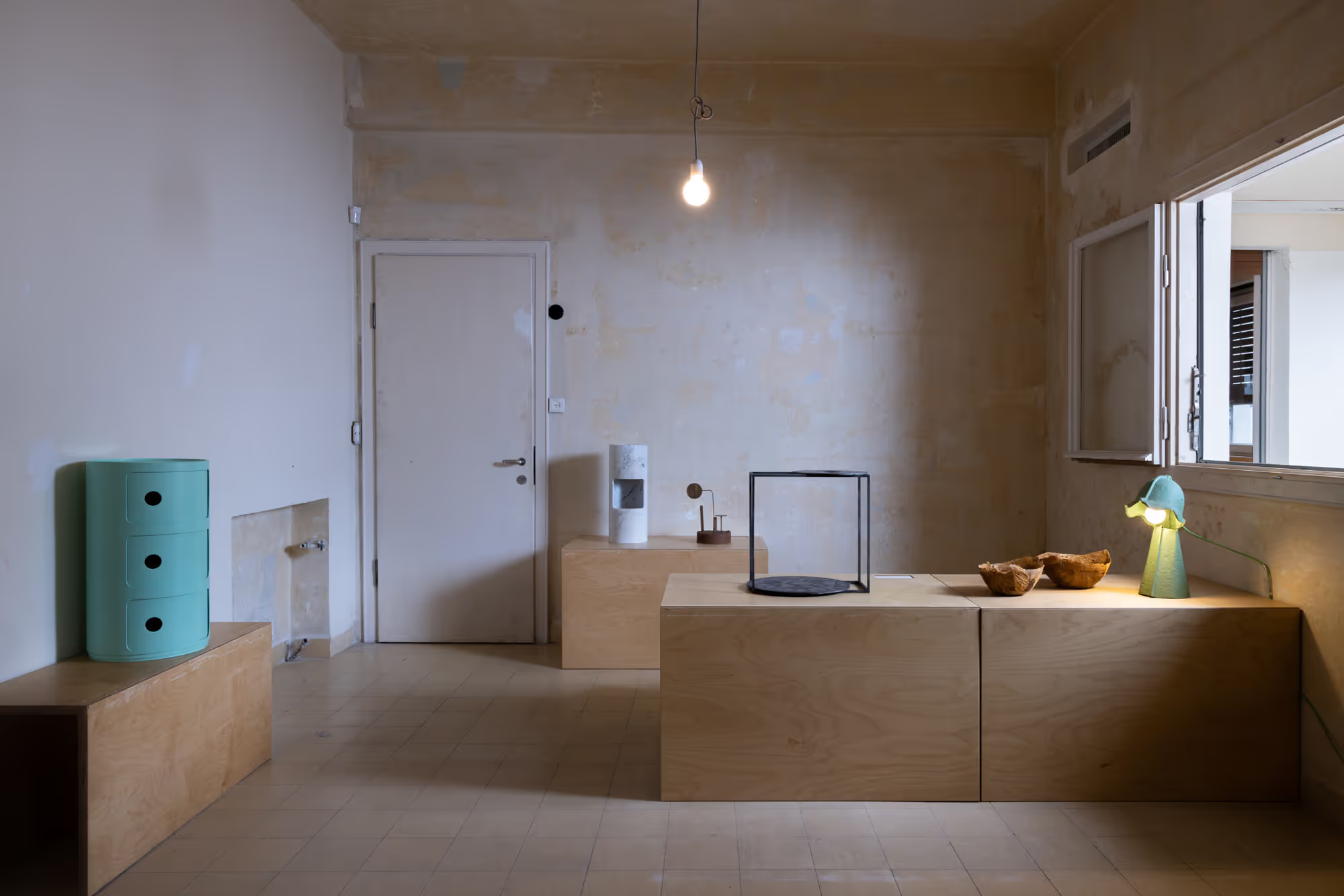
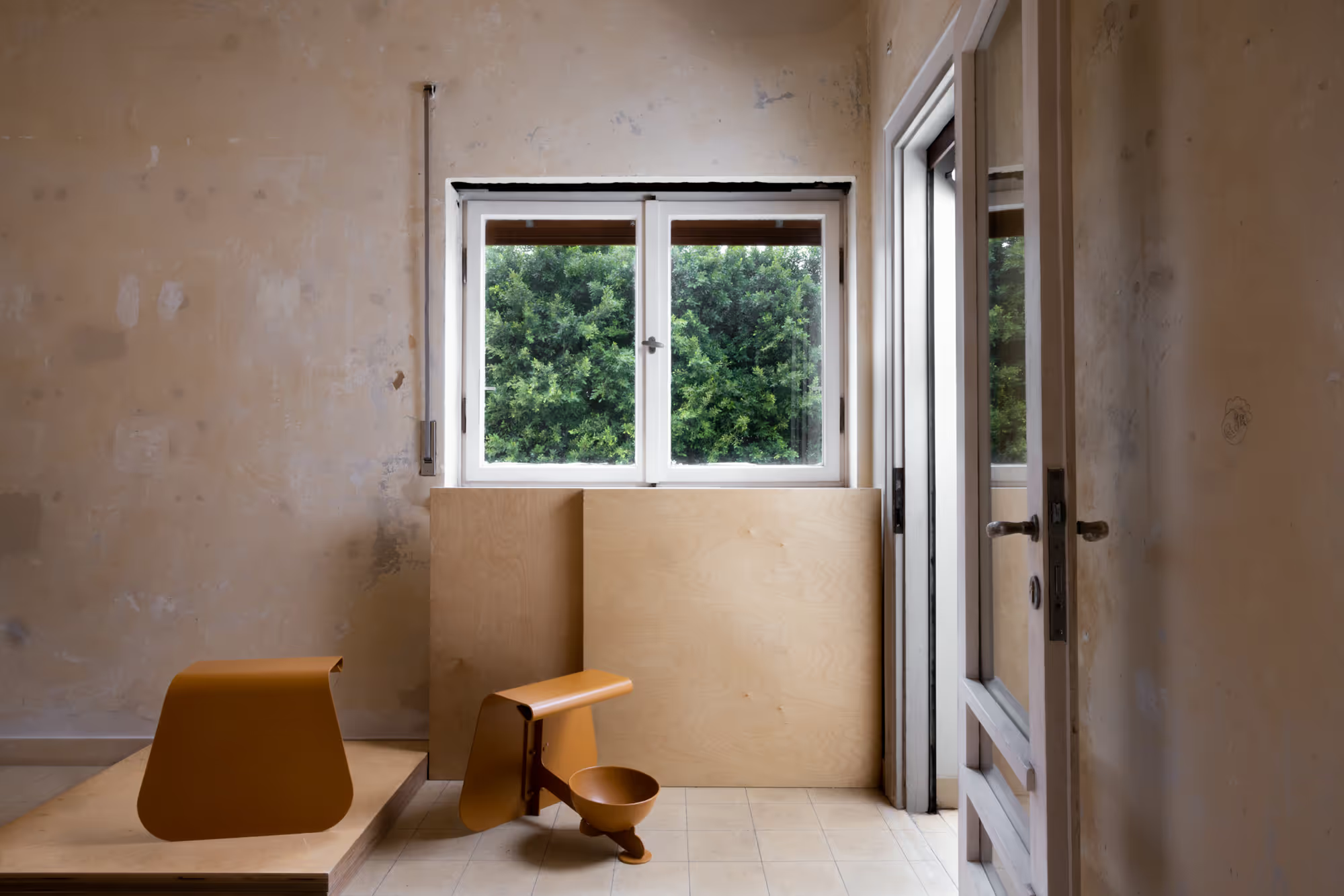
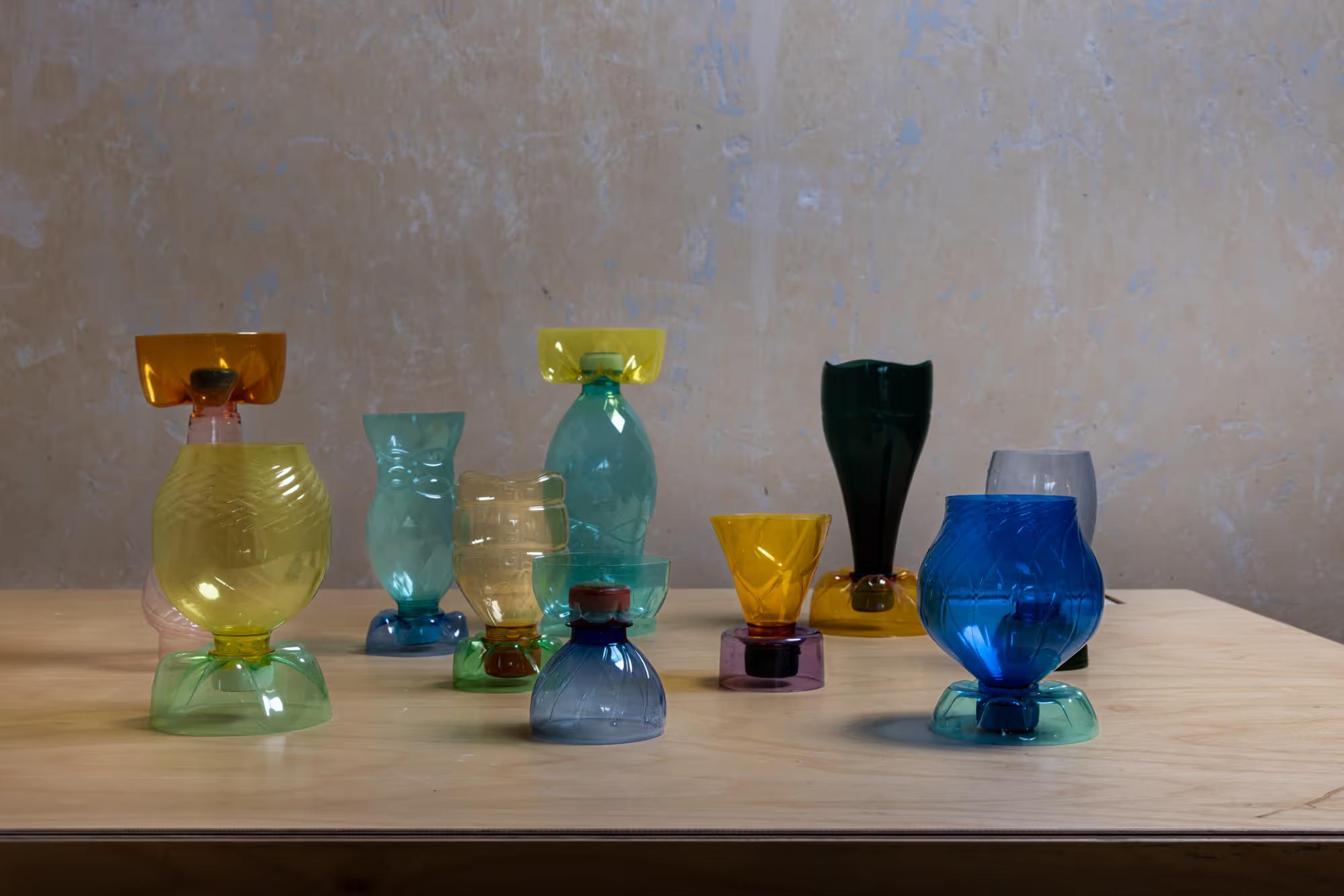
an inevitably concise yet sufficiently paradigmatic overview of how italian design is moving in an ecological direction, responding to contemporary environmental sustainability needs through a genuine inversion of trends compared to the production systems and design strategies of the 20th century.
it represents an overall and radical rethinking of a production model once aimed at the over-exploitation of resources. this shift requires a reassessment of all stages of design and production, beginning with the conception of objects and products that are repairable, reconditionable, reusable, shareable, and recyclable. rather than ending up in landfill, the value of an object is kept in circulation, continuously regenerating itself.
co-designer tsuf bar-on, graphic design bruno morello, hebrew translation sivan raveh, text editing yoni raz portugali. In collaboration with the Istituto Italiano di cultura of tel aviv, photography: yael schmidt
eran: what is the exhibition about?
mai omer: the exhibition is about the menashiya neighborhood. about what that place represents in terms of its political significance and my own interest in it. let me rephrase. the exhibition is about documentation and destruction. i have been photographing the menashiya neighborhood for many years because of my grandfather, the poet and landscape architect hillel omer (ayin hillel), and due to my fascination with silenced narratives. menashiya is a classical example of a hidden history, the neighborhood was destroyed, its rubble thrown into the sea. on top of the remains a park was built, designed by my grandfather. you can dig into the grass and expose the past. my grandfather’s involvement in the destruction made me feel as if i have a personal connection to that place, and of course also the archival materials our family has.
can you tell us about these archival materials that you worked with?
i discovered the archival materials that form the basis of the exhibition in 2017, as i was getting ready to move to london. i had at home some 8mm films that my grandfather had filmed and one of them was titled jaffa. i had a feeling that it contains a treasure of documentary material, so before i left i gave it to a friend who converted it and watched it, and called me saying it’s an “art film.” it turned out that it really is a beautiful film that my grandfather shot in menashiya and in the north of jaffa, those areas in which he eventually worked as a landscape architect. and since he was a poet and had artistic sensitivity, he shot an artistic film. meaning, it’s not exactly a family film (even though he did also film our family) and it is not exactly an architecture film (even though he did also film architecture). it’s a film that also has the sea and birds and children, and there’s an attempt to create a certain atmosphere and effect. his gaze, which documented the place before it was destroyed, is in fact the same gaze that transformed the place. so that is what the exhibition is about, that gaze, which documents and destroys at one and the same time.
how would you characterize his filming style?
i think that the kind of story my grandfather created in his film is a very naive story, but underneath that naivety you can sense a repression of reality. i think my grandfather regarded jaffa as if his generation had not been the one that fought in the war and was part of the nakba. in other words, he documented the place while ignoring the meaning of his presence there, the violence, the destruction and the elimination that he himself was a part of. my claim is that this gaze belongs to a certain tradition. it can be associated with the 19th century tradition of orientalist photography. it can also be associated with earlier traditions of colonialist impressions by “explorers” who documented the places where they arrived. in recent years i’ve been interested in understanding these traditions and seeing to what extent colonialist culture is part of my culture, language, ingrained aesthetics, and artistic education and training. in parallel i’m interested in understanding what to do with this gaze and what to do with the archival materials.
what are your thoughts regarding the awareness of the colonialist artistic gaze? do you think your grandfather was aware of the things that his gaze ignored?
i didn’t know my grandfather well enough to be able to say if and to what extent he was conscious or unaware of his gaze, or if this blindness came from his free will. even my mother can’t answer this question. but it can be thought of differently, that i am sort of an incarnation of his. that is, that this awareness passed on to me and i continue to develop it from a different, new perspective. this was one thought that came to me while reading ariella azoulay’s latest book potential history: unlearning imperialism.
how so?
azoulay claims that imperial modes of thought regard the past as closed, final and unchangeable. therefore, she claims, every apparatus that separates the past from the present and presents it as a sealed chapter, the museum, the archive, the camera, is an imperialist apparatus. this notion allowed me to look back at my grandfather’s archival materials as living entities, as still ongoing. i could think i have an opportunity to understand how i want, need and can continue it, how i can talk to the archive, oppose it and change it. at the same time, i also wanted to emphasize the contexts of that gaze in relation to the way jaffa looks today, and israel/palestine looks today.
what did you discover? what can be done with your grandfather’s gaze? what can be done with menashiya?
mai: that’s a big question, what do you do with problematic history, with the weight of history? how do you deal with collective trauma and with your own personal trauma within the collective one? there are no real answers for that, or at least no one definite answer. there are all sorts of strategies, there are movements of understanding or change. in the uk and in the us, for example, monuments commemorating imperialist history have been removed. but the charles clore park has no monument to topple. the entire park is the monument, and it is a very successful public space that is enjoyed by many jews, palestinians, immigrants and tourists. so should it be knocked down? can a park even be toppled? does an historical event need to be addressed in exactly the place it occurred? how? by erecting a statue? hanging an exhibition? i don’t yet have answers to these questions, but i hope to develop as many courses of action as possible.
finally, can you say a few words about the title of the exhibition, alayam الايام?
the name comes from emile habibi’s the secret life of saeed: the pessoptimist, where there’s a female character called yoaad. the name means something like “repeat.” yoaad is the teenage love of saeed, the novel’s main protagonist. in the middle of the story the idf pulls her away from him in a very cruel manner, but the plot continues. saeed marries, has a child, and the years go by. toward the end of the book saeed meets yoaad again. he’s very excited to see her after all those years, yet it transpires that she is not his beloved yoaad but her daughter, who resembles her and bears her mother’s name. she is the same yet different. she tells him that she will always come back to him, like water to the sea. so to return to your first question from another angle, the exhibition is about time, return, continuity, and the political potential in gazing at past and present days together.
text editing yoni raz portugali, english translation sivan rave.
.avif)
.avif)
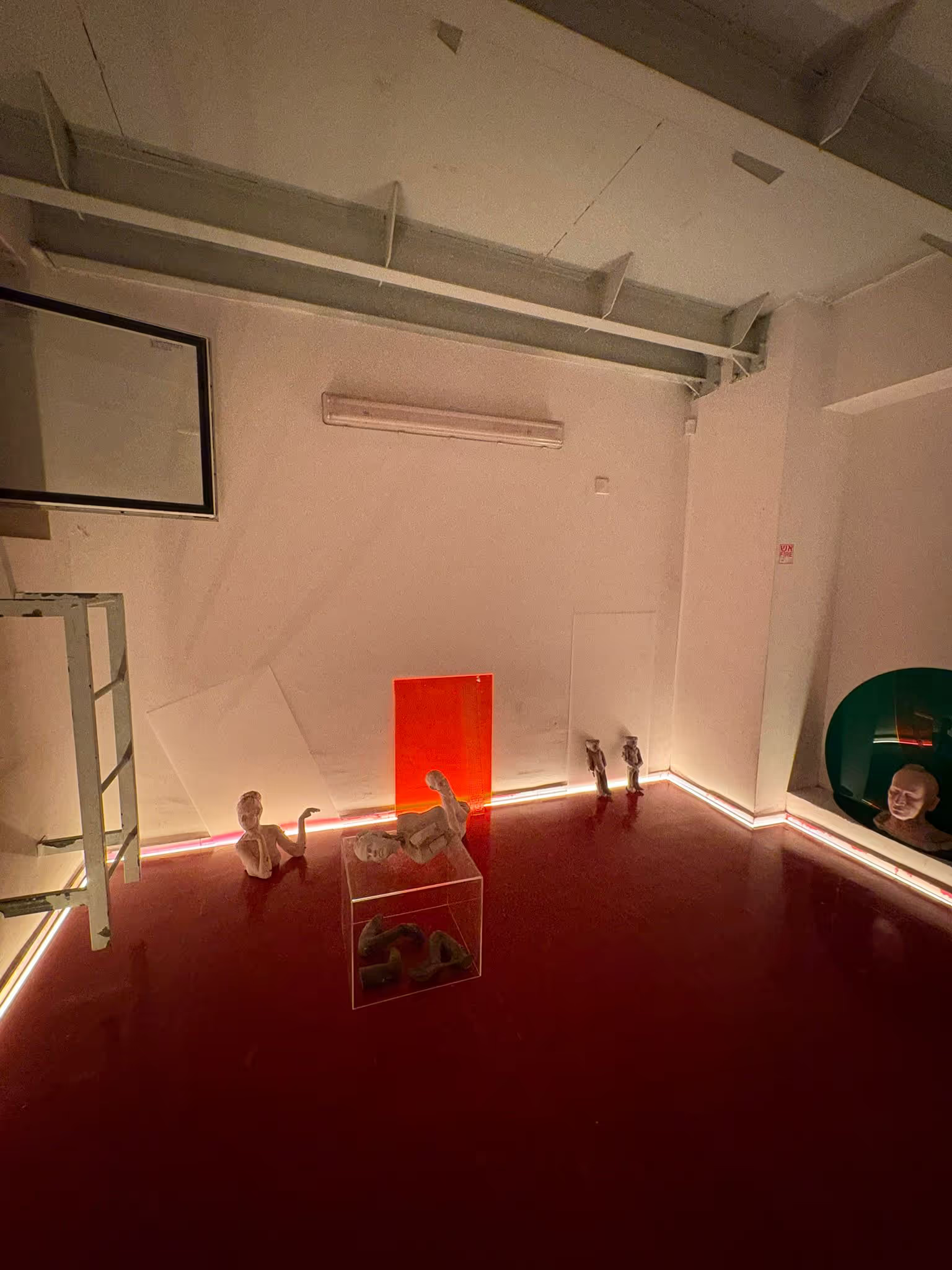
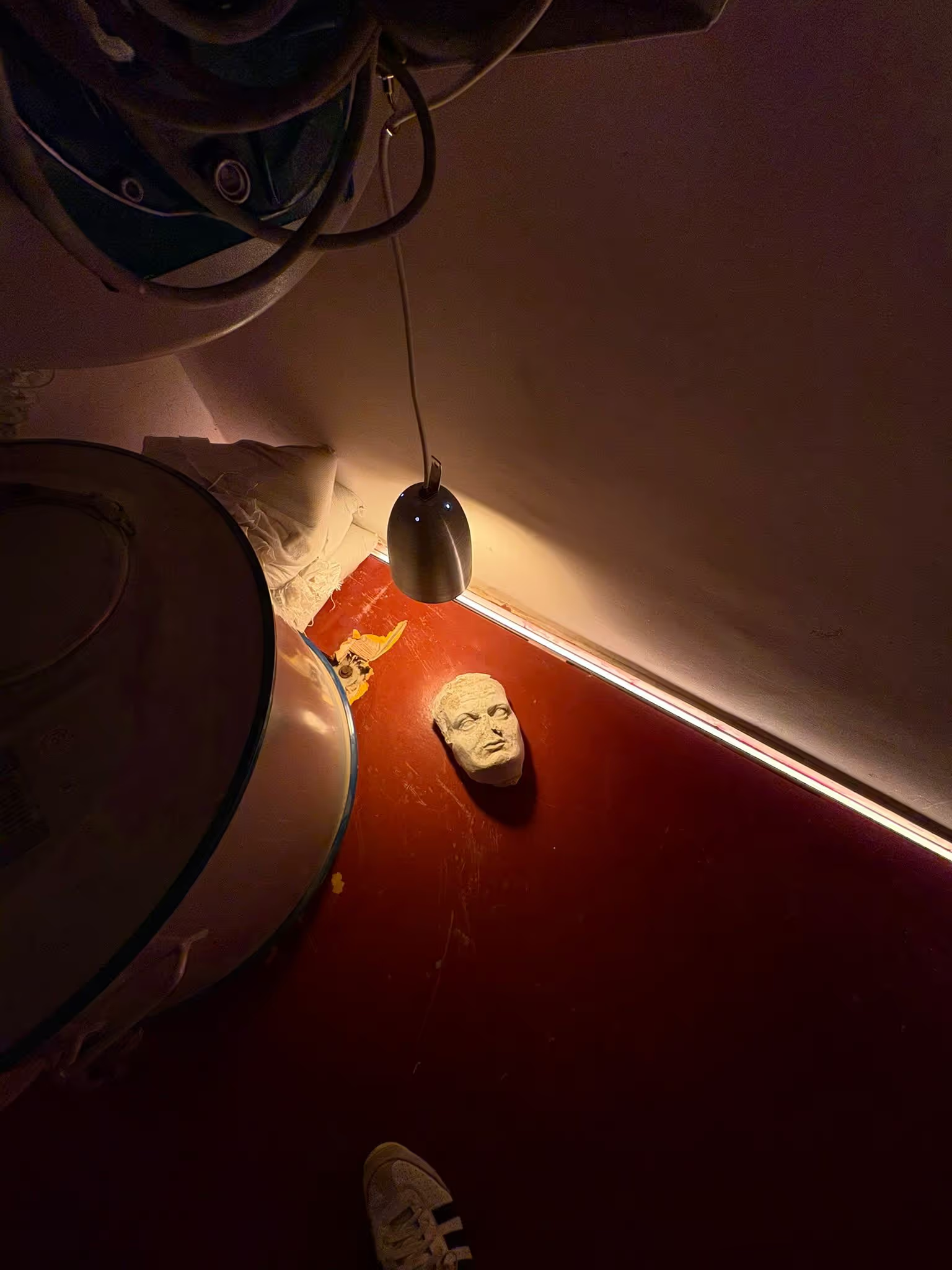
olympus mountain is a very small performance space located beneath liebling haus, developed and designed for events by the school of the city. it hosts performance art, sound, and art shows, emphasizing experimentation, originality, learning, and action, presenting for one evening only. the mountain is a learning through action arena for the olympus program, a learning program for creators.
images of fragments and mistakes, a work by zohar gotesman, with a soundscape by rani aviv. curated by roni raviv.
jaffa art program is an artist residency that operates within the urban spaces of jaffa and through its active community and cultural centers. it is a learning action program for artists, designers, and creators from all disciplines, offering a space for study and practice within an urban environment.
the program is intended for creators whose work centers on the relationship between their artistic practice and the people living around them. it operates from a pedagogical perspective that views art as a way of life, focusing on process rather than outcome. therefore, participating artists are not required to carry out a specific activity or present an exhibition at the end of the program.
instead, the program provides time and space for exploring and understanding the urban environment. it offers an opportunity to refine one’s practice and to reflect on its social and environmental dimensions through sustained presence and attention.
the program’s syllabus includes workshops led by guest artists, offering tools for sensory exploration of the environment, methods of mapping, and conceptual models drawn from the fields of art, architecture, design, and cosmology. alongside this, the program provides individual guidance focused on each participant’s personal practice.
a team of mentors accompanies the artists in clarifying their motivations for artistic action within the urban space and in shaping their daily working routines. the program offers a free and shared space for collective learning, examining artistic action in the public realm through slowly formed companionship and experimentation as a mode of practice.
residencies: assia weissberg, aya fakher, danielle rosenkranz, leila erdman-tabukashvili, mica kupfer, rinat schertzer, ariel dror, shaked mochiach, yael sloma. the program is led by maayan mozes and roni raviv from liebling haus, and directed by lavi vanounou and eran eizenhamer.jaffa art program is a collaboration between the mishlama for jaffa and liebling haus
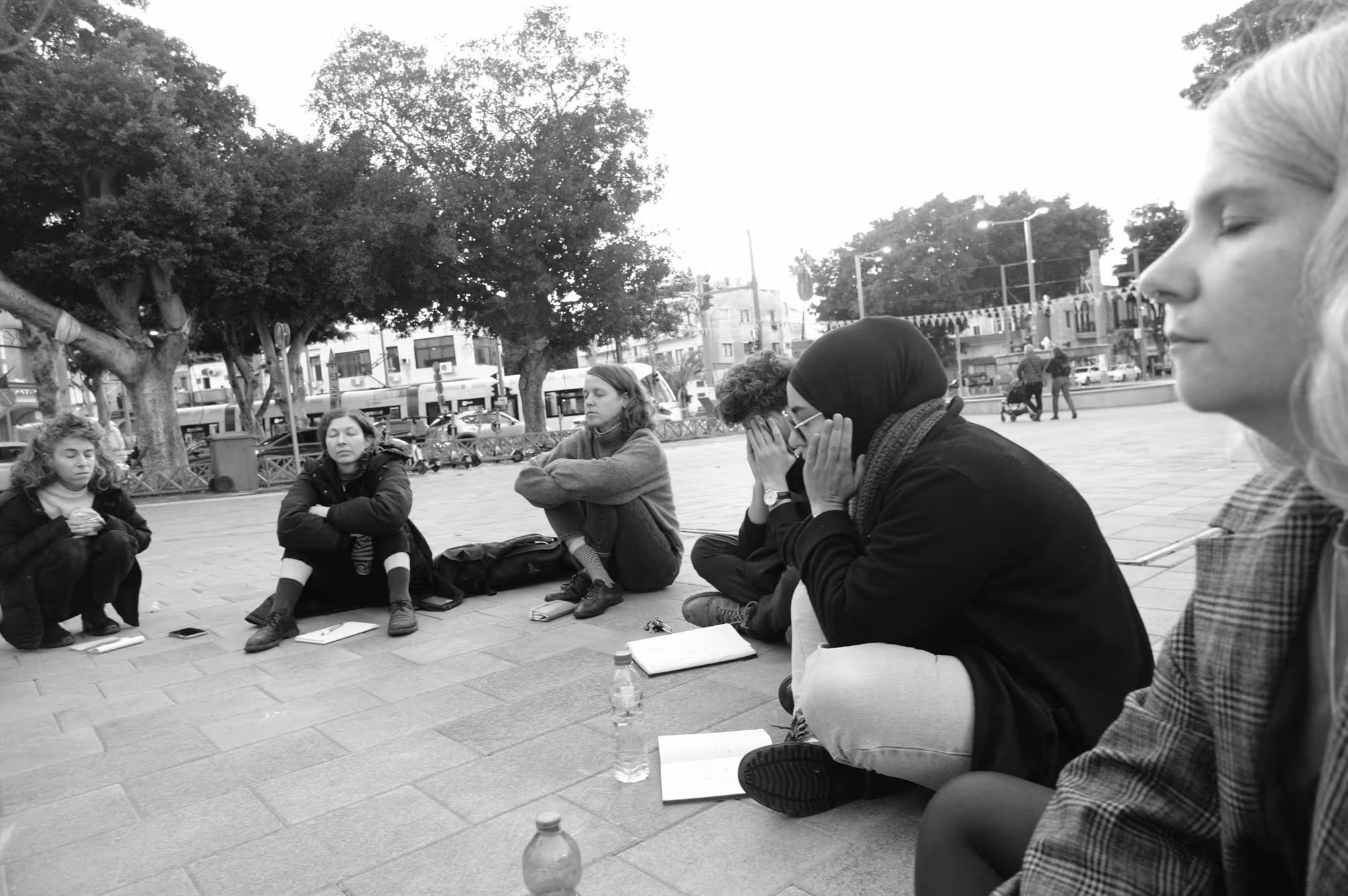
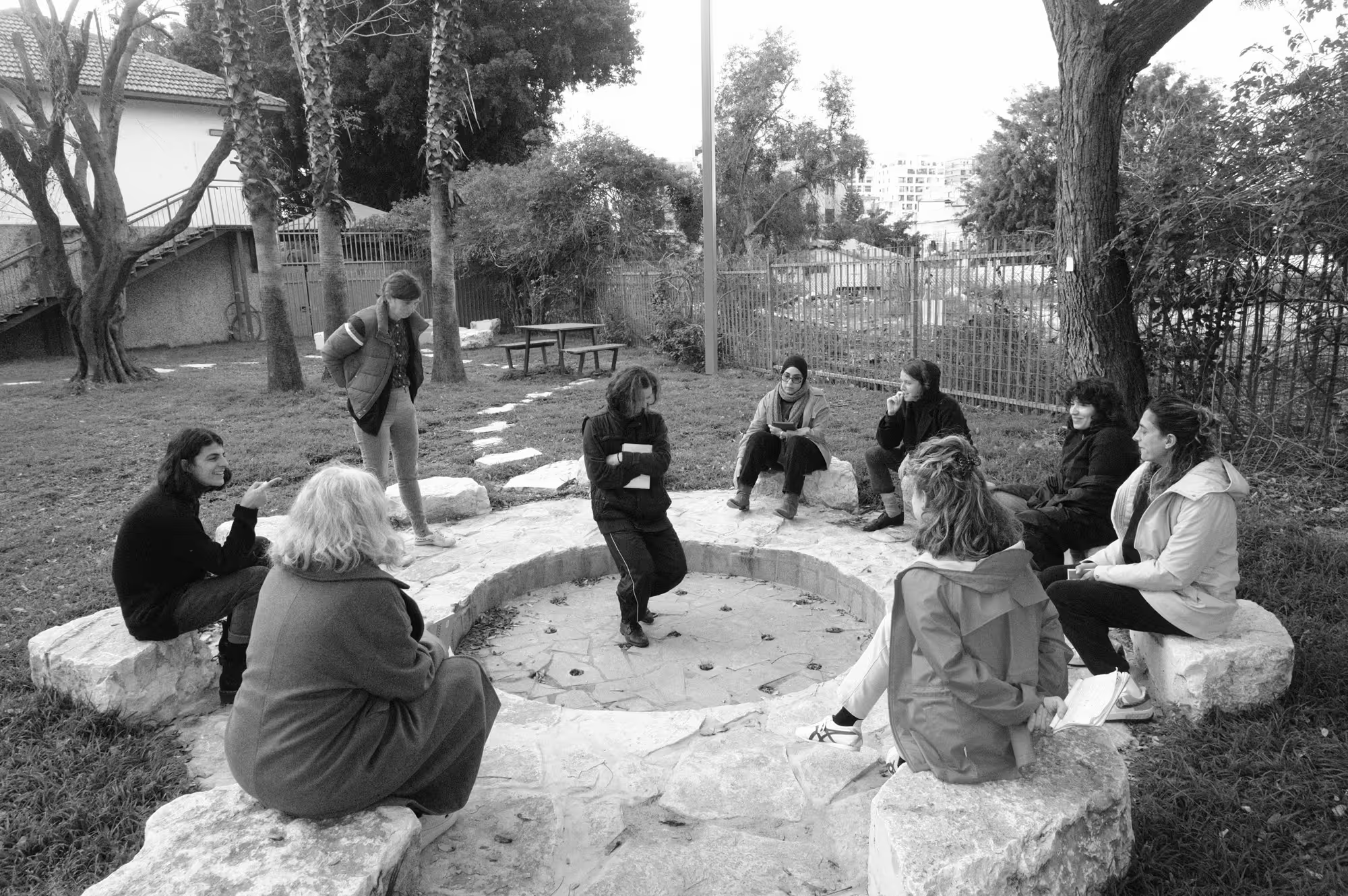
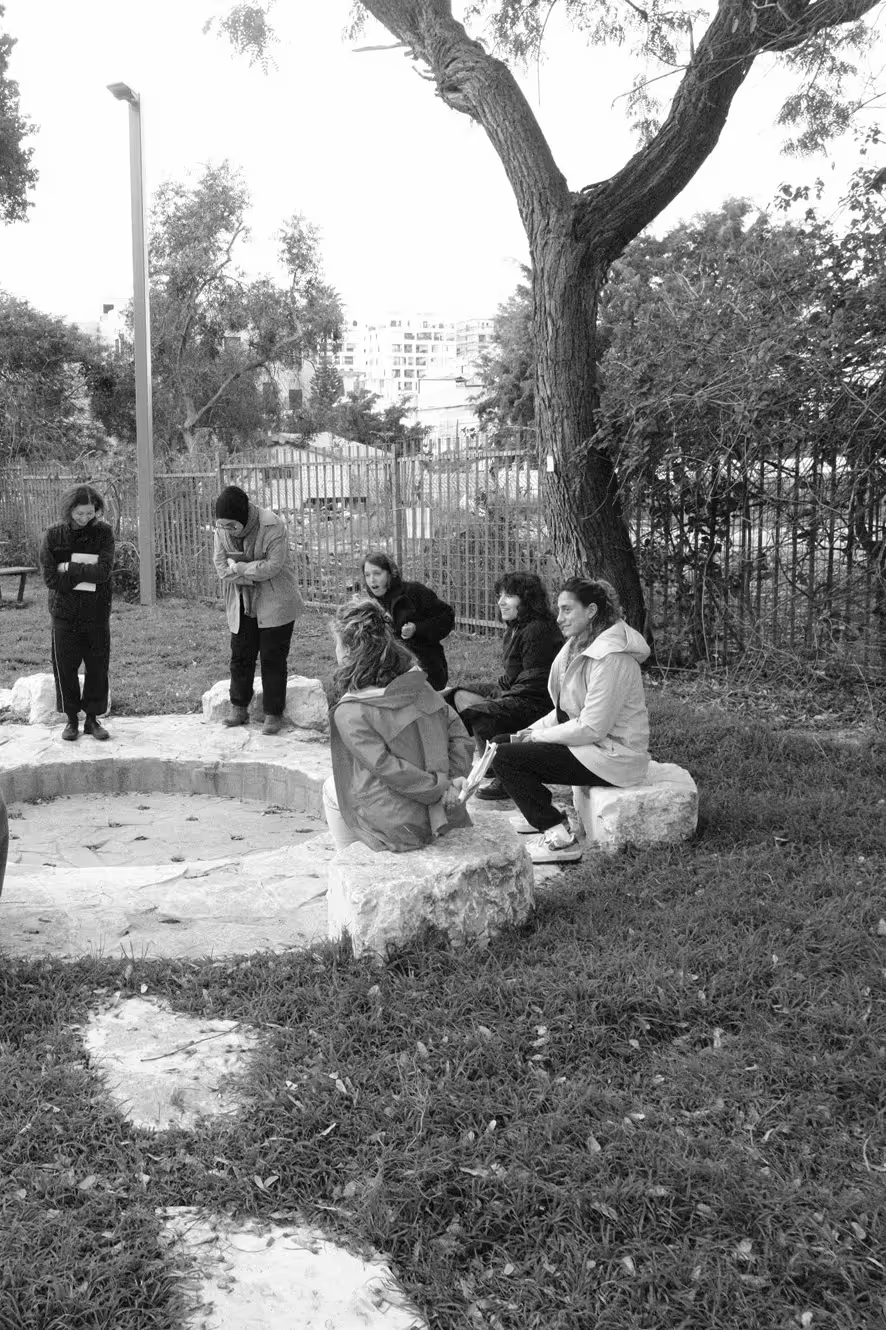
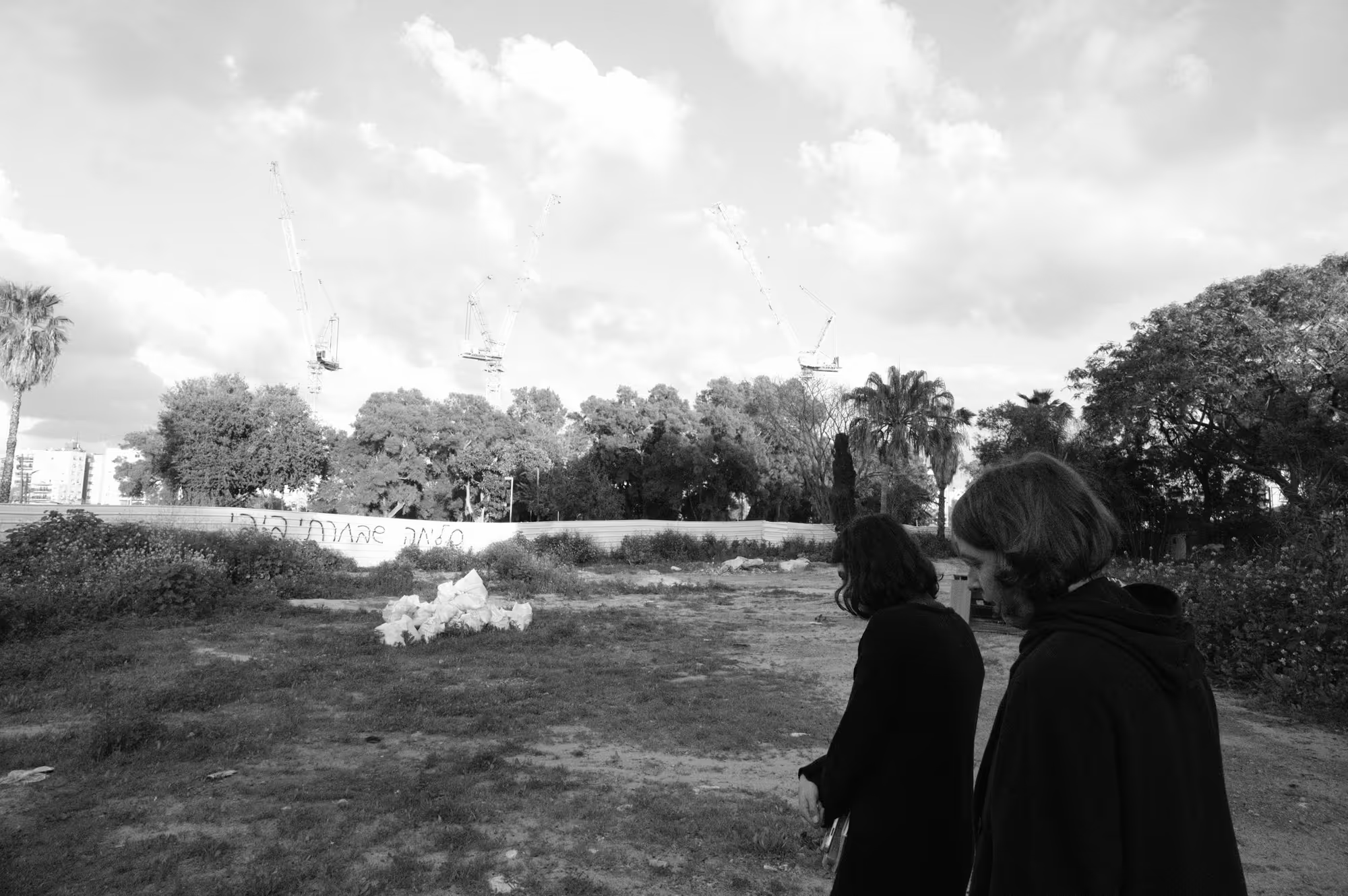
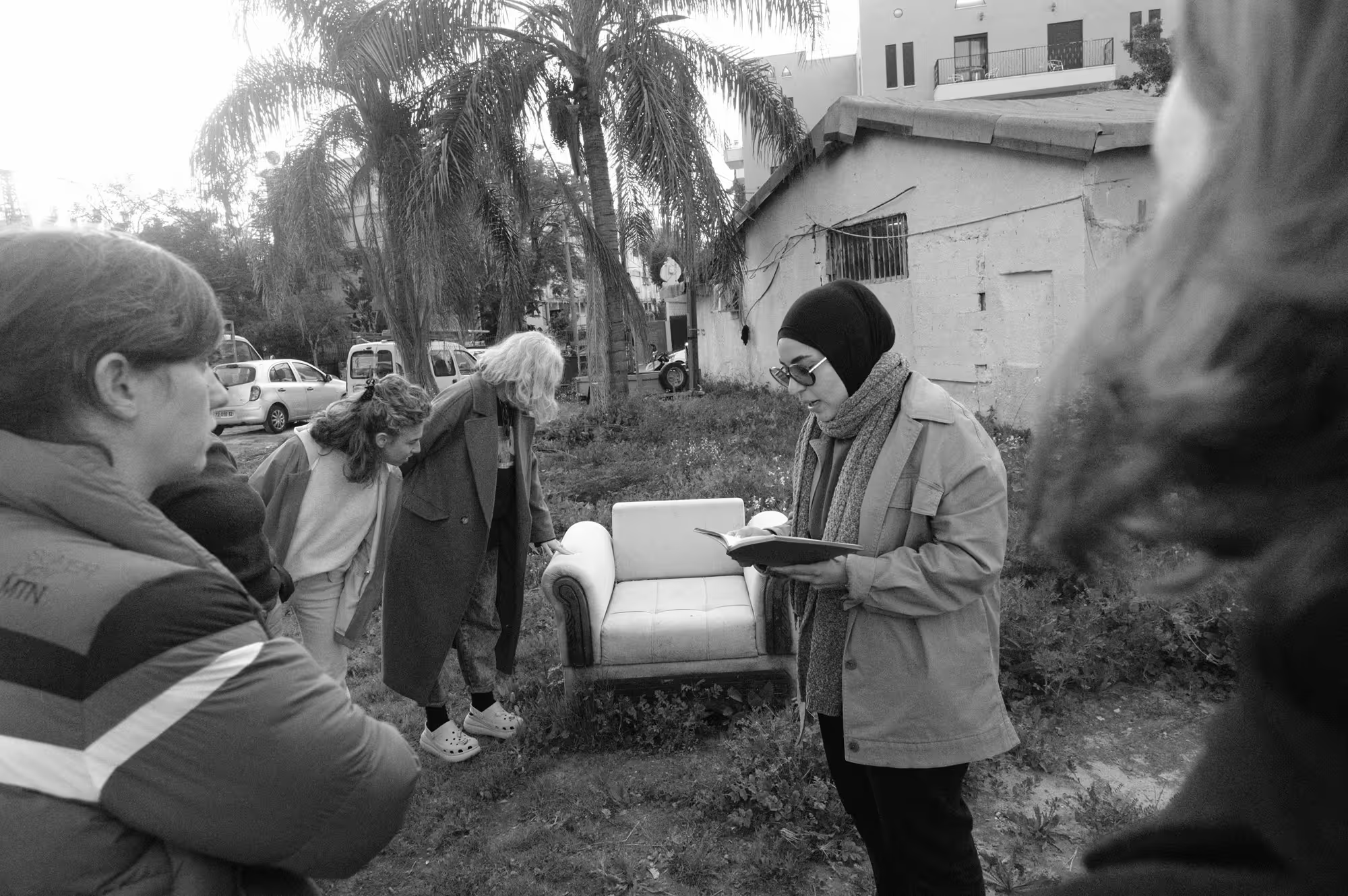
roni: lavi, please tell us about the sequence of events that eventually led you to beit barakat.
lavi vanounou: around 2012 i started photographing yafo blog, where i documented life in the city i had moved to in 2010. through the blog i connected with several local artists and began initiating artistic actions. for example, one project took place on jerusalem boulevard where we laid down artificial grass along the promenade and invited people to meet there.
the mishlama for jaffa, the municipal body responsible for jaffa’s development, noticed our actions. following that we began collaborating and launched a community food market at amiad center, which turned out to be very successful. that’s where my connection with the mishlama began.
one day i came across a municipal tender offering to rent a beit ha’beer at 6 salame street. i was already interested in these well houses in jaffa, i used to photograph them, climb over fences, and go inside. i even had a personal mapping of all the well houses in jaffa and visited each one. when i saw that tender, i approached the mishlama with the idea of operating cultural centers in jaffa’s well houses under municipal management.
maayan: what drew you so much to these well houses?
lavi: i was fascinated by looking at these abandoned buildings and understanding their story. it’s something very unique to jaffa. i’d always passed by them and never understood what they were. that’s also one of the reasons i felt connected to jaffa, the history here is present everywhere, in a space that’s much less sterile than tel aviv.
what was your model for a cultural center back then?
lavi: first of all i wanted it to remain public, as open to the public as possible, not just open for an hour a week. i didn’t yet have a clear model, but i knew very well what i didn’t want.
eran: which residents of jaffa was the well house on salame street meant for, and how do you respond to the question of gentrification in that context?
lavi: the more i looked into gentrification, the more i realized that in a way i was creating it myself, both in the neighborhood where i lived at the time and in the establishment of the salame well house. but the well house itself wasn’t really a driver of gentrification, because by the time it opened the process in north jaffa had already taken place.
it wasn’t that the well house opened and then artists started moving in around it. there were many events and activities aimed exclusively at the arab community or bilingual programs. for the municipality the well house was a success story, before it there hadn’t been a community center anywhere in north jaffa.
incidentally, due to high demand, about thirty to forty percent of the programming was for parents and children. it was important to stay responsive to local needs, even when they sometimes conflicted with my original vision.
and how successful do you think the salame well house was as a cultural center?
lavi: i think its biggest achievement was simply opening its doors to the public, making knowledge about the well houses accessible and establishing a community cultural center in an area that hadn’t had one before.
and now, a few years later, as you establish beit barakat, what would you like to add or change?
lavi: barakat is a different story. with the salame well house i felt more at ease regarding its historical context. barakat is located in a much more complex area of jaffa, a place where it’s truly challenging to bring all residents together.
and how do you feel about establishing a cultural center in such a complex area?
lavi: i think it’s even more important and more relevant. north jaffa already had active cultural spaces and residents who consume culture. the area around barakat had much less of that.
can you tell us more about beit barakat, what are your plans for it?
lavi: barakat is in a mixed neighborhood with many arab residents, located in a kind of border zone just before transformation. i want to make the building as accessible as possible, so residents can come and use it throughout the day.
another goal is to develop cultural and artistic programming, which is still relatively scarce in jaffa. the salame well house took on a more community oriented role, while here i want to work with artists as a community.
i understand better now your idea of well houses as learning centers. can you elaborate on that?
lavi: i see the well houses as a kind of double historical correction. first, returning a taken home to the public in the best possible way under the circumstances. second, using these buildings as neighborhood-scale cultural centers across jaffa and south tel aviv, areas where almost no such centers ever existed.
you walk down in flip flops, watch a performance, take part in a workshop, meet neighbors, and form a community. not an auditorium for a thousand people, but something local and present.
ultimately, what we’re trying to do is learn the space, how learning, art, and the city can become one and the same.
eran: the goal of learning through action is to understand that we can change the space we live in, rather than passively adapt to it.
the artists who participate in jaffa art program are those whose practices are open outward.
eran: yes, we aim to work with artists and creators who have a neighborhood and urban motivation, a desire to act in relation to the space they live in.
lavi: one of my motivations with beit barakat is to work with others who think similarly. over time i realized that what i do is essentially community and space based art. at salame i worked alone, here i wanted to work differently.
how would you measure the success of the residency program at beit barakat?
lavi: success for me would mean that artists keep coming back, continue to meet, work and create here. that they open new circles and see barakat as a home from which they can act.
you’re talking about creating a community of artists.
lavi: my aspiration is to establish a meaningful cultural center, meaningful both for the public and for the artistic community. a place artists feel they can sit, gather and talk. i wish i’d had such a place when i first came to jaffa.
residencies: assia weissberg, aya fakher, danielle rosenkranz, leila erdman-tabukashvili, mica kupfer, rinat schertzer, ariel dror, shaked mochiach, yael sloma. the program is led by maayan mozes and roni raviv from liebling haus, and directed by lavi vanounou and eran eizenhamer.jaffa art program is a collaboration between the mishlama for jaffa and liebling haus
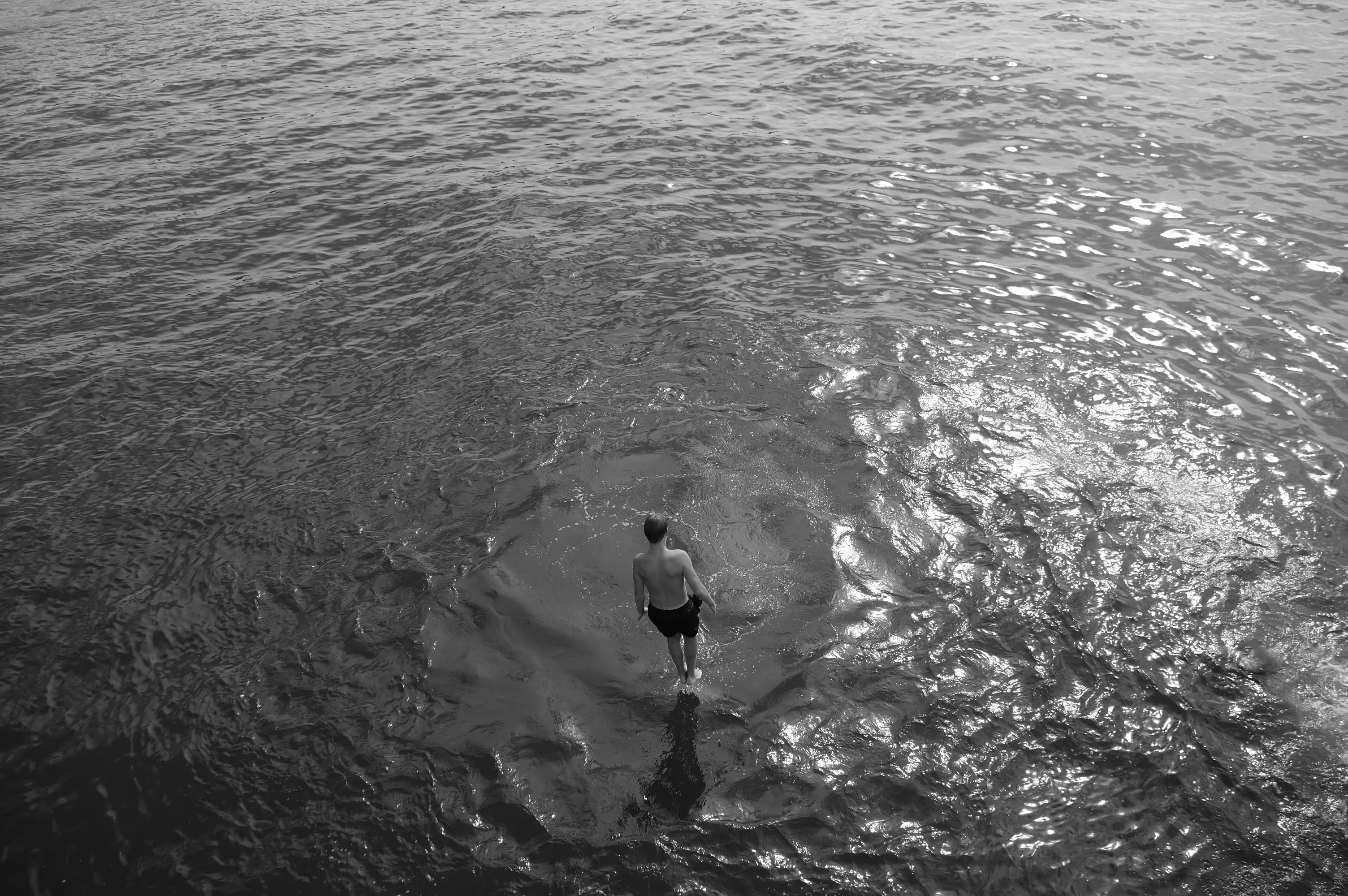
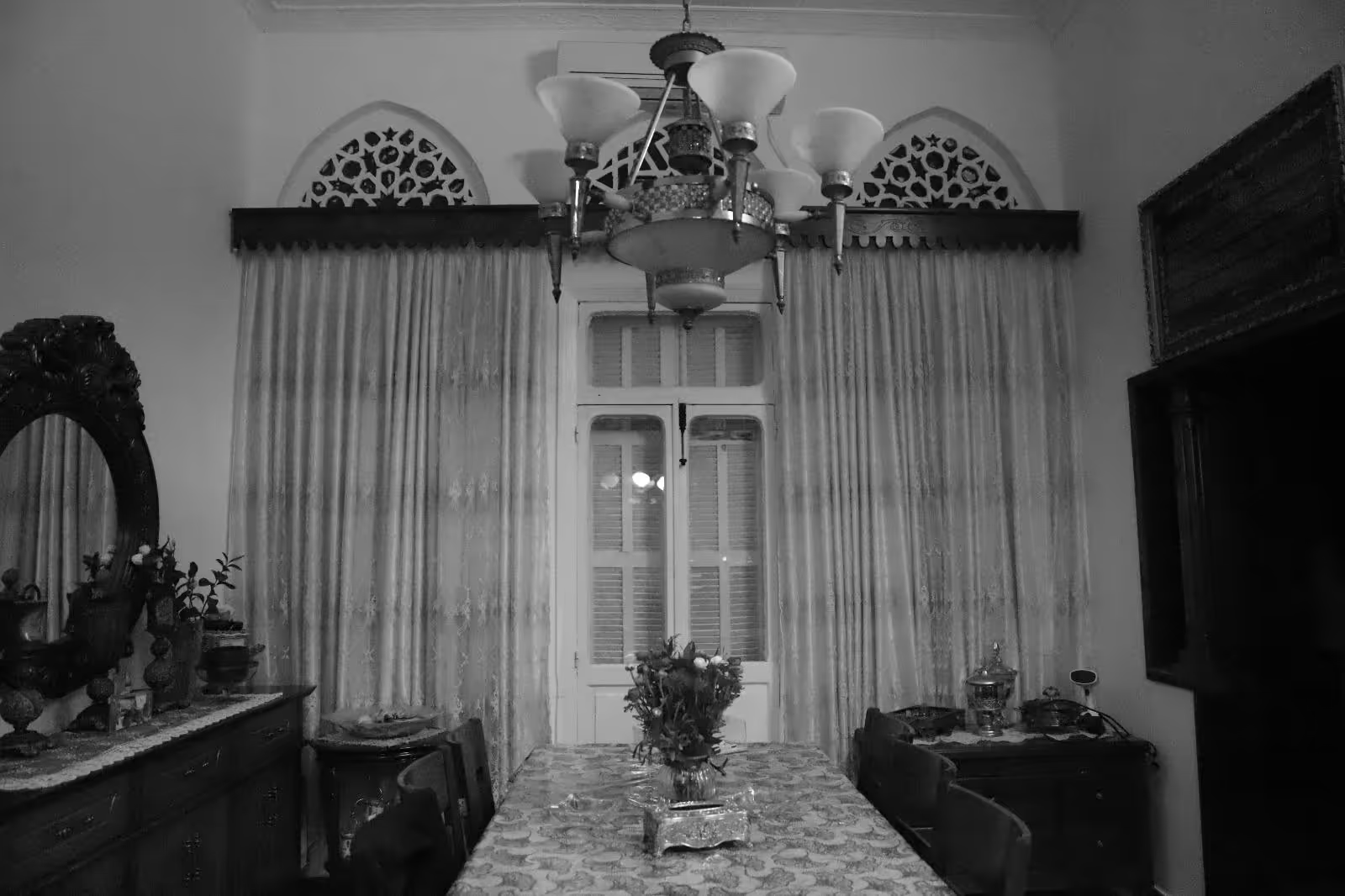
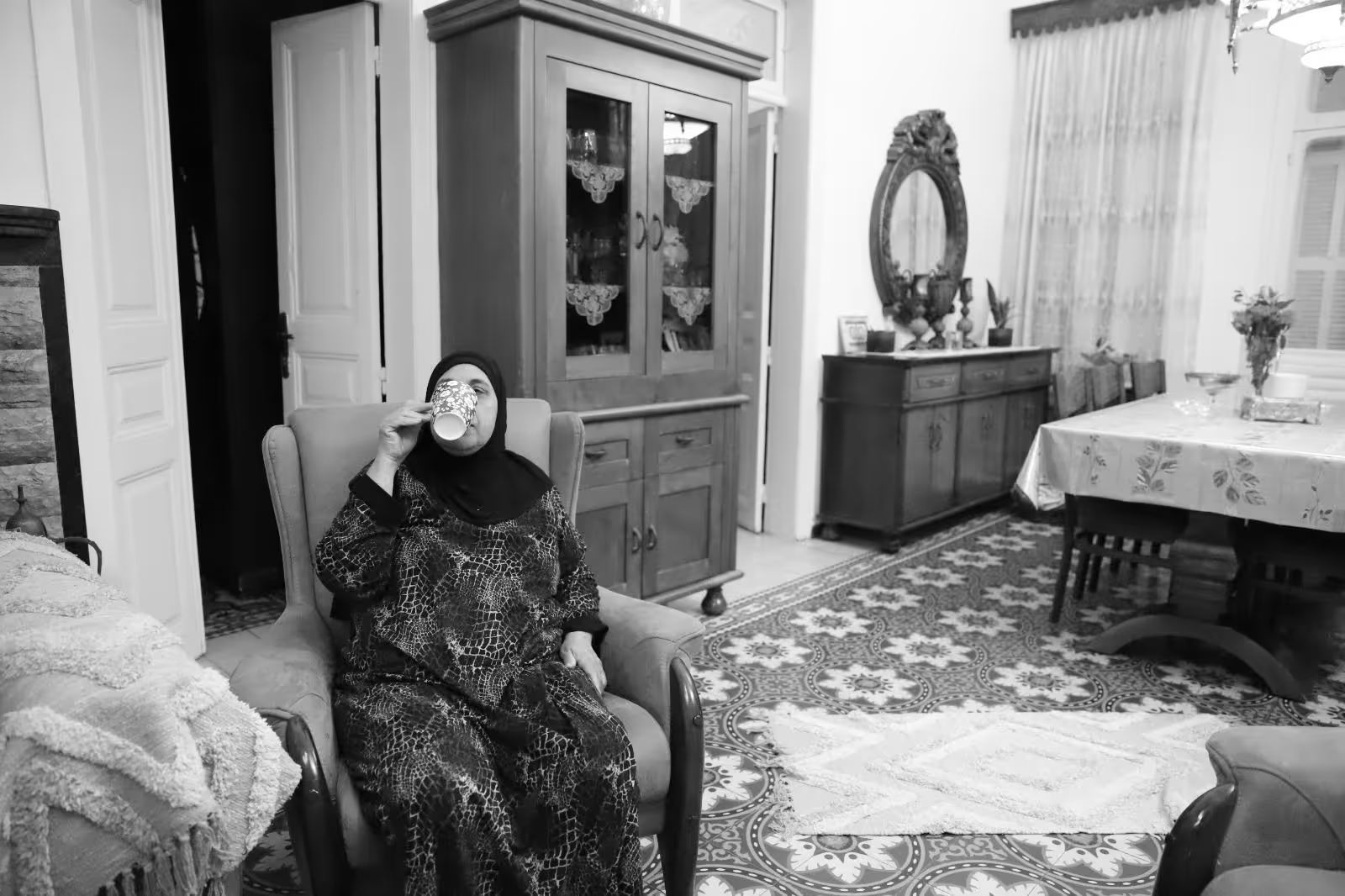
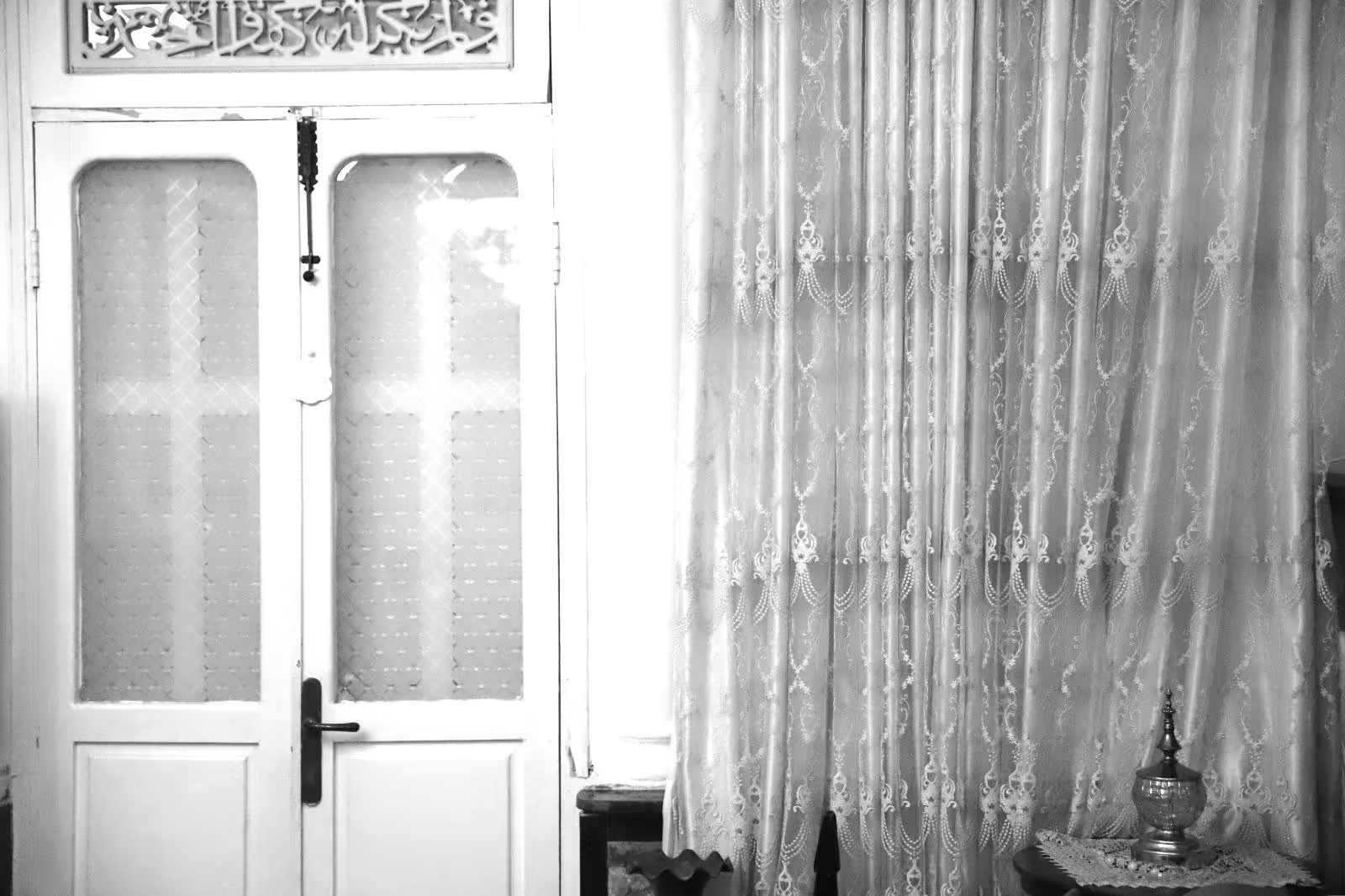
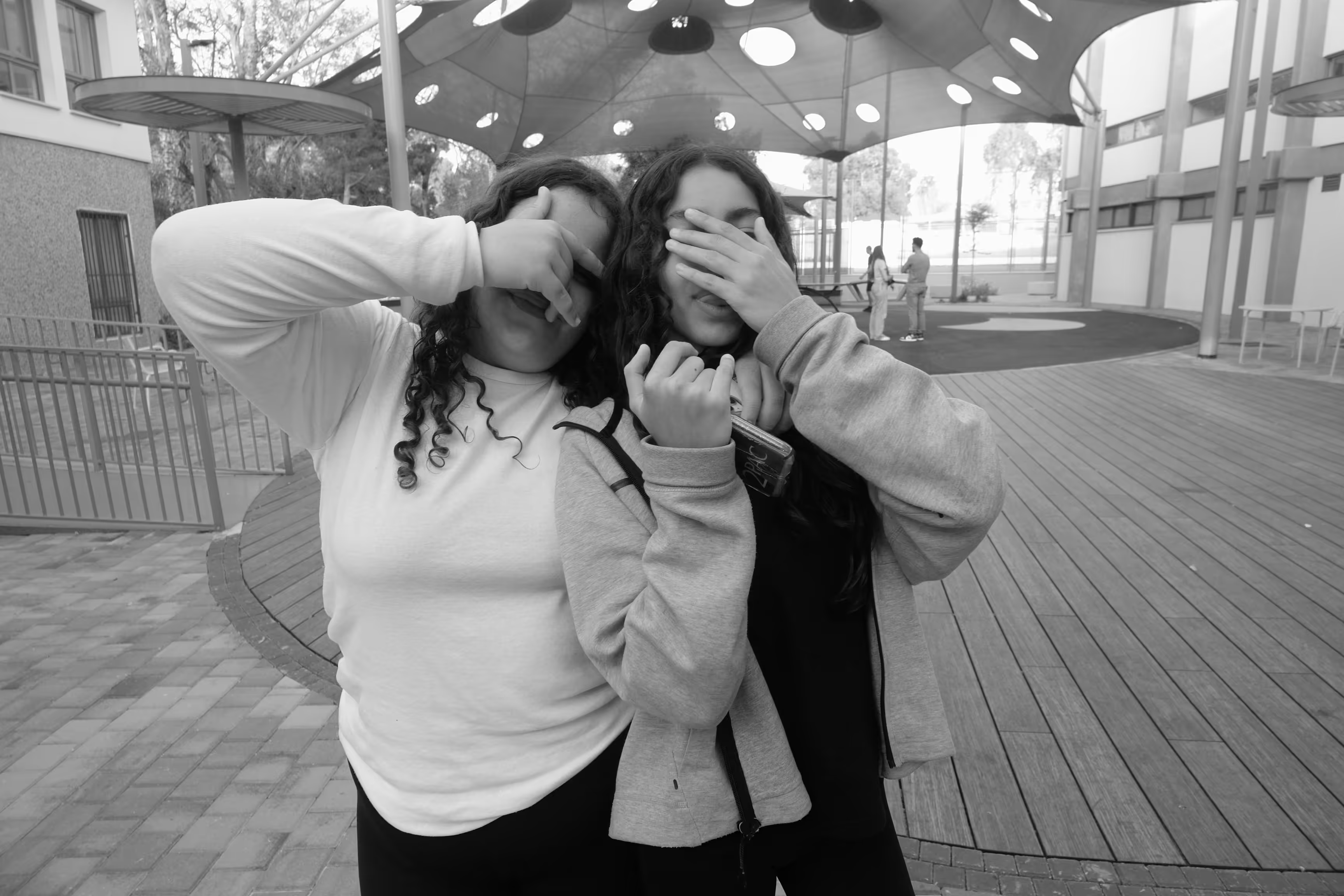
eran: let’s start with the motivations behind establishing jaffa art program at barakat house.
roni raviv: for me, the program grew out of a desire to expand the format we usually work with at liebling haus. there we typically offer a workshop or a course that someone has to purchase. here i wanted us to be able to operate in a broader, more open way.
maayan mozes: i wanted to define for myself the relationships and modes of working between an artist who works in public space and the community. to use encounter, conversation, listening, and dialogue. to turn attention toward people, to understand deeply what happens when people meet.
my perspective is that of a learner, a researcher. in that sense all of us, the program facilitators, directors, mentors, and participating artists, are researching and learning together, each bringing their own knowledge and understanding.
eran: i was interested in exploring how our pedagogy in olympus, our learning program, could create within a cultural center a free space for study, for developing ideas and artistic work.
roni: the idea was to learn through experience, that while the learning process takes place, there are people around, people to meet. creating encounters, initiating them, is not simple.
we also had another question. can we work with artists who are used to creating art in a closed, private context, and teach them to act together with people. meaning with the public, with a community, not with colleagues.
can we open that possibility for them and then develop it together. is it something that can be taught within such a framework, or is it a capacity people must already bring into the program.
maayan: and then suddenly everything changed. following the events of october 7 and the war, barakat house didn’t open when we expected it to. as a result we didn’t have the residency space during the learning sessions. what happened instead was that a lot of space opened up for reflection, for thinking.
roni: in retrospect, where did we try to steer things after the plans changed. what guided us during the sessions and in the personal mentorship.
eran: we gave them context. our role was to be magnets for context, connections with what’s happening around us, with people, with broader political and institutional frameworks.
that’s the classic role of a mentor, to remind. to remind that we don’t work alone, not just from our minds. we work through relations, with people and with physical surroundings.
through the guest mentors we tried to present alternative, concrete ways of thinking and acting, approaches that participants could consider adopting if they wished. being concrete is a pedagogical task, focusing on how we learn.
roni: we brought in guest mentors, professionals we felt could offer different practices that would help us examine our own ways of thinking in relation to potential activity within an urban environment.
with tal alperstein we learned tools of investigation and understanding through listening as a means of deep comprehension. dana freibach offered conceptual tools and mapping practices. ahmad kharouf introduced diagrams and mental models as a way to develop projects creatively. mor kadishzon brought ideas from cosmology, asking what stories we tell about the world.
maayan: there’s a common notion that says i want to work with the community or make public art because i want to do good for others. i’ll find out what they need from me and fulfill those needs.
we tried another approach. one that says we work with people because they are always there, in front of us. we won’t change them, we won’t necessarily improve their lives, and we can’t replace their reality with another.
what we can do is meet them, to hold an honest, ongoing, attentive conversation. returning to that simple place requires a long process.
roni: the change in plans helped us release the artists from a predefined obligation, from knowing in advance what they were going to do, or what the rules were for creating with people.
we replaced that with a wish for an organic and open process, one based on personal motivation rather than a sense of duty toward a final outcome.
maayan: every time roni and i asked the participants what they wanted, what drives them, what interests them, we reached a new thought or assumption.
it turned out that the deeper we looked inward from a personal perspective, the easier it became to encounter others and the outside world.
roni: one of the artists planned to involve local residents in her process and create a shared choreography with them. but within the group’s spirit of openness she realized she couldn’t do that kind of work at this moment.
instead a new piece developed, one about language and the desire to share intimacy with others. it also involved the audience, but in a way she hadn’t tried before.
this is an example of how, through lingering on the root of one’s motivation, with awareness and honesty about where one currently stands, things take a truer, closer form in encounters with others.
eran: essentially this is a training program for people who want to work with other people. it doesn’t produce immediate results, that’s the point.
things take time, and the expectation for quick outcomes will always lead to disappointment.
roni: barakat house wants artists to gather there, and through shared learning, people gather. we’re not creating through predefined outcomes or large events, but by generating attraction through collective learning.
art by its nature is deeply social. the relationships of friendship at its core are part of the art itself. we wanted to give that idea a meaningful place and invite more artists to take part in it.
maayan: we ask participants first of all how open are you to learning something new. how does that openness manifest in your life. how curious are you about new things. are you willing to be surprised.
it’s about boldness, being ready to take risks. questions about learning are also questions about life.
eran: that was our guiding criterion in selecting participants. we look for artists who are learners, that’s what they do, independently or in dialogue with others.
people who are always in a process of learning and growth. that also applies to the guest mentors we chose. we looked for people interested in dialogue with us and with the participants. the art here is the art of pedagogical precision.
roni: that’s always relevant for anyone who comes to learn and for anything that’s taught. that’s what we need in order to work together.
eran: good training programs focus on how people learn, not on what the institution gets out of it. that’s really the distinction between training programs and institutional ideology.
maayan: we replaced ideology with a question.
photography: yael sloma

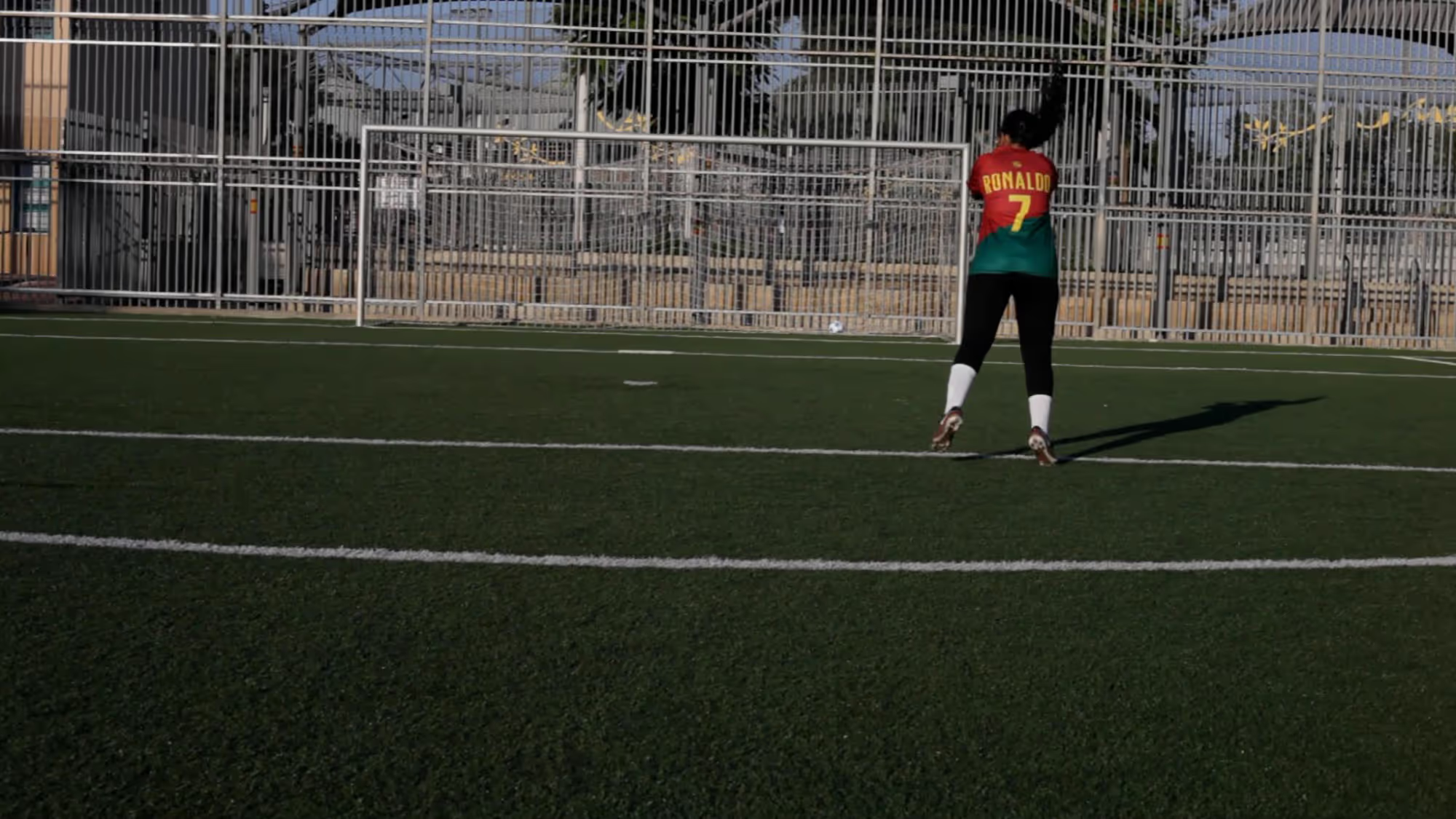
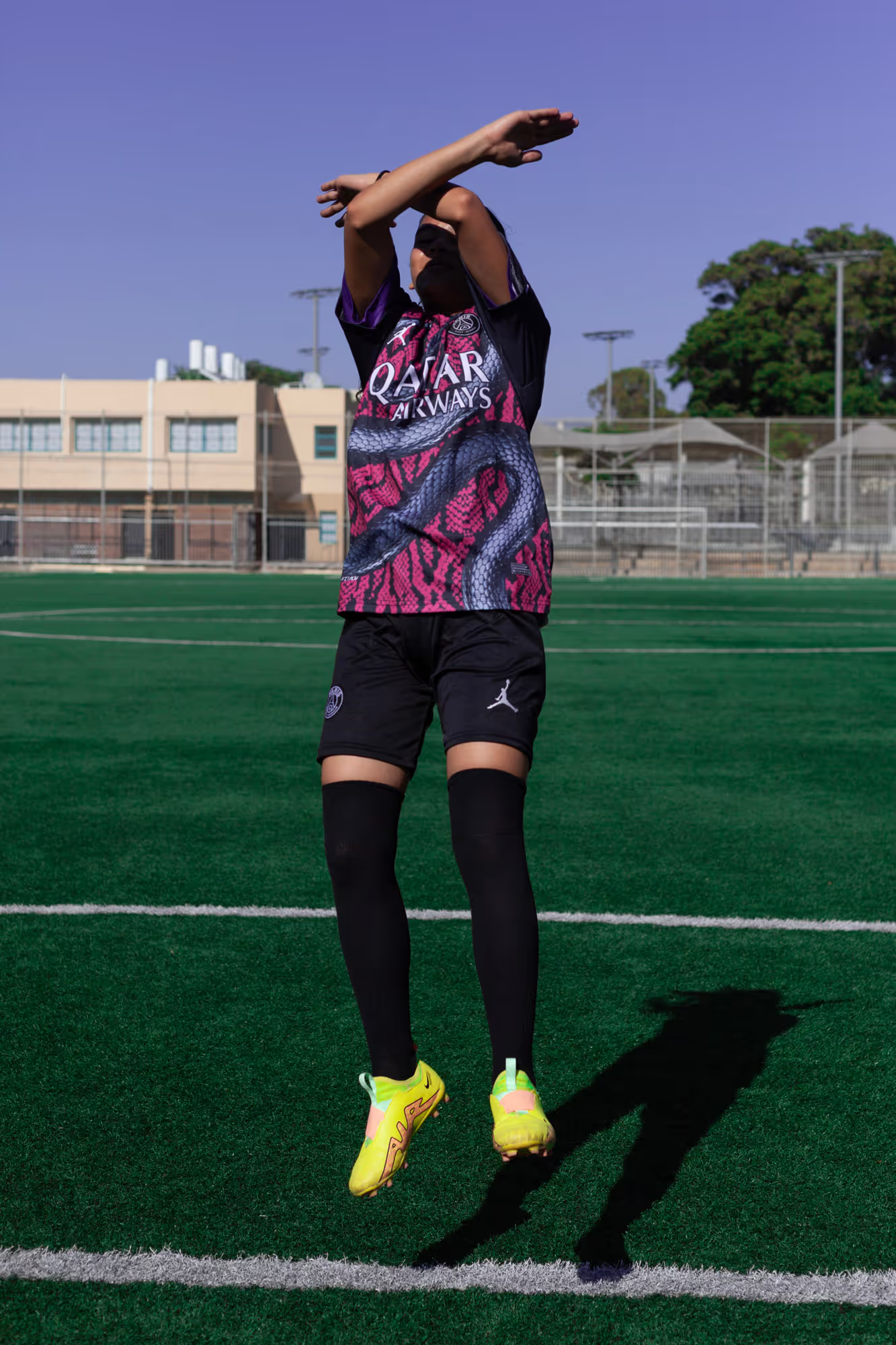

at the opening of its eighth year of activity, the school of the city presents two consecutive exhibitions that showcase the school and its artistic pedagogical practice, the school of the city presents and everything we’ve learned so far.
in search of an image for the school, the avocado stood before our eyes in the room, containing the entire world, growth, knowledge, air, and water. alongside artworks, conversations, gatherings, and actions, the avocado will grow together with all the knowledge we have gathered, what we have not yet encountered, and the things we will never understand.
over the next five months, we will grow an avocado and observe it. we will follow the seed as it cracks open and sprouts, the vessel in which it grows, and the water that sustains it. the avocado represents art, creation, and learning as ongoing, everyday processes, unfolding everywhere and at all times, as long as we remain attentive and willing to experiment.
work of dana mor, photography: yael schmidt
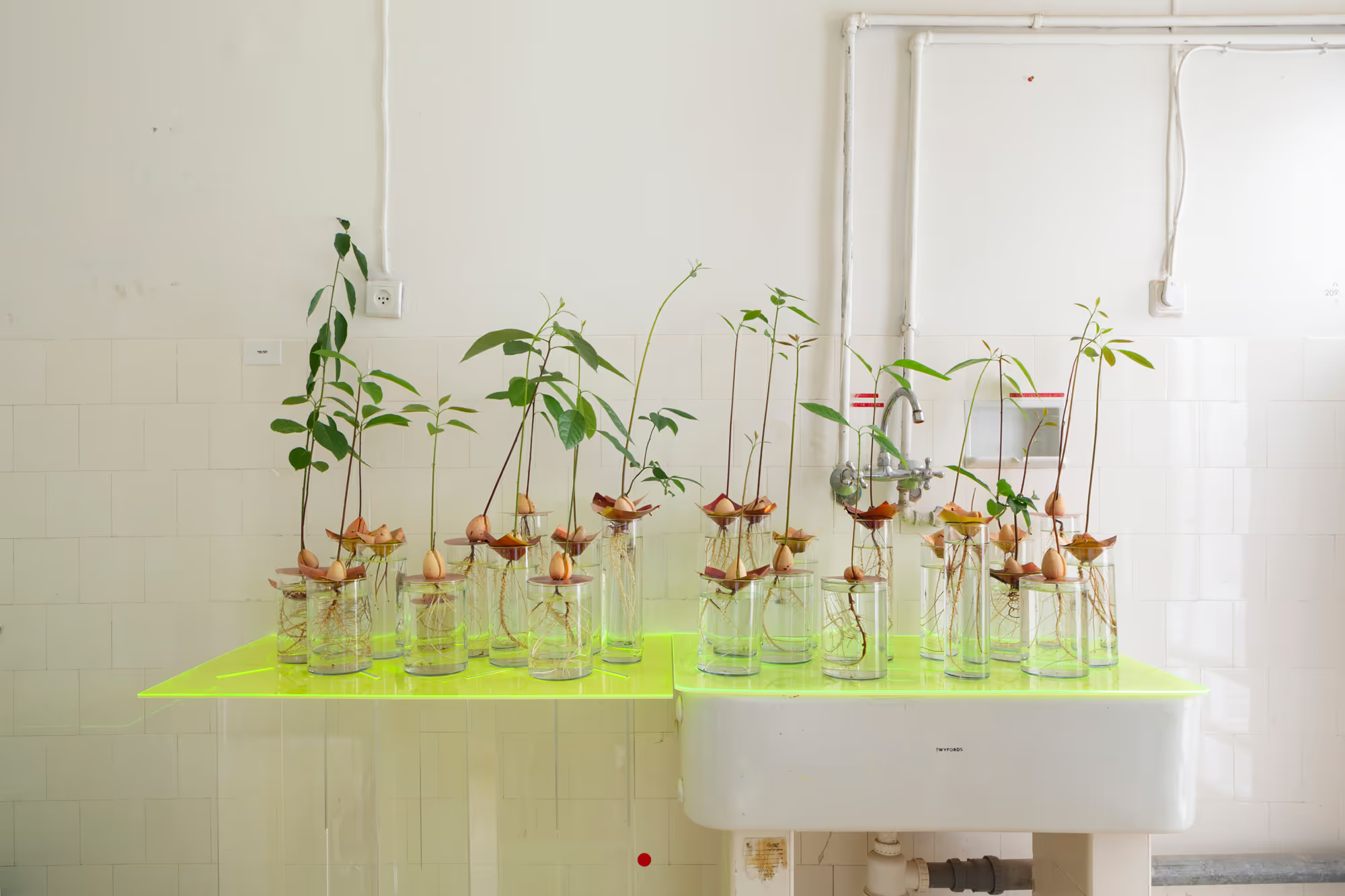
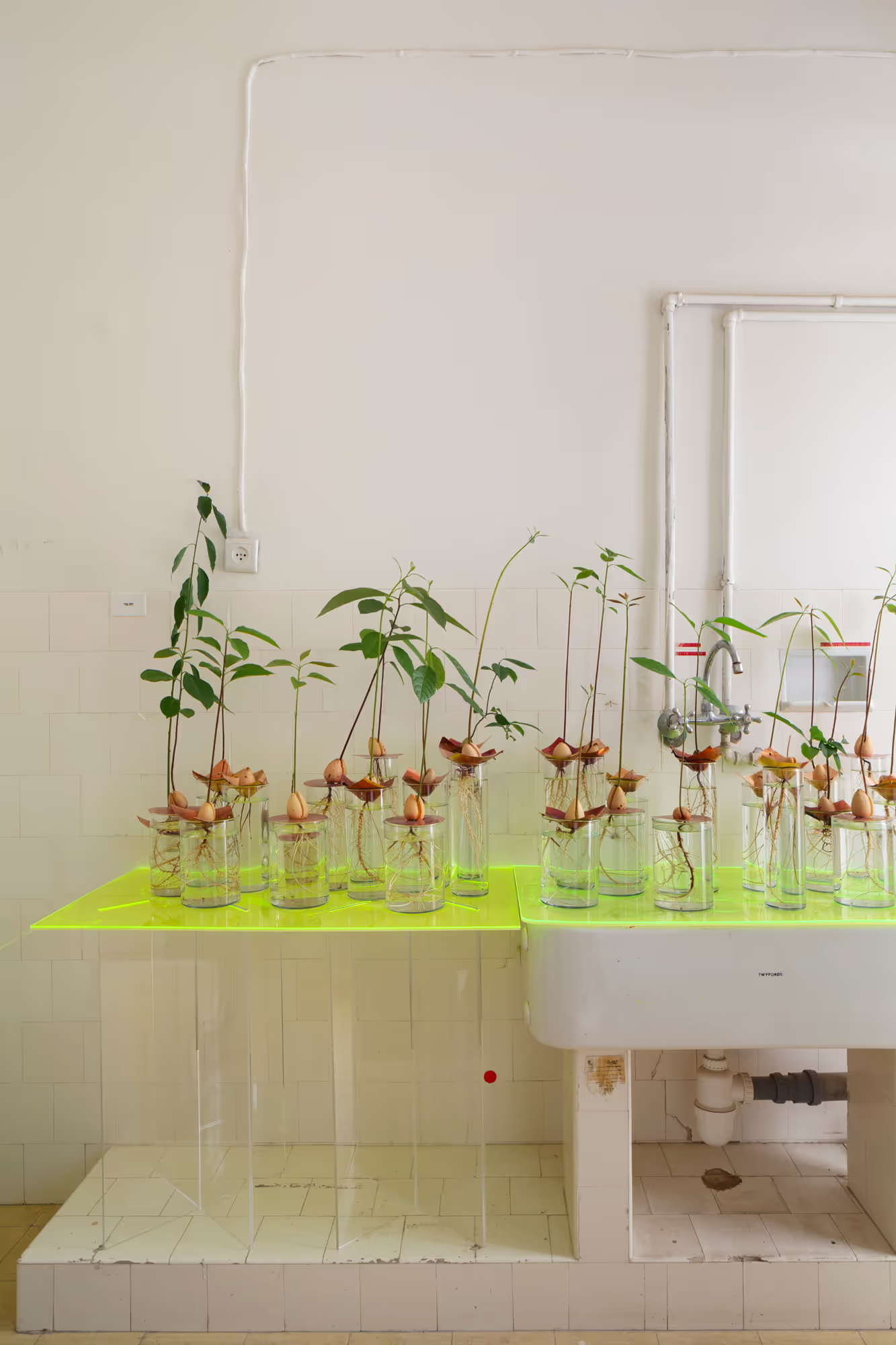
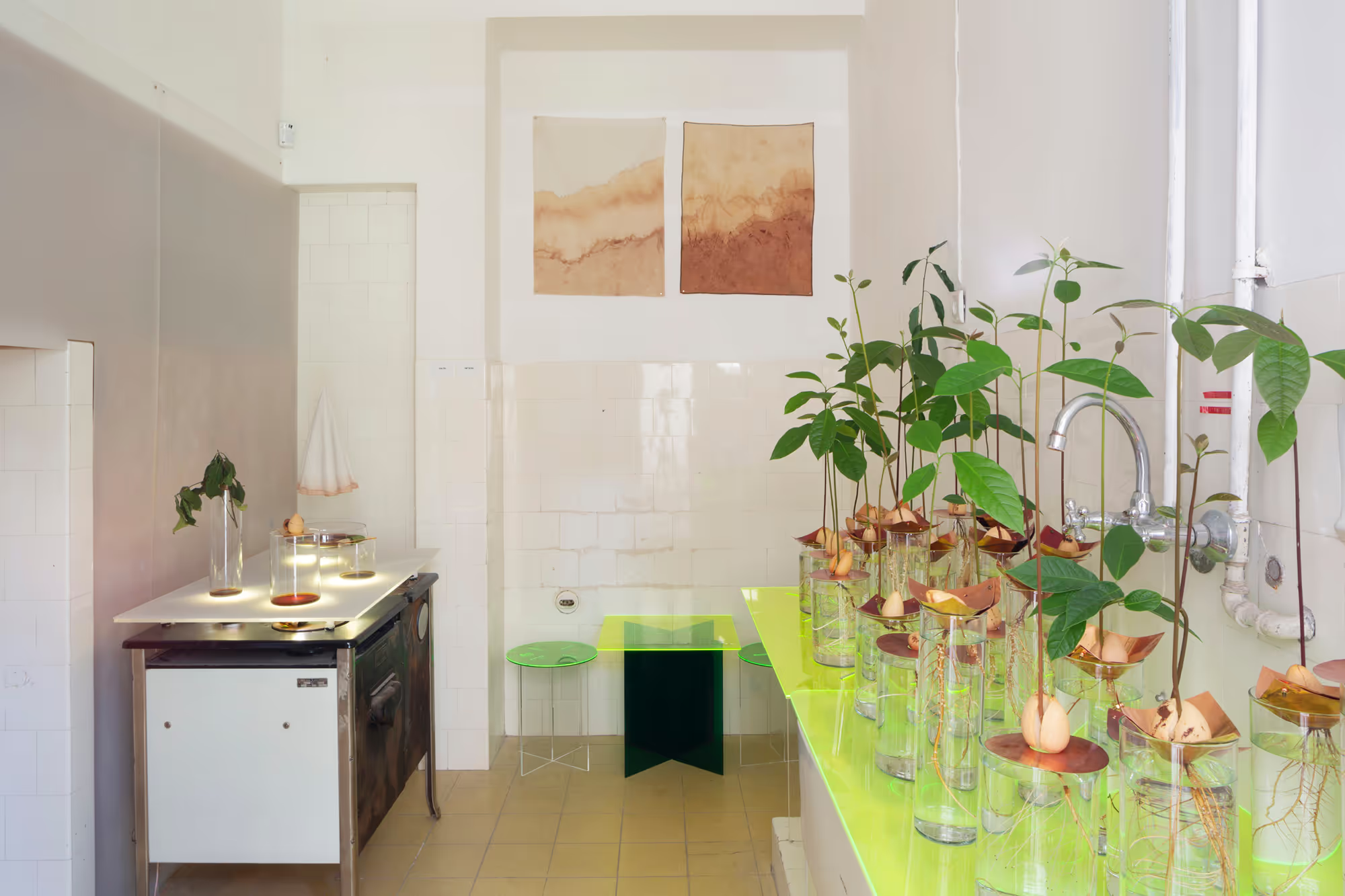
part of the dreamers workshop involves drawing mental maps, a tool that weaves our thoughts and feelings with geographical perception and reflection. it creates an image that allows us to understand our own unique position of being in a place.
co-curator paz ponce
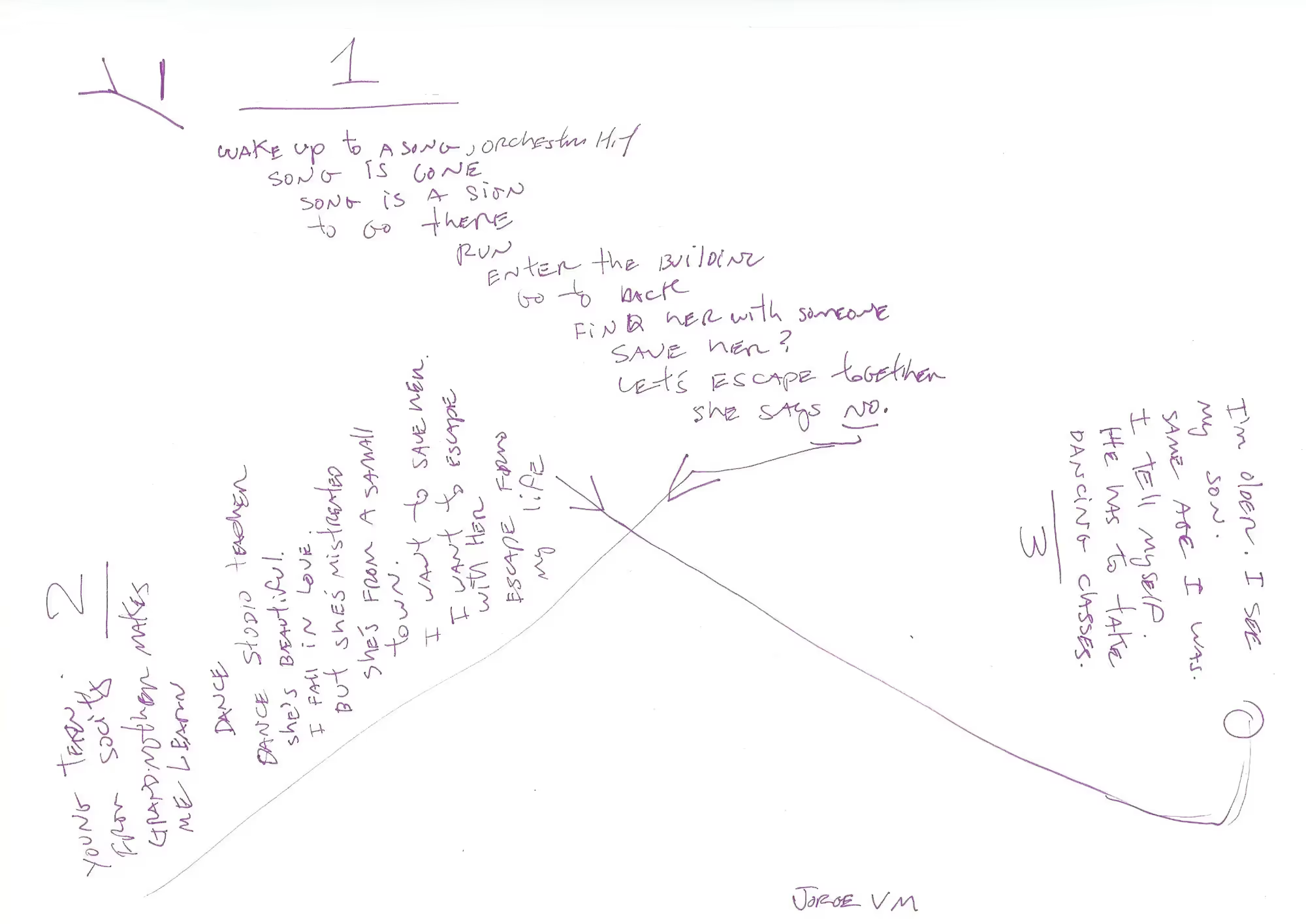
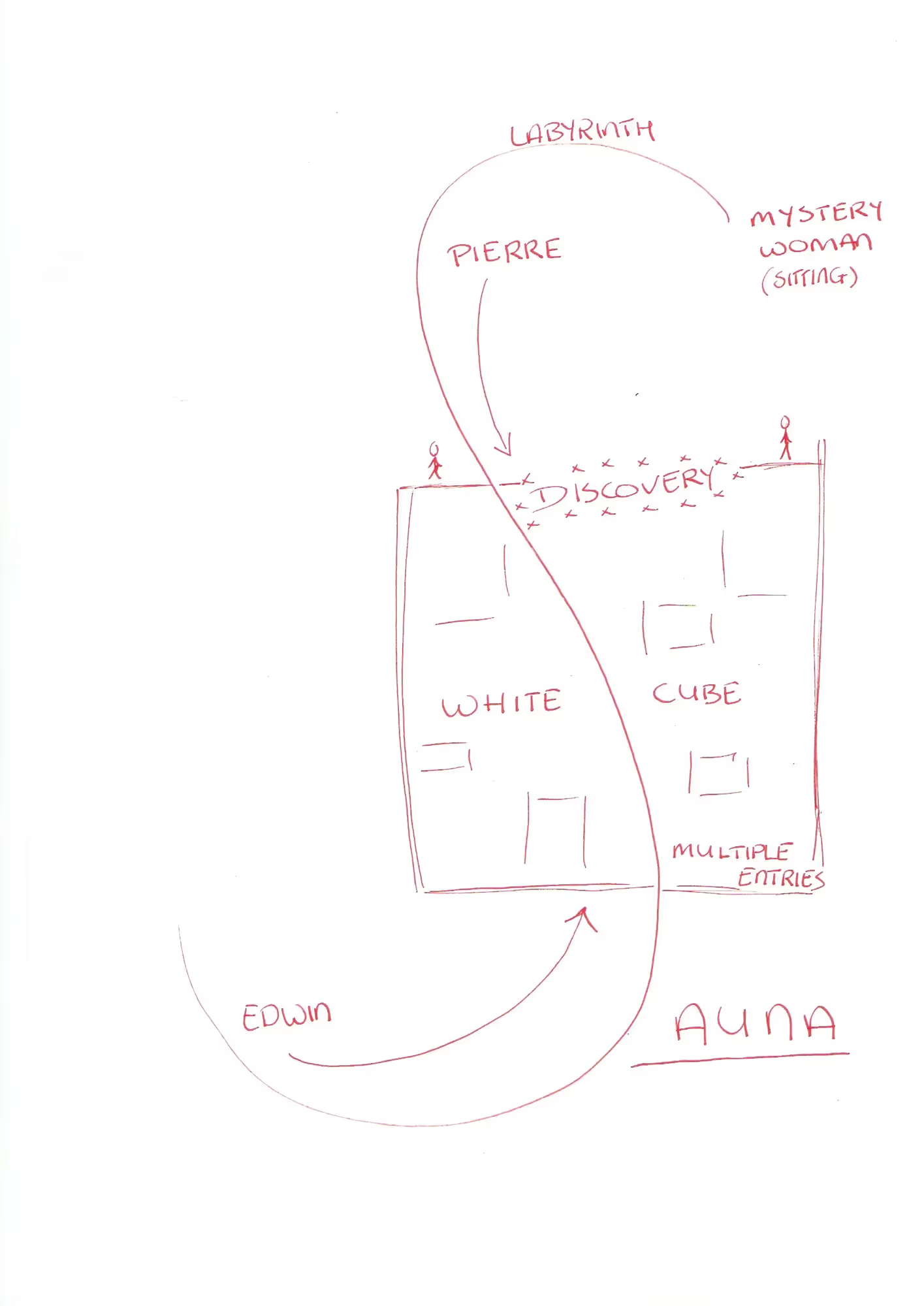
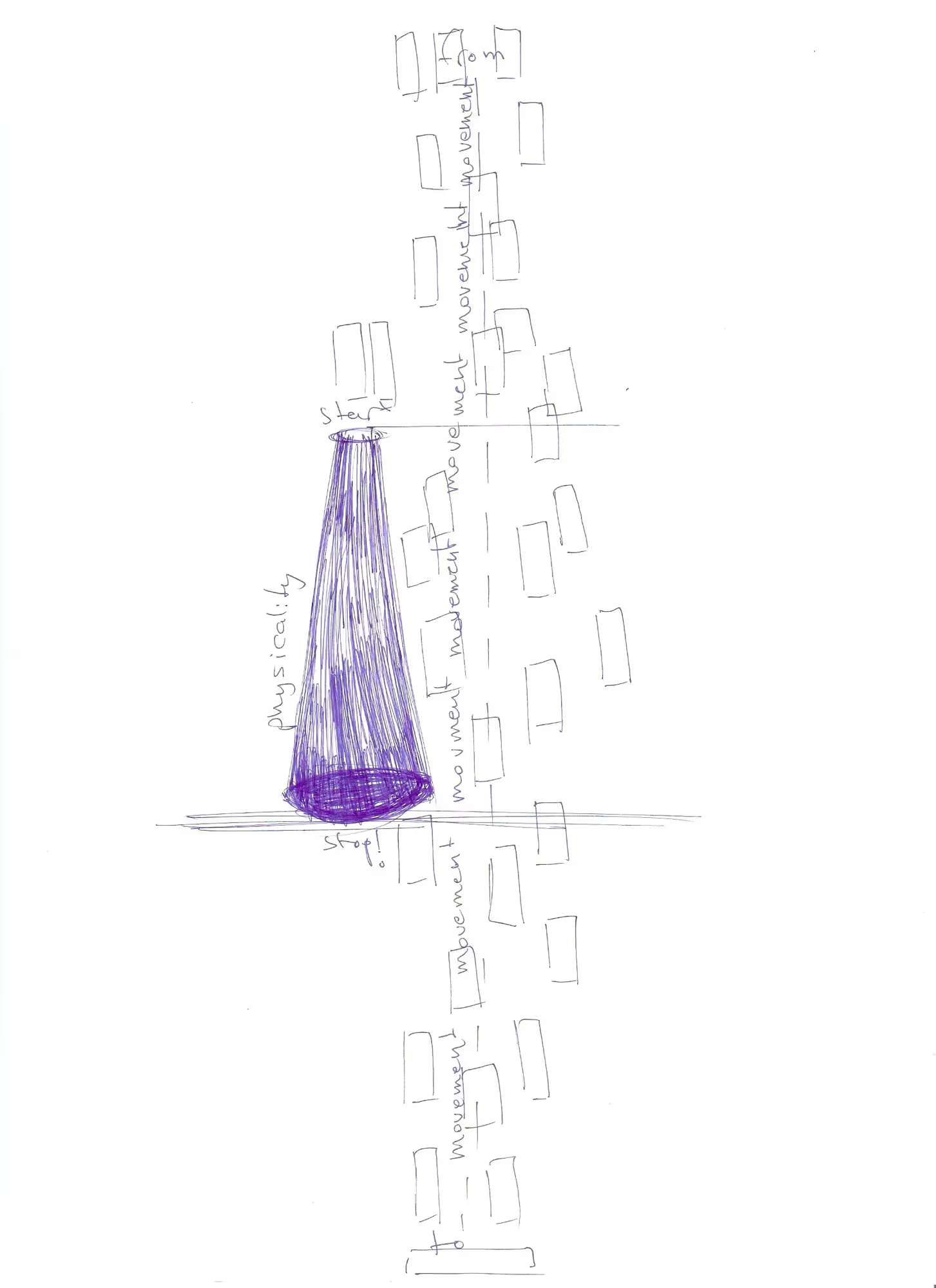
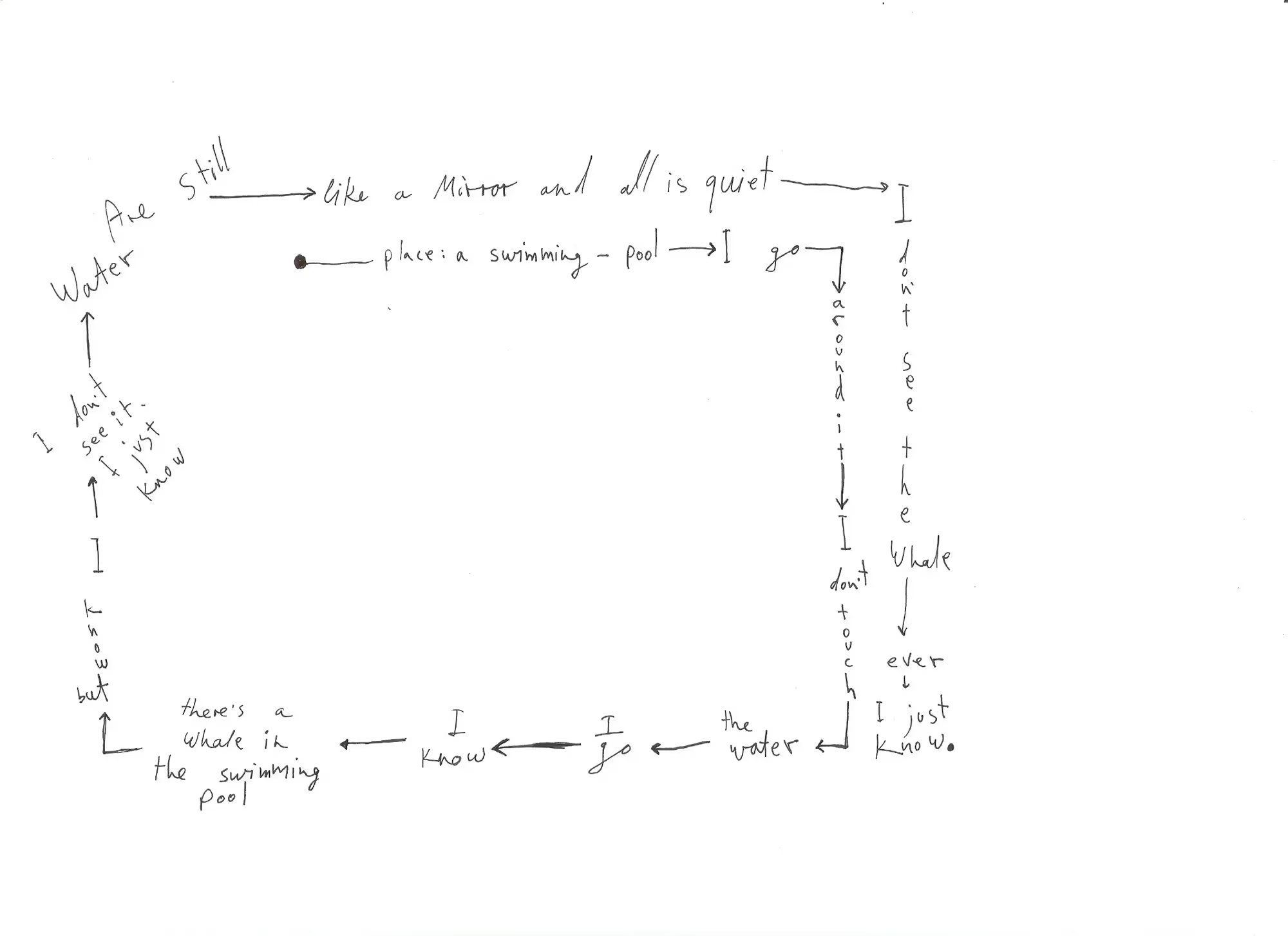
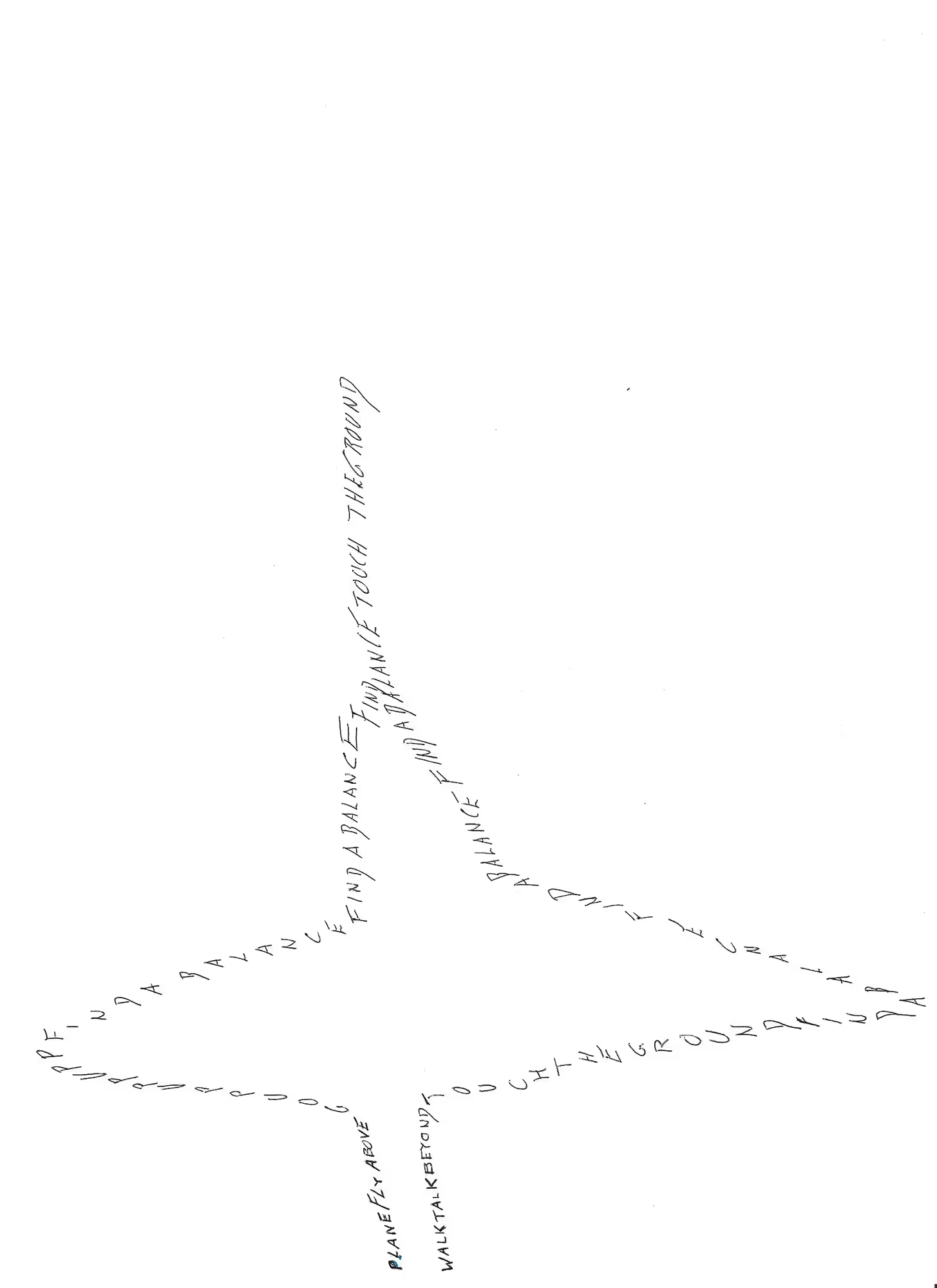
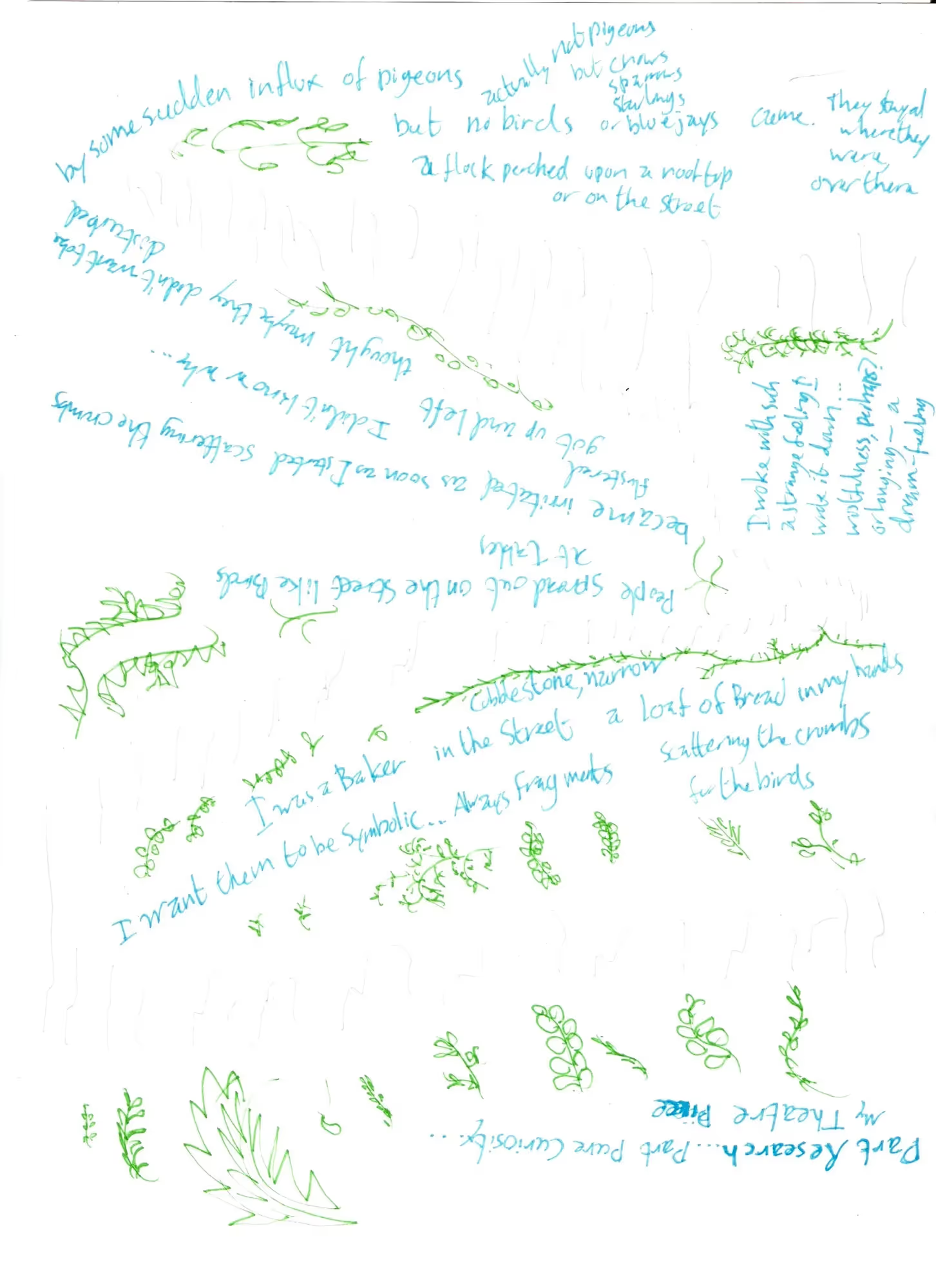
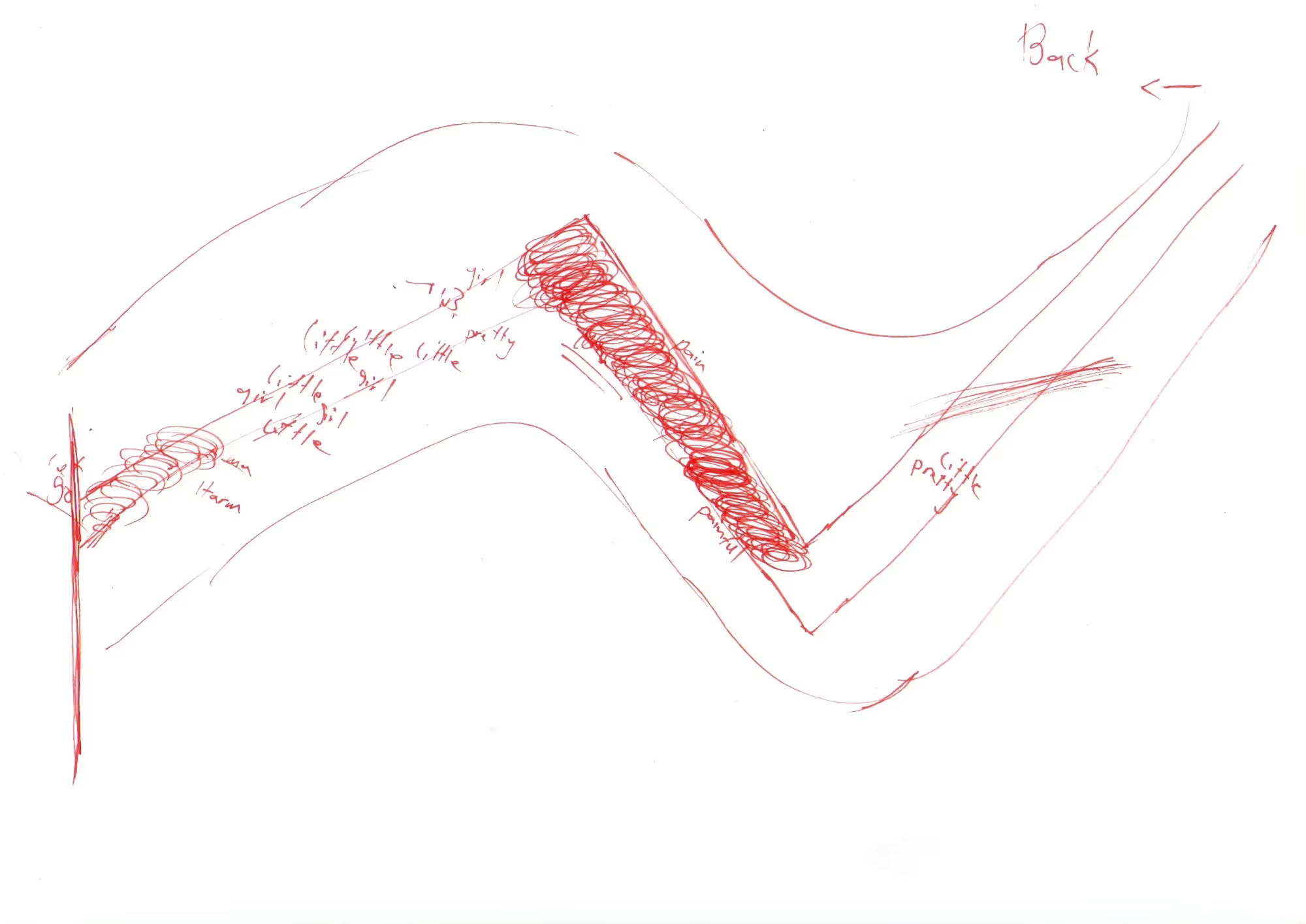
designed around a shared, flexible central space, the apartment is filled with natural northern light. it is a reworking of a standard developer unit, where the public area became the heart of the home, a place for gathering while also supporting parallel everyday activities.
the light creates conditions for openness and a sense of continuity. the design integrates built-in wardrobes, vintage furniture, lightweight storage units, and a steel library, serving both as practical storage and as elements that define and organize the living spaces.
photograpy: yonatan h. mishal, art: sabrina cegla
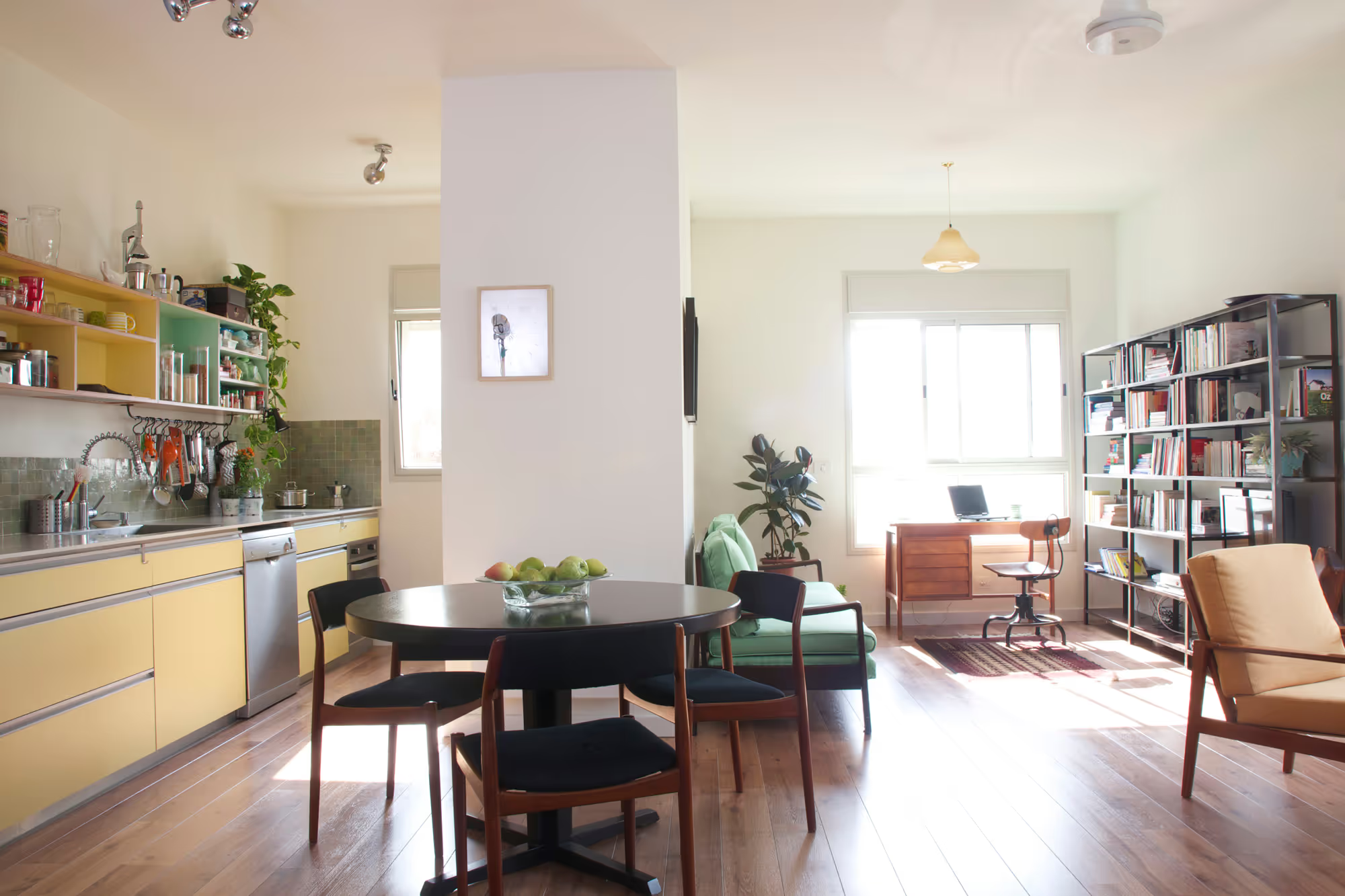
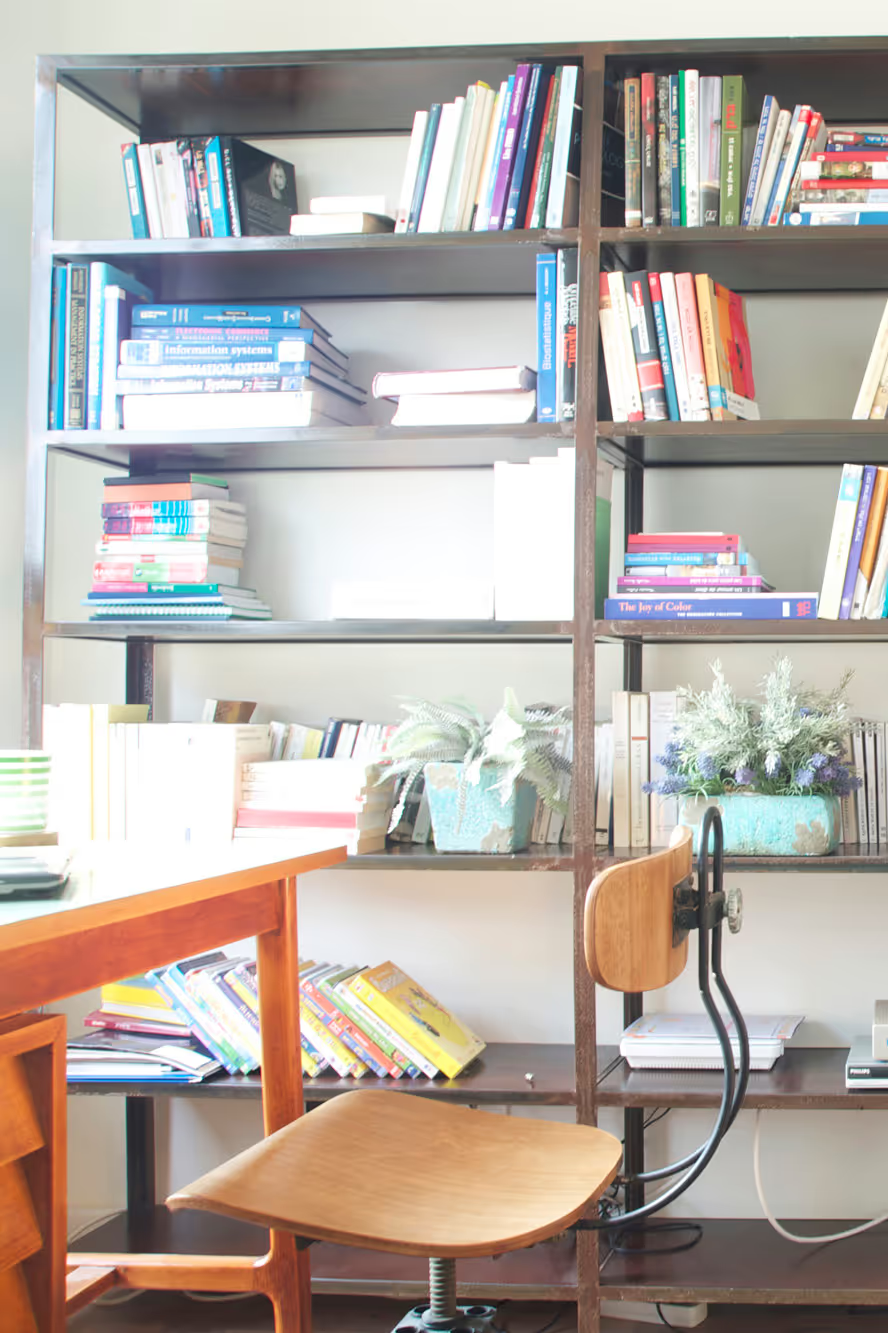
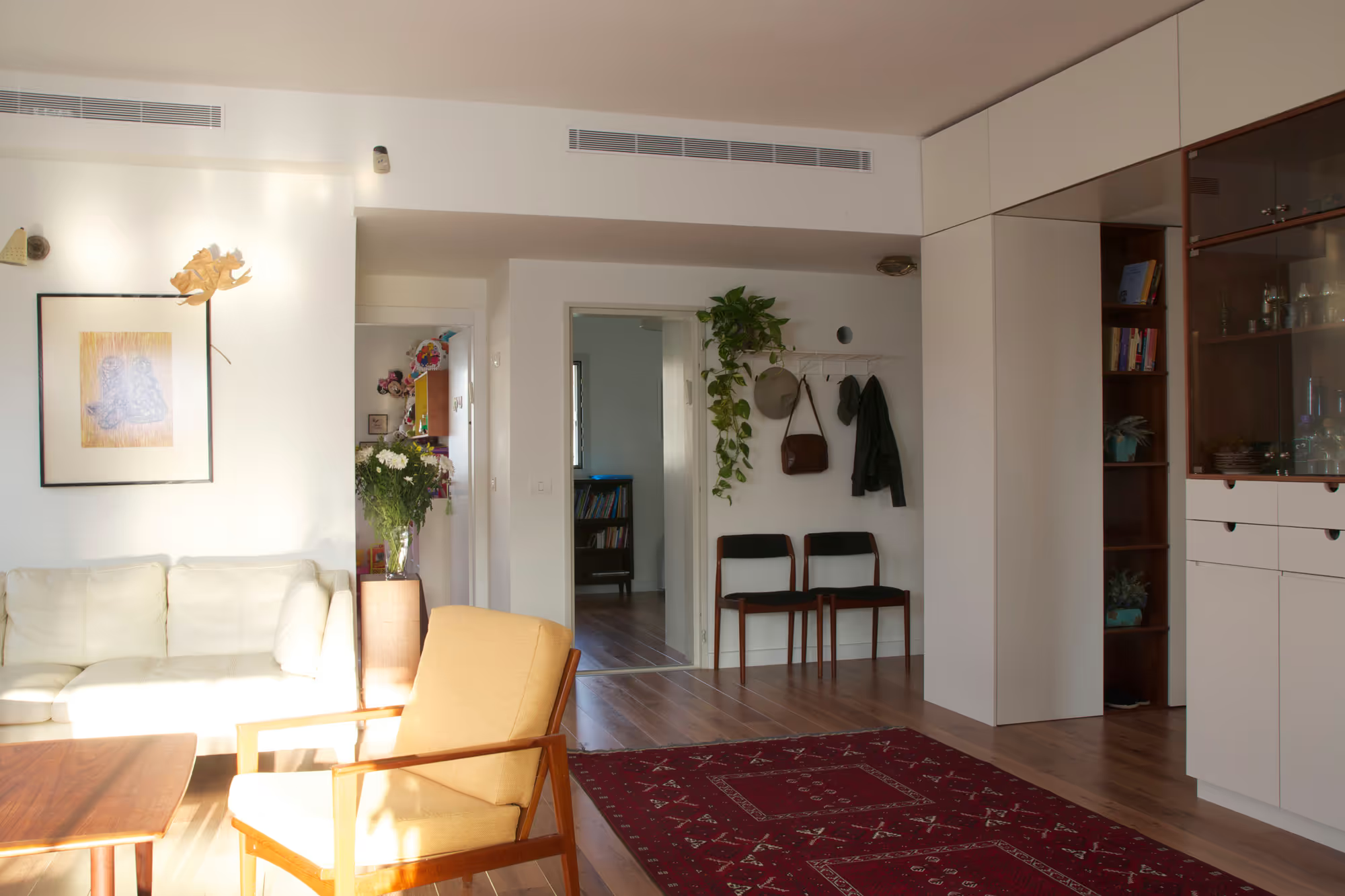
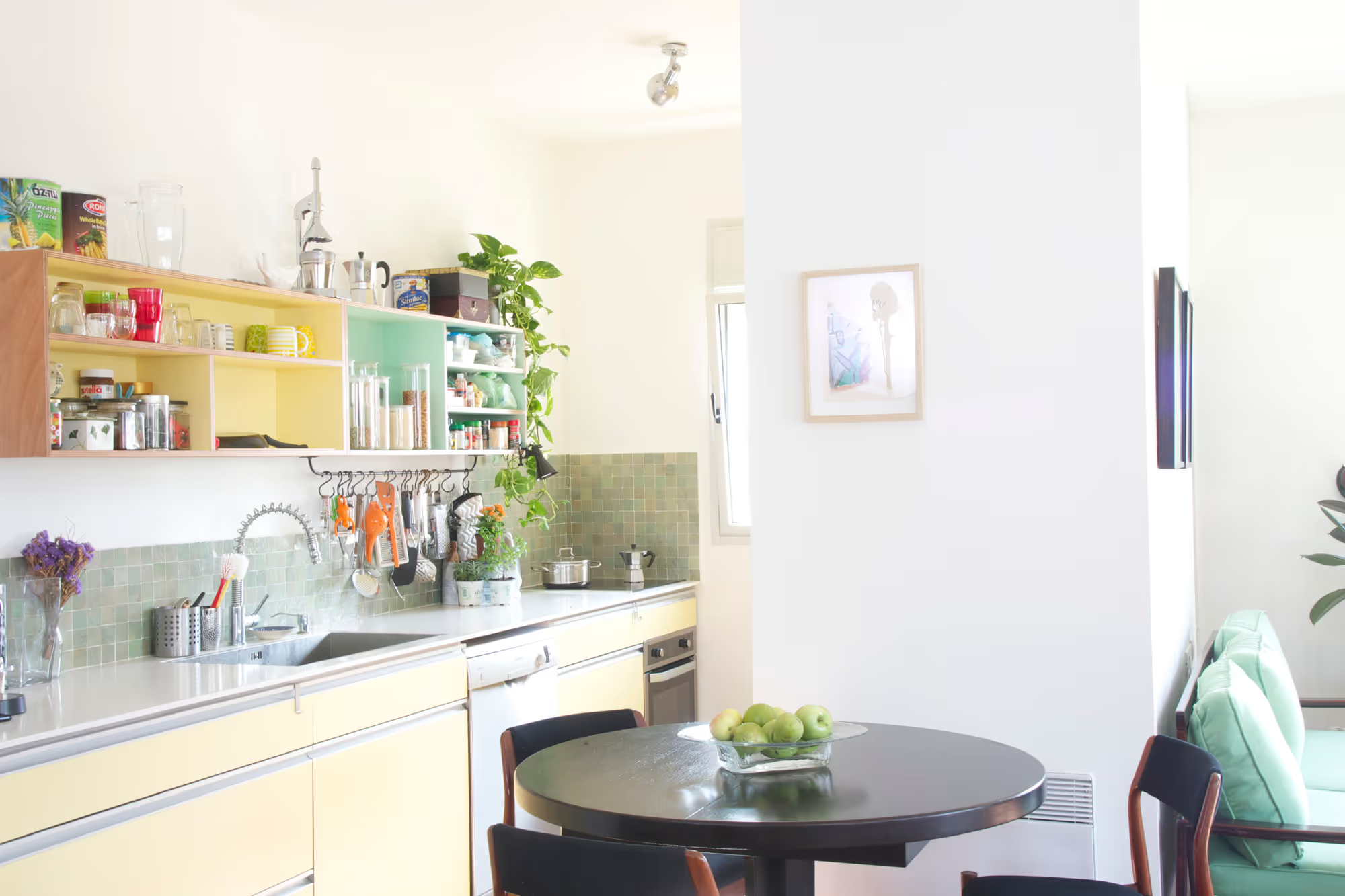
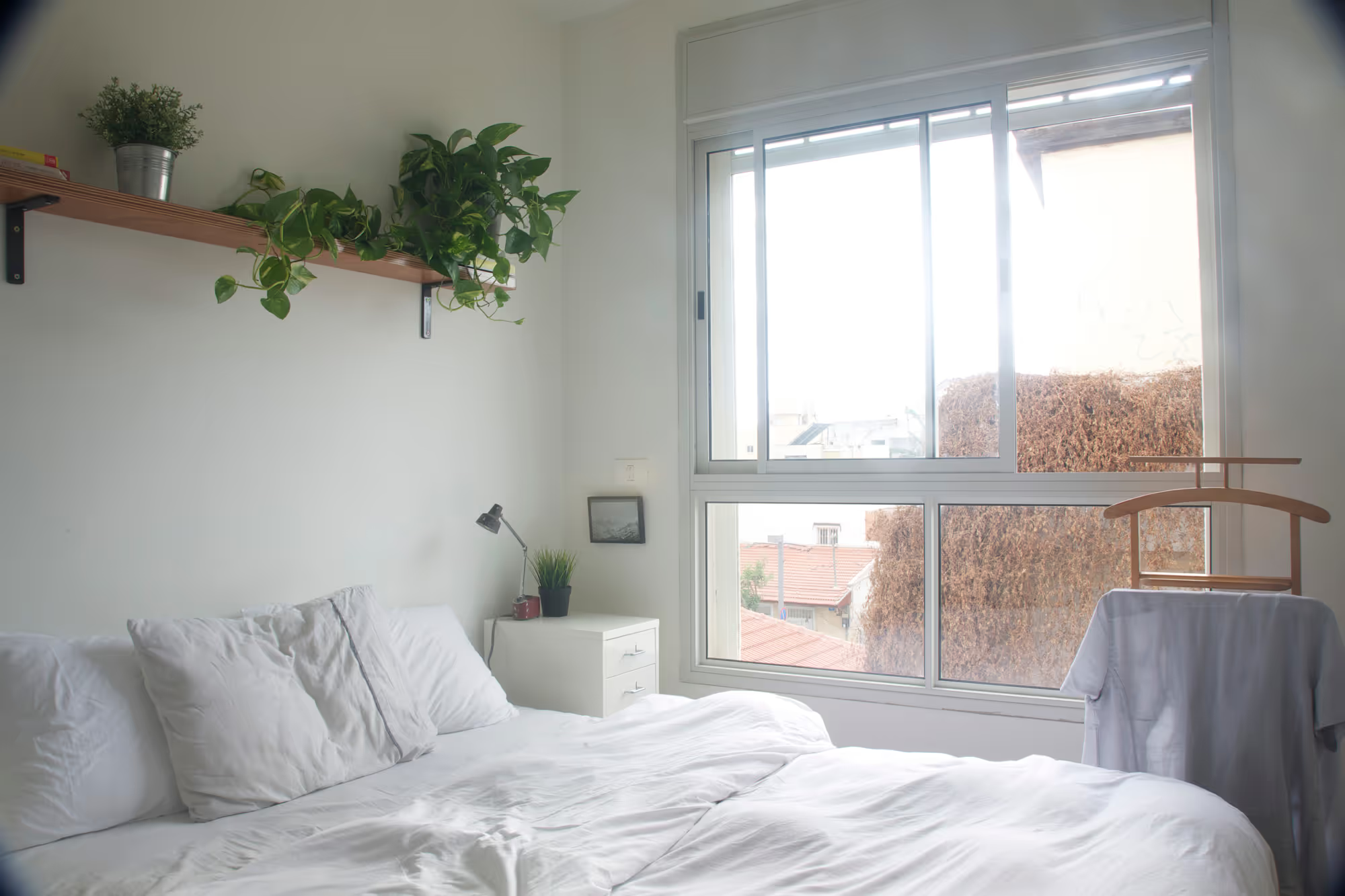
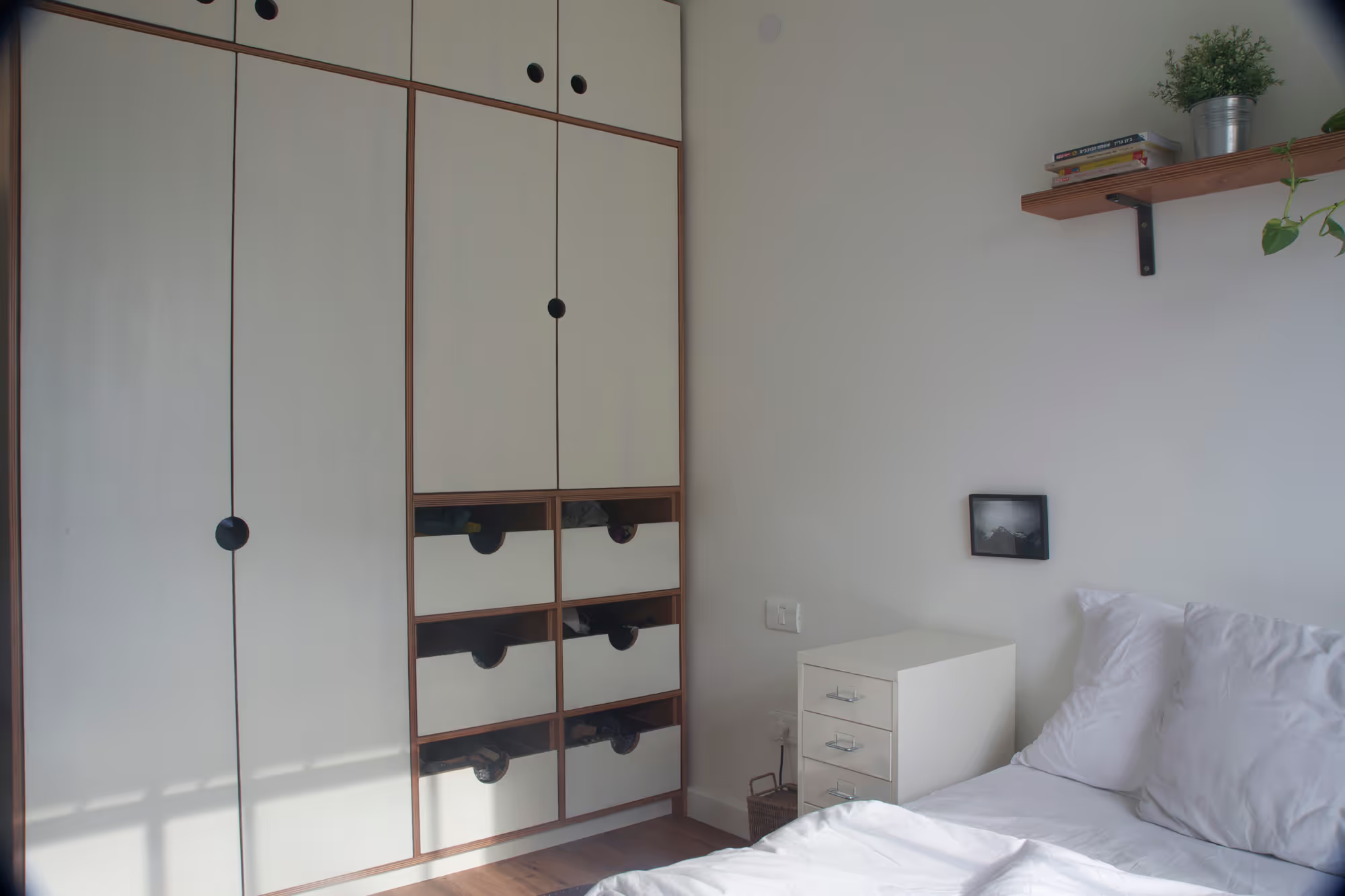
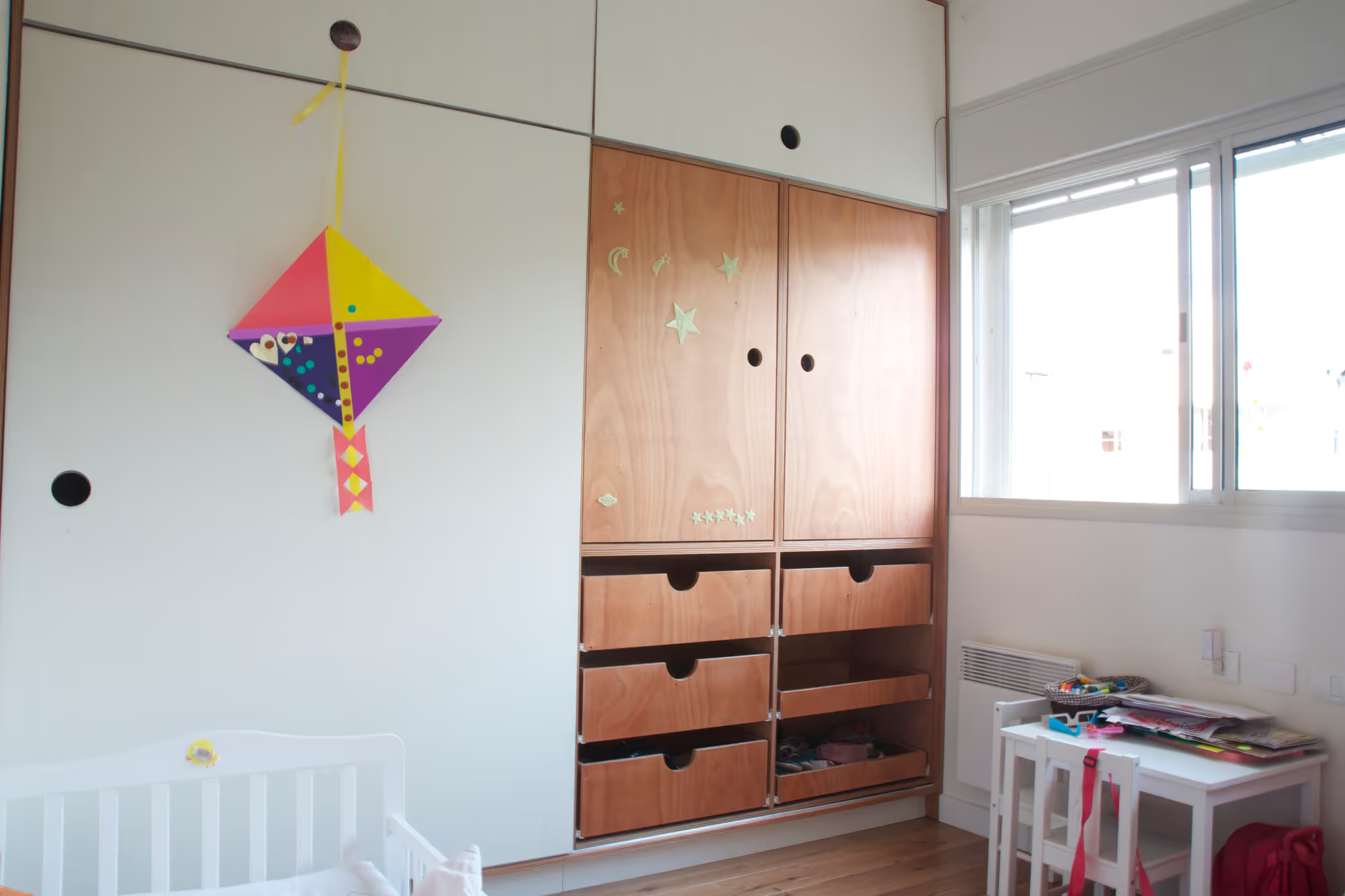
dwelling and proposes an architecture grounded in the principles of passive climate design. A comfortable indoor climate is maintained throughout most of the year, the result of careful planning that combines insulated block walls, a concrete floor with wood finish, wood–aluminum windows, and precise attention to roof insulation details, thermal bridges, and shading pergolas at the openings. Planned on a single ground floor, with the option of a simple extension within the pitched roof space, the house’s elongated form results from the layout of rooms along a shared central space—a configuration that reflects a notion of collective living. The house relates to the archetype also as an organizing principle for shared life, where structural simplicity creates the conditions for being within the landscape itself, and for experiencing the daily movement of the sun and light.
photograpy: yonatan h. mishal
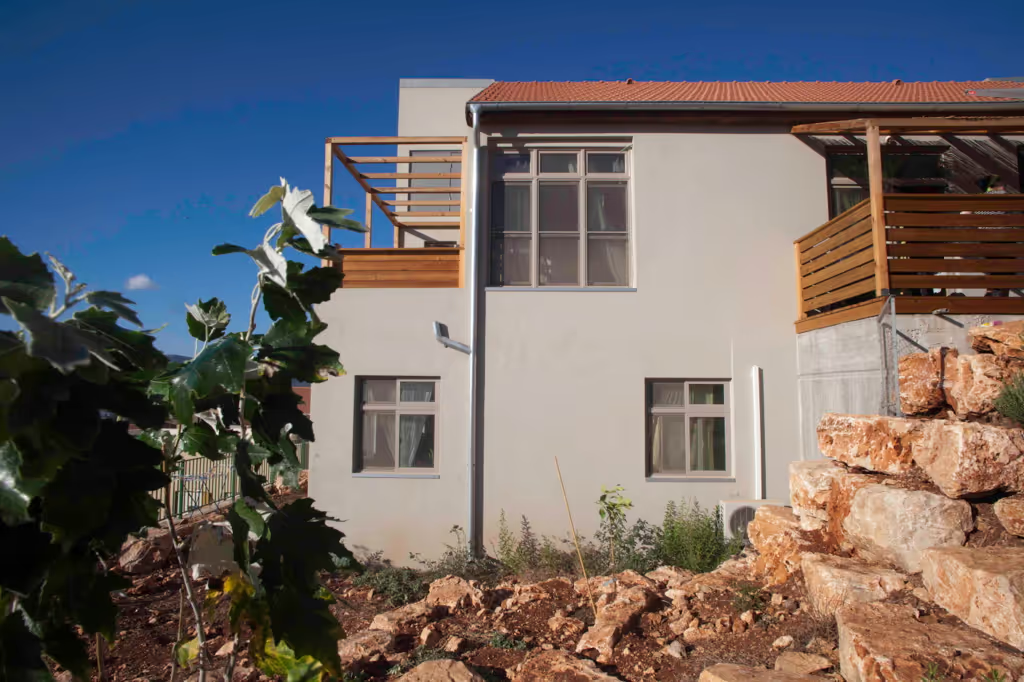
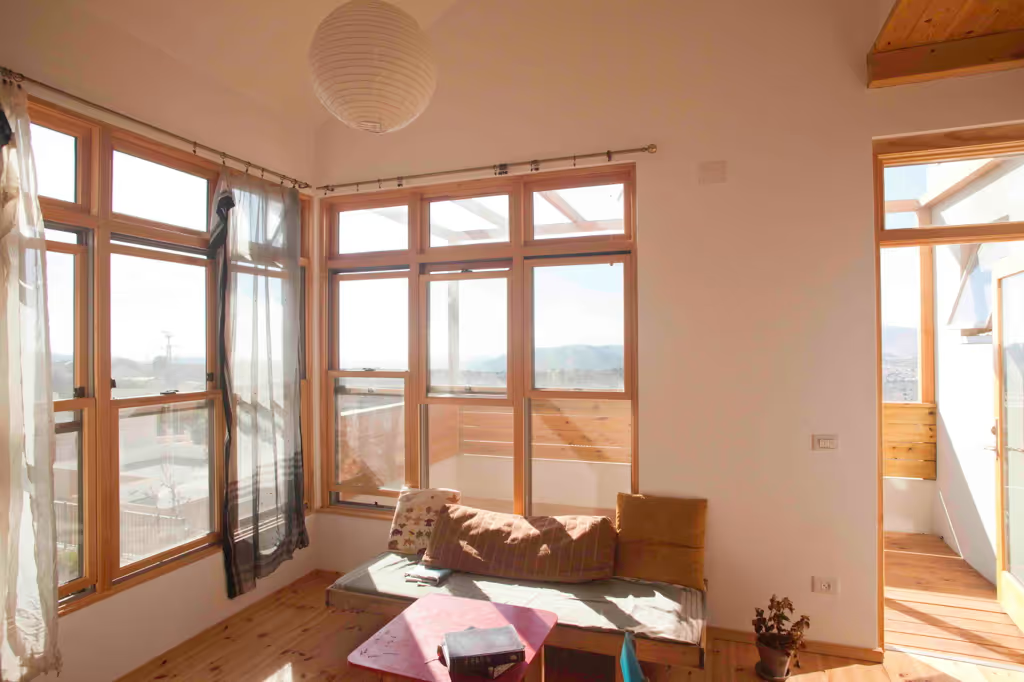
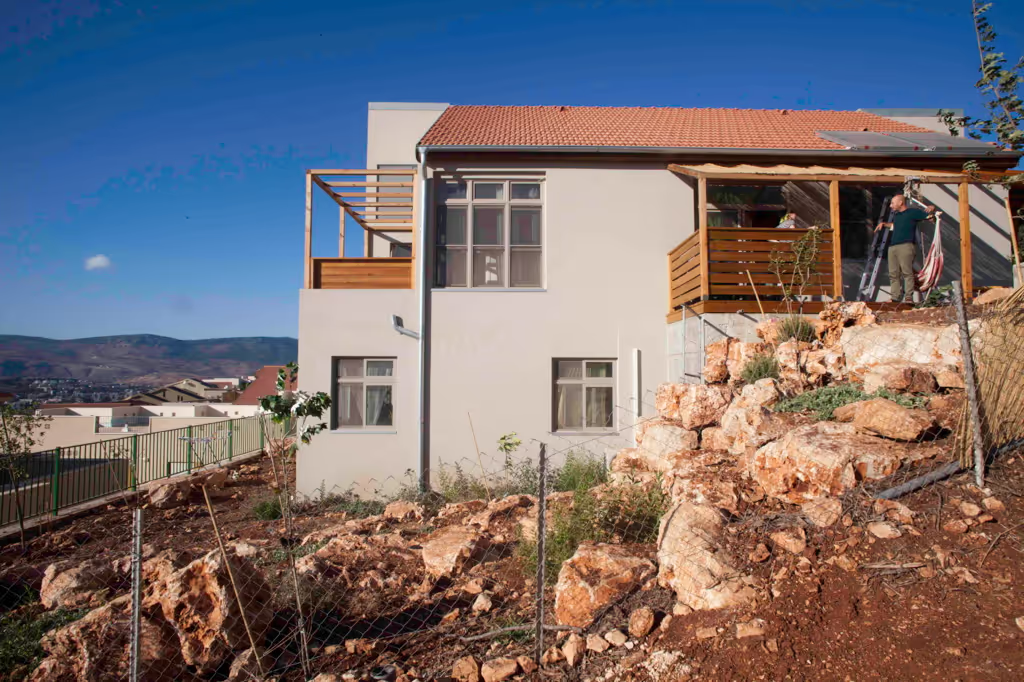
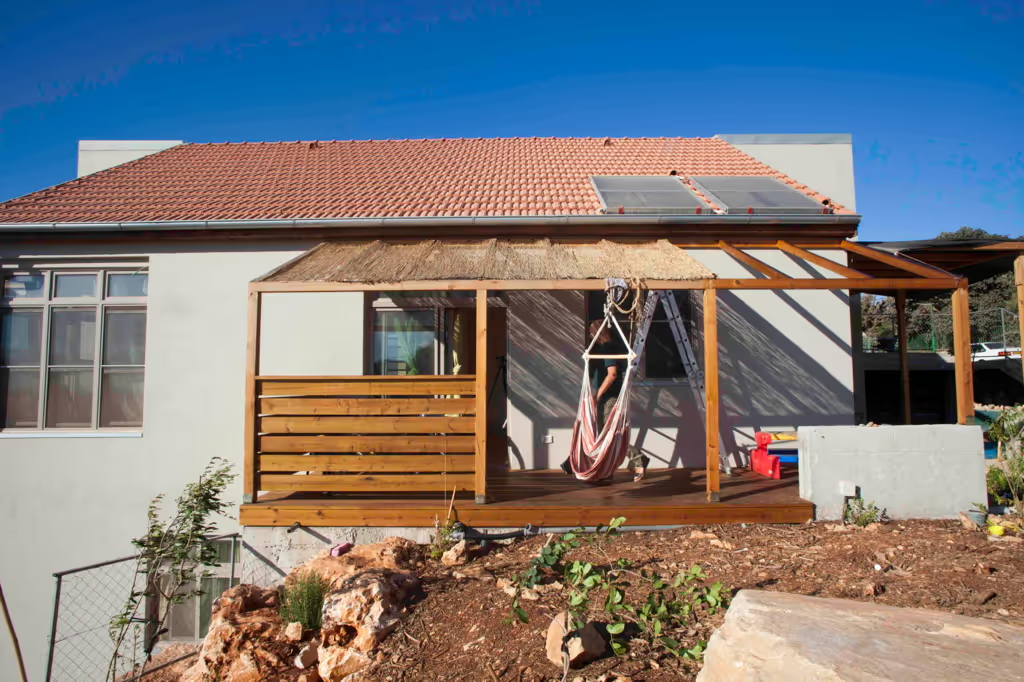
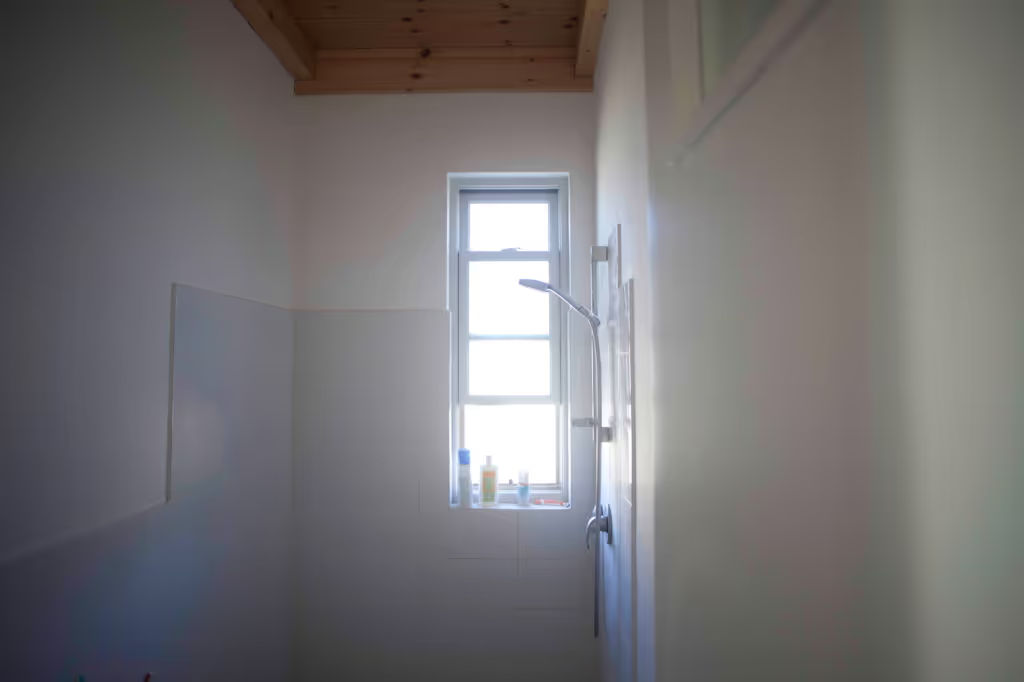
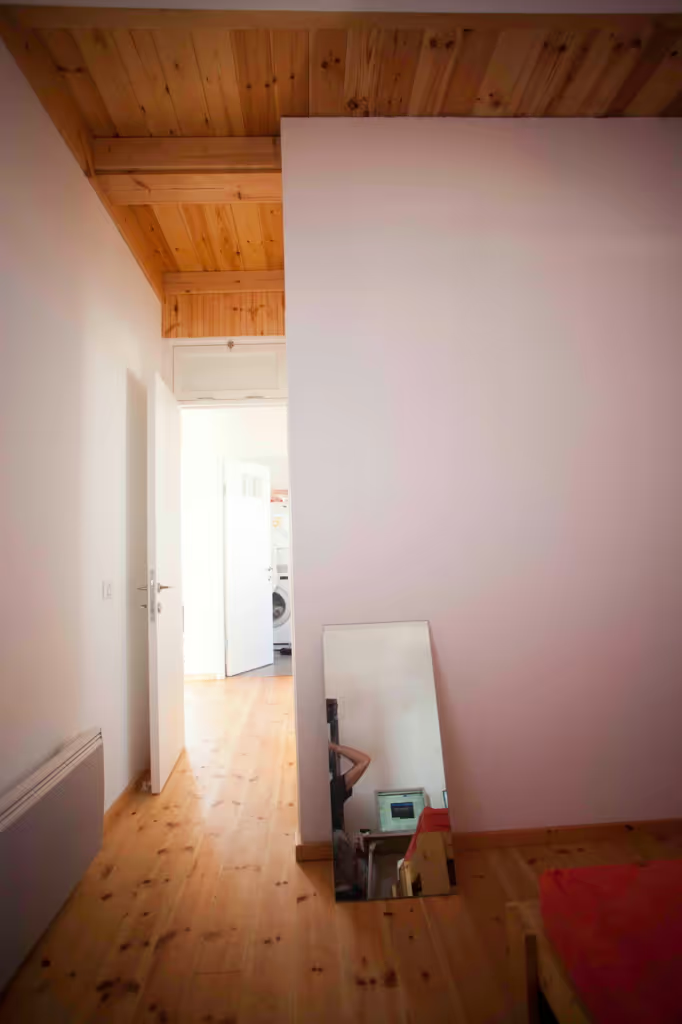
curated by tal alperstein and maayan mozes
as the first night star appears, the focus turns to performance art in its various forms: acts, words, voice, and ceremony. visitors are invited to move around freely, to watch and listen from near and far, and to take part in discussions, learning, and shared presence.
anyone interested in performance art is invited to join us on the liebling haus roof and celebrate a shared love for performance under the autumn night sky.
for this event, the ouroboros, the snake holding its tail in its mouth, was chosen as a symbol of the momentary spark of live art. the ouroboros lives the moment of its birth as it gives birth to itself. it embodies the idea and the vehicle as one autonomous, self sufficient organ.
the idea is the vehicle, the vehicle is the idea, and both are manifested in the body of the snake, or in the body of the performer, in an event with no end and no definite answer.
the evening what is performance art marks the opening of har, a small space for performance at liebling haus. har hosts performances, sound, and art, focusing on novelty, experimentation, exploration, and action.
performers dan allon, tal alperstein, lior avizoor and ran brown, moshe bar, ruth direktor and iris lana, uri duvdevani, ido feder, tom gorenberg yarkoni, yonatan levy, kineret haya max, hadas ophrat, nir segal, naomi shalev, nir shauloff and ana wild, irit sternberg, shani tamari matan, rotem volk, naomi yoeli, executive producer: olga stadnuk, stage design: aya zeiger, content manager liebling haus: moran navon, graphic design: ran malul
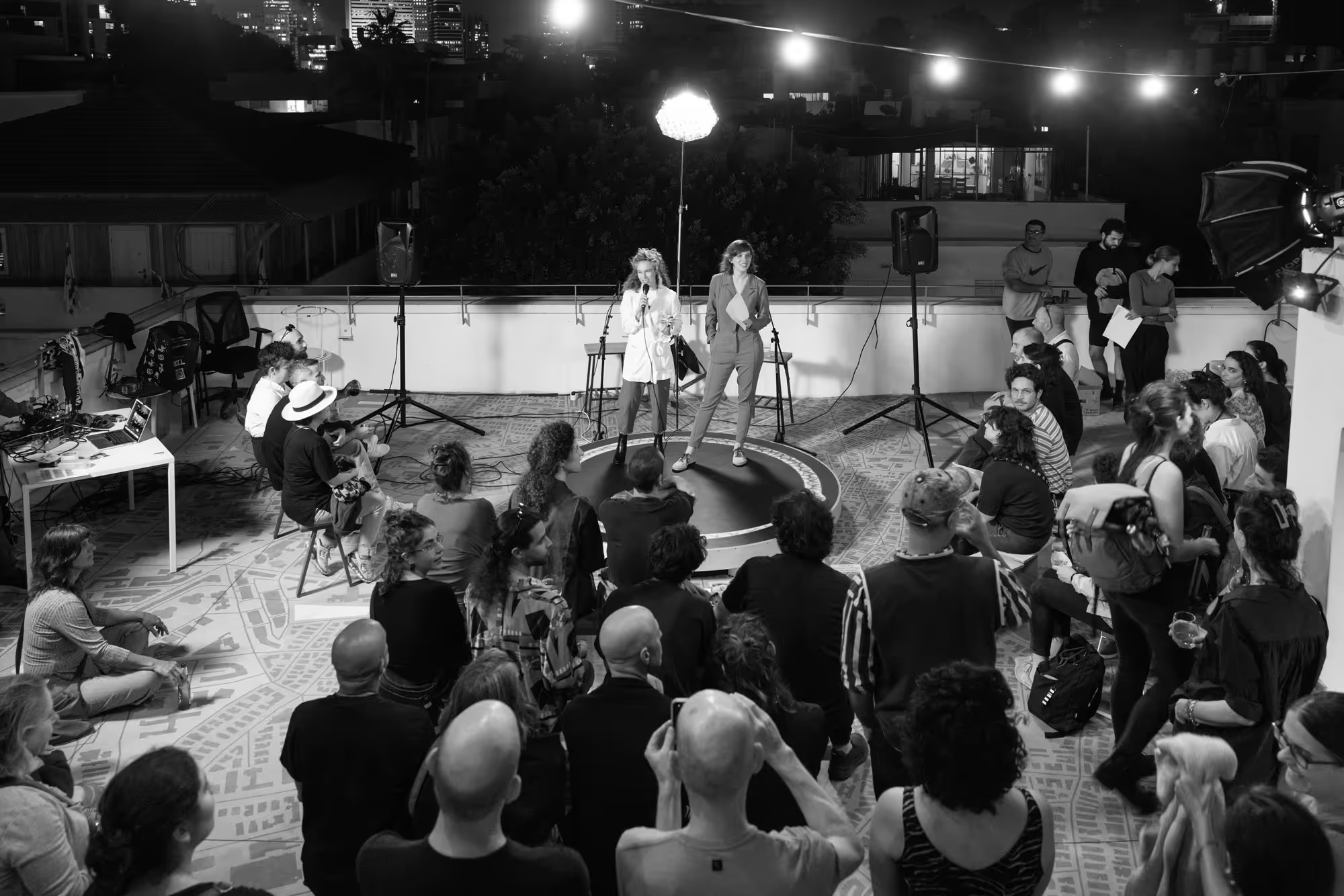
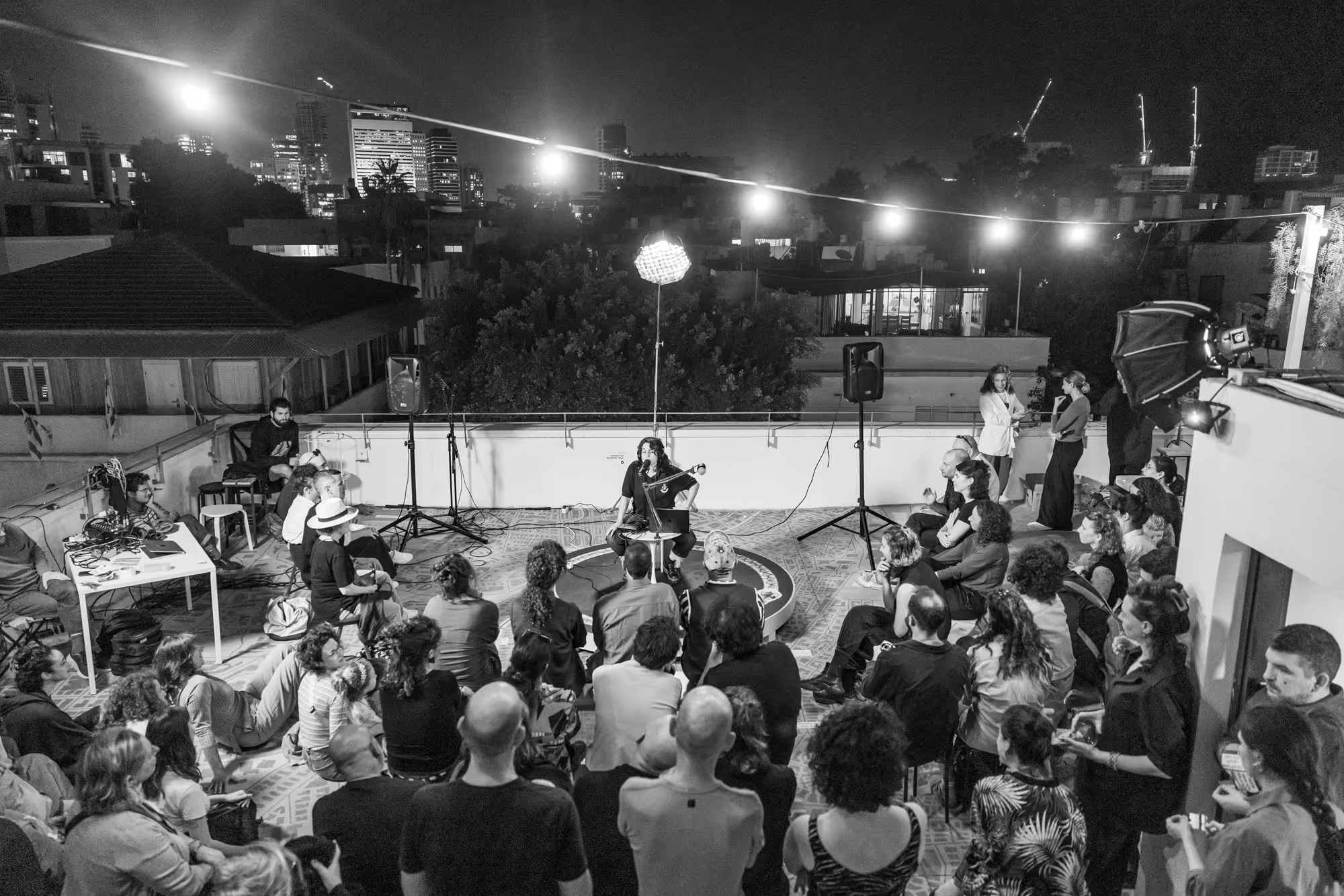
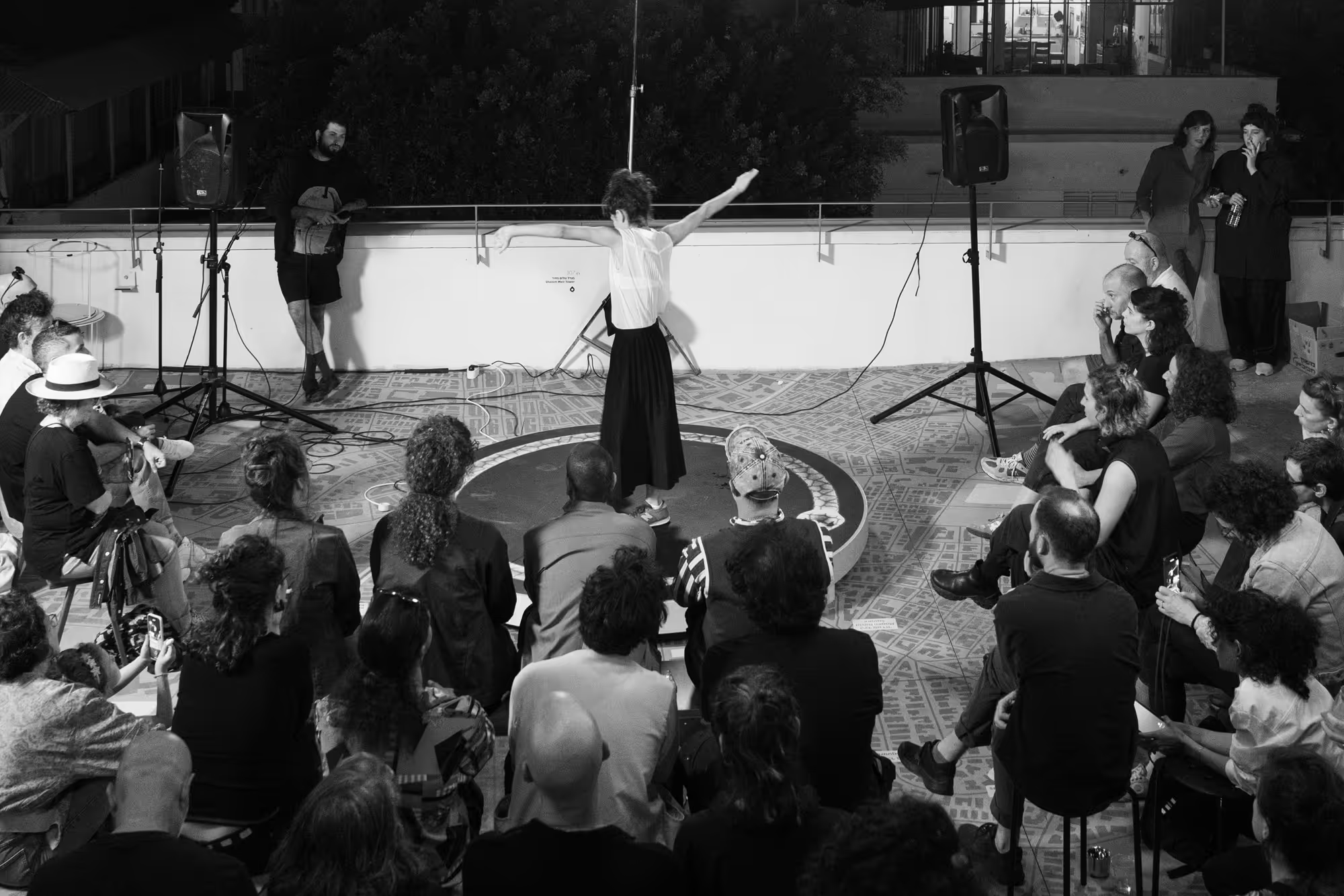
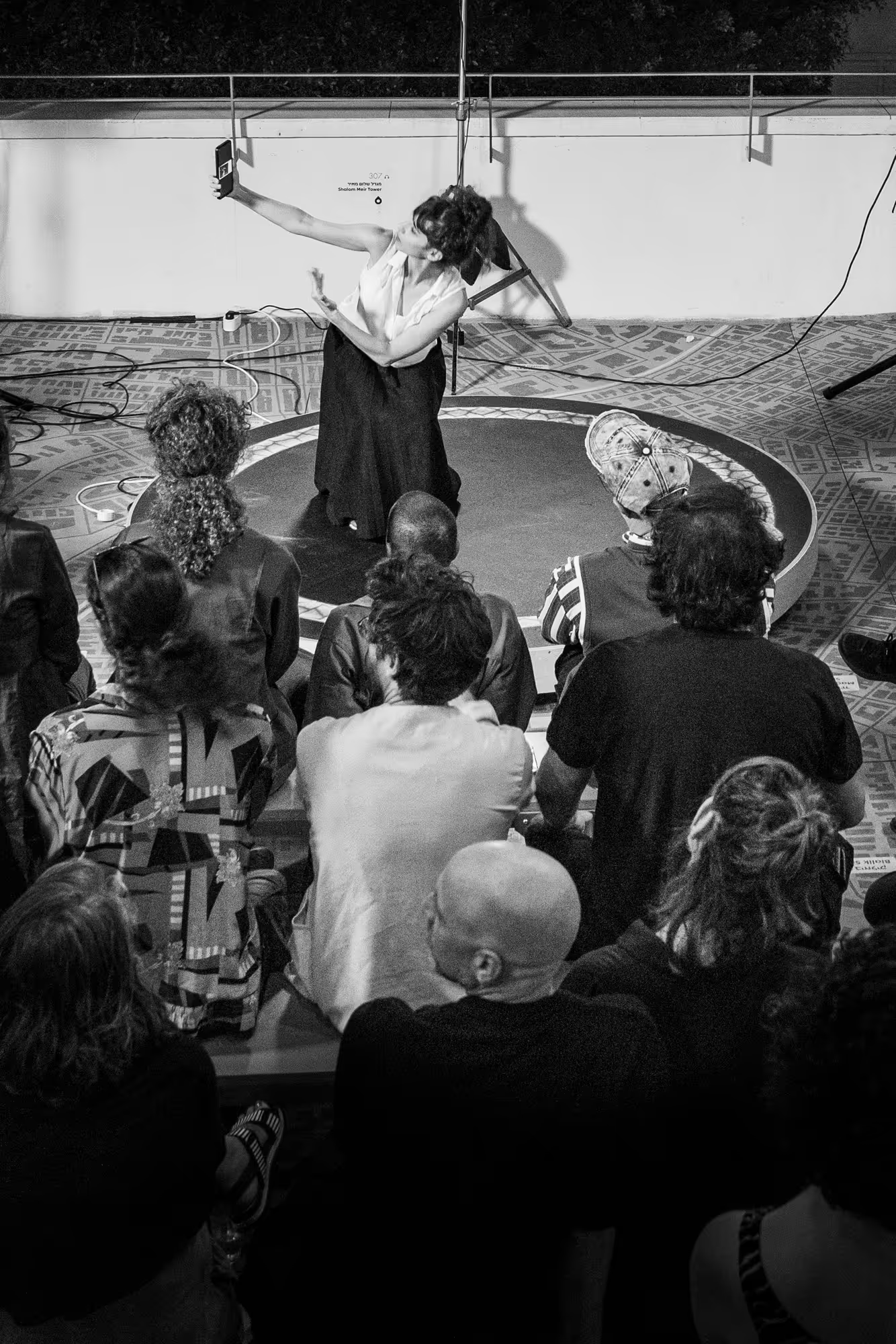
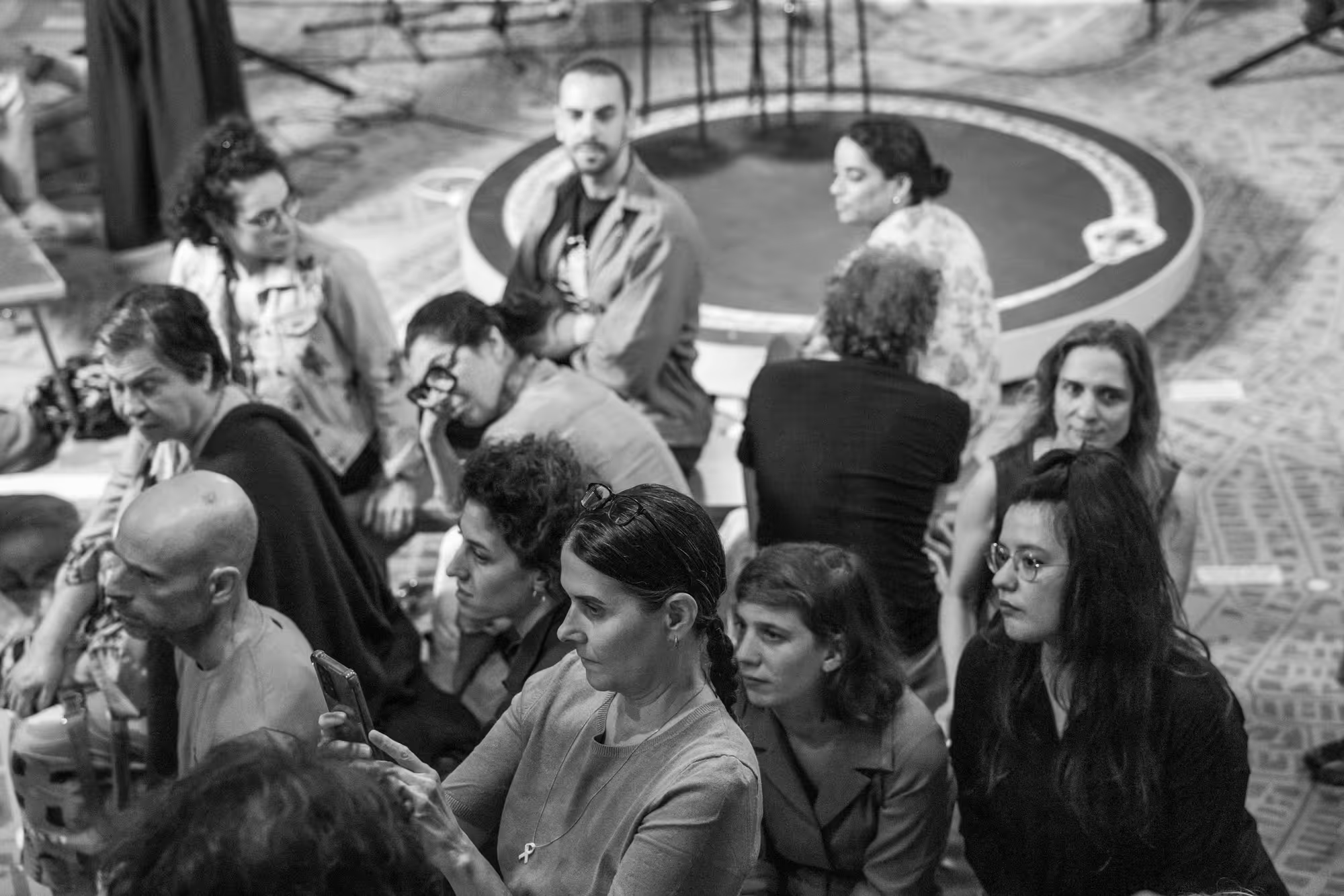
olympus is a learning and action program for creators from all disciplines, developed and taught at the school of the city. it is an independent framework for post-academic creative studies, offering original, sharp, and unconventional study programs that focus on the learner, their practice, and the creative process itself. olympus seeks to challenge existing working habits, stretch horizons of thought, refine personal language, and recalibrate the creative compass.
the study programs at olympus require courage, seriousness, and commitment. they are intended for creators who are interested in a journey, and who wish to pass through a meaningful process rather than merely accumulate tools. learning at olympus restores the joy of discovery and the excitement of early creative stages through an ongoing encounter with making, thinking, and doing.
the pedagogy at olympus is egalitarian and open, with a strong emphasis on the quality of each session, the depth of the encounter, and an intensive learning experience. learning unfolds as a continuous conversation, adapted to each creator and to every medium. programs take place through individual mentoring or in small groups of up to eight participants, guided by one mentor and sometimes two, according to the character of the group and its evolving dynamics.
the olympus team is composed of artists and creators who have been working together since 2017 in teaching and in the development of learning methods, alongside their professional creative practices.
its an organic team with a shared pedagogical agenda, rather than a system of separate courses. the collective work enables the integration of approaches and modes of learning drawn from architecture, performance, design, literature, art, pedagogy, and curatorial practice. from this shared process, living and relevant study programs are developed each year, treating learning itself as a space for action, experimentation, and creation.
alongside olympus operates olympus mountain, a very small space for performance and display, carved beneath the surface of the ground. olympus mountain functions as a direct continuation of the learning process through action, staging, presence, and experimentation, allowing ideas developed in study to take on body, time, and space.
school of the city team, co-founders: maayan mozes and ana wild, graphic design: rachel kinrot, text editing yoni raz protugali
.avif)

a multidisciplinary educational program for elementary schools explored urban living through personal experience. the team included educators, artists, designers, and architects working together across disciplines.
the program examined the city and the relationship between the built environment and its inhabitants, while cultivating observational and aesthetic approaches to everyday life in the city. it focused on learning through direct experience and attention to the surrounding environment.
its aim was to strengthen the connection between pupils’ private lives and living spaces and the urban public sphere, allowing children to see the city as a place of presence, action, and learning.
the program was implemented in several schools across tel aviv, including eastern and southern neighborhoods as well as jaffa and ramat aviv. more than 3000 pupils participated every week as part of their annual curriculum.
development team: tal alperstein, tamara anna efrat, merav kamel, dana mor, maayan mozes, roni raviv, rotem volk.

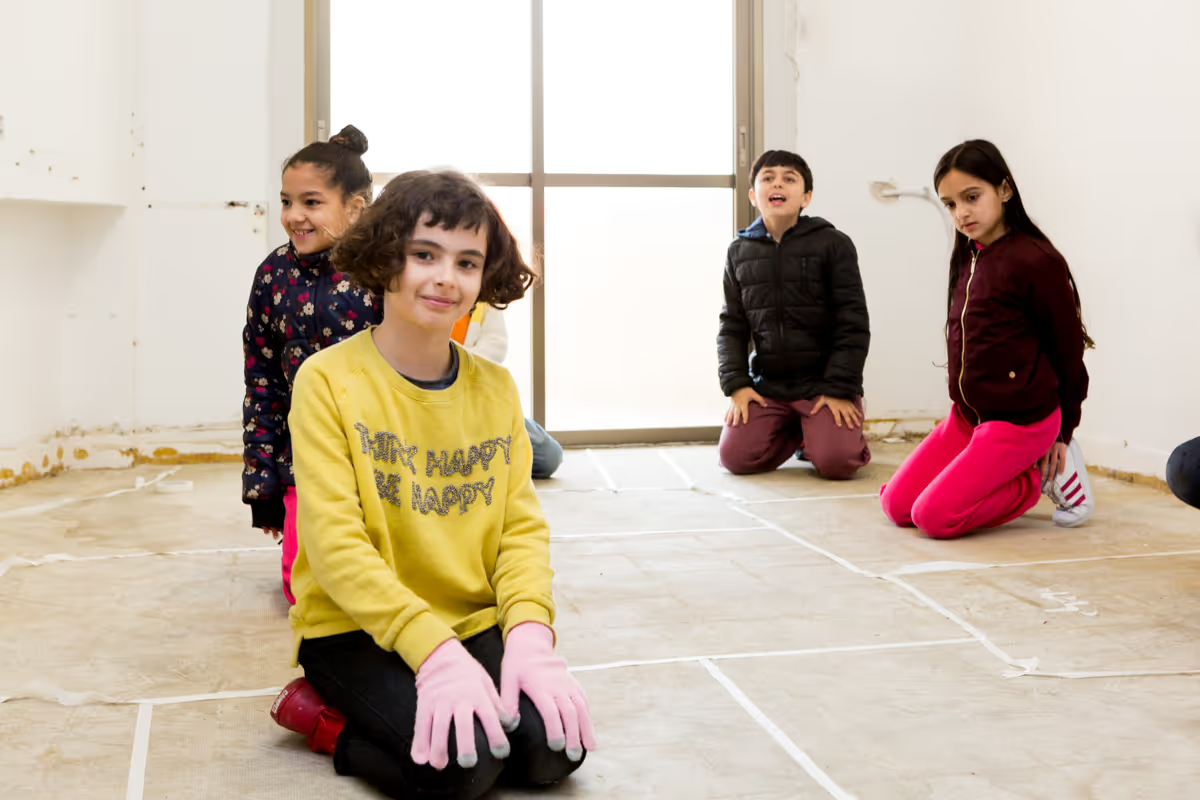
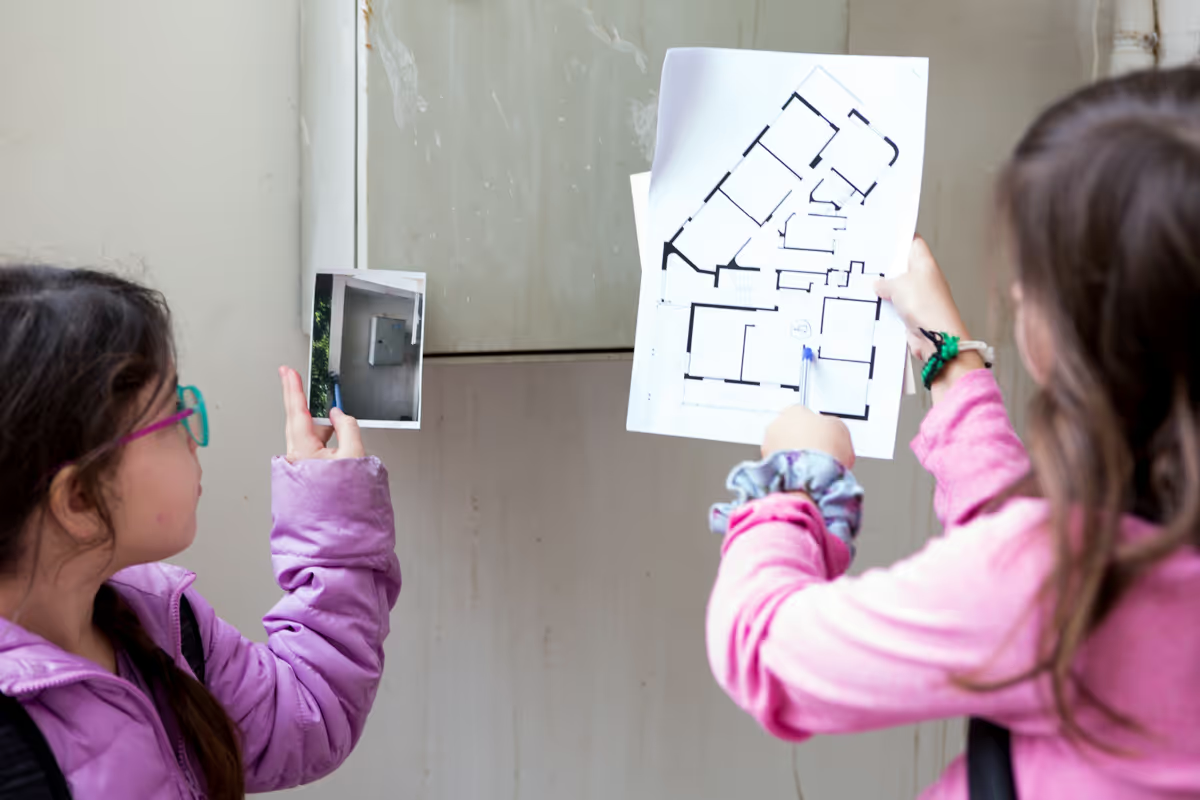
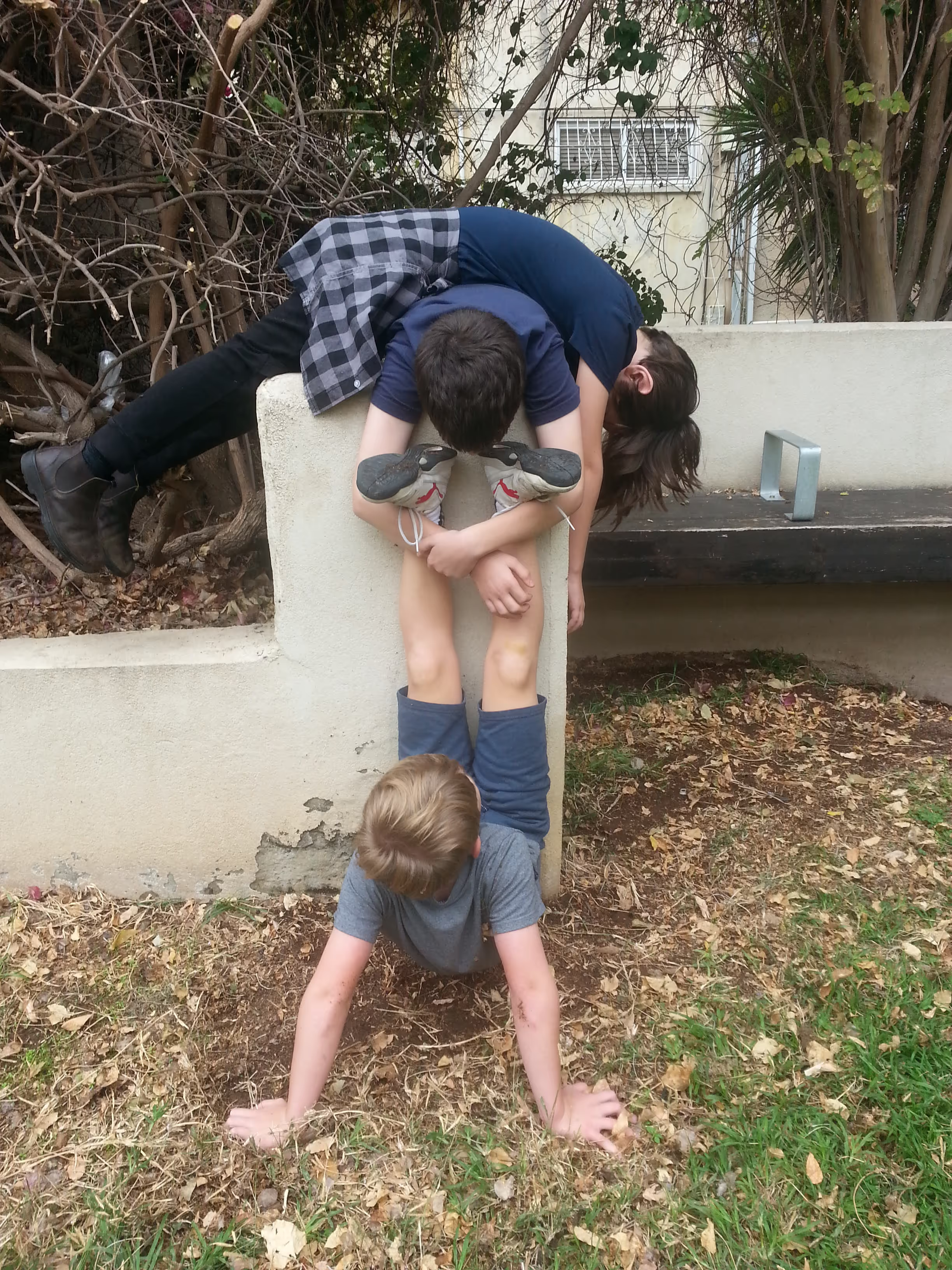
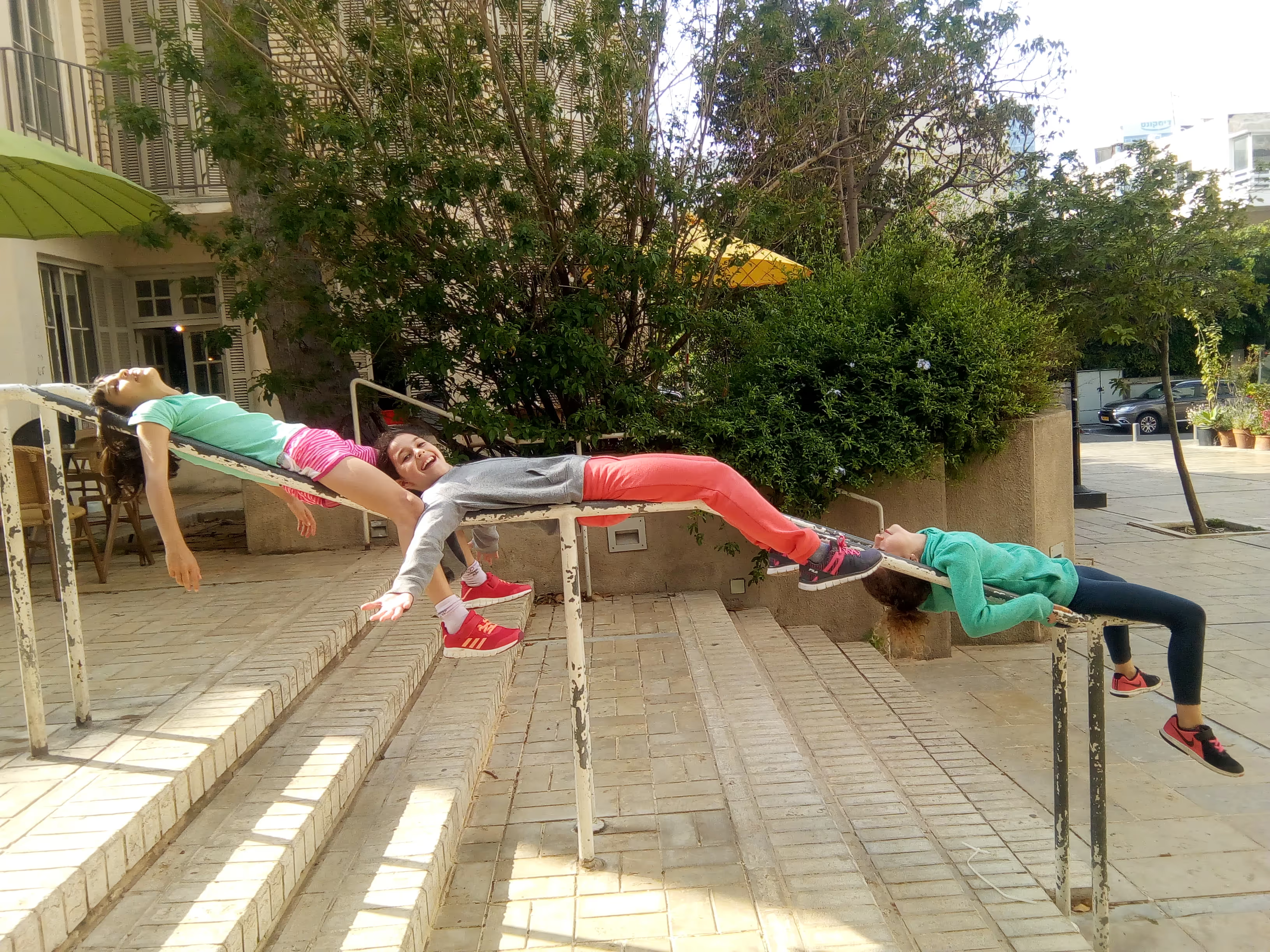
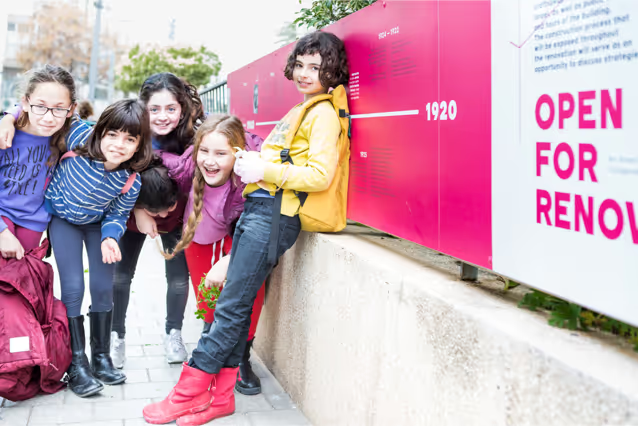
X is a collection of folding chairs, which designer Yaacov Kaufman has been collecting for years. Patrons of Lev Cafe, on the ground floor, are welcome to use the chairs during the exhibition.
O is a Field of Flowers: a study of cylinders and plastics, Kaufman has been engaged in recently, featured at the gallery in apartment 6.
X
maayan, anna, and i visited the studio of designer yaacov kaufman while preparing for the first school of the city conference. we wanted to use his collection of folding chairs as seats for conference guests. kaufman spent decades compiling his collection while teaching a course on folding chair design.
he agreed, and we stored the chairs in the liebling haus basement.
the pandemic broke out a few days before the conference, struggling to hold an event as close to the plan as possible, we sent the chairs to participants' homes. instead of one location, the liebling haus, we held the conference in forty different houses. the chairs kaufman collected for his study were now scattered across the world, connecting conference participants when it was impossible to meet in person.
it all happened over a year ago.
the chairs have since returned to the liebling haus. courtesy of kaufman, they are still used around the house, standing in exhibitions, used in conference rooms and balconies, even sent to the homes of the olympus program participants. the folding chair is a strange thing, a mundane object. usually designed for a large scale event, it is mainly tucked between the wall and closet.
its design combines the need to be comfortable while taking minimal space (thanks to a folding mechanism, which puts the seat and backrest on the same level).
a classic design conflict between comfort and functionality embodied in an invisible object.
O
we continued visiting kaufman at his bat yam studio, mainly to update him on the whereabouts of his folding chairs. his studio is divided into two areas, in one space, we found the stack of folding chairs, standing next to hundreds of other objects, in the second space, he stores things in different states of development and exploration of materials, forms, and ideas. an experimental, free form invention in design and art.
that's where we found the objects displayed in the exhibition, a field of white plastic flowers made of cut chewing gum containers. this hours long exploration of the abstract form of a flower represents the importance of experimentation and everyday creativity in the practice of design, art, and action.
co designer and production anat levi, exhibition installer aya zaiger, conference co curators ana wild and maayan mozes, text editor yoni raz portugeli, graphic design: tal nistor
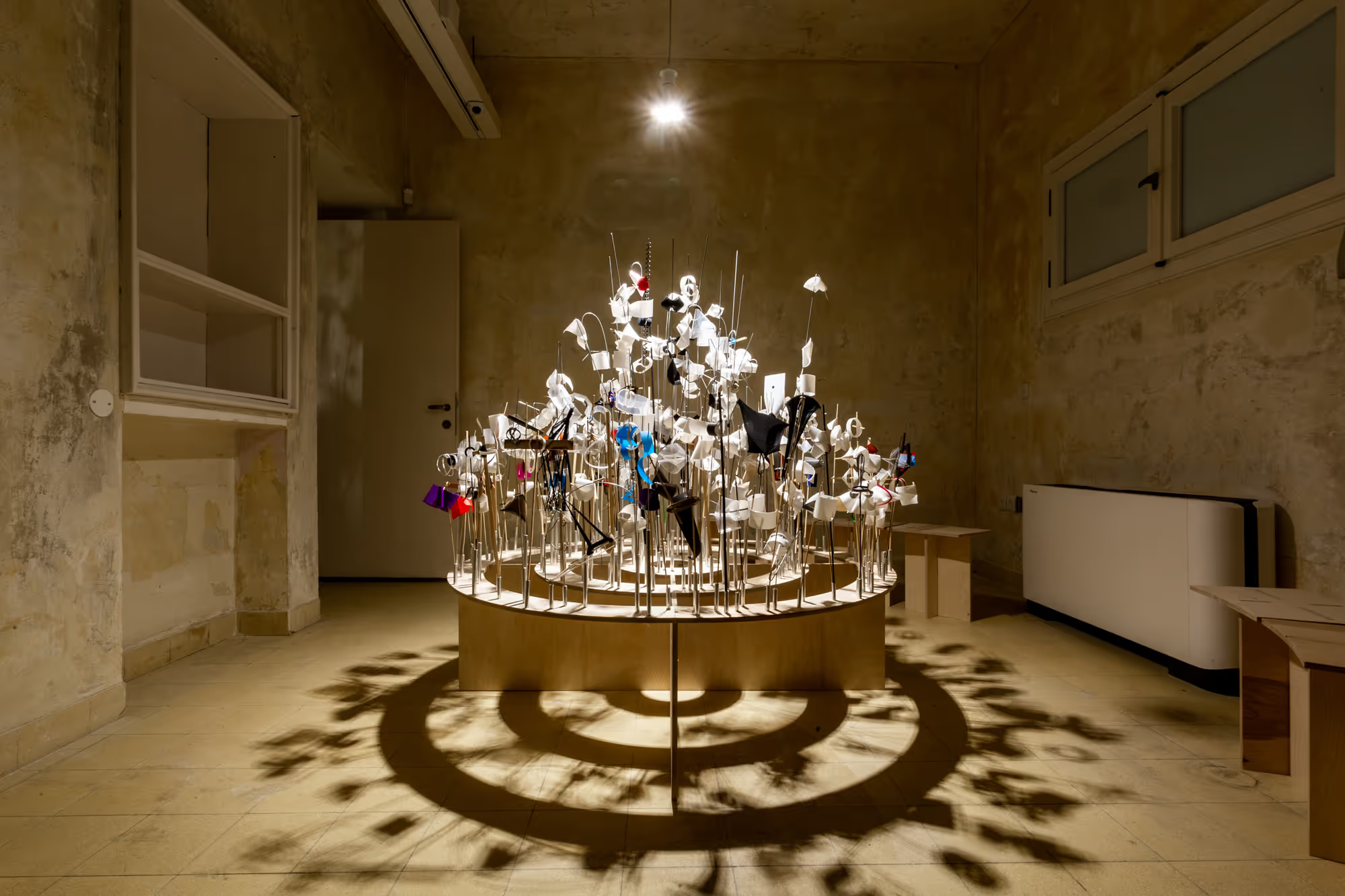
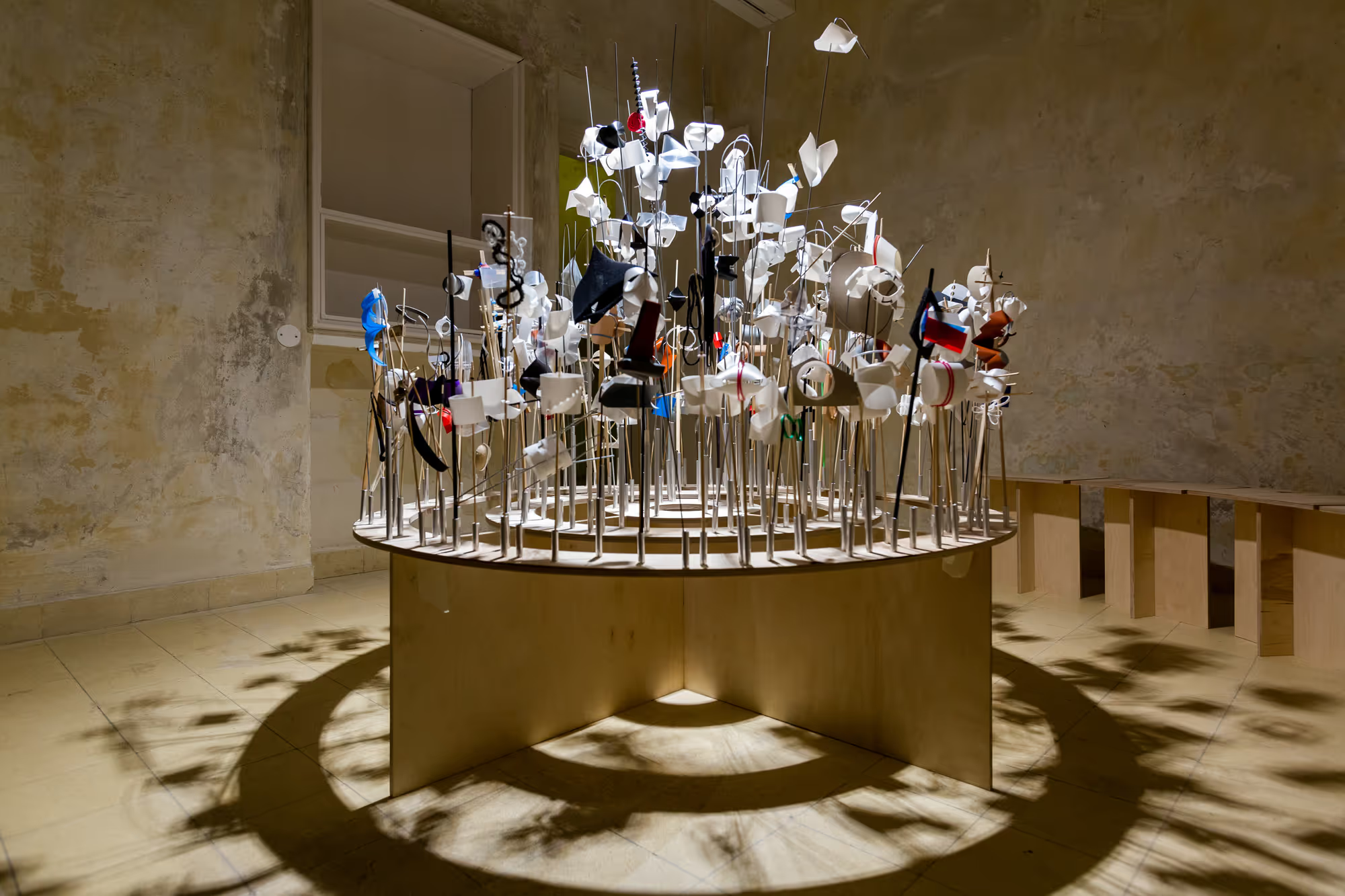
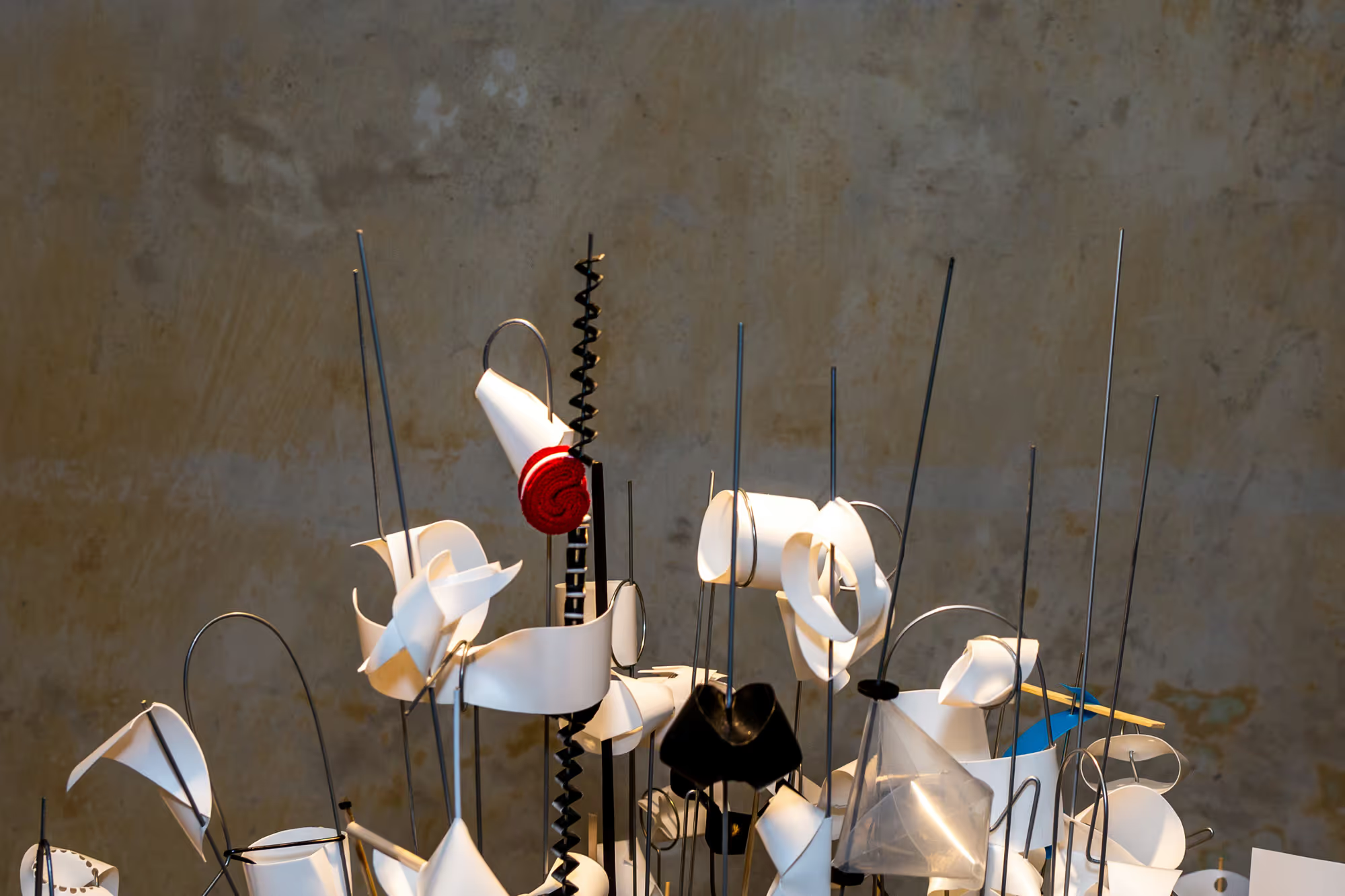
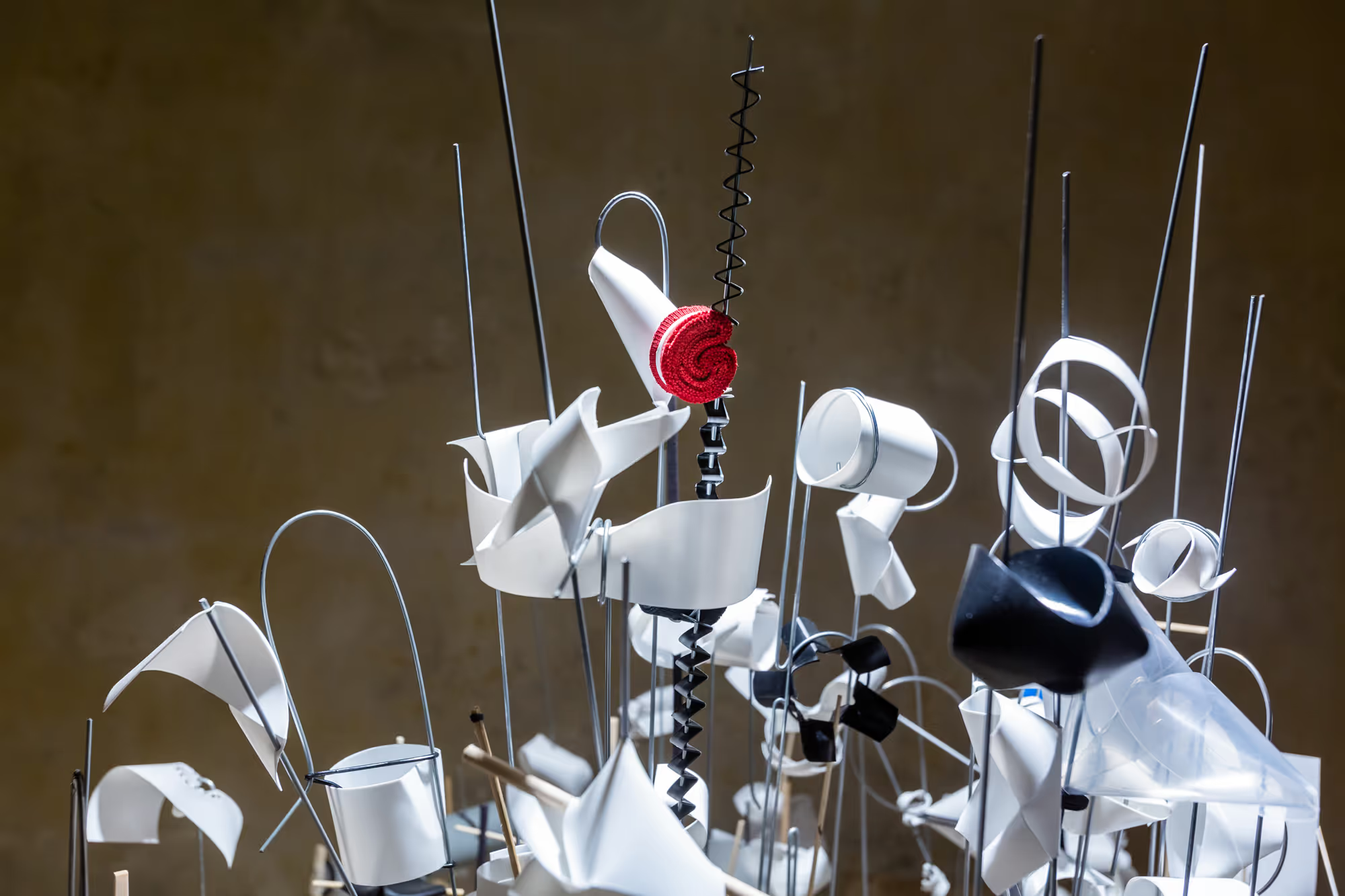
restoration of an apartment in the center of tel aviv from the 1950s, in which it became clear that what was needed was to reveal its original qualities: a southern light that needed to be softened and guided inward, into the unique modernist structure, a sequence of rooms surrounding a wide central hall.
the design focused mainly on understanding the illumination of the rooms and bringing light into the hall, as well as refining the precise relationships between the rooms. the doors were redesigned in the style typical of the 1950s, with white painted wooden doors, simple hinges and handles, and a terrazzo floor newly designed in reference to the apartment’s original flooring.
photograpy: yonatan h. mishal, art: sabrina cegla
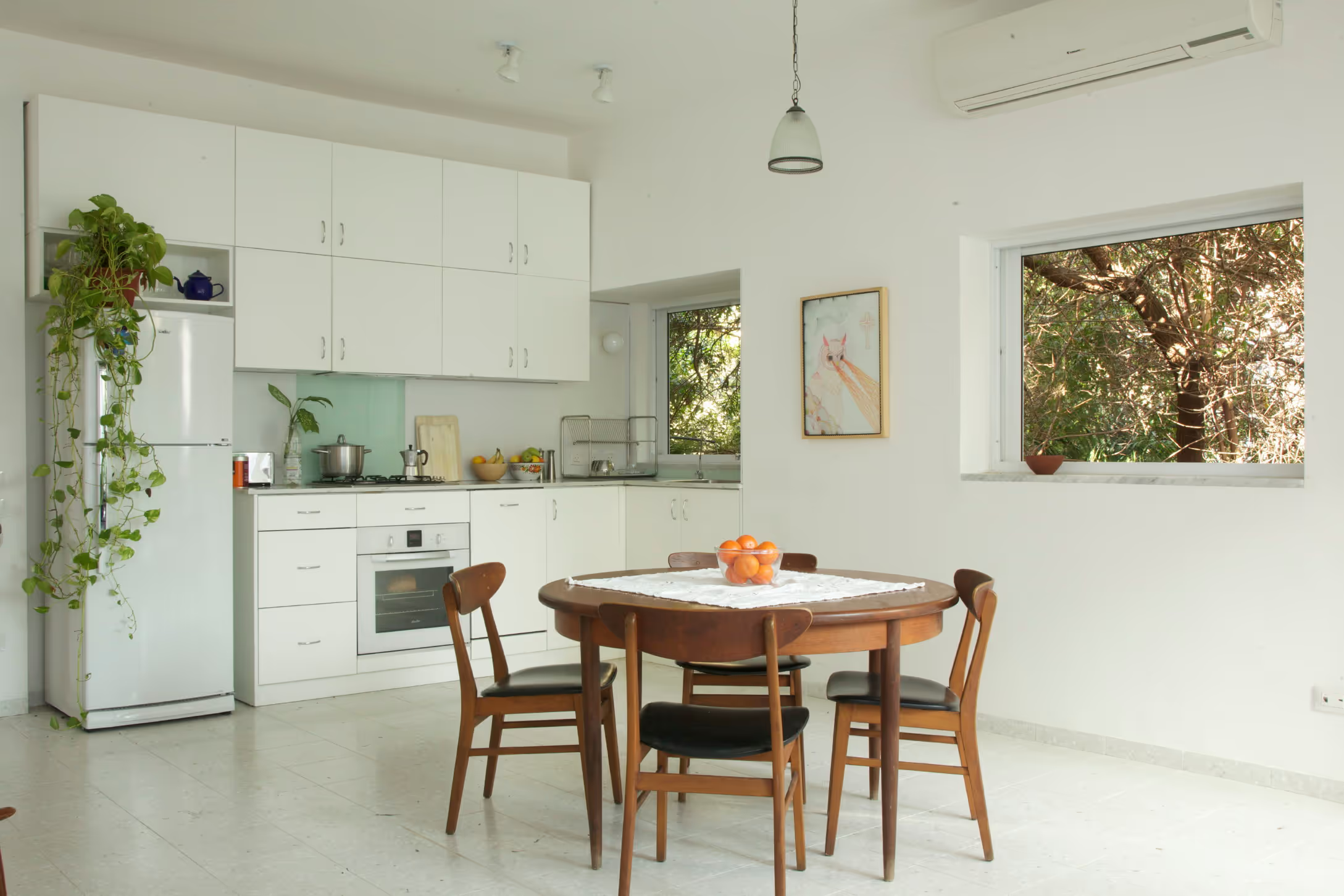
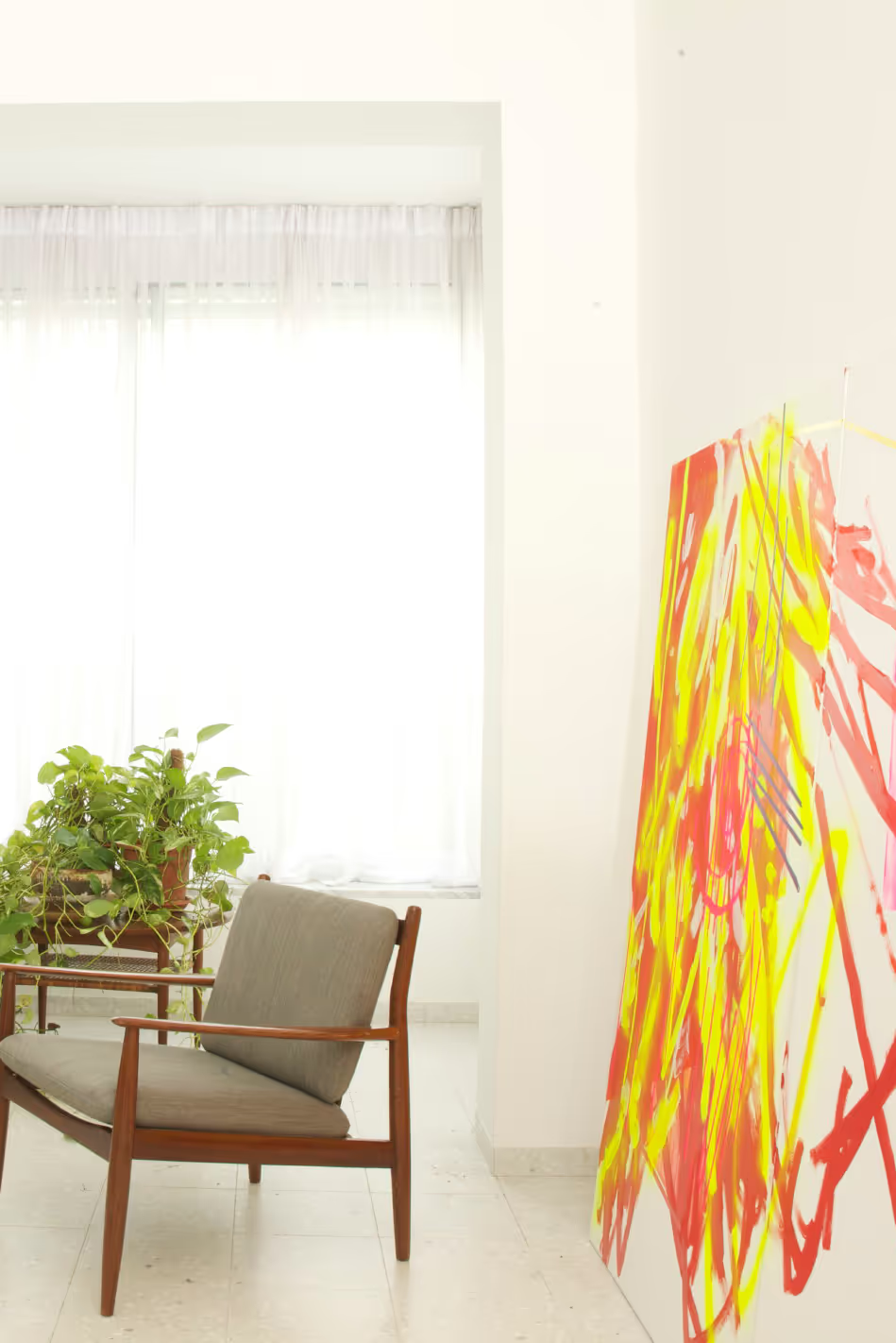
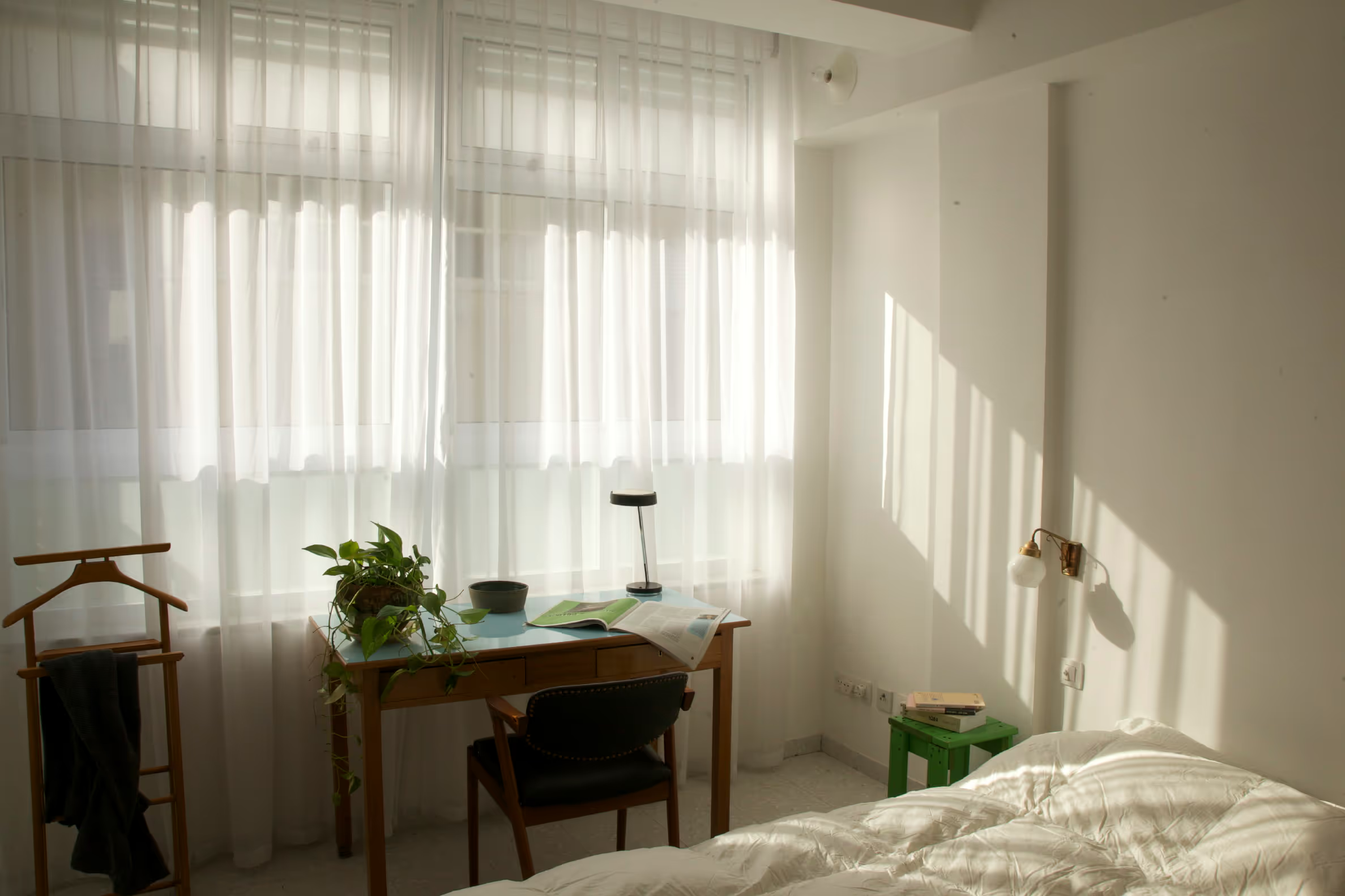
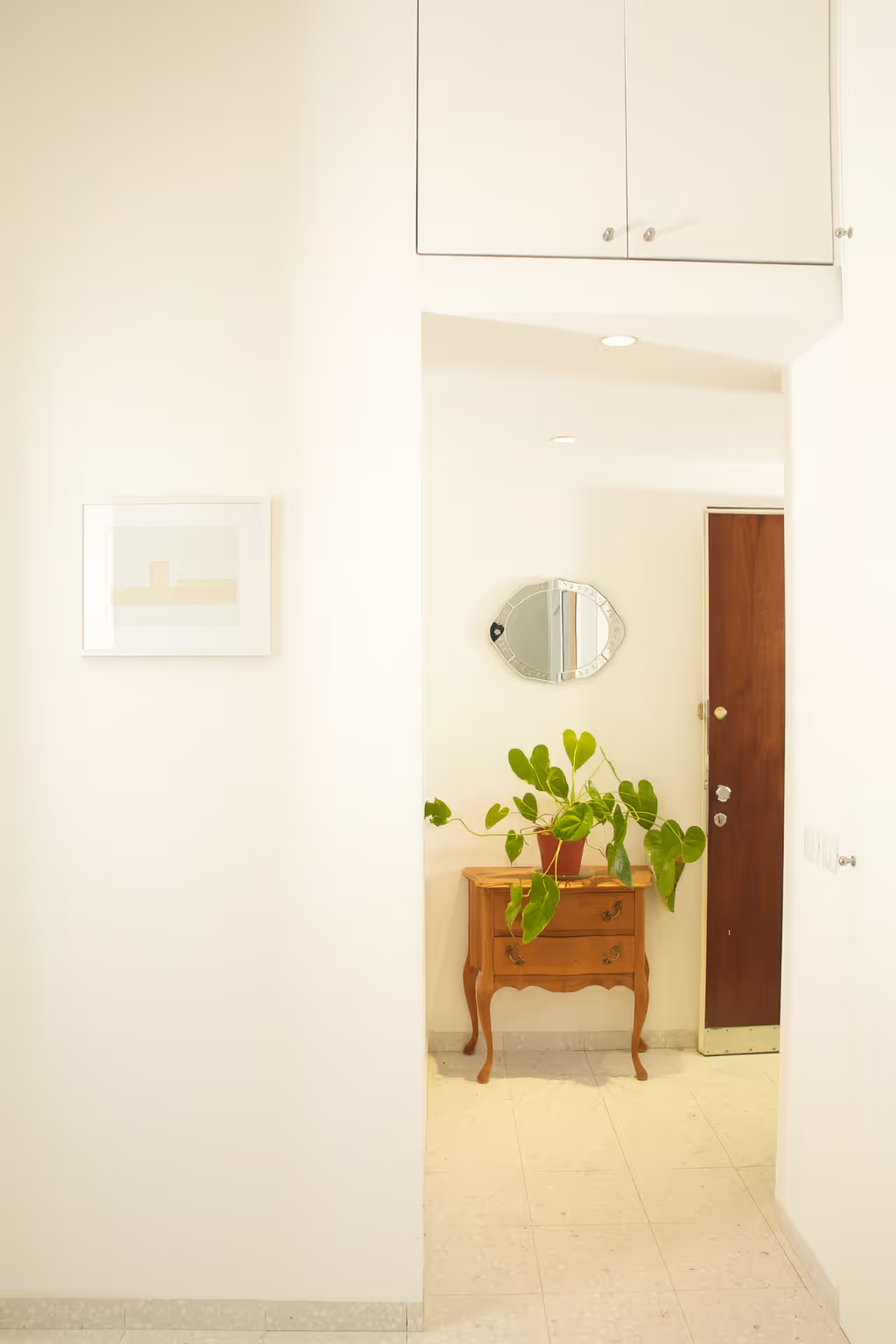
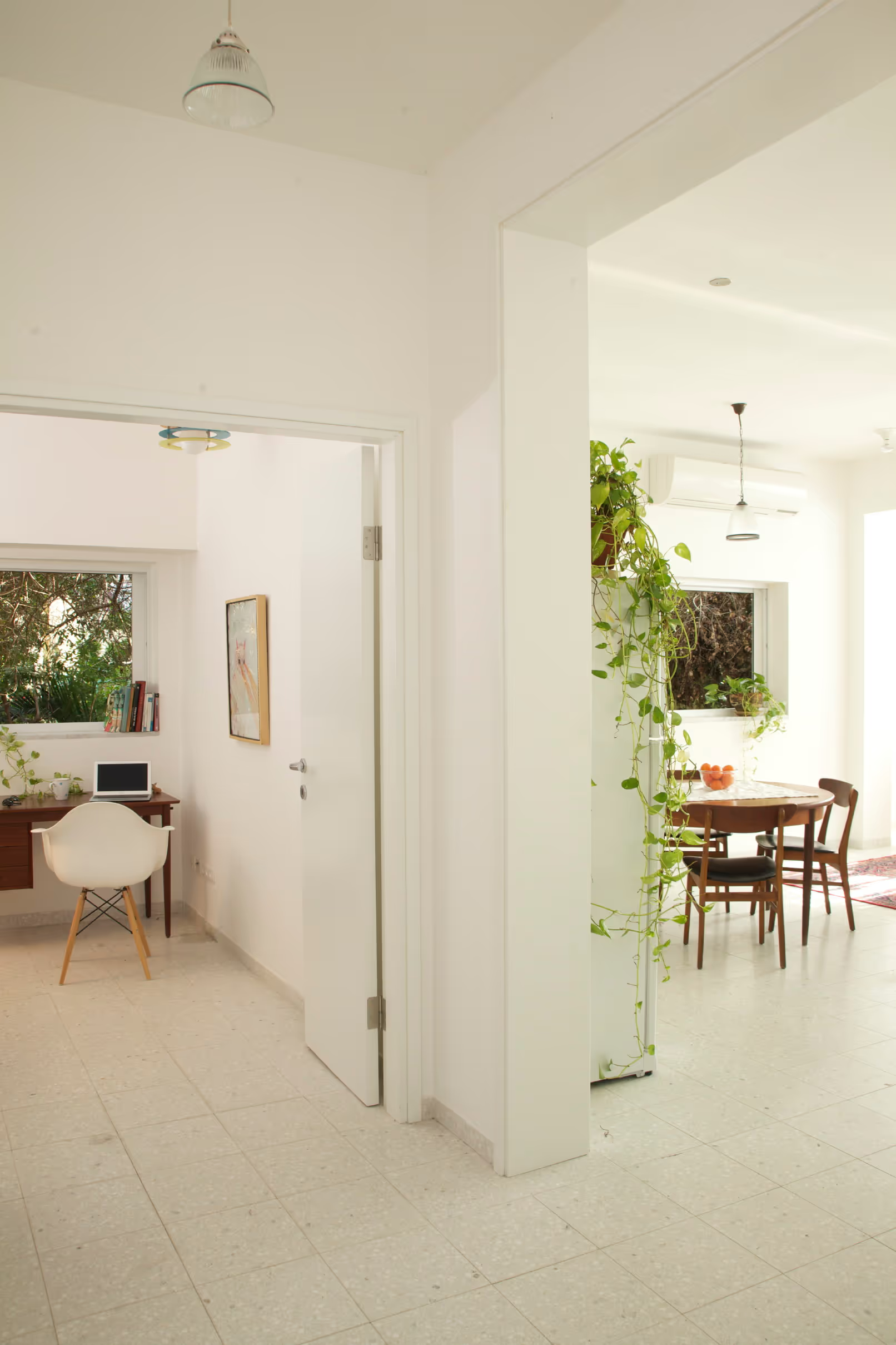
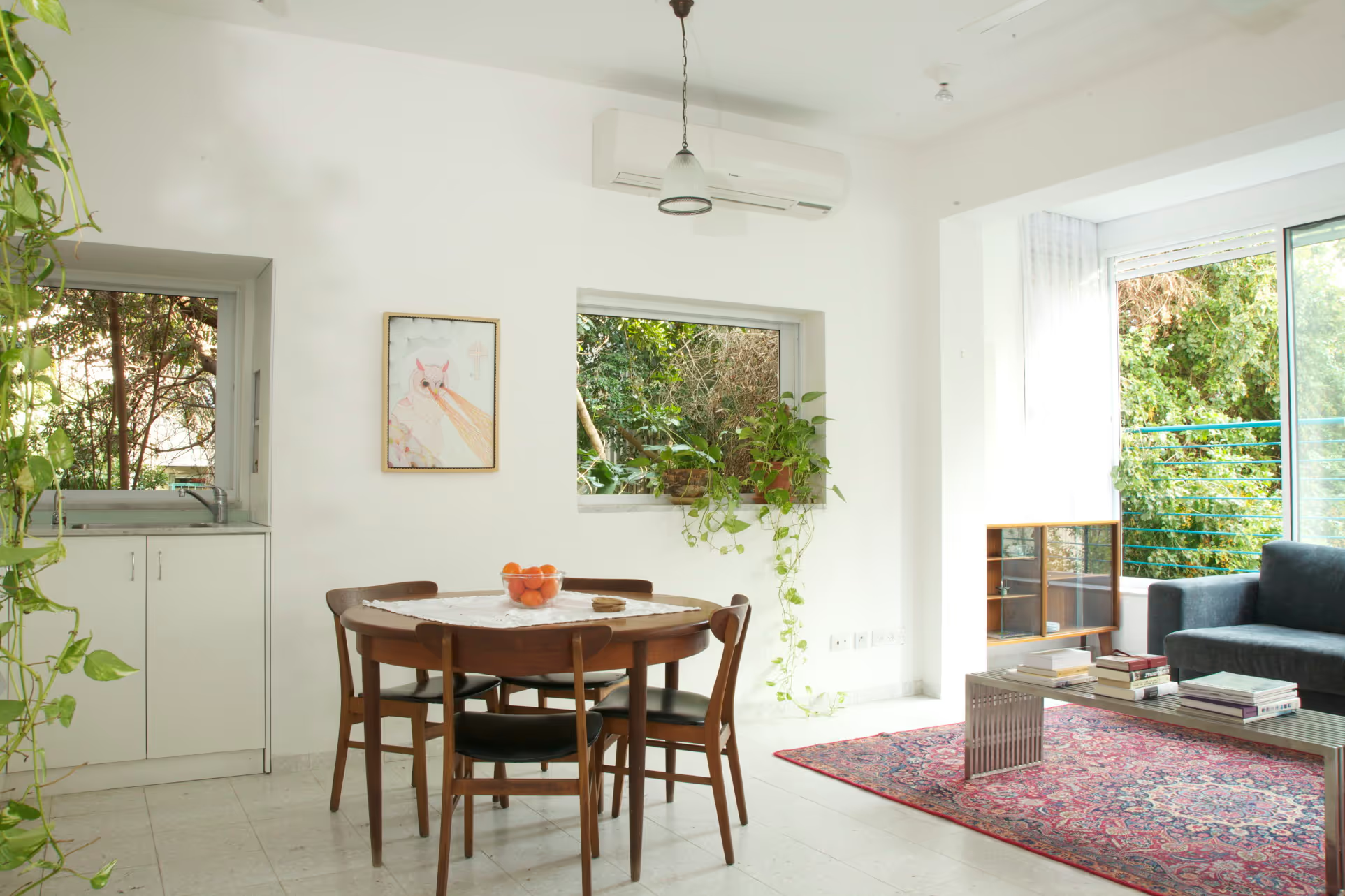
experiencing architecture is developed for the grand opening of the new bauhaus archiv berlin, in collaboration with the bauhaus archiv and curated together with friederike holländer and nina wiedemeyer.
the project unfolds through a sequence of events and the launch of a publication. it brings together educational, artistic, and performative formats that explore architecture as a lived and experiential field rather than an object of explanation.
during the opening, visitors are invited to experience the bauhaus archiv architecture directly through presence, movement, and attention. the building becomes an active environment for encounter, perception, and participation.
experiencing architecture proposes a sensory and experiential approach to architectural perception, rooted in bauhaus principles and contemporary pedagogical thinking. architecture is approached as a field to be lived, explored, and learned from, creating a personal and intuitive connection between people and the built environment.
the project approaches the bauhaus archiv as a living educational space, where learning takes place through embodied experience, action, and attentive engagement with space.
curated with friederike holländer and nina wiedemeyer. realized in collaboration with the german federal cultural foundation and the daad artists-in-berlin program.
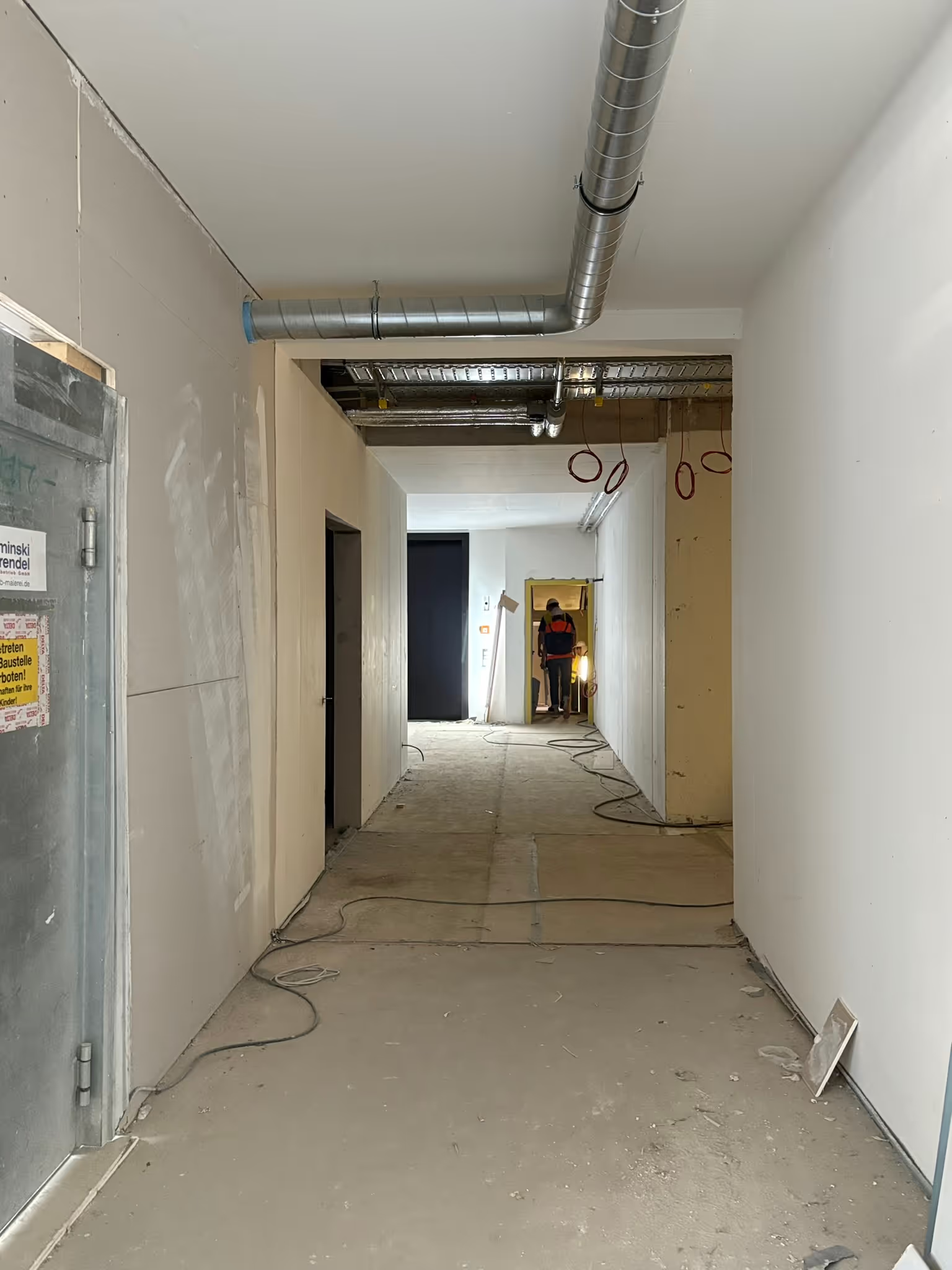
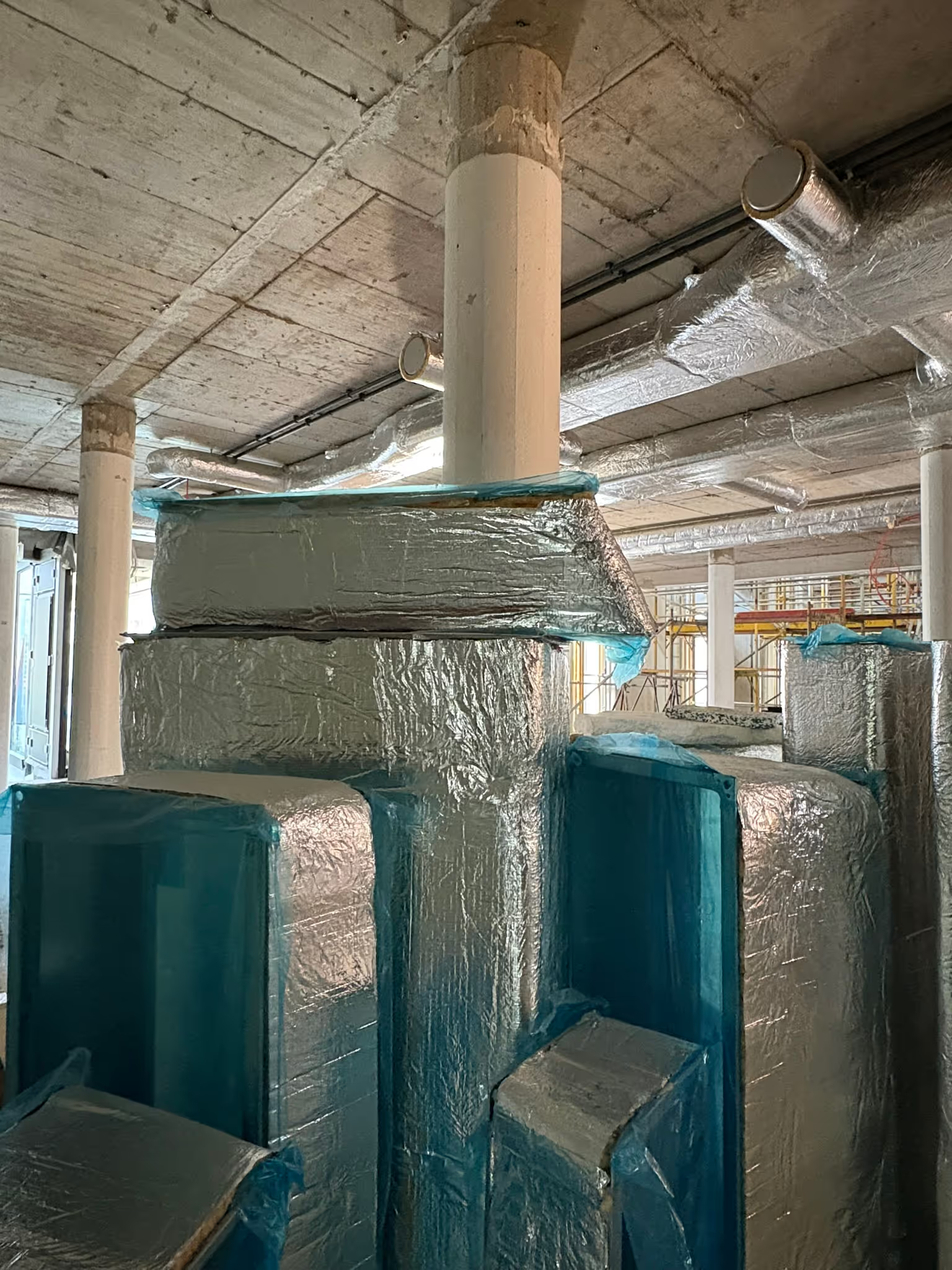
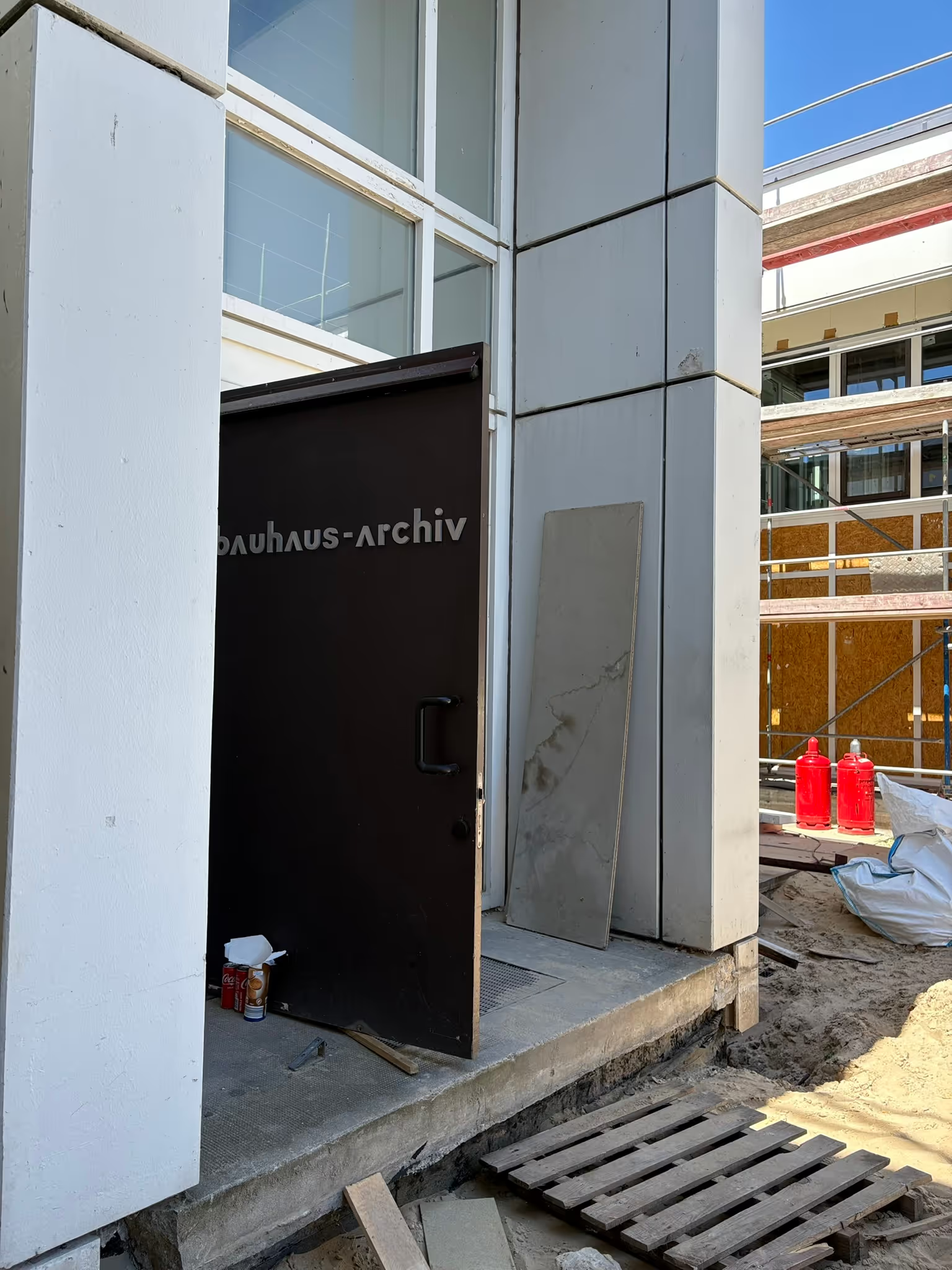
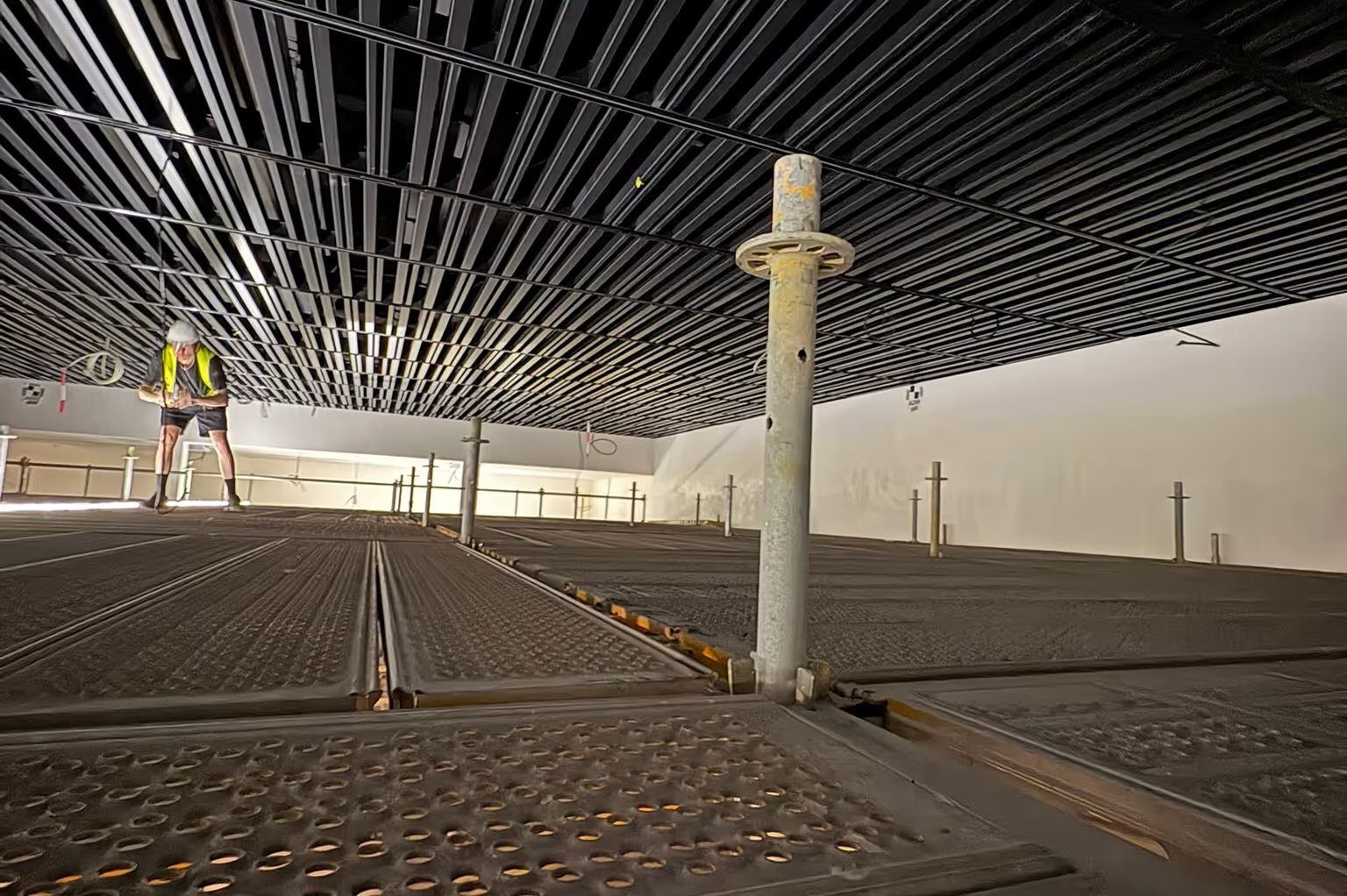
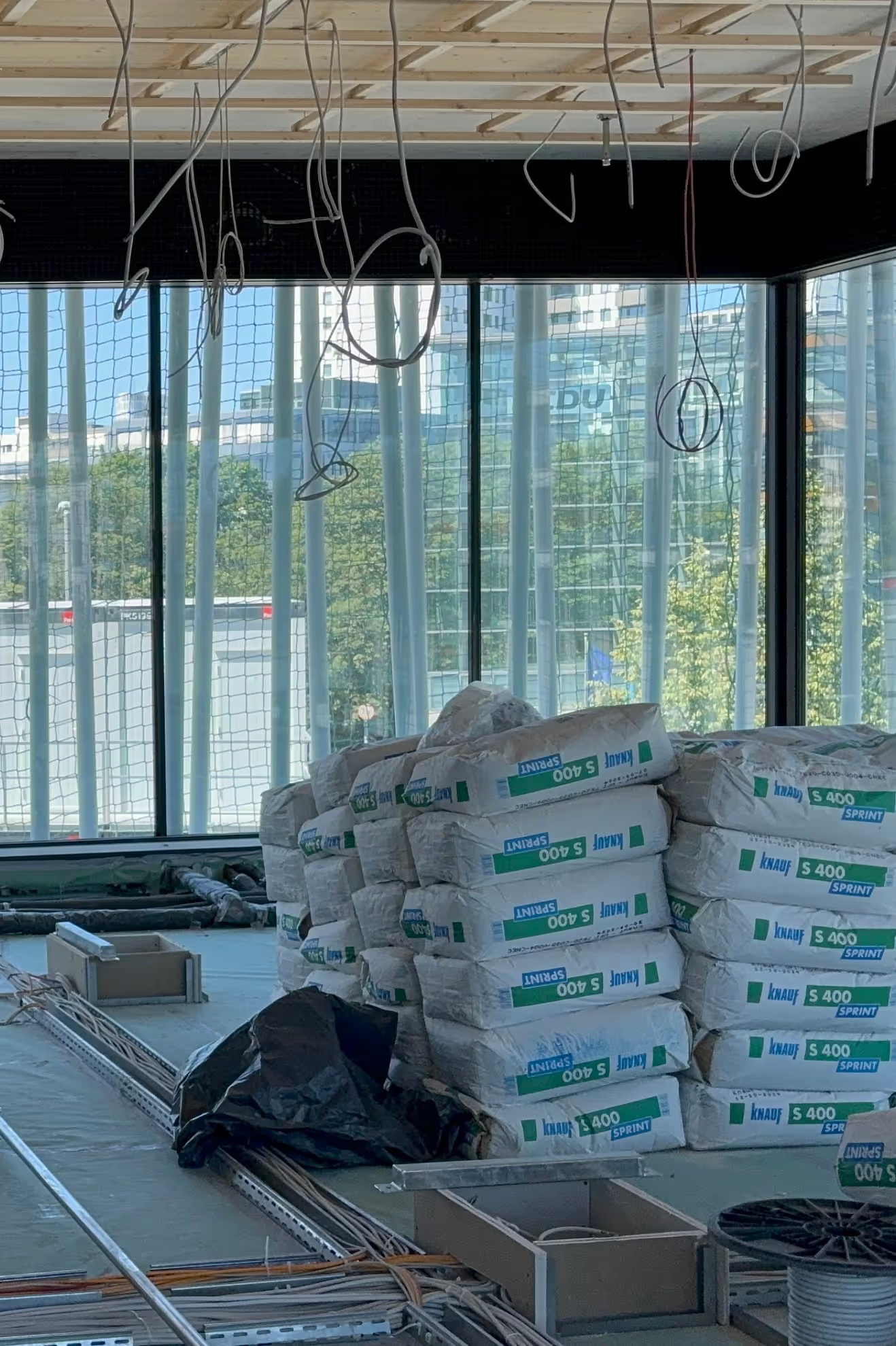
the dreams and the things that make up our most private space, our apartment, are the focus of the exhibition interior. over the past three years the artist tal alperstein has been conducting an ongoing exploration into the way in which our living environs are designed. in her apartment she set up a laboratory of sorts, staging different types of apartments. she used her camera to document the sense of time and distinct character created by each space, the way in which individual rooms behave, and the subtle choreography of the actions that take place in tandem in separate spaces.
the result is a trilogy of short films, featured in the exhibition, which offer a poetic reading of the fantasies, emotions and constraints that compose our living environments.
in home movie, the first of the three films, faraway hollywood images pour into our most protected and personal space. the film touches on the chasm between these images and the actual life being lived within the walls, turning the gaze to the qualities and materiality of the sort of dead time that tv series and films shot in houses tend to ignore, as we do, too.
corridor, the second film in the trilogy, pays homage to films shot at the bauhaus school. the bauhaus films depicted the modern apartment as an embodiment of the good life, a life supported by functional and precise design. shot at liebling haus, the film has a bauhaus apartment, of the type whose various versions still serve us today, acting as the lead character in the plot and as a factor that determines the relations between the people residing in it.
i.furniture, the final film, has humans in the role of items of furniture. the film’s actors perform as various pieces of furniture, enacting their everyday functions in the home. these human furniture pieces take us by surprise when they recall the original role of furniture, an extension of the body. the film offers a new, physical gaze on the design of the furniture items that surround us, revealing the poetic potential they contain.
the exhibition regards the interior design of the apartments we inhabit in a manner far removed from the consumer viewpoint, which perceives design as lifestyle and the apartment, real estate. interior design here appears as the intersection of culture, aesthetics and architecture, allowing us to rediscover the emotional and poetic wealth of the spaces we inhabit, and the human relations formed within them.
graphic design noam noy, photography yael schmidt, production anat levi
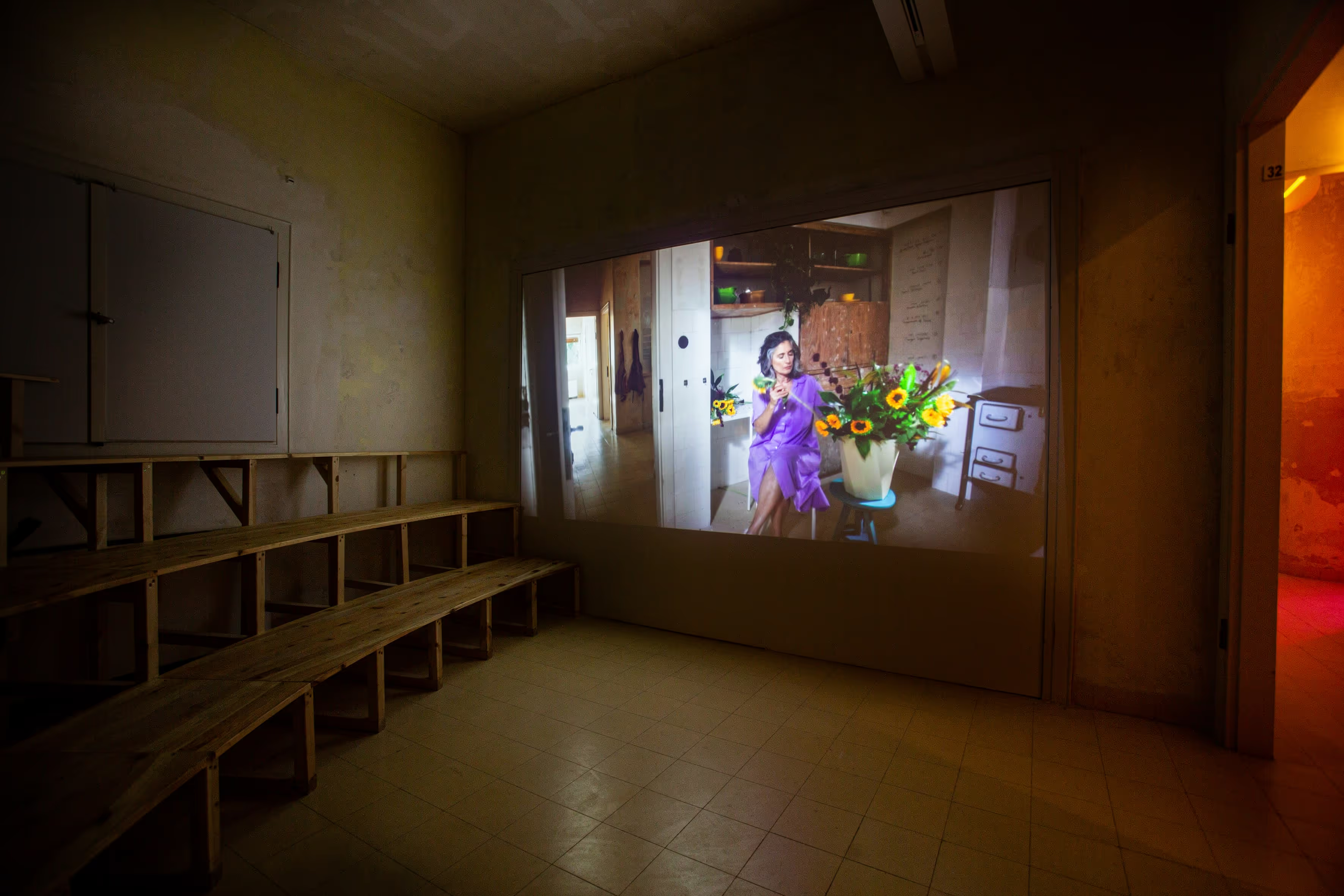

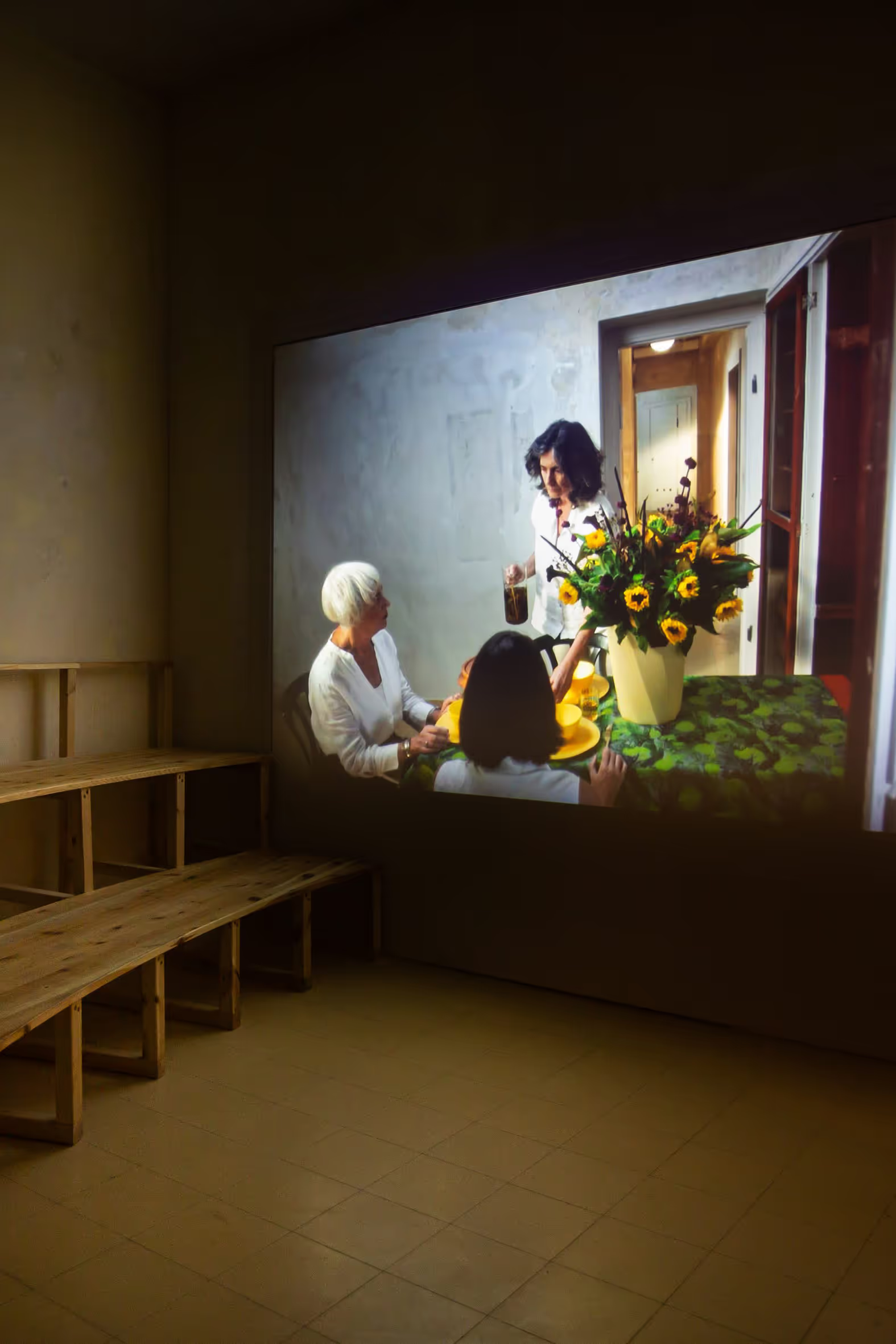
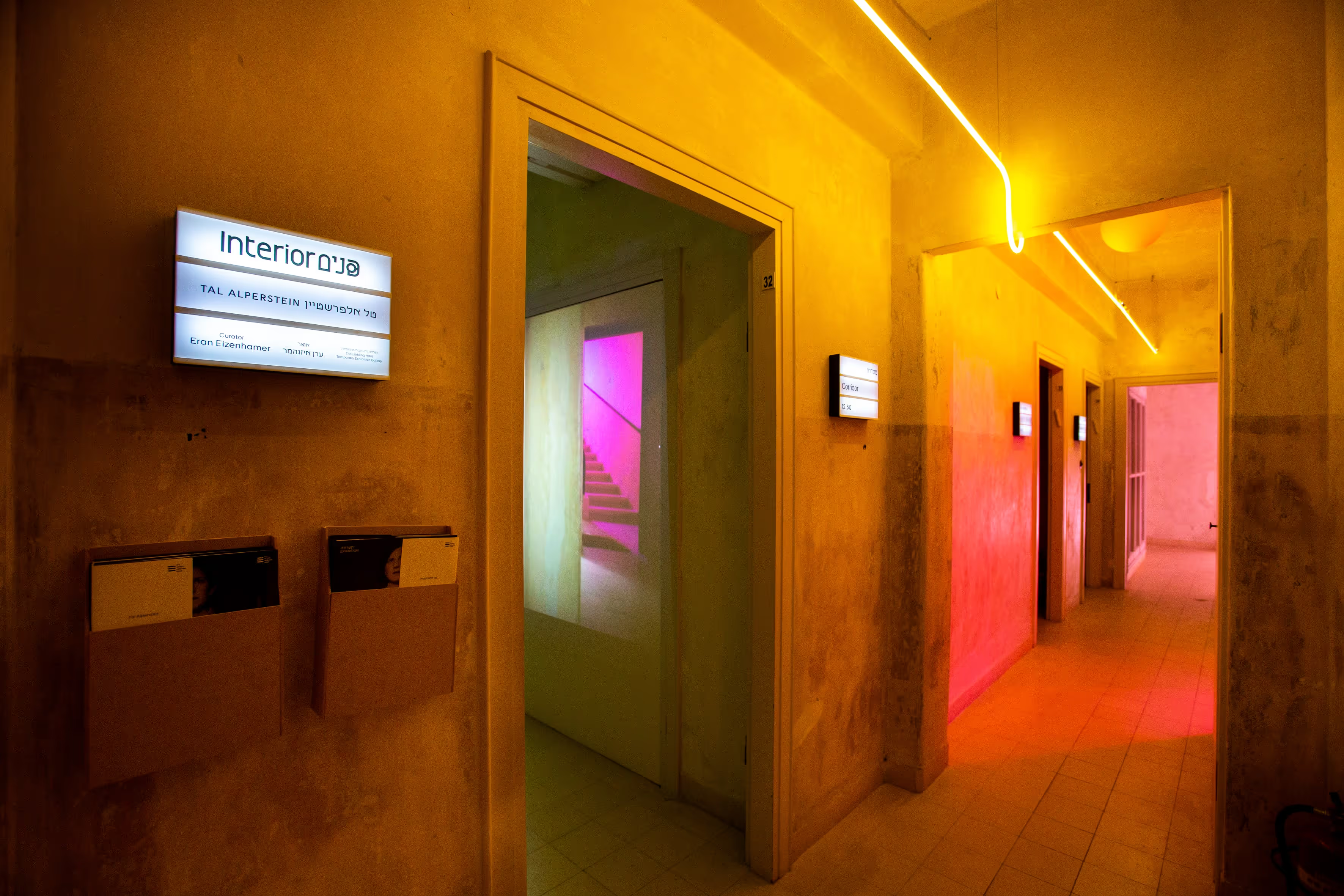
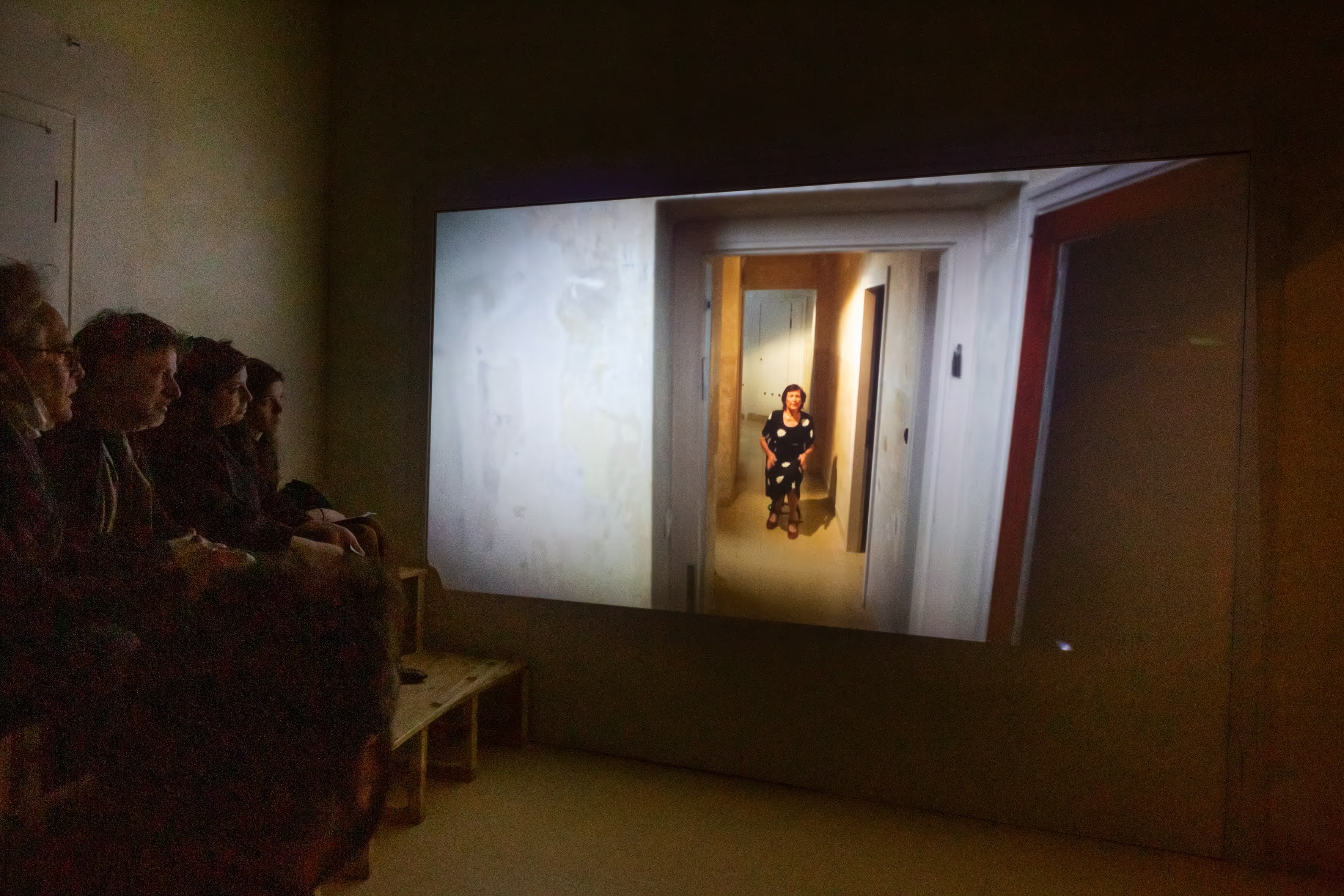
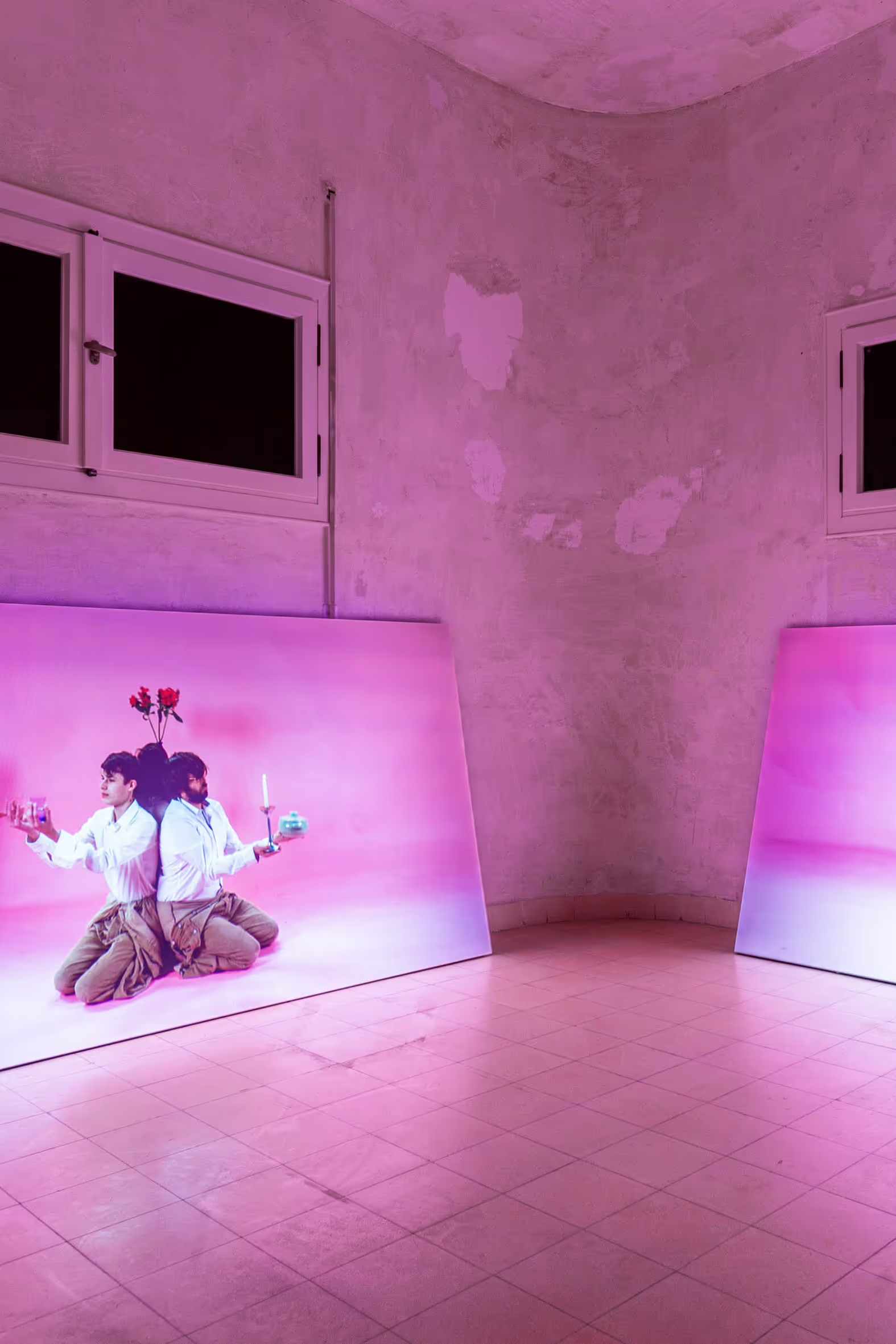
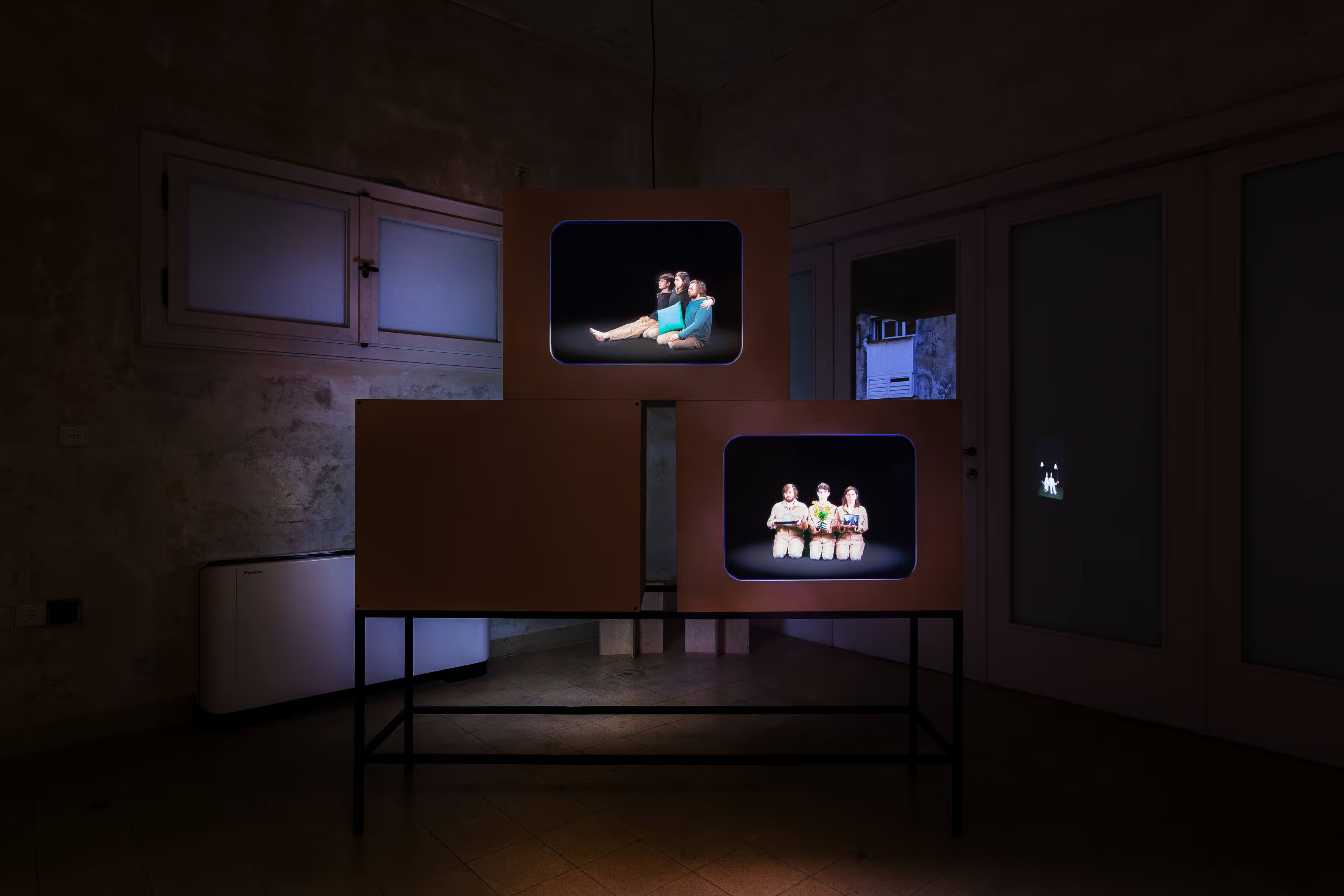
solutions and problems presents a series of video works created by absalon during the final two years of his life, 1992–1993.
curated by hila cohen-schneiderman, the exhibition brings together the works bataille, bruits, proposition, and proposes a new interpretation of absalon’s work solutions.
in solutions, six situations unfold in which absalon inhabits six architectural cells he designed for himself. the work is transformed here into a spatial installation, presented through six screens simultaneously within one shared space, at real scale, accompanied by a composed soundscape.
Curator: hila cohen-schneiderman, sound editing and production: dotan brand, video editing and restoration: luma abu wardy
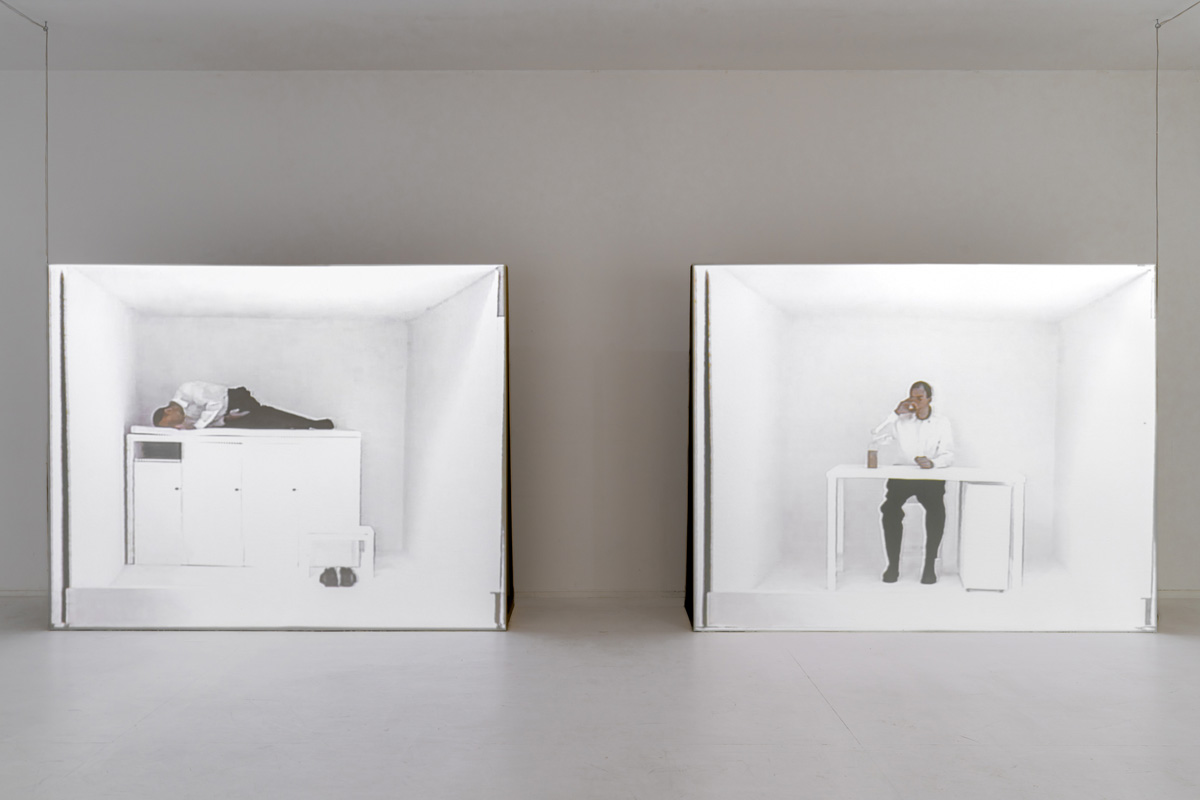
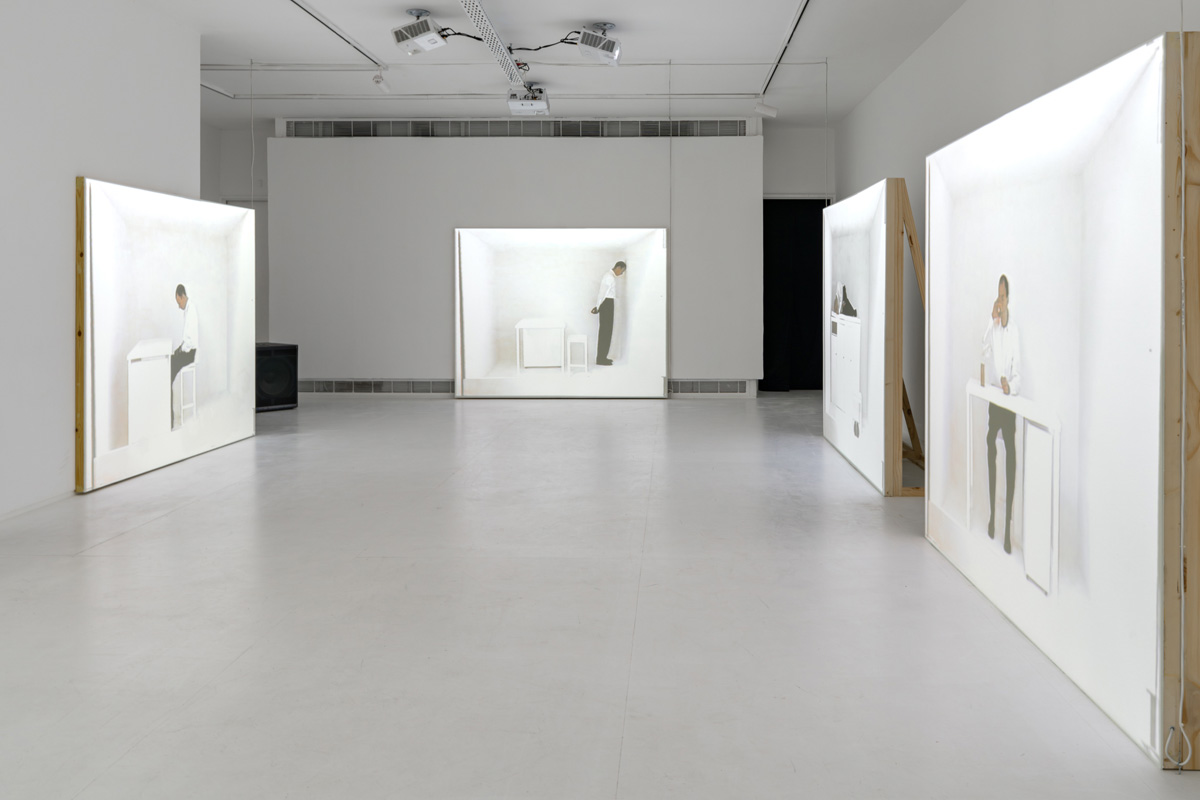
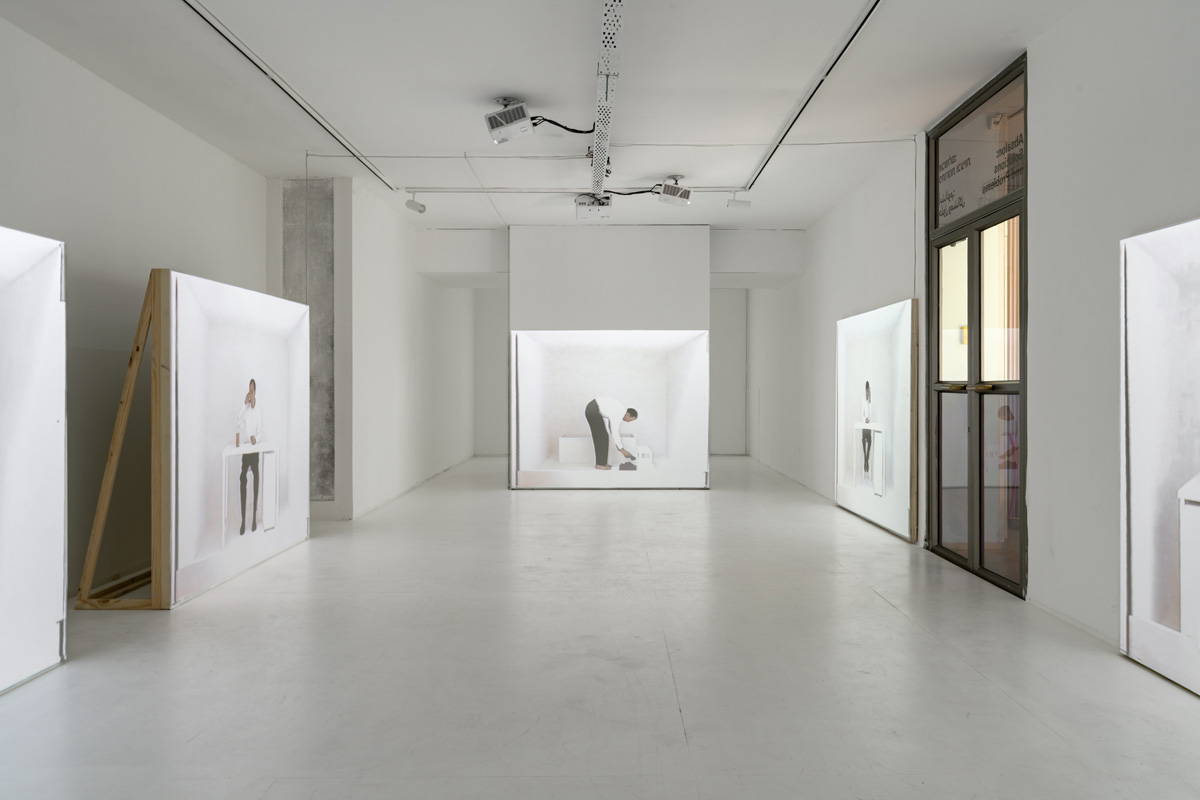

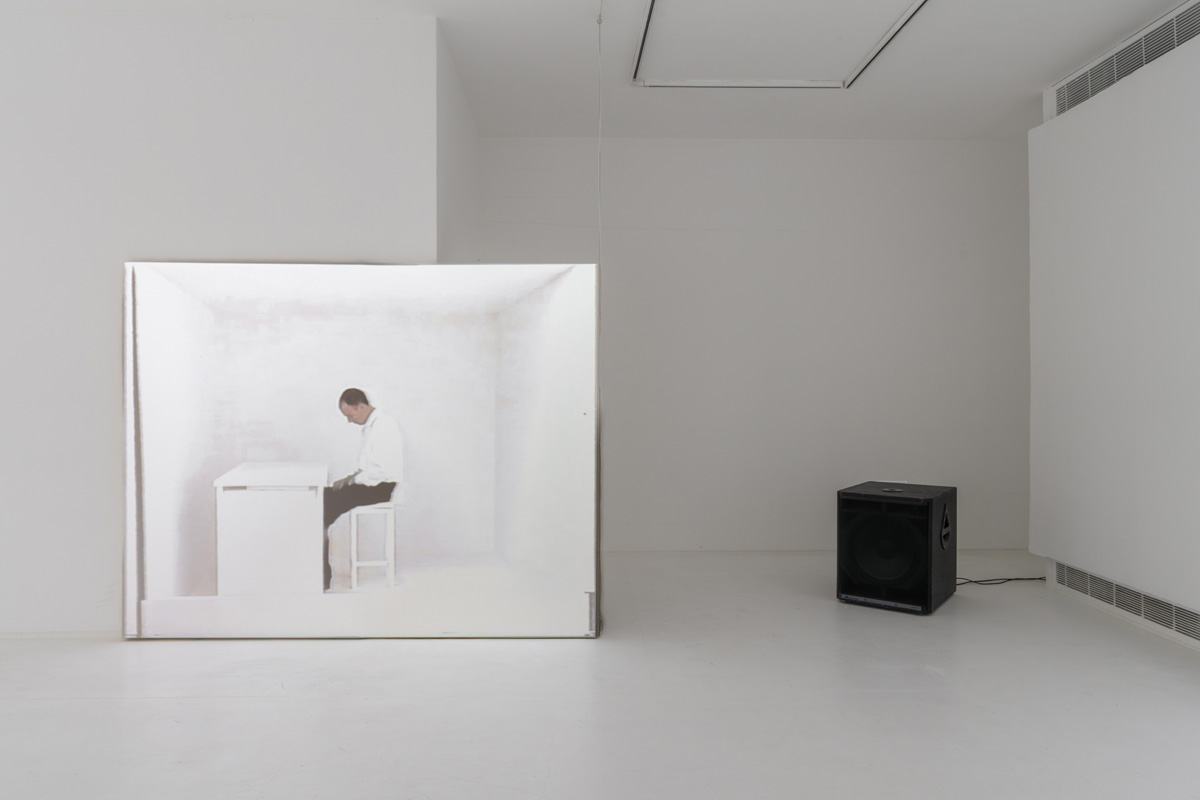
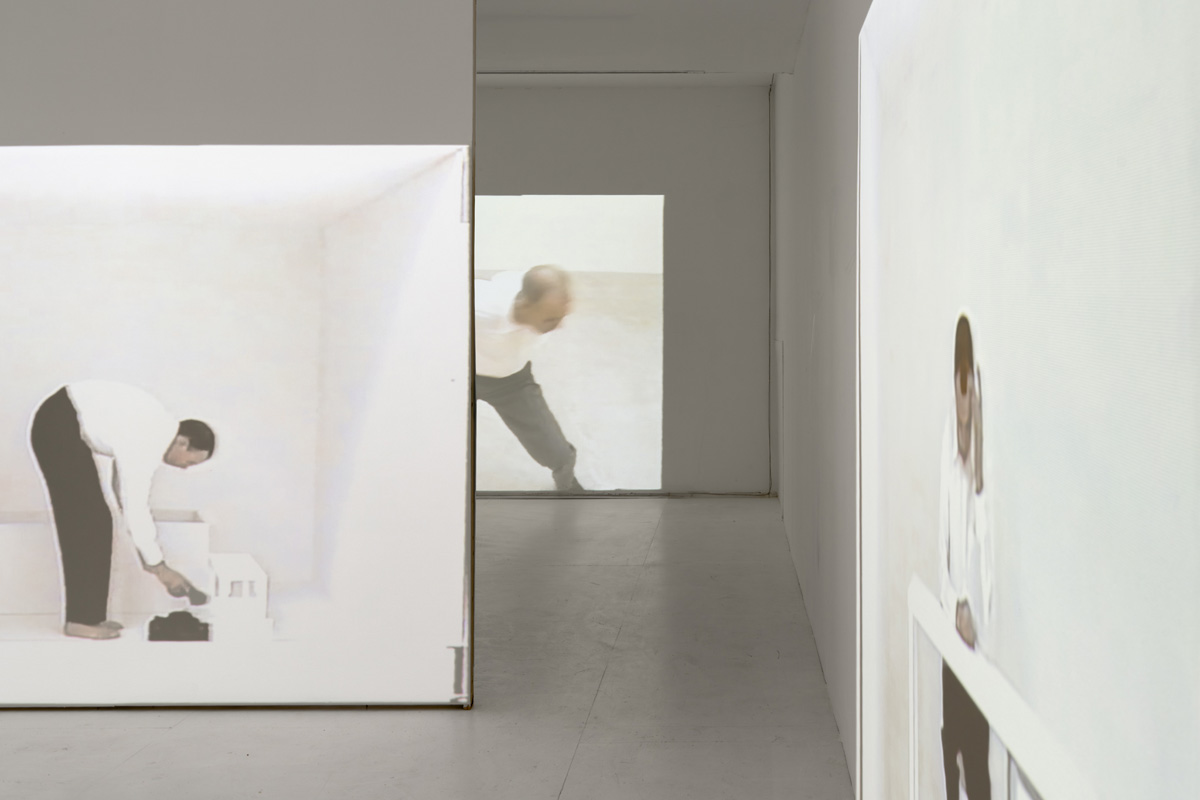
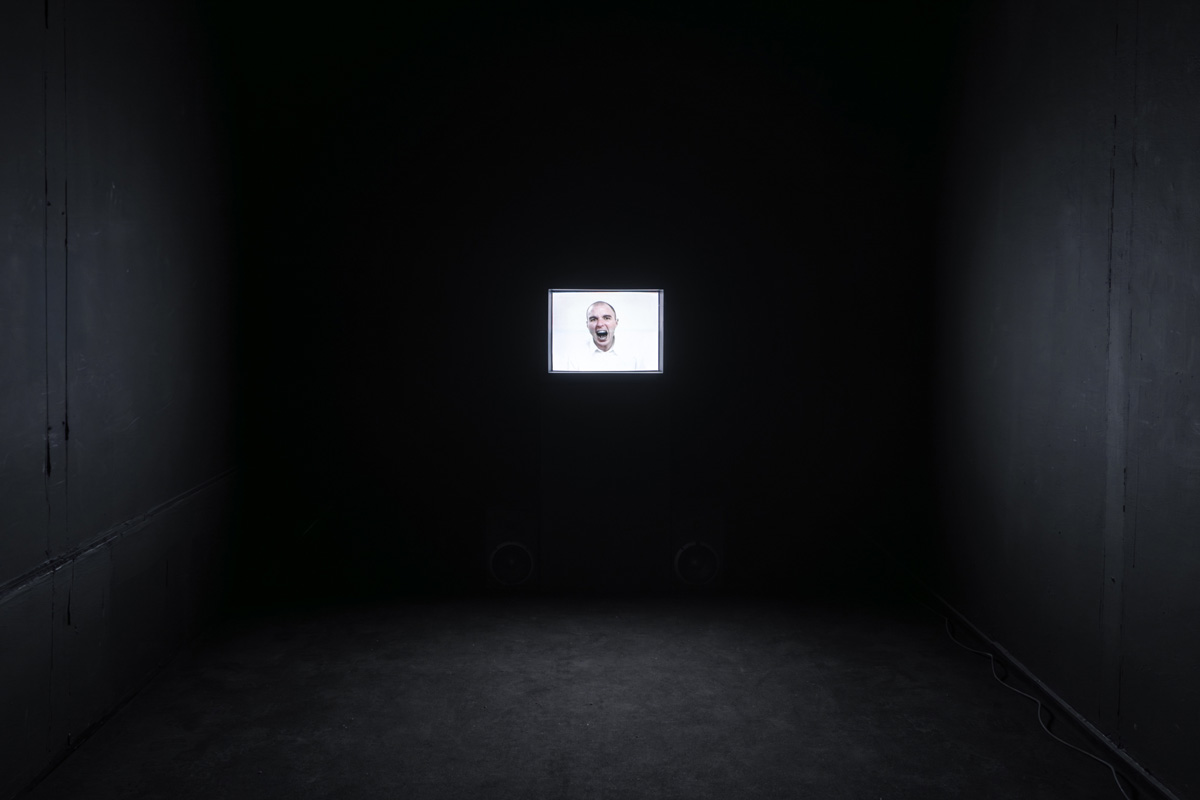
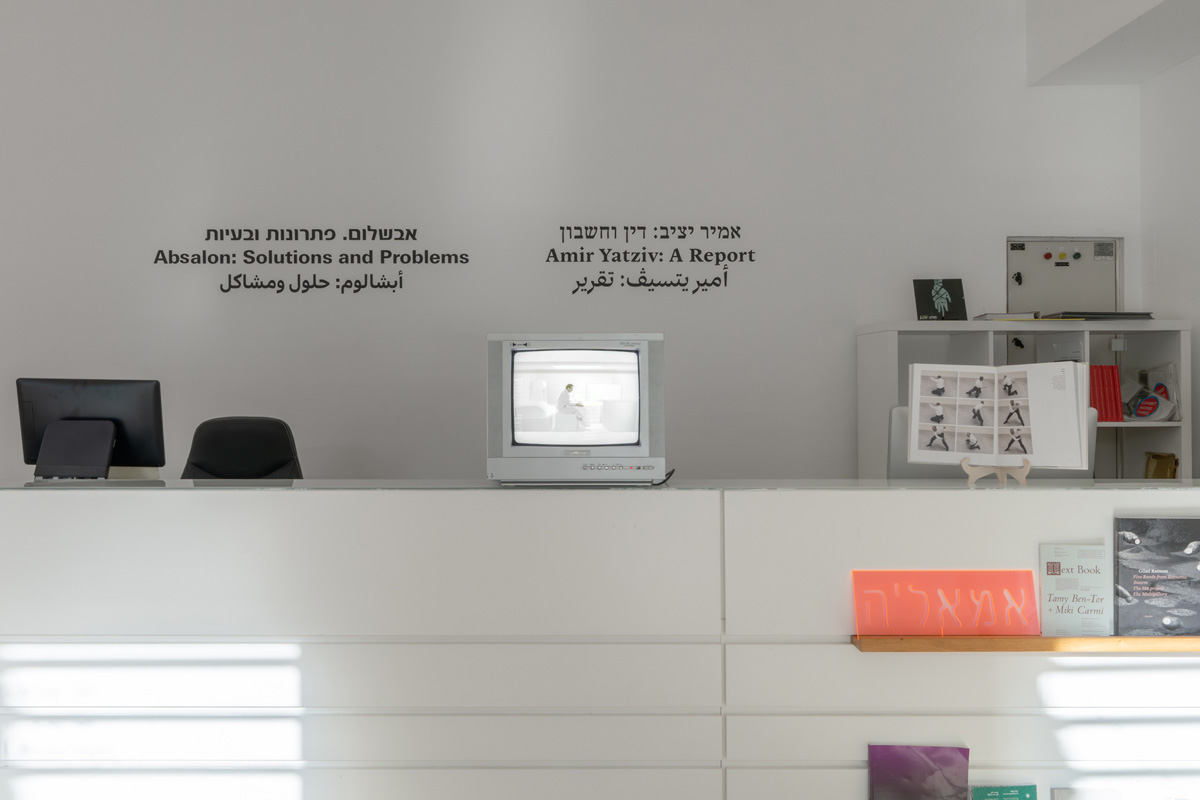
being space itself
eran: tal, what are we looking at?
tal: the exhibition is about the stuff that makes up an apartment, that is, the people that live in apartments and the ways in which they live in them, as also the actual space of the apartment. i wanted to look at the spaces that comprise our apartments a bit like you would look at a nature film. to really scrutinise the spaces people arrange for themselves when they need to bathe, for example, or cook or sleep. to examine the items people choose to surround themselves with in each type of room, and to see how the spaces themselves behave. apartments usually consist of juxtaposed spaces, in this exhibition i am thinking about the acts that happen in tandem in the various spaces of the apartment, which i join like separate sentences that belong to the same text.
you refer in the works to cinema as well, to the way apartments are represented in films.
i’m interested in the home fantasies we have that appear in cinematic images of apartments, especially the way the lighting and set design create a fantasy of the home and the life lived in it. the quality of our encounter with the cinematic fantasy home is also very interesting, it presents a strange and impaired sort of time, in which only significant events occur, without any gaps. as if every moment lived in the home is a dramatic moment. it can be said that the exhibition suggests a different kind of cinematic time, like the one people have at home, very far from the fantasy. so this exhibition is also dedicated to routine, to boredom, to the type of time that makes its continuous quality felt.
what links the films in the exhibition?
i think that in all three films i’m looking for beauty, in the sense of precise organisation of the items, of colors, of the frames and the light that comprise the space. but perhaps what i’m really looking for is dead time. i think of film as a medium of dead time, everything you see in the cinema is of the past, a recorded time that can’t be changed. and yet, as i just mentioned, it seems to me that when the life in the home is described in film it tends to ignore the dead time, the routine that makes up most of what really goes on at home. i can’t really explain why, but this disregard bothers me immensely.
if it isn’t at the heart of the drama, what draws you to the apartment as a location?
an apartment is a separated bubble, a private refuge from the world. i was interested in trying to join it to images from the external world, as if trying to perforate or penetrate it, to show how much external fantasy is involved in the stuff that makes up our most private place. i also think that our fantasy apartment is a very sheltered space, and my attempts to let the outside in are a reminder that this might not be the case. i treat the interior of an apartment like an emotional interior, a world of feeling within the apartment. that’s another thing the exhibition is about, this encounter of interior and exterior.
you described the apartment as a place where a choreography of acts is performed in tandem in different spaces. can you elaborate?
my experience of home is that in which people live together but can still be alone. in the film home move, the four different places that seemingly form the house are completely separated, because they all contain everything that a home requires. but in fact each room is a different film, different characters, different lighting and design. in corridor, which is a film with a main feature that seemingly interacts with the other characters in the house, relations don’t manage to form. there is a constant presence of unfamiliar characters and a sense that the space is not really private and therefore unyielding to personal relationships. only in i.furniture do relations form, relations of caring, consideration and sharing. but these relationships are between pieces of furniture.
how did you begin to work on this series of films?
when i began to imagine the first film, home movie, i had in mind only an image of my childhood bathroom. a large, spacious bathroom, with a bathtub. it was a bright, clean white, like a sci fi film spaceship. when we began scouting for a location it transpired that finding such a white room is difficult. in tel aviv there are hardly any flats that still have a bathtub, and many of those that do have become such small rooms that it is impossible to film in them. i got as far as the villa of an architect from the city of hod hasharon, who told me she has a white bathroom. unfortunately i discovered that her bathroom tiles were cream, not white. the cold white i was after stayed with me, and then one day, when i was in the shower, i noticed that in the house where i was then living, on herzl street, i was in fact standing in a bathtub. and that under all the layers of dirt and time, it was once white. this revelation demanded peeling away a million layers but eventually the bathroom in my house was exactly the one i was after. i spent a month and a half peeling and then painting the walls and polishing the bathroom tiles with every detergent imaginable. the effort paid off ideally, because it gave me the time and leisure to be in the space and really look at it, without the regular trepidation that you have when filming in someone’s house.
and the second film, corridor?
the idea i set out for the script was that the space would act as the film’s means of editing. i imagined that there would be no cuts, and that the transition between the film parts will happen via the entrance and exit of the characters through the apartment doors. the corridor is ideal for this because it is the space with the most doors. i think that what is beautiful and interesting about liebling haus as a structure is that it has so many angles from which to look deep into the apartment. i was constantly busy imagining something happening in the foreground and something happening in the background. this was the film’s backbone on which i set the events.
one of the things that stands out in all the works is the humanness of the items and furniture.
i agree, even though in home movie i invested a lot in trying to build a realistic set, because i wanted the apartment spaces to look like film sets. in corridor, i selected very few items to allow the space to be the film’s main feature. the items there were chosen by thinking about what the characters need to operate their relationships. in all the works i thought about a comparison or an identification between people and objects. in i.furniture the idea that most fascinated me in relation to furniture is the way in which they were meant to be, a continuation of our body. i show this by looking for the function of the furniture and then having it performed. in this film i wanted to see what happens when the body is treated like still life. i think that it is then that its vitality is revealed. it’s an unscripted act of using the body as material, and because the performers were asked to become still life and tried hard not to move, slight shudders are exposed. these shudders, as i see it, are very basic acts in defiance of death, of the inanimate state of furniture.
text editing yoni raz purtugali
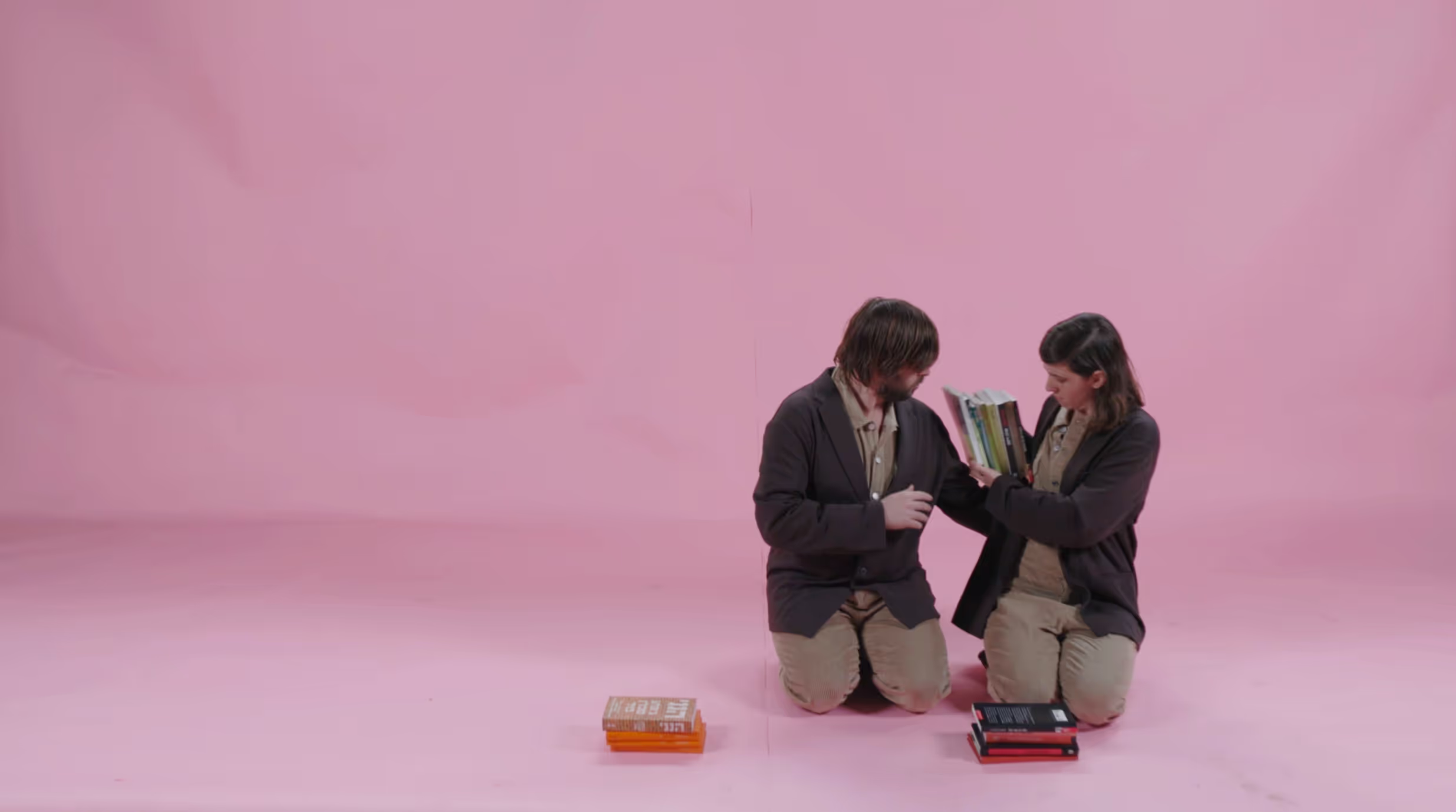
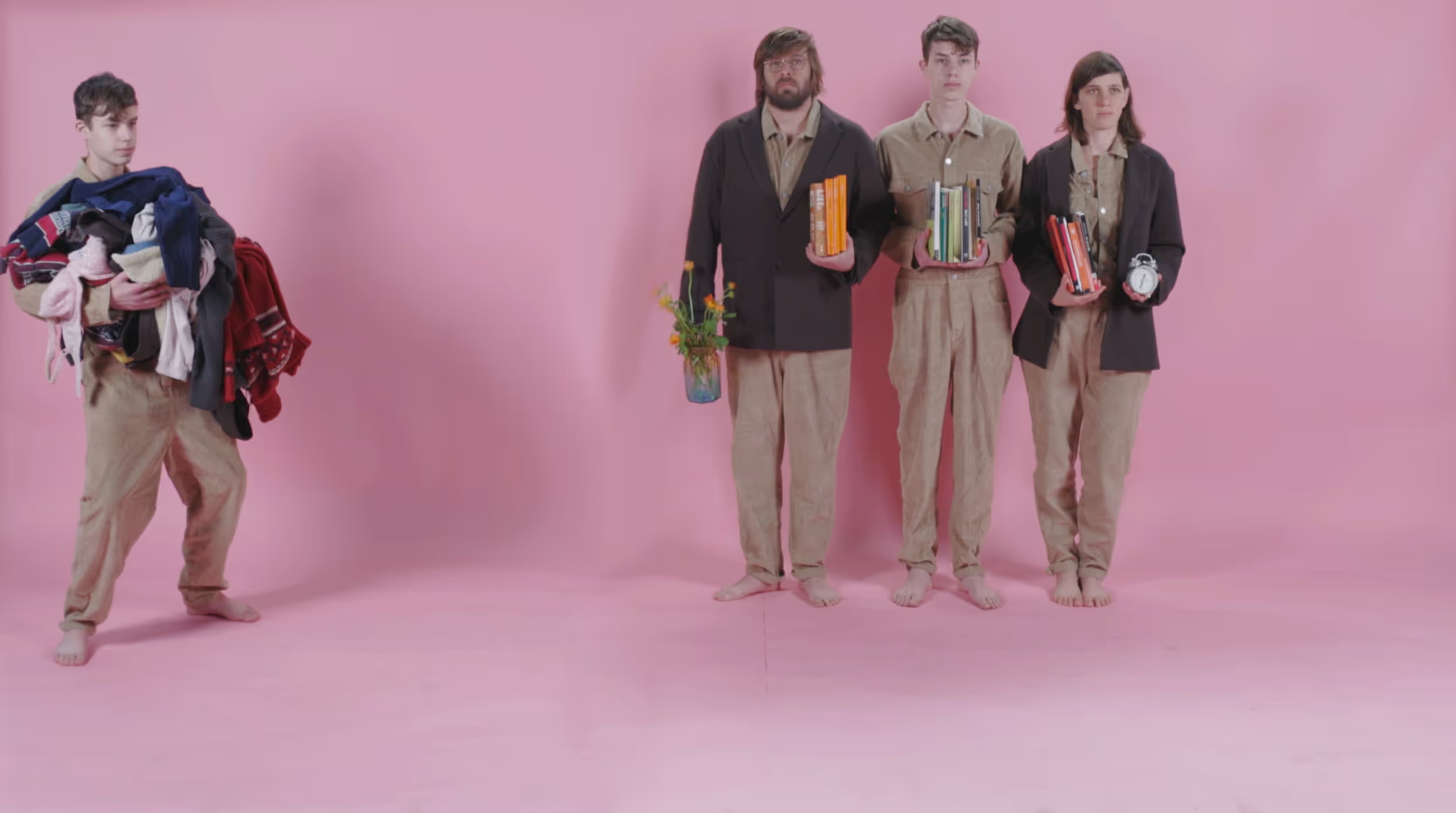
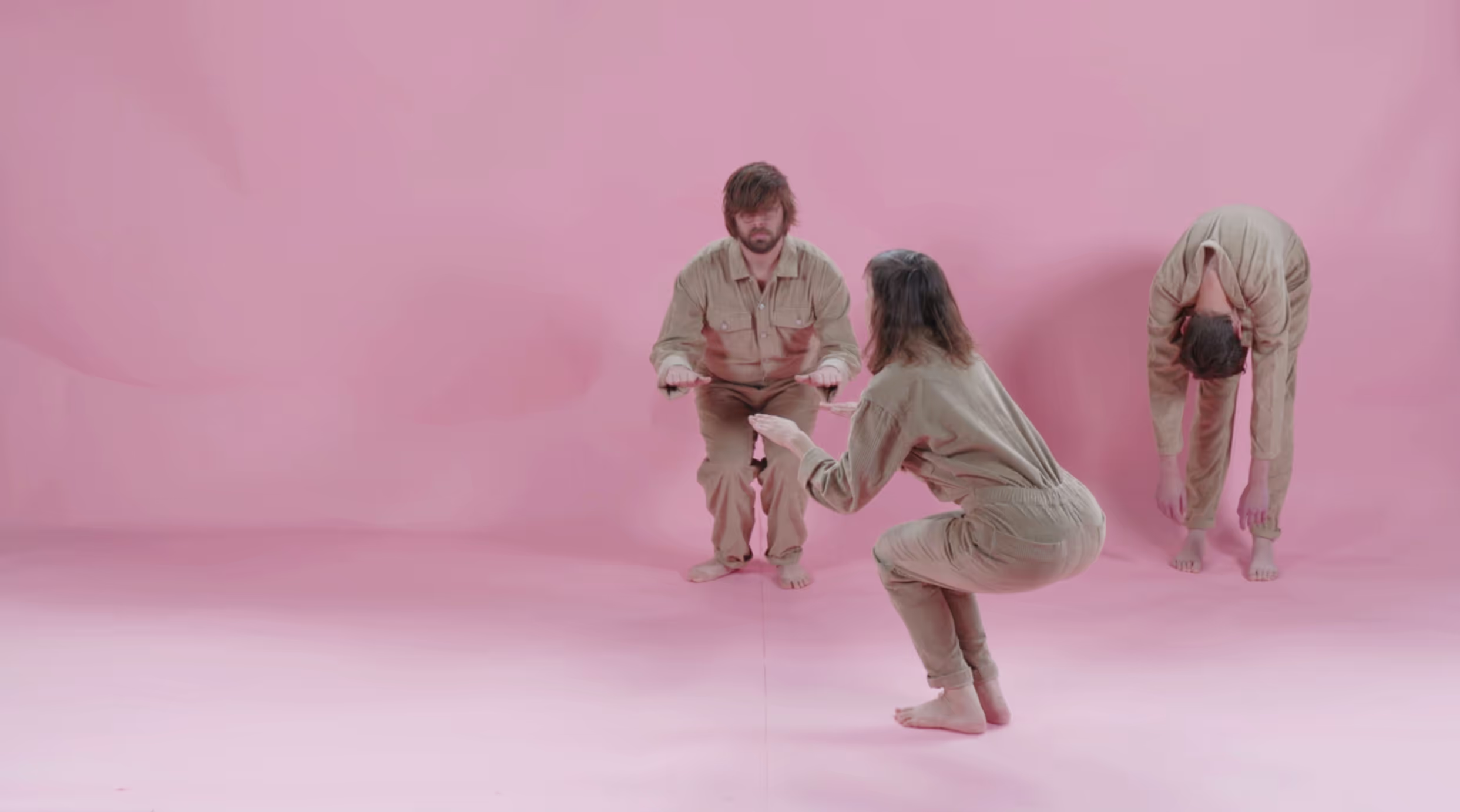
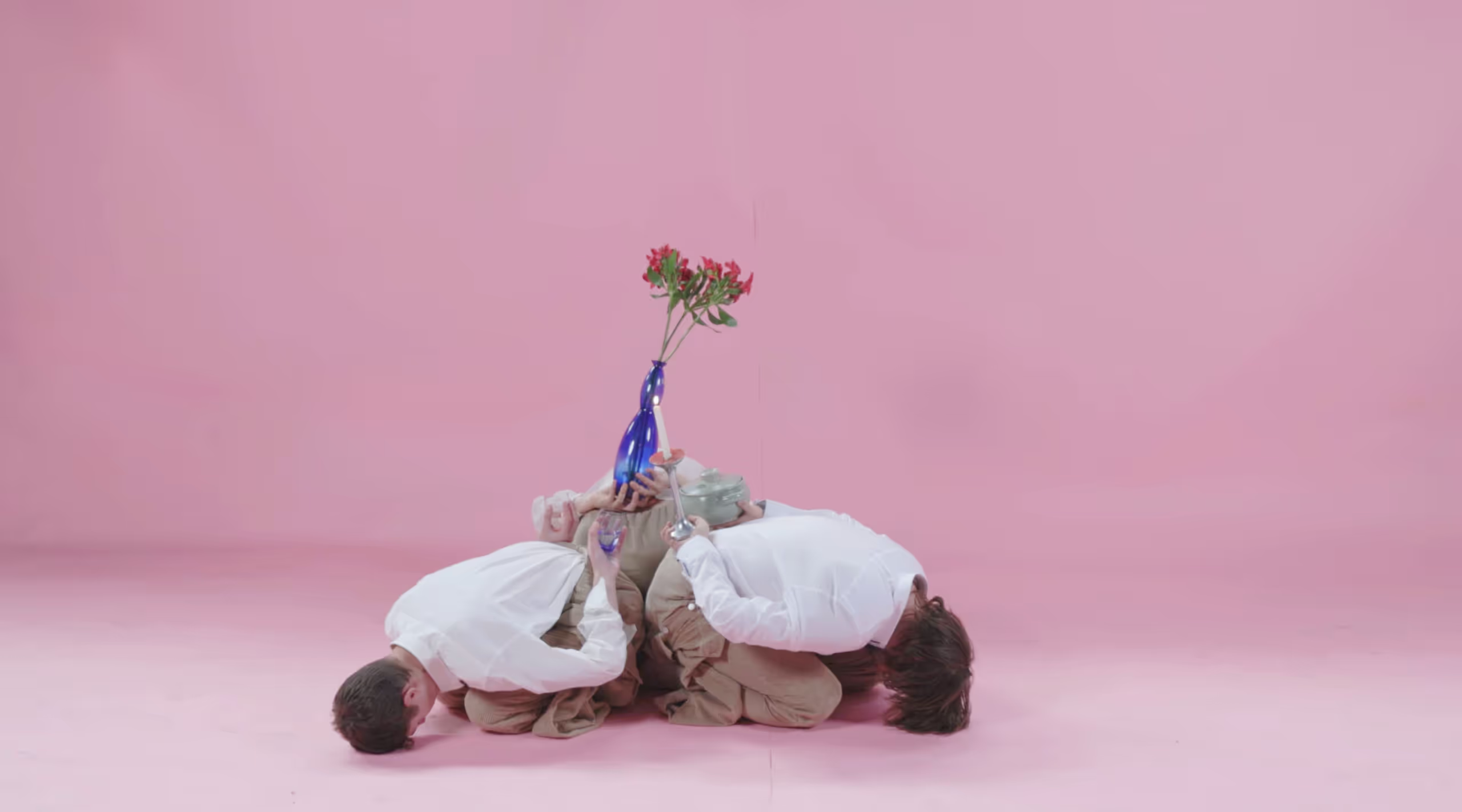
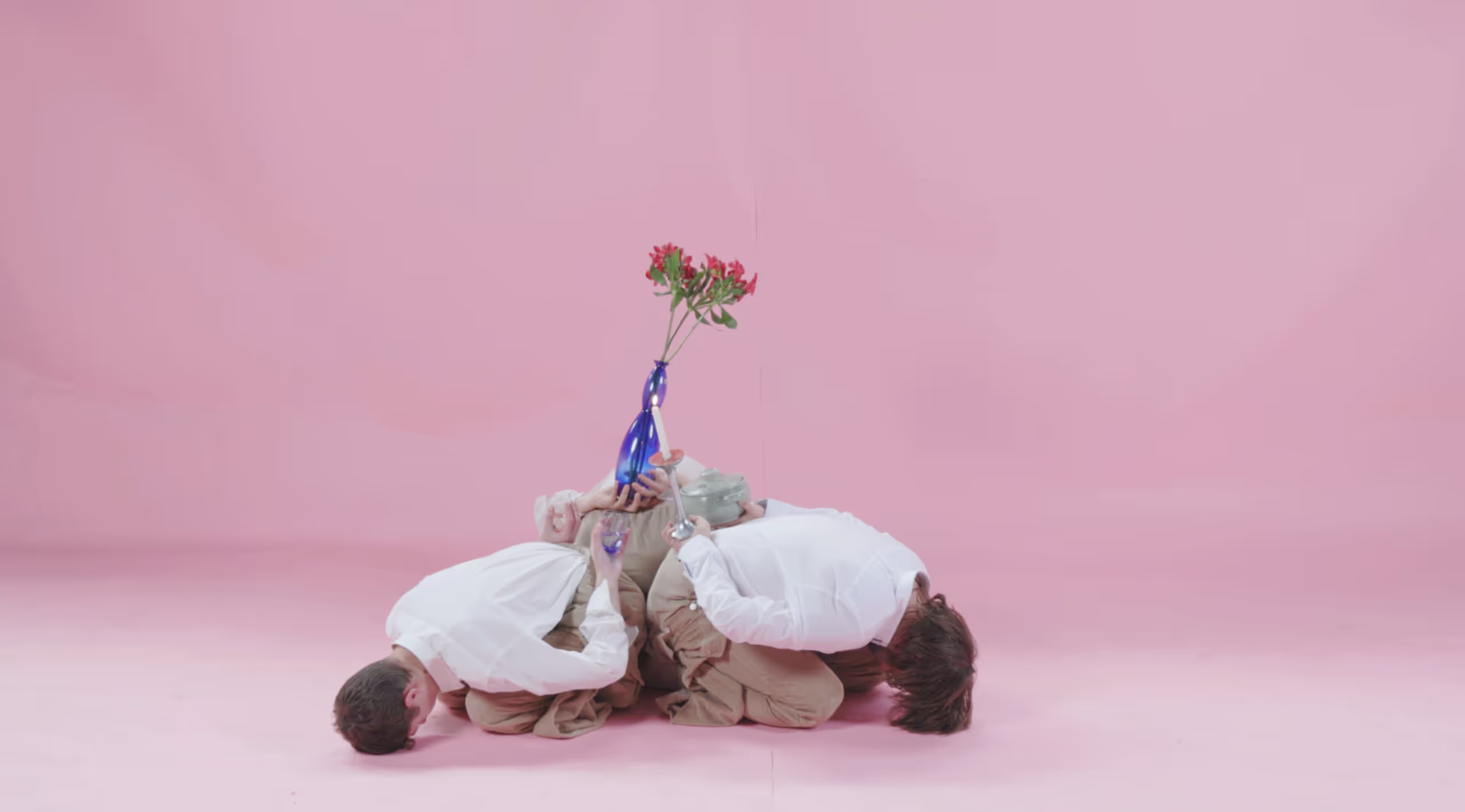
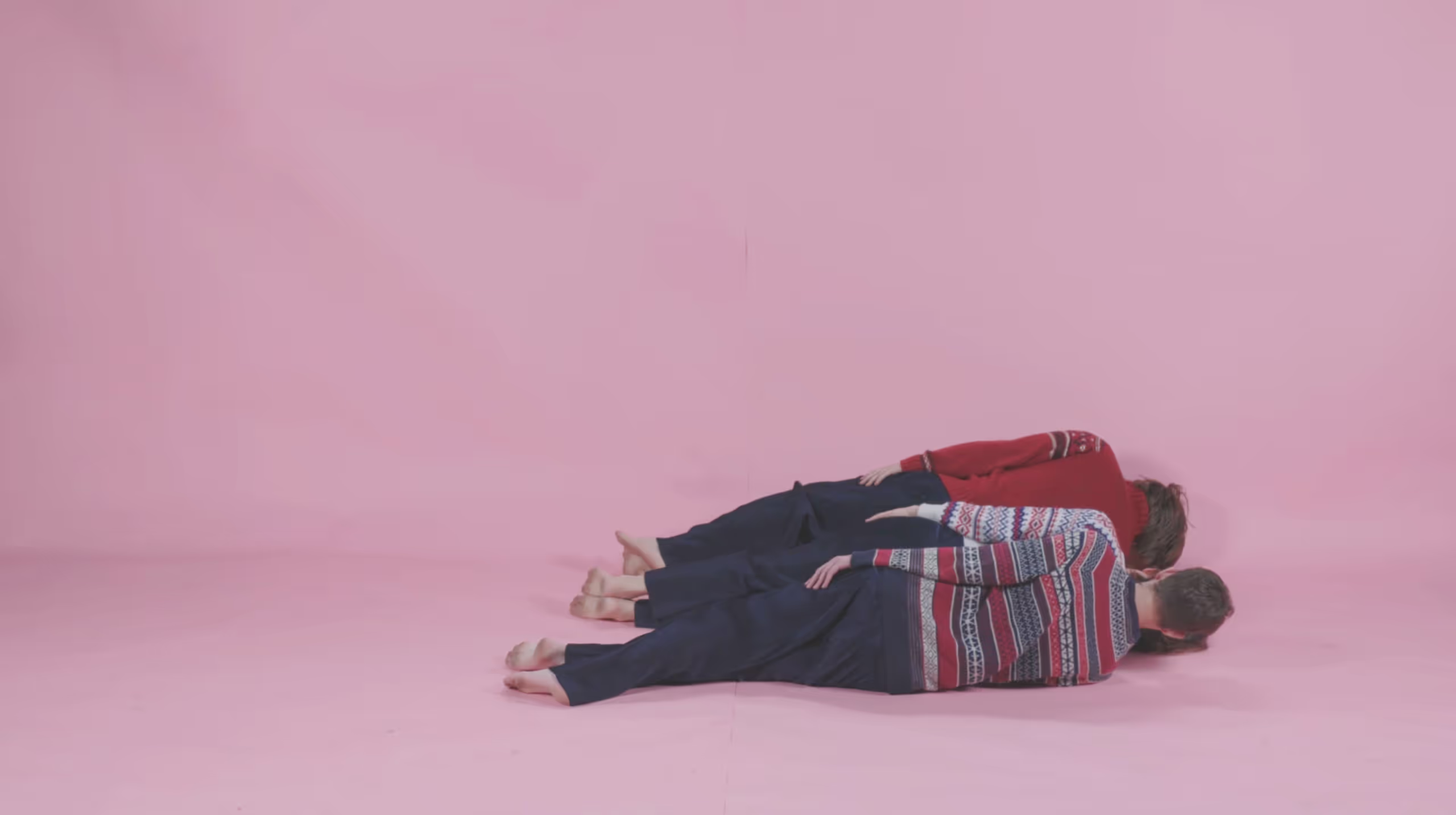
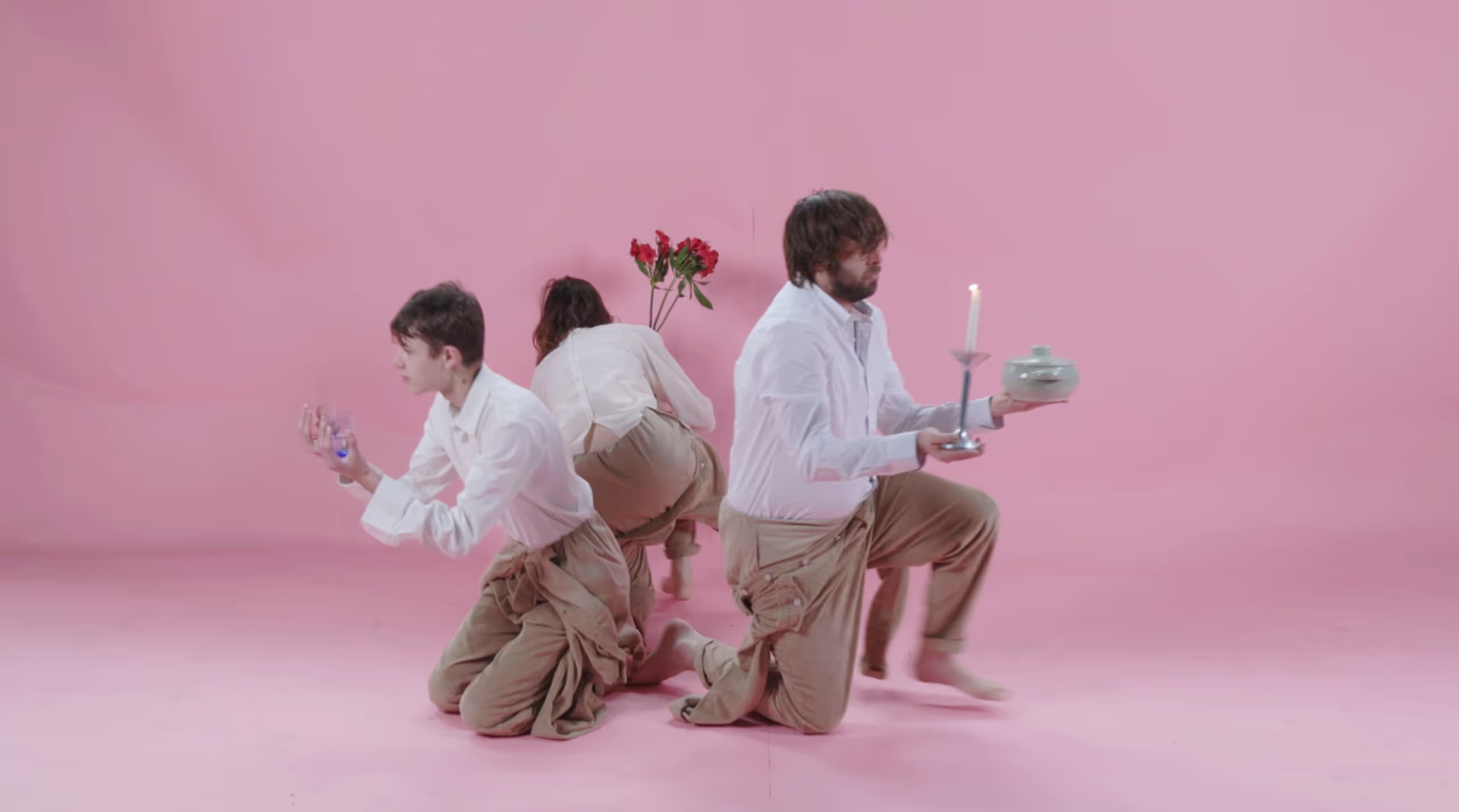
creating a home for a family whose needs and aesthetic preferences were still unknown. the design followed the organic development of the apartment and the way it was constructed over time, a kind of conservation of vernacular architecture and its unique, unexpected details.
the apartment naturally extended first into two additional rooms, and later into a larger living space built by the previous owners themselves. originally it consisted of a single rooftop room that gradually expanded over the years. this history shaped the design approach, turning the renovation into a dialogue with the place and with layers of care, improvisation, and lived experience accumulated within it.
the main space of the house, with its distinctive pine windows and central wooden column, was restored. new doors were made from simple plywood, and all built in joinery was crafted from pine combined with white and light blue ceramic tiles. the original terrazzo floor was polished to reveal its material presence once again.
at the same time, i was working on an exhibition titled architecture and everyday life. the apartment became a case study for designing a place that could welcome an unknown family, shaped by the unique history and aesthetic of the site. it was photographed by david havrony, who participated in the exhibition and documented a family living among their belongings.
photograpy: david havrony
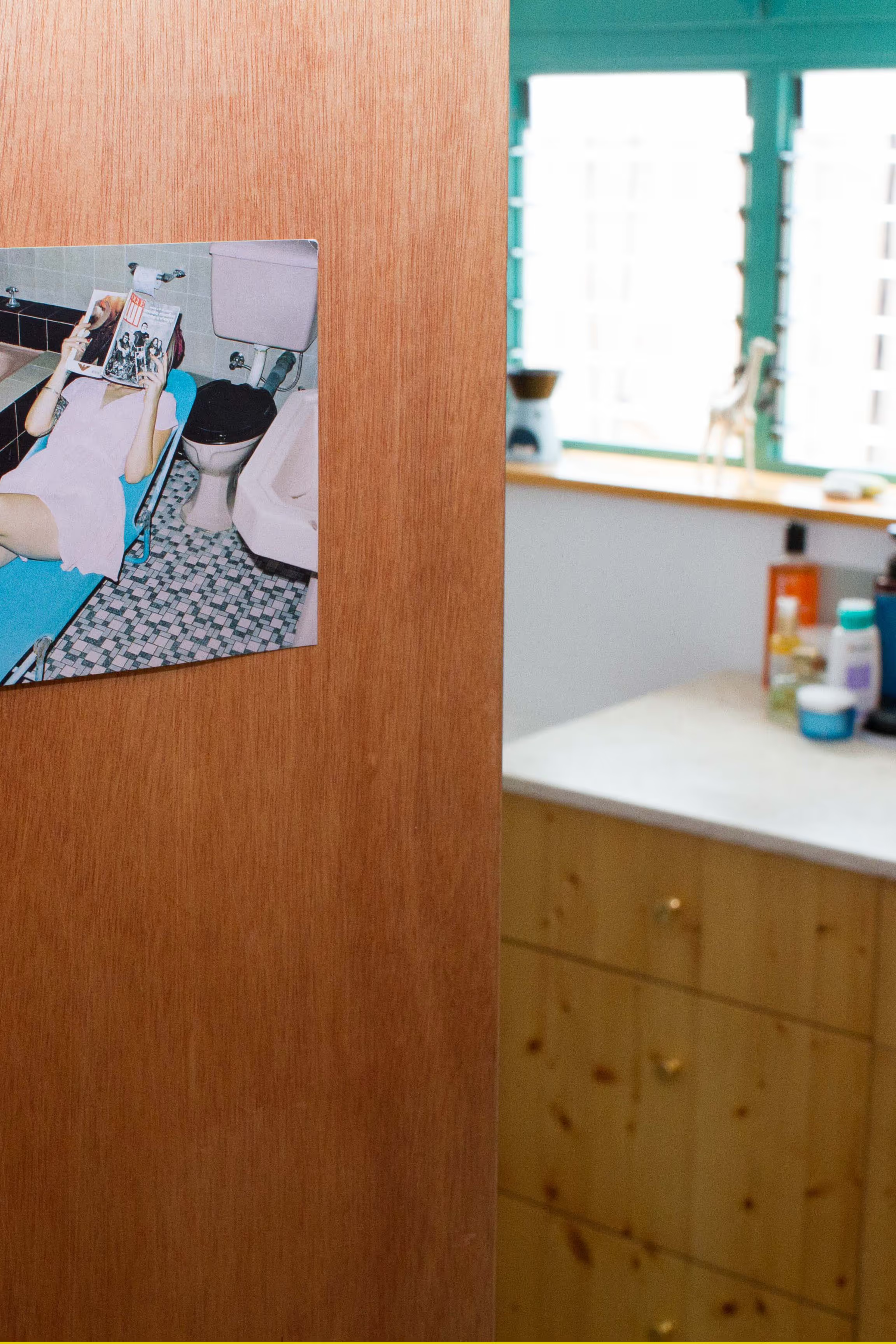
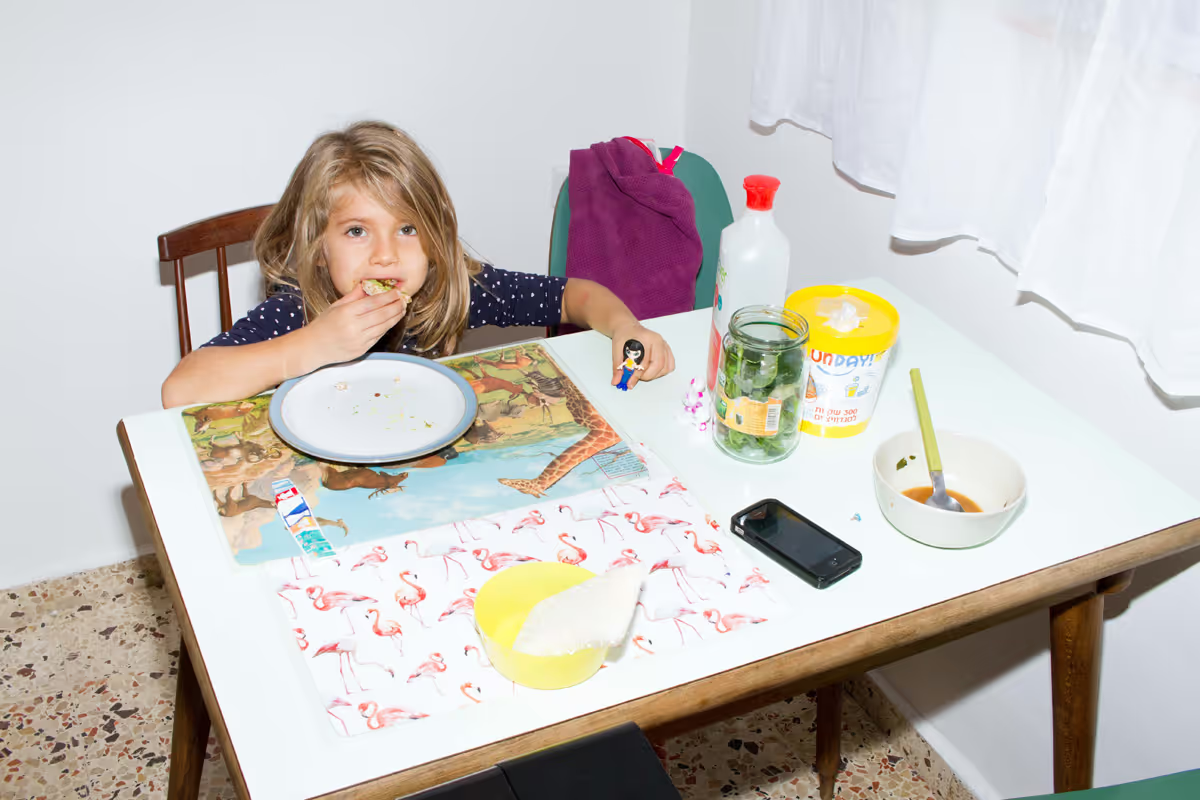
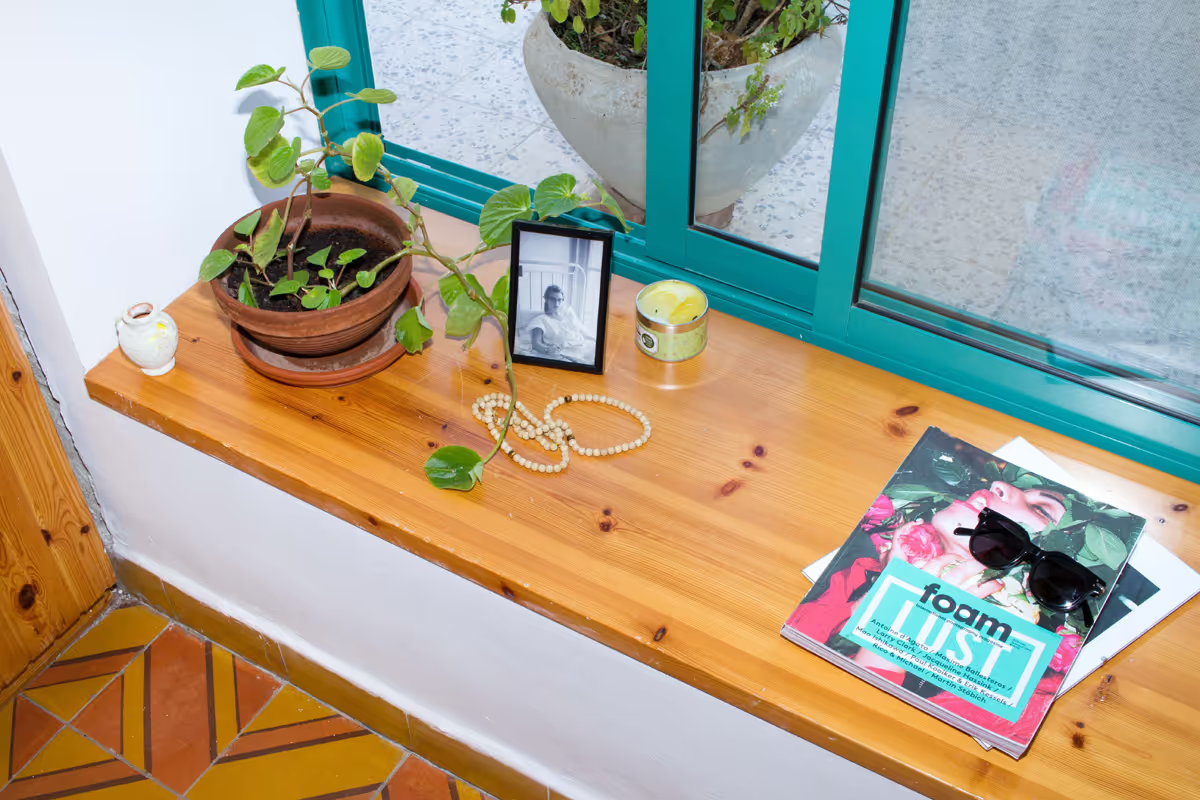
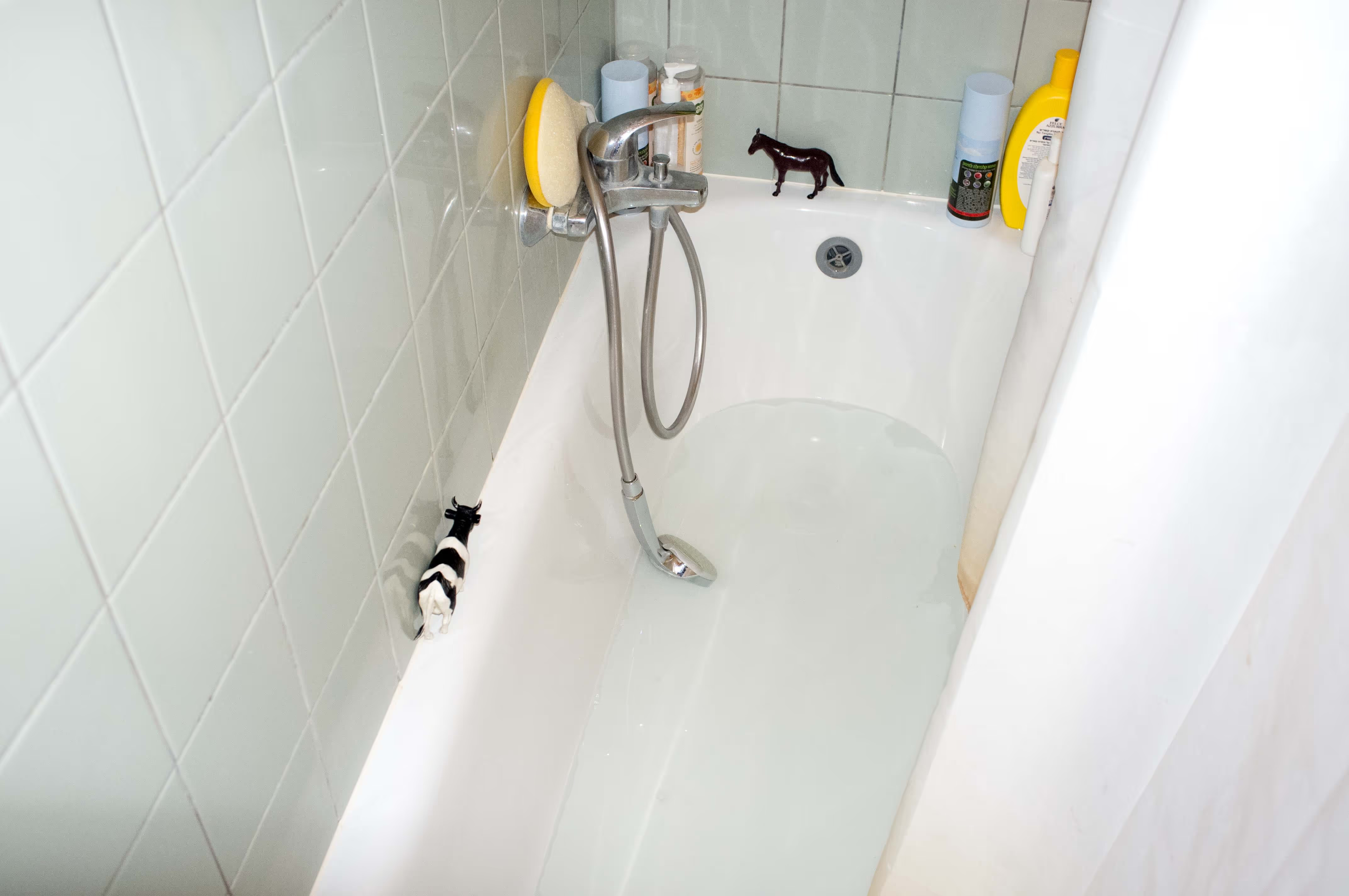
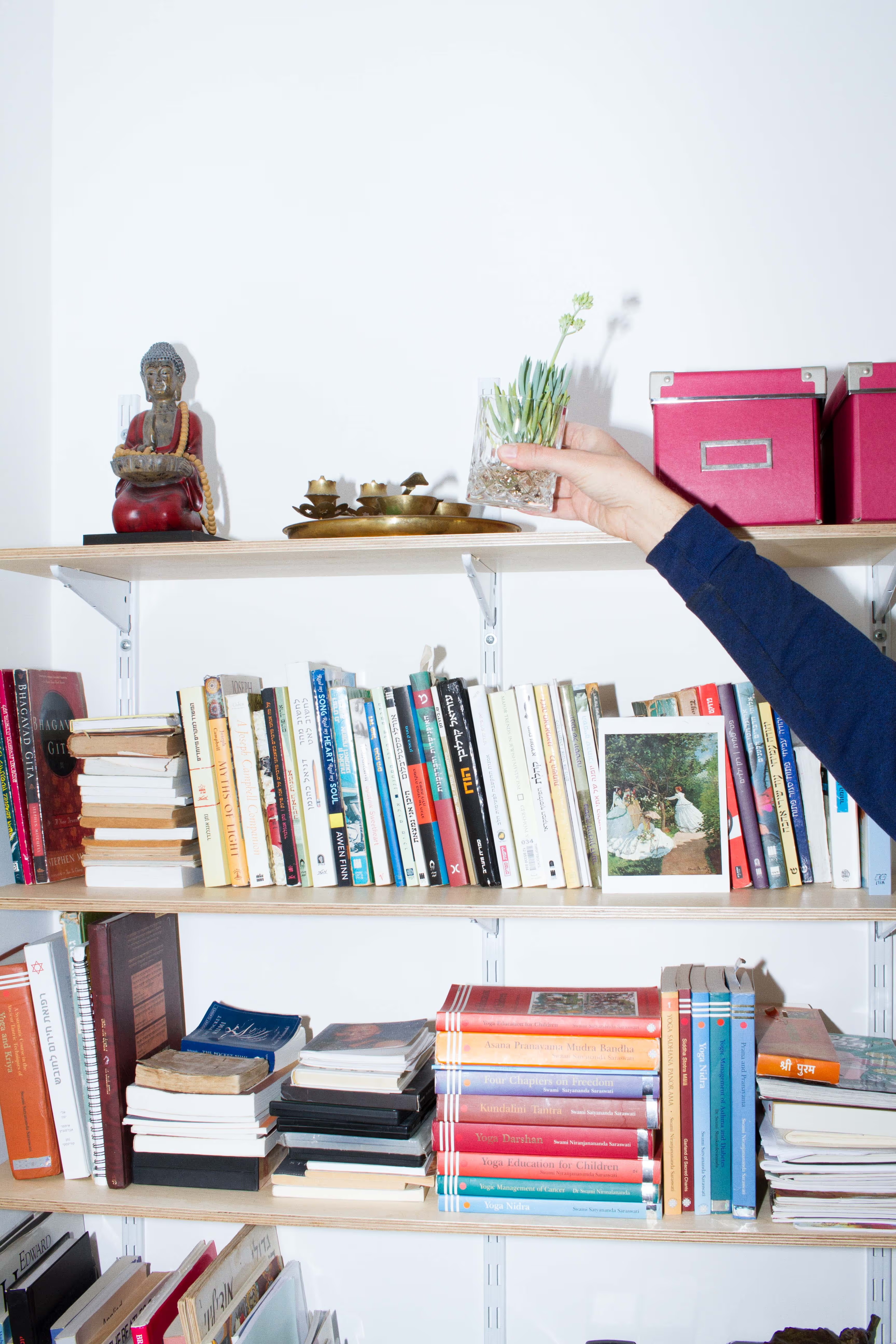
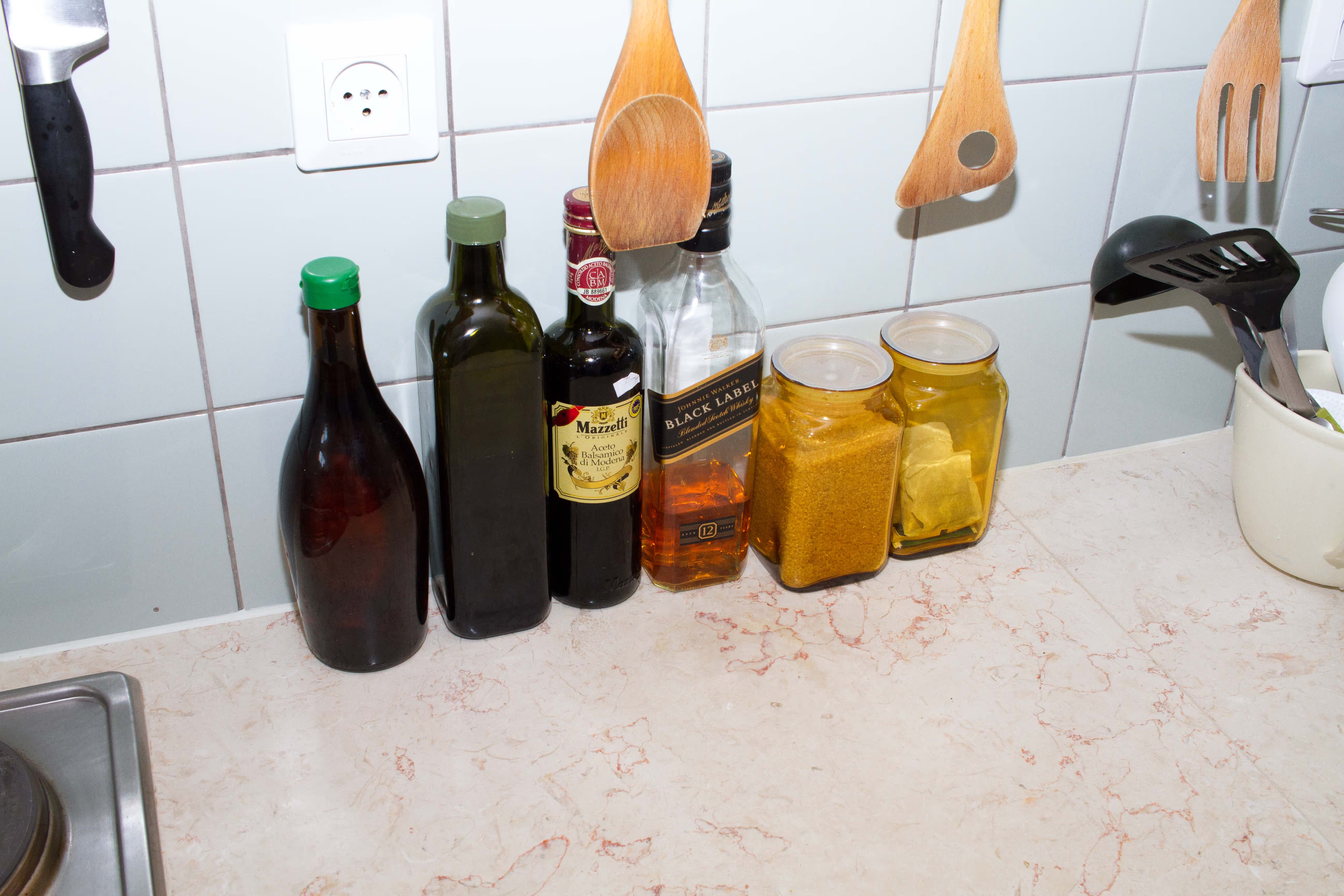
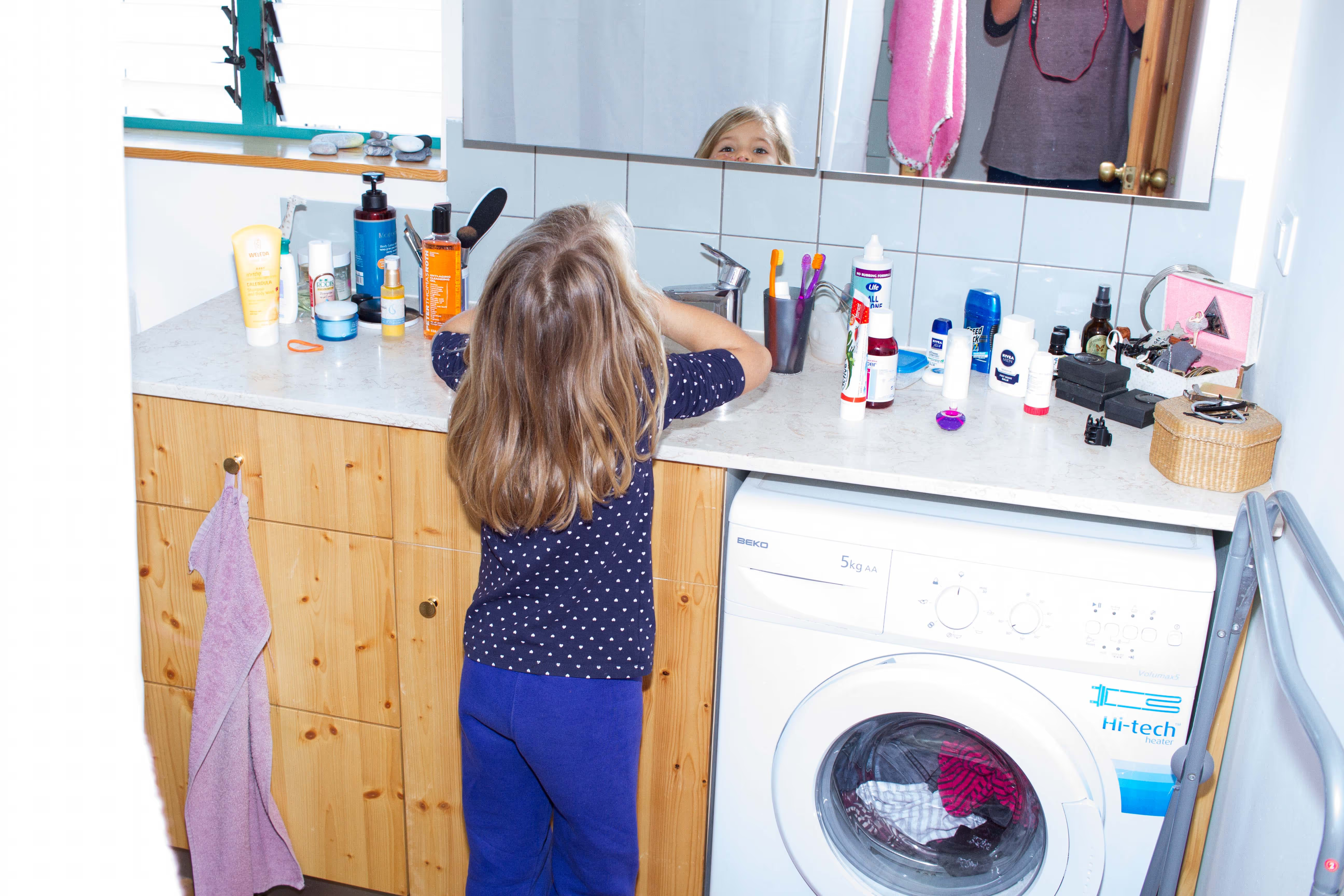
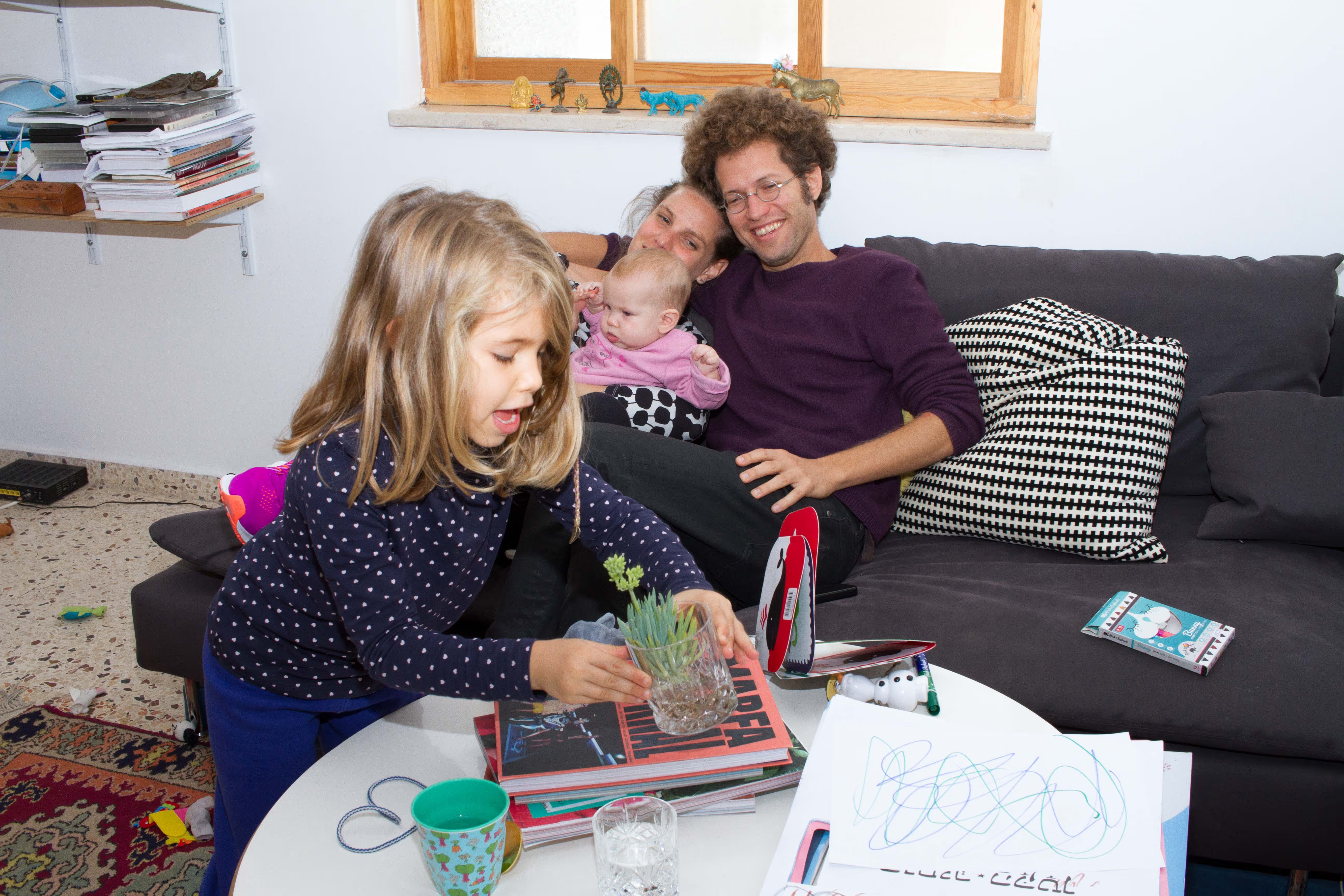
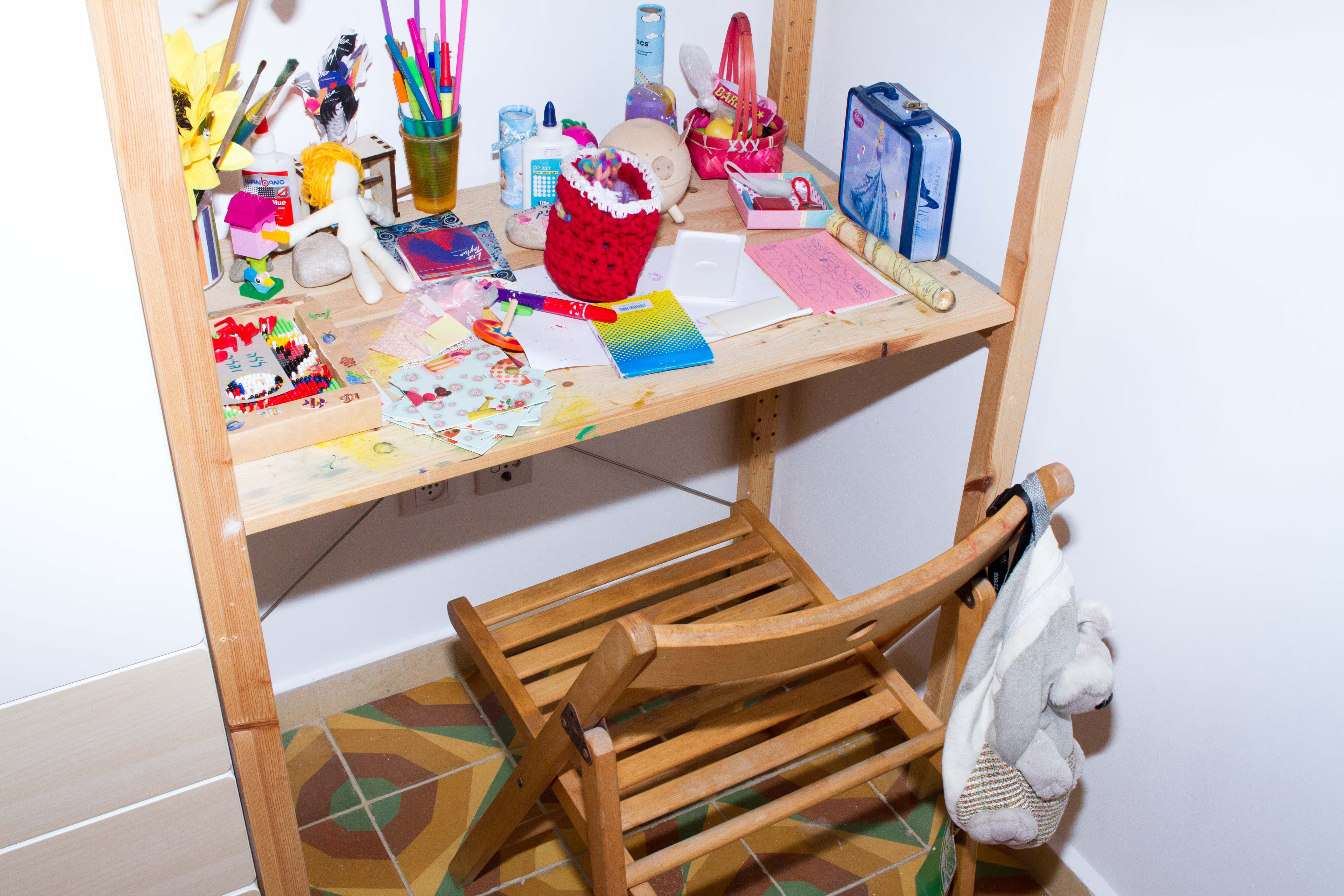
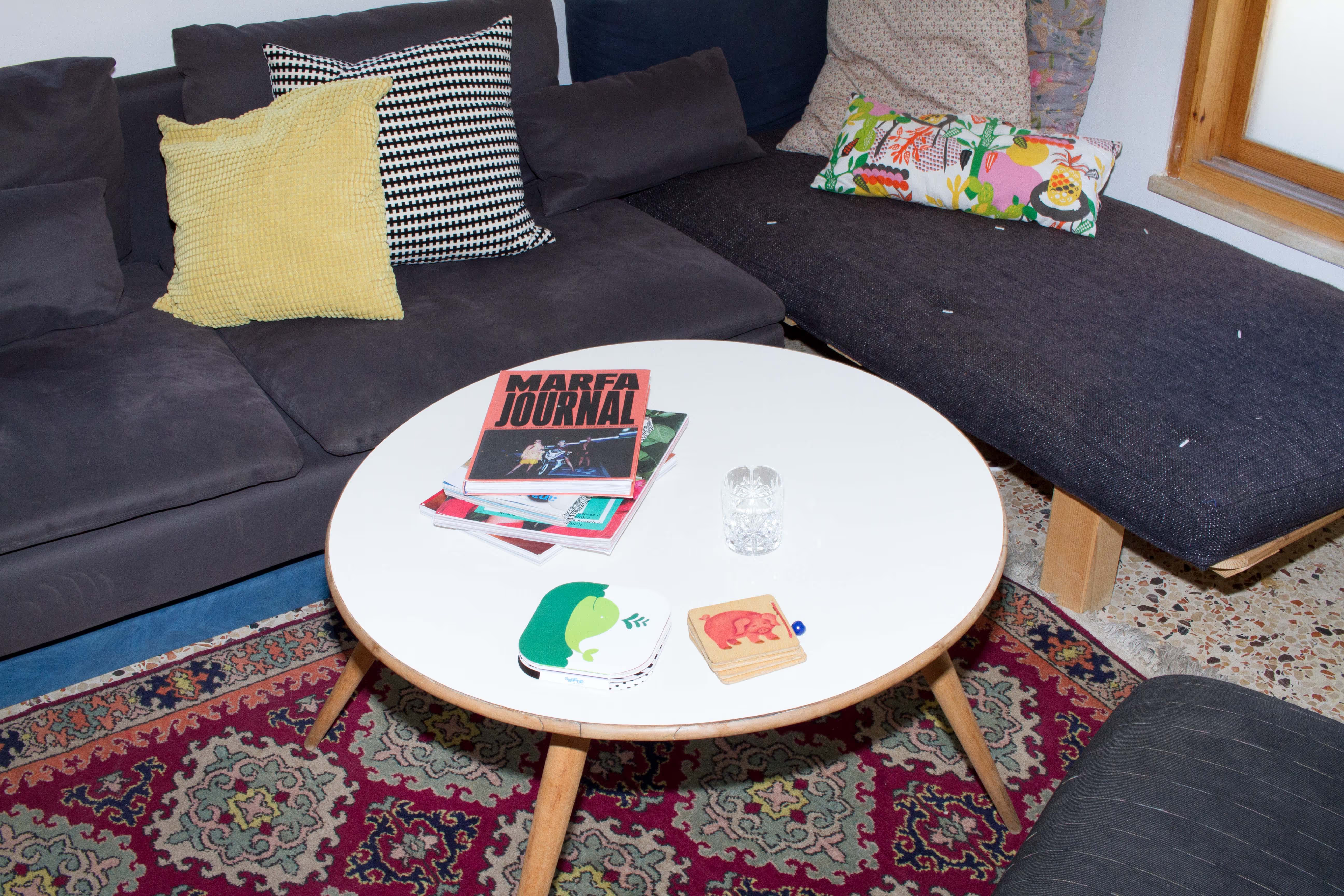
renovation of an apartment in a residential building in haifa designed in the international style in 1935 by architect hans sobelsohn, born in vienna in 1890. the design of the apartment is based on the architect’s original plan, maintaining the core principles of the international style, the proportions of the openings, the spatial form, and the natural light that defines the architectural experience.
at the same time, the apartment was adapted to changes in the family’s way of life that have taken place almost a century after its construction. the renovation responds to contemporary needs while remaining faithful to the original architectural logic.
the kitchen was moved to a larger and brighter space, a small bathroom was added to one of the bedrooms, and two small rooms near the entrance were converted into an additional bathroom and a storage space. these adjustments were made possible by the flexibility of the original plan, whose layout allowed for the creation of a generous entrance hall.
the inner vestibule originally planned by sobelsohn was reinterpreted in the new design as a dining area directly connected to the kitchen, maintaining the spatial hierarchy while allowing everyday life to unfold differently within it.
the renovation was shaped through the spirit of the architectural style itself. its language draws on mid century modern aesthetics combined with early israeli modernism, grounded in openness, light, and proportional precision. the joinery was designed using birch plywood finished with tung oil, highlighting the raw presence of the wood in space and light.
photograpy: mikaela burstow, styling: tsuf bar-on, thanks to maya kremer
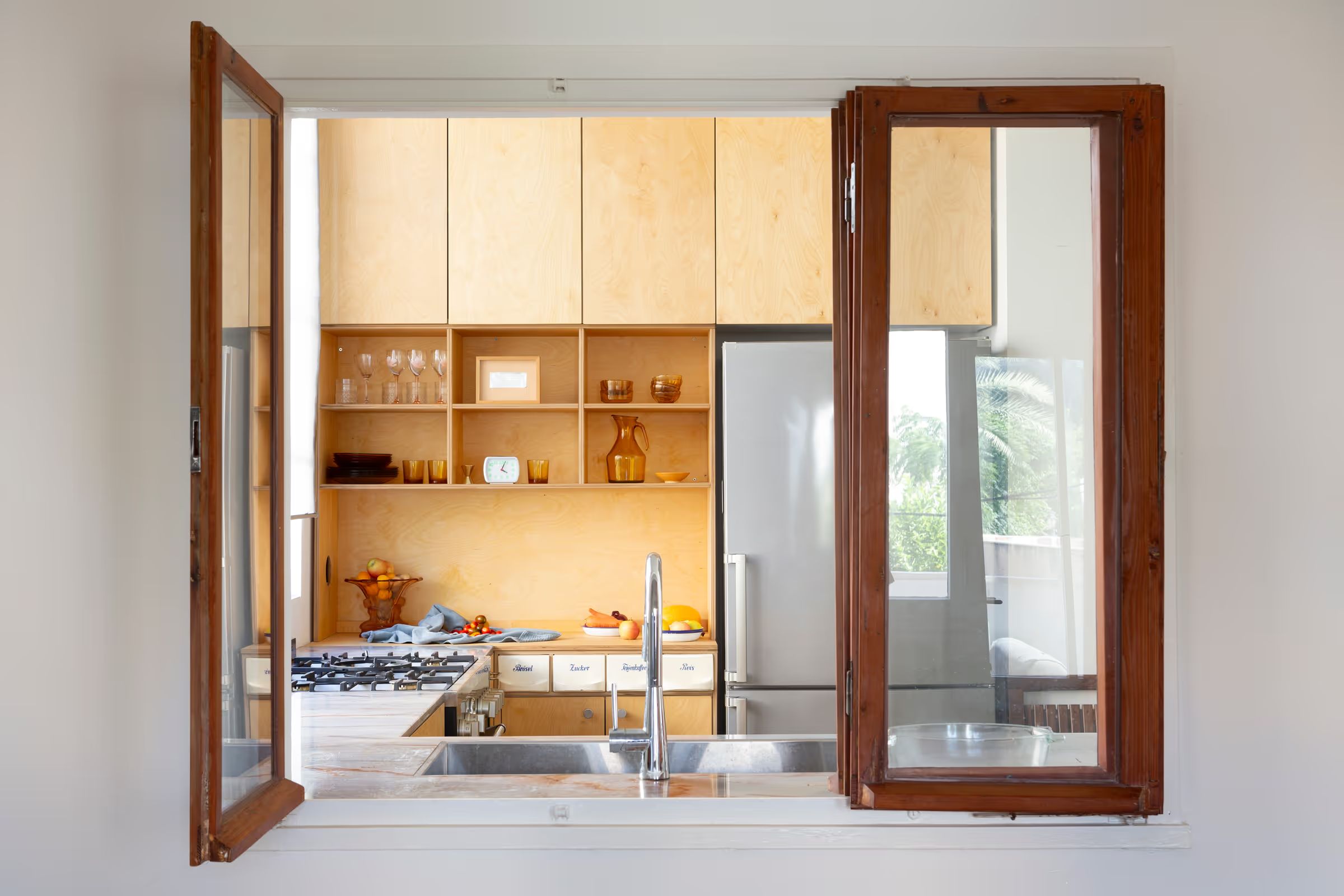
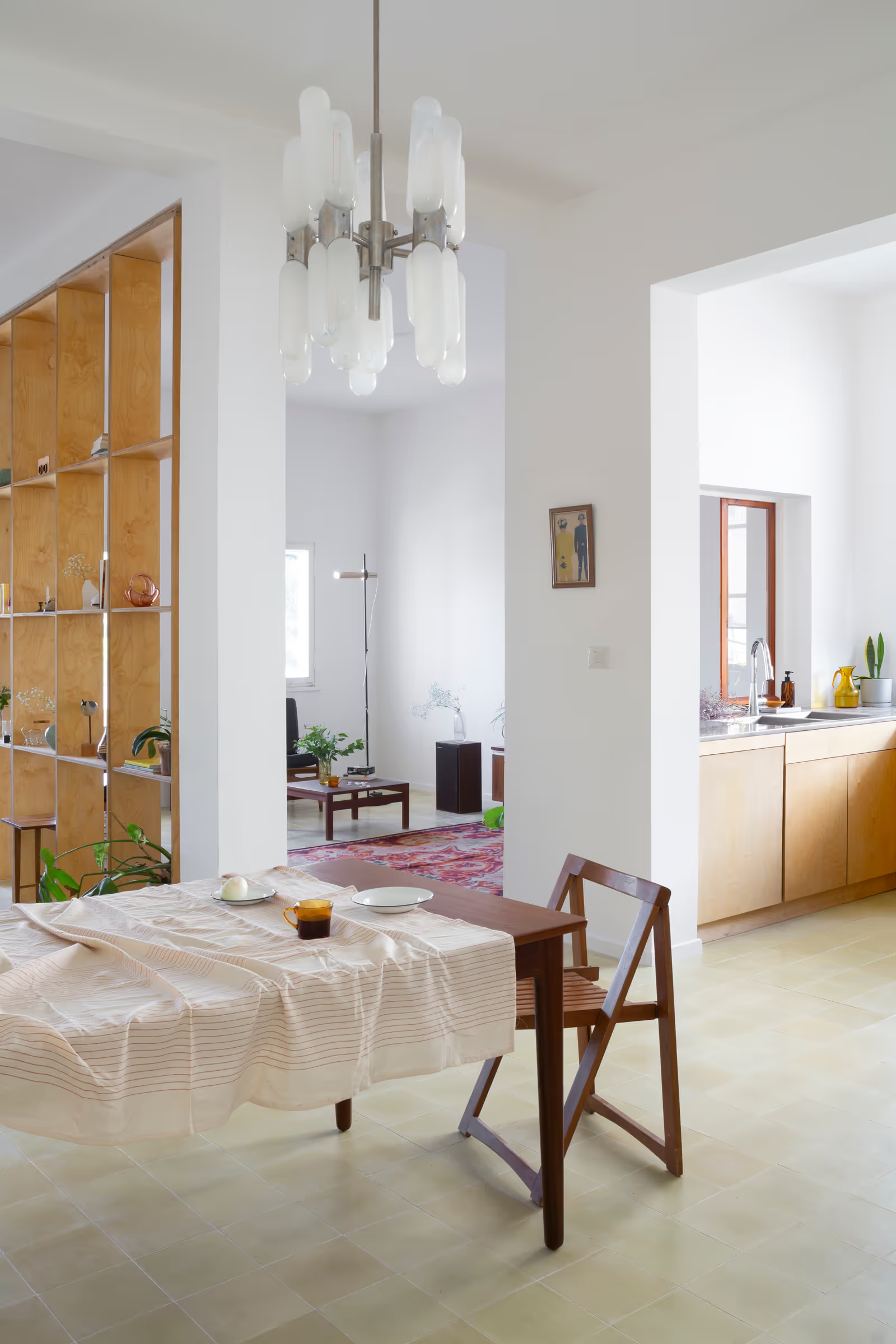
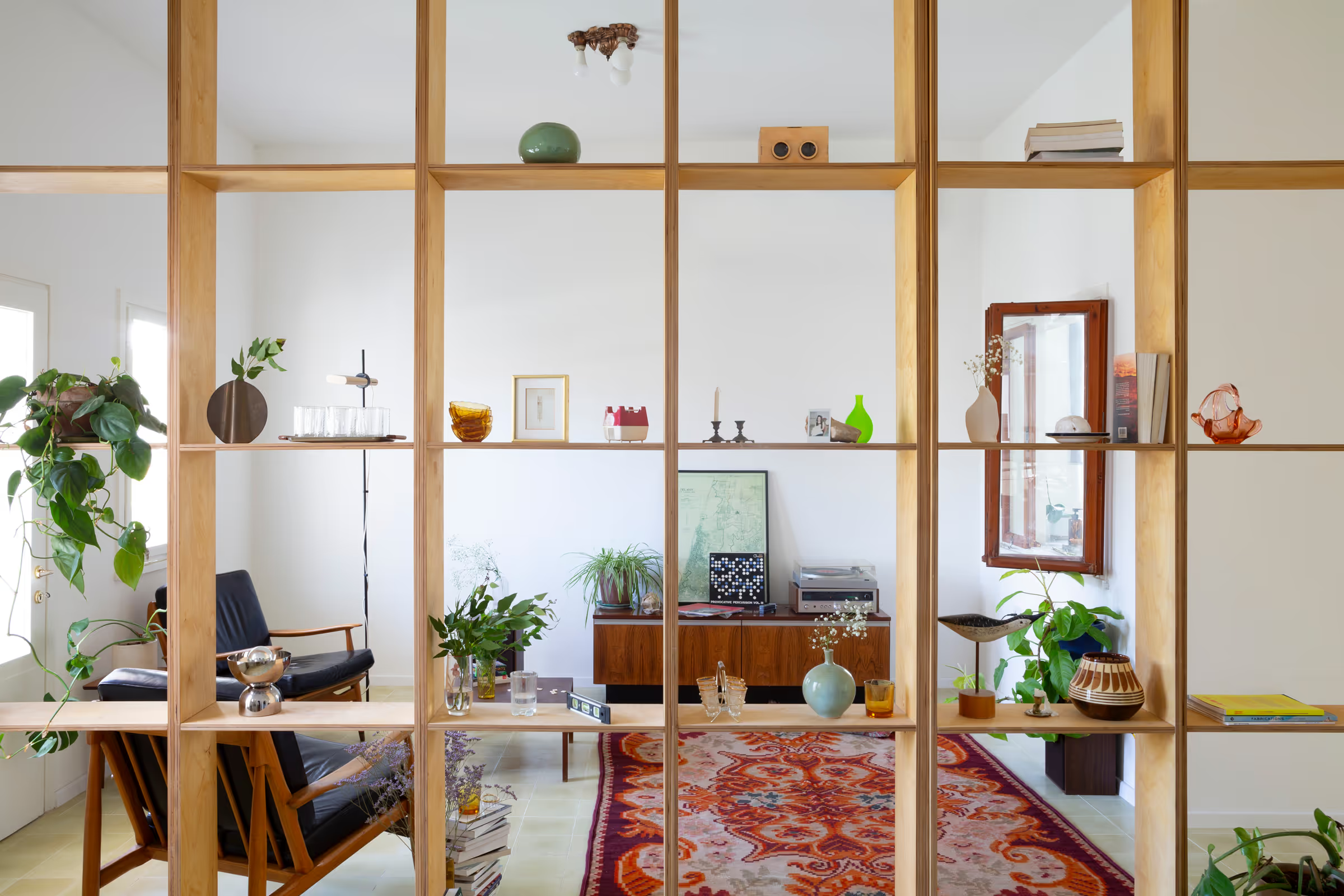
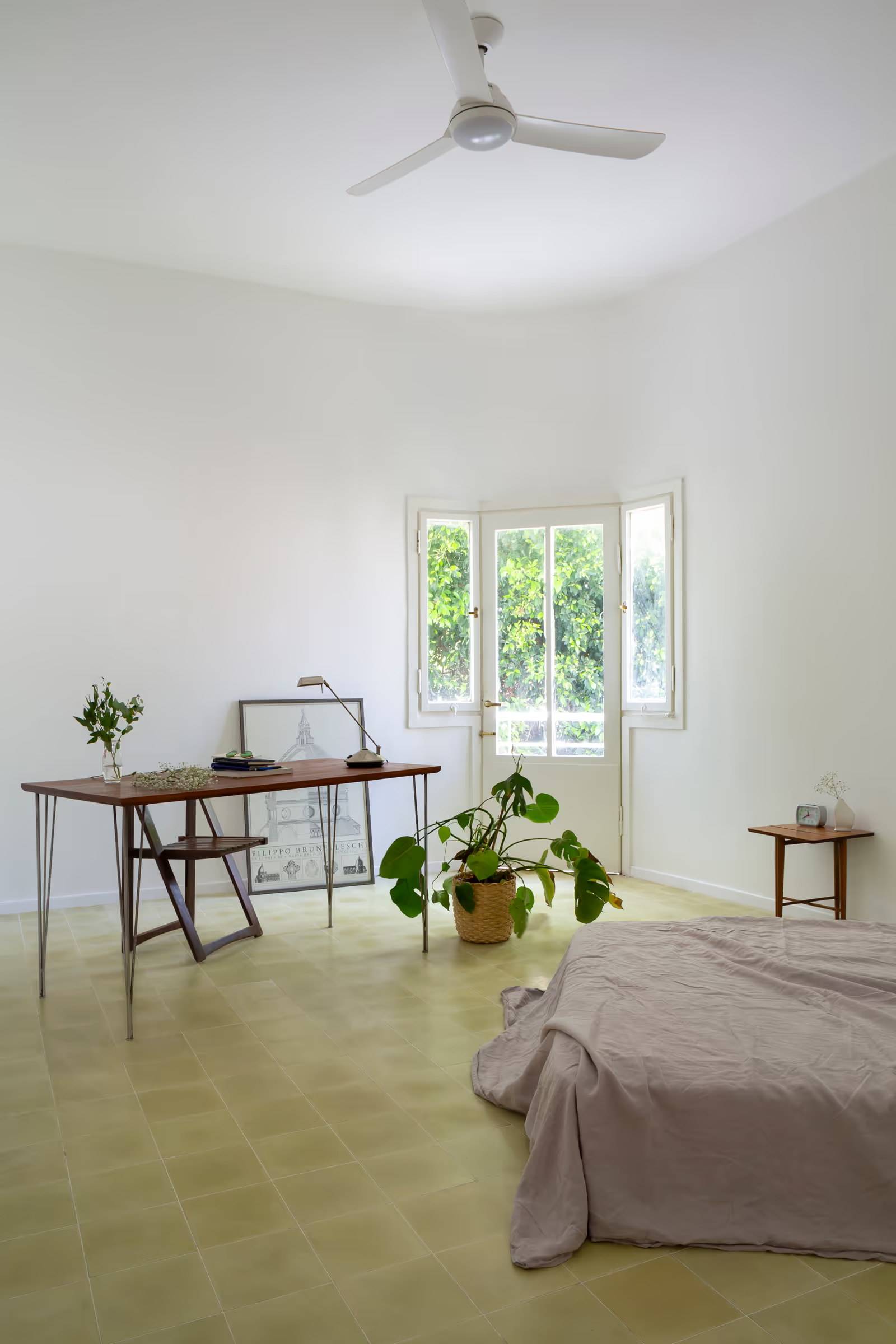
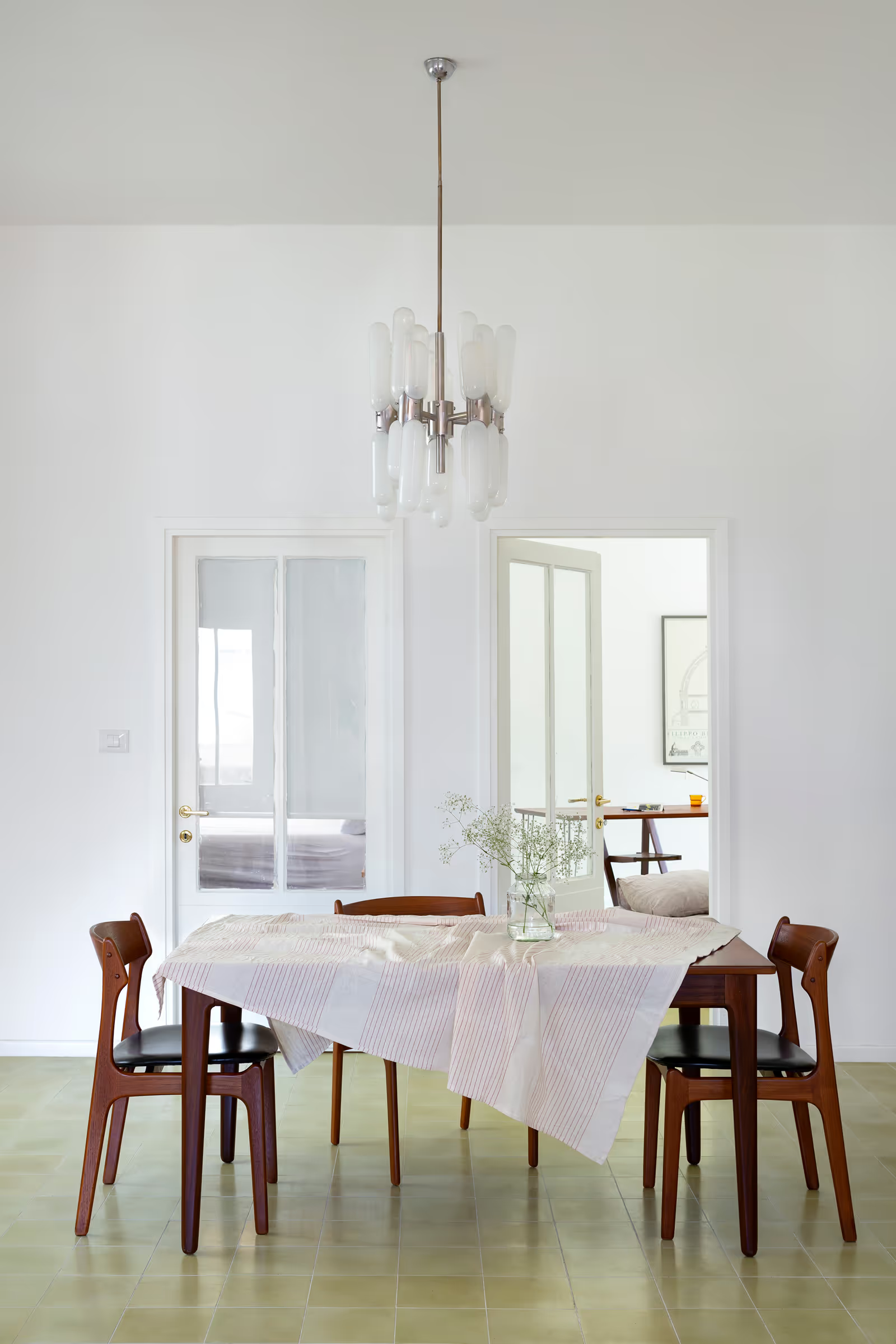
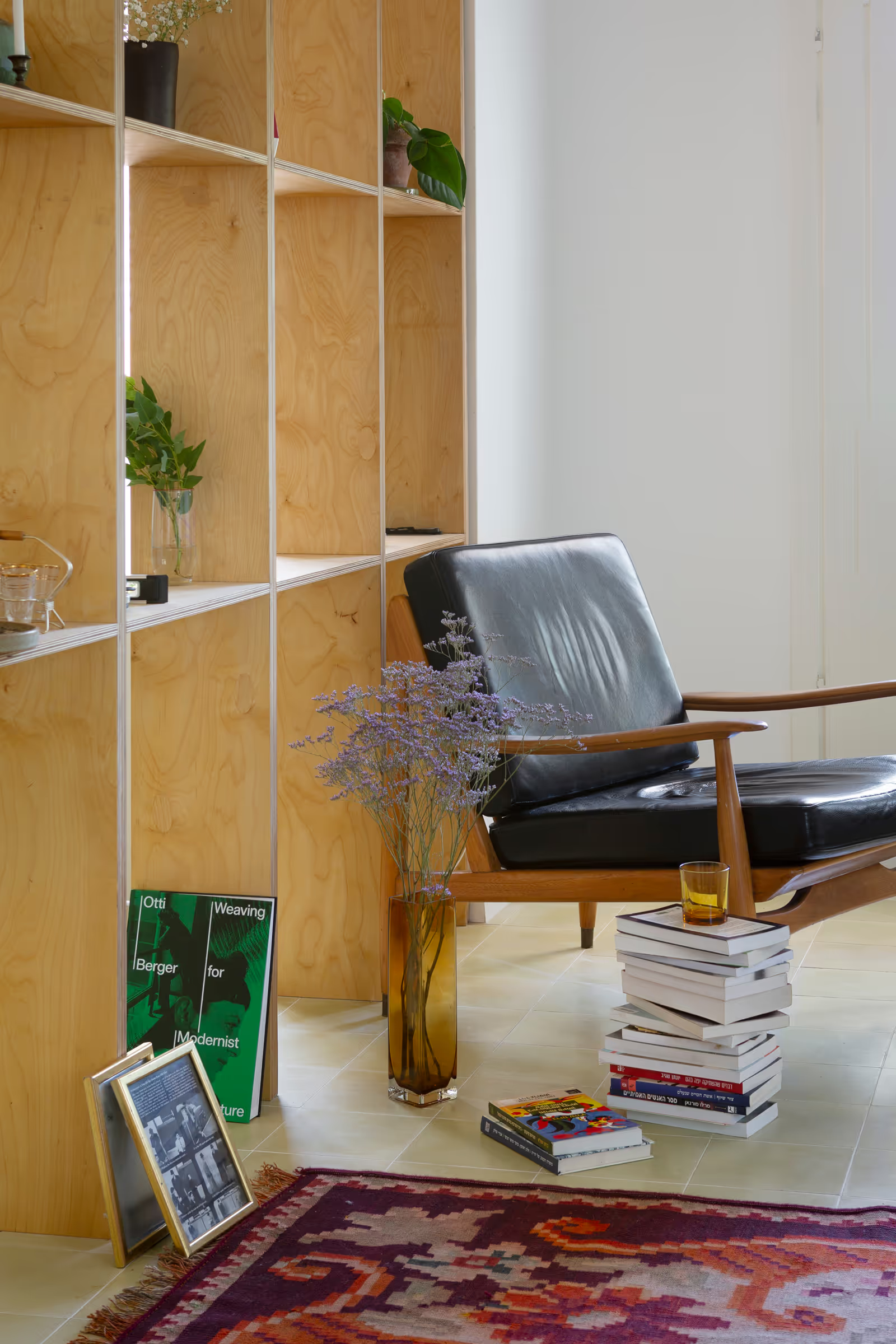
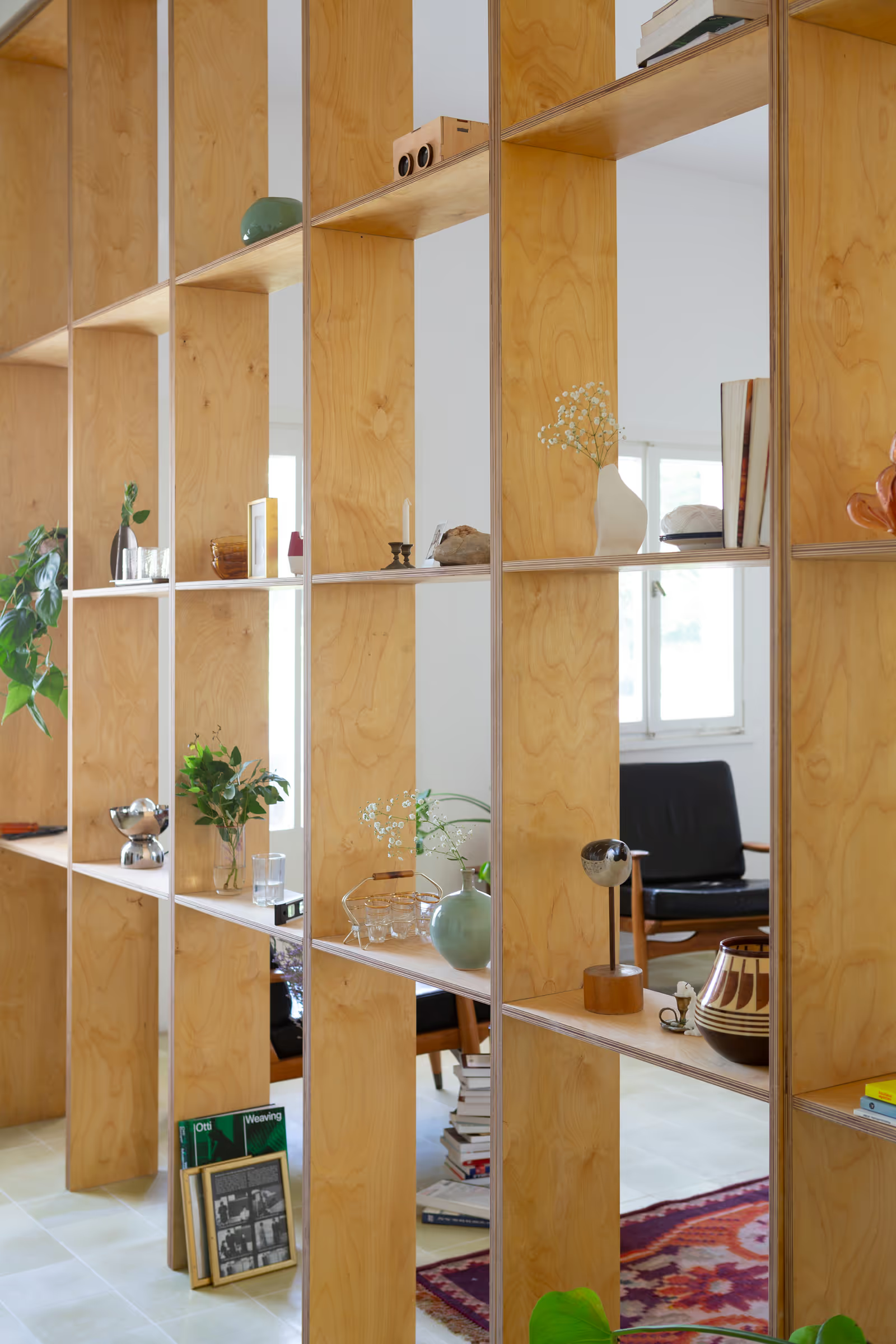
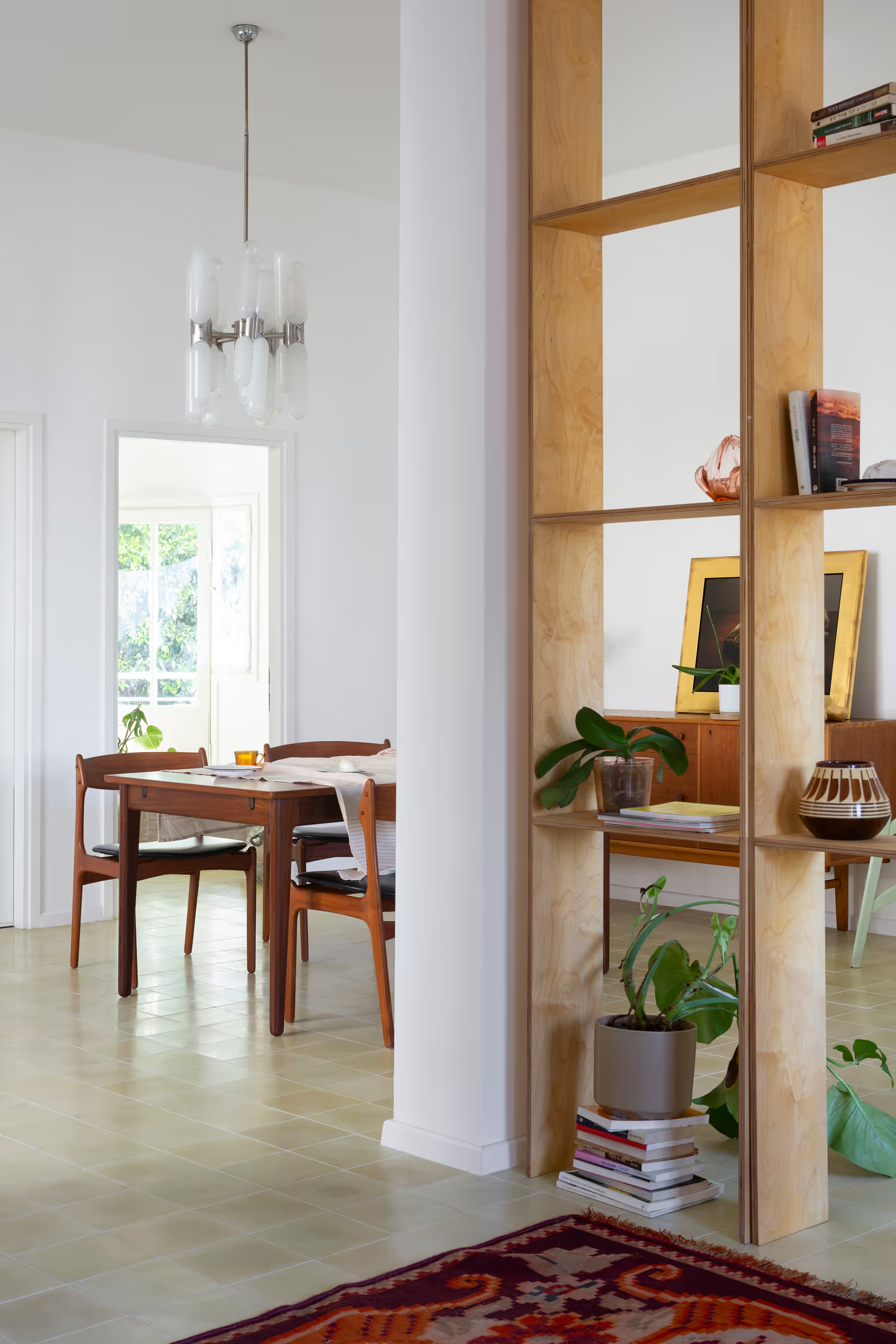
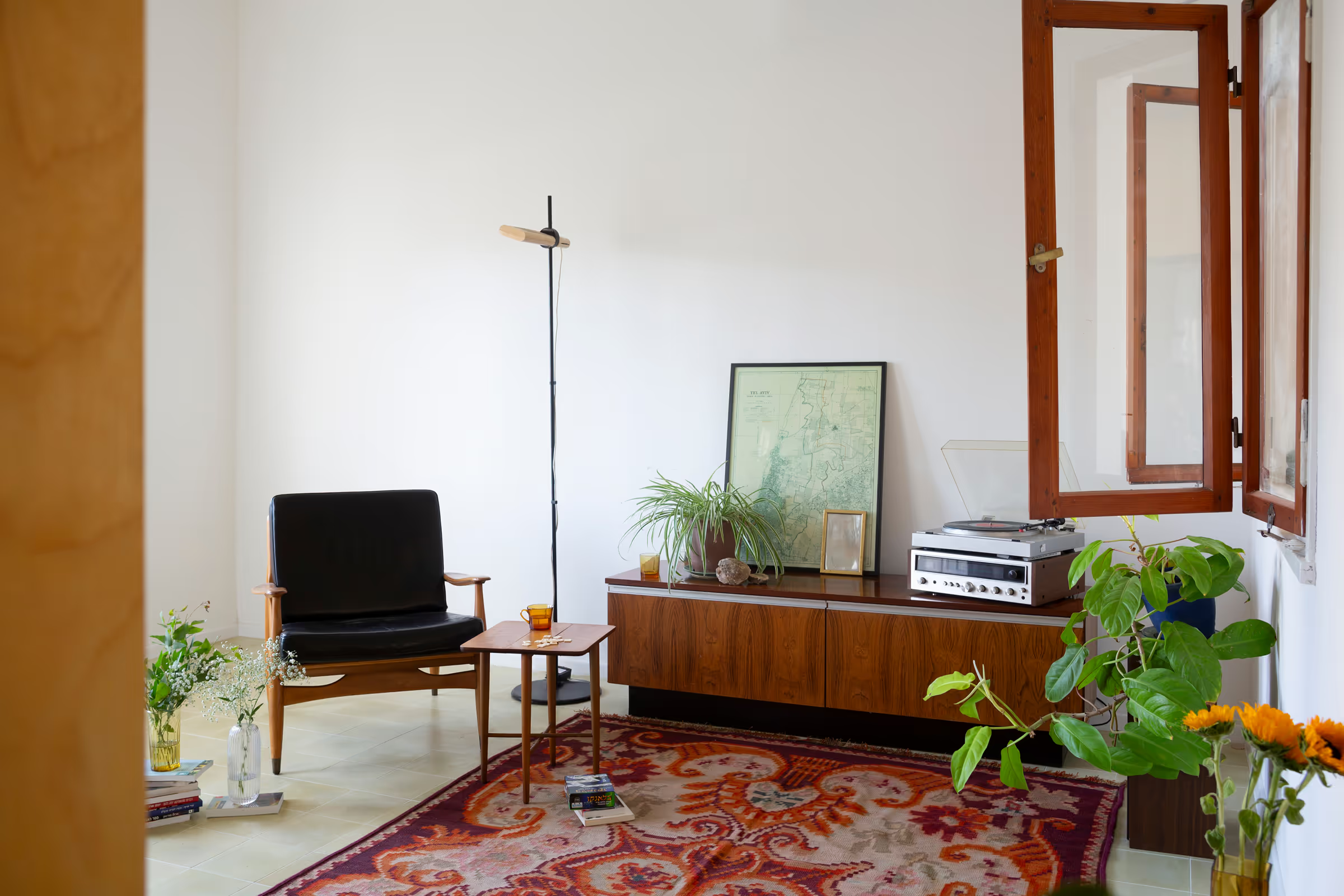
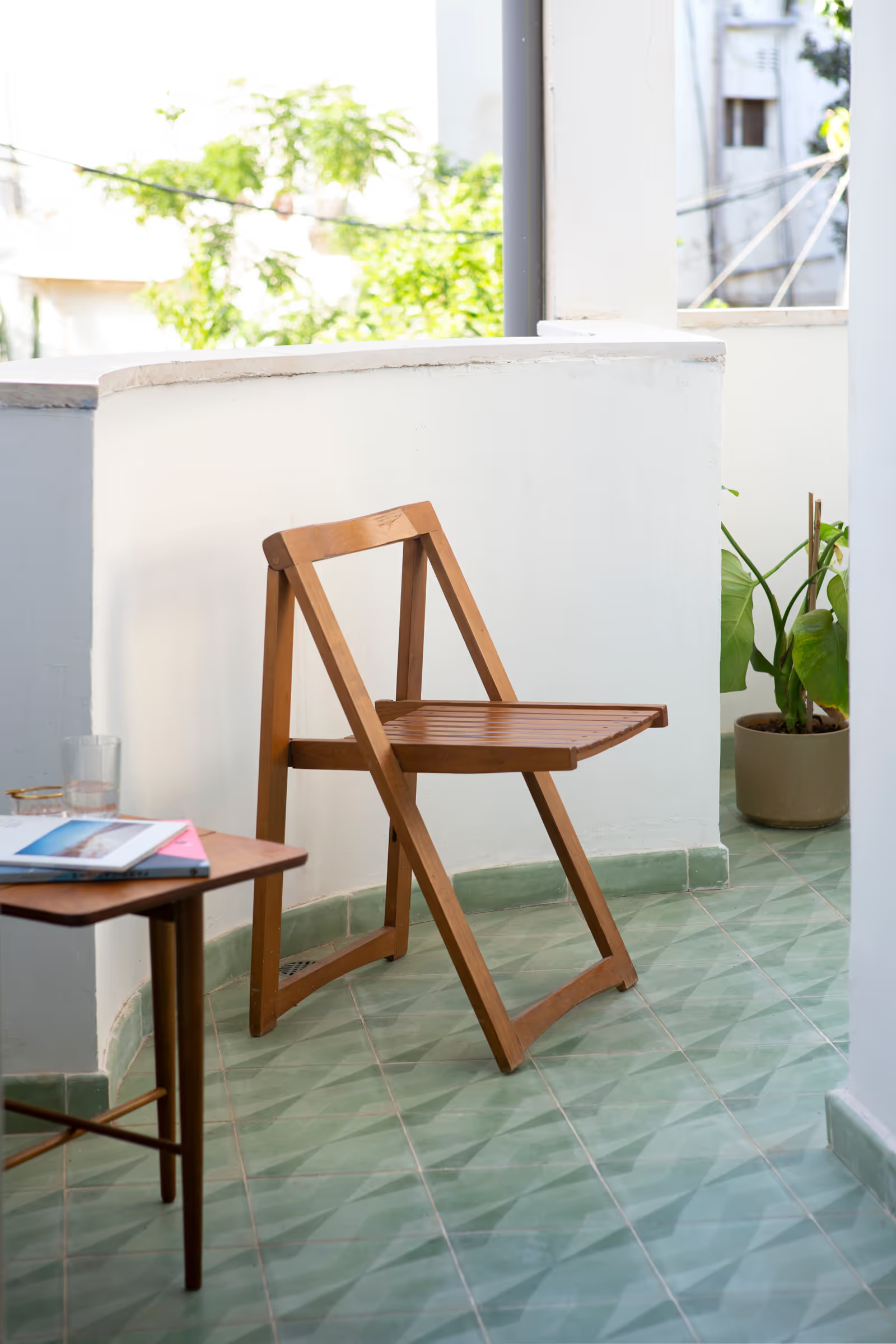
imagination and bravura have turned this apartment from a standard space into a new york style modern apartment, quoted in an interior design magazine, 2020.
the notion of an apartment, any apartment, is simple and beautiful. a real space that is ours and ours only, a space in which our experiences, acquired taste and knowledge surround us, a place in which we can feel at home. it is somewhat strange, therefore, that a couple living in an israeli town would decide to design their apartment in a new york style, whatever that is, of all things.
in the current world of interior design, creativity and bravura do not usually come from the real environment in which people live, but from faraway fantasies that have little to do with our everyday life. we are inundated with design images that exist in a void, images that present an idea of abundant wealth, of climates and cultures far removed from our own. these are then reflected in the ways in which we imagine and construct our most private of spaces.
but is it really the essence of interior design to turn spaces into empty stage sets of a kind of life beyond our reach. or perhaps there is a different kind of interior design, one that connects us to ourselves and our environs, takes note of transformations life brings about and the spaces we inhabit. an interior design that focuses on life, not lifestyle.
by culture i mean that balance between the inner and outer that contains sound thoughts and actions, wrote the architect adolf loos in 1910. this balance in the planning of our living spaces was disrupted in the twentieth century when the profession was divided into two different practices, architecture and interior design. yet things were not always so.
take liebling haus, for example. in the 1930s, when the architect dov karmi planned the building, he thought about the apartments themselves. he considered the penetration of sunlight and the flow of air in each apartment, and he planned and designed the entrance hall and the building’s stairwell, spaces that elegantly link the shared and private spaces. the individual apartments took into account future changes in design and in use, reflecting the changing needs of occupants while maintaining the balance between the internal and external parts of the apartment, between the inner and outer person.
interior design that stems from our real life is one that lives with us. it calls our attention to the materials and light that form a space and to their effect on our emotions, helping us understand why we are attracted to certain objects and urban spaces whereas others make us uneasy. it is a thought on interior design as a tool for developing an ear more attuned to our personal preferences and taste, to our aesthetic choices as expressions of our internal spiritual world.
this perception stands in opposition to the current notion of total interior design, which sets out to completely overhaul the home, replacing it with a new, uniform and hermetic layer. interior design appears here as an open, breathing and ongoing craft, one that accompanies us throughout life, changing and developing along the way, reflecting new insights on the places and the body we inhabit.
the films presented in the exhibition feature silent apartments that seem to stand in defiance of the aesthetic and verbal noise of current interior design and its fantasies. they show internal, everyday, ongoing life.
they consist of a sequence of thousands of hours of life in which the house occupants peel potatoes, eat their supper or simply sleep. they offer the beauty that arises from the accumulation of many hours spent within, among walls and items of furniture, between the kitchen and the bedroom.
they note the way in which beautiful things take shape from everyday occurrences in the apartment. and they present the strange, persistent art of living in a home, the only place in our world that is interior.
text editing: yoni raz purtugali
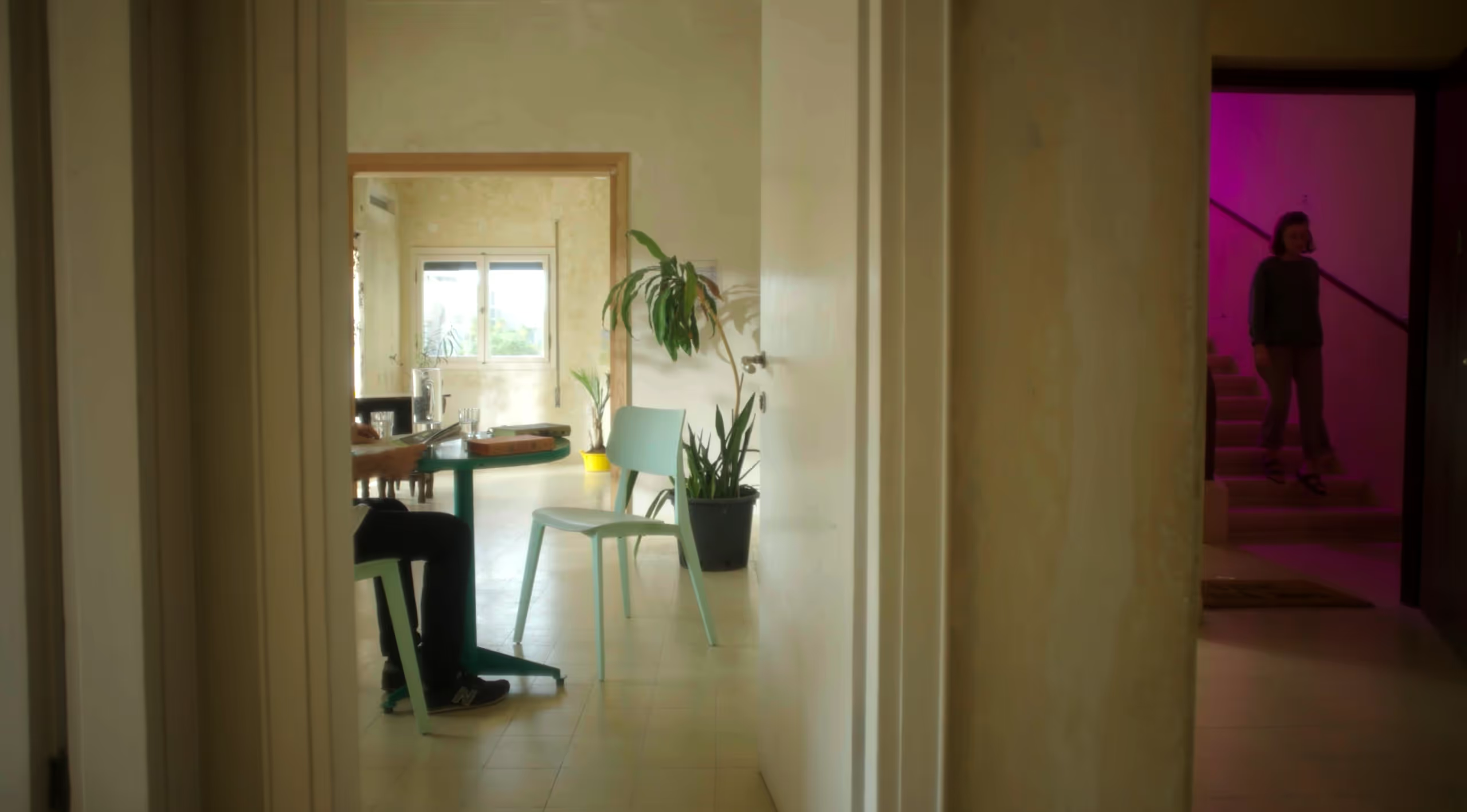
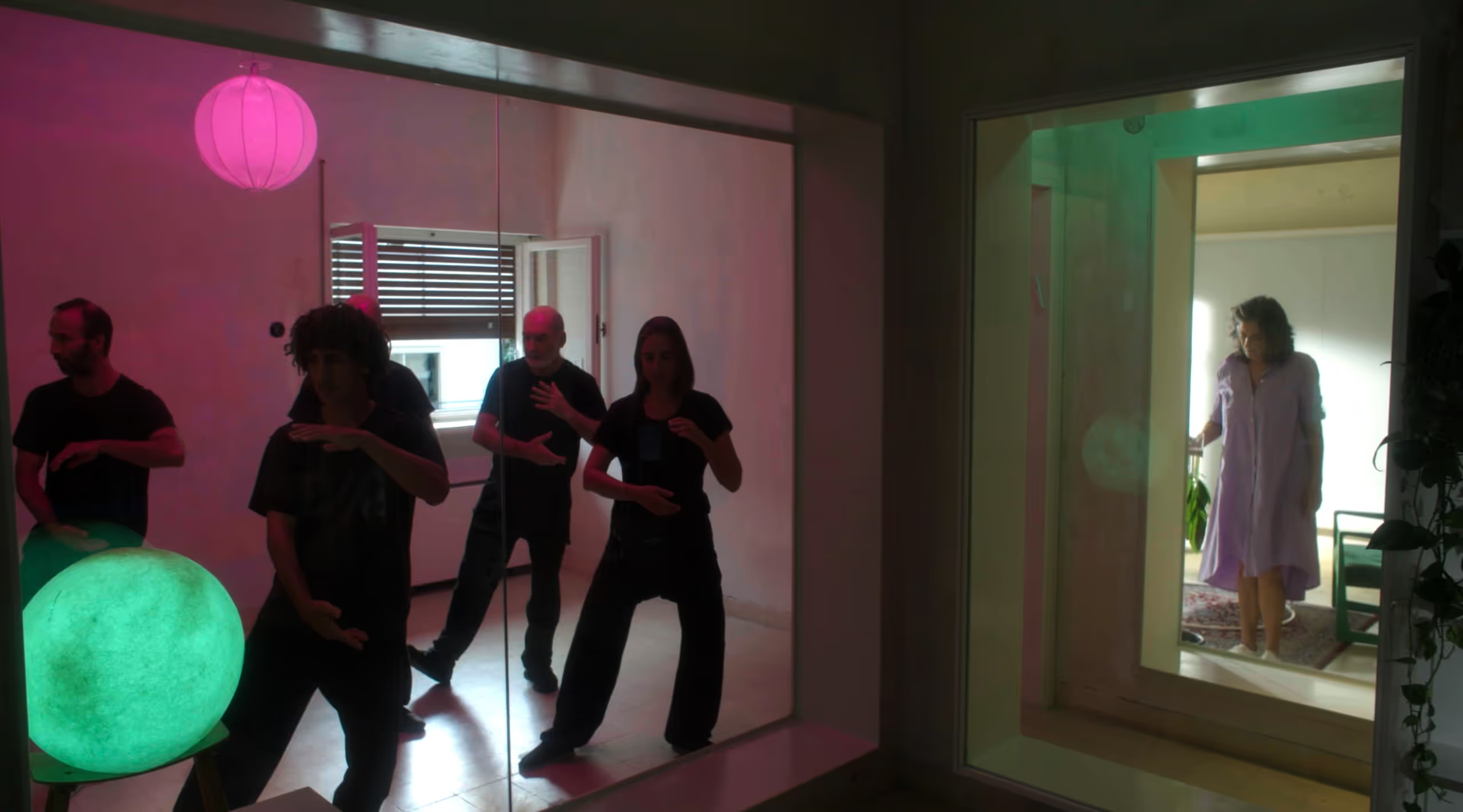
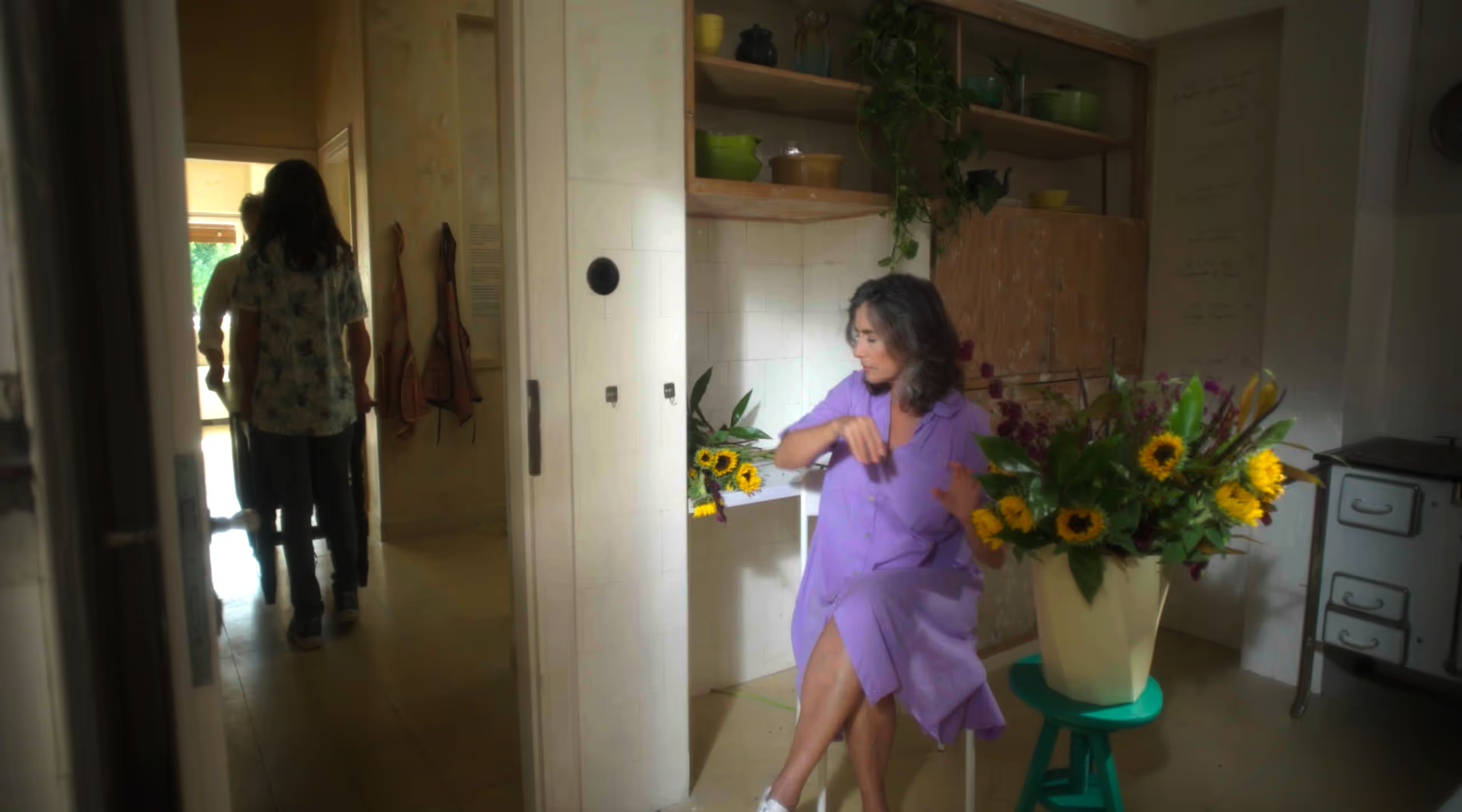
everything we have learned so far presents events, actions, ideas, and practices at the intersection of architecture, design, art, and performance, developed by the artist-mentors of the school of the city since its opening at the liebling haus in 2017.
the school’s programs invite participants into learning through direct engagement, exploring our relationship with the spaces we inhabit by cultivating attentiveness to our presence within them. built around exercises in observation, inquiry, dialogue, and critical thinking, the programs nurture a shared sensitivity to our environments and to the ways these spaces shape our lives and feelings.
cocurators: michal david, rotem volk, tal alperstein, maayan moses, maya kramer. exhibition participants: tal alperstein, neta debelstein, michal david, rotem volk, maayan moses, dana mor, aya zaiger, maya kramer, roni raviv, michal ronald. photograpy: mikaela burstow
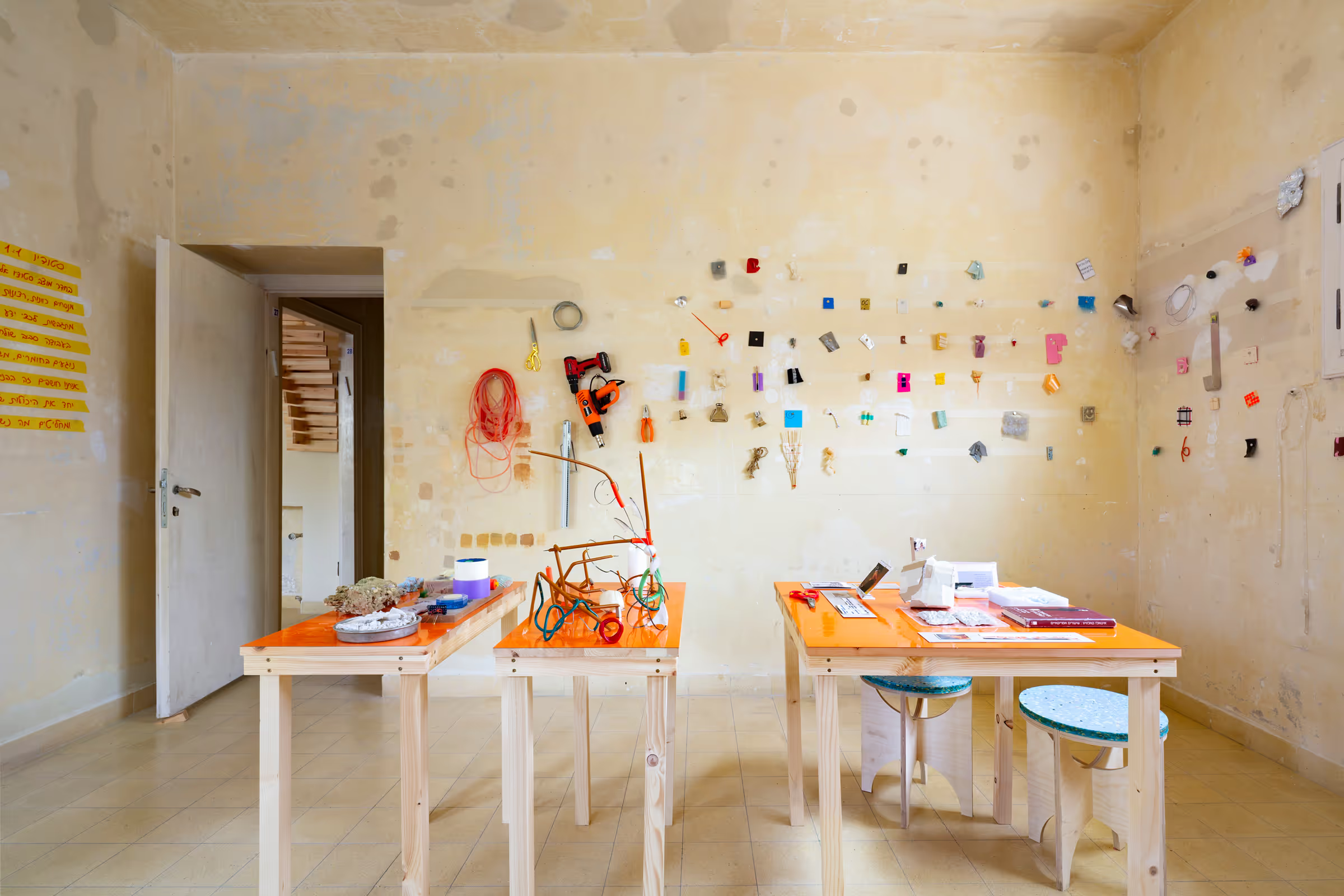
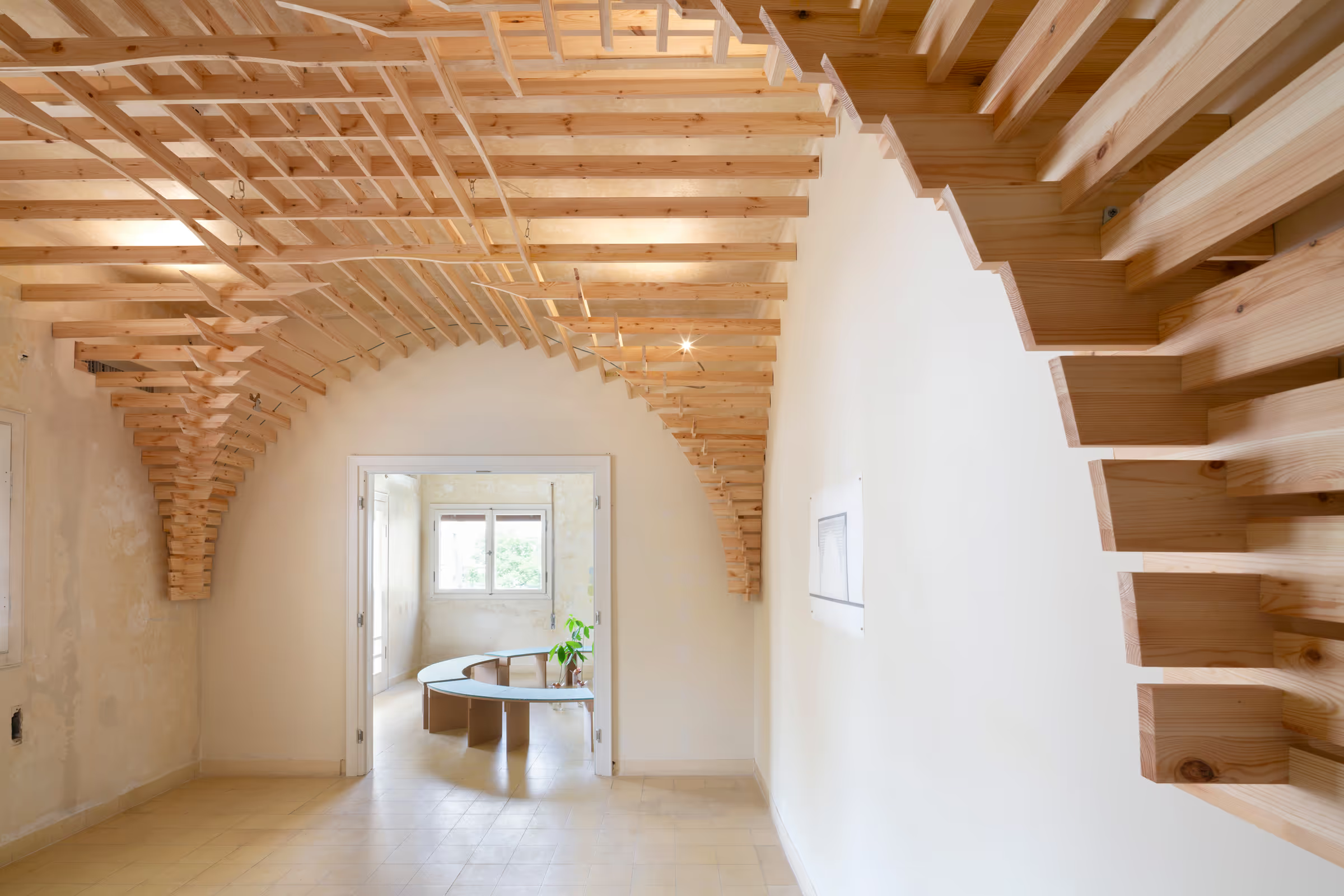
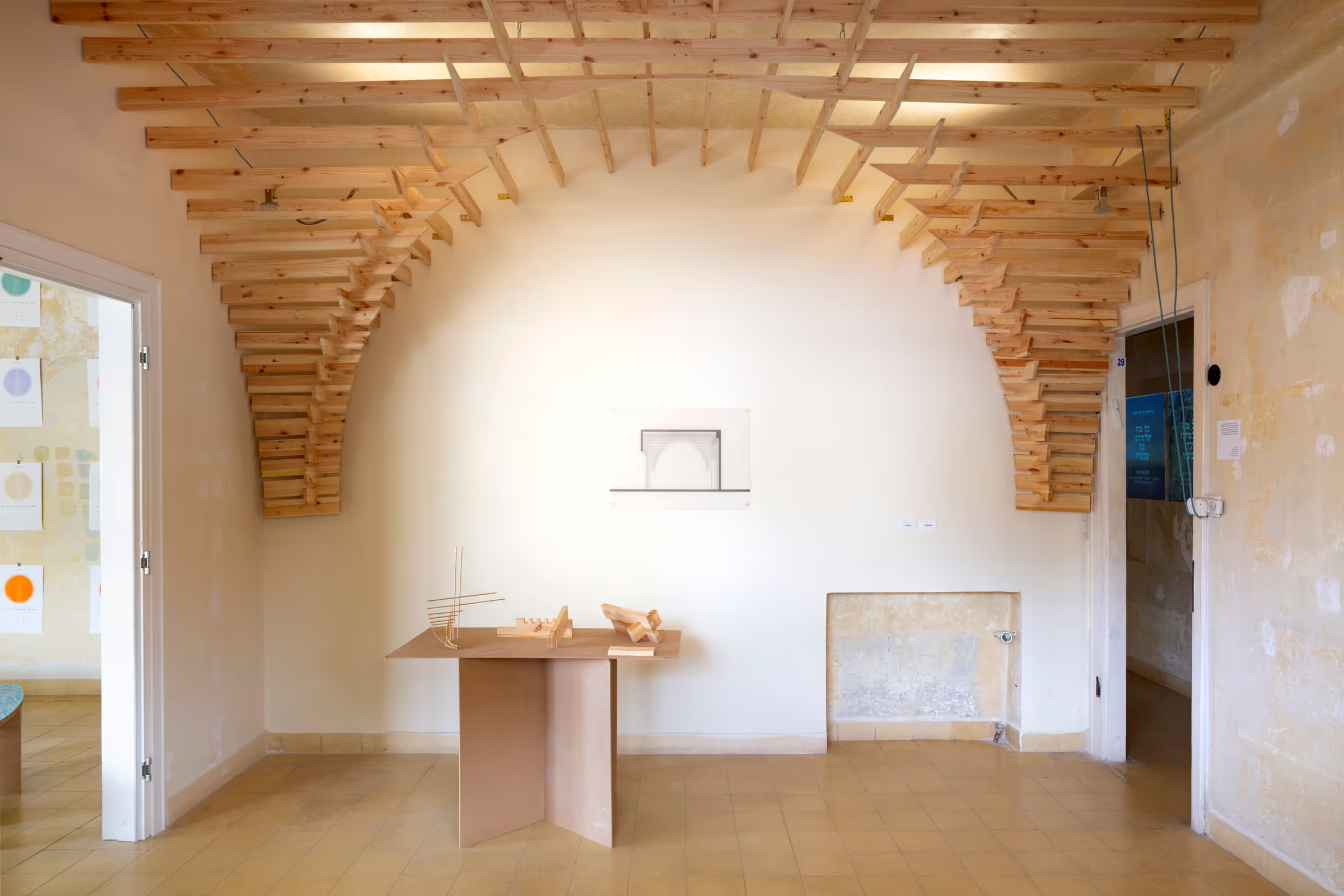
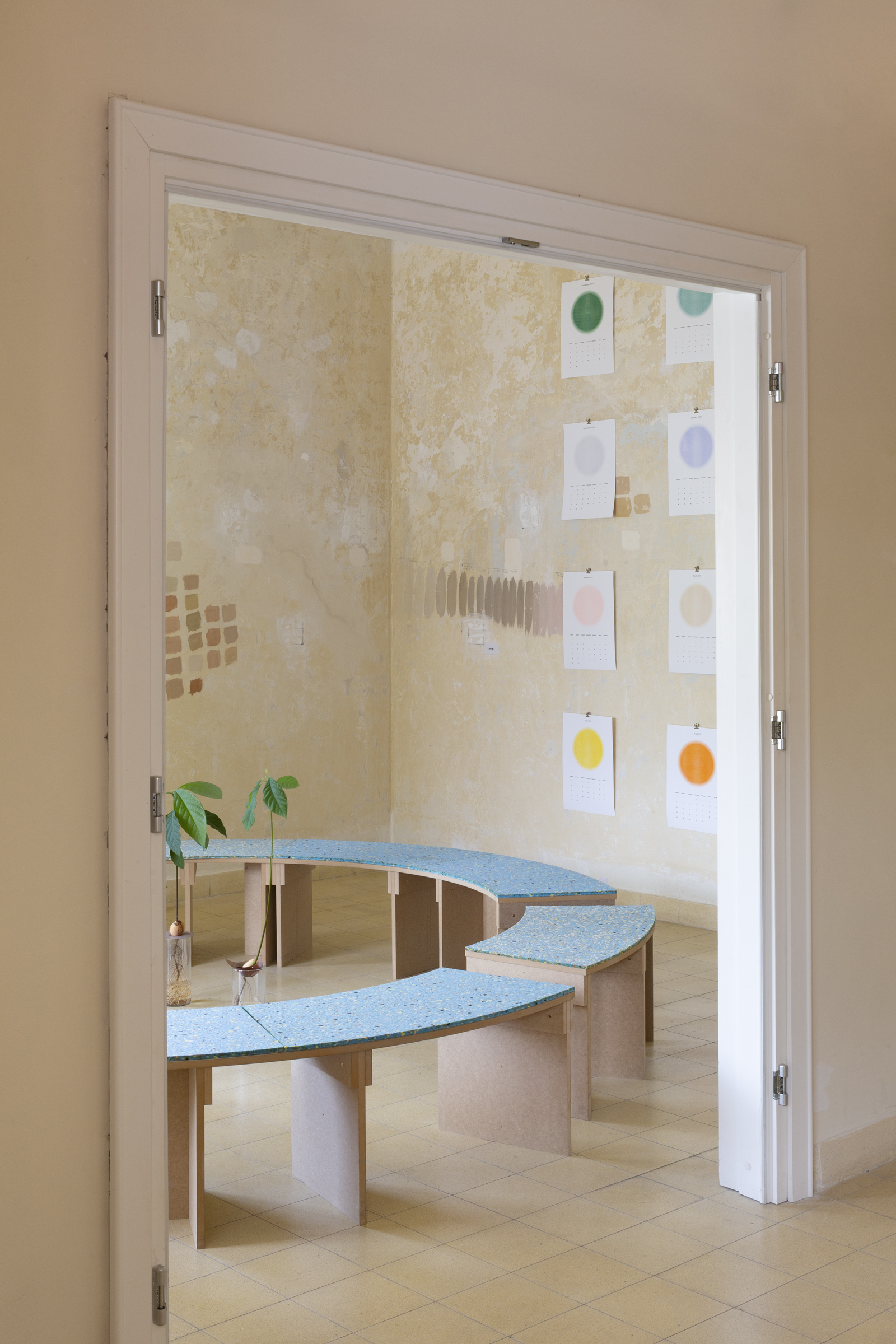
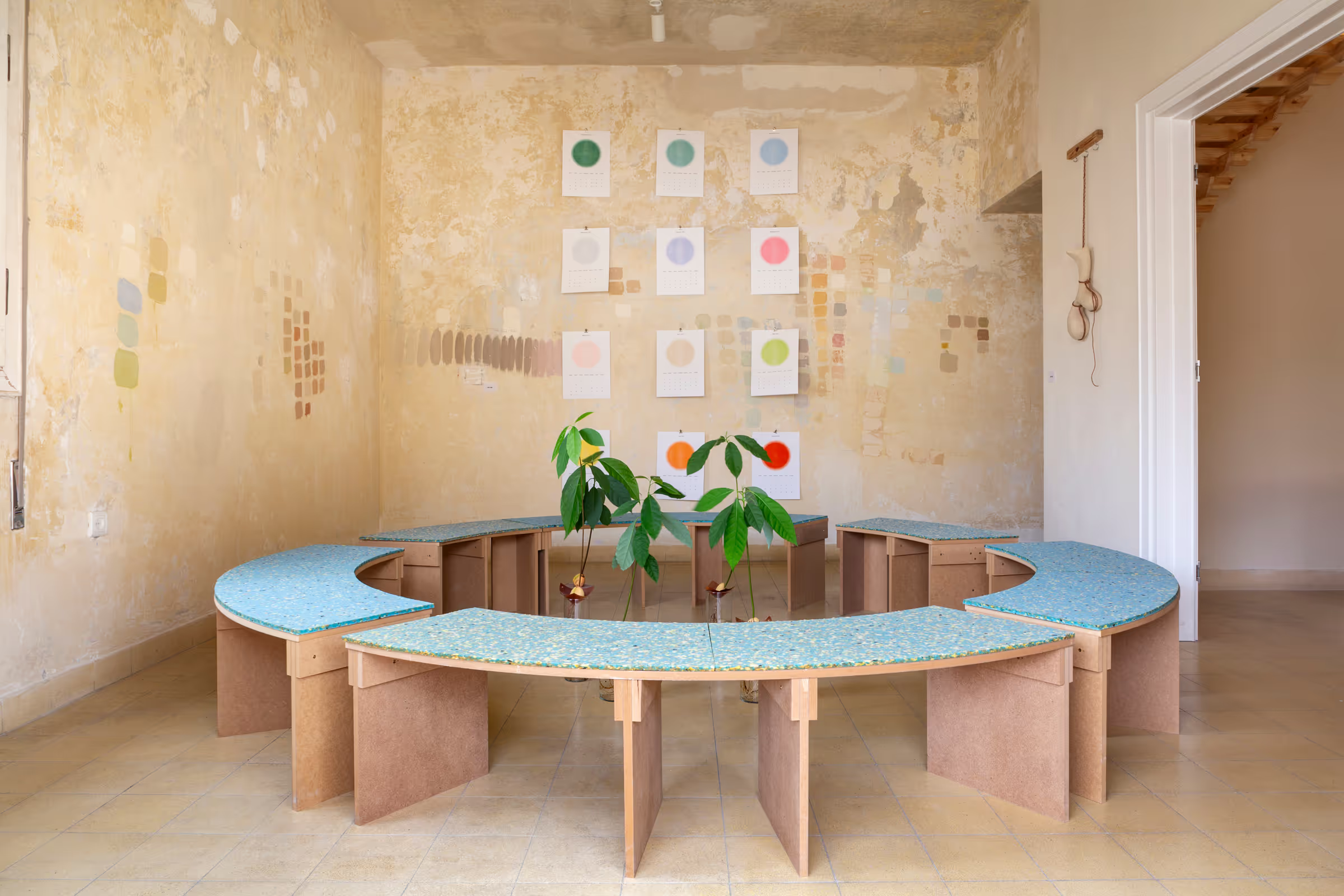
our days repeat themselves. the same actions, the same habits, the same places. this is the everyday life from which we distance ourselves toward the exceptional and the one-time event, toward the spectacle, fantasizing about the unattainable.
architecture too distances itself from the everyday and from the routine of life, designing the extraordinary, the spectacular, and today, more than ever, it is entangled in the image and the fantastical.
the everyday exists between the apartment and the city, in the streets, among the gears of the large systems that operate the urban space, and also within the private space of the individual, at home. architecture is the space of the everyday, and it holds the possibility to shape our living environments through routine. but can the everyday be seen as variable? can that which repeats be understood as unique? can architecture be designed for the everyday?
works by david havrony

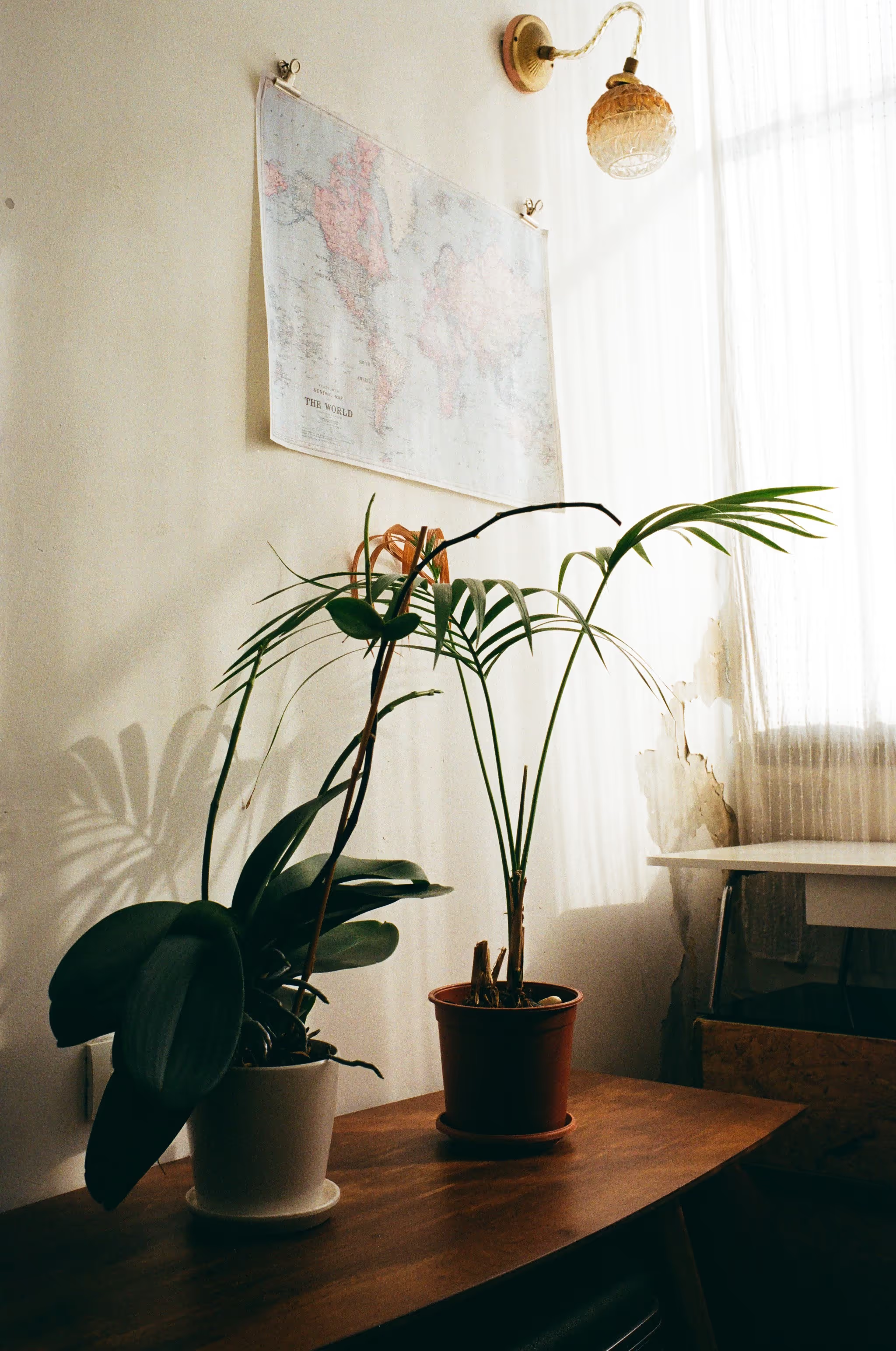
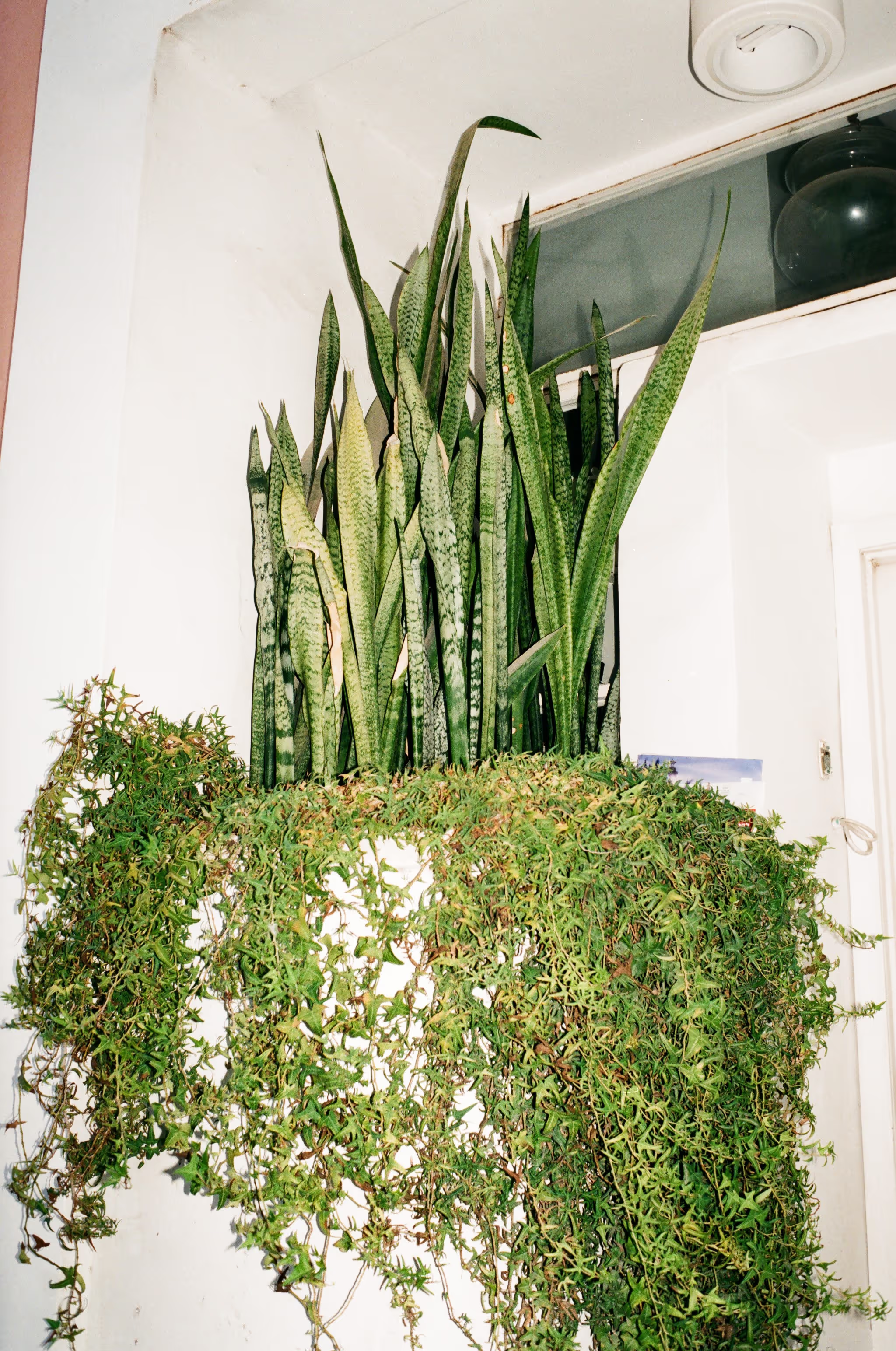
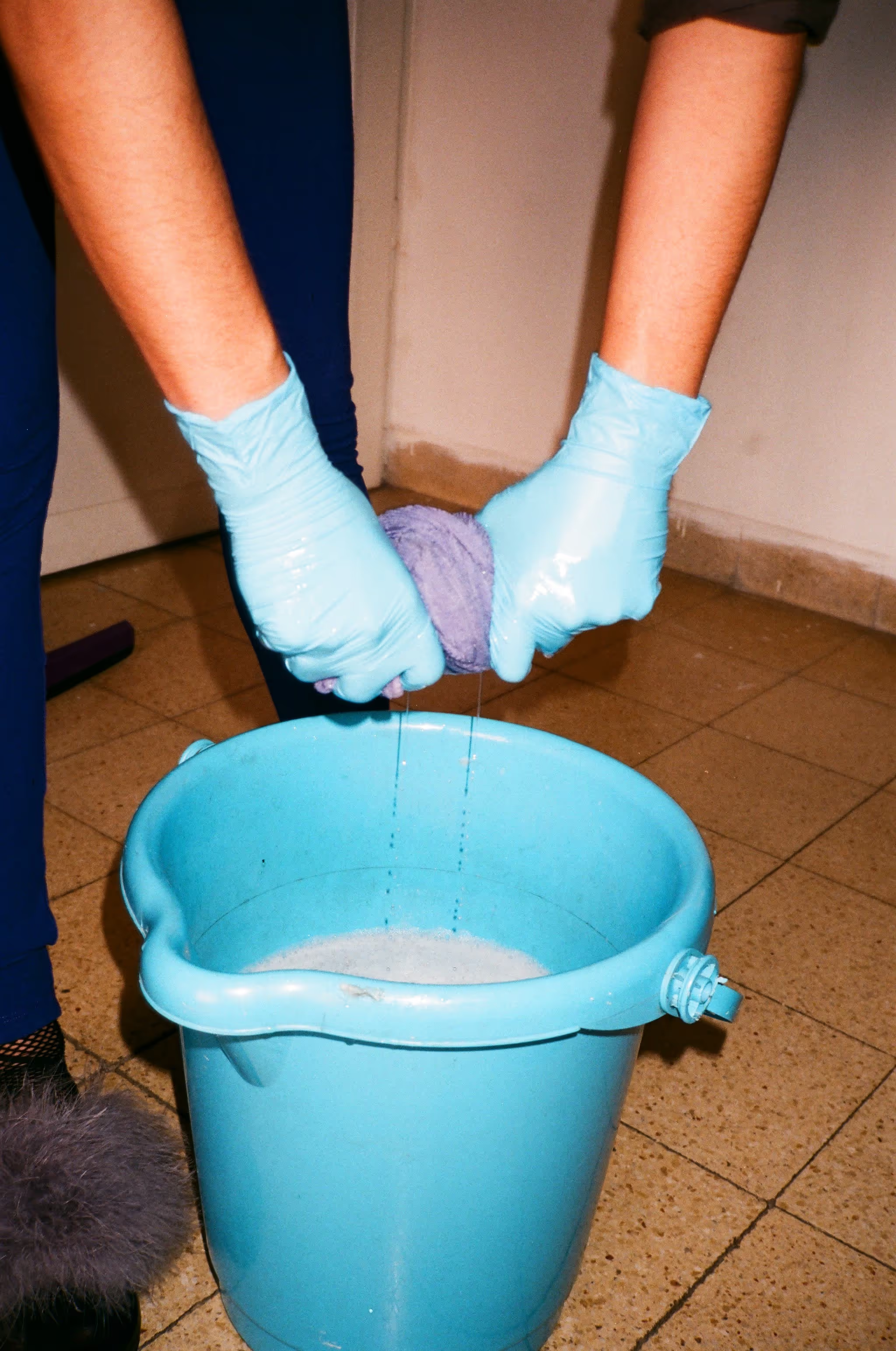
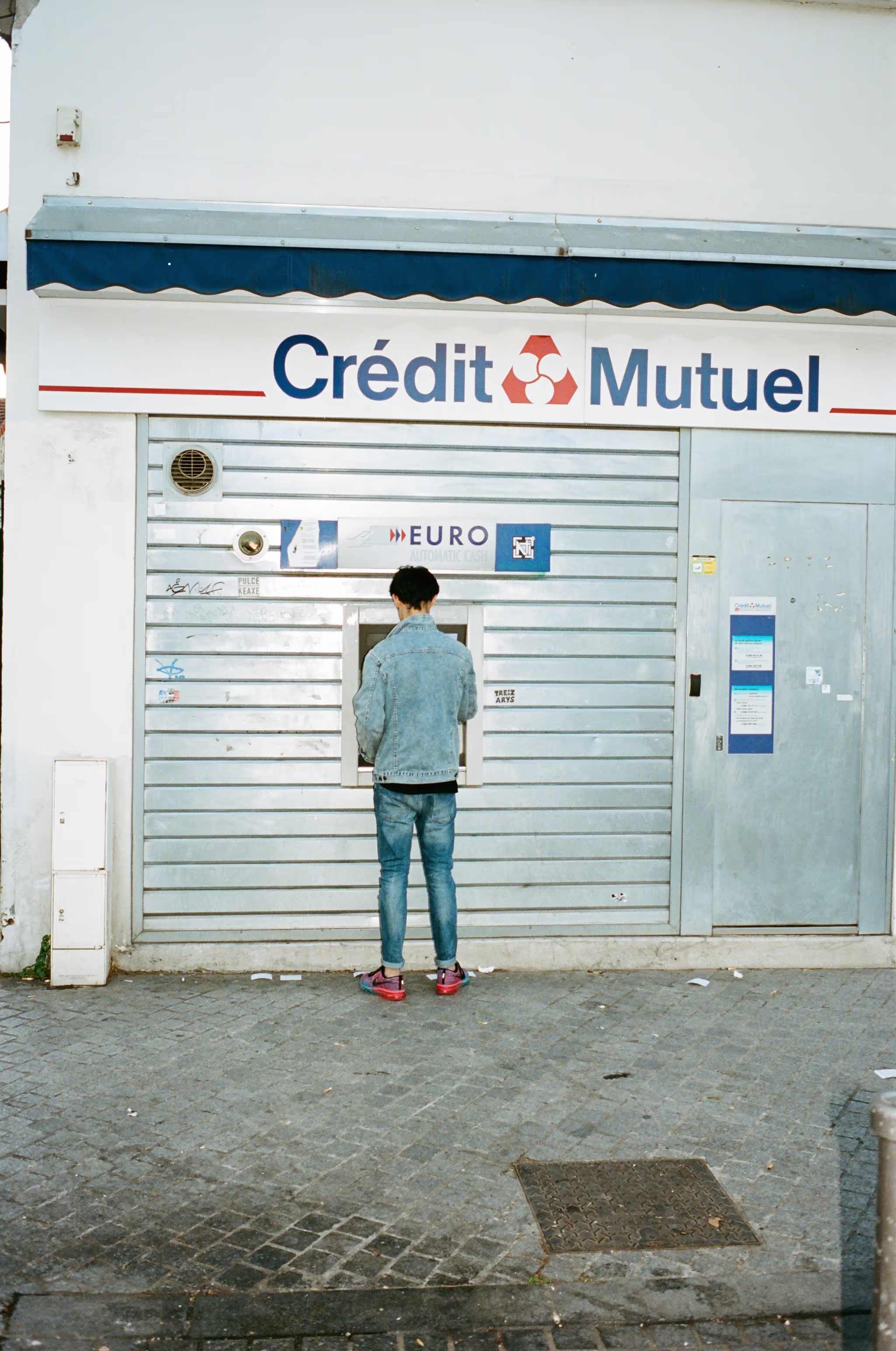
in the nineteen sixties, the painter and sculptor constant developed a city called new babylon.the text i will read is a lecture he delivered in november 1963 at the ica in london. the lecture was accompanied by slides that presented the city to the audience. two months ago, i traveled to utrecht to his archive, and for the first time i opened the box of slides that had been sitting in storage until that moment. on the box was written new babylon. i took nineteen slides from it. this lecture was read only once, and it will now be presented again in full at liebling house in a version edited with the artist meshi oliniki.
i have been asked to present here my project, called new babylon. you may wonder why an artist like myself spends time imagining and describing an imaginary city, and why i am interested in urban ideas at all. i want to convince you that new babylon is not a project in urban planning, but a way of thinking, imagining, and seeing life. since new babylon is born out of contemporary culture, i will begin by telling you about my artistic view, or rather, the current desperate state of art.
(page turn)
my personal artistic crisis and my doubt in art itself cannot be understood, nor my provocative attitude toward society, without clarifying who the artist is, at what moment i appeared in society, and when we can expect me to disappear again. it is curious that people continue to speak of art and artists as if these words represent ideas that are always universally understood, as if art is merely an odd activity and i am some other kind of person, different from the ordinary human being.
(page turn)
since the beginning of the twentieth century, there has been much talk about the creative abilities of the human species. more than one avant-garde movement declared that poetry is born from this creativity, from humanity itself: "la poésie doit être faite par tous."
the realization of such a universally creative society, of course, cannot rely solely on artists. it demands a fundamental transformation of our society.
in past societies, creativity was never essential, not even important. what was essential was the production of basic goods. yet, despite people devoting and sacrificing their lives to production, human history remains a history of hunger and lack, where man had to spend all his energy on exhausting labor just to survive. (page turn)
my appearance in human history comes with the rise of the bourgeoisie. the bourgeoisie was never a creative class. money enabled them to fulfill their dreams, and they did so by employing artists. artists became a tool in the bourgeois struggle against the aristocracy, which until then had embodied culture.
the division of humanity into creative and non-creative people is a social division, consisting of a ruling class whose members do not work and a working class beneath them. one could say that without this division, there would be no culture and we would not be gathering in this room.
(page turn)
as an artist, i do not represent the ruling class, but i am dependent on it. one could say that i work for the ruling class. it is my employer. the art as we know it today, in its moment of collapse, is produced within systems of economy and money.
having clarified this, we can better understand the critical condition in which artists find themselves since the beginning of the industrial revolution. before a machine can replace human labor, it must first be produced. that production demands energy, and that energy comes at the cost of creativity.
art understood this, even unconsciously. otherwise, how can we explain the immediate and violent resistance to mechanization, a resistance that artists and avant-garde movements still share today? a resistance to a technological society where artists have no place. this resistance is the result of a constant conflict between technology and creativity.
(page turn)
but today the situation we face is different. the growing production of machines leads to the end of human labor. i can now say with confidence that we are heading into a new era. an era in which production is automated and humans are freed from labor and hunger. for the first time in history, humanity will be able to establish an affluent society where no one needs to exhaust themselves through work, and everyone can use their energy for creative development.
(page turn)
in theory, there is no action a machine cannot perform. the only activity it cannot and will not do, the action that distinguishes humans from machines, is imagination. the one thing computers cannot do is the unpredictable, the whimsical creativity of a human being who changes and reshapes the world. (page turn)
so now i ask: how will free human beings use their limitless powers? in what way will they realize their freedom? what kind of life do they aspire to? what is clear is that the freedom i speak of is not the so-called "freedom" we associate with the lives of artists. the free person of the future will live a reality they choose, in a world they shape freely, a life beyond mere survival.
this societal transformation i describe is a revolution in human behavior. a person no longer tied to productive labor is no longer bound to permanent settlement. they will move, wander, expand and shift the space of their life. in other words, space will be free for them, just as time will be at their disposal. i believe we are reaching that moment in history.
(page turn)
but let me ask you this: can a human being who lives in absolute freedom, who owns time and space, be expected to live a creative life? will they not waste their days in idleness and boredom? is it not senseless to aim for a new society and a new life if we do not believe in the creation of a new kind of person?
in answering these questions, i will repeat that i, the artist, differ from other people only in my social habits. my creative abilities are not different from those of anyone else. art has always sought to represent the world, that is, to change it and make it better.
now, my task is to offer a new and exciting reality, and to do so instead of simply depicting the unsatisfying one about to unfold. (page turn)
a person does not have to be an artist to be creative. he will shape his own life, design it according to his unknown needs. these will emerge only once he has gained complete freedom. and so, the artistic work i dedicate all my time to is the design of new babylon.
(pause – drink water)
new babylon represents this environment of the playing person. but before i speak about it, i want to clarify something about our cities. the functional cities that have developed throughout the long human history, during which human life was devoted to utility. these cities are in no way suited to the needs of the creative person. the environment they need is entirely different: flexible, transformable, allowing every movement, change of location or mood, every behavior. these spaces cannot be planned, nor can their use be predetermined.
(page turn)
in new babylon, a person's home is not the center of their life. the primary and most significant space in their environment is what i will call an extensive social space. a free space where people move in search of adventurous conditions of life, lively, alert, and active lives. a space for social realization, where people encounter each other, influence one another, and fulfill their lives.
(page turn)
it is now clear why new babylon is not a project. it is not a plan for a city as we know it, a city claiming to provide everything architects and planners think people need. quite the opposite. new babylon remains undefined, and its elements are undetermined. the space is designed to be mobile and flexible, a possible space, vast and immense, whose form and atmosphere are changed endlessly by the people who live in it. thus, new babylon is little more than a minimal framework for free movement. everything in it is possible so that anything can happen.
(page turn)
let me speak for a moment about the critical conditions of life that led to the two fundamental premises of new babylon. the first and most important is population growth, which has led to the almost complete urbanization of the landscape that was once our common space. the second is the growth of mechanized mobility, which has extended the living space of each person. this is the new social reality, and it cannot be ignored. we cannot continue to allow mobility to destroy the social space of cities, nor can we let population growth turn cities into uniform, boring, dead built environments.
(page turn)
any future plan that aspires to be as free as new babylon must solve these problems. any failure to do so is an attack on free life. therefore, the two basic premises of new babylon are practical. i propose a separation between mobility systems and living space, and a firm separation between artificial built environments and nature. from this follows the basic structure of new babylon:
urbanization becomes a clear system of covered spaces (what i will call sectors) and between them, vast open spaces without any buildings: natural parks, agricultural lands, and gardens. a system that can be thought of as a limitless, borderless network that theoretically extends across the entire earth.
(page turn)
the covered space, which i call a sector, is vastly larger than any building as we know it. i will describe it now as a spatial system of platforms, leaving the ground free for fast and intense mobility. above them, there may be airports allowing even faster travel between sectors around the world. most of these platforms are empty. they are in fact an extension of the earth’s surface. a new envelope for the planet, expanding and amplifying the space of human life.
the non-functionality of this construction, similar to a playground, renders any attempt at spatial division meaningless. instead, a fairly chaotic arrangement of differently sized spaces will emerge, built and dismantled using mobile walls, floors, and stairways. a social space that responds to the changing needs of a changing population passing through its different areas.
(page turn)
life in new babylon does not suit fixed habits and patterns. it is a series of situations demanding engagement. this non-functional and fantastic way of living forces us to move quickly from one place to another, from one sector to another. in a way, life in new babylon can be defined as nomadic life. people are constantly moving and wandering, with no need to return to a specific place that will soon change anyway.
therefore, in each sector, there are private rooms, like a hotel, where passersby can rest for a while, spend the night, make love, relax, and recover.
rarely will they stay long, because movement is easy and such life is interesting and intense. so intense that each moment erases the memory of the one before it, which is often the very memory that paralyzes our creative imagination.
(page turn)
the playing person in new babylon roams a world that emerges beneath their feet. i can say that a single day in new babylon may offer more experiences and sensations than a long journey in any other era of our history. every square kilometer of new babylon’s surface is an endless space of new and unknown situations. nothing remains fixed, everything changes. the mobile structure of new babylon, its climate and lighting, ensure the constant variation of the spaces we inhabit.
(page turn)
to create the widest possible range of conditions, the interior of the sectors is climate-controlled, enabling any desired environment to be created. thus, by moving from one space to another, a person can experience the most extreme climatic contrasts.
the use of artificial lighting not only greatly expands the variety of light options, but also frees humans from dependence on sunlight even more than is already possible today.
thus, the technical means of creating atmosphere (methods of controlling light, temperature, humidity, and other atmospheric conditions) are used creatively as an artistic medium.
we need not dwell on attempts to imitate natural conditions. we must instead exploit the vast diversity of artificial climates to make transitions between sectors of new babylon as adventurous and variable as possible.
(page turn) (drink water)
with the help of this model presentation, i want to illustrate my idea. please consider it as a proposal, like one that a poet or artist might offer, a proposal for a world different from our utilitarian one, from which i am trying to escape.
i hope it helps you imagine how a non-functional city might differ from the ones built until now for the working man.
(page turn)
i do not wish to predict the future. that is impossible. i will only try to offer you, and myself, an idea of what the world might look like once labor is abolished.
i ask you to look at this model as if you are visiting a new and unknown city and are now experiencing its atmosphere.
the rest depends on your imagination.
(turn off the light) (sound enters) (slide presentation begins)
photography: fondation constant archive, co-editing: meshi olinky


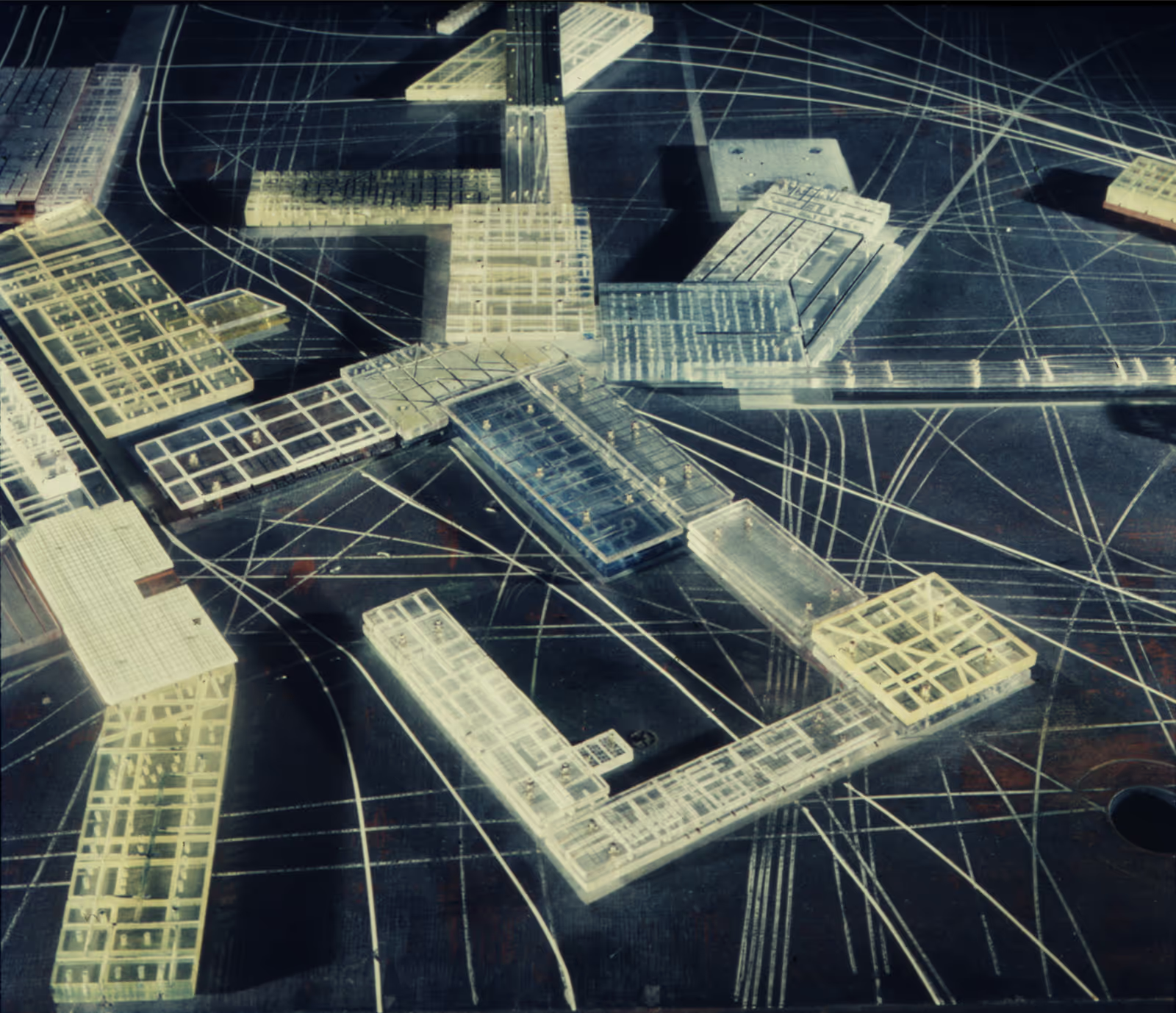


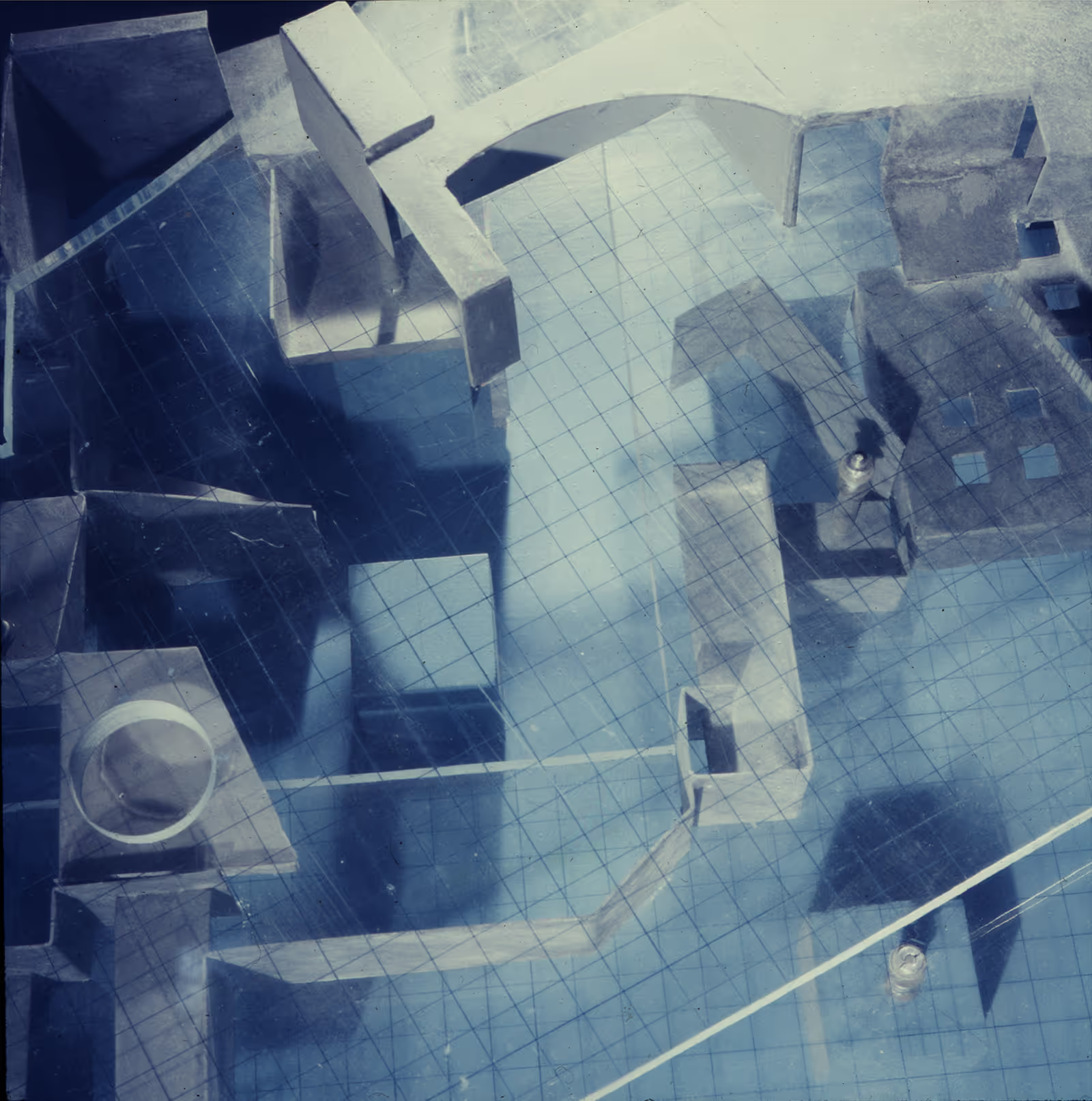
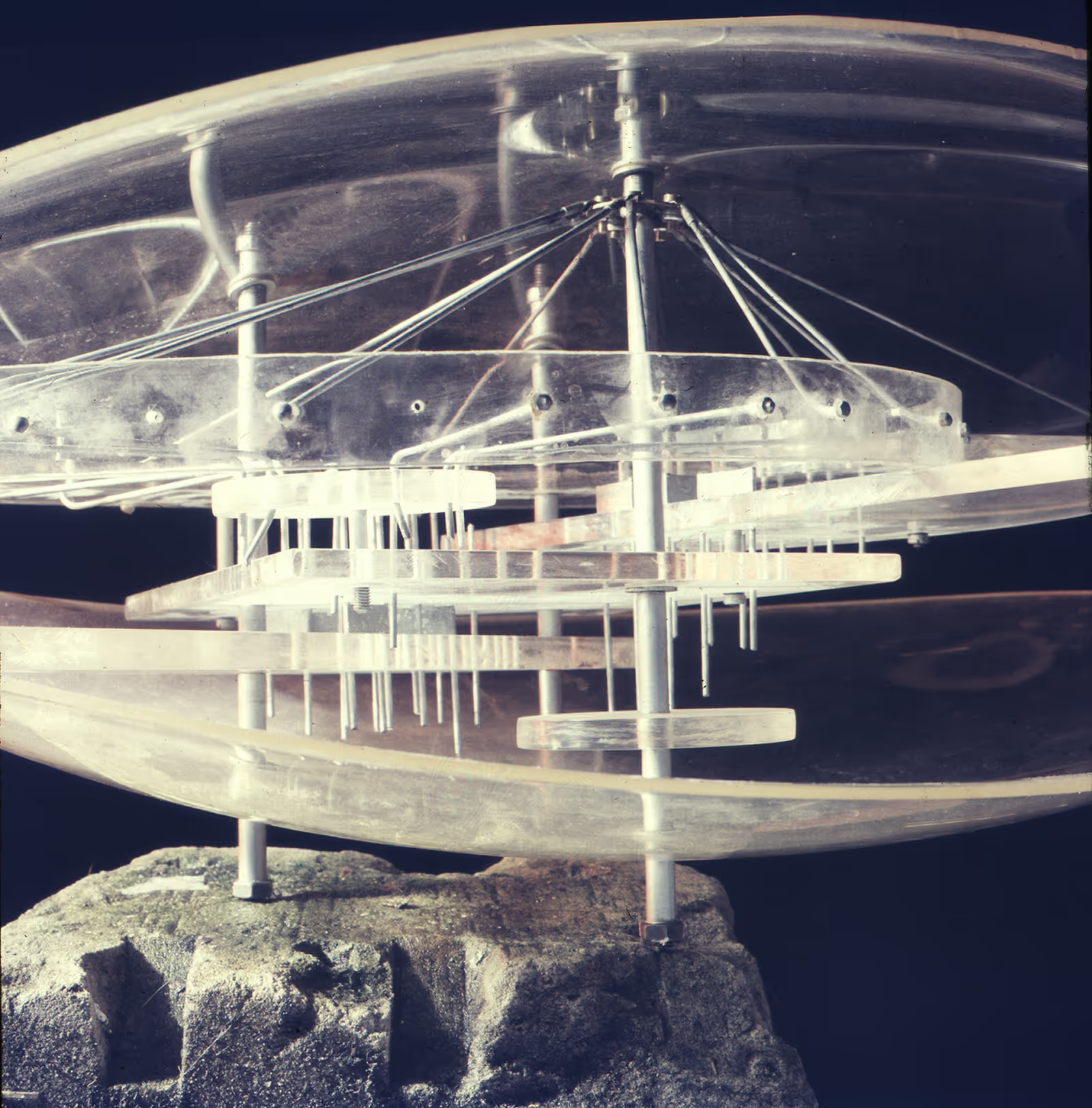
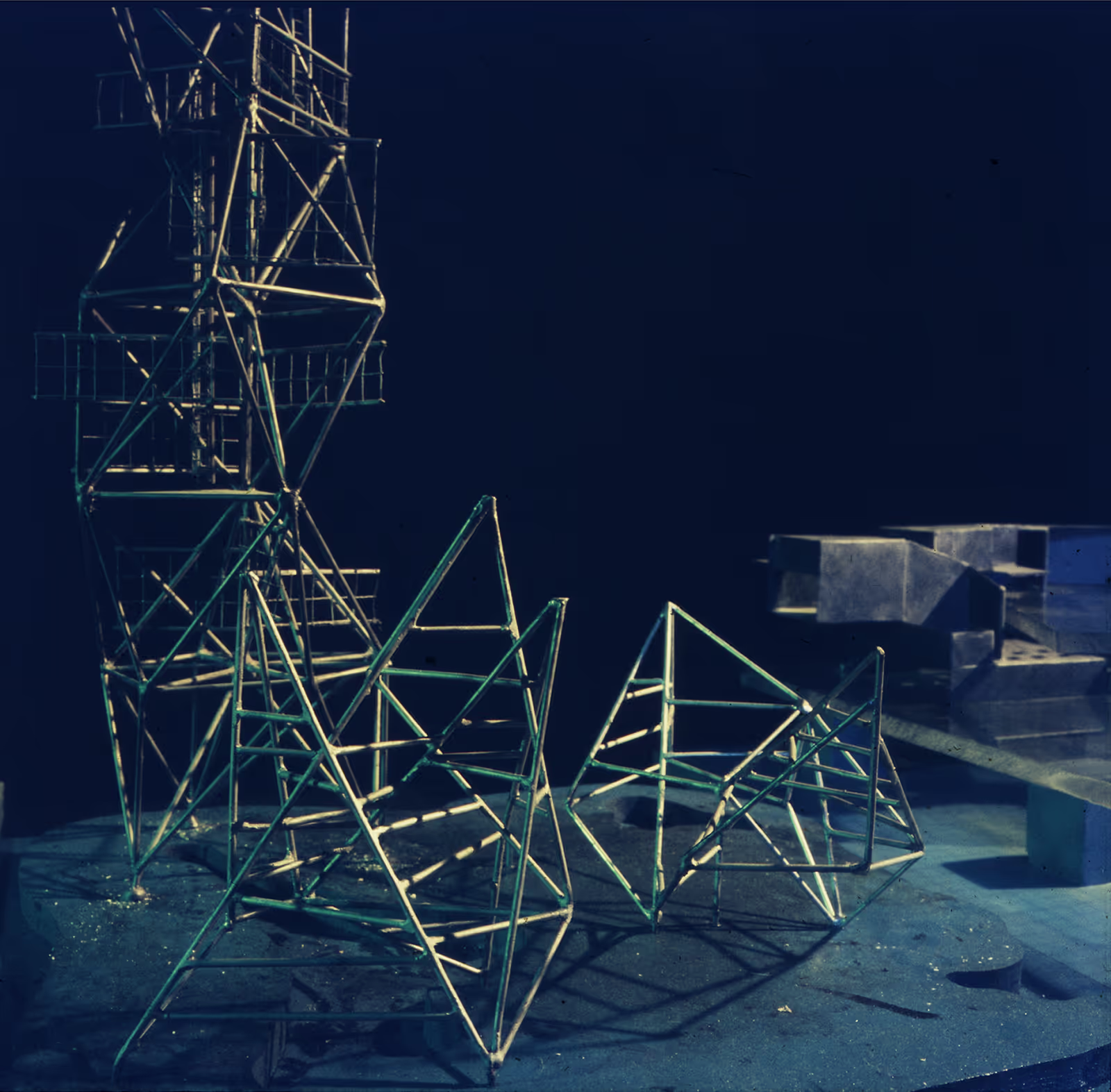
the school of the city at liebling haus in tel aviv is a place dedicated to learning life in the city through space. a school where space is not studied, but learned through. learning architecture through space, experience, and everyday life, the school approaches the city as an active field for observation, action, and engagement, and develops ways of learning that emerge directly from being present within space itself.
liebling haus is a center for architecture, and from the outset the school questioned its own essence. what lies at the core of studying architecture and design, and how can learning take shape when its subject is space, always experienced within changing environments. this led to the understanding that space itself is the core of architecture, and that it cannot remain a historical or descriptive subject. it must offer each person tools to read any place independently, while cultivating an awareness of the beauty, qualities, and values of architecture in everyday life.
learning to read space is also learning how to act within it. grounded in a phenomenological approach, the school learns space through direct experience, inviting attention to the senses, personal curiosity, and the desire to explore reality. from this position, a language of action, engagement, and direct relation to the world emerges.
the school functions as an independent education department, a school in its full sense, devoted to the development of content and to the development of methods of learning. it is supported by a team of artists, designers, architects, and educators who develop the school’s learning practices through their own work, as well as through shared research, collaboration, and exploration. the intention is to create optimal conditions for free creation, for ideas and methods of execution, and for practices and experimentation developed by the school’s teaching team.
the school works with children and adults, addressing both a wide public and a professional audience. it offers diverse programs and expands aesthetic discourse toward new fields of action, learning, and engagement. this involves the development of a versatile pedagogy that continually refines its capacities through encounters with different ages, with professionals alongside a broad public, at every stage of life.
the school operates within liebling haus and throughout the surrounding streets and urban spaces. in doing so, it realizes the idea of a school that functions within the city itself, developing unique forms of learning that move between inside and outside, between intuition and practical research.
in the images, drawing class by omer shach, photography: yael shmidt
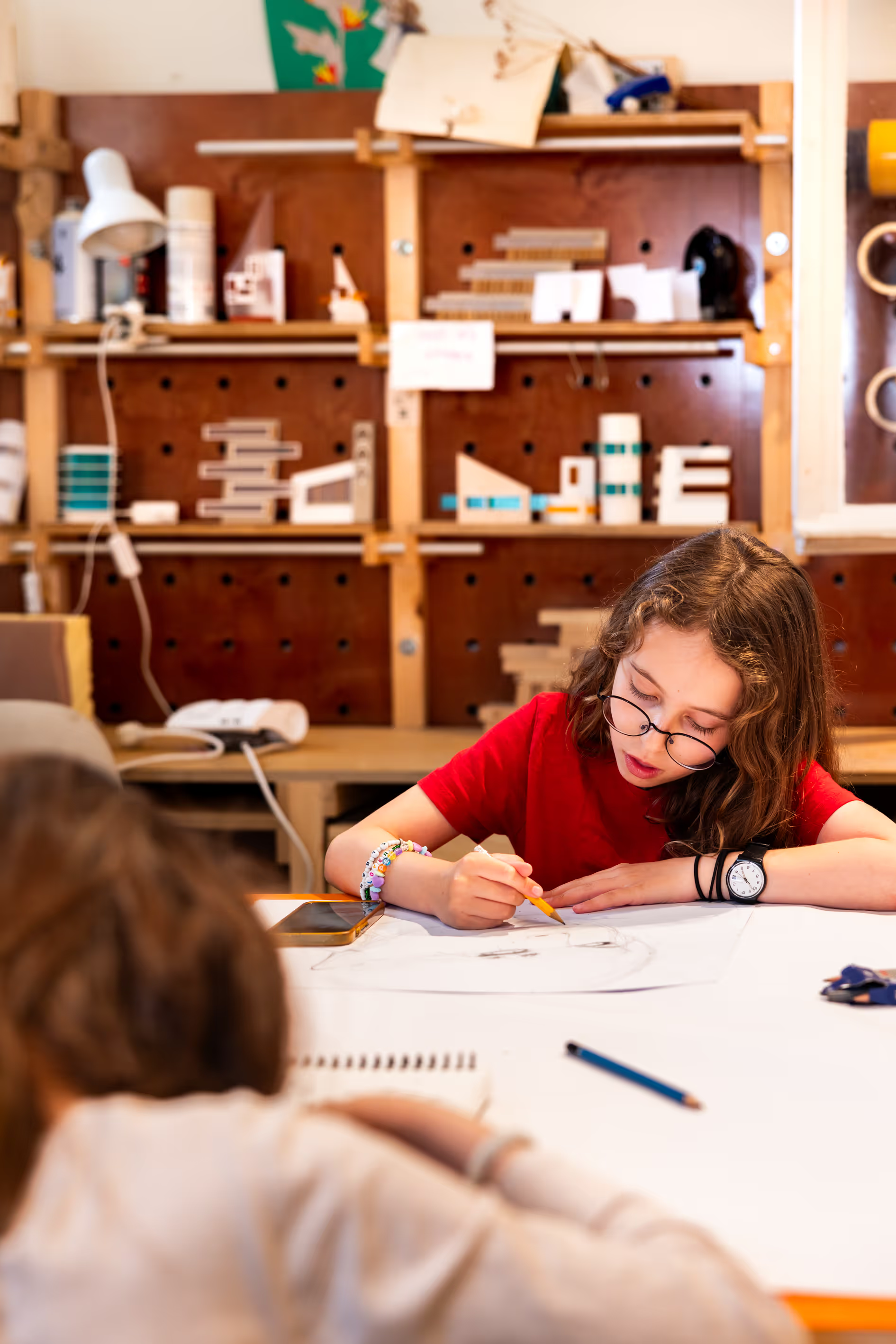
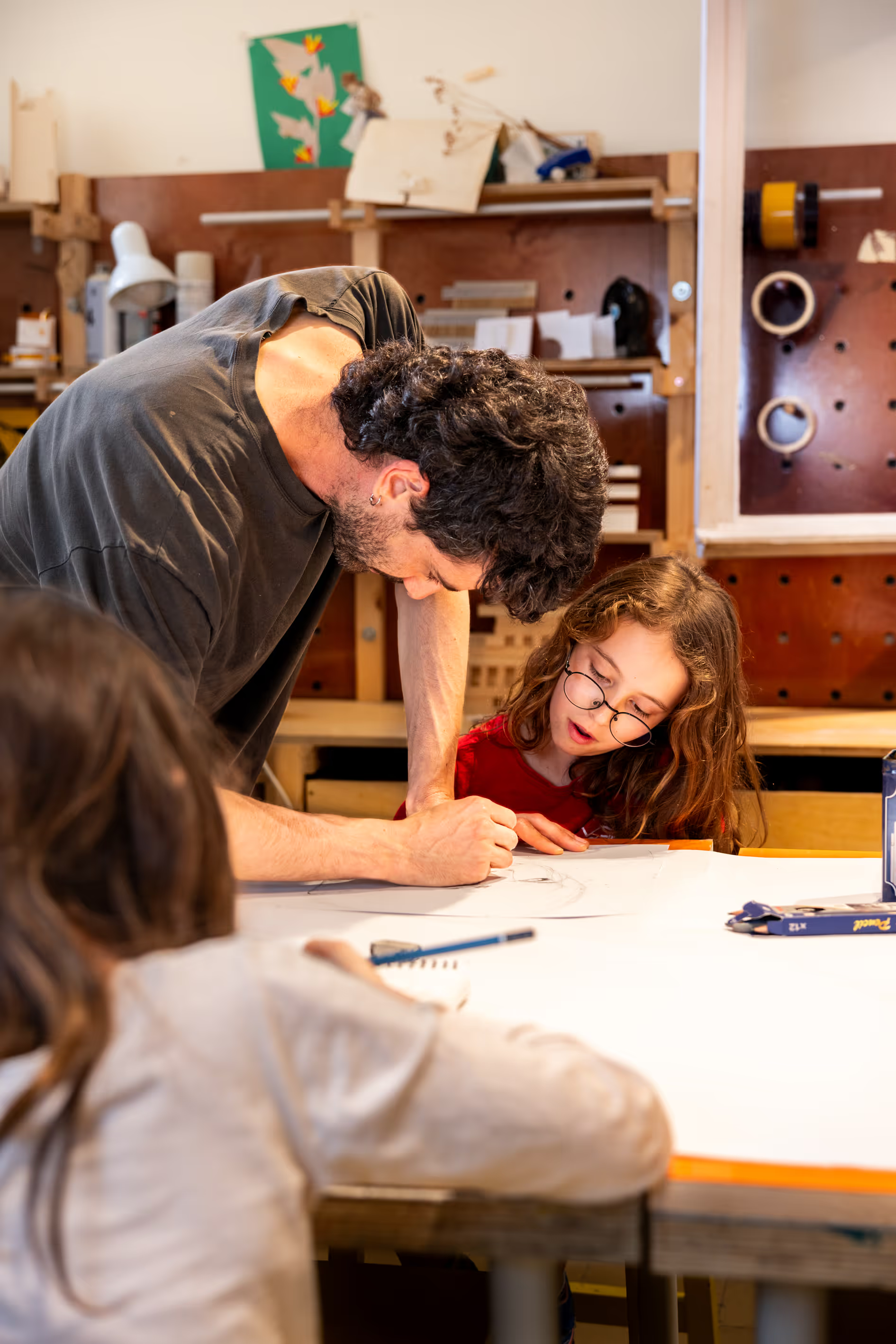
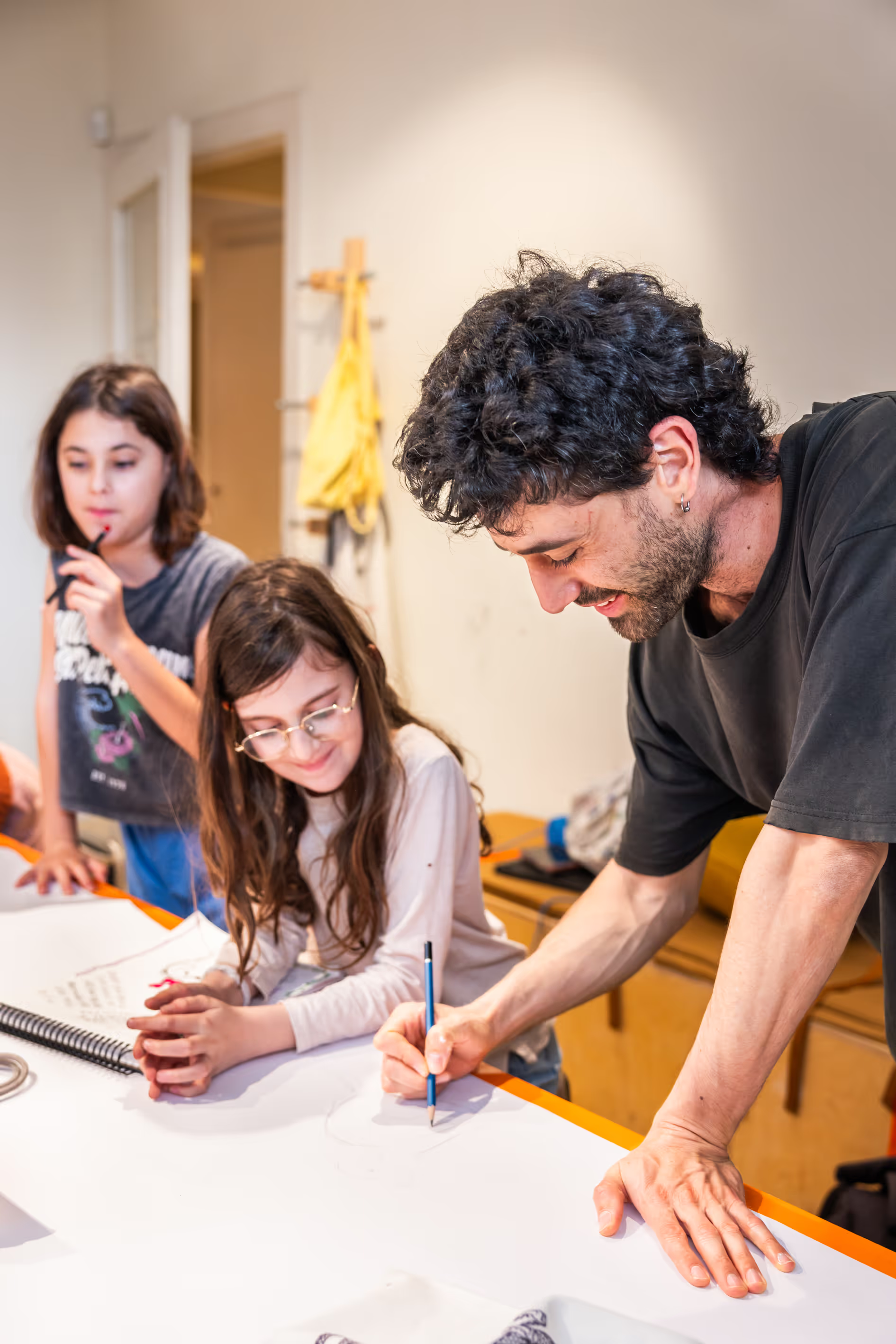
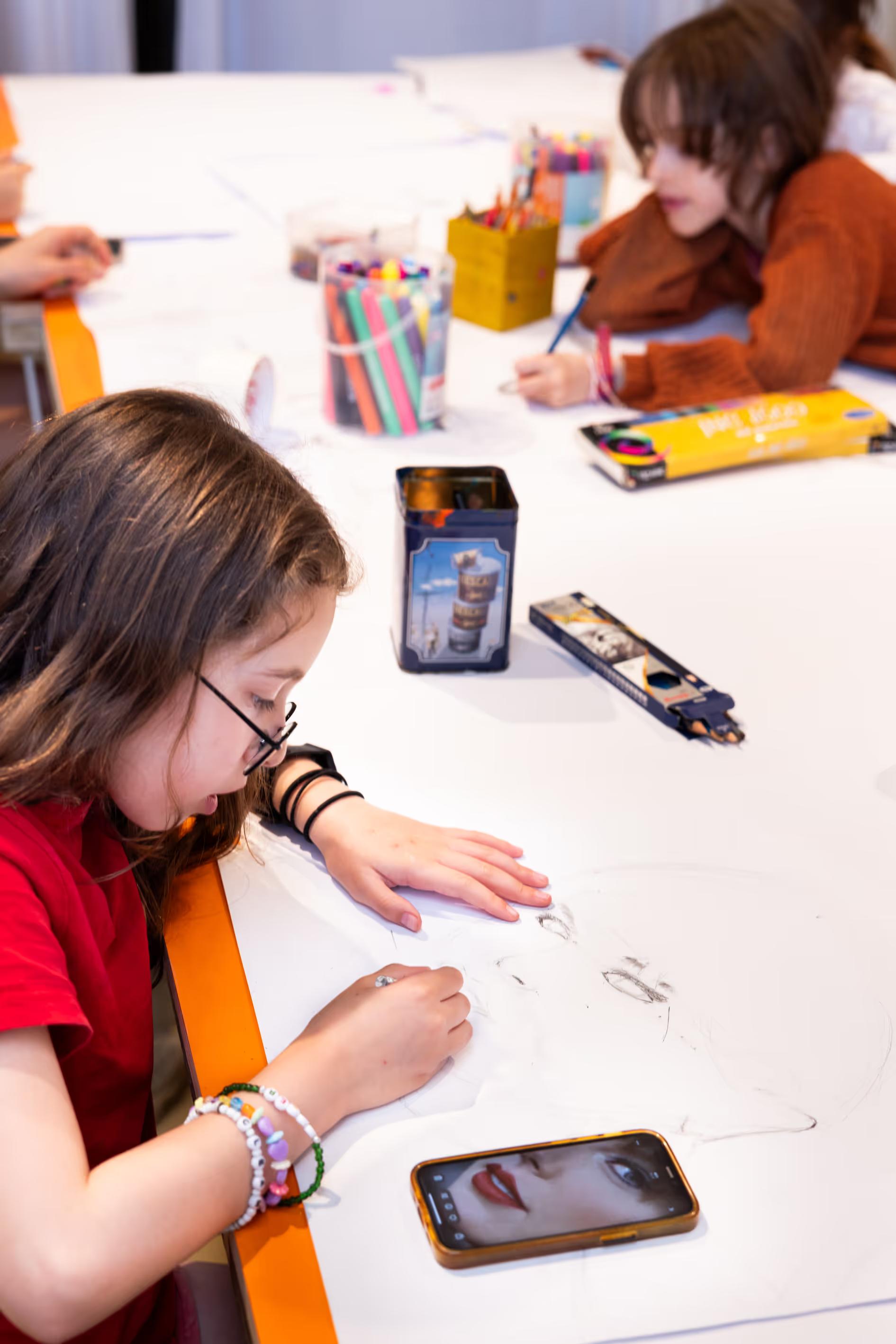
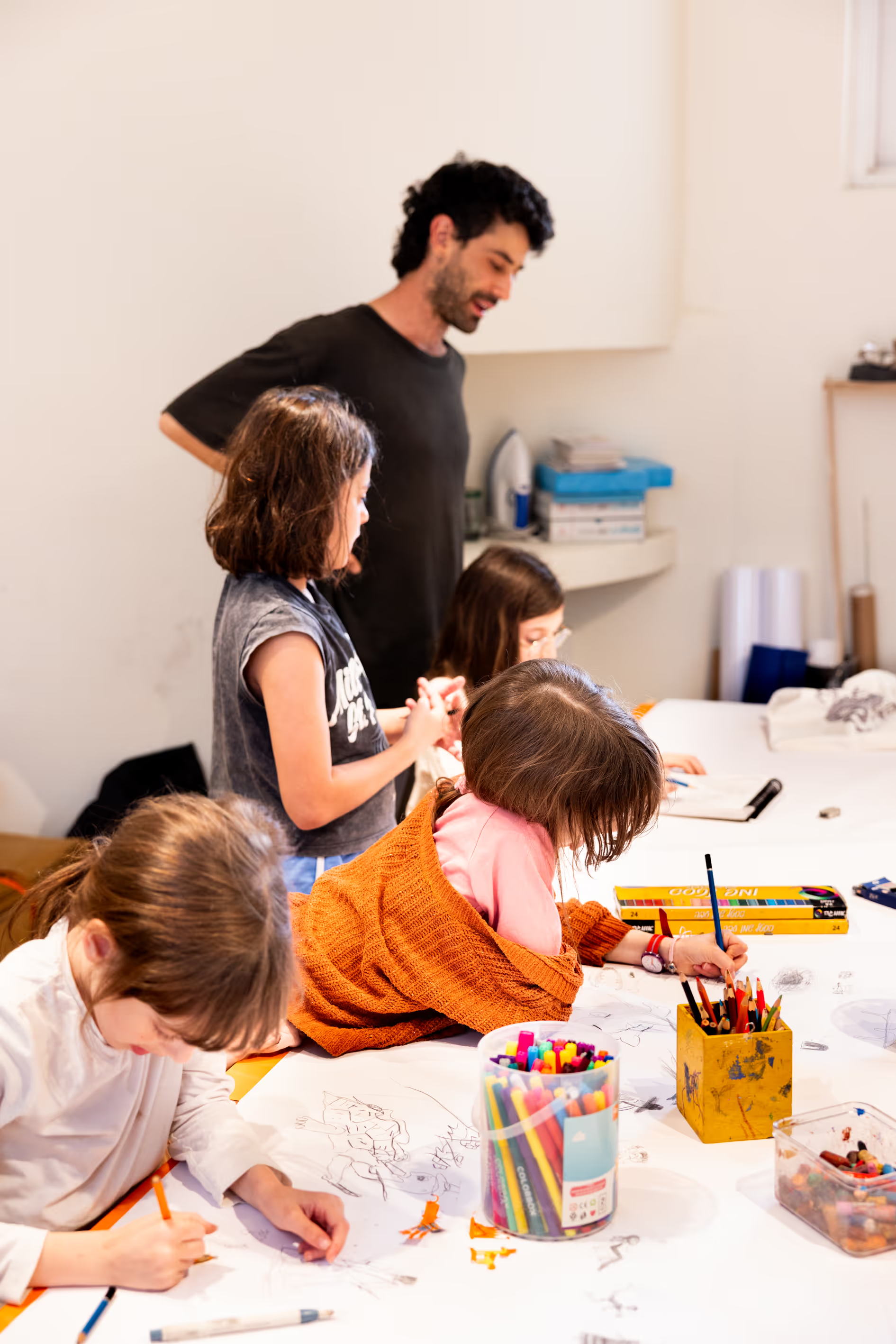
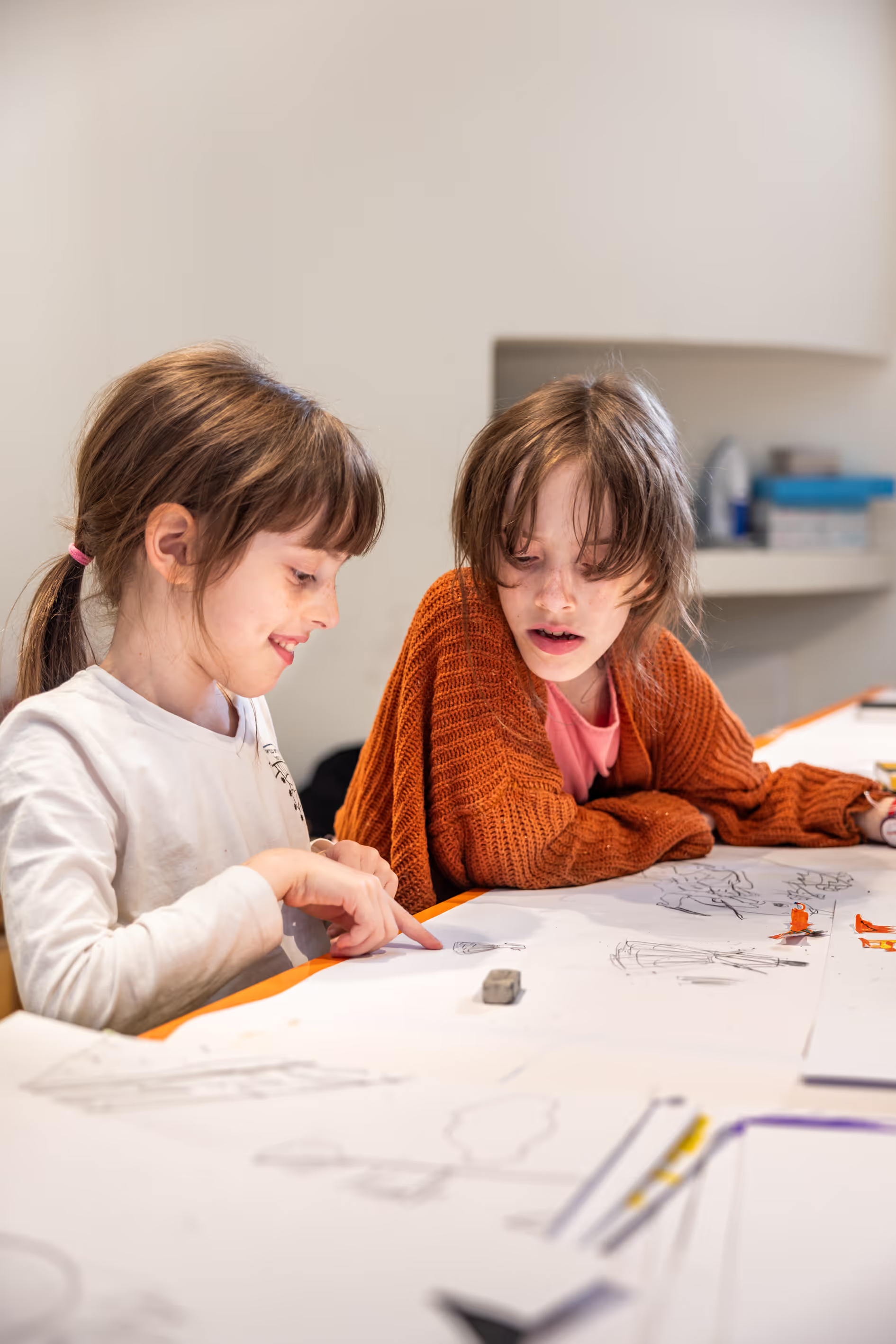
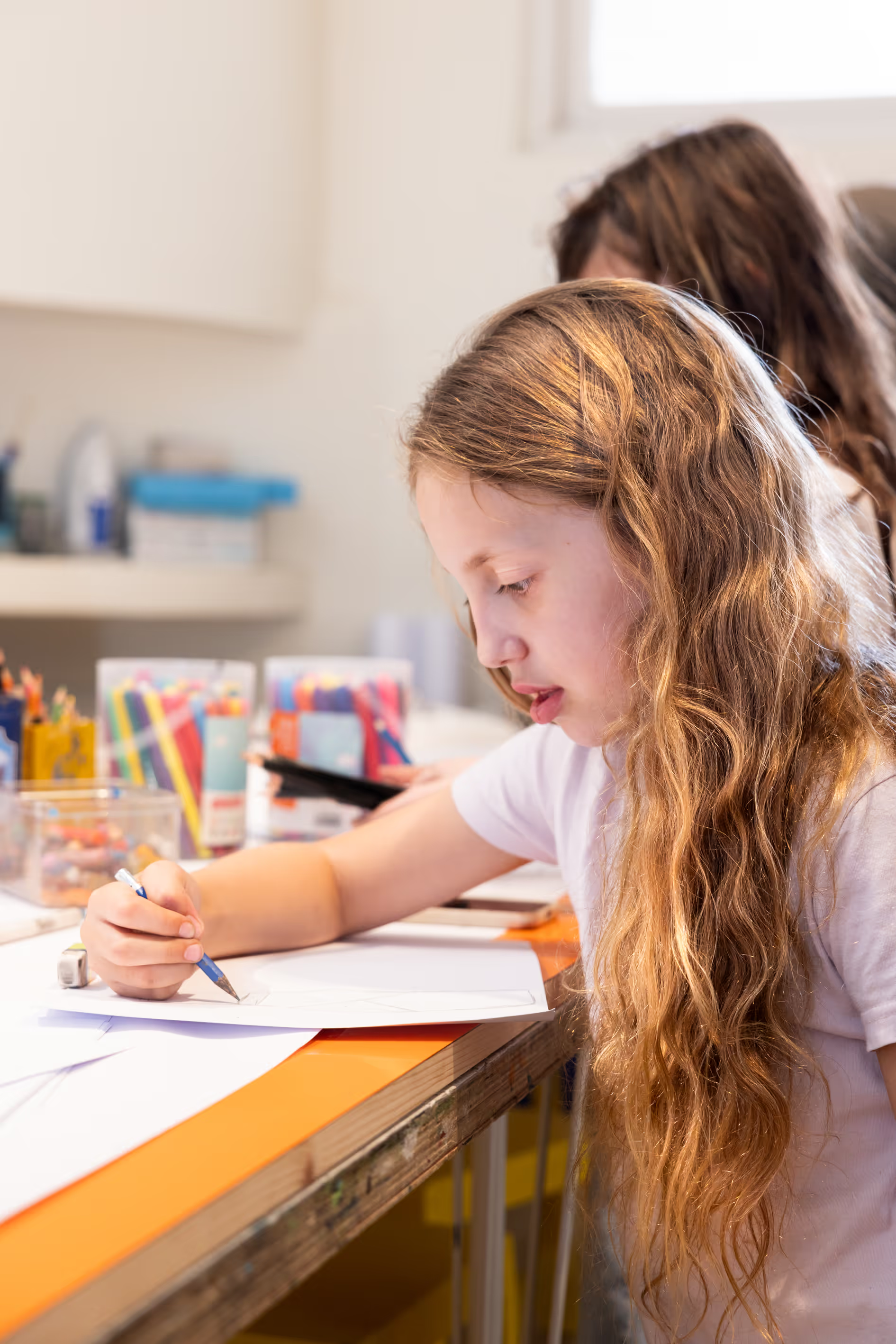
towards architecture as pedagogy is a master’s thesis that examines architecture as a lived, embodied, and pedagogical practice. it approaches architecture not as a finished object, but as an ongoing situation that teaches its users how to inhabit, perceive, and relate to the world.
the research argues that everyday spatial experience is itself a mode of learning. learning unfolds through the body, the senses, repetition, and attention, rather than through abstract instruction.
grounded in phenomenological thinking and informed by curatorial and educational practice, the thesis critiques modern architecture’s tendency to privilege abstraction and visual dominance over lived experience.
it proposes an alternative framework in which architecture functions as a pedagogical apparatus. this approach cultivates awareness, care, and a shared spatial language between architects and non professionals.
the research is closely tied to practice, drawing on exhibitions, learning programs, and spatial experiments developed through the school of the city and related curatorial projects. these case studies demonstrate how architectural thinking can operate across scales, from domestic interiors to public space, and across formats such as exhibitions, exercises, and performative actions.
the thesis ultimately calls for an architecture that reconnects design with everyday life, treating spatial experience as a fundamental cultural and educational resource.
the thesis was submitted to the policy and theory of the arts department at bezalel academy of arts and design. photography from the living in the city program, yael schmidt.
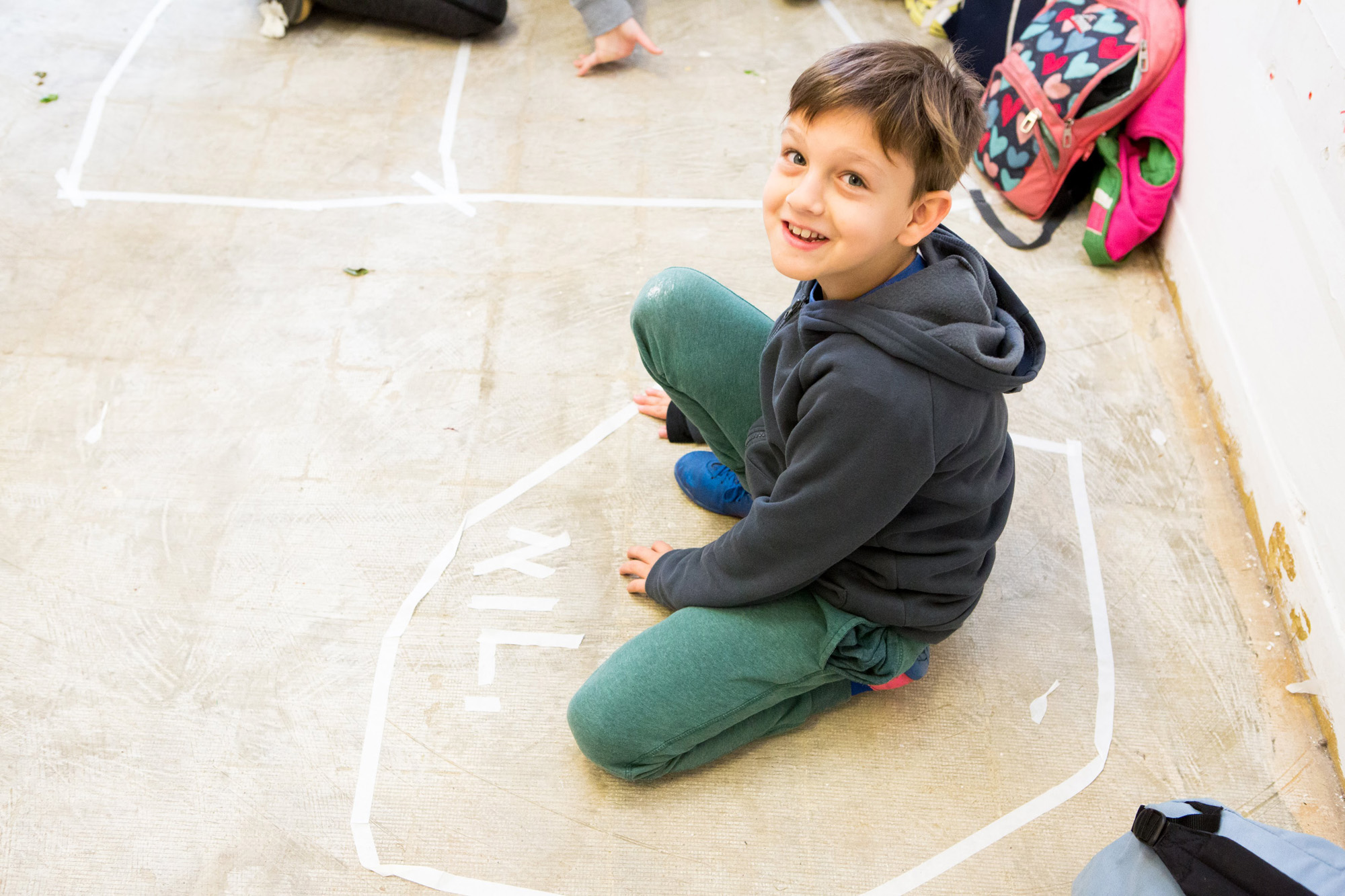
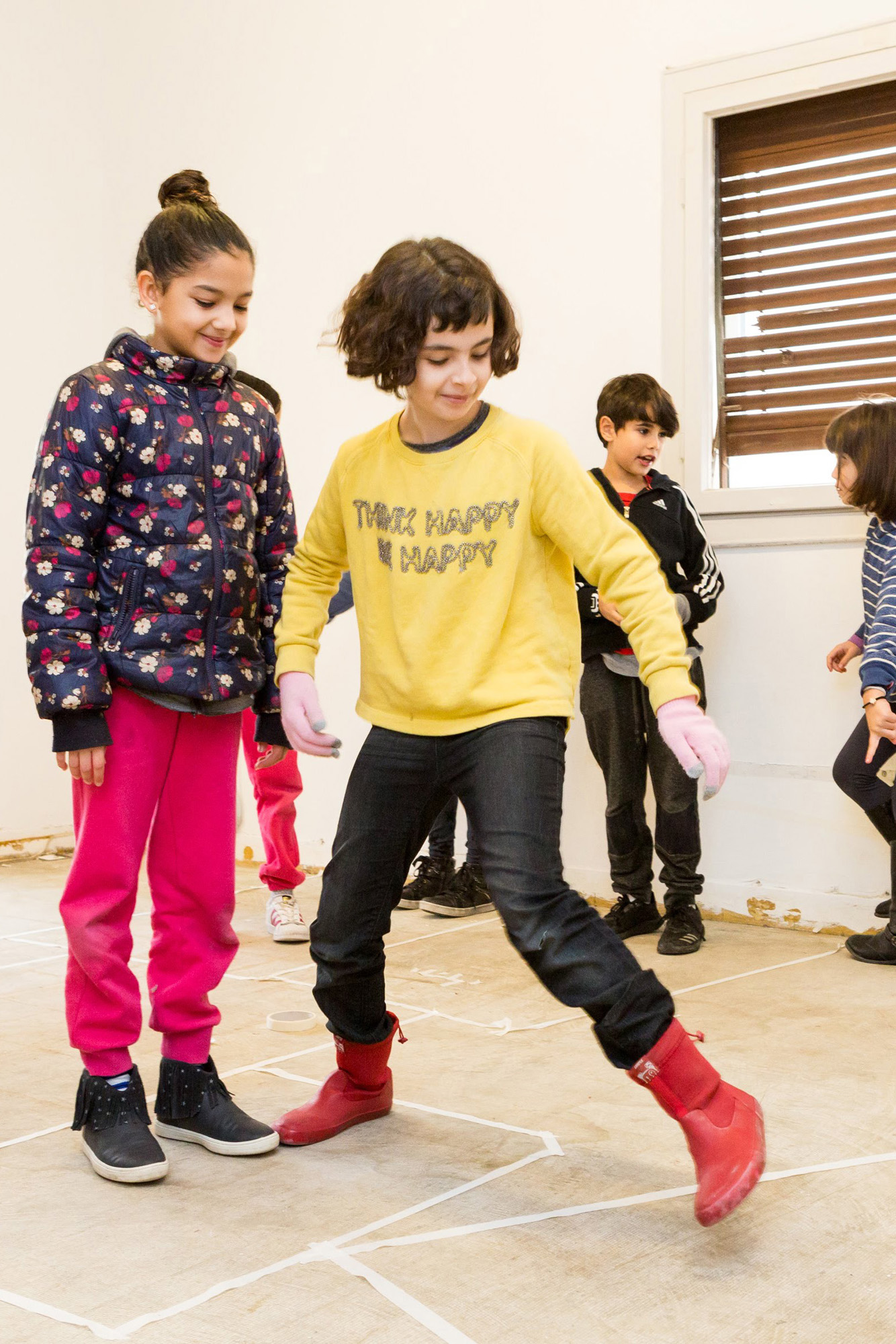
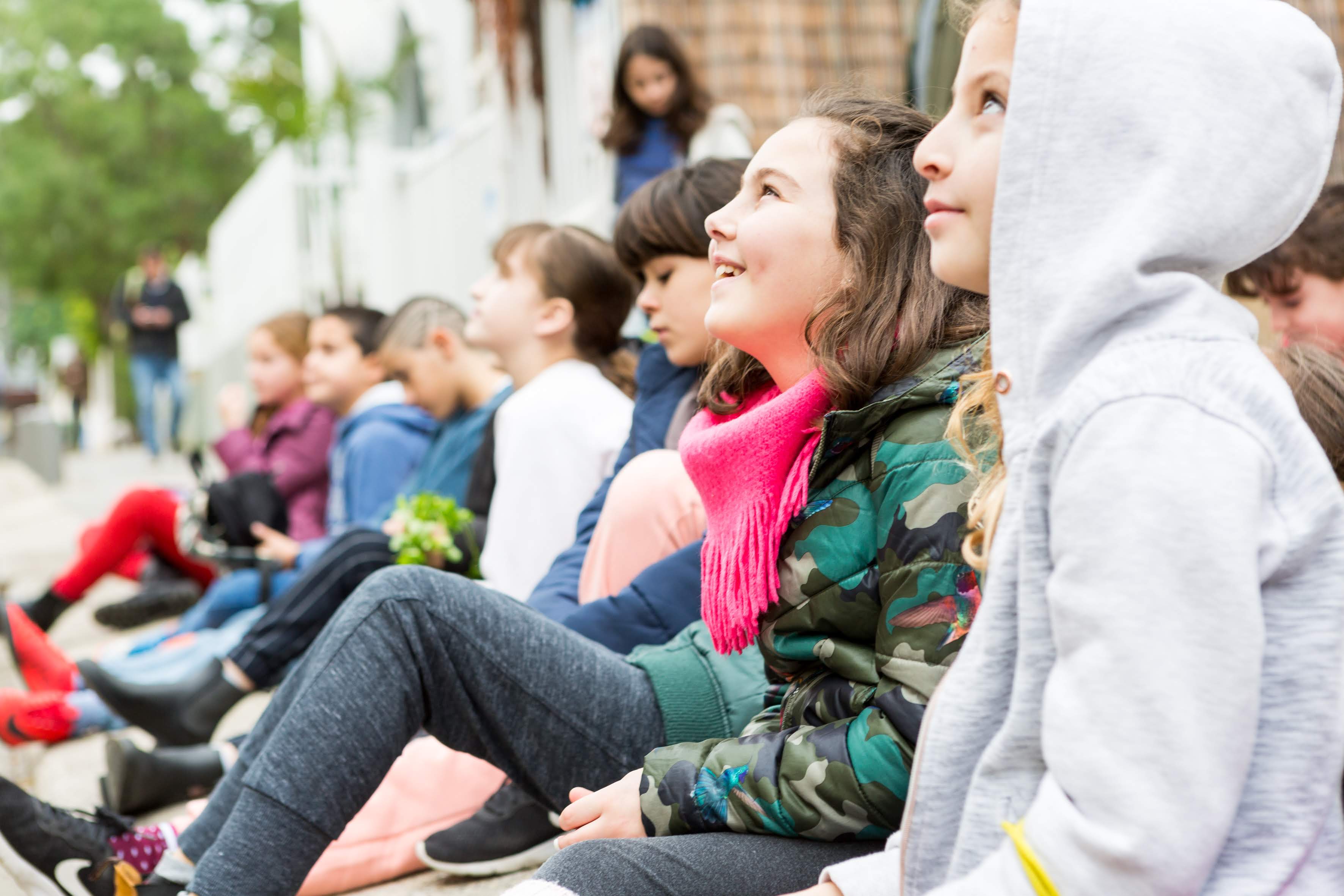
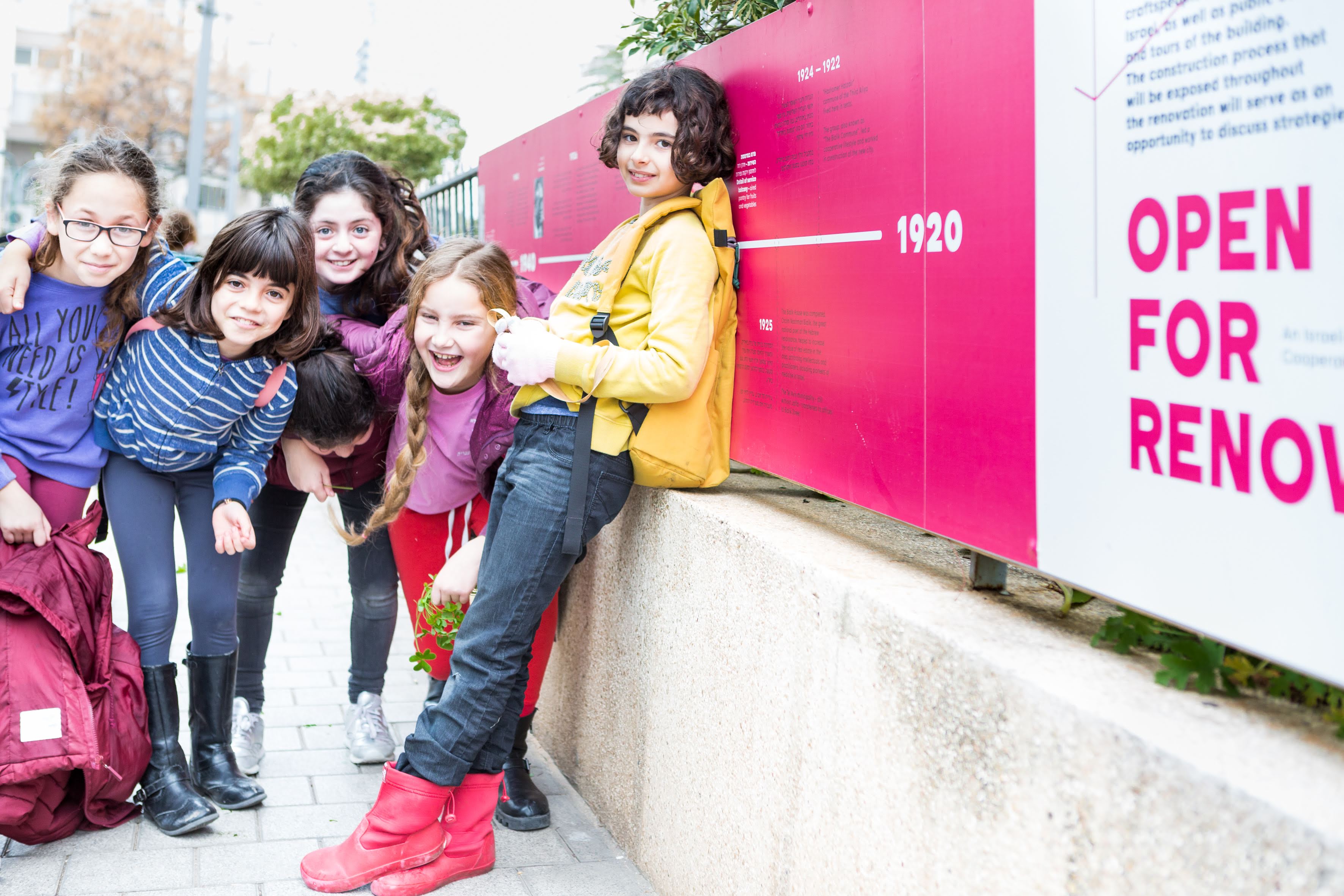

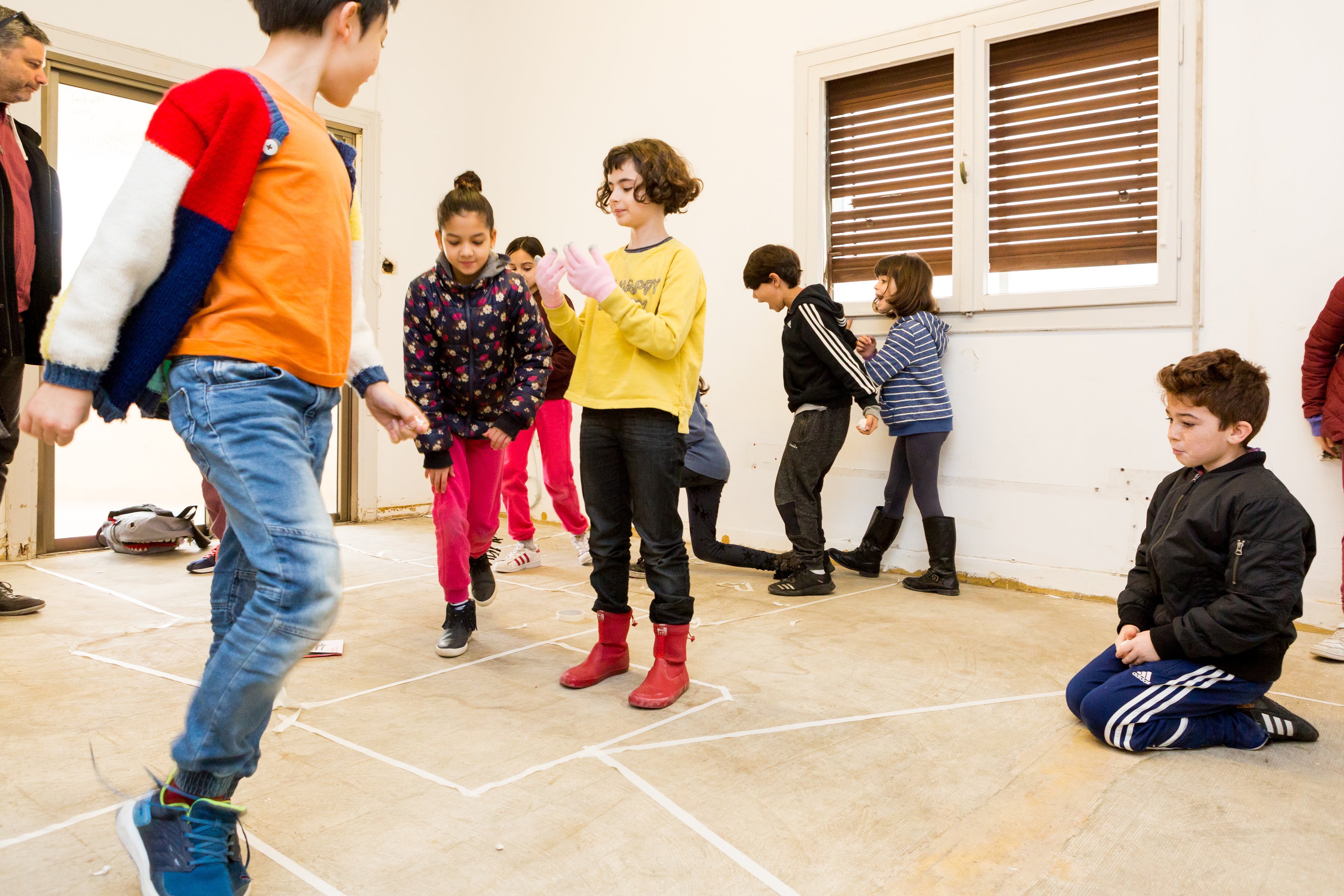
a living model for turning the city into the school itself. the city as school transforms the urban landscape into a campus where, for one weekend, apartments, streets, courtyards and gardens become classrooms for direct encounters.
residents offer what they know, skills, stories and experiences, while others choose from a program shaped by the community’s shared knowledge. learning unfolds in familiar spaces, dissolving the line between public and private, and revealing a city where living and learning merge into one continuous experience
co-curators karni barzilay, tali kayam, yonatan h. mishal, production netta levavi, part of tel aviv, loving art, making art events
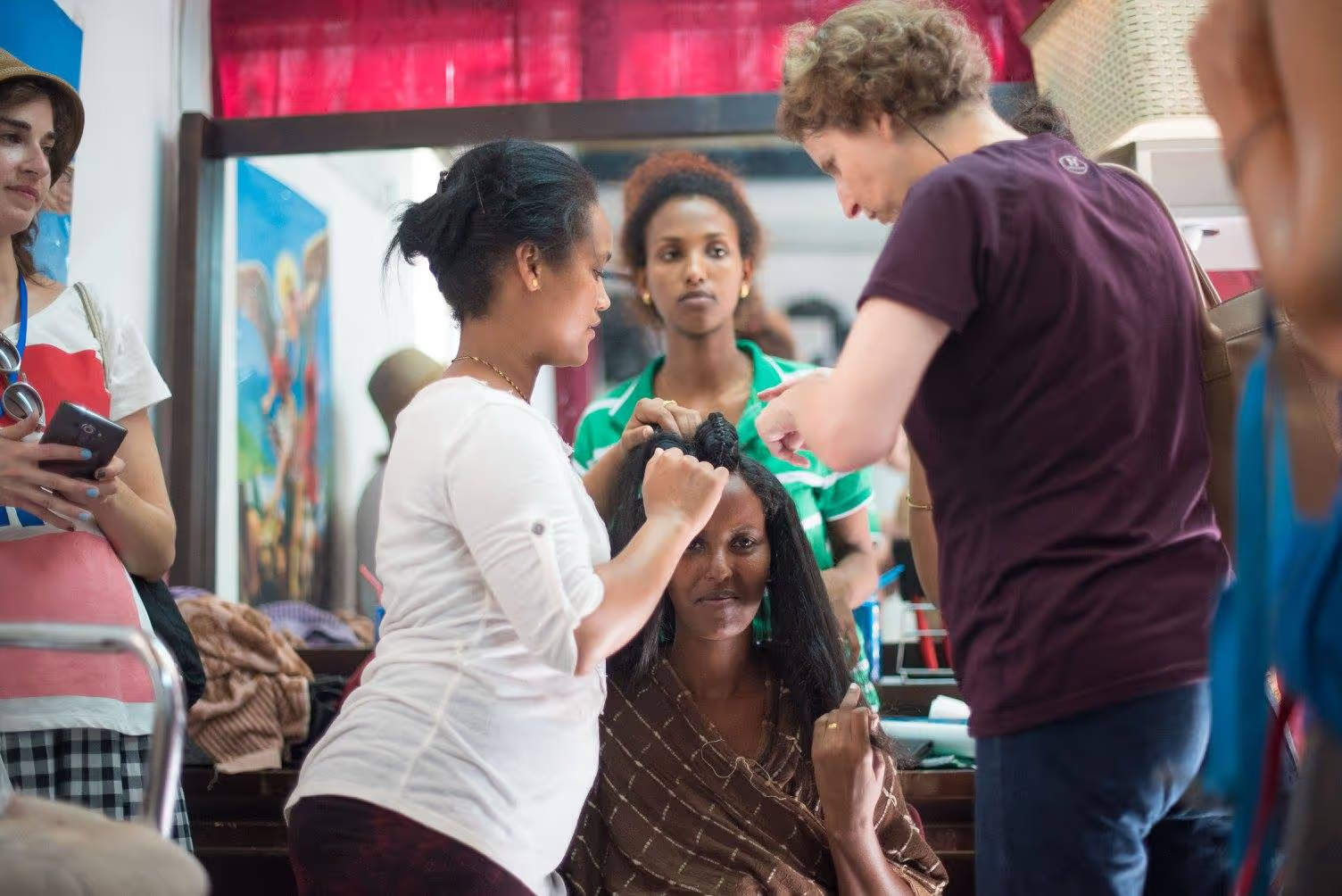
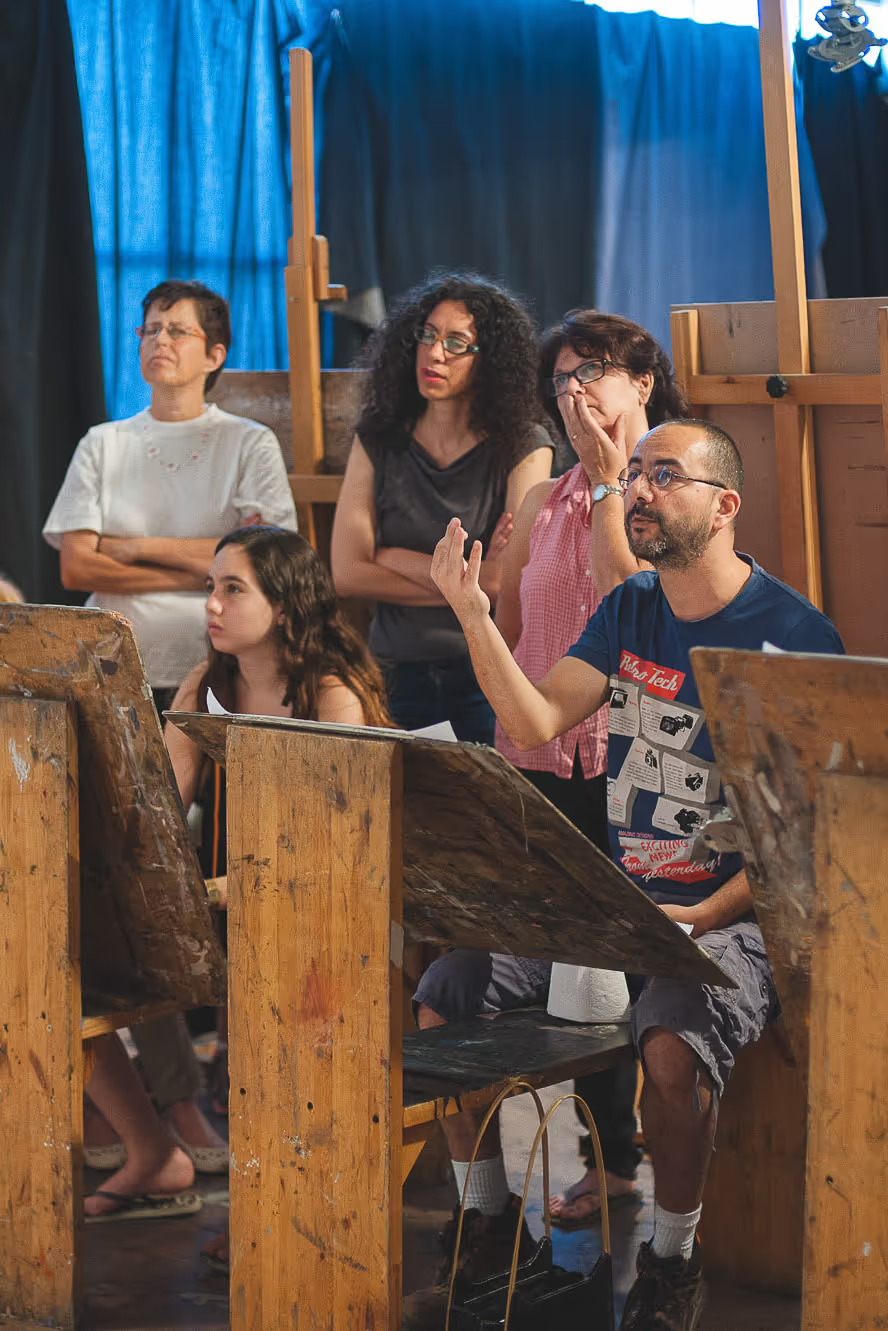
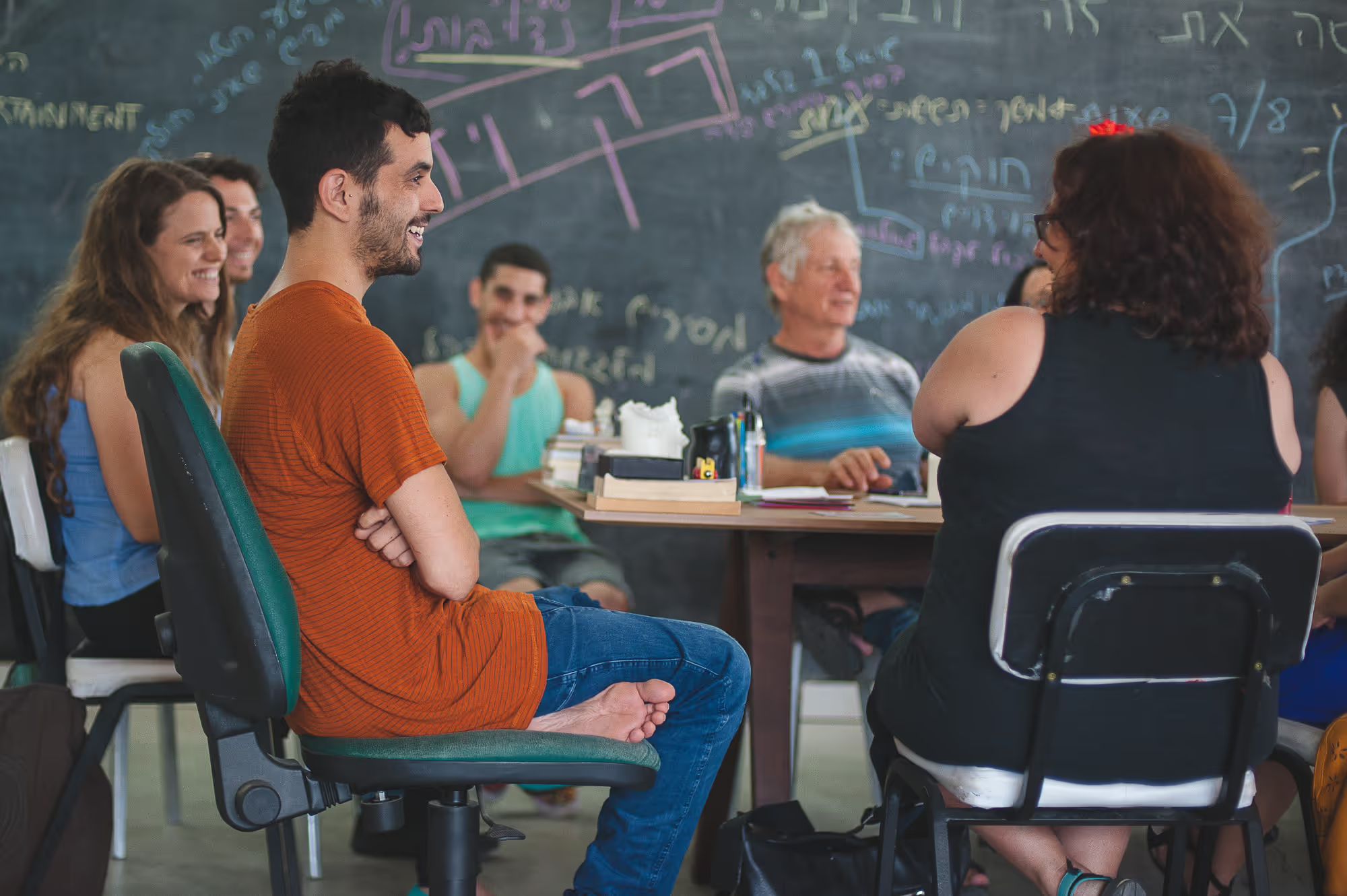
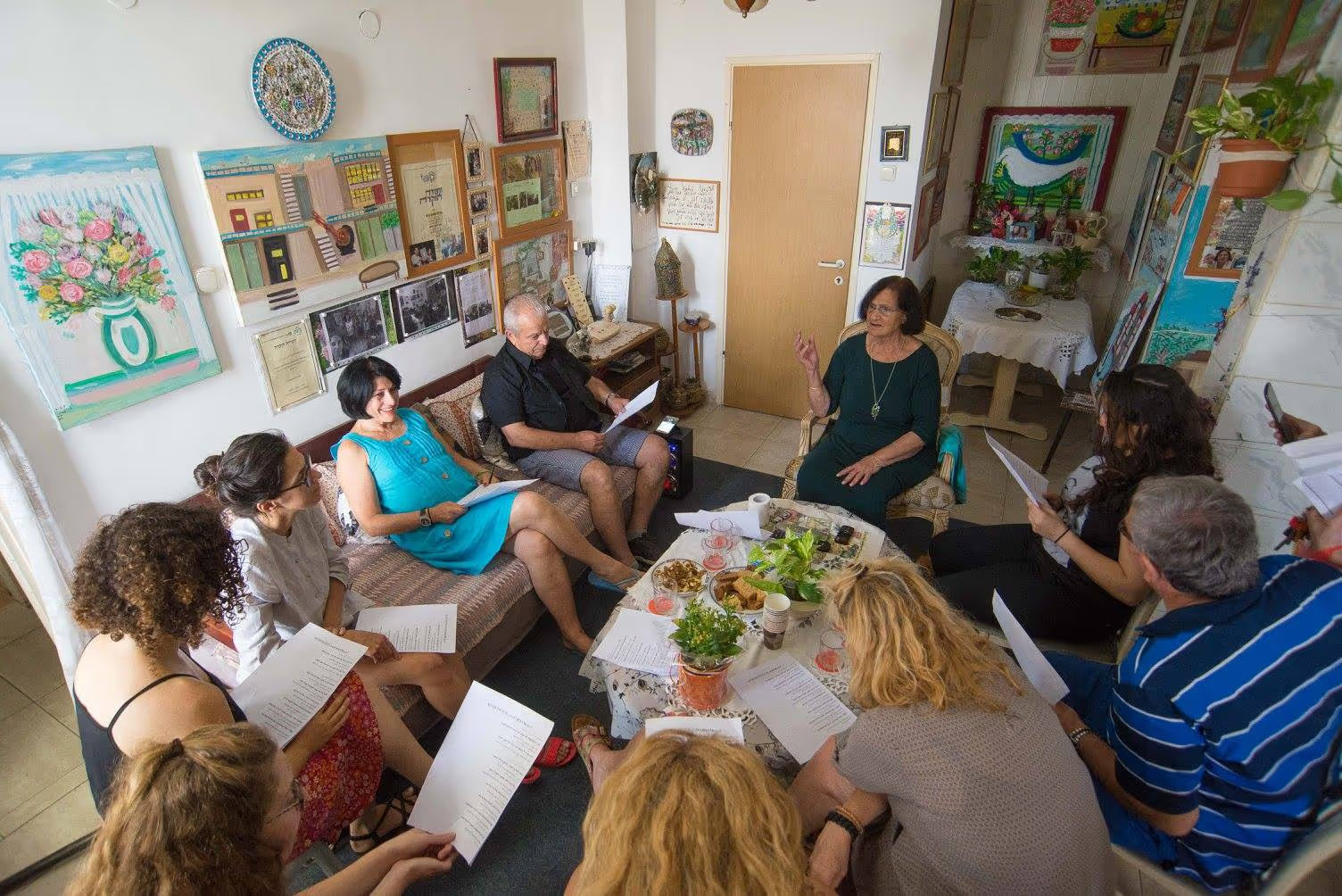
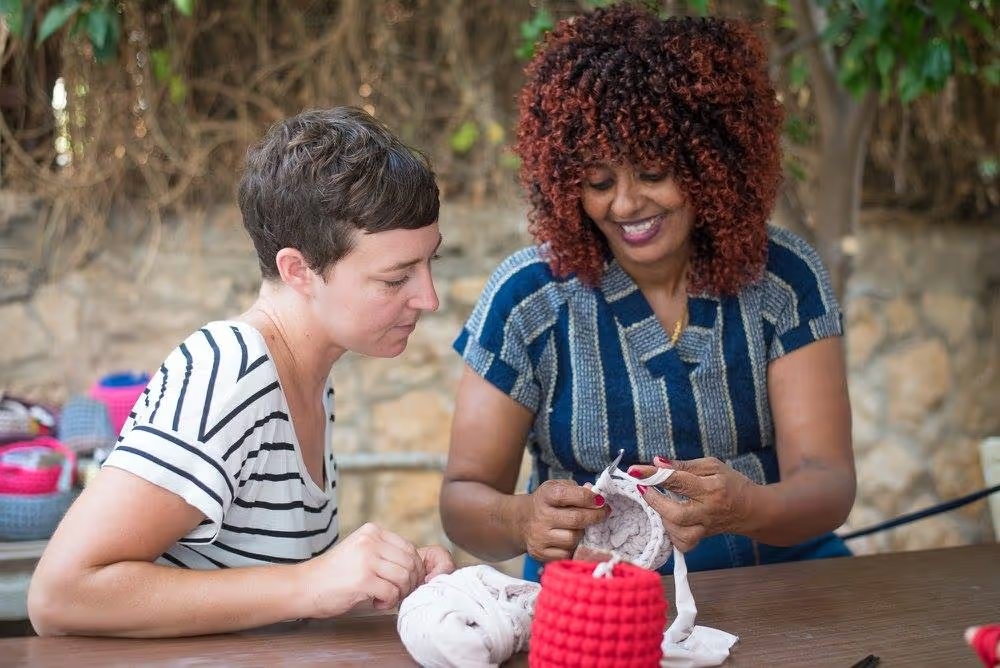
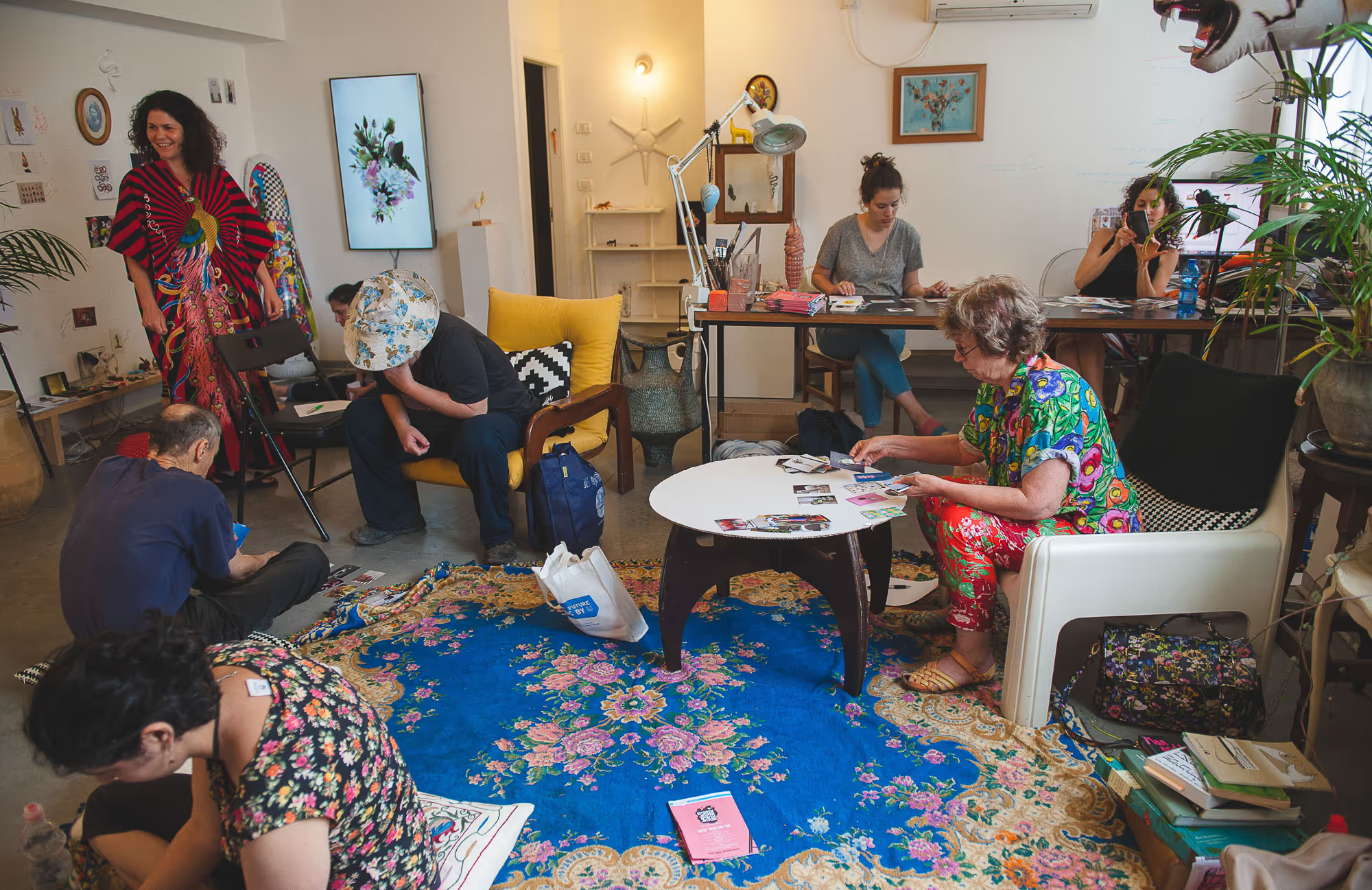
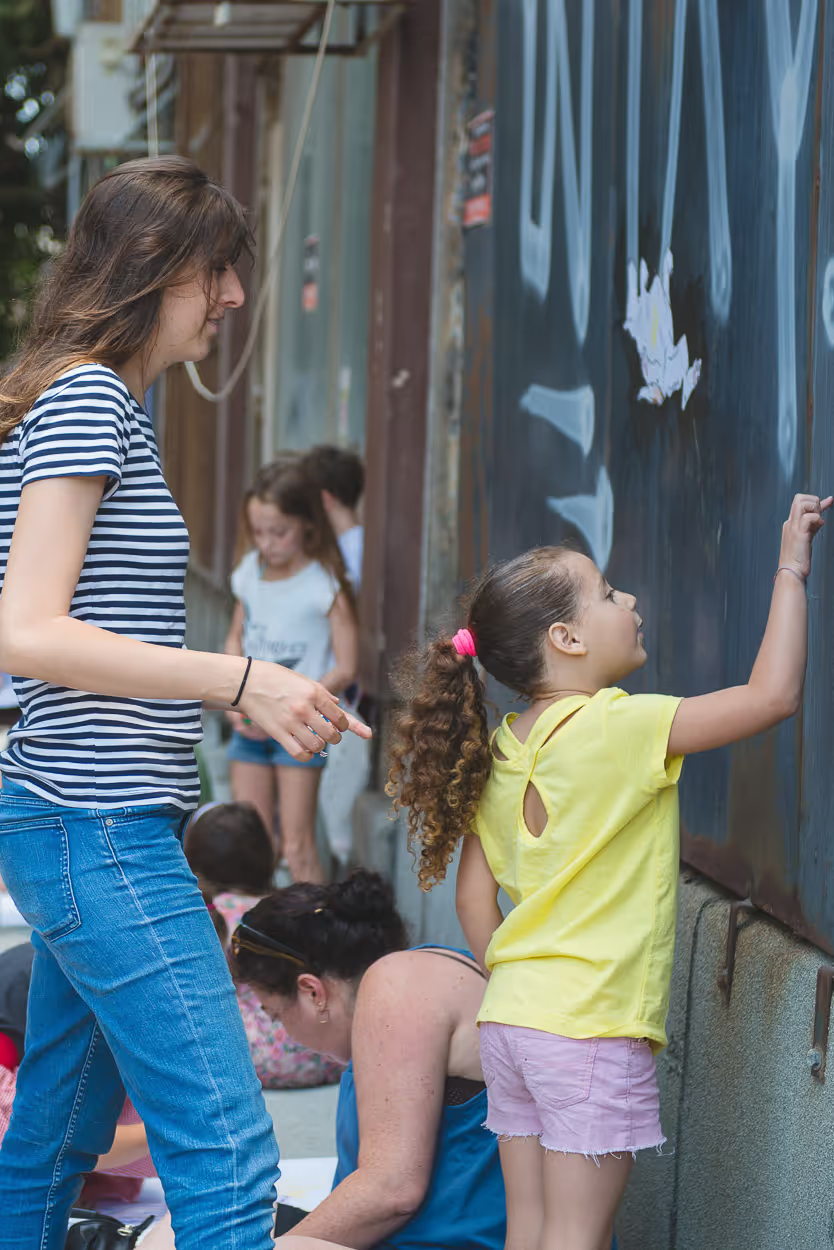
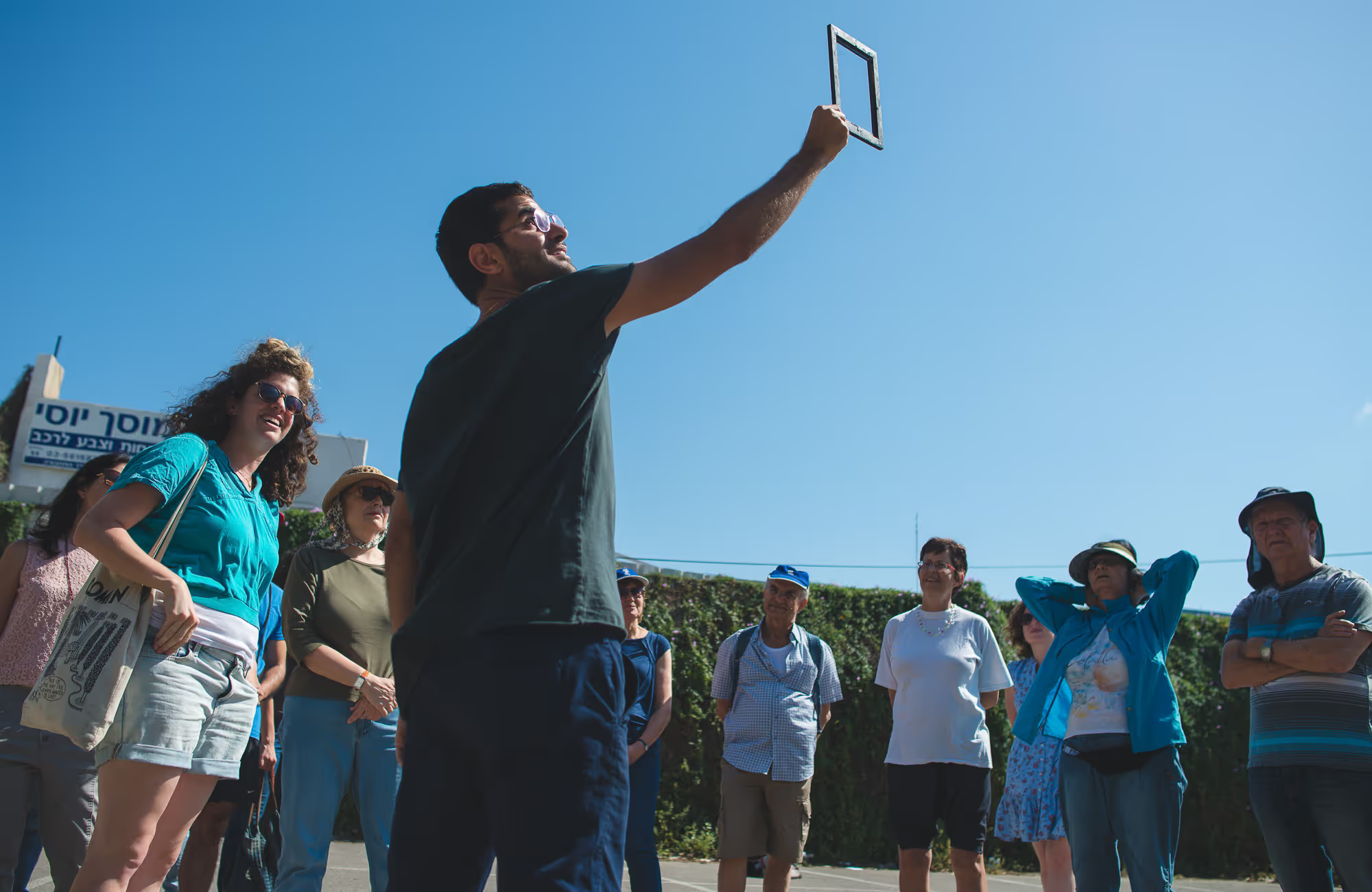
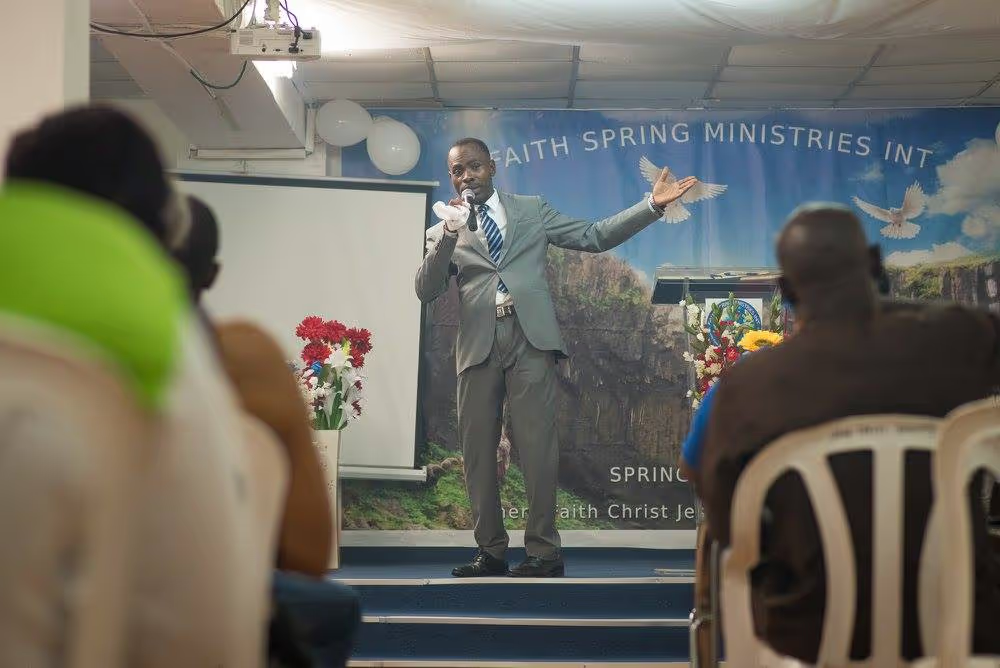
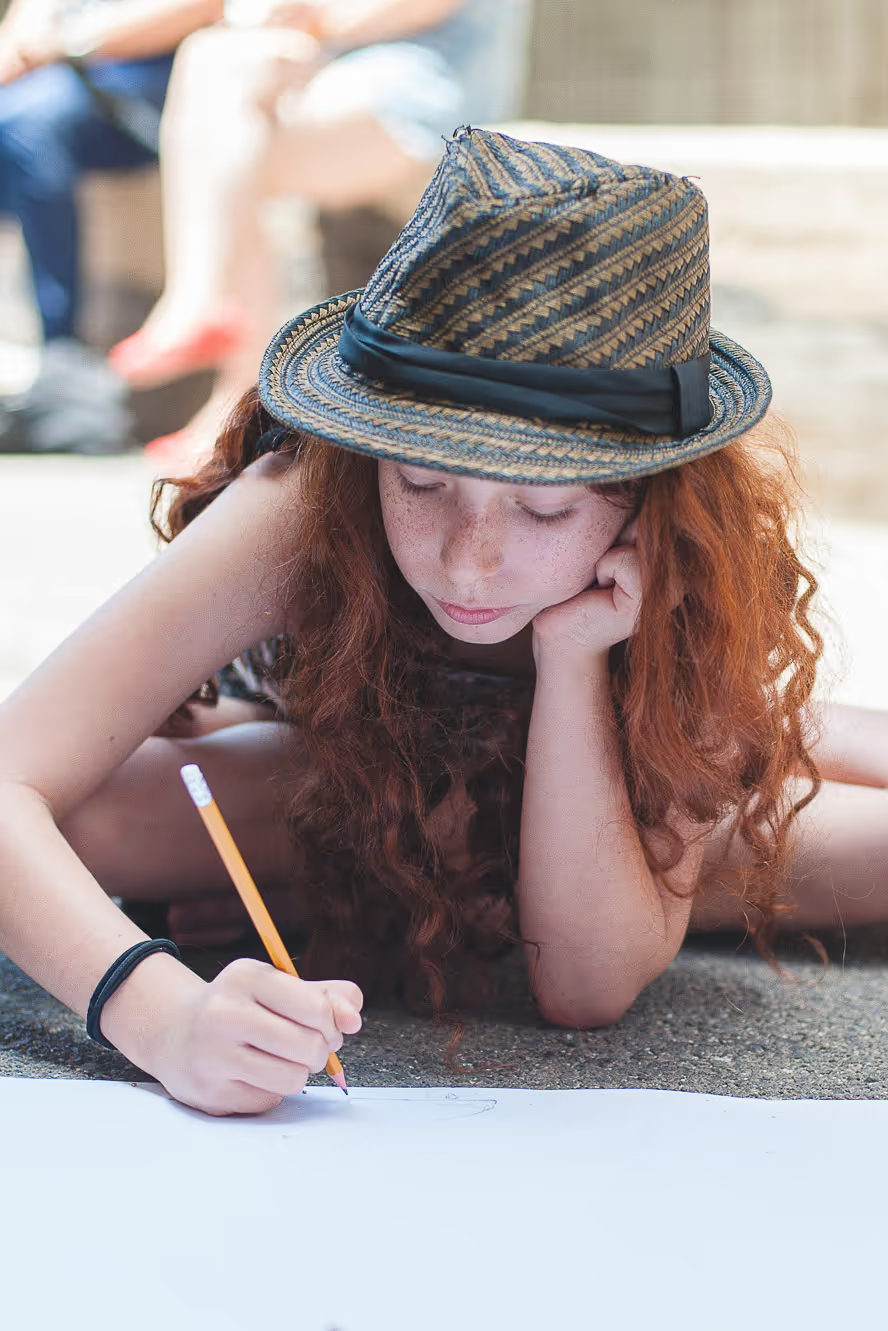
Our commitment
We are committed to making our website accessible to everyone, including people with disabilities. We strive to follow best practices and standards for accessibility to ensure that all users have a positive experience on our site.
Standards compliance
We aim to meet the Web Content Accessibility Guidelines (WCAG) 2.1 Level AA accessibility standards, which define how to make web content more accessible for people with a wide range of disabilities, including visual, auditory, cognitive, and motor impairments.
Accessibility features
Where possible, our website includes the following:
- Meaningful alternative text for important images.
- Logical heading structures and clear page layouts.
- Support for keyboard navigation and screen readers.
- Responsive design that adapts to different devices and screen sizes.
-
Known limitations
Although we are continually improving accessibility, there may be some parts of the site that are not fully accessible at this time. For example:
- Some third-party content or embedded media may not fully support screen readers or keyboard navigation.
- PDFs or downloadable documents, if present, may not meet all accessibility criteria.
We are actively reviewing these areas and working toward improvements.
Feedback and contact
If you encounter any accessibility barriers while using this website, please contact us so we can help resolve the issue and improve the site experience for all users:
Email: eran20@gmail.com
We aim to respond to accessibility inquiries promptly and to provide accessible alternatives where possible.
Ongoing efforts
We regularly review our website’s accessibility and update this statement as improvements are made or standards evolve.
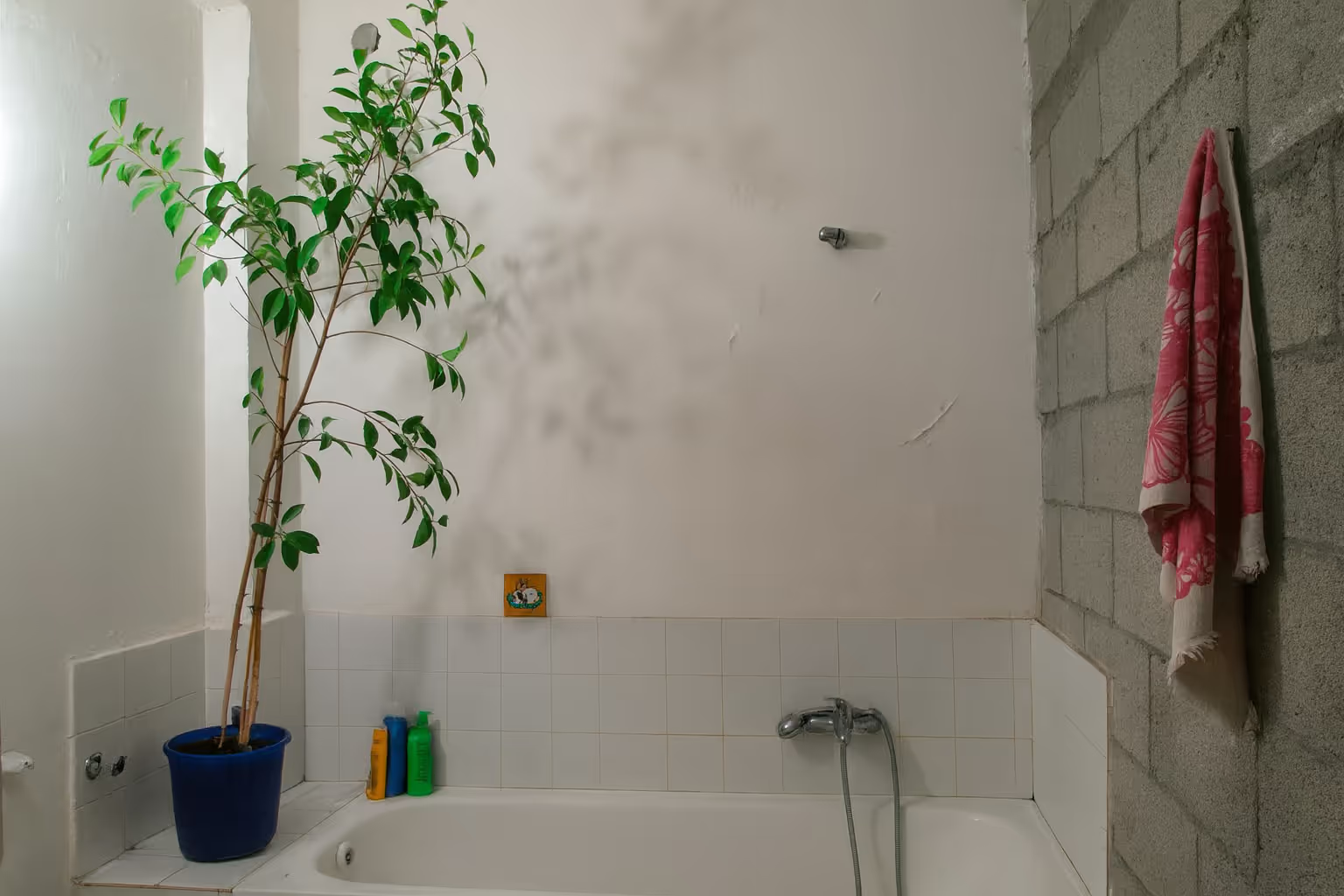
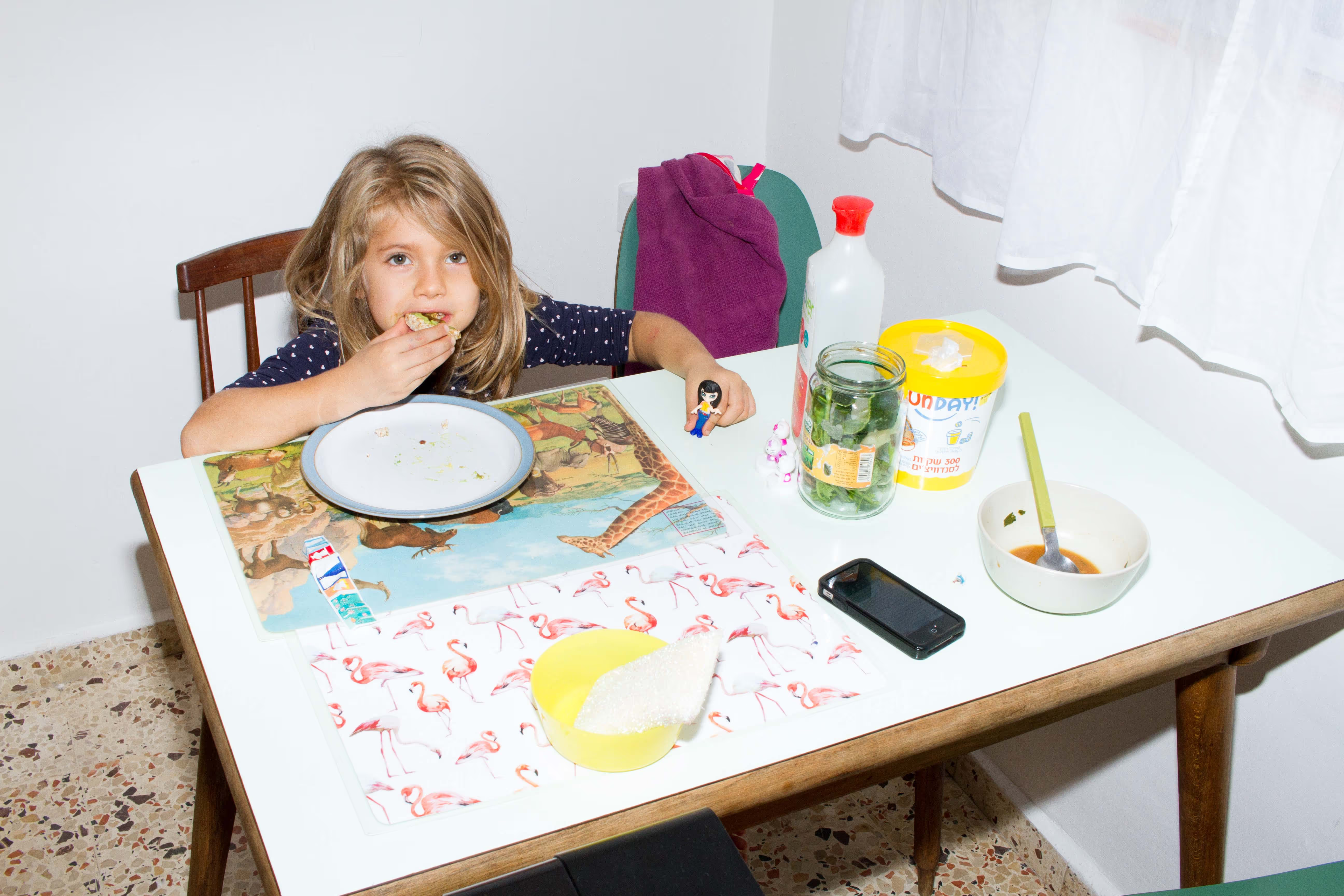
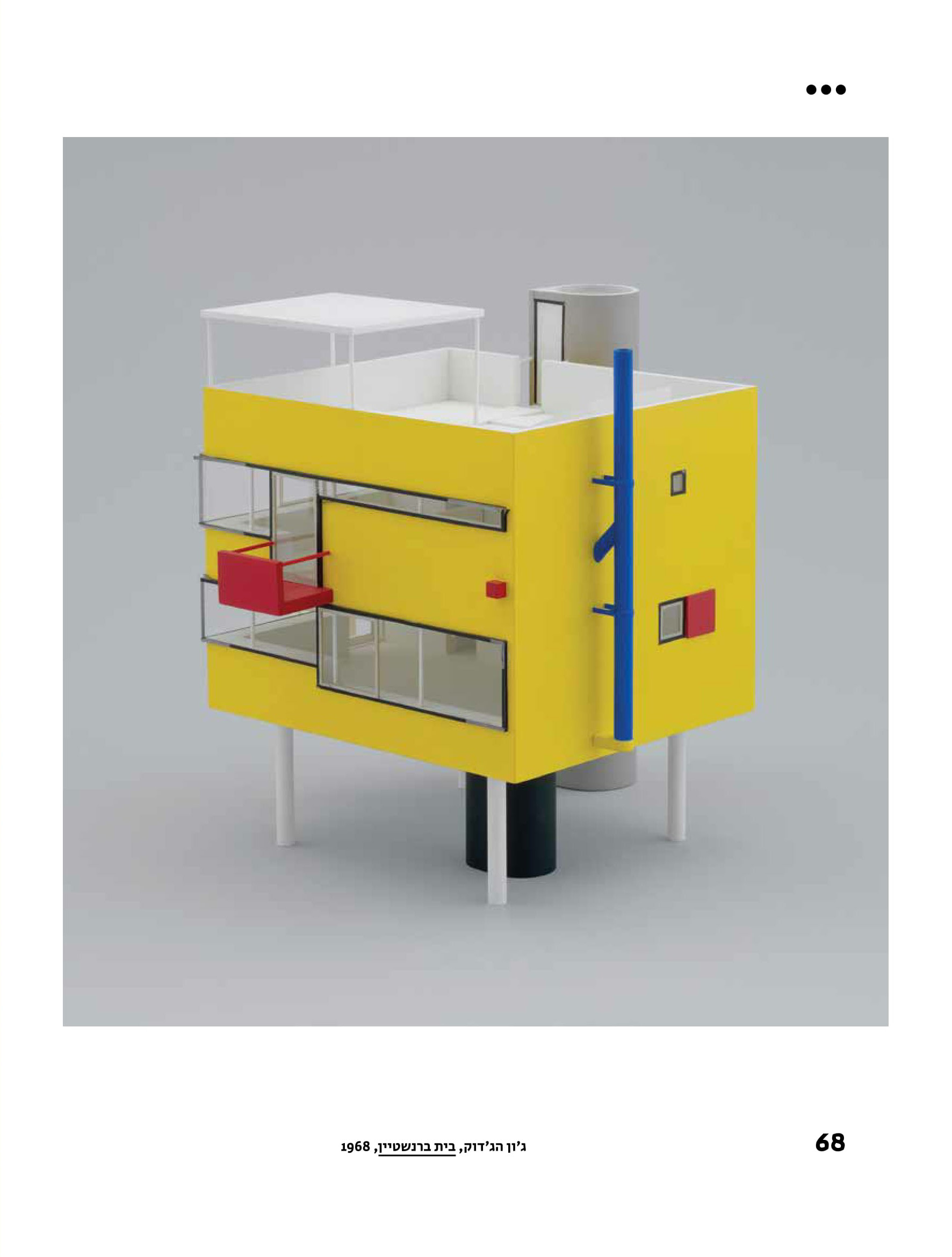

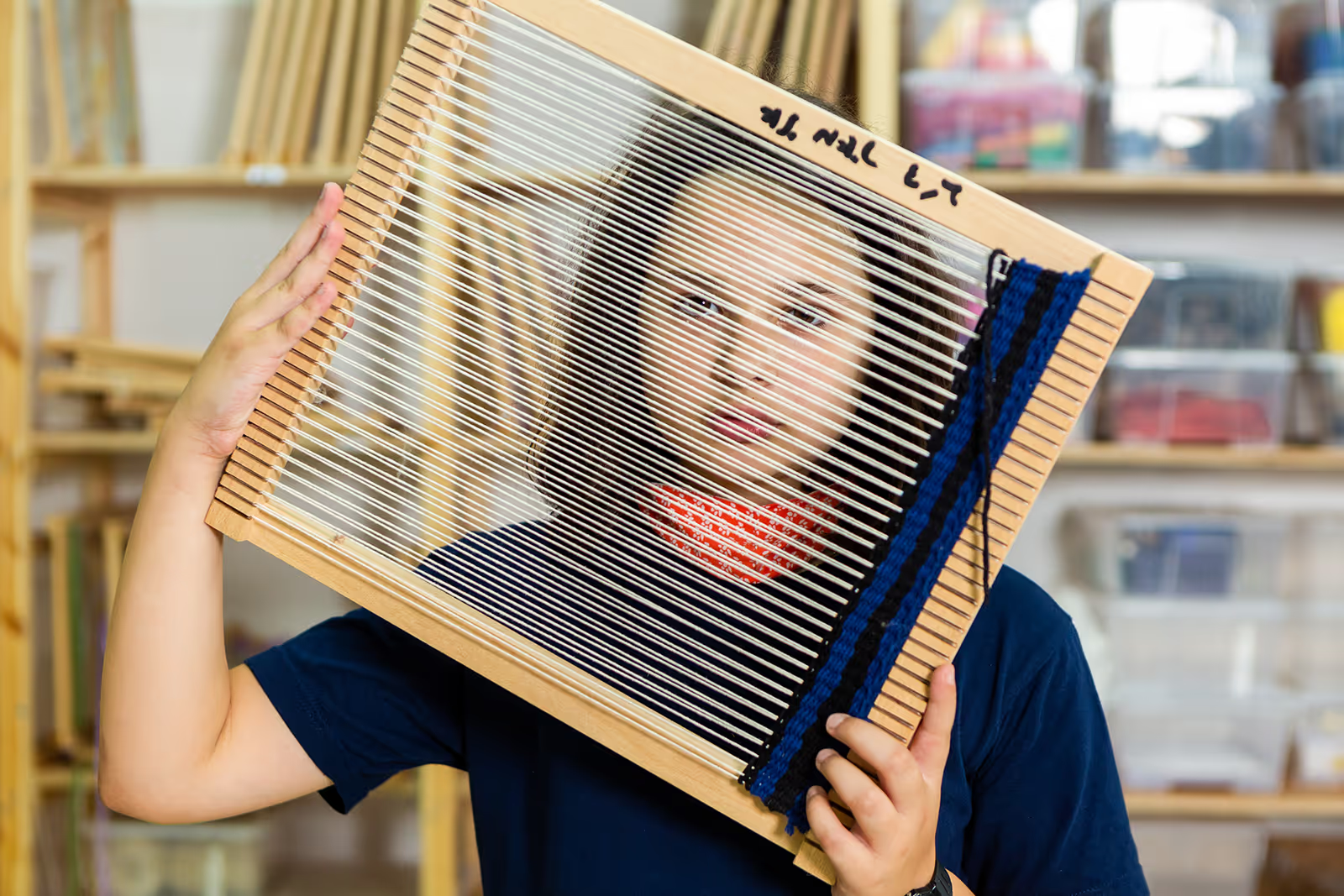
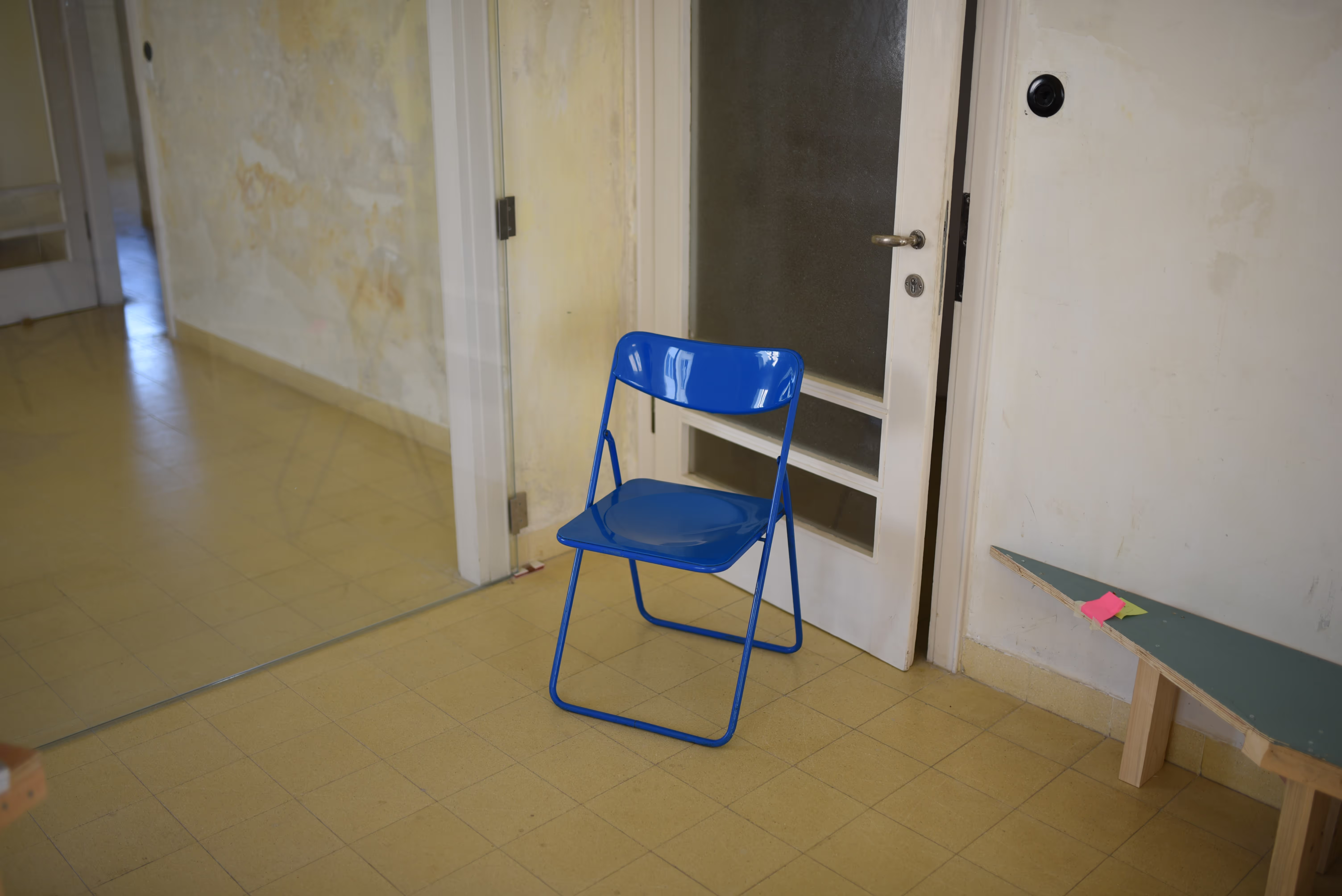
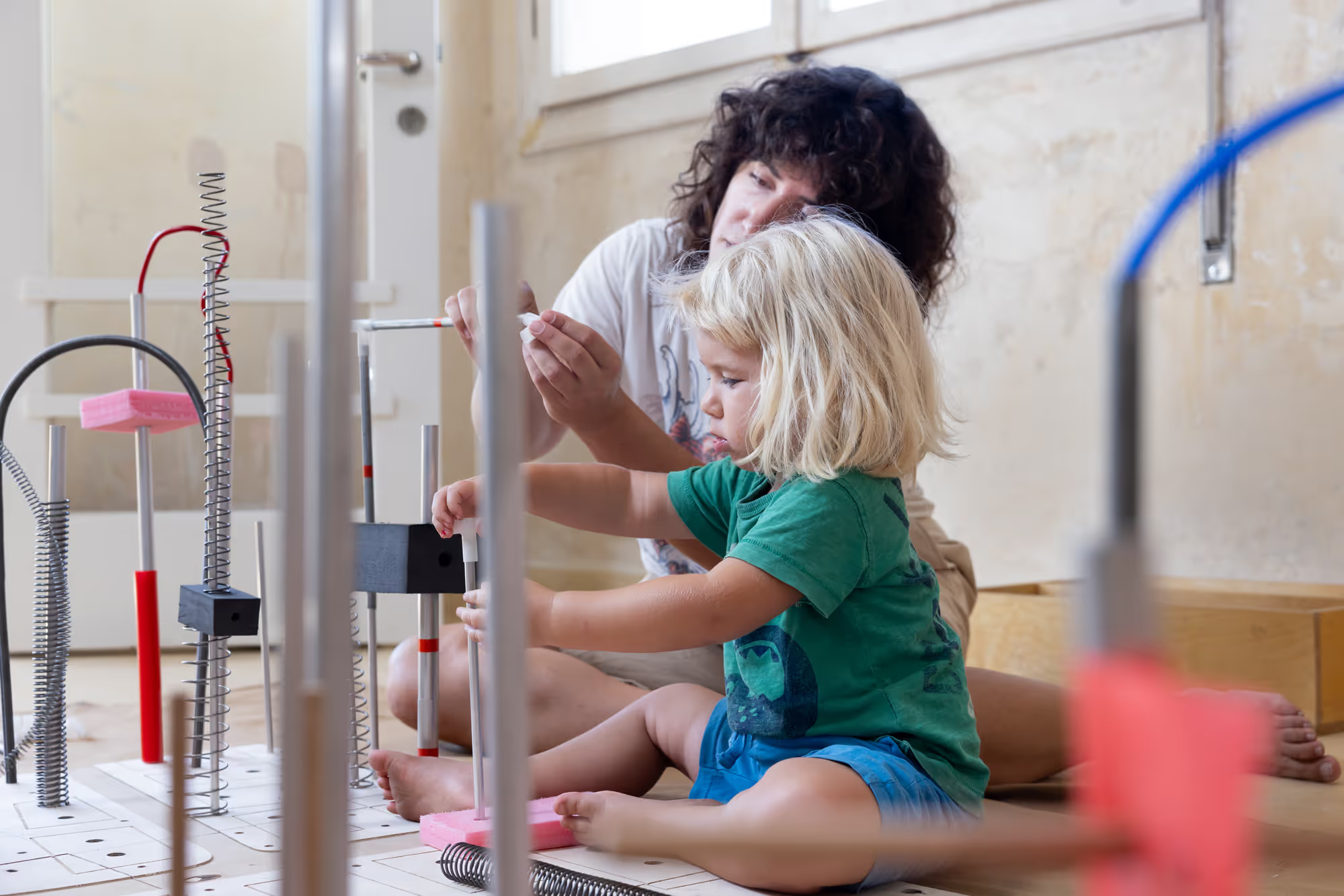
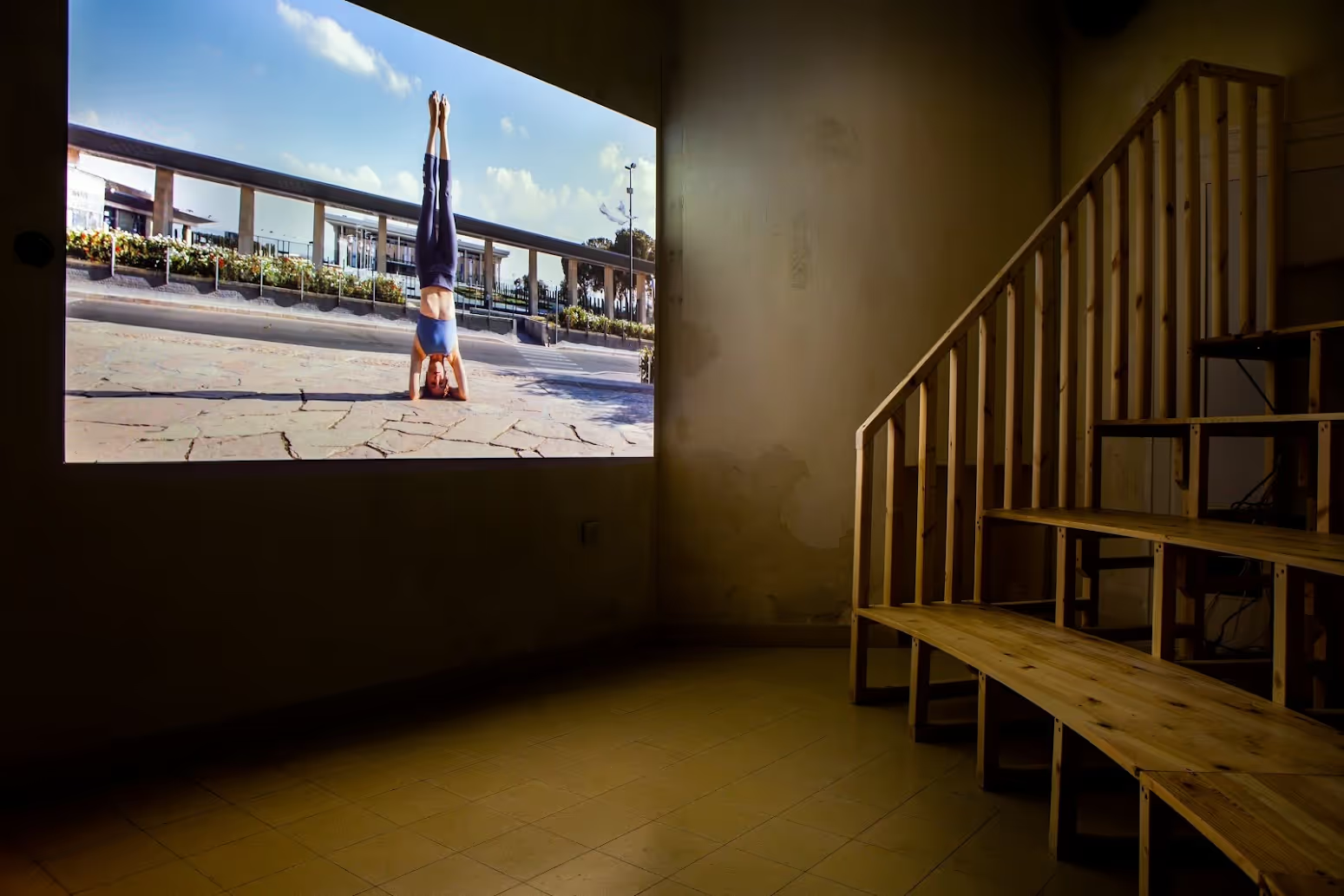
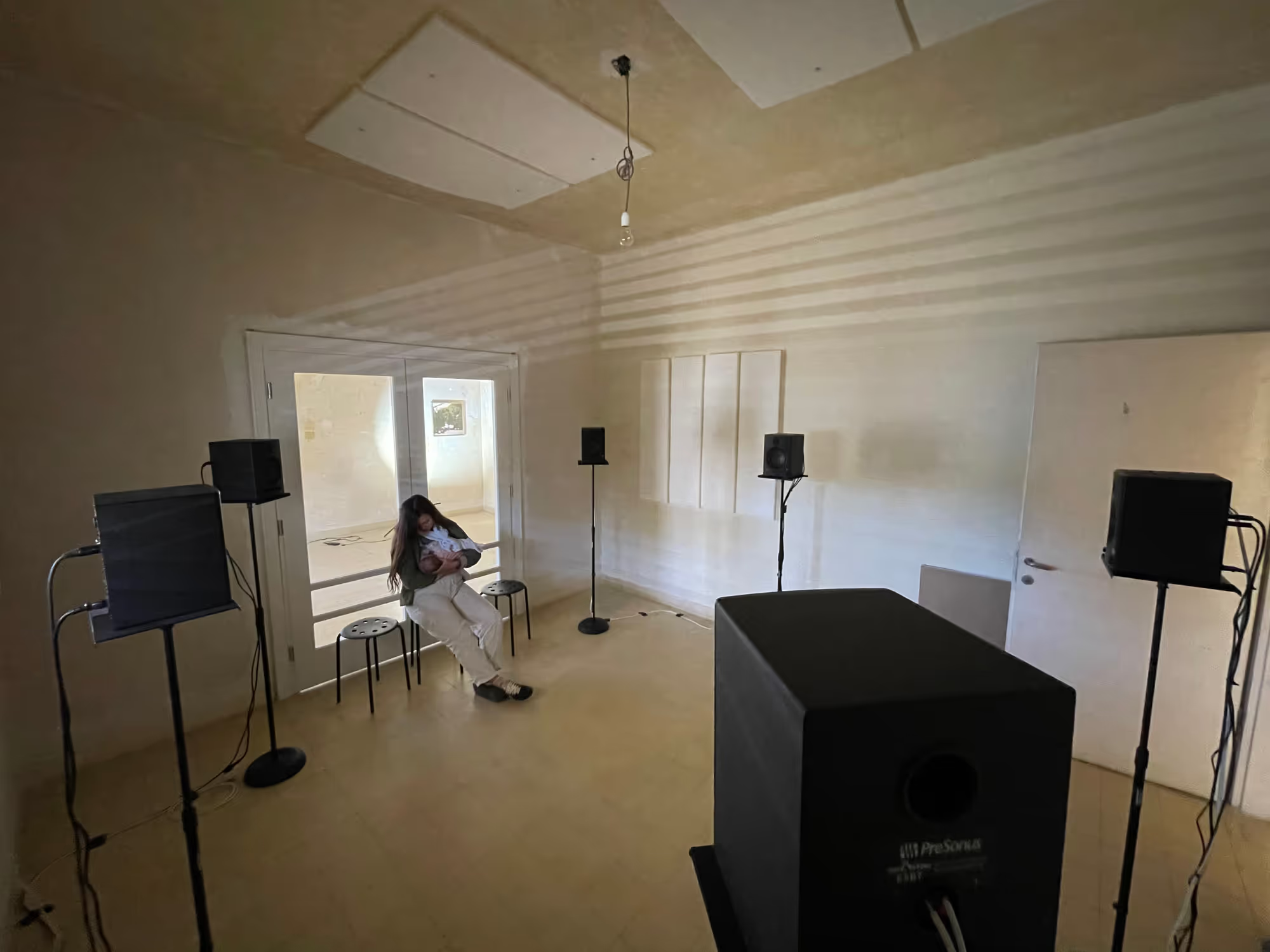
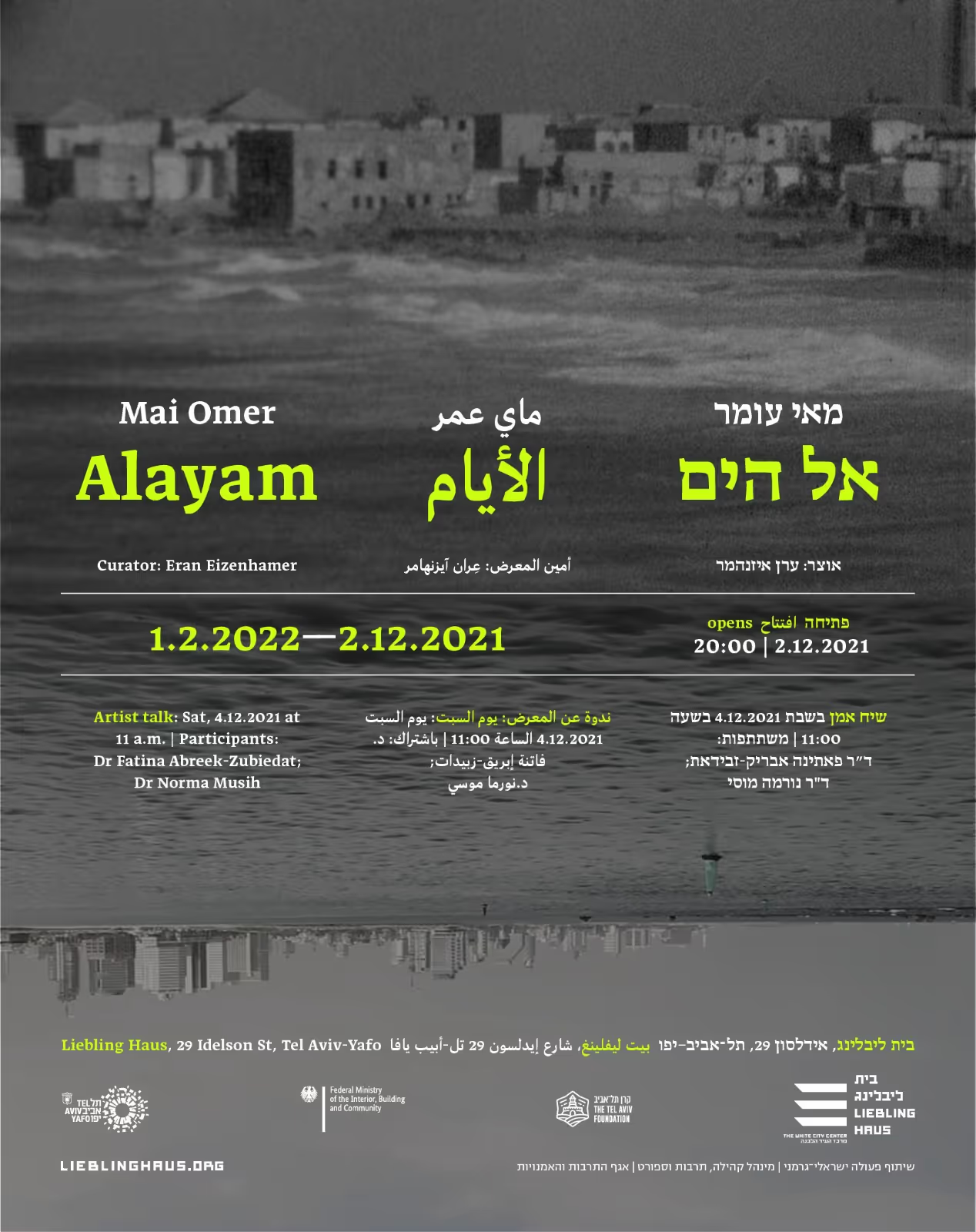
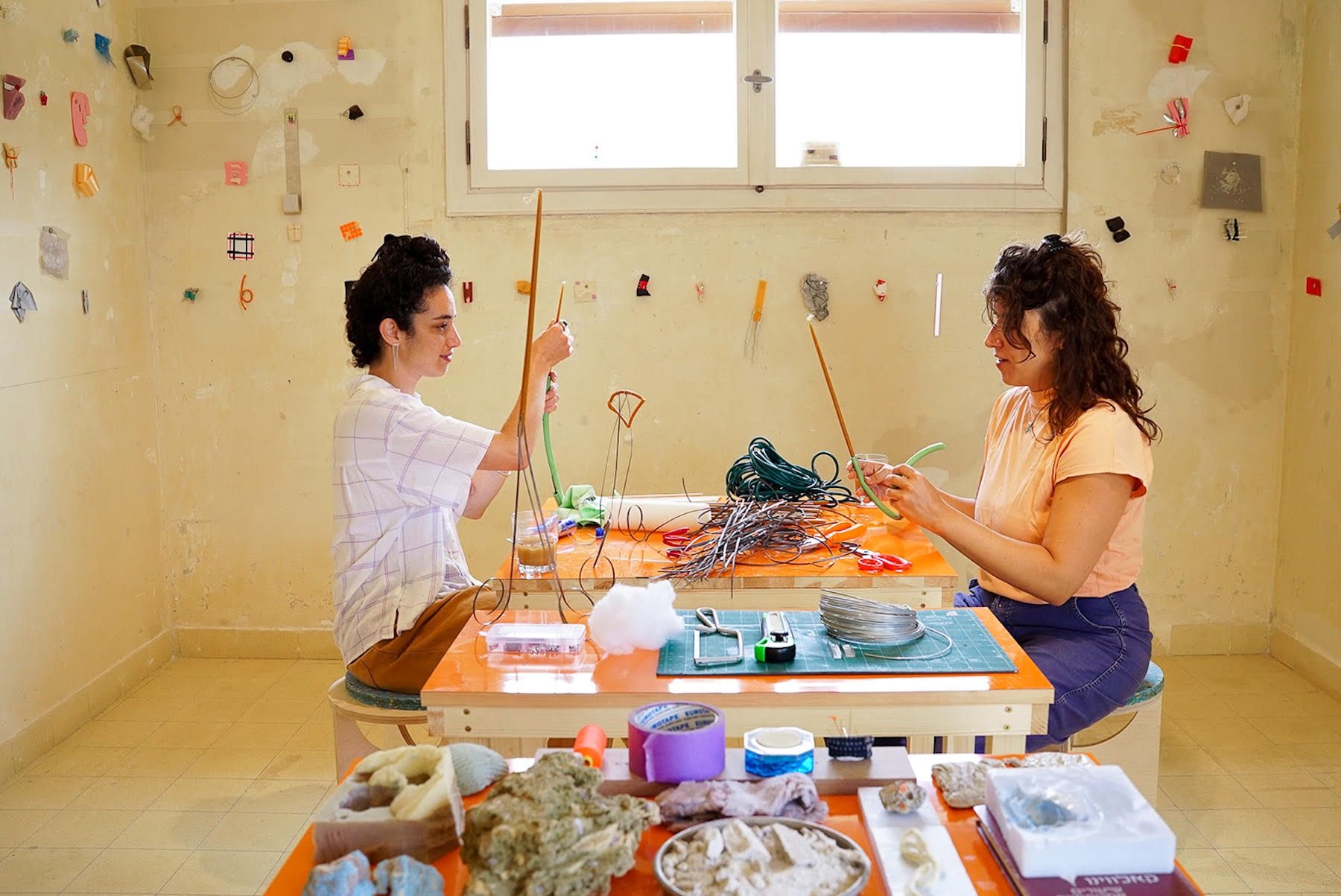
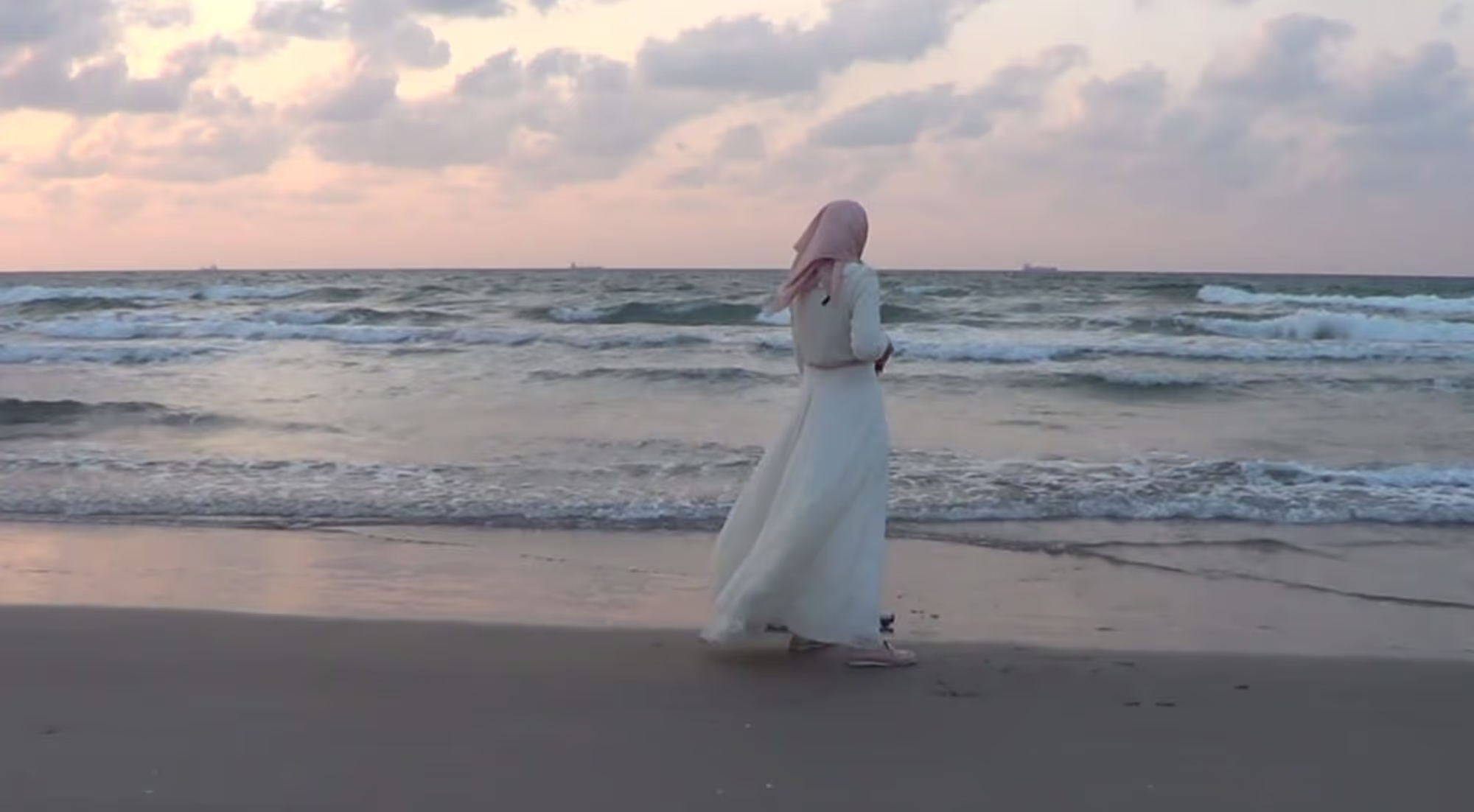
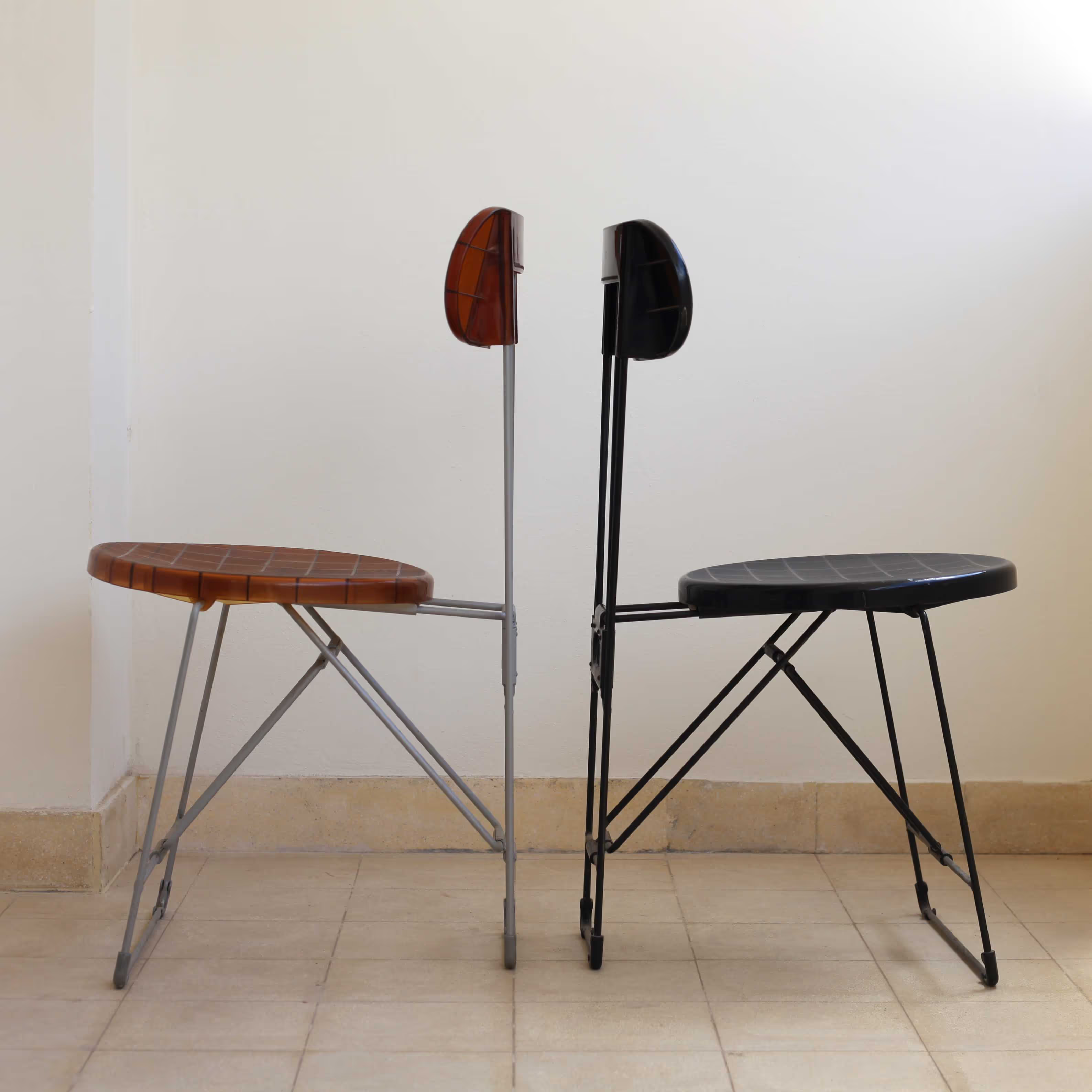
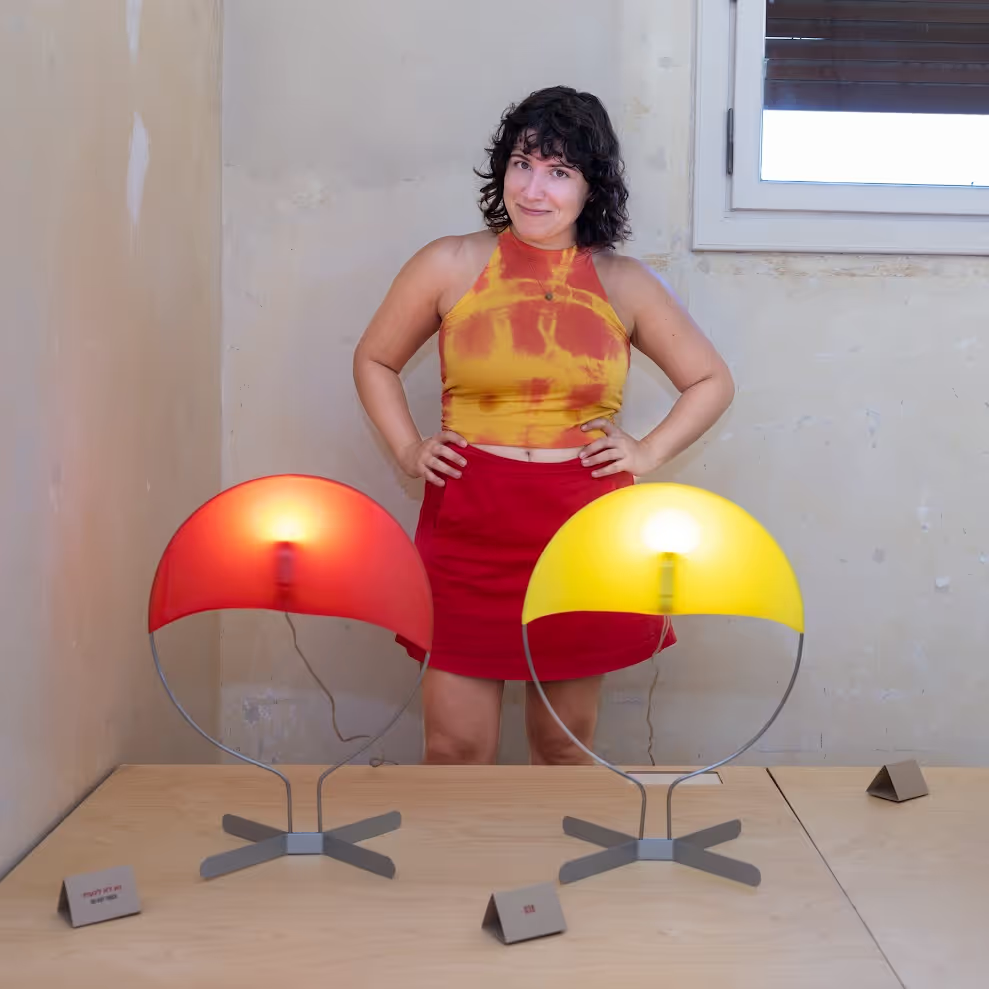
.avif)